

Note: This article contains affiliate links. If you click on these links and make a purchase, I may earn a small commission at no extra cost to you. This helps support my research and content. Read my full affiliate disclosure here.
If you use your Toyota Tundra for towing, hauling, or spirited driving, the right intercooler can reduce intake temperatures and help maintain engine performance under load. Picking the best option matters because heat soak and restrictive airflow can reduce power and throttle response when the engine is pushed hard.This guide covers six shortlisted intercoolers that represent reliable choices in the category. We evaluated core airflow, heat rejection, and fitment considerations to surface the top picks. Read on to see the factors we weighed before the product list.
Looking for other parts? See all Toyota Tundra parts & accessories.
Top Picks at a Glance
| Best Reviewed A top-rated pick with lots of positive feedback | Mishimoto Z-Line Universal Front-Mount Intercooler (MMINT-UZ) |  |
| Best Quality Built to a higher standard if you want something more solid | E-MOTOR 2.5" Tube-and-Fin Universal Intercooler 27×12.5×3 |  |
| Best Budget The cheapest option that still gets the job done reliably | DNYSYSJ Universal Front-Mount Aluminum Intercooler (3" Inlet/Outlet) |  |
| Most Sold A high-volume bestseller chosen again and again | PG POWERGO MOTORSPORT Front-Mount Turbo Intercooler 31x12x4 in. |  |
| Best Value for Money The sweet spot between price and what you get | HiBuyer 2.5" Tube-and-Fin Front-Mount Aluminum Intercooler (31" x 13") |  |
| Best Overall The best all-around choice for most situations | Mishimoto MMINT-UR R-Line Universal Performance Intercooler |  |
1. Mishimoto Z-Line Universal Front-Mount Intercooler (MMINT-UZ)

| Model | MMINT-UZ |
|---|---|
| Inlet & Outlet | 2.5 inches |
| Core Size | 20.5" x 6.25" x 2.5" |
| Max PSI | 22 |
The Mishimoto Z-Line universal front-mount intercooler is built as a compact, high-flow cooler for turbocharged applications. Constructed from 6061 aluminum with TIG-welded seams and one-piece cast end tanks, it is intended to reduce intake temperatures and minimize pressure drop on boosted engines. Typical use is as a front-mount unit mounted behind the bumper where its six threaded points allow custom bracketry and placement. Notable features include 2.5 inch inlets and outlets, a relatively thick tank wall and a claimed max pressure rating that suits moderate to high boost. In practice this intercooler offers solid construction and effective cooling for increased power demands, but it is a universal piece so expect to fabricate or adapt mounts and piping for a Toyota Tundra application. Several buyers reported inlet flange fit issues with 2.5 silicone couplers, so you may need adapters or slight trimming. The product balances durable, factory-quality materials with the extra work required for vehicle-specific installation and coupler fitment.
Best for: A reliability-focused buyer who prioritizes a rugged, factory-quality cooling upgrade and is willing to adapt mounting and plumbing to fit a Toyota Tundra.
Less Ideal for: Buyers who want a bolt-in, vehicle-specific intercooler with no modification or anyone unwilling to fabricate brackets or source adapter couplers.
- 6061 aluminum core with TIG-welded construction for durability
- One-piece cast aluminum end tanks designed to withstand boost pressure
- Compact profile fits behind many bumper openings without major cutting
- Six threaded mounting points for custom bracket installation
- Lifetime warranty from the brand for long-term reliability
- Universal design requires fabrication or brackets for vehicle-specific fitment
- Inlet flanges may not accept standard 2.5 inch couplers without adapters or trimming
Verdict A durable, well-built universal intercooler that delivers reliable cooling but requires vehicle-specific mounting and possible coupler adapters for a Toyota Tundra.
2. E-MOTOR 2.5" Tube-and-Fin Universal Intercooler 27×12.5×3

| Inlet/Outlet Diameter | 2.5 inches |
|---|---|
| Overall Size | 27 x 12.5 x 3 inches |
| Core Type | Tube & Fin |
| Pressure Rating | Tested over 80 PSI |
This E-MOTOR intercooler is a large tube-and-fin unit built for high-boost, performance installations. It features 2.5-inch inlet and outlet ports and a generous overall size intended to increase charge air cooling and reduce intake temperatures by up to the advertised drop during runs. Typical use is as a front-mount upgrade for turbocharged or supercharged setups on a Toyota Tundra, where space allows fitting the 27" face and associated piping. The core is rated to withstand more than 80 PSI, making it suitable for spirited street use and many performance builds. Tube-and-fin construction keeps weight and cost down while delivering solid flow for higher-power applications. Buyers should note this is a universal unit so it will require custom piping, brackets, and trimming or relocation of factory components to fit a Tundra, and the tube-and-fin core is less dense than bar-and-plate designs for extreme sustained track use. Fitment success depends on planning and fabrication or professional installation.
Best for: Performance-oriented owners planning a Toyota Tundra build who prioritize improved charge cooling and higher flow and are prepared to fabricate or pay for professional fitment.
Less Ideal for: Owners seeking a direct bolt-in factory-replacement intercooler or those who need the maximum thermal capacity for sustained track endurance without custom modifications.
- Large face and core area for improved charge air cooling compared with many factory units
- 2.5-inch inlet/outlet supports higher flow for upgraded turbo systems
- Tested to withstand over 80 PSI, suitable for higher boost applications
- Tube-and-fin design reduces weight and is commonly easier to route in custom installs
- Universal fit requires custom piping, mounting brackets, and possible bumper or core support modification
- Tube-and-fin cores can heat soak sooner than heavier bar-and-plate cores under sustained high-load conditions
Verdict A high-flow universal intercooler that delivers better charge cooling for a performance Toyota Tundra build but requires custom fitment and may not match bar-and-plate endurance for sustained track use.
3. DNYSYSJ Universal Front-Mount Aluminum Intercooler (3" Inlet/Outlet)

| Material | Aluminum |
|---|---|
| Inlet & Outlet Diameter | 3 inch |
| Core Size | 18 x 11.5 x 2.5 inch |
| Working Pressure | 5~50 PSI |
| Construction | Machine cut and stamped, hand welded |
This front-mount intercooler is a straightforward, low-cost way to add cooling capacity to a turbocharged setup on a Toyota Tundra. It is a full-aluminum core with machine-cut and hand-welded construction, 3" inlet and outlet plumbing, and a stated working pressure range suitable for moderate boost applications. Typical use is as a direct-replacement style unit mounted at the front of the vehicle to lower intake temperatures and support higher sustained power without complex plumbing. The large core and reported pressure-drop figures suggest reasonable flow for up to roughly 500 horsepower when matched and installed correctly. Expect a basic fitment process since installation instructions are not included and the unit is universal rather than vehicle-specific, so some modification, brackets, or intercooler piping adjustments may be required to fit a Tundra. The polished finish looks tidy but does not affect performance. For buyers on a tight budget this offers notable cooling gains, though it lacks the vehicle-specific brackets and documentation of higher-end factory-quality replacements.
Best for: Budget-conscious Tundra owners who want a cost-effective way to lower intake temperatures and support higher boost without buying an expensive vehicle-specific intercooler.
Less Ideal for: Drivers seeking a plug-and-play, factory-quality replacement with vehicle-specific brackets and documented fitment should consider a direct-fit intercooler from a specialist vendor instead.
- Full-aluminum construction with machine-cut core and hand-welded seams for solid thermal transfer.
- 3" inlet and outlet sizing supports higher flow and simplified connection to common aftermarket piping.
- Large core volume designed to reduce charge-air temperatures on sustained runs.
- Stated working pressure up to 50 PSI and pressure-drop figures indicate efficient flow at moderate boost levels.
- Universal fitment requires custom brackets or piping modifications for a proper Toyota Tundra installation.
- No installation instructions or vehicle-specific mounting hardware included.
- Polished finish may require protection against road debris and does not improve performance.
Verdict A capable, low-cost aluminum front-mount intercooler that delivers good cooling value for budget-minded Toyota Tundra owners but requires custom fitment work.
4. PG POWERGO MOTORSPORT Front-Mount Turbo Intercooler 31x12x4 in.
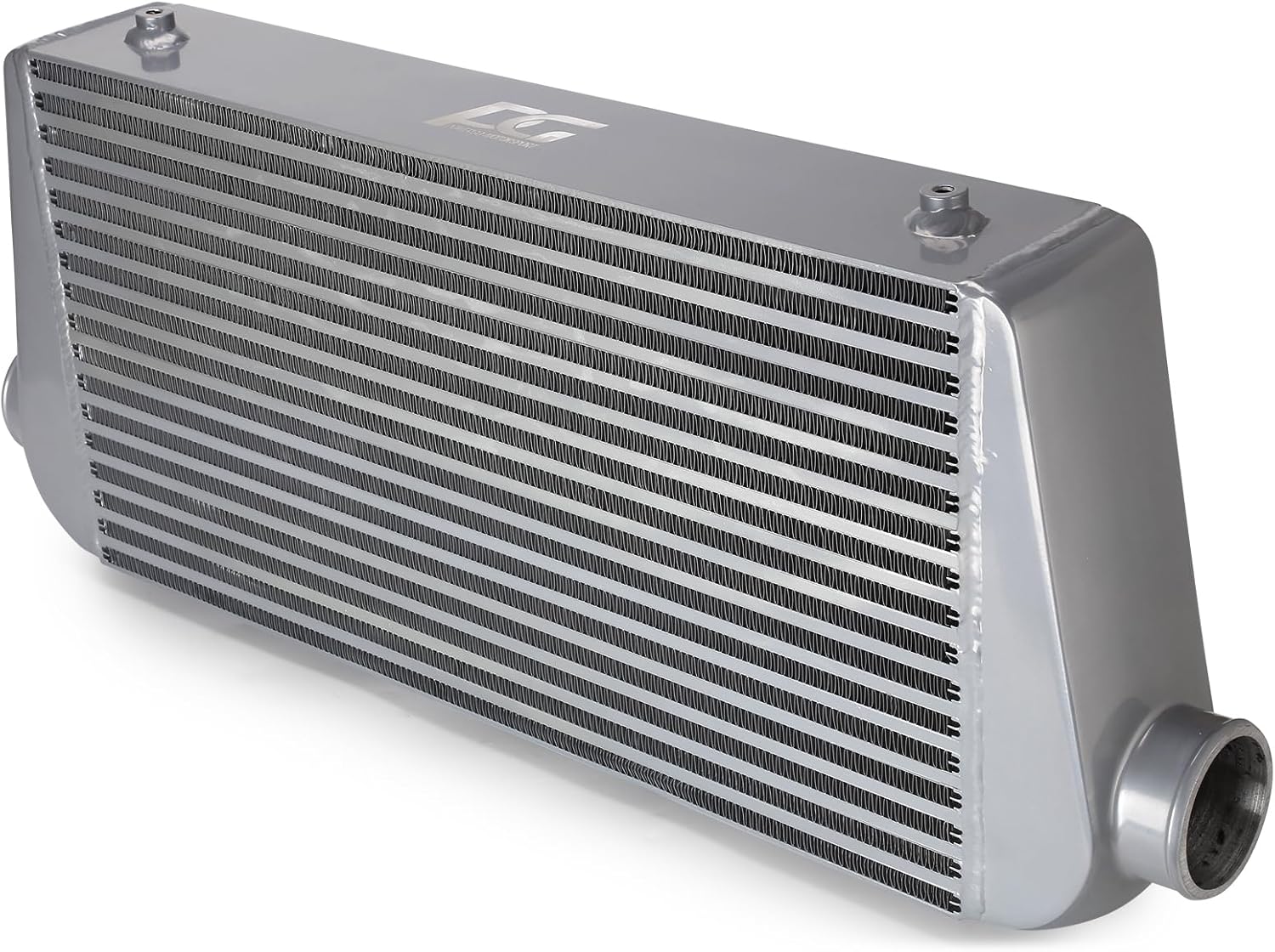
| Core Construction | Bar and Plate |
|---|---|
| Core Size | 24 x 12 x 4 in. |
| Inlet/Outlet Size | 3 in. (76mm) |
| Material | 6061 Aluminum |
| HP Rating | 1000 HP |
This PG POWERGO MOTORSPORT front-mount intercooler is a universal bar-and-plate unit built for high-flow, high-boost applications. It uses a thick 4-inch core with 3-inch inlet and outlet ports to move large volumes of compressed air while the bar-and-plate construction improves heat dissipation compared with basic tube-and-fin cores. In real-world use it is typically mounted at the front of the vehicle to maximize airflow and reduce intake temperatures under sustained boost, which helps preserve power and reduce detonation risk. The intercooler is TIG-welded with one-piece cast aluminum end tanks and a painted finish for corrosion resistance. Important limitations are that it is a universal part so it will require custom piping, brackets, and professional installation to fit a Toyota Tundra, and no installation instructions are provided. The unit is built for high horsepower applications but adds packaging and installation complexity compared with bolt-in, vehicle-specific kits.
Best for: Conservative buyers who prioritize durable, high-capacity cooling for upgraded forced-induction Tundra engines and prefer a robust component they can have professionally fitted.
Less Ideal for: Owners seeking a direct-fit, bolt-on intercooler or a plug-and-play solution should look at vehicle-specific kits instead.
- Bar-and-plate 24 x 12 x 4 in core for improved cooling efficiency under sustained boost
- 3 in. inlet and outlet ports support high airflow for high-horsepower builds
- 6061 aluminum construction with TIG-welded seams and cast end tanks for durability under boost
- Large 4-inch core thickness increases charge-air volume and reduces heat soak potential
- Universal fitment requires custom piping, brackets, and likely professional fabrication
- No installation instructions included, so inexperienced installers will need guidance
Verdict A heavy-duty, high-flow universal FMIC that delivers strong cooling for boosted Tundra builds but requires custom installation and fitment work.
5. HiBuyer 2.5" Tube-and-Fin Front-Mount Aluminum Intercooler (31" x 13")

| Inlet/Outlet Size | 2.5 inches |
|---|---|
| Core Size | 23 x 10.5 x 2.5 inches |
| Construction | Aluminum, tube-and-fin |
| Mounting Method | Front mount |
| Position | Front |
This HiBuyer intercooler is a budget-friendly, universal front-mount unit aimed at reducing intake temperatures on boosted Toyota Tundra setups that need a larger core than stock. It uses a 2.5" inlet and outlet with a 23" x 10.5" tube-and-fin core and polished aluminum construction with TIG-style welds. In practice it provides meaningful charge-air cooling for moderate to high-boost four- or six-cylinder forced-induction conversions and can be pressure tested to around 19psi according to user reports. Installation requires custom mounting and likely trimming or fabrication to fit a Tundra chassis, and professional installation is recommended. Build quality is hit-or-miss for a budget part: some buyers report solid welds and thick flanges while others found cosmetic dings, bent fins, or limited mounting bosses. The dense fin pack offers good cooling but damaged or blocked fins will reduce effectiveness, so inspect and straighten before install. This is a practical, low-cost way to increase intercooler capacity when you plan to modify brackets and piping for vehicle-specific fitment.
Best for: Practical optimizers who want the most cooling for their budget and are comfortable fabricating mounts and piping to adapt a universal intercooler to a Toyota Tundra.
Less Ideal for: Buyers seeking a vehicle-specific, bolt-in replacement or show-quality finish should consider purpose-built Tundra intercoolers instead.
- Large 23" x 10.5" core provides substantial extra cooling capacity over many stock units
- 2.5" inlet and outlet match common aftermarket piping sizes for easier hose connections
- Polished aluminum with TIG-style welds offers corrosion-resistant surface and sturdy hose necks
- Dense tube-and-fin core helps lower intake temperatures under sustained boost
- Pressure-tested by users up to about 19 psi indicating decent sealing for typical builds
- Universal design requires custom mounting, trimming, or brackets for Toyota Tundra fitment
- Cosmetic damage and bent fins have been reported out of the box, which can impair airflow
- Limited threaded mounting bosses reduce factory-style attachment options and may need additional fabrication
Verdict A cost-effective way to gain intercooler capacity for a Tundra if you plan to fabricate mounts and accept variable cosmetic quality.
6. Mishimoto MMINT-UR R-Line Universal Performance Intercooler
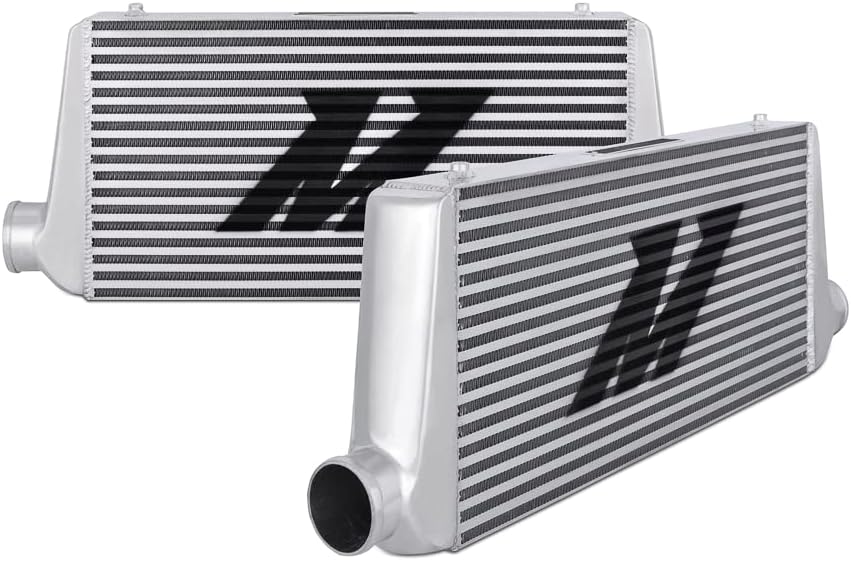
| Material | Aluminum |
|---|---|
| Maximum Pressure | 32 Pound per Square Inch |
| Outside Diameter | 3 Inches |
| Nominal Wall Thickness | 0.197 inches |
| Core Type | Bar-and-plate |
The Mishimoto R-Line MMINT-UR is a universal front-mount intercooler designed to reduce intake air temperature and maintain low pressure drop for boosted applications. It fits a custom installation approach and is typically used when upgrading cooling capacity on turbocharged or supercharged trucks. Notable features include one-piece cast aluminum end tanks rated to handle higher boost pressures, a bar-and-plate core for efficient heat transfer, and four threaded mounting points that simplify custom bracketing. In practical use this intercooler delivers noticeably cooler intake air and minimal boost loss compared with cheaper cores, which helps sustain power on repeat pulls or heavy towing. The universal design means fitment requires mock-up and fabrication for secure mounting and piping; it is not a direct bolt-in Tundra part. While the build quality and thermal performance are strong, buyers should plan for custom piping, potential trimming or reinforcement of mounting areas, and professional installation if they want factory-quality fit and finish on a Toyota Tundra.
Best for: Balanced owners who want reliable, high-capacity cooling for a modified Toyota Tundra and are comfortable arranging a custom fit to gain sustained performance under load.
Less Ideal for: Drivers looking for a bolt-on, vehicle-specific intercooler or those who prefer a plug-and-play solution without fabrication or professional installation.
- Robust 6061 cast aluminum end tanks withstand high boost and reduce failure risk.
- Bar-and-plate core offers strong heat transfer and lower intake air temperatures.
- Low pressure drop design preserves boost and throttle response.
- Universal mounting points give flexibility for custom Tundra installations.
- Universal, not vehicle-specific, so requires custom piping and mounting work.
- Large overall size may need trimming or relocation of other front-end components during installation.
Verdict A durable, high-performance universal intercooler that delivers better cooling and low boost loss for a modified Toyota Tundra but requires custom fitment and piping.
Choosing the Right Toyota Tundra Intercooler: Key Factors to Consider
Core Design and Surface Area
The core design determines how much air can pass through and how effectively heat transfers from the charge air to ambient. Larger face area and greater core depth usually increase cooling capacity but can also affect fitment behind the grille.
Different core constructions — bar-and-plate versus tube-and-fin — behave differently under sustained load. Bar-and-plate cores often offer higher thermal mass and structural strength, while tube-and-fin designs can be lighter and more compact. Consider how the core size will interact with your vehicle's available frontal area and whether the added surface area justifies any extra installation complexity.
Airflow Restriction and Pressure Drop
An intercooler must cool without creating excessive pressure drop that reduces boost at the intake. Look for units with optimized internal passages and smooth end-tank transitions that minimize turbulence and pumping losses.
Manufacturers sometimes publish pressure-drop curves or flow rates at specified velocities. Lower pressure drop across the core helps preserve turbocharger performance and throttle response, especially under high-load conditions. Balance the desire for maximum cooling with the need to maintain efficient airflow through the intake path.
Thermal Efficiency and Heat Soak Resistance
Thermal efficiency indicates how effectively the intercooler reduces intake-air temperature under sustained operation. Materials with good thermal conductivity and cores designed for rapid heat rejection will limit heat soak during repeated heavy use.
Consider how the unit performs over extended runs, such as towing or repeated accelerations. Units with higher thermal capacity and faster cooldown characteristics will keep intake temps lower between runs, reducing the risk of detuning or reduced power when the engine is pushed repeatedly.
Fitment and Installation Complexity
Fitment affects both installation time and the need for additional parts. Vehicle-specific designs that match factory mounting points and inlet/outlet locations simplify installation and reduce the risk of interference with radiators, fans, or trim.
Check whether the intercooler requires removal of other components, trimming, or fabrication. Some options are direct-replacement units while others are performance-oriented front-mount conversions that need more disassembly. Consider the availability of clear instructions and the typical labor involved for your skill level.
Durability and Construction Quality
Material choice and construction practices influence longevity. Look for corrosion-resistant finishes, robust welds or brazing around end tanks, and pressure ratings that exceed expected boost levels to provide a safety margin.
Durable construction reduces the likelihood of leaks, cracks, or deformation over time. Pay attention to hose coupling methods and the quality of clamps or flanges. A well-built intercooler stands up better to road debris, temperature cycling, and the occasional impact.
Compatibility With Forced-Induction Settings
Different driving and tuning contexts require different intercooler characteristics. If you run higher boost, frequent towing, or performance tuning, you should prioritize cores and end tanks designed to handle increased pressure and thermal load.
Consider how the intercooler integrates with existing plumbing, the turbocharger map, and any planned engine modifications. Some units are optimized for moderate factory-like boost levels, while others are engineered to support significant increases in charge pressure without excessive restriction or risk of failure.
FAQ
How do I know if my Toyota Tundra intercooler needs replacement?
Common signs include higher than normal intake temperatures, a noticeable drop in boost pressure, or visible oil or coolant contamination around intercooler connections. Physical damage or bent fins that significantly obstruct airflow also indicate a problem. If you notice fluctuating boost or poor recovery after repeated runs, inspection for leaks and pressure testing can confirm whether replacement is needed.
Will upgrading the intercooler improve towing performance?
Upgrading often helps by reducing intake-air temperatures during sustained high-load conditions, which can preserve power and reduce the chance of heat-related detuning. The benefit depends on the severity of your towing demands and the intercooler you choose. Prioritize units with strong thermal capacity and low pressure drop for heavy towing use.
Can an intercooler leak be repaired, or does it need full replacement?
Small leaks from a damaged core or a loose clamp can sometimes be repaired, but repairs may be temporary and depend on the damage location. Cracked welds, crushed cores, or corroded tanks typically require full replacement for a reliable long-term fix. Have leaks pressure-tested to determine whether a repair is feasible.
Is a front-mount intercooler always better than the stock cooler?
A front-mount intercooler can offer greater face area and better exposure to airflow, which often improves cooling, but it is not universally better for every situation. Front-mount units may require more installation work and can affect bumper clearance. The optimal choice depends on your driving style, cooling needs, and willingness to accept installation tradeoffs.
How much does intercooler installation typically affect vehicle fitment and accessories?
Installation can affect components located near the front of the vehicle, such as crash sensors, fog lights, or trim pieces, depending on the intercooler design. Vehicle-specific units that maintain factory mounting points minimize these impacts. Expect varying levels of disassembly and potential relocation of small accessories with more aggressive or larger units.
What should I consider when matching an intercooler to a tuned engine?
Consider maximum expected boost levels, charge-air temperatures under load, and the turbocharger's flow characteristics. Choose an intercooler with adequate pressure rating and thermal capacity to handle the increased demands. Also verify that inlet and outlet sizes match your existing plumbing to avoid introducing flow restrictions.
How We Chose the Best Toyota Tundra Intercooler
We focused on parts that directly improve intake-air cooling and sustained boost performance for Toyota Tundra owners. Evaluation criteria included core design and airflow capacity to measure how well the unit moves and cools charge air, material and finish for durability against corrosion and heat cycling, and end-tank and hose interface for reliable fitment and leak resistance. We also considered thermal testing data or manufacturer-rated pressure/temperature differentials where available, as well as packaging dimensions to assess whether the unit interferes with other front-end components.Excluded items included universal cores without vehicle-specific fitment, welded DIY cores lacking manufacturing traceability, and units that require extensive chassis modification to install. We prioritized components designed for direct fit or minimal modification, with clear specifications for core size, pressure rating, and recommended installation practices. The result is a short list of six intercoolers that meet real-world durability and cooling expectations for this vehicle.
Our full evaluation process is outlined in our review methodology.
Conclusion
Choosing the right Toyota Tundra intercooler means balancing cooling capacity, airflow efficiency, and practical fitment. Prioritize a core and end-tank design that provides strong heat rejection without excessive pressure drop, and consider durability features if you tow or frequently push the truck.Accept that larger cores can improve cooling but may increase installation complexity and frontal exposure. Use the evaluation factors above to weigh tradeoffs and select a unit that matches your driving demands and expected boost levels.
Explore More:
- Check out all Toyota Tundra parts & accessories
- Explore Cooling System
- Browse all Auto Parts
