

Note: This article contains affiliate links. If you click on these links and make a purchase, I may earn a small commission at no extra cost to you. This helps support my research and content. Read my full affiliate disclosure here.
Picking the right engine oil for your Ford F-350 matters more than many owners realize. The right oil reduces wear under heavy loads, helps the engine run cooler during towing, and supports reliable starts in extreme temperatures. This guide gathers seven top engine oils suited to the F-350 and explains the factors that make each type a practical choice.We shortlisted options across conventional, synthetic blend, and full synthetic formulations and evaluated them against real-world needs like viscosity for towing, thermal stability, and protection for higher-mileage engines. Below you will find our top picks and clear guidance to help you choose the best oil for your truck and driving habits.
Top Picks at a Glance
| Best Overall Engine Oil Well-rounded, OEM-compatible oil that balances protection and price | Valvoline Advanced Full Synthetic SAE 5W-30 Motor Oil, 5 qt |  |
| Best Budget Engine Oil Low-cost motor oil that still meets basic performance needs | Castrol GTX Full Synthetic 5W-30 Motor Oil, 5 Quart Jug |  |
| Best Full-Synthetic 5W-30 Engine Oil Premium full-synthetic 5W-30 for modern engines and high-temp protection | Motorcraft 5W-30 Full-Synthetic Engine Oil, 5-Quart Jug |  |
| Best Heavy-Duty 15W-40 Diesel Engine Oil Thicker diesel-formula oil designed for heavy loads and older engines | Ford Genuine 15W-40 Super Duty Diesel Motor Oil — 5 Quart |  |
| Best OEM Motorcraft Formula Engine Oil Factory-spec Motorcraft formula tuned for Ford engine compatibility | Motorcraft SAE 5W-20 Synthetic Blend Motor Oil, 5-Quart Jug |  |
| Best Large-Capacity Oil Change Kit Complete oil-change kit with multiple quarts and a matching filter included | Factory Racing Parts 5W-30 Full Synthetic Deluxe Oil Change Kit (7 qt) |  |
| Best High-Viscosity 5W-40 Diesel Engine Oil Higher-viscosity 5W-40 blend aimed at diesel torque and thermal stability | Ford Motorcraft 5W-40 Full Synthetic Diesel Motor Oil, 1.25 Gal (5 Quart) |  |
1. Valvoline Advanced Full Synthetic SAE 5W-30 Motor Oil, 5 qt
Best Overall Engine Oil

| SAE J300 Viscosity Grade | 5W-30 |
|---|---|
| Liquid Volume | 5 Quarts |
| Compatible with Vehicle Type | Car, Truck |
| Viscosity Level | Low to Medium |
Valvoline Advanced Full Synthetic 5W-30 is a modern full synthetic motor oil designed to protect gasoline engines in everyday and demanding use. It supplies improved low-temperature flow for easier cold starts, stronger wear protection to reduce friction, and additive chemistry aimed at minimizing deposits and sludge under heat. Typical use for an F-350 includes highway towing, suburb-to-shop commuting, and stop-and-go city driving where temperature swings and short trips stress the engine; this oil targets those conditions with claimed boosts in wear and heat defense compared with industry baselines. It meets current ILSAC and API specifications and several Ford performance requirements, so it aligns with factory guidance for many Ford gasoline engines. The practical benefits are longer engine life, cleaner internals, and modest fuel-economy gains from reduced friction. Limitations are that viscosity is fixed at 5W-30, so owners who need a different grade for extreme cold or specific high-temp applications should choose an alternate viscosity, and synthetic oils may require careful tracking of change intervals per Ford recommendations.
Best for: DIY-minded owners of Ford F-350s who want a factory-friendly full synthetic that protects engines during daily driving and routine towing while staying within manufacturer performance specs.
Less Ideal for: Owners who require a different viscosity for extreme cold starts or who need a product explicitly labeled for diesel engines or specialized high-temperature racing use.
- Full synthetic formula improves low-temperature flow for reduced cold-start wear
- Claims stronger wear protection and better deposit control versus industry standards
- Meets ILSAC GF-7A and API SP and includes Ford performance specifications
- Formulation offers enhanced heat protection to resist thermal breakdown during towing
- Only available in a 5W-30 grade which may not suit all temperature extremes or specific engine requirements
Verdict: The go-to choice for DIY mechanics who want a reliable, factory-friendly oil that delivers protection across common driving and towing conditions.
2. Castrol GTX Full Synthetic 5W-30 Motor Oil, 5 Quart Jug
Best Budget Engine Oil

| Liquid Volume | 5 Quarts |
|---|---|
| Container Type | Bottle |
| Compatible with Vehicle Type | Car, Truck |
| Item Type Name | Full Synthetic Motor Oil |
Castrol GTX Full Synthetic 5W-30 is a full-synthetic motor oil formulated to reduce engine wear, control sludge, and resist viscosity breakdown under high temperature and pressure. It is typically used as a regular replacement oil for gasoline engines and is suitable when a 5W-30 viscosity is recommended for Ford F-350 models with compatible gasoline engines. The formula emphasizes endurance and cleanliness with additives intended to clean old sludge and help prevent new deposits, which supports sustained engine efficiency and power. Castrol claims extended protection up to 10,000 miles between oil changes when used according to service intervals, and the oil meets a range of industry and OEM specifications including API SP and ILSAC GF-7 plus manufacturer listings relevant to modern Ford engines. Limitations are that fitment depends on using the right viscosity and Ford-approved specs for your specific F-350 engine variant, and heavy-duty diesel variants or applications requiring a different spec should use oils formulated for those engines.
Best for: Owners who perform regular DIY oil changes on gasoline-powered Ford F-350s and want a cost-conscious full synthetic that balances protection and longer drain intervals.
Less Ideal for: Fleet operators of heavy-duty diesel F-350s or owners who need oils meeting specific diesel or commercial service ratings should choose a diesel-formulated product instead.
- Full synthetic formulation offers strong protection against wear and high-temperature breakdown
- Claims improved sludge control and engine cleanliness compared with industry minimums
- Meets modern industry specifications including API SP and ILSAC GF-7 and lists Ford-approved standards
- Available in a 5-quart jug sized for a typical DIY oil change
- Not specifically tailored for heavy-duty diesel F-350 engines that require diesel-grade oils
Verdict: A wallet-friendly option for owners who change their own oil regularly and need acceptable protection without paying for premium additives.
3. Motorcraft 5W-30 Full-Synthetic Engine Oil, 5-Quart Jug
Best Full-Synthetic 5W-30 Engine Oil
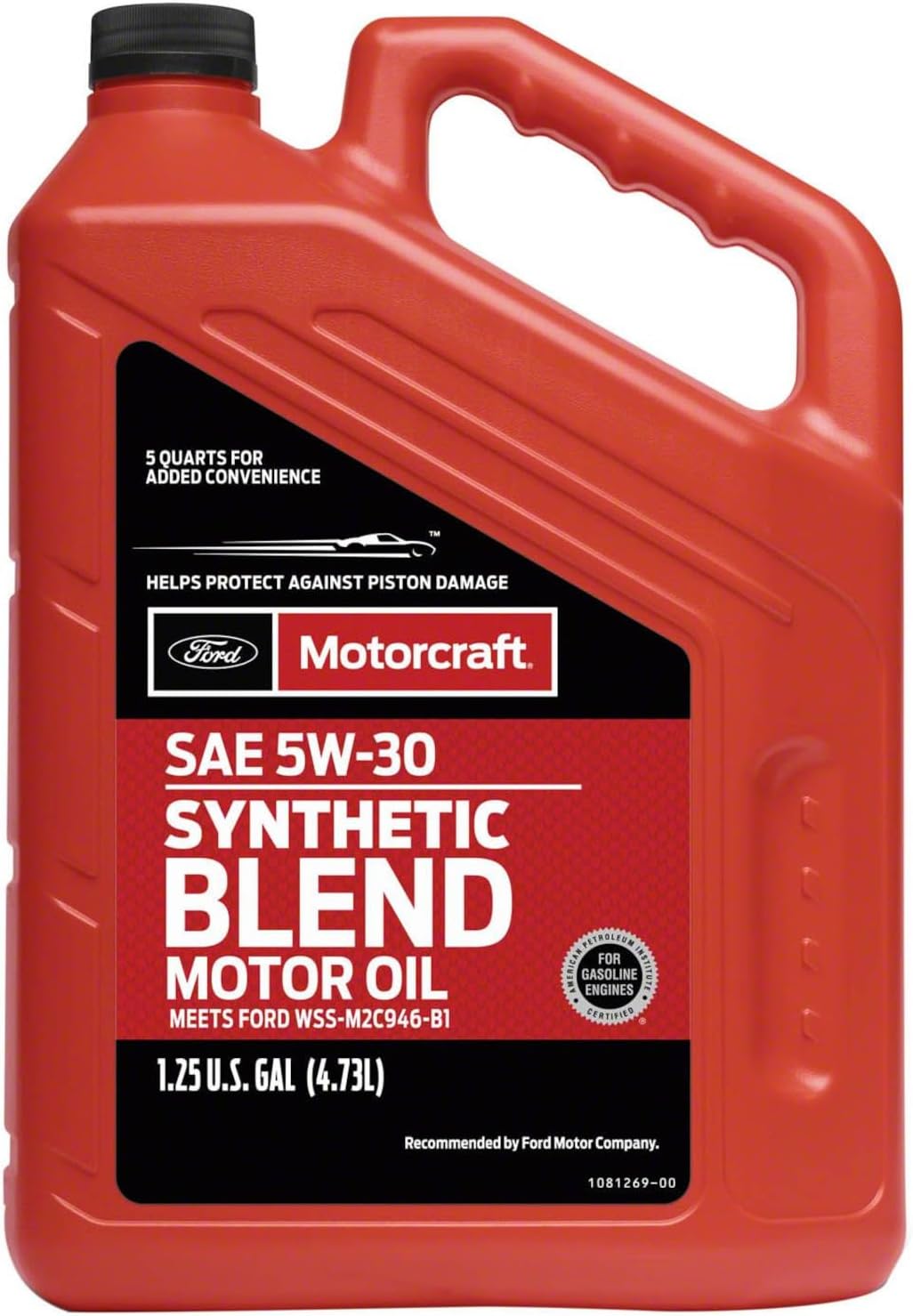
| Viscosity | 5W-30 |
|---|---|
| Size | 5-Quart Jug |
| Vehicle Service Type | Car, SUV, Truck, Van |
| Flash Point | 446 Degrees Fahrenheit |
This Motorcraft 5W-30 full-synthetic engine oil is formulated to provide stable lubrication from cold starts and strong protection under sustained loads. Packaged in a 5-quart jug for easy DIY changes, it is intended as a factory-quality replacement for Ford/Lincoln vehicles and other gasoline engines specifying 5W-30. The formulation resists thermal breakdown and helps maintain viscosity during extended-interval service, which is useful for drivers who run long hauls or tow frequently. Practical benefits include a high flash point and consistent flow at low temperatures for quicker oil pressure recovery at startup. Limitations: the listing emphasizes universal fit and Ford compatibility rather than application-specific formulations for very high-mileage or diesel engines, and buyers should confirm their vehicle service manual for recommended change intervals and specifications.
Best for: Drivers who want a factory-quality full-synthetic 5W-30 that strengthens startup lubrication and stands up to prolonged driving or towing, while keeping service intervals reasonable.
Less Ideal for: Those looking for oils formulated specifically for high-mileage engines, specialized diesel service, or aftermarket performance blends should consider dedicated formulations instead.
- Full-synthetic 5W-30 formulation for improved cold-start lubrication
- High flash point that helps resist thermal breakdown under heavy use
- Sold in a 5-quart jug suitable for complete oil changes
- Manufacturer alignment with Ford/Lincoln for factory-quality replacement
- Not marketed with vehicle-specific long-term test data for heavy-duty diesel applications
Verdict: Choose this if you want a full-synthetic 5W-30 that improves lubrication at startup, resists breakdown under heavy use, and suits extended-interval schedules.
4. Ford Genuine 15W-40 Super Duty Diesel Motor Oil — 5 Quart
Best Heavy-Duty 15W-40 Diesel Engine Oil

| Viscosity Grade | 15W-40 |
|---|---|
| Compatible with Vehicle Type | Truck |
| Container Type | Jug |
| Liquid Volume | 160 fluid ounces |
This 15W-40 Super Duty diesel motor oil from Ford is formulated with hydroprocessed base stocks and a tailored additive package to protect high-load diesel engines. It is intended for routine oil changes in heavy-duty trucks and is suitable for vehicles that tow, haul, or run at elevated operating temperatures. The medium-to-high viscosity offers a thicker film at operating temperatures compared with lighter passenger-car oils, which helps maintain oil pressure and reduce wear on bearings and valve train components during sustained heavy load. Supplied in a 5-quart jug, it is easy to handle for DIY maintenance and contains enough for a single service on many large diesels. Limitations include the fixed SAE 15W-40 grade, which may not be optimal for very cold climates where a lower winter viscosity is preferred, and the product listing does not specify API or manufacturer heavy-duty specifications on the label that some technicians look for when matching service intervals.
Best for: Diesel owners who regularly tow, haul, or run sustained high-temperature duty cycles and want a factory-branded 15W-40 oil that emphasizes load-carrying protection.
Less Ideal for: Drivers in very cold climates who need lower-viscosity winter oils or owners requiring explicit documented approvals for extended service intervals.
- Formulated with hydroprocessed base oils and additives for heavy-duty diesel protection.
- 15W-40 viscosity maintains a robust lubricating film under high-temperature, high-load conditions.
- Sold in a 5-quart jug convenient for single-service DIY changes.
- Brand-specific product that aligns with factory maintenance expectations for Ford trucks.
- Label does not list specific API or heavy-duty OEM performance approvals in the provided details.
- Single-viscosity grade may not suit very cold-start conditions without alternative winter oil.
Verdict: This pick fits diesel owners who tow or haul frequently or run higher-temperature duty cycles and need a 15W-40 oil built for heavy-duty protection.
5. Motorcraft SAE 5W-20 Synthetic Blend Motor Oil, 5-Quart Jug
Best OEM Motorcraft Formula Engine Oil

| SAE J300 Viscosity Grade | 5W-20 |
|---|---|
| Container Type | Jug |
| Compatible with Vehicle Type | Car, SUV, Truck, Van |
| Liquid Volume | 5 Quarts |
This Motorcraft SAE 5W-20 Synthetic Blend is formulated to meet Ford specifications and is intended as a direct factory-quality oil replacement for many Ford, Lincoln, and Mercury vehicles. It is typically used during routine oil changes to minimize engine deposits, protect against high-temperature oxidation, and reduce wear with friction-reducing additives. The synthetic/hydro-processed base stocks and performance additives help resist turbocharger deposits, control foaming, and offer improved cold-flow behavior compared with conventional oils. Because it meets WSS-M2C960-A1 and SN PLUS, it can also help reduce oil-related low speed pre-ignition in compatible engines. The practical benefits are straightforward: you get an oil designed by the vehicle maker to preserve service history and provide consistent protection across the specified model list. Limitations are that the 5W-20 viscosity is suited only to engines that call for that grade, so it is not appropriate for Ford engines requiring 5W-30 or heavier oils.
Best for: Buyers who prioritize keeping service history and using manufacturer-recommended fluids for routine oil changes on compatible Ford family gasoline or flex-fuel engines.
Less Ideal for: Drivers who need a different viscosity or who are looking for full synthetic 0W-x or heavier-weight oils for high-load or diesel applications should consider alternatives.
- Factory-specified formulation designed to meet Ford performance standards
- Synthetic blend base oils and additives that reduce deposits and wear
- Meets WSS-M2C960-A1 and SN PLUS for protection against low speed pre-ignition
- Sold in a 5-quart jug convenient for a single oil change
- Viscosity limited to SAE 5W-20 so not suitable for engines requiring other grades
Verdict: Pick this when you want a Motorcraft/OEM-specified oil to match factory recommendations and preserve warranty-friendly service history.
6. Factory Racing Parts 5W-30 Full Synthetic Deluxe Oil Change Kit (7 qt)
Best Large-Capacity Oil Change Kit

| Viscosity grade | 5W-30 |
|---|---|
| Oil volume | 7 quarts |
| Certifications | API SP Resource Conserving, ILSAC GF-6A |
| Included components | Oil, oil filter, air filter, drain plug gasket, funnel, sticker |
This deluxe kit is built as a one-stop solution for a full home service on compatible 2016 Ford Super Duty trucks. It supplies seven quarts of Factory Racing Parts 5W-30 full synthetic oil rated API SP and ILSAC GF-6A, a WIX-brand replacement oil filter, an air filter, a drain plug gasket, funnel, gloves and an oil change sticker. The synthetic formulation is aimed at extended drain intervals and protection against LSPI and start-stop wear, while the included premium filter helps keep contaminants out during the next service period. Having all required consumables in one box saves trips to the store and ensures the correct filter fitment claimed for these engine applications. Limitations: the kit is vehicle-specific to certain 2016 Super Duty engines so confirm fitment before buying, and the pack contains only the listed filter and gasket types so shops needing OEM-coded parts may prefer sourcing individual components.
Best for: Buyers who want a single purchase that supplies the correct oil volume and the matching filters and accessories to complete a full oil service at home for a compatible 2016 Super Duty truck.
Less Ideal for: People who need parts for vehicles outside the specified 2016 Super Duty V8/V10 applications or who require OEM-branded components for warranty or dealer service continuity.
- Complete kit includes 7 quarts of API SP/ILSAC GF-6A full synthetic oil plus oil and air filters and basic accessories
- Includes a premium WIX oil filter for strong particle capture
- Formulated to resist LSPI and support start-stop engines, enabling longer intervals between changes
- Packaged for a full-service at home so you get correct oil volume and commonly needed parts in one purchase
- Fitment is specific to certain 2016 Ford Super Duty V8/V10 engines so it is not universal
- Does not include OEM-branded parts beyond the WIX filter, which some buyers may prefer
Verdict: Buy this kit if you prefer a one‑purchase solution that supplies enough oil and the correct filter for a full service at home.
7. Ford Motorcraft 5W-40 Full Synthetic Diesel Motor Oil, 1.25 Gal (5 Quart)
Best High-Viscosity 5W-40 Diesel Engine Oil

| SAE Viscosity Grade | 5W-40 |
|---|---|
| API Service Category | CJ-4 |
| Compatible Vehicle Type | Truck |
| Liquid Volume | 160 Fluid Ounces |
This Motorcraft 5W-40 full synthetic diesel motor oil is formulated for heavy-duty diesel engines and is recommended by Ford for Power Stroke applications. It is typically used in trucks like the F-350 where sustained loads and higher operating temperatures demand a thicker film strength than lighter oils provide. The 5W-40 viscosity offers stronger lubricating films at high temperature while remaining pumpable at cold start; the formula meets API CJ-4 for modern diesel exhaust emission systems and ultralow sulfur diesel fuel. Practical benefits include improved protection under towing or heavy hauling, compatibility with diesel aftertreatment systems when used as specified, and the reassurance of a factory-recommended product. Limitations are that it is specifically intended for diesel engines and should not be used in gasoline engines with catalysts, and buyers should confirm it matches their engine manufacturer recommendations and service intervals before switching.
Best for: Owners who run heavy loads, tow frequently, or otherwise operate their diesel truck under sustained high-temperature conditions and want a thicker running viscosity for added film strength and protection.
Less Ideal for: Drivers with gasoline engines or those who prioritize maximum cold-weather fluidity over high-temperature film strength should consider a different viscosity or formulation.
- Full synthetic formulation for stable performance at high temperatures
- 5W-40 viscosity provides stronger film strength under sustained loads
- Meets API CJ-4 for modern diesel emission systems
- Factory-recommended product for Ford diesel engines
- Not suitable for gasoline engines with catalytic converters
Verdict: This option is for owners who want a thicker operating viscosity for diesel applications that improves film strength under sustained loads and higher temperatures.
Choosing the Right Ford F-350 Engine Oil: Key Factors to Consider
Viscosity Grade and Towing Demands
Viscosity grade determines how the oil flows at cold start and at operating temperature, which directly affects protection when the engine is under load. For an F-350 regularly towing trailers or hauling heavy payloads, a higher film strength at operating temperature helps maintain a protective oil film between moving parts.
Choosing the right grade reduces wear during sustained high-load operation and helps control oil consumption in hot conditions. It also affects fuel economy and oil pressure, so match the viscosity grade to your typical climate and towing habits rather than to one blanket recommendation.
Synthetic Vs Conventional Formulation
Full synthetic oils typically offer better high-temperature stability and lower volatility than conventional oils, which helps preserve viscosity and reduce deposits during heavy towing. Synthetic formulations also flow better at low temperatures, improving cold-start protection for turbocharged or high-compression F-350 engines.
Conventional or synthetic-blend options can still be acceptable for lighter use or for owners following shorter drain intervals, but for severe duty cycles and extended drain intervals, synthetics usually provide superior protection and longevity.
Additive Package and Wear Protection
Additives like zinc dialkyldithiophosphate (ZDDP), high-quality detergents, and dispersants help reduce metal-to-metal wear, neutralize acids, and keep engine internals clean. Vehicles that tow frequently place extra stress on bearings, cam lobes, and piston rings, so an oil with a robust anti-wear and detergent package matters more for an F-350.
Seal conditioners and friction modifiers can help with older engines that show minor leaks or elevated oil consumption, but for newer engines the focus should be on strong anti-wear properties and deposit control to maintain performance over time.
Thermal Stability and Oxidation Resistance
High under-hood temperatures and prolonged high rpm during towing accelerate oil breakdown through oxidation. Oils with superior thermal stability resist thickening and deposit formation, which preserves lubrication and cooling properties.
Good oxidation resistance also means more consistent viscosity over service intervals, supporting longer drain intervals when recommended. For trucks subjected to regular heavy loads, prioritize oils proven to resist breakdown under sustained high temperatures.
Cold-Start Performance
Cold-start pumpability is crucial for protecting engine bearings and valvetrain components during the first moments after a start. Low-temperature flow characteristics are governed by the oil base and viscosity grade; synthetics and lower first-number grades improve rapid circulation at cold temperatures.
If you operate an F-350 in winter or in areas with large temperature swings, select an oil that balances cold-start protection with adequate high-temperature film strength to avoid compromising protection during towing.
Compatibility With Service Intervals and Mileage
Consider how long you intend to run between oil changes and the current mileage of your F-350. High-mileage formulations include additives aimed at conditioning seals and reducing oil burn-off, which can be beneficial if your truck is accruing many miles. Conversely, if you plan to extend drain intervals to factory-extended service periods, choose oils with proven resistance to breakdown and strong detergency.
Also account for manufacturer warranty or service recommendations; some modern engines and after-treatment systems respond better to specific viscosity ranges and formulations, so align your oil choice with maintenance strategy and mileage.
Choosing the Right Viscosity for Your Climate and Use
Ambient temperature and duty cycle together determine the most appropriate viscosity for an F-350. For cold climates you will want an oil that flows quickly at low temperatures to shorten the unprotected start period. In hot climates or frequent highway towing, slightly heavier hot-viscosity grades help maintain film strength under high thermal stress.
Consulting the truck's owner manual gives a baseline, but adjust upward within acceptable ranges if you regularly tow heavy loads or operate at sustained highway speeds with a trailer. Keep in mind that multi-grade oils are designed to offer a balance of cold-start flow and hot-operating protection.
- Lower first-number grades improve cold-start protection.
- Higher second-number grades enhance film strength at operating temperature.
- When towing, prioritize hot-viscosity stability over marginal fuel-economy gains.
Benefits of Full Synthetic Oils for Heavy Use
Full synthetic oils are formulated to resist thermal breakdown and to maintain consistent viscosity during extended high-load driving. That reliability matters for the F-350 when towing or hauling because it reduces the risk of deposit formation and wear during long runs.
Synthetics also typically enable better low-temperature start performance and can help preserve engine internals over longer service intervals, which is useful if you drive extensively or expect to tow frequently.
- Better high-temperature stability during towing.
- Improved cold-start flow and pumpability.
- Enhanced resistance to sludge and varnish.
High-Mileage Considerations for Older F-350s
If your F-350 has high miles, consider formulations that focus on seal conditioning and reduced oil consumption. These oils often include additives that swell seals slightly to reduce leaks and modifiers that lower smoking and oil burn.
High-mileage oils can help extend the usable life of an older engine, but they are not a substitute for mechanical maintenance. Use them as part of a broader maintenance plan that addresses worn components and monitors oil consumption trends.
- Look for seal conditioners and anti-wear additives.
- Monitor oil consumption after switching formulations.
- Combine with regular inspections of valve guides and seals.
How Oil Choice Affects Towing Performance and Engine Longevity
When towing, engine temps and loads increase, so an oil that maintains pressure and film strength keeps critical components protected. Sustained high-load operation can accelerate wear if the oil thins or oxidizes, so selecting a formulation that targets stability under stress enhances engine longevity.
Consistent oil performance also reduces the likelihood of deposit-related power loss and helps maintain turbocharger health in turbocharged F-350 engines, since turbos rely on clean, stable oil for both lubrication and cooling.
- Stable viscosity protects bearings and camshafts during long hauls.
- Detergents prevent piston and ring deposits that harm compression.
- Good oil reduces thermal stress on turbochargers and supports reliable boost performance.
Practical Tips for Oil Changes and Maintenance
Follow the manufacturer-recommended service intervals as a baseline, but adjust frequency if you use the truck for severe duty such as heavy towing, frequent idling, or dusty operation. Regular oil analysis can provide insight into contamination or wear trends and helps determine whether drain intervals should be shortened.
Always replace the oil filter with a cartridge or spin-on type that meets the flow and micron-capture requirements for your engine. Keep records of oil type, mileage at change, and any changes in oil consumption or engine performance so you can evaluate whether a different formulation better suits your habits.
- Shorten intervals for heavy towing or severe duty cycles.
- Use filters that meet OEM flow specifications.
- Document changes and monitor for consumption or leaks.
How We Chose the Best Ford F-350 Engine Oil
We prioritized oils that meet or exceed Ford OEM viscosity and performance recommendations for heavy-duty use in the F-350. Primary evaluation criteria included viscosity grade suitability for towing and temperature extremes, film strength and anti-wear additives, thermal and oxidation stability under sustained high load, and compatibility with common F-350 engine types and drain interval recommendations.We also weighed detergency and deposit control to protect intake and combustion components, and considered formulations aimed at higher-mileage engines where seal conditioning and reduced oil consumption matter. Cold-start pumpability and low-temperature flow were evaluated for drivers in colder climates.Excluded from consideration were products that lack the necessary industry or Ford-specified performance approvals or that are intended only for specialty engines outside typical F-350 use. Our filters focused on durability, real-world protection under towing and hauling, and service-interval practicality to reflect what matters for Ford F-350 owners.
Our full evaluation process is outlined in our review methodology.
FAQ
How often should I change engine oil in an F-350 used for towing?
It depends on load and operating conditions. For frequent heavy towing, many owners shorten intervals compared with light-duty use, often changing oil more frequently than standard highway schedules to reduce contamination and thermal stress.
Can I use a lower-viscosity oil to improve fuel economy in my F-350?
Lower-viscosity oils can improve fuel economy slightly, but if you tow regularly choose a grade that still provides adequate film strength at operating temperature. Do not sacrifice high-temperature protection for marginal fuel savings.
Is synthetic motor oil necessary for newer F-350 engines?
Synthetic motor oil often provides better thermal stability and cold-start protection, which benefits newer engines under severe duty. Whether it is necessary depends on your driving and towing habits, but it is commonly recommended for heavy-use scenarios.
Should I switch to high-mileage oil if my F-350 has over 100000 miles?
High-mileage formulations can help with seal conditioning and oil consumption, so many owners find them beneficial past 100000 miles. They do not fix mechanical wear, but they can reduce leaks and smoking while you address worn components.
Does oil viscosity affect turbocharger longevity on the F-350?
Yes. Turbochargers depend on stable oil flow and cooling. Using an oil with good high-temperature stability and proper viscosity helps protect turbo bearings and reduces the risk of deposit buildup that can impair turbo life.
What should I monitor after changing to a different oil formulation?
Watch for changes in oil consumption, leaks, engine noise, and fuel economy. Also note the oil pressure at idle and operating temperature and inspect for any new smoke or odors, which could indicate compatibility or seal issues.
Final Verdict
Prioritize oil choices that match your F-350's duty cycle and typical climate. For regular towing or heavy loads, favor formulations with strong high-temperature stability and robust anti-wear additives. If you drive in cold conditions or run extended intervals, balance cold-start pumpability with hot-viscosity protection.Weigh tradeoffs between synthetic benefits and conventional costs, and adjust drain intervals to your use pattern. Using the criteria above will help you select an oil that protects the engine, supports towing reliability, and fits your maintenance plan.
