

Note: This article contains affiliate links. If you click on these links and make a purchase, I may earn a small commission at no extra cost to you. This helps support my research and content. Read my full affiliate disclosure here.
If you own a Ford F-350 with a manual transmission, the fluid you choose affects shift quality, gear longevity, and towing performance. Manual gearboxes see heavy loads, high torque, and frequent clutch engagement, so picking a fluid formulated for those demands matters in daily driving and during heavy hauling.This guide highlights five top manual transmission fluids shortlisted for the F-350 Manual transmission. We explain the evaluation criteria used, cover practical fitment notes for the vehicle, and help you weigh durability, shift feel, and temperature resilience when selecting fluid. Read on to compare the options and identify which traits match your driving needs.
Top Picks at a Glance
| Best Overall Transmission Fluid A top pick that balances OEM compatibility, performance, and availability. | Ford Genuine XT-M5-QS Full Synthetic Manual Transmission Fluid, 1 Quart |  |
| Best Budget Transmission Fluid An affordable, no-frills fluid that meets basic spec requirements. | Valvoline Synchromesh Manual Transmission Fluid, 1 Quart |  |
| Best OEM Ford Transmission Fluid Ford-branded or factory-specified fluids formulated to meet Ford requirements. | Motorcraft XT11QDC Synthetic Transmission Fluid |  |
| Best Manual Gear Oil (75W-90 GL‑4) Dedicated manual gearbox oils (GL‑4, 75W‑90) for syncros and gear protection. | TRIAX Synergy Gear MT 75W-90 GL-4 Full Synthetic Manual Gear Oil (1 qt) | 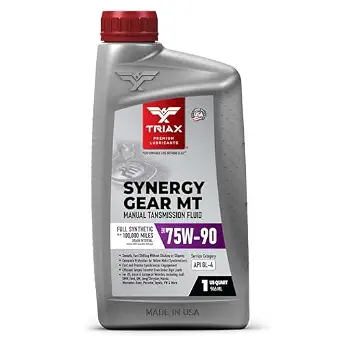 |
| Best Gallon/Bulk Transmission Fluid Larger-volume containers for DIYers doing full drain-and-fill jobs or fleet maintenance. | TRIAX Synergy Gear MT 75W-90 GL-4 Full Synthetic Manual Transmission Fluid (1 Gallon) |  |
1. Ford Genuine XT-M5-QS Full Synthetic Manual Transmission Fluid, 1 Quart
Best Overall Transmission Fluid

| Viscosity | SAE 75W-90 |
|---|---|
| Liquid Volume | 32 Fluid Ounces |
| Upper Temperature Rating | 350 Degrees Fahrenheit |
| Recommended Uses | 1995-2011 MTX-75 and IB5 transmissions |
This Ford Genuine XT-M5-QS is a full synthetic manual transmission fluid designed for use in MTX-75 and IB5 gearboxes and older rear-drive transmissions that call for GL-3 or GL-4 gear oils. It improves gear shifting across ambient temperatures thanks to synthetic base oils and performance additives, and its thermal and shear stability helps maintain fill-for-life intervals in compatible Ford manuals. The formula emphasizes synchronizer and bearing protection, which can reduce wear and help preserve shift quality over time. For DIY mechanics the product comes in a familiar 1 quart bottle and is straightforward to pour during a fluid service. The main limitation is fitment scope: this product is tailored to specific Ford manual transmissions and should be used only where the owner guide or service manual lists XT-M5-QS or compatible specs; it is not a universal transmission fluid for all manual or automatic gearboxes.
Best for: Mechanically inclined owners who want a factory-quality fluid that preserves shift quality and protects internal parts in compatible Ford manual transmissions and prefer a product that matches manufacturer recommendations.
Less Ideal for: People looking for a universal manual fluid for multiple vehicle makes or for automatic transmissions should choose a product specified for those applications instead.
- Full synthetic base and additives improve cold and hot shift feel
- Formulated to match Ford manual transmission specifications for MTX-75 and IB5
- High thermal and oxidative stability supports long service intervals
- Designed to protect synchronizers and bearings, extending component life
- Intended for specific Ford manual transmissions and not suitable for all manuals or automatics
Verdict: Choose this slot for a well-rounded transmission fluid that matches factory specs, delivers consistent shifting, and is easy for DIY mechanics to source and use.
2. Valvoline Synchromesh Manual Transmission Fluid, 1 Quart
Best Budget Transmission Fluid

| Item Type | Manual Transmission Fluid |
|---|---|
| Material | Synthetic |
| Liquid Volume | 1 Quarts |
| Flash Point | 390 Degrees Celsius |
Valvoline Synchromesh Manual Transmission Fluid is a synthetic MTF designed to protect synchronizers and gears in manual transmissions. It is typically used as a top-up or routine service fluid where GL-4 level protection and compatibility with GM and Chrysler synchronizer systems are required. The formula emphasizes load carrying, extreme-pressure resistance, anti-foam properties, and corrosion protection, which helps reduce wear under high loads and supports smooth shifting in everyday driving. Its thermal stability and cold-flow characteristics mean it will circulate effectively in a range of temperatures for reliable shifting after cold starts. As a budget-conscious choice, it provides factory-quality performance for routine maintenance without specialty additives for extreme or heavy-duty racing use. The main limitation is that its listed fitment references GM and Chrysler part numbers and API GL-4 specifications, so installers should confirm suitability for a Ford F-350 manual transmission against the vehicle manufacturer requirements before use.
Best for: Mechanics looking for an affordable, factory-quality manual transmission fluid for routine service who prioritize meeting minimum service specs and predictable shifting performance.
Less Ideal for: Do not choose this product for high-performance, heavy-towing, or racing builds that demand specialized extreme-pressure or competition fluids, or when the vehicle manual specifies a different service level.
- Synthetic formulation offers good thermal stability and cold-flow for reliable shifting in varied temperatures
- Engineered additives deliver load carrying and extreme-pressure protection to reduce gear and synchronizer wear
- Anti-foam and corrosion inhibitors help maintain fluid performance and component life
- Meets API GL-4 and references common OEM part numbers for straightforward compatibility checks
- Manufacturer fitment notes emphasize GM and Chrysler applications rather than Ford-specific listings
Verdict: This pick is for mechanics who need a cost-conscious fluid that still meets the minimum service specification and performs reliably for routine maintenance.
3. Motorcraft XT11QDC Synthetic Transmission Fluid
Best OEM Ford Transmission Fluid

| Material | Synthetic |
|---|---|
| Liquid Volume | 946 Milliliters |
| Container Type | Bottle |
| Part Number | XT11QDC |
Motorcraft XT11QDC is a factory-formulated synthetic transmission fluid intended for Ford manual transmissions that require Motorcraft specification fluids. In use it functions as a direct replacement fluid to protect gears and synchronizers, control wear, and help prevent corrosion in the drivetrain. The fluid comes in a standard bottle size and is labeled for lubricant and corrosion prevention applications. Because it is engineered by the vehicle maker's parts division, it is designed to match Ford friction characteristics and lubrication needs for worry-free compatibility and predictable shift feel. Practical benefits include trusted compatibility with Ford systems and synthetic base oil performance for temperature stability and wear protection. Limitations are that the listing provides basic specs only and does not include a full compatibility chart or specific Ford manual transmission model approvals on the label, so confirm your F-350 manual transmission's required spec before use.
Best for: Buyers who prioritize using manufacturer-specified fluids to preserve factory shift feel and drivetrain longevity in Ford manual-transmission trucks.
Less Ideal for: People who need a fluid specified for non-Ford vehicles or who require an aftermarket fluid with a broad, multi-vehicle compatibility chart.
- Factory-formulated by Motorcraft to match Ford transmission friction and wear characteristics
- Synthetic formulation for improved temperature stability and wear protection
- Labeled for corrosion prevention to help protect drivetrain components
- Product listing lacks a detailed compatibility chart or explicit manual transmission model approvals on the label
Verdict: Use this slot when you want a fluid manufactured or specified by the vehicle maker to match Ford friction and wear specifications for worry-free OEM compatibility.
4. TRIAX Synergy Gear MT 75W-90 GL-4 Full Synthetic Manual Gear Oil (1 qt)
Best Manual Gear Oil (75W-90 GL‑4)

| SAE J300 Viscosity Grade | 75W-90 |
|---|---|
| Viscosity | 75W90 / MT 90 |
| Liquid Volume | 1 Quarts |
| Material | Full Synthetic Fluid |
This Triax Synergy Gear MT 75W-90 GL-4 is a full synthetic manual transmission fluid meant to keep manual gearboxes and differentials running smoothly under heavy loads. It is specified as SAE 75W-90 and GL-4 compatible so it protects brass and yellow-metal synchronizers while reducing shudder, sticking, and slipping during shifts. For use in a Ford F-350 manual transmission that calls for GL-4 viscous grade, the fluid offers friction optimization for crisp synchronizer engagement and claims improved heat and wear resistance for high horsepower or towing demands. The one-quart bottle is convenient for top-offs and partial drains, and the formulation is positioned for long drain intervals in many driving conditions. Limitations to note include relying on exact OEM spec checks for the F-350 application and that single-quart quantities mean multiple bottles are needed for full-fill services on large gearboxes or differentials.
Best for: Buyers who need a synchronizer-safe 75W-90 GL-4 fluid for heavy-duty manual transmission or differential service and prioritize smooth shifting under towing or high-load use in their F-350.
Less Ideal for: People looking for factory-specified ATF replacements, non-GL-4 formulations, or single-bottle solutions for full-capacity gearboxes should consider other options.
- Full synthetic formulation for improved thermal stability and wear protection
- GL-4 friction chemistry safe for brass and yellow-metal synchronizers
- 75W-90 viscosity suitable for heavy-load, towing, and high-speed gear use
- Friction-optimized to reduce shift shudder and improve synchronizer engagement
- Sold in 1-quart bottles which may require multiple bottles for a complete service on F-350 transmissions or differentials
Verdict: Select this category for full‑ or synthetic manual-gear oils designed specifically for manual transmissions and differentials that need GL‑4 protection and proper synchronizer compatibility.
5. TRIAX Synergy Gear MT 75W-90 GL-4 Full Synthetic Manual Transmission Fluid (1 Gallon)
Best Gallon/Bulk Transmission Fluid

| Viscosity | 75W-90 |
|---|---|
| Specification | GL-4 |
| Volume | 1 Gallons |
| Material | Full Synthetic Fluid |
| SAE J300 Grade | 75W-90 |
This one-gallon TRIAX Synergy Gear MT 75W-90 is a full-synthetic GL-4 manual transmission fluid intended to replace factory-spec gear oil where 75W-90 GL-4 is specified. It is frictionally optimized for smooth synchronizer engagement to reduce sticking, slipping, and shudder, and the formulation is described as yellow-metal safe so it will not harm brass or bronze synchros. The fluid targets high-load and high-temperature protection, so it should hold up well during heavy towing or sustained highway use and supports long drain intervals claimed by the brand. Packaged as a gallon, it provides enough volume for a full fluid service on large manual transmissions without buying multiple quarts. Limitations: compatibility depends on the F-350 manual transmission specifying SAE 75W-90 GL-4; this product is not a universal replacement for transmissions that require different grades or manufacturer-specific fluids. Buyers should confirm the Ford F-350 manual gearbox spec before using to ensure factory-quality fitment.
Best for: Owners performing a full manual-transmission service on a Ford F-350 who want a single-gallon supply and prioritize smooth shifting and extended drain intervals.
Less Ideal for: Do not choose this if your F-350 transmission requires a different viscosity or a manufacturer-specific transmission fluid; this is not appropriate for users who need multi-vehicle, multi-grade compatibility.
- Full-synthetic 75W-90 formulation for strong thermal and wear protection
- Friction-optimized and yellow-metal safe for smooth synchronizer engagement
- One-gallon container suitable for a full service without multiple quart purchases
- Formulated for high-load conditions such as towing and extended service intervals
- Requires confirmation that Ford F-350 manual transmission specifies SAE 75W-90 GL-4 before use
Verdict: This slot fits gallon or multi-gallon packs aimed at owners who need enough fluid for full service jobs, saving per-quart cost and trips to reorder.
Choosing the Right Ford F-350 Manual Transmission Transmission Fluid: Key Factors to Consider
Friction Characteristics and Synchronizer Compatibility
Friction behavior determines shift smoothness and prevents gear clash during engagement. Manual transmissions use synchronizers and often rely on the fluid to modulate friction between the gear and synchronizer surfaces. A fluid with too low friction can cause slipping or poor engagement, while one with too high friction can make shifts harsh. For the F-350, which frequently sees heavy loads, maintaining predictable synchronizer friction across temperature ranges reduces wear and improves driver confidence.
Compatibility with synchronizer materials is critical because some friction modifiers or detergents can accelerate wear or change engagement feel over time. Look for fluids formulated for manual gearboxes that explicitly address synchronizer compatibility and provide stable friction performance through cold starts and extended high-temperature operation.
Viscosity Grade and Thermal Stability
Viscosity affects film strength between gears and bearings. A fluid that thins excessively at high temperatures will reduce film protection under heavy towing and prolonged highway runs, increasing wear. Conversely, a fluid that is too thick at low temperatures can impede gear engagement and cause grinding during cold starts. For a Ford F-350 used in towing or commercial duty, pick a fluid with demonstrated viscosity retention and thermal stability so protective properties hold up under elevated operating temperatures.
Thermal stability also influences maintenance intervals because fluids that resist oxidation and breakdown retain additives longer. That means sustained corrosion protection and consistent shifting behavior over more miles, which is particularly important when hauling or operating in hot climates.
Shear Resistance and Long-Term Durability
Shear resistance measures a fluid's ability to resist mechanical breakdown of its viscosity under repeated high-shear conditions between gear teeth and bearings. Manual transmissions in the F-350 see high torque loads that can shear polymer-thickened fluids, reducing their effective viscosity and weakening film protection. Choosing a fluid with proven shear stability helps maintain target viscosity and protective performance between service intervals.
Long-term durability also ties to additive depletion rates. Fluids designed with robust anti-wear and anti-oxidation chemistries maintain protection for more miles and reduce the risk of metal-to-metal contact. For heavy-duty use, durability reduces the frequency of service and protects expensive internal components.
Corrosion and Wear Protection Additives
Gears and bearings need consistent anti-wear protection to avoid pitting and scoring. Additives such as anti-wear agents, rust inhibitors, and anti-foaming compounds preserve component life and maintain fluid performance. For a truck that may be driven in wet or salty environments, corrosion inhibitors are especially important to prevent surface degradation of gear teeth and housings.
Good additive packages also protect synchronizers and clutch interfaces from glazing and excessive wear. When evaluating fluids for the F-350 Manual transmission, ensure the product includes comprehensive wear protection balanced with additives that do not compromise friction control.
Manufacturer Specification and Fitment Notes
Matching the fluid to the vehicle's specification helps ensure compatibility with seals, synchronizers, and clutch materials. Ford may recommend specific viscosity ranges or performance specifications for manual gearboxes; adhering to these published guidelines minimizes the risk of seal swelling, leaks, or altered shift feel. When a product lists compatibility with Ford manual transmissions or meets recognized gear-oil specifications, it reduces uncertainty.
Fitment notes also cover drain and fill procedures, recommended capacities, and whether the fluid is suitable for different transmission variants within the F-350 Manual transmission family. Confirming fitment minimizes the chance of using an inappropriate fluid grade or chemistry that could necessitate a future fluid change.
Service Interval and Maintenance Practicality
How often you need to change the fluid affects total ownership time and cost. Fluids formulated for extended drain intervals that retain viscosity and additive performance can reduce downtime and service frequency for the F-350 used in commercial or towing applications. However, extended-interval fluids should still meet shear and thermal stability requirements to perform reliably between services.
Maintenance practicality also includes availability, ease of filling or flushing, and whether the fluid requires a complete flush or simple drain-and-fill. Consider products that balance long-life chemistry with straightforward service steps compatible with common shop procedures for the F-350 Manual transmission.
Why Manual Transmission Fluid Differs From ATF
Manual transmission fluids are formulated with different friction modifiers, viscosity targets, and additive packages than automatic transmission fluids. Manuals focus on synchronizer compatibility, gear protection, and stable friction characteristics that produce predictable shift feel, whereas ATF chemistry is optimized for hydraulic control and clutch pack behavior in automatic gearboxes.
For the Ford F-350 Manual transmission, using a fluid specifically designed for manual gears helps maintain synchronizer function and prevents clutch or gear damage that can occur when using fluids designed for automatic transmissions.
- Manual fluids balance friction for synchronizers and clutch engagement.
- ATF often contains additives tuned for torque converters and valve bodies.
- Using the correct fluid reduces wear and preserves shift quality.
Signs You Should Change the Transmission Fluid
Watch for symptoms such as grinding or notchy shifts, inconsistent engagement, or unusual noise from the gearbox. These can indicate contaminated or degraded fluid. For trucks used in towing or heavy-duty cycles, inspect fluid condition more frequently because heat and shear accelerate breakdown.
Visual checks and simple feel tests during a service can reveal contamination, metallic particles, or darkened fluid, which are all indicators that a fluid change or inspection is due.
- Difficulty engaging gears, especially when cold.
- Grainy or metallic particles in drained fluid.
- Fluid that smells burnt or appears very dark.
How Load and Driving Style Affect Fluid Choice
If you tow heavy trailers or frequently carry heavy payloads in your F-350, prioritize fluids with higher thermal stability and shear resistance to maintain protective film under stress. Urban stop-and-go driving can also stress synchronizers differently than highway cruising, so fluids with stable cold-start friction can improve everyday shift feel.
Driving style matters: aggressive shifting, launch maneuvers, or repeated low-speed gear changes increase mechanical stress and favor fluids with strong anti-wear and anti-oxidation characteristics.
- Towing: choose higher thermal stability and film strength.
- Commercial duty: favor durability and extended-drain chemistry.
- Casual driving: balanced fluids that improve cold engagement work well.
Practical Tips for Performing a Transmission Fluid Service
Follow the vehicle manufacturer's fill and drain procedures. Use the specified capacity and top up to the correct level to avoid overfilling, which can cause churning and aeration, or underfilling, which reduces protection. If you perform the service yourself, warm the transmission slightly to help drain more completely and collect a sample for inspection.
Consider whether a partial drain-and-fill or a full flush is appropriate. For high-mileage units with heavily contaminated fluid, a full flush may remove more debris but also mobilize deposits. Always inspect the drained fluid for metal particles and note color and odor as part of routine maintenance.
- Warm the gearbox before draining for better flow.
- Inspect drained fluid for metal shavings and contamination.
- Replace drain plug gasket or crush washer to prevent leaks.
Interpreting Technical Data and Labels
Product labels and technical data sheets list viscosity grades, performance specifications, and compatibility notes. For the F-350 Manual transmission, focus on published viscosity at operating temperatures, shear stability data if available, and explicit mention of manual gearbox use. Avoid relying solely on marketing language and consult technical bulletins for chemical compatibility with synchronizers and clutch materials.
Look for SAE viscosity recommendations and any referenced industry specifications that match Ford's guidance. Technical data sheets can also explain the additive package and whether the product contains friction modifiers that influence synchronizer feel.
- Check SAE viscosity and temperature performance.
- Read technical data sheets for shear stability and additive details.
- Ensure the product states suitability for manual transmissions.
Still looking for the perfect fit?
Select your Ford F-350 configuration to see the most relevant Transmission Fluids recommendations
How We Chose the Best Ford F-350 Manual Transmission Transmission Fluid
We selected candidates by focusing on attributes that directly impact service life and drivability in a Ford F-350 with a manual transmission. Our editorial filters emphasized fluids formulated for heavy-duty, high-torque manual gearboxes commonly used in full-size trucks. We prioritized products with documented friction control, shear stability, and thermal resistance. Compatibility with Ford specifications and compatibility statements for manual transmissions were required for shortlist consideration.Evaluation criteria included friction and shift feel, high-temperature viscosity retention, additive chemistry that protects synchronizers and bearings, shear stability under sustained loads, and compatibility with clutch materials used in manual F-350 gearboxes. Durability under towing and repeated gear changes was another key axis. We excluded fluids intended only for automatic transmissions, CVT-specific fluids, or products lacking technical data on long-term shear or thermal performance. Recommendations favor fluids that balance smooth engagement with protective film strength for heavy-duty use.
Our full evaluation process is outlined in our review methodology.
FAQ
How often should I change the manual transmission fluid in my F-350?
It depends on usage. For typical driving, intervals often fall in the manufacturer's recommended range, but for heavy towing or commercial use you should inspect and possibly change fluid more frequently because heat and shear accelerate degradation.
Can I use automatic transmission fluid in my F-350 manual gearbox?
Usually you should not. ATF has different additives and friction properties tuned for automatic gearboxes and torque converters. Using ATF can change synchronizer behavior and shift feel unless the manufacturer explicitly allows it for that manual transmission variant.
What are signs of contaminated or failing manual transmission fluid?
Signs include gritty or metallic particles in the fluid, dark or burnt smelling fluid, difficulty engaging gears, or noisy operation. Any of these symptoms warrant inspection and likely fluid service.
Will a higher viscosity fluid reduce gear noise in the F-350?
A higher viscosity can sometimes dampen noise by increasing film thickness, but if it is too thick for cold conditions it may make shifts less smooth. Select a viscosity that matches operating temperature ranges and manufacturer recommendations for a balance of noise reduction and shift quality.
Should I change fluid before or after towing heavy loads?
If you regularly tow heavy loads, maintain a tighter service schedule rather than changing specifically before or after each tow. Inspect fluid condition after frequent heavy towing and replace when signs of breakdown or contamination appear.
Final Verdict
Choose a transmission fluid for your Ford F-350 Manual transmission that balances stable friction for smooth synchronizer engagement with strong shear and thermal resistance for heavy-duty use. Prioritize products that meet Ford-compatible specifications, demonstrate viscosity retention under heat, and include robust anti-wear and corrosion protection.Decide based on how you use the truck: favor higher durability and thermal stability for towing and commercial duty, and choose balanced fluids for everyday driving. Regular inspection and timely service will protect gearbox components and preserve shift quality over the long term.
