

Note: This article contains affiliate links. If you click on these links and make a purchase, I may earn a small commission at no extra cost to you. This helps support my research and content. Read my full affiliate disclosure here.
Picking the right coolant for a 1997-2004 Dodge Dakota matters more than many owners expect. The right formulation protects the engine block, head gaskets, hoses, and radiator from corrosion, helps control operating temperature, and reduces the need for frequent top-offs or early flushes. For Dakotas from this range, compatibility with the cooling system materials and the correct mix ratio are especially important to prevent premature component wear.This guide covers the five shortlisted coolant options that are appropriate for the 1997-2004 Dodge Dakota, and explains how each was assessed. You will get guidance on corrosion inhibitors, recommended dilution, service life expectations, and how to decide which type fits your maintenance plan. Next, we summarize the selection criteria used to create the list.
Looking for other parts? See all Dodge Dakota parts & accessories.
Top Picks at a Glance
| Best Budget Coolant An inexpensive, ready-to-use option that protects on a tight budget | Zerex Pre-Charged Heavy Duty 50/50 Prediluted Antifreeze/Coolant, 1 gal |  |
| Best Concentrate Coolant Undiluted concentrate for pro shops or owners who prefer custom mixing | Zerex Extended Life Heavy Duty Concentrate Antifreeze/Coolant 1 gal |  |
| Best Ready-to-Use Coolant Pre-mixed 50/50 coolant you can add straight to the radiator or reservoir | Valvoline Multi-Vehicle 50/50 Ready-to-Use Antifreeze Coolant, 1 Gallon |  |
| Best Heavy-Duty / Nitrite-Free Coolant Robust formulation built for heavy-duty corrosion resistance and extended service | Zerex G40 Phosphate and Nitrite Free Concentrate Antifreeze/Coolant 1 Gal |  |
| Best Universal Multi‑Vehicle Coolant A broadly compatible coolant formulated to work in many makes and chemistries | PEAK 50/50 Prediluted All-Vehicles Antifreeze/Coolant, 1 Gal. |  |
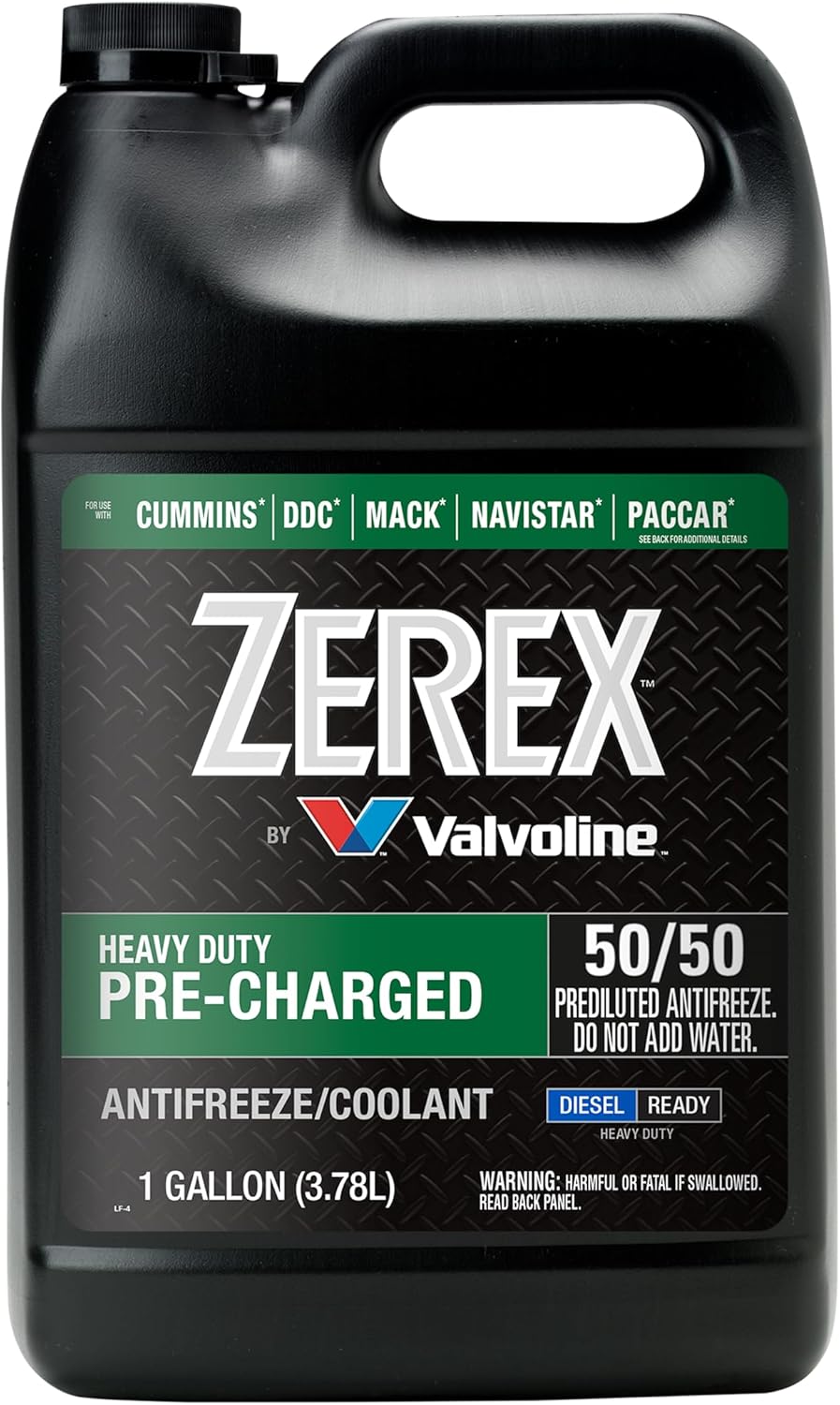
1. Zerex Pre-Charged Heavy Duty 50/50 Prediluted Antifreeze/Coolant, 1 gal
Best Budget Coolant
| Formulation | 50/50 prediluted ready-to-use |
|---|---|
| Intended use | Heavy-duty diesel and universal passenger vehicle coolant |
| Additives | Nitrite, corrosion/scale/rust inhibitors, defoamer |
| Service life | Up to 3 years or 150,000 miles |
Zerex Pre-Charged 50/50 is a premixed antifreeze designed to give straightforward freeze, boil and corrosion protection without any mixing. You pour it into a drained or topped-off cooling system when replacing coolant or doing a flush; because it is pre-diluted with deionized water and nitrite corrosion inhibitors, it removes the need to measure concentrate. The formula is low-silicate and includes rust, scale and defoamer additives to protect aluminum and other metals plus water pumps and radiators from pitting and deposits. It is targeted at heavier-duty applications but is also compatible with typical passenger vehicle systems, and the manufacturer backs performance for up to 3 years or 150,000 miles when used per instructions. The practical benefits are convenience, broad protection for mixed-metal systems, and reduced risk of coolant-related corrosion. Limitations are that it is a single-chemistry, prediluted product so it does not allow customizing concentration for extreme climates and may not match vehicle-specific OEM coolant specifications that require particular additive packages.
Best for: Drivers who want a simple, no-mix coolant that provides reliable freeze and corrosion protection for routine maintenance and system top-offs.
Less Ideal for: Owners seeking a vehicle-specific or concentrated coolant to tailor additive chemistry or mix ratios for extreme climates or mandated OEM specifications.
- Ready-to-use 50/50 premix removes need to dilute or measure concentrate
- Low-silicate, nitrite formulation protects against pitting and cavitation
- Includes corrosion, scale and rust inhibitors for mixed-metal cooling systems
- Backed for up to 3 years or 150,000 miles when used per label
- Defoamer and mild formulation safe for gaskets, hoses and plastics
- Prediluted ratio cannot be adjusted for extreme cold or high-heat tuning
- Not a vehicle-specific specialty formula for manufacturers requiring unique additive blends
Verdict: When you need basic freeze/boil protection and corrosion defense without paying for specialty chemistries or concentrate mixing.
2. Zerex Extended Life Heavy Duty Concentrate Antifreeze/Coolant 1 gal
Best Concentrate Coolant

| Type | Concentrate antifreeze/coolant |
|---|---|
| Technology | Organic Acid Technology (OAT) |
| Service life | Up to 3 years, 30,000 miles or 7,000 hours on initial fill |
| Standards/approvals | Meets ASTM D6210; Cummins 14603 approved |
Zerex Extended Life Heavy Duty is a concentrated antifreeze designed for mixing to the desired dilution and protecting engines from corrosion, cavitation, and scale. It is commonly used for full system flushes or topping off during maintenance where users prefer to mix their own 50/50 coolant. The formula uses Organic Acid Technology and virgin ethylene glycol to provide freeze and boilover protection while resisting corrosion in heavy-duty diesel applications and many gasoline engines. The product is rated for long service intervals and is specified to meet ASTM D6210 and several heavy-duty manufacturer approvals, which makes it suitable for extended-life fills. As a concentrate it reduces shipping volume and lets DIYers control final mixture, but you must correctly measure water and coolant to get proper freeze/boil protection and corrosion inhibitors. It is not a pre-diluted ready-to-use coolant, so expect extra mixing steps during installation and attention to compatibility with vehicle manufacturer specifications.
Best for: DIYers who prefer to mix concentrate themselves for topping off or doing a full flush and want a product built for extended-life service and heavy-duty protection.
Less Ideal for: Buyers who want a ready-to-use prediluted coolant or who prefer a coolant matched exactly to a light-duty passenger car factory color specification.
- Concentrated formula lets you mix to a 50/50 ratio to control freeze and boil protection and reduce shipping volume.
- Organic Acid Technology provides extended corrosion, cavitation, and scale protection for engines.
- Meets ASTM D6210 and carries multiple heavy-duty manufacturer approvals for confidence in compatibility with specified engines.
- Rated for long service intervals on initial fill, reducing frequency of full system flushes.
- Requires accurate mixing with distilled or deionized water to achieve correct coolant performance.
- Formulated for heavy-duty applications so color and inhibitor chemistry may differ from light-duty factory coolants used by some manufacturers.
Verdict: For DIYers topping off or flushing systems who want the flexibility and lower shipping cost of a concentrate to mix to 50/50.
3. Valvoline Multi-Vehicle 50/50 Ready-to-Use Antifreeze Coolant, 1 Gallon
Best Ready-to-Use Coolant

| Size | 1 Gallon |
|---|---|
| Flash Point | 250 Degrees Fahrenheit |
| Automotive Fit Type | Universal Fit |
| Model | Multi-Vehicle |
Valvoline Multi-Vehicle 50/50 Ready-to-Use Antifreeze is a premixed coolant intended for quick DIY topping off or full coolant changes without measuring or dilution. It uses Valvoline's Alugard Plus additive to provide broad compatibility with other ethylene glycol-based coolants and to protect aluminum and other cooling-system metals from corrosion and deposits. The 50/50 formulation is ready to pour and claims freeze protection down to about -34F and boilover protection to about 265F when used as directed, so it suits seasonal extremes. Because it is pre-diluted and labeled universal fit for cars and light trucks, it saves time and reduces mixing errors during routine maintenance. The product is specific to ethylene glycol systems and is not suitable where a propylene glycol or specialized OEM coolant is required, so check your vehicle's coolant specification before use. It is practical for owners who want a reliable, drop-in premix for standard cooling systems and seasonal coolant service.
Best for: Owners who want a quick, no-mix coolant solution for routine radiator top-offs or full fluid changes and prioritize convenience and broad compatibility during DIY maintenance.
Less Ideal for: Do not choose this if your vehicle requires a specific OEM or propylene glycol-based coolant, or if you need a concentrated formula to mix to a custom ratio.
- Comes premixed 50/50 so there is no measuring or dilution required
- Formulated with Alugard Plus for compatibility with other ethylene glycol coolants
- Protects aluminum and other cooling-system metals against corrosion and deposits
- Provides wide temperature protection for freezing and boiling in typical climates
- Contains ethylene glycol so it is not appropriate where a propylene glycol or manufacturer-specified specialty coolant is required
Verdict: Pick this when you want the convenience of premixed protection—no mixing, no measuring—ideal for quick DIY maintenance.
4. Zerex G40 Phosphate and Nitrite Free Concentrate Antifreeze/Coolant 1 Gal
Best Heavy-Duty / Nitrite-Free Coolant

| Formulation | Si‑OAT concentrate |
|---|---|
| Free of | Nitrite, phosphate, amine |
| Base | Ethylene glycol |
| Recommended mix | 50/50 typical for -34 to 265F |
Zerex G40 concentrate is a long-life, Si‑Organic Acid Technology (Si‑OAT) coolant designed to protect modern and older aluminum-heavy cooling systems. It is mixed with water (typically 50/50) and used for topping off or complete system flushes; the formula resists corrosion, scale and deposits while helping prevent freezing and boil-over. Key features include a nitrite, amine and phosphate-free formulation that is safer for mixed-metal systems and claims extended protection cycles. In real-world use the concentrate keeps radiators, water pumps and thermostat passages cleaner than conventional IAT coolants and is suitable where manufacturers call for carboxylate or OAT-type chemistry. Important limitations are that it is a concentrate requiring proper dilution and it is optimized for vehicles recommending Si‑OAT chemistries rather than older nitrite-based heavy-duty specs, so verify your Dakota’s coolant spec before switching. For heavy use or older trucks, follow a full system flush and compatible sealant procedures when changing chemistries.
Best for: Buyers who need a tougher, extended‑life coolant chemistry for frequent or heavy use and who prioritize corrosion protection for aluminum or mixed-metal cooling systems in 1997–2004 Dodge Dakota applications.
Less Ideal for: Drivers who must match older nitrite-based heavy‑duty coolant specifications or who prefer a ready‑to‑use premix without measuring and mixing.
- Si‑OAT long‑life formula reduces corrosion and helps keep aluminum components clean
- Free of nitrites, phosphates and amines to suit mixed‑metal systems and reduce deposit formation
- Concentrate form lets you control dilution for climate-specific freeze/boil protection
- Designed to meet OEM carmaker specifications for many European and performance vehicles
- Not pre-mixed so requires correct dilution and handling
- Not formulated to the older nitrite-heavy heavy‑duty coolant specs used in some legacy diesel applications
Verdict: For owners needing a tougher, extended-life chemistry that reduces nitrites/borates for improved protection in heavy-use or older cooling systems.
5. PEAK 50/50 Prediluted All-Vehicles Antifreeze/Coolant, 1 Gal.
Best Universal Multi‑Vehicle Coolant

| Container Type | Jug |
|---|---|
| Compatible with Vehicle Type | Car, Truck, Motorcycle, SUV |
| Automotive Fit Type | Universal Fit |
| Liquid Volume | 1 Gallons |
This PEAK 50/50 prediluted antifreeze is designed as a universal coolant you can pour straight into the cooling system without mixing. It provides corrosion protection for common cooling system metals including aluminum and is marketed for long service life, which makes it useful for routine top-offs and full coolant changes in older vehicles. The jug format is convenient for garage use and the 50/50 mix removes guesswork when adding fluid. Practical benefits include compatibility with different coolant colors and technologies, immediate rust and corrosion protection, and a simple fill-and-go approach that reduces the chance of mixing incompatible concentrates. Limitations: prediluted fluid offers no flexibility to fine-tune freeze/boil protection if you need a custom concentration for extreme climates, and a universal formula may not match specific factory coolant specifications required by some manufacturers or niche systems. For a 1997–2004 Dodge Dakota, confirm coolant type and follow the truck's service recommendations before switching to a universal product.
Best for: Buyers who service multiple vehicles and want a simple, broadly compatible coolant that reduces the chance of mixing incompatible products when topping off or refilling systems.
Less Ideal for: Do not choose this if you need a coolant that exactly matches a specialized factory-specified formula or if you require a nonprediluted concentrate for custom mix ratios.
- Ready-to-use 50/50 mix removes need to dilute and simplifies top-offs
- Formulated to protect common cooling system metals including aluminum
- Compatible with different coolant colors and technologies to reduce mismatch risk
- Long-life formulation intended for extended service intervals
- Convenient 1 gallon jug suitable for full system fills
- Prediluted mix prevents adjusting concentration for extreme freeze/boil conditions
- Universal formulation may not strictly match every manufacturer specification
Verdict: Select this if you maintain multiple vehicles or want one coolant that covers varied OEM specs and reduces the risk of mismatch.
Choosing the Right 1997-2004 Dodge Dakota Coolant: Key Factors to Consider
Coolant Chemistry and Inhibitor Type
Coolant chemistry determines how the fluid controls corrosion and how long the protection lasts. Older vehicles like 1997-2004 Dodge Dakotas were originally filled with inorganic additive technology or early hybrid inhibitors. Choosing a coolant with an appropriate inhibitor type matters because some modern long-life formulas use different corrosion inhibitors that can interact poorly if mixed with remaining old coolant.
For Dakota owners, assess whether the cooling system still contains residual old coolant or if you are starting with a fresh flush. If mixing cannot be avoided, select a formulation that explicitly supports crossover use or perform a full system flush to ensure consistent chemistry. Matching inhibitor type to the vehicle's metal components and seals reduces risk of localized corrosion and helps protect the water pump, heater core, and radiator over time.
Compatibility With Metals and Seals
The Dakota cooling system contains a variety of metals and elastomers. A compatible coolant maintains protective films on cast iron, aluminum, brass, and copper, and does not cause accelerated gasket or hose degradation. Incorrect chemistry or aggressive inhibitors can lead to pitting, scale buildup, or swollen seals.
Be especially mindful of compatibility notes on the product label that reference mixed-metal systems and non-pressurized heater cores. If the vehicle has replacement hoses or a rebuilt radiator, confirm those components are rated for the coolant type you plan to use. Compatibility reduces the chance of leaks and extends component life.
Service Life and Maintenance Interval
Service life affects how often you need to drain and refill the system. Conventional coolants often require more frequent changes, while long-life formulas advertise multi-year protection. For a 1997-2004 Dodge Dakota, consider how often you perform vehicle maintenance and whether a longer service interval is worth any extra care needed during a chemistry changeover.
Longer service life can reduce the frequency of coolant flushes but may require a complete system flush before switching types. Also consider how the vehicle is used: frequent towing, idling, or high-temperature operation can accelerate coolant degradation and shorten the effective service interval.
Freeze and Boil Protection at Recommended Mix
Coolant must provide both freeze protection and boil-over protection when mixed to the manufacturer-recommended ratio. For owners in cold climates, adequate freeze protection prevents block cracking and reduces the chance of pump damage. In hot or heavy-load conditions, boil protection helps maintain stable operating temperatures and head gasket integrity.
Always follow the recommended concentration guidelines. Prediluted products simplify this, but concentrates let you tailor the freeze/boil point to local conditions. Check the freeze and boil point charts on the product to match the environmental exposure for your Dakota.
Corrosion Test Data and Warranty Guidance
Published corrosion test results or references to established standards indicate whether a coolant will reliably protect the vehicle over time. Look for information on tests such as ASTM corrosion panels, seal compatibility tests, and OEM approval statements. Clear documentation reduces the risk of unexpected deterioration in radiators and engine internals.
Also review any manufacturer guidance or warranty notes regarding coolant use. While older vehicles may not have active warranties, using fluids that align with OEM recommendations helps ensure predictable long-term performance and fewer compatibility surprises after repairs.
Ease of Use and Changeover Requirements
Some coolant types require a thorough chemical flush before switching, while others are marketed as compatible with older systems. Consider whether you will perform a full system flush, which may be necessary to avoid mixing incompatible chemistries and to remove contaminant buildup.
Ease of pouring, availability of pre-mix versus concentrate, and clear instructions for mixing and topping off are practical details that affect routine maintenance. If you plan to do the work yourself, choose a product with straightforward directions and recommended tools for bleeding air and refilling to minimize trapped air pockets.
Understanding Inhibitor Types for Older Dakotas
Inhibitor classification—commonly labelled IAT, OAT, or HOAT—describes the corrosion-control chemistry inside a coolant. For 1997-2004 Dodge Dakota owners, it is important to know which category your existing fluid falls into, because mixing incompatible inhibitor types can reduce corrosion protection or create sludge.
If the service history is unknown, a complete flush before filling with a new long-life coolant is often the safest course. If a flush is not practical, choose a product that explicitly supports crossover use and follow manufacturer instructions carefully to minimize risk.
- IAT: typically conventional, shorter service life, silicate-based protection
- OAT: organic acid-based, longer service intervals, may not mix well with IAT
- HOAT: hybrid formulas offering some silicate protection for aluminum plus organic acids
When to Perform a Full Coolant Flush
A full coolant flush is recommended when the composition of the current fluid is unknown, when switching inhibitor types, or when the system shows signs of contamination. Flushing removes trapped sediment, scale, and old inhibitor residue that can undermine a new coolant's effectiveness.
Typical signs that a flush is needed include discolored fluid, recurring low coolant levels without visible leaks, overheating episodes, or noticeable heater core performance loss. Proper flushing and refilling improves inhibitor distribution and restores intended freeze and boil protection.
- Flush before switching inhibitor chemistry
- Flush after radiator or head gasket repairs
- Flush to remove rust-colored or murky fluid
Mixing Concentrate Vs Using Pre-Mix
Concentrate coolants let you control the freeze and boil points by adjusting the water to coolant ratio. For Dakotas in regions with severe temperatures, adjusting concentration can be useful. However, concentrates require accurate measuring and clean water to avoid introducing minerals that can reduce protection.
Pre-mixed coolants are convenient and reduce the risk of incorrect dilution, making them a good choice if you want a simple, reliable refill. Always use distilled or deionized water with concentrates to prevent scale and mineral deposits.
- Use distilled water with concentrates to avoid mineral buildup
- Pre-mix saves time and reduces dilution errors
- Aim for manufacturer-recommended concentrations for balanced protection
Bleeding Air and Getting Proper System Fill
Air trapped in the cooling system can cause hot spots and erratic temperature readings. After filling, run the engine and use the heater at high to circulate fluid; bleed points and radiator caps should be used as directed to evacuate air pockets.
For the 1997-2004 Dakota, verify heater hoses become hot and watch the coolant level after a short drive; topping up may be necessary once trapped air is expelled. Proper bleeding helps ensure the water pump and thermostat experience stable flow and temperature.
- Start with the vehicle level on a flat surface
- Open bleed valves if present, or run heating system to purge air
- Recheck levels after a short test drive
Handling Leaks and Corrosion Symptoms
If you notice persistent low coolant, external leaks, white or brown deposits, or overheating, these can be signs of gasket failure, corroded passages, or radiator damage. Addressing the root cause is important before relying on a new coolant to restore system health.
Small leaks at hose clamps or hose interfaces may be resolved by replacing old hoses and tightening clamps. For internal corrosion, a flush will reveal the extent of scale or pitting and inform whether component replacement is necessary.
- Inspect hoses, clamps, radiator seams, and water pump for leaks
- Look for rust-colored fluid that indicates internal corrosion
- Repair leaks before refilling with long-life coolant
Winter Considerations and Storage
If you live in colder climates, ensure your chosen coolant mix provides freeze protection below expected low temperatures. Antifreeze also raises the boiling point so the system resists boil-over under heavy loads. Keep seasonal conditions in mind when selecting concentration.
Store unused coolant in a sealed container in a cool, dry place out of direct sunlight. Proper storage preserves the inhibitor package and prevents contamination from dust or moisture, ensuring the fluid performs as intended when used later.
- Match freeze point to local winter lows
- Use sealed, labeled containers for leftover concentrate
- Rotate stock if you keep multiple containers to avoid age-related degradation
Still looking for the perfect fit?
Select your Dodge Dakota configuration to see the most relevant Coolants recommendations
How We Chose the Best 1997-2004 Dodge Dakota Coolant
We prioritized fluid formulations and compatibility factors that matter specifically for 1997-2004 Dodge Dakota cooling systems. Selection criteria included chemical technology, corrosive-inhibitor package, and compatibility with cast iron engine components and common radiator materials used on these Dakotas. We also considered recommended service intervals, manufacturer compatibility notes, and whether a coolant is intended for conventional drain-and-fill schedules or extended service intervals.Concrete evaluation criteria included: inhibitor chemistry (IAT, OAT, HOAT), stated service life in years or miles, compatibility with mixed-metal systems and OEM seals, freeze and boil protection at factory-recommended mix ratios, and suitability for use after a coolant flush or system repair. Additional practical filters were ease of dilution, availability of concentrate versus pre-mix, and clear instructions for crossover use in older systems.We excluded fluids intended only for heavy-duty diesel applications, one-off racing formulas, and products that explicitly require non-standard additives or system modifications. Products without clear compatibility or lacking published inhibitor data were also excluded. The goal was to produce a shortlist focused on safe, serviceable coolant choices for the specified Dodge Dakota model years.
Our full evaluation process is outlined in our review methodology.
FAQ
Can I mix different coolant types in a 1997-2004 Dodge Dakota?
Mixing coolant types is generally not recommended because different inhibitor chemistries can react and reduce corrosion protection. If mixing cannot be avoided, perform a full system flush first or choose a product that explicitly states crossover compatibility.
How often should I change the coolant in my Dakota?
Change intervals depend on the coolant chemistry and driving conditions. Conventional coolants often require more frequent changes while long-life formulas advertise multi-year protection. Check the product guidance and your service history, and consider a flush if the fluid is discolored or contaminated.
Is pre-mixed coolant better than concentrate for this vehicle?
Pre-mixed coolant reduces the chance of dilution errors and is convenient for most owners. Concentrate allows precise freeze and boil point adjustment, but it requires distilled water and accurate mixing to avoid mineral deposits.
Will switching to a long-life coolant require any repairs first?
If the system has scale, rust, or unknown residual coolant chemistry, a full flush is recommended before switching to a long-life product. Addressing leaks, replacing old hoses, and ensuring the radiator is in good condition improves the effectiveness of a long-life coolant.
How do I know if my coolant is still protecting against corrosion?
Signs of reduced protection include discolored fluid, crusty deposits, overheating, or recurring low coolant without visible leaks. Test strips or lab analysis can check inhibitor levels; otherwise, a professional inspection or flush can determine condition.
What mix ratio should I use for winter protection?
Follow the coolant manufacturer's freeze/boil point chart and aim for the recommended ratio that provides freeze protection below your local low temperatures. A common target is a 50/50 mix for balanced freeze and boil protection, but colder climates may require a higher concentrate percentage.
Final Verdict
For a 1997-2004 Dodge Dakota, prioritize coolant compatibility with the vehicle's metals and seals, clear inhibitor documentation, and realistic service intervals that match your maintenance habits. If the system history is unclear or contamination is present, perform a thorough flush before switching chemistries to avoid unexpected reactions.Balance long service life against the need for proper changeover procedures. Choose a coolant that offers reliable corrosion control, appropriate freeze and boil protection for your climate, and clear instructions for dilution and bleeding. These priorities will help maintain cooling system reliability and extend component life over time.
Explore More:
- Check out all Dodge Dakota parts & accessories
- Explore Fluids & Chemicals
- Browse all Accessories
