

Note: This article contains affiliate links. If you click on these links and make a purchase, I may earn a small commission at no extra cost to you. This helps support my research and content. Read my full affiliate disclosure here.
If you haul loose or oddly shaped cargo in a Honda Ridgeline, a purpose-built cargo bar can prevent damage, reduce shifting, and make loading easier. The right cargo bar keeps items from sliding during cornering or braking and can protect both the truck bed and the cargo itself.This guide covers six shortlisted options chosen for fitment, adjustability, and load control specifically for the Ridgeline. We explain the criteria used to evaluate each bar and highlight practical factors to help you pick the best solution for everyday hauling, weekend projects, or longer trips.
Looking for other parts? See all Honda Ridgeline parts & accessories.
Top Picks at a Glance
| Best Overall Cargo Bar A reliable, well-rounded cargo bar that fits most bed widths | KEEPER Ratcheting Adjustable Cargo Bar (40"–70") |  |
| Best Budget Cargo Bar A basic, low-cost cargo bar that secures light loads affordably | VEVOR Adjustable Cargo Bar 40–73 in, Steel with Rubber Pads |  |
| Best Heavy‑Duty Cargo Bar Thicker steel or high-capacity bars built for heavy loads and rough roads | Leikius Adjustable Heavy-Duty Cargo Bar (40–78.7 in), 200 lb Capacity |  |
| Best Ratcheting Cargo Bar Bars with a ratchet lock for fast, tool-free tensioning and release | US Cargo Control Ratcheting Adjustable Cargo Bar (40"–70") |  |
| Best Long‑Reach Cargo Bar Extra‑long adjustable bars that extend beyond typical 70" ranges | KILOUPOLE Adjustable Cargo Bar (40"–79") with Cargo Net |  |
| Best Cargo Bar Kit (net + Divider) Complete cargo kits that include nets, dividers, or multiple bars for organization | Mytee Products Adjustable Ratcheting Cargo Bar with 60" x 24" Storage Net |  |
1. KEEPER Ratcheting Adjustable Cargo Bar (40"–70")
Best Overall Cargo Bar

| Adjustable length | 40" – 70" |
|---|---|
| Load Capacity | 165.4 Pounds |
| Mounting Type | Trunk Mount,Truck Bed Mount |
| Automotive Fit Type | Universal Fit |
The KEEPER ratcheting cargo bar is a simple, sturdy way to keep items from sliding in a Ridgeline's bed or trunk area. It expands from 40 to 70 inches using a ratchet tensioner so you can dial in a snug fit between wheel wells or sidewalls, and large rubber end pads give a skid-resistant contact surface to hold the bar in place without scratching factory surfaces. The bar is weather and UV resistant and has a baked-on finish that helps it resist corrosion from road spray. With a listed load capacity around 165 pounds it is well suited to restrain boxes, coolers, and medium-weight gear during everyday trips. Installation is tool-free and fast, making it convenient for homeowners or weekend users. Limitations include a single-bar design that will not replace strapped anchor points for very heavy or oddly shaped loads and the fixed rubber end pads may need repositioning in deep or irregular bed liners.
Best for: Buyers who want a dependable, easy-to-use cargo bar to control everyday loads in their Ridgeline and prioritize quick setup and corrosion resistance.
Less Ideal for: Those who regularly haul very heavy machinery, loose bulk materials, or require certified tiedown systems for commercial hauling should consider dedicated tie-downs or multiple anchored solutions instead.
- Adjustable 40"–70" range fits most Ridgeline bed widths without modification
- Ratcheting tensioner enables quick, tool-free installation and tightening
- Large rubber end pads provide skid-resistant contact and protect surfaces
- Weather and UV resistant finish helps prevent corrosion in regular use
- Not intended for securing very heavy or irregularly shaped loads that need multiple anchor points
Verdict: Choose this slot if you want a dependable, easy-to-use cargo bar that balances build quality, range, and everyday performance for general hauling and load control.
2. VEVOR Adjustable Cargo Bar 40–73 in, Steel with Rubber Pads
Best Budget Cargo Bar

| Adjustable length | 40–73 inches |
|---|---|
| Load capacity | 220 Pounds |
| Material type | Carbon Steel, Rubber |
| Mounting type | Truck Bed Mount |
| Is foldable | No |
This VEVOR cargo bar is a basic, no-frills solution for stopping light loads from shifting in a pickup bed or inside an SUV like the Honda Ridgeline. It telescopes from 40 to 73 inches and locks using one of 16 adjustment holes, so it installs quickly without tools and can be set in seconds. The carbon steel tube and powder coat give it solid durability for everyday use, while wide rubber end pads improve grip and reduce scuffing against the bed or interior panels. Its 220 pound rating is adequate for groceries, small boxes, and secured cargo but is not intended for heavy equipment. Expect a straightforward fit when you need a temporary divider or anti-shift barrier; it is not foldable and offers limited versatility for very narrow or extra-wide configurations. For simple, budget-conscious runs where preventing sliding is the priority, this bar does the job reliably.
Best for: Buyers who want a low-cost, easy-to-use barrier to keep groceries, small boxes, and light cargo from shifting during trips in a Ridgeline and prefer a quick install without tools.
Less Ideal for: Avoid this if you need a heavy-duty load retainer for construction gear, large furniture, or a permanent mounted solution; consider sturdier or purpose-built cargo restraints instead.
- Wide adjustable range covers many mid-size pickup bed widths and interior spans
- Quick, tool-free adjustment with 16 locking positions for fast installs
- Rubber end pads provide strong anti-skid contact and protect surfaces
- Carbon steel tube and powder coat resist deformation and surface corrosion
- 220 lb load rating is low for heavy or stacked cargo
- Not foldable or multi-piece, so storage when not in use is less compact
Verdict: Pick this when you need a simple, inexpensive bar to stop groceries and small boxes from shifting without extra features or high load ratings.
3. Leikius Adjustable Heavy-Duty Cargo Bar (40–78.7 in), 200 lb Capacity
Best Heavy‑Duty Cargo Bar

| Load Capacity | 200 pound |
|---|---|
| Adjustable Range | 40 to 78.7 inch |
| Material Type | Aluminum, Carbon Steel |
| Compatible with Vehicle Type | Car, Trailer, Truck, Van |
The Leikius adjustable cargo bar is a telescoping support rod that locks between surfaces to keep heavy items from shifting during transport. It extends from 40 to 78.7 inches and uses spring-loaded locking pins, a quick-release lever, and rotating textured end pads to bite into surfaces without marring them. In real use it works as a divider or load restraint for moving boxes, tools, or gear and can create a temporary shelf or anchor point inside a truck bed or Ridgeline cargo area. The mixed aluminum and carbon steel construction balances strength and weight while the 200 pound rated load gives confidence for heavier loads typical of jobsite gear. Setup is quick and tool-free, but the bar is a single-piece nonfolding design so it can be bulky to store when not in use and it relies on surface contact rather than mechanical anchors for hold. For someone who hauls tools or heavy equipment occasionally, it offers a robust, easy-to-install way to reduce cargo movement without permanent modification.
Best for: Ridgeline owners who routinely carry heavy tools or worksite gear and want a strong, quick-install cargo restraint that avoids drilling or permanent hardware.
Less Ideal for: Buyers seeking a compact, foldable storage solution or a permanent bolted anchor system should consider other cargo management options.
- Adjustable 40–78.7 inch range fits a wide span of interior cargo widths
- 200 pound rated load capacity for heavier gear and tools
- Spring-loaded locking pins and quick-release lever provide secure, tool-free installation
- Rotating textured end pads and non-slip handle reduce movement without damaging surfaces
- Constructed from aluminum and carbon steel for strength with manageable weight
- Nonfoldable one-piece design can be awkward to store in small cabins
- Grip depends on surface contact so performance varies with wall material and cleanliness
Verdict: Use this slot if you regularly haul heavy gear or worksite tools and need a cargo bar with stronger tubing and higher rated capacity for rugged use.
4. US Cargo Control Ratcheting Adjustable Cargo Bar (40"–70")
Best Ratcheting Cargo Bar

| Adjustable length | 40" to 70" |
|---|---|
| Load Capacity | 150 Pounds |
| Material Type | Alloy Steel, Rubber |
| Mounting Type | Easy Snap |
This ratcheting cargo bar uses a finger-release ratchet to quickly extend and lock the bar between vehicle walls, providing repeatable tensioning to keep items from sliding during transit. It adjusts from 40 to 70 inches, so it covers short to medium spans and installs in seconds without tools by pressing the rubber-footed ends into place and ratcheting to tension. The non-slip rubber pads pivot to seat against panel surfaces and help protect finish while resisting movement under load. Built from alloy steel, the bar feels sturdy for everyday loads like boxes, groceries, and small gear, and the easy-snap mounting makes it convenient for frequent repositioning. Limitations are that its 150 pound load capacity and straight tubular design are intended for light to moderate cargo; it is not a replacement for tiedown systems for heavy or irregular loads, and over-ratcheting can press hard on interior panels. For a Ridgeline owner wanting a fast, secure way to keep loose items from shifting in the bed or cargo area, this is a practical, user-friendly option.
Best for: Buyers who prioritize fast, tool-free tensioning to stop everyday items from shifting during short trips and want a simple, repeatable locking solution for their Ridgeline cargo area.
Less Ideal for: People who need to secure very heavy, oversized, or irregular loads that require multiple tie-downs or higher rated anchor systems should consider heavier-duty restraints instead.
- Quick finger-release ratchet for fast, repeatable tensioning
- Adjustable 40"–70" span fits short to medium cargo spaces
- Pivoting rubber non-slip feet protect surfaces and resist sliding
- Alloy steel construction gives solid feel for everyday loads
- 150 lb rated capacity limits use to light or moderate cargo
Verdict: Choose a ratcheting-style cargo bar when you want quick, repeatable tensioning that locks securely under load and is simple to adjust on the fly.
5. KILOUPOLE Adjustable Cargo Bar (40"–79") with Cargo Net
Best Long‑Reach Cargo Bar
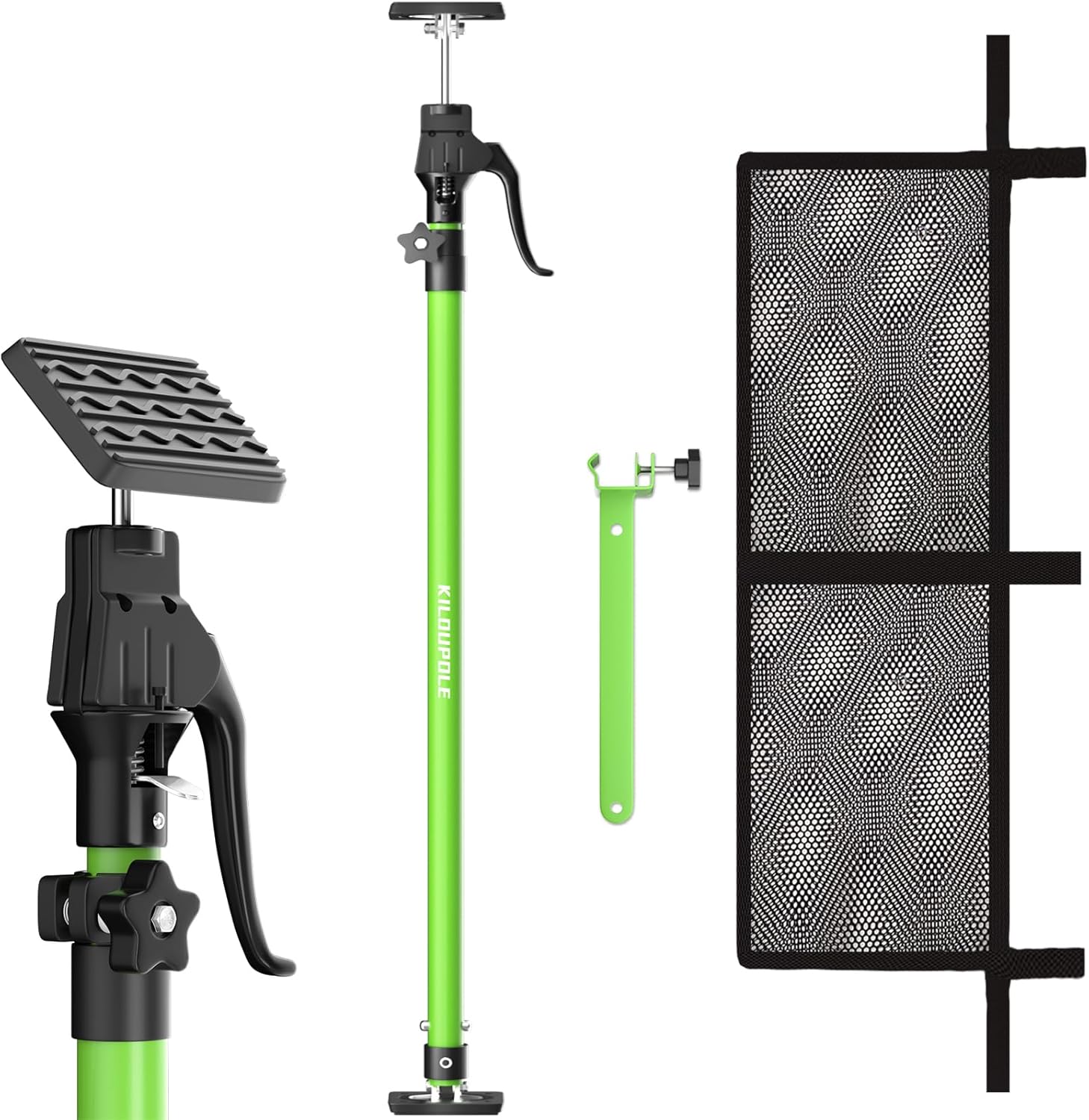
| Adjustable length | 40 to 79 inches |
|---|---|
| Material Type | Aluminum |
| Mounting Type | Power Grip |
| Is Foldable | Yes |
The KILOUPOLE Adjustable Cargo Bar is a single telescoping divider designed to span wide cargo spaces or act as a tall divider when set near its maximum length. It installs by extending the aluminum shaft between two surfaces and tightening the ergonomic handle to create pressure; rotating rubber foot pads conform to bed walls to reduce slipping. The infinite adjustability system makes it easy to fine-tune fit without ratchets, and the included cargo net gives a simple place to stash small tools or loose items. Built with reinforced aluminum and steel components and safety knobs, the bar feels robust for routine hauling and daily use. At longer spans it relies on surface contact and tension rather than mechanical anchors, so performance depends on a secure mounting surface and correct torque. The single-bar design is best for dividing or bracing loads rather than heavy-duty load restraint for very large or shifting cargo.
Best for: Buyers who need one long, easy-to-install bar to span a wider cargo area or create a tall divider in their Ridgeline and value quick adjustability and a lightweight build.
Less Ideal for: Not the best choice for users who need multiple fixed partitions or who plan to restrain very heavy, shifting loads without additional tie-downs or anchor points.
- Extends up to 79 inches to cover wide beds or act as a tall divider
- Anti-slip rotating foot pads conform to different surfaces for better grip
- Ergonomic handle and infinite adjustability for quick, tool-free fitting
- Includes cargo net to organize small items and prevent rolling
- Reinforced aluminum and steel construction with safety knobs increases durability
- Relies on friction and pressure for hold at full extension so heavy shifting loads may still move
Verdict: Select this if you need a single bar that spans wider beds or doubles as a tall divider, offering reach beyond standard adjustable lengths.
6. Mytee Products Adjustable Ratcheting Cargo Bar with 60" x 24" Storage Net
Best Cargo Bar Kit (Net + Divider)

| Extended Length | 70 inches |
|---|---|
| Fastener Type | Hook |
| Mesh Opening Size | 2 inches |
| Material Type | Nylon |
| Hardware Material | Alloy Steel |
This Mytee Products kit combines an adjustable ratcheting load bar with a full-size 60" x 24" nylon cargo net so the bed stays organized during drives. The steel bar telescopes from 40 to 70 inches and uses a ratchet hook fastener and rubberized feet to press against the bed walls for a secure hold; the included alloy-steel hardware and TPE feet improve impact resistance and grip. The nylon net attaches to the bar and bed anchors to keep smaller boxes and loose gear from shifting, and the step-wise installation is straightforward for a single person. Practical benefits include versatile span adjustment for different load widths and a built-in net that removes the need to source a separate restraint. Expect a moderately heavy single-piece kit and reliance on the ratchet tension for stability, so check mounting points and retighten after heavy use. This is a functional all-in-one option for drivers who want a quick cargo divider and containment solution without buying separate components.
Best for: A Ridgeline owner who wants a single purchase that both divides the bed and secures loose items for everyday hauling and weekend gear transport.
Less Ideal for: Avoid this if you need multi-point, heavy-duty load restraint for commercial towing or if you prefer permanent bolted dividers over a tensioned bar and net system.
- Includes both an adjustable ratcheting load bar and a 60" x 24" nylon storage net for one purchase
- Telescoping 40"–70" range fits a wide span of bed widths without extra parts
- Rubberized feet and alloy-steel hardware improve grip and durability under load
- Ratcheting hook fastener allows quick tensioning and re-tensioning during trips
- Single-bar design can shift if not tensioned to solid bed anchor points
Verdict: Opt for a kit when you want an all-in-one solution—cargo bar plus net or divider—so loose items stay contained and organized without buying extras.
Choosing the Right Honda Ridgeline Cargo Bar: Key Factors to Consider
Fit and Adjustment Range
A cargo bar must span the exact points where you need restraint in the Ridgeline. Measure the width and height of the area you intend to secure and compare that to a bar's telescoping range. Bars with coarse or fine adjustment options let you achieve a snug fit whether you are bracing across the bed, between the wheel wells, or inside an enclosed tailgate area.
Insufficient range means the bar will not hold tight and may slip; overly long bars that require extreme compression can damage end fittings. Consider bars that list both minimum and maximum lengths and include anti-slip features so adjustment remains secure under load.
End-Fitting Design and Bed Protection
The interface between the bar and the Ridgeline bed matters for both grip and surface protection. Look for end caps or pads made from non-marring rubber or high-friction polymer to prevent scratching painted surfaces while maintaining stable contact during stops and turns.
Some bars have contoured or pivoting end fittings that conform to irregular contact points. This reduces rocking and distributes pressure more evenly, which is helpful when bracing against wheel wells or inner bed panels rather than flat surfaces.
Build Quality and Materials
Durable materials resist bending, corrosion, and wear from repeated use in wet or salty conditions. Steel shafts offer strength for heavy loads but should have rust-resistant coatings. Aluminum provides a lighter option with good corrosion resistance but may deform under excessive compression.
Pay attention to seam and locking mechanism quality. Threaded or spring-loaded locks that wobble can loosen over time. A robust locking system maintains a consistent preload and reduces the chance of in-transit movement.
Locking Mechanism and Safety
The locking system determines how reliably a bar maintains its set length. External clamps, twist-lock threads, and spring-loaded detents are common approaches. Each has tradeoffs: twist locks can offer very tight compression but may back off without vibration-resistant features. Quick-release or push-button mechanisms are convenient but must be engineered to resist accidental release under load.
Consider whether the bar includes a secondary safety catch or visible indicators that show when it is fully engaged. For owners who haul over rough roads, vibration resistance is especially important to avoid gradual loosening.
Versatility for Different Cargo Types
You may use the Ridgeline for groceries one day and bulky gear the next. Bars that allow angled placement, or that work in pairs, increase flexibility when securing uneven loads. Some designs permit vertical or horizontal orientation, enabling use to prevent forward-backward movement as well as side-to-side shift.
Assess whether the bar can be repositioned quickly and whether its shape interferes with loading larger items. A versatile bar reduces the need to buy multiple specialized devices.
Ease of Use and Storage
Frequent removal and reinstallation is typical for light-duty owners, so a cargo bar should be intuitive to set up and store. Lightweight materials and compact collapsed length make a difference when you stow the bar inside the Ridgeline's in-bed storage or under the seat.
Also consider whether the mechanism can be operated wearing gloves and how easy it is to align the end fittings in tight spaces. Simpler systems tend to be faster to deploy, but convenience should not compromise secure locking and protection.
Where to Position a Cargo Bar in the Ridgeline
Effective placement depends on the load shape and desired direction of restraint. For side-to-side stabilization, position the bar crosswise near the tallest portion of the cargo so the pressure point blocks lateral movement. For forward-backward restraint, mount the bar between the tailgate and the cab or near the tailgate area where it can bear against solid anchor points.
When bracing small stacked items, consider two bars at different heights to create a layered stop. For long items, placing the bar further forward reduces leverage that can cause shifting during sudden stops.
- Crosswise near cargo center for side-to-side control
- Between cab and tailgate for forward-back restraint
- Multiple bars at staggered heights for stacked loads
Protecting the Bed and Tailgate Finish
Contact points can concentrate pressure and cause scratches or dents over time. Use pads or soft end caps to distribute the load and reduce point loading. Periodically inspect the contact surfaces and clean debris that could abrade the finish.
If you frequently transport abrasive or heavy materials, add a thin protective layer such as a rubber mat under the bar ends. This simple step prolongs the Ridgeline's bed finish and preserves resale condition while not interfering with the bar's grip.
- Use rubber end caps or pads at contact points
- Clean and inspect contact areas regularly
- Add a protective mat for abrasive cargo
Using Multiple Bars and Pairing Strategies
Pairing bars expands the range of loads you can safely secure. Two bars spaced apart can create a cradle for bulky items or keep stacked boxes aligned. When using multiple bars, set each with independent locking and check both before driving.
Spacing depends on cargo dimensions; position bars to block expected movement paths rather than simply mirroring each other. If you often carry mixed loads, store an extra bar in the Ridgeline so it is available when needed.
- Use two bars to create layered restraint
- Set independent locks and confirm both are secure
- Position bars to block likely movement directions
Maintenance Tips to Keep a Cargo Bar Reliable
Regular maintenance extends the life and reliability of a cargo bar. Clean threaded components and moving parts to prevent grit buildup. Light lubrication on threads can keep twist-lock systems working smoothly but avoid contaminating rubber end caps.
Inspect for dents, bent shafts, or degraded end pads before each use. Replace worn protective pads and test the locking mechanism periodically to ensure it resists accidental release under vibration.
- Clean and lightly lubricate threads as needed
- Replace worn rubber pads to maintain protection
- Inspect locking mechanisms for wear or play
Common Installation Mistakes to Avoid
Do not rely on a bar that is only lightly compressed or hung in place; it should show firm contact with both anchor points. Avoid using a single bar to restrain extremely heavy or shifting loads that need tiedowns or straps instead.
Do not overtighten twist-lock bars so they bind; excessive force can damage fittings. Finally, avoid leaving bars under constant compression when not in use, which can prematurely wear rubber end caps.
- Ensure firm contact, not a loose fit
- Use straps for very heavy or dynamic loads
- Avoid over-compressing or prolonged storage under tension
How We Chose the Best Honda Ridgeline Cargo Bar
We focused on attributes that matter for securing loads in the Honda Ridgeline bed and cargo area. Primary evaluation criteria included fit and range of adjustment to ensure reliable contact points across the Ridgeline's cargo dimensions, and construction quality, including materials and end-cap design, to resist wear and protect painted surfaces.We also weighed ease of installation and removal, since many owners need a tool-free or low-effort system for intermittent use. Load control performance under typical road maneuvers was assessed using reported user feedback about anti-shift effectiveness and grip under compression. Additional factors were mounting versatility for different cargo shapes and any protective features that prevent marring the bed or tailgate.We excluded bars designed only for full-size trucks or specialty commercial racks that do not fit the Ridgeline's cargo geometry. We did not consider products lacking clear adjustability range or those without basic protective end fittings. The final list emphasizes usable range, durable materials, and practical installation for typical Ridgeline owners.
Our full evaluation process is outlined in our review methodology.
FAQ
Can a cargo bar prevent cargo from shifting during sudden stops?
A properly fitted cargo bar can significantly reduce lateral and fore-aft movement for light to medium loads. For very heavy or unbalanced cargo, combine a cargo bar with tie-downs to ensure complete restraint.
Will a telescoping cargo bar damage my Ridgeline bed?
Not if it has non-marring end caps and you maintain protective pads. Avoid placing bare metal ends against painted surfaces and inspect pads regularly to prevent abrasion from grit buildup.
Are adjustable cargo bars easy to install alone?
Most adjustable bars are designed for single-person installation, using twist locks or spring-loaded tensioners. Heavier-duty steel models may require more effort to compress but still can be installed solo with proper technique.
How do I know the right length range for my Ridgeline?
Measure the distance between the intended contact points where you will mount the bar, and choose a product whose minimum and maximum lengths cover that span with room for secure compression. Account for any bed liners or protective pads that change effective spacing.
Can I use a cargo bar vertically to stop forward movement?
Yes. Many owners set a bar vertically between the tailgate and the cargo to limit forward travel. Ensure the end fittings seat securely and that the locking mechanism resists vibration-induced loosening.
Final Verdict
Prioritize a cargo bar with the right adjustment range and secure end fittings to suit the Ridgeline's cargo geometry. Durable construction and a reliable locking mechanism give the best balance of convenience and load control.Decide based on the types of items you haul most often: choose higher-strength designs for heavier loads and more protective end caps for fragile finishes. With the right bar and a few sensible installation habits, you can cut cargo shift and protect both your gear and the Ridgeline bed.
Explore More:
- Check out all Honda Ridgeline parts & accessories
- Explore Other Accessories
- Browse all Accessories
