

Note: This article contains affiliate links. If you click on these links and make a purchase, I may earn a small commission at no extra cost to you. This helps support my research and content. Read my full affiliate disclosure here.
If you drive a 2018-present Jeep Wrangler and need a dependable way to move bikes, the right rack makes a big practical difference. Wranglers have unique rear geometry and often a spare-tire mount or hitch that affects mounting choices, so picking a rack that fits your vehicle and riding habits matters for safety and convenience. This guide covers six shortlisted bike racks chosen for fit and function on 2018-present Jeep Wrangler models, including common JL and JLU configurations. We evaluate each option for fitment, load capacity, mounting method, and ease of installation so you can quickly find a rack that matches how you use your Wrangler.
Looking for other parts? See all Jeep Wrangler parts & accessories.
Top Picks at a Glance
| Best Overall Bike Rack Well-rounded pick balancing fit, durability, and easy mounting | Yakima SpareRide Rear Spare-Tire Mounted 2-Bike Rack |  |
| Best Spare‑Tire Mount Bike Rack Racks that attach to a rear spare tire for space-saving carry | PENSUN Spare‑Tire 2‑Bike Rack — Foldable, Anti‑Wobble, Locking |  |
| Best Hitch Platform for E‑bikes Platform-style hitch racks built to support heavy e-bikes and fat tires | CRAVOT CyberRack E2 Hitch 2 Ebike Rack with Ramp, 200 lb Capacity |  |
| Best Roof Crossbars for Bikes Aluminum crossbars and baskets that carry bikes and rooftop gear | Tuyoung Lockable Roof Cross Bars for Jeep Wrangler JK/JL & Gladiator JT (2007–2026) |  |
| Best Heavy‑Duty Bike Rack High-capacity, reinforced racks rated for heavier bikes and loads | Leader Accessories TrekTote 2-Bike Hitch Platform Rack with Ramp (2" Receiver) |  |
| Best Compact Lightweight Hitch Rack Light, low-profile hitch racks that fold up for easy storage | JOYTUTUS 2-Bike Compact Lightweight Hitch Rack (150 lb capacity) |  |
1. Yakima SpareRide Rear Spare-Tire Mounted 2-Bike Rack
Best Overall Bike Rack

| Load Capacity | 35 Pounds |
|---|---|
| Mounting Type | Rear mounted |
| Is Foldable | No |
| Material Type | Alloy Steel |
The Yakima SpareRide converts a vehicle spare wheel into a stable two-bike carrier so you can load up for trail runs without a hitch-mounted setup. It installs over the spare tire with an adjustable mounting plate and three tongue lengths to accommodate different tire offsets, then uses cushioned ZipStrip cradles and TireTread pads to keep frames from rubbing and reduce bike sway while driving. Built from alloy steel with an included SKS locking package and a locking knob for the mount, it feels robust and theft-resistant compared with lightweight carriers. Typical use is simple: attach the bracket to the spare, swing the arms into position, strap bikes into the ZipStrips and cinch the lock. Expect a secure, low-maintenance fit on Wrangler-style rear-mounted spares, though tight clearances on oversized tires can make installation awkward and may require extra torque to adjust the hardware. Also budget for stronger bike cables if you want to lock frames to the carrier rather than rely only on the supplied cable. For Jeep Wrangler owners who want a durable, straightforward spare-tire solution, this is an excellent everyday choice.
Best for: Jeep Wrangler owners who want a tough, easy-to-use spare-tire bike carrier that balances security and day-to-day convenience for regular trail rides.
Less Ideal for: Drivers who use oversized aftermarket spare tires or need a carrier that folds flat against the vehicle for tight garage storage should consider alternative mounting styles.
- Mounts directly to rear spare for easy access and no hitch required
- Padded ZipStrip cradles and TireTread pads protect bikes and limit sway
- Included SKS locks and locking mount increase security against theft
- Heavy-duty alloy steel construction feels durable for regular trail use
- May be difficult to fit or adjust on vehicles with oversized spare tires or uncommon lug patterns
- Anti-theft cable included is basic and many users prefer a separate higher-quality cable
Verdict: The Best Overall slot is for a reliably built bike rack that balances secure mounting, straightforward installation, and broad bike compatibility for typical DIY drives and trail runs.
2. PENSUN Spare‑Tire 2‑Bike Rack — Foldable, Anti‑Wobble, Locking
Best Spare‑Tire Mount Bike Rack

| Compatible with Vehicle Type | SUV |
|---|---|
| Is Foldable | Yes |
| Load Capacity | 140 Pounds |
| Mounting Type | Easy Snap |
| Material Type | Carbon Steel |
This PENSUN spare‑tire 2‑bike rack attaches to the rear spare wheel to carry two bikes without a hitch or roof mount. It installs with included lug extensions and a bracket that clamps to the spare‑tire bolts, then supports bikes on two foldable arms with anti‑wobble structure to reduce rattling on rough roads. The rust‑resistant coating and carbon steel construction aim for durability in wet conditions, and the integrated lock gives basic theft deterrence when you leave bikes at a trailhead. Folding arms make it easier to access the rear and store the rack when not in use. Practical downsides reported by users include fitment issues with some spare tire lug sizes and rims, limited instructions, and a few fastening points that may need reinforcement or longer hardware for larger aftermarket tires. If your Wrangler has compatible spare‑bolt sizing and you want a compact, non‑hitch option for occasional bike trips, this rack delivers the core convenience it promises, but plan to verify fit and keep hand tools on hand for adjustments.
Best for: Buyers who want a compact, rear‑mounted bike carrier for a 2018‑present Wrangler that installs without a hitch or roof gear and prioritize easy install and minimal permanent hardware.
Less Ideal for: Drivers with nonstandard spare bolt sizes, very large aftermarket wheels, or those unwilling to make minor hardware adjustments should consider other mounting options.
- Spare‑tire mounting frees hitch and roof space and avoids ground clearance issues
- Anti‑wobble design reduces movement and road noise during travel
- Foldable arms improve rear access and make the rack less obtrusive when not in use
- Integrated security lock helps deter theft of bikes and the rack
- Rust‑resistant coating and carbon steel build for outdoor durability
- Fitment problems reported with some spare‑tire lug sizes and deeper rims requiring longer extensions
- Limited assembly instructions and some fastening points may require additional hardware or modification
Verdict: Choose this category when you want a compact, rear-mounted bike rack that clamps to the spare tire for easy install and minimal roof or hitch hardware.
3. CRAVOT CyberRack E2 Hitch 2 Ebike Rack with Ramp, 200 lb Capacity
Best Hitch Platform for E‑bikes
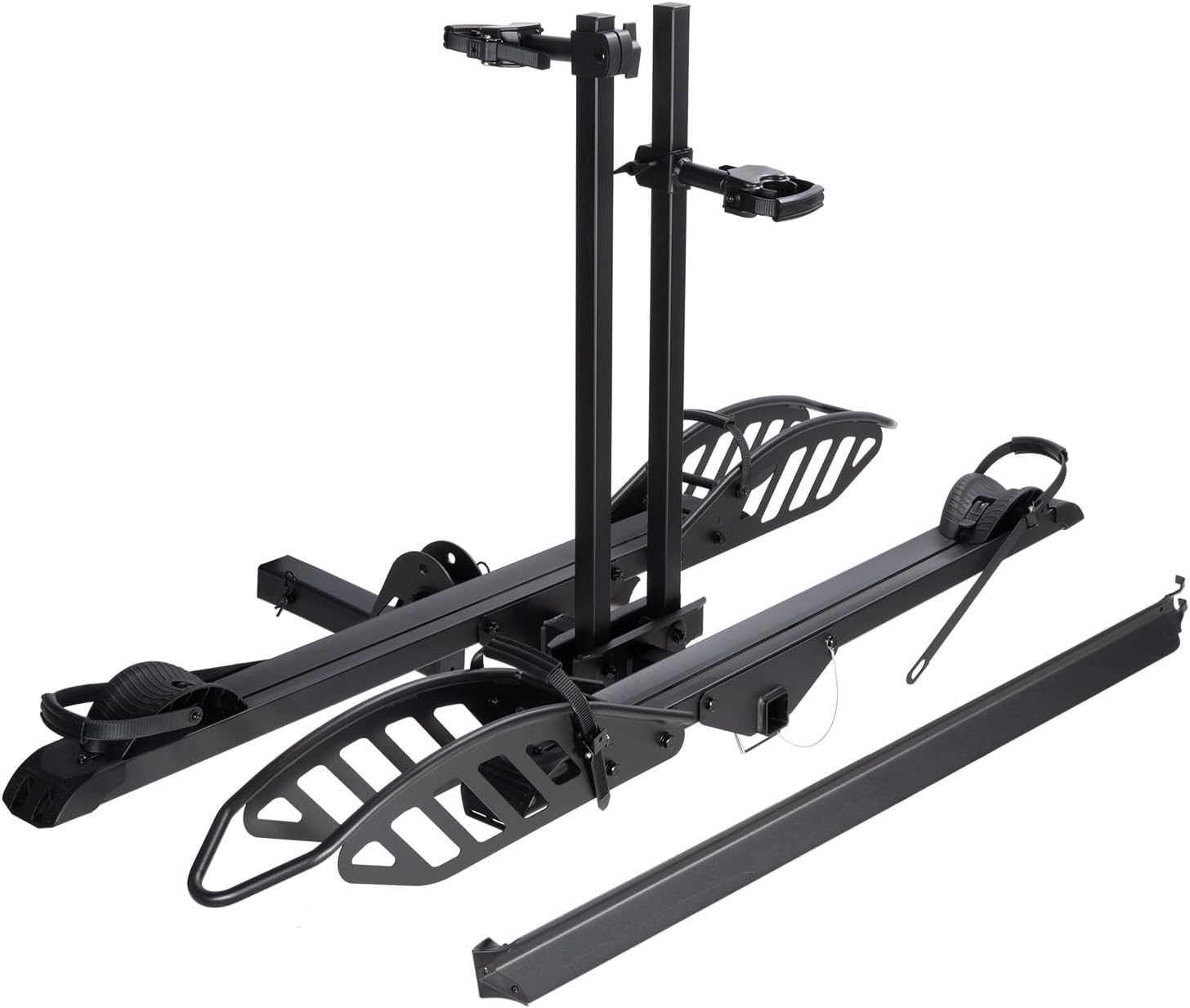
| Load Capacity | 200 lbs |
|---|---|
| Fits Receiver | 2-inch |
| Maximum Tire Width | Up to 5 inches |
| Wheelbase Compatibility | Up to 50 inches |
The CRAVOT CyberRack E2 is a two-bike hitch platform aimed at transporting heavy e-bikes and fat-tire bikes safely on a vehicle with a 2-inch receiver. It holds up to 200 lb total (100 lb per bike) and uses wide wheel trays, a V-shaped front cradle, and a three-point ratchet strap system to stabilize bikes without touching delicate frames. The included ramp makes loading heavy e-bikes much easier and the foldable design lets the rack tuck up when not in use. Construction combines aluminum and steel with anti-rust coating for weather resistance, and the kit includes soft padding and rubber covers where the rack contacts bikes to reduce scratches. Assembly can be a bit involved and the unit is relatively heavy to handle, but that weight contributes to stability on long trips. For owners of 2018–present Jeep Wrangler models with a 2-inch hitch, the E2 offers a secure, platform-style option that simplifies loading and keeps large e-bikes steady on highway drives.
Best for: Jeep Wrangler owners who prioritize a heavy-duty platform rack that makes loading and securing large e-bikes or fat-tire bikes simple and reliable for longer trips.
Less Ideal for: Drivers who need a lightweight, frequently removed carrier or who rarely transport bikes and prefer a minimal, low-profile solution.
- 200 lb total capacity supports most heavy e-bikes when paired two-up
- Wide wheel trays and V-shaped front cradles accept fat tires up to 5 inches
- Integrated ramp eases loading and unloading of heavy bikes
- Three-point ratchet straps and soft padding secure bikes without frame contact
- Foldable design and corrosion-resistant coating for easier storage and weather protection
- Relatively heavy assembly and unit weight make handling and installation harder for one person
- Some users report small plastic spacers and parts that require patience during assembly
Verdict: This slot is for sturdy platform hitch racks with high weight limits and wide wheel trays that make loading and securing electric bikes or fat‑tire bikes simple and safe.
4. Tuyoung Lockable Roof Cross Bars for Jeep Wrangler JK/JL & Gladiator JT (2007–2026)
Best Roof Crossbars for Bikes

| Compatible with Vehicle Type | Fit for Jeep Wrangler JK JL Gladiator JT 2007-2026 |
|---|---|
| Load Capacity | 220 Pounds |
| Mounting Type | U-Bolt |
| Material Type | Aluminum |
These Tuyoung cross bars provide a low-profile, vehicle-specific way to carry bikes or a rooftop bike carrier on 2018-and-newer Jeep Wranglers with a hard top. The set includes two aluminum crossbars, four base feet, and installation tools so you can clamp the bars to the factory-style rain gutters or full-length gutter on compatible hard tops. The bars have a streamlined wing-shaped profile and a rubber center strip to reduce wind noise and protect gear, while the aluminum construction keeps weight down yet supports a stated 220 lb load. Lockable end covers add anti-theft protection, though some owners report the lock cores are easier to bypass than higher-end systems. Installation is straightforward with clear instructions and video, but compatibility depends on having the correct hard-top gutter length and clearance around door seals. For mounting bikes, these bars work well with roof-mount bike carriers and provide good stiffness and low noise for highway use, making them a practical mid-price alternative to OEM crossbars if your Jeep meets the fitment requirements.
Best for: Buyers who want a durable, low-profile roof solution to carry bikes or a roof-mounted bike carrier on a hard-top Jeep Wrangler or Gladiator and prioritize easy installation and reduced wind noise.
Less Ideal for: Drivers without a continuous roof gutter, owners of soft-top Wranglers, or anyone who needs a top-tier tamper-proof locking system should look elsewhere.
- Vehicle-specific fit for Jeep Wrangler JK/JL and Gladiator JT hard tops
- Lightweight but strong aluminum construction with a rubber strip to protect cargo
- Streamlined wing profile reduces wind noise at highway speeds
- Includes base feet, hardware, and installation tools for straightforward setup
- Stated load capacity of 220 lb suitable for bikes or bike carriers
- Lock cores and plastic covers are less robust than premium locking systems
Verdict: Pick this slot if you prefer to mount bikes or bike carriers up top using lockable, vehicle-specific crossbars or a roof basket for greater cargo flexibility.
5. Leader Accessories TrekTote 2-Bike Hitch Platform Rack with Ramp (2" Receiver)
Best Heavy‑Duty Bike Rack

| Mounting Type | Hitch |
|---|---|
| Load Capacity | 220 Pounds |
| Receiver Size | 2" |
| Is Foldable | Yes |
This platform-style hitch rack is aimed at transporting two heavy bikes safely from a 2-inch receiver hitch. It supports up to 110 lb per bike and uses a mix of reinforced steel and aluminum, so loading large e-bikes or heavy mountain bikes is straightforward using the built-in ramp. The rack secures frames with foam-padded hooks and ratchet straps to limit frame contact and hold bikes stable, and a no-wobble bolt is included to reduce hitch movement during travel. It folds and tilts back to allow rear access without removing the rack and stores compactly when not in use. Practical downsides seen in user reports include foam padding that can fail, light plastic hardware and straps that may wear, and occasional bouncing on rough roads that can stress components; owners carrying very heavy or frequent off-road loads should inspect and reinforce straps and padding. Assembly is typical for platform racks and requires basic tools.
Best for: Buyers who need a beefy hitch platform for carrying heavy e-bikes or mountain bikes frequently and who prioritize load capacity and anti-wobble stability for off-road or multi-day trips on a 2" hitch.
Less Ideal for: If you rarely carry heavy bikes or need a lighter, less expensive solution for occasional road rides, a lighter tray or fork-mount option may be a better fit.
- High load rating of 220 lb total suitable for most heavy e-bikes and fat‑tire bikes
- Integrated ramp makes loading heavy bikes much easier and reduces lifting strain
- Folding and tilt-back functions allow trunk access and compact storage when not in use
- No-wobble bolt and reinforced construction reduce movement and improve ride stability
- Some users report foam padding and plastic straps/hardware wearing or breaking with heavy use
- Reported bounce on rough roads that can stress pivot points when bikes are very heavy
Verdict: This spot highlights beefy racks with higher load ratings and anti-wobble features meant for heavy mountain bikes, multiple loads, or frequent off‑road use.
6. JOYTUTUS 2-Bike Compact Lightweight Hitch Rack (150 lb capacity)
Best Compact Lightweight Hitch Rack

| Load Capacity | 150 Pounds |
|---|---|
| Mounting Type | Hitch Receiver |
| Compatible Vehicle Type | Truck |
| Is Foldable | No |
This JOYTUTUS 2-bike hitch rack targets users who want a lightweight, easy-to-handle carrier that still holds two adult bikes. It arrives nearly assembled and fits both 1.25 and 2 inch receivers, so mounting to a Wrangler’s hitch is quick and mostly tool-free; the anti-wobble insert and hitch bolt tighten down for a secure fit. The rack uses adjustable aluminum wheel holders, rubber-padded clamps, and tire straps to accommodate 16" to 29" wheels and prevent frame contact, while a tilting mechanism lets you open the rear hatch without removing bikes. At about 29 pounds it is easy to lift off the vehicle and roll into storage. Limitations to note: some buyers reported manual specs that differ from updated capacity and wheelbase claims, and the compact arm length can require a hitch extender on Jeeps with spare tires or rear-mounted accessories to maintain clearance. Expect solid stability for highway use when tightened properly but verify clearance on your Wrangler before long trips.
Best for: Buyers who prioritize an easy-to-install, easy-to-store hitch rack that a single person can mount and move, and who need a lightweight solution for occasional to regular weekend trips with two bikes on a Wrangler.
Less Ideal for: Anyone who regularly hauls very heavy electric bikes or needs a long-reach carrier to clear a rear spare tire or swing-out Jeep accessories should look at heavier-duty or extended-length racks.
- Lightweight at about 29 lbs for easy handling and storage
- Fits both 1.25" and 2" hitch receivers for flexible installation
- Tilting design provides rear access without removing bikes
- Adjustable wheel holders and rubber-padded clamps secure a wide range of wheel sizes
- Anti-wobble system and included lock improve stability and theft deterrence
- Compact arm may not clear a rear spare tire or tightly packed rear accessories without an extender
- Product paperwork has shown inconsistent capacity and wheelbase numbers in some cases
Verdict: Use this label for smaller, lightweight hitch-mounted racks that prioritize easy handling, quick installation, and compact folding for garage storage or occasional trips.
Choosing the Right 2018-Present Jeep Wrangler Bike Rack: Key Factors to Consider
Mounting Method
How the rack attaches to the Wrangler governs fit and convenience. Hitch-mounted racks use the factory receiver and offer strong, stable support and easier loading, but require you to have the correct hitch class installed and can add length behind the vehicle. Spare-tire or trunk-mounted options avoid a hitch but must match the spare-tire carrier diameter and tailgate clearance; they also place more load on the rear door hinges. Roof-mounted racks keep the rear accessible and lower the center of gravity for side-to-side stability, but loading bikes onto the roof is more physically demanding and roof rails or crossbars may be needed. Consider whether you prefer a hitch, spare-tire, roof, or trunk mounting system based on your Jeep's existing hardware and how you typically load bikes.
Weight Capacity and Bike Types
Match the rack's weight capacity to the bikes you own. Modern mountain, e-bike, and gravel bikes vary widely in weight. Check both per-bike and total payload ratings so you do not overload the rack or hitch receiver. For example, e-bikes often exceed the weight of traditional bikes and may demand higher-capacity solutions. Overloading can cause structural stress, reduce handling stability, and risk detachment. Also consider distribution of weight when carrying multiple bikes so heavier bikes are centered or placed on stronger attachment points to keep the load balanced for your Wrangler.
Fitment With Spare Tire and Tailgate
Wrangler rear designs and spare tire placements affect how a rack sits and whether it interferes with tailgate function. Some racks are specifically engineered to clear the spare tire and provide a tilt or swing-away feature so you can open the tailgate or access the cargo area without removing bikes. Check whether a rack requires removal of the spare tire, blocks tailgate opening, or needs additional adapters for JL and JLU Wrangler variations. Poor fitment can stress tailgate hinges and make routine loading or gear access inconvenient during trips.
Security and Attachment Hardware
Secure attachment points and locking options protect both the rack and your bikes. Look for robust straps, locking hitch pins, keyed locks for the frame mounts, and theft-resistant fasteners. Corrosion-resistant hardware is particularly important for Jeep owners who drive on salted roads or coastal trails. Consider whether the rack includes integrated locks or requires aftermarket security. Reliable attachment hardware also reduces rattling and movement on bumpy roads, which improves ride comfort and decreases wear on both the rack and your bike frames.
Ease of Use and Installation
A rack that is quick to install and intuitive to use will be used more often. Evaluate how much time and how many tools installation requires, whether you can mount bikes by yourself, and if the rack offers tilt, fold, or swing mechanisms to improve access. Instructions that are clear and documented fitment references for JL and JLU Wranglers help avoid trial-and-error installs. Consider whether the rack has quick-release arms or cradles that secure frames without touching delicate finishes. For frequent loading, a design that reduces lifting height or offers assisted tilt will make day trips less of a hassle.
Durability and Weather Resistance
Jeep Wranglers are often used in off-road and varied weather conditions, so durability matters. Look for thick gauge steel or reinforced aluminum construction, sealed bearings on moving parts, and finishes that resist chipping and rust. UV-resistant plastics and marine-grade coatings extend service life. Maintenance needs are also a consideration. Racks with easily replaceable straps, grease points for pivots, and accessible fasteners simplify upkeep after mud, salt, or long trail use. A durable rack reduces the chance of mid-trip failures and holds value longer for resale.
Hitch Vs Spare-Tire Mounts: Which Fits Your Wrangler
Choosing between a hitch-mounted rack and a spare-tire or swing-arm design depends on your Wrangler setup and how you use the vehicle. Many 2018-present Wranglers have factory hitch receivers available, and a hitch rack gives better load distribution and easier loading because bikes sit lower to the ground.
Spare-tire mount solutions are attractive if you prefer not to add or use a hitch, but they require careful fitment checks for JL and JLU rear profiles. Some spare-tire racks include adapters or arms that clear oversized spare tires and still allow access to the tailgate, which is a major practical advantage.
- Hitch racks typically offer higher capacity and easier loading.
- Spare-tire racks preserve hitch length but must match spare carrier geometry.
- Swing-away or tilt features help access the tailgate with bikes mounted.
Installation Tips for Jeep Wrangler Owners
Prepare basic tools and a second set of hands for heavier racks. Verify torque specifications for hitch hardware and check that straps and bolts are tightened after a short test drive. For spare-tire mounts, confirm that the mounting plate sits flush and that no hardware rubs the tire or tailgate.
When installing on JL and JLU Wranglers, follow the vehicle-specific instructions and double-check any included spacers or adapters. Regularly recheck attachment points after off-road trips since vibration can loosen fittings over time.
- Inspect and hand-tighten fasteners, then torque to spec.
- Test with a single, lighter bike before loading full capacity.
- Use thread locker where recommended and protective padding for frame contact.
Managing Weight and Handling With Bikes Loaded
Adding multiple bikes to your Wrangler changes vehicle dynamics. Keep heavier bikes closest to the vehicle centerline and ensure overall payload remains within the rack and hitch ratings. Monitor tire pressures and consider slight adjustments to driving when carrying heavy loads to maintain control.
Be mindful of rearward overhang and check clearance in tight parking or garage environments. A secure load reduces sway and avoids sudden shifts of weight during cornering or braking.
- Distribute weight evenly and center heavier bikes.
- Check local load limits for hitch class and tailgate hinge ratings.
- Drive more cautiously on uneven terrain with a heavy rear load.
Corrosion Prevention and Maintenance
Wranglers frequently see mud, water crossings, and seasonal road salt. Rinse racks after exposure to corrosive elements and lubricate pivot points periodically. Replace worn straps and rubber cradles before they fail in the field.
Store folding or detachable racks in a dry place when not in use. Inspect welds, fasteners, and protective coatings annually to catch early signs of corrosion or fatigue, especially if you use the rack for off-road adventures.
- Rinse and dry after mud or salt exposure.
- Lubricate moving parts and inspect straps for cracking.
- Touch up chipped paint to slow corrosion.
Folding and Stowability for Active Owners
If you frequently switch between driving and storage, a folding rack that reduces stowed footprint is helpful. Some designs fold against the vehicle to minimize obstruction when bikes are not mounted, while others remove quickly for compact storage.
Consider how often you need to remove the rack entirely versus leaving it on the vehicle. Quick-detach systems and compact folded dimensions make it easier to keep the rack when space is tight in a garage or when transporting the Wrangler on trailers.
- Folding racks free up rear access when not in use.
- Quick-detach mechanisms reduce time to remove and reinstall.
- Compact stowage avoids long-term interference with the spare tire or bumper.
Accessories That Improve Use With a Wrangler
A few practical accessories enhance rack usability on the Wrangler. Hitch extenders or anti-rattle devices can correct minor fit issues and reduce noise, while frame adapters help secure different tube shapes without clamping on painted surfaces. Integrated locks and cable systems add theft resistance when left unattended at trailheads. Consider protective padding to prevent scratches to the spare tire cover or tailgate, and carry spare straps and a small tool kit for roadside adjustments. These small additions increase confidence and reduce the chance of a stranded ride due to minor hardware issues.
- Anti-rattle hardware and hitch locks for stability and security.
- Frame adapters for nonstandard bike tubes.
- Spare straps and a compact tool kit for quick repairs.
Still looking for the perfect fit?
Select your Jeep Wrangler configuration to see the most relevant Hitch-mounted Bike Racks recommendations
How We Chose the Best 2018-Present Jeep Wrangler Bike Rack
We selected these six bike racks using criteria that reflect real-world needs for 2018-present Jeep Wrangler owners. Our primary filters included confirmed fitment with Jeep Wrangler rear profiles, compatibility with common spare-tire mounts and factory hitch receivers, and secure bike attachment methods that work with typical mountain and gravel bike frames. We prioritized racks that maintain sufficient ground clearance and do not obstruct spare tire access when possible. Key evaluation points were weight capacity per bike and total payload to match heavier modern bikes, attachment security including straps and locks, build quality and corrosion resistance for off-road environments, and installation complexity with common tools. We also considered stowability and whether a rack folded or tilted for easier vehicle access. Exclusions included designs that require nonstandard vehicle modifications or that lack documented fitment for JL and JLU Wranglers. The final list balances durability, user ergonomics, and precise fit for the Wrangler chassis codes in the 2018-present range.
Our full evaluation process is outlined in our review methodology.
FAQ
Can I use a hitch bike rack on a Wrangler without a factory hitch?
Often you can install an aftermarket hitch if your Wrangler does not have a factory receiver. Check the hitch class and installation instructions to confirm compatibility with your 2018-present Wrangler generation and confirm ground clearance and bumper interference before purchasing.
Will a spare-tire-mounted rack fit JL and JLU Wranglers the same way?
Not always. JL and JLU rear profiles and spare-tire carrier designs differ, so verify documented fitment for your specific generation. Some spare-tire racks include adapters for different carrier diameters to ensure a secure fit.
How do I protect my bike frames from scratches on a rack?
Use racks with padded cradles or add protective tape and foam to contact points. Frame adapters that clamp around the tube rather than the paint can reduce abrasion, and regular inspection of pads helps prevent wear-related damage.
Are tilt or swing-away features necessary on a Wrangler?
Tilt or swing-away mechanisms are very useful because they allow tailgate access without removing bikes. They are especially valuable if you frequently access cargo with bikes mounted or if your spare tire setup limits clearance.
How often should I check rack hardware after installation?
Inspect mounting bolts, straps, and locks after the first 50 miles, then at regular intervals during extended trips. Off-road use can accelerate loosening, so increase inspection frequency after rough drives.
What should I consider for carrying e-bikes on a Wrangler?
E-bikes require higher weight capacity and strong attachment points. Verify per-bike and total weight ratings, and prioritize hitch-mounted or heavy-duty platforms that distribute the load on the vehicle chassis rather than on the tailgate.
Final Verdict
For 2018-present Jeep Wrangler owners, the best bike rack balances secure fitment with the vehicle's rear layout and your typical bike weights. Prioritize mounting method compatibility, verified weight capacity, and features that preserve access to the spare tire and tailgate. Consider security hardware and corrosion resistance if you regularly drive on trails or in harsh weather. Decide whether a hitch or a spare-tire solution fits your routine, then choose a rack with sufficient capacity and practical features like tilt, fold, or easy installation. With those tradeoffs in mind, you can confidently pick a rack that makes transporting bikes safe and convenient for your Wrangler.
Explore More:
- Check out all Jeep Wrangler parts & accessories
- Explore Exterior Accessories
- Browse all Accessories
