

Note: This article contains affiliate links. If you click on these links and make a purchase, I may earn a small commission at no extra cost to you. This helps support my research and content. Read my full affiliate disclosure here.
If you own a 1997-2006 Jeep Wrangler and want to haul bikes reliably, picking the right rack matters for safety and convenience. Wranglers from this era, spanning TJ, LJ, and TJU chassis builds, have specific mounting points, bumper shapes, and clearance limits that affect which racks fit and how they perform on and off road. This guide shortlists seven top bike rack options chosen for their compatibility with the 1997-2006 Wrangler, load capacity, and ease of installation. We evaluate each pick for fitment, carrying capacity, stability, and how they handle common Wrangler use cases like off-road access and spare tire clearance. Read on to find the style and mounting approach that matches how you ride and carry gear.
Looking for other parts? See all Jeep Wrangler parts & accessories.
Top Picks at a Glance
| Best Overall Bike Rack A well-rounded hitch or mount rack that balances strength, features, and ease. | TRAILXPERT 2-Bike Hitch-Mount Platform Rack, Tilting Foldable, 2" Receiver |  |
| Best Budget Bike Rack A low-cost trunk or hitch option that carries bikes without breaking the bank. | MAXXHAUL 50025 Hitch-Mount 2-Bike Rack (100 lb Capacity) |  |
| Best Hitch‑Mount E‑Bike Platform Rack Platform-style 2-bike hitch rack designed to carry heavy e‑bikes and fat tires securely. | Young Electric Hitch‑Mount 2‑Bike Platform Rack with Ramp, 200 lb Capacity |  |
| Best Spare‑Tire Bike Rack Rear spare‑tire–mounted racks that bolt to the tire for space-saving bike transport. | PENSUN Spare‑Tire 2‑Bike Rack — Anti‑Wobble, Folding, Locking |  |
| Best Roof‑Mount Bike Rack Roof-mounted carriers and crossbar systems that free up the rear and work with rooftop gear. | KUAFU Steel Roof Rack for 1997–2006 Jeep Wrangler TJ/Rubicon |  |
| Best Compact Folding Hitch Rack Small, foldable hitch racks that store flat and tilt for trunk access when not in use. | JOYTUTUS Compact 2-Bike Hitch Rack (150 lb capacity) |  |
| Best Heavy‑Duty Ramp‑Assist Platform Rack High-capacity platform racks with ramps and reinforced frames for loading heavy bikes. | CRAVOT CyberRack E2 Hitch 2-Bike Electric Bike Rack with Ramp |  |
1. TRAILXPERT 2-Bike Hitch-Mount Platform Rack, Tilting Foldable, 2" Receiver
Best Overall Bike Rack

| Load Capacity | 160 Pounds |
|---|---|
| Mounting Type | Hitch Receiver |
| Compatible with Vehicle Type | Car, RV, SUV, Truck |
| Is Foldable | Yes |
This TRAILXPERT platform rack mounts to a standard 2-inch hitch and is built to carry two bikes, including e-bikes and fat-tire models with tires up to 5 inches wide. It uses padded clamps and adjustable wheel holders to secure bikes and includes an anti-theft locking pin, hitch pin, and built-in shock absorption to reduce road vibration. The rack tilts down for rear access and folds flat for storage when not in use, and most buyers find assembly and installation straightforward. Practical benefits include the 160 lb load capacity that covers two heavy bikes or a pair of e-bikes when within the limit, and the lighter overall weight compared with some competitors makes mounting the rack easier for one person. Limitations to note are the lack of an integrated loading ramp and some reports of wobble without a hitch tightener; buyers may want to add a hitch stabilizer for the firmest fit on rough roads. A few users mention plastic parts on small components that can be fiddly during setup.
Best for: Buyers who want a dependable, all-purpose hitch platform that carries heavier bikes and fat-tire e-bikes while offering easy rear access and compact storage.
Less Ideal for: If you need a rack specifically designed for hands-free loading or you want a completely vibration-free solution without any aftermarket anti-wobble hardware, consider other specialized options.
- 160 lb total load capacity suitable for two heavy bikes or many e-bike combinations within the limit
- Accommodates fat tires up to 5 inches and adjustable wheel holders for different wheelbases
- Tilt-back design for rear hatch access plus foldable frame for compact storage
- Includes padded clamps and an anti-theft locking pin to protect bikes during transport
- No built-in loading ramp so lifting heavy e-bikes onto the platform relies on manual lifting
- May exhibit hitch sway on some setups without adding a hitch tightener or stabilizer
- Some small plastic components can be awkward to fit during assembly
Verdict: Choose this slot if you want a dependable, all-purpose rack with solid build, easy loading, and features that work for most bikes and drives.
2. MAXXHAUL 50025 Hitch-Mount 2-Bike Rack (100 lb Capacity)
Best Budget Bike Rack

| Load Capacity | 50 Pounds Per Bike |
|---|---|
| Mounting Type | Straps, Hitch |
| Is Foldable | Yes |
| Automotive Fit Type | Universal Fit |
The MAXXHAUL 50025 is a no-frills hitch-mounted two-bike rack made for simple, occasional use. It installs into either a 1-1/4" or 2" receiver and uses an all-steel hitch adapter, a built-in locking knob to reduce wobble, rubber cradles and buckle straps to hold two bikes up to 50 lb each, and a hinge pin that lets the rack tilt down for rear access. Typical use is short trips or weekend rides where you need a sturdy but inexpensive way to move two bikes without a roof rack. The rack is lightweight and folds for storage, and many owners find it easy to assemble and reliable at highway speeds when properly tightened. Limitations are its basic attachment design, which can leave a little play in the receiver unless shims or a hitch extension are used, and the strap-only bike retention is less refined than higher-end trays or arms. The rack is best if you prioritize affordability and occasional convenience over premium materials and advanced anti-wobble features.
Best for: Buyers who need an inexpensive, functional hitch rack for occasional rides and short trips and who value straightforward installation and compact storage.
Less Ideal for: Do not choose this if you need a heavy-duty daily carrier, a tray-style platform for e-bikes, or premium anti-wobble performance for long cross-country hauls.
- Fits both 1-1/4" and 2" hitch receivers for broad compatibility
- Supports two bikes with a 100 lb total capacity and rubber cradles to reduce frame contact
- Foldable design and tilt-down pin allow rear hatch access without full removal
- All-steel hitch adapter and locking knob increase stability compared with cheapest strap-only racks
- Some play can remain in the receiver connection unless tightened, shimmed, or used with an extension
- Retention relies on buckle straps so heavier bikes may need extra tie-downs for long trips
Verdict: Pick this when you need a functional, low-price rack for occasional use or short trips and can accept simpler materials and fewer extras.
3. Young Electric Hitch‑Mount 2‑Bike Platform Rack with Ramp, 200 lb Capacity
Best Hitch‑Mount E‑Bike Platform Rack

| Load Capacity | 200 Pounds |
|---|---|
| Mounting Type | Hitch Receiver |
| Fits Receiver | 2 Inch |
| Item Weight | 66.1 pounds |
| Automotive Fit Type | Vehicle Specific Fit |
This Young Electric platform rack is built for hauling heavy e‑bikes on a 2‑inch hitch receiver and includes a roll‑on ramp for easier loading. It mounts as a non‑tilting hitch carrier and holds up to 200 pounds total, using wheel cradles and ratcheting straps to secure bikes without relying on a center frame bar. Assembly is straightforward but the unit is heavy and alignment of some bolt holes can be tight during install. The ramp and wheel clamps make loading large, fat‑tire e‑bikes much easier and eliminate most overhead lifting, while the solid steel/aluminum construction gives confidence on long trips. Expect to add stronger lashing straps or a cable lock for extra security and to consider a hitch lock or raised adapter if you need extra ground clearance or want faster access to the rear hatch. The rack does not tilt, so opening the Wrangler's rear requires removing bikes or detaching the rack, and the plastic tire straps may feel less robust than metal tie‑downs for very rough roads.
Best for: Buyers who need a stable platform rack to haul two electric or heavy bikes and prioritize easy roll‑on loading and high weight capacity for weekend trips and trail access.
Less Ideal for: People who need a tilting rack for frequent hatch access or those unwilling to handle a heavy carrier during installation should look at lighter or tilting alternatives.
- 200 lb total capacity suitable for two heavy e‑bikes
- Platform style with wheel cradles avoids needing a frame crossbar
- Included ramp simplifies rolling heavy bikes onto the rack
- Solid metal construction that reduces flex and movement on the highway
- Rack is heavy and can be difficult to lift into the receiver alone
Verdict: Use this pick if you plan to haul electric or heavy bikes and need a stable platform-style hitch rack with high weight capacity and wheel cradles.
4. PENSUN Spare‑Tire 2‑Bike Rack — Anti‑Wobble, Folding, Locking
Best Spare‑Tire Bike Rack

| Compatible with Vehicle Type | SUV |
|---|---|
| Is Foldable | Yes |
| Load Capacity | 140 Pounds |
| Mounting Type | Easy Snap |
| Material Type | Carbon Steel |
This PENSUN spare‑tire 2‑bike rack mounts to the rear spare wheel to carry two bicycles without using a hitch, keeping the tail area clear on compatible Wrangler models. It uses a coated carbon‑steel frame and an anti‑wobble structure to reduce movement and road noise, and the rack folds down when not in use so it interferes less with parking or cargo access. An integrated lock provides basic theft deterrence for short stops at trailheads or campsites. Installation avoids drilling and is intended to be simpler than permanent mounts, but several users report fitment issues with spare tire lug sizes and extension nuts on some Wrangler years; some owners needed longer hardware or machining to get a secure fit. A few reviews also note missing instructions and a fastening detail where bike support rods rely on small fasteners, so double‑check all attachment points and consider carrying longer bolts or spacers if your spare or rim is larger than shown. For 1997–2006 Wrangler rigs this is a compact non‑hitch option if you confirm mounting hardware fits your spare wheel.
Best for: Drivers who want a straightforward, non‑hitch way to carry two bikes while keeping the rear area clear and prefer a foldable, locking rack for occasional trail or weekend use on compatible Wranglers.
Less Ideal for: Those who need a guaranteed bolt‑on fit without modification or frequent heavy‑duty use should consider other racks or plan to source longer hardware for certain spare wheel setups.
- Spare‑tire mount keeps hitch and cargo area free
- Anti‑wobble design reduces movement and road noise
- Folding frame improves storage and rear access when not in use
- Integrated security lock helps deter theft during short stops
- Included lug extensions and fasteners may not fit all spare tire studs without modification
- Some bike support rods use small fasteners that reviewers say can be insufficiently robust
- Assembly instructions may be missing or unclear
Verdict: Choose a spare‑tire mount when you prefer a simple, non-hitch solution that keeps the tailgate area clear and mounts directly to the rear spare.
5. KUAFU Steel Roof Rack for 1997–2006 Jeep Wrangler TJ/Rubicon
Best Roof‑Mount Bike Rack

| Compatible with Vehicle Type | 1997-2006 Jeep Wrangler TJ / Rubicon |
|---|---|
| Load Capacity | 300 Pounds |
| Mounting Type | Crossbar Mount, Door Mount, Roof Mount |
| Material Type | Alloy Steel |
This steel roof rack mounts to the Jeep Wrangler TJ/Rubicon using front door mounts and a rear frame attachment to create a four-point platform for carrying gear on the roof. It is built from powder-coated alloy steel tubing with removable crossbars so you can install large items like a rooftop cargo box, bike carriers, or a roof-top tent while keeping the soft top removable only after bar removal. The rack claims a 300 pound distributed load capacity and a contoured design that looks less boxy than some baskets. Real-world notes from owners: the rack is sturdy once assembled but installation can be time consuming and may require extra tools, drilling or hole alignment tweaks, and threadlocker when re-torquing bolts. Some buyers reported uneven coating and missing or poorly sized hardware in kits, so expect basic fabrication or sourcing of correct fasteners for a clean fit. Instructions are minimal, so plan for a multi-hour DIY install or a shop fitment if you want plug-and-play convenience.
Best for: Buyers who want to carry bikes on the roof to preserve rear access and also plan to pair bike carriers with rooftop cargo or overland accessories, and who are comfortable with a hands-on or shop-assisted installation.
Less Ideal for: Buyers who need a true plug-and-play roof rack with complete hardware and step-by-step instructions or who want a factory-finished cosmetic fit without on-vehicle adjustments.
- Vehicle-specific fit for 1997–2006 Jeep Wrangler TJ/Rubicon for secure mounting
- Removable crossbars allow combination of cargo box, bike carriers, or roof-top tent
- Steel tubing and heavy-duty brackets provide high claimed load capacity (300 lb) when weight is distributed
- Contoured design avoids a boxy appearance compared with full baskets
- Installation often requires extra tools, hole drilling or adjustment, and time to align mounts
- Some kits arrive with incomplete or poorly sized hardware and inconsistent powder coating
Verdict: Select a roof rack when you want bikes up top to preserve rear access or combine bike transport with rooftop cargo and overland accessories.
6. JOYTUTUS Compact 2-Bike Hitch Rack (150 lb capacity)
Best Compact Folding Hitch Rack

| Load Capacity | 150 Pounds |
|---|---|
| Mounting Type | Hitch Receiver |
| Compatible with Vehicle Type | Truck |
| Is Foldable | No |
This JOYTUTUS 2-bike hitch rack is a compact platform-style carrier built around a steel and aluminum frame that emphasizes light weight and easy everyday use. It installs into a 1.25" or 2" receiver and arrives mostly preassembled so mounting takes only a few minutes. The rack secures bikes by adjustable U-clamps and rubber-padded frame locks plus tire straps, and a built-in anti-wobble system reduces movement on highway drives. The tilting mechanism lets you open the rear hatch without removing bikes, and the unit folds compactly for garage storage or tight spaces. Practical strengths are its broad wheel size fit (16" to 29") and relatively low lifting requirement thanks to the 29 lb carrier weight and built-in wheels for moving it when unmounted. Important limitations are apparent: some customers report manual and label inconsistencies about capacity and wheelbase, and the platform can sit short on vehicles with spare tires or recessed rear areas requiring a hitch extender to achieve clearance. Expect good stability for recreational road use but verify clearance on a 1997–2006 Jeep Wrangler and plan for an extender if needed.
Best for: Buyers who need a space-saving, easy-to-use two-bike hitch rack for occasional trips and daily driving where quick trunk access and simple storage are priorities.
Less Ideal for: People who regularly carry very heavy e-bikes or need guaranteed long-wheelbase clearance without using an extender should consider a heavier-duty, dedicated e-bike carrier instead.
- Compact folding and tilting design saves garage space and allows rear access without removing bikes
- Fits 1.25" and 2" hitch receivers for flexible installation
- Adjustable clamps and tire straps accommodate wheel sizes from 16" to 29" and up to 53" wheelbase
- Anti-wobble insertion and included locks improve highway stability and theft protection
- Lightweight frame (about 29 lb) and built-in wheels make it easy to move when off the vehicle
- May require a hitch extender on vehicles with rear spare tires or recessed hatches to clear the rear window
- Product literature shows inconsistent specs (manual vs listing) which can confuse exact capacity and wheelbase limits
Verdict: Opt for a compact folding hitch rack if garage space or occasional use is a priority and you want easy tilt/fold convenience for daily driving.
7. CRAVOT CyberRack E2 Hitch 2-Bike Electric Bike Rack with Ramp
Best Heavy‑Duty Ramp‑Assist Platform Rack
| Load Capacity | 200 Pounds |
|---|---|
| Mounting Type | Hitch (2-inch receiver) |
| Is Foldable | Yes |
| Compatible with Vehicle Type | Cars, Trucks, SUVs, Minivans, RV, Trailer |
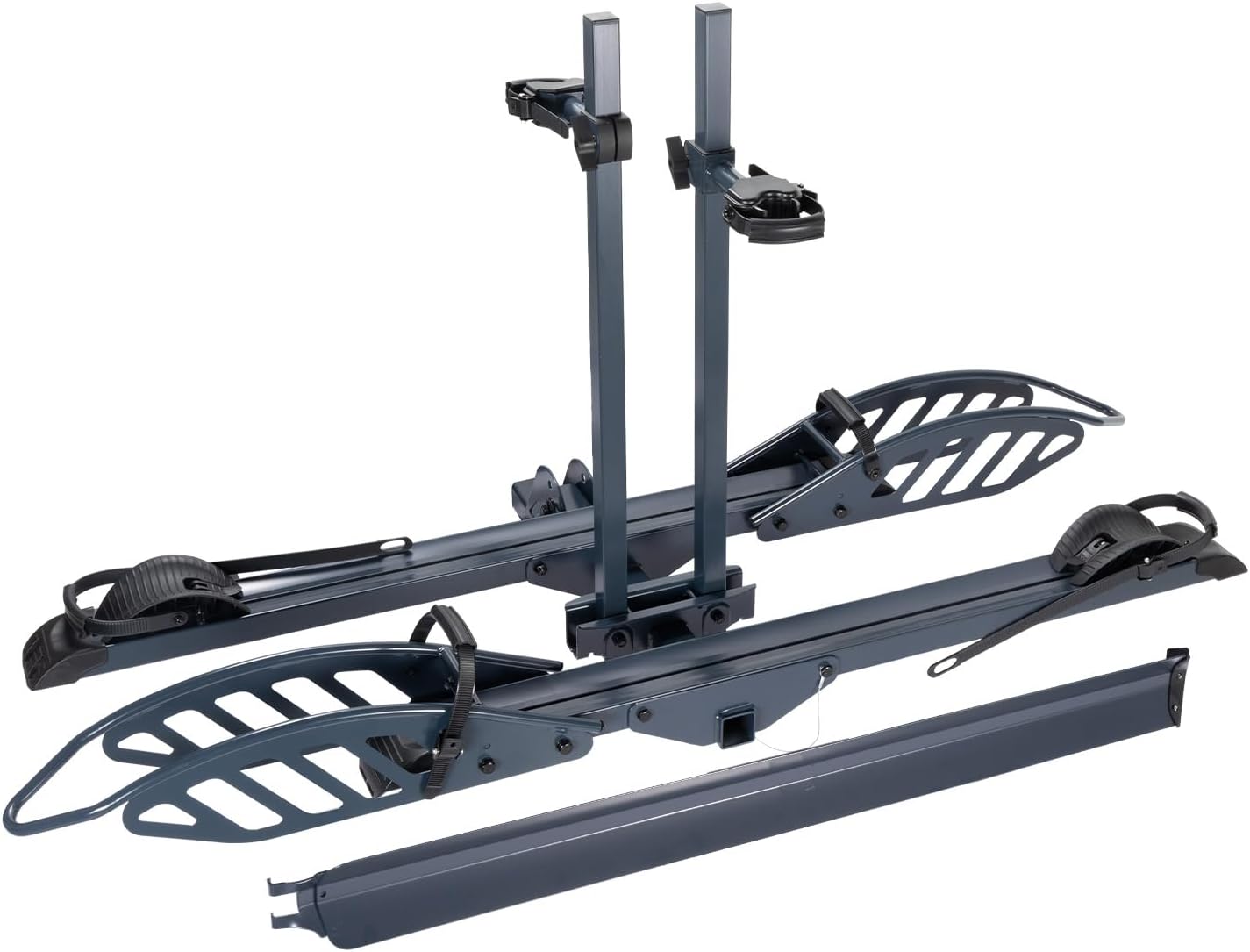
The CRAVOT CyberRack E2 is a heavy-duty 2-bike platform carrier built for hauling fat-tire and electric bikes from a 2-inch trailer receiver. It uses two individual support bars per bike, a V-shaped front wheel cradle, and a ratchet strap system to secure each bike at three points, while a bolt-mounted vertical post and shock-absorbing threads reduce movement on rough roads. The included ramp makes loading much easier for heavy e-bikes and stores on the rack when not in use, eliminating repetitive lifting. Construction mixes steel and aluminum with a corrosion-resistant coating to handle regular outdoor use. The rack is foldable for storage but is physically heavy, which makes assembly and attaching to the hitch easier with two people and may require a hitch extender on Wranglers with spare tires. Expect sturdy highway stability and less wobble than lighter carriers, but plan for the extra weight when installing, storing, or fitting the rack to tight rear-door vehicles like a 1997–2006 Jeep Wrangler with limited clearance.
Best for: Buyers who prioritize effortless loading and stable long-distance transport for heavy e-bikes or wide fat-tire bikes and who are prepared to handle a heavier, more durable carrier.
Less Ideal for: If you need a lightweight, single-person-install solution or regularly require tight rear-door clearance without an extender, choose a lighter platform or a different mount style.
- 200 lb total capacity suitable for two heavy e-bikes or fat-tire bikes.
- Integrated ramp simplifies loading and reduces the need to lift heavy bikes.
- Two-bar per-bike support, V-shaped cradle, and multiple straps increase stability during long trips.
- Foldable design lets the rack be stored up against the vehicle when not in use.
- Corrosion-resistant coating and mixed metal construction for durability on road trips.
- At about 75 lb assembled it is heavy and usually requires two people to mount or remove from the receiver.
- May need a hitch extender on Jeep Wrangler setups with a rear spare tire because of clearance limits.
Verdict: Buy this when you need effortless loading for fat‑tire or heavy e‑bikes—look for ramps, reinforced trays, and anti‑wobble features for long-distance stability.
Choosing the Right 1997-2006 Jeep Wrangler Bike Rack: Key Factors to Consider
Mount Type and Vehicle Fit
Mount type determines how a rack attaches and how it interacts with the Wrangler's rear geometry. Hitch-mounted racks need the correct receiver size and must clear the spare tire and bumper contours common on 1997-2006 Wranglers. Trunk or rear-door mounts must respect tailgate hinges and any aftermarket bumpers to avoid interference. Roof-mounted options are influenced by the presence or absence of factory roof rails and the height implications for loading bikes. Choosing the right mount minimizes wobble and prevents damage to the vehicle. For example, a well-fitted hitch rack will concentrate load near the vehicle's center and often provides better stability on uneven terrain. Conversely, a trunk-mounted or spare-mount solution can be lighter and easier to store but may stress tailgate hardware or obscure the license plate and lights. Verify attachment points and clearance before buying.
Weight Capacity and Bike Compatibility
Weight capacity sets the maximum safe load and should cover the heaviest bike you plan to carry. Consider both per-bike rating and the rack's total capacity to avoid overloading. Mountain bikes, electric-assist bikes, and fat-tire bikes vary widely in weight and wheelbase; choose a rack rated for your bike type. Pay attention to wheel sizes and frame shapes because some racks secure bikes by the frame while others cradle wheels. Mismatched capacity or contact points can lead to sagging, instability, or frame damage. If you frequently carry heavier bikes or multiple bikes, prioritize a higher rated capacity and solid attachment systems. Also check compatibility with accessories like fenders, kickstands, and full-suspension rear swings that affect how bikes sit in cradles.
Stability and Vibration Resistance
Stability is crucial, especially if you drive on gravel, dirt roads, or trails common to Jeep owners. Racks with anti-sway cradles or dedicated frame clamps reduce side-to-side movement and protect both the bike and the vehicle. Look for robust arm construction, multiple tie-down points, and padded contact areas to prevent scratching and absorb shocks from bumps. A stable rack reduces the chance of bikes shifting into the spare tire or the road. Assess how the rack secures both the wheel and the frame, and whether additional straps or locks are needed to control vibration. Durable fasteners and anti-corrosion finishes help maintain a stable connection over time and exposure to the elements.
Access to Rear Door, Spare Tire, and Lights
On a Wrangler, maintaining access to the spare tire, tailgate, and rear lights is an important practical concern. Some racks tilt or swing away to allow tailgate operation; others require partial removal to access the rear. Consider whether you need frequent access while bikes are loaded and choose a design that accommodates that usage pattern. A rack that interferes with the spare tire or obscures lights can be a safety and legal issue. Verify whether the rack blocks license plates or lights and if additional lighting or plate relocation is needed. For off-road trips, easy access without unloading bikes can be especially valuable.
Durability and Weather Resistance
Wranglers see varied conditions including mud, rain, salt, and sun. Choose materials and finishes that resist corrosion and wear. Powder-coated steel, stainless fasteners, and durable plastic components extend service life. Pay attention to welded joints and areas that trap water or grit which accelerate failure. Durable components also maintain fitment tolerances and reduce the need for frequent retightening. Consider replaceable wear parts like rubber cradles or straps so you can service the rack without replacing it entirely. A well-built rack reduces the risk of sudden failures during extended trips.
Storage, Portability, and Vehicle Clearance
How you store and transport the rack when not in use affects day-to-day convenience. Folding racks or those with removable arms are easier to stow in a garage or under a seat. Consider the weight of the rack itself, ability to fold flat, and whether components can be removed with simple tools. Vehicle clearance is also important for parking garages, steep driveways, and off-road obstacles. Roof racks raise overall vehicle height, while hitch or rear-mounted racks extend rear overhang. Balance portability with the profile you can live with between uses. Lightweight aluminum racks are easier to handle but may offer different durability tradeoffs compared with heavier steel designs.
Why Wrangler TJ, LJ, and TJU Owners Choose Rear-Mount Racks
The 1997-2006 Wrangler TJ, LJ, and TJU has compact rear dimensions and frequent use of a spare tire on the tailgate, which makes rear-mounted racks a common choice. Rear options put bikes close to the vehicle, preserving roof height and simplifying loading compared with roof-mounted systems.
Many rear-mount designs are optimized to avoid contact with spare tire carriers and to maintain tailgate access through swing-away or tilt features. For users who prioritize lower lift height and off-road stability, a well-designed rear rack often provides the best compromise between usability and performance.
- Lower lift height than roof racks
- Better center-of-gravity than roof-mounted bikes
- Options that swing or tilt to allow tailgate access
When a Hitch-Mounted Rack Makes Sense
Hitch-mounted racks concentrate load near the vehicle and typically offer the best stability for heavier bikes. If your Wrangler has a receiver hitch compatible with the 1997-2006 TJ, LJ, and TJU chassis, a hitch rack can simplify loading and reduce bike sway on rough trails.
Consider the hitch drop or rise and how the rack will clear the spare tire and bumper. Many hitch racks include anti-wobble hardware and straps that improve stability on uneven surfaces, which is important for Jeep owners using the vehicle off paved roads.
- Best option for heavier bikes and long trips
- Often includes anti-wobble and anti-sway features
- Requires a compatible receiver and checking spare tire clearance
Roof Racks: Pros and Cons for Jeep Wranglers
Roof racks keep the rear door and spare fully accessible and are great if you already use roof cargo for other gear. However, they raise vehicle height and can make loading bikes harder, especially without a lift or ramp. For riders with frequent garage parking or low-clearance situations, roof mounts may be less practical.
For the TJ, LJ, and TJU era Wrangler, roof racks are useful when carrying multiple items and when you need unobstructed rear access. If you choose a roof system, ensure it is rated for the dynamic loads of bikes and that loading can be done safely without risking falls or damage.
- Keeps rear access clear
- Increases vehicle height
- Requires safe loading technique or assistance
Integrated Security and Locking Considerations
Security features are important when leaving bikes unattended. Look for racks with built-in locks for both the bikes and the rack hitch or mounting clamps. If built-in locks are not available, plan to use keyed cable locks or frame locks to secure bikes to the rack.
Integrated locking mechanisms should be durable and weather-resistant to avoid seizing. For the TJ, LJ, and TJU Wrangler environment, corrosion-resistant locks and the ability to route tie-downs through secure points on the rack provide better protection against theft and unauthorized removal.
- Prefer racks with integrated keyed locks or lock-ready designs
- Use corrosion-resistant locks for longevity
- Consider cable routing that secures frame and wheels
Transporting Different Bike Types on a Jeep
Different bicycle styles change how you secure and position them. Full-suspension mountain bikes may need extra wheel straps to prevent rear shocks from compressing under braking or impact. Fat bikes and bikes with wide handlebars require wider cradles or adjustable arms to avoid rubbing.
If you plan to carry a mix of bikes, choose a rack with adjustable trays or arms and generous spacing between bikes. This reduces the likelihood of bikes contacting each other or rubbing against the vehicle during travel.
- Adjust spacing for wide handlebars and fat tires
- Use extra straps for full-suspension bikes
- Choose adjustable arms for mixed-bike fleets
Maintaining and Caring for Your Rack
Routine maintenance extends the life of your bike rack. Regularly inspect fasteners, cleaning salt and mud away, and lubricate moving parts to prevent seizure. Replace worn straps and padding before they fail to avoid sudden drops or scratches.
Store the rack in a dry place when not in use and keep spare hardware and mounting tools together. For Wrangler owners who frequently go off-road, check attachment points after rough trips and retorque hardware as needed.
- Inspect and tighten fasteners after off-road trips
- Clean salt and grit to prevent corrosion
- Replace straps and padding when worn
Still looking for the perfect fit?
Select your Jeep Wrangler configuration to see the most relevant Hitch-mounted Bike Racks recommendations
How We Chose the Best 1997-2006 Jeep Wrangler Bike Rack
We focused on practical fit and performance criteria that matter specifically for 1997-2006 Jeep Wrangler owners. Selection began by screening racks for physical compatibility with the Wrangler body, bumper designs, spare tire mounts, and typical ground clearance for TJ, LJ, and TJU-generation models. We prioritized carrying capacity suitable for adult mountain and gravel bikes, robust attachment hardware that resists vibration on rough roads, and rack geometries that preserve rear visibility and spare tire access. Key evaluation criteria included: secure mounting methods for Wrangler bumpers, receivers, or spare mounts; rated weight capacity per bike and total load; ease and repeatability of installation; anti-sway and anti-tilt features for off-road stability; and materials corrosion resistance for exposure to mud and salt. We excluded any rack that required irreversible vehicle modification or did not provide clear fit guidance for the 1997-2006 Wrangler. The final shortlist balances real-world durability with simple installation and effective bike retention.
Our full evaluation process is outlined in our review methodology.
FAQ
Will a hitch rack fit my 1997-2006 Wrangler TJ, LJ, and TJU?
It often depends on whether your Wrangler has a receiver hitch installed. If you have the correct receiver size and the rack clears the spare tire and bumper, a hitch rack can be compatible. Check the rack's clearance requirements against your bumper and spare tire location.
Can I carry fat-tire or full-suspension bikes on a Wrangler rack?
Many racks accommodate fat tires and suspension frames if they have wide cradles and adjustable arms. You may need extra straps or adapters for very wide tires or unusual frame geometries, and you should confirm the rack's weight rating.
Are roof racks practical for a 1997-2006 Wrangler TJ, LJ, and TJU?
Roof racks are practical if you need rear access and carry other rooftop gear, but they raise vehicle height and make loading heavier bikes more difficult. They suit owners who prioritize keeping the rear door clear over ease of loading.
How do I prevent bike sway on rough roads?
Choose a rack with anti-sway cradles or dedicated frame clamps and use multiple tie-down points. Properly tensioned straps and anti-wobble hitch hardware also reduce movement over rough terrain.
Will a rear-mounted rack block my spare tire or tailgate?
Some rear-mounted racks may interfere with spare tire access or obscure lights. Look for swing-away or tilt designs that restore access with bikes loaded, and verify whether additional steps are needed to keep lights and plates visible.
How much maintenance does a bike rack need for off-road use?
Off-road use increases the need for inspections and cleaning. Check fasteners and pivots after trips, clean off mud and salt, and replace worn straps or padding. Regular maintenance prevents corrosion and keeps attachment points secure.
Final Verdict
For 1997-2006 Jeep Wrangler owners, the right bike rack balances secure attachment, appropriate weight capacity, and easy access to the rear of the vehicle. Decide first on the mounting style that fits your driving habits—hitch or rear-mounted options usually offer lower lift height and better stability for trail use, while roof racks preserve rear access but raise loading difficulty. Prioritize a rack that matches your heaviest bike, provides anti-sway features for rough roads, and allows convenient tailgate access when needed. With attention to fit, capacity, and durability, you can pick a rack that keeps bikes secure and lets you focus on riding.
Explore More:
- Check out all Jeep Wrangler parts & accessories
- Explore Exterior Accessories
- Browse all Accessories
