

Note: This article contains affiliate links. If you click on these links and make a purchase, I may earn a small commission at no extra cost to you. This helps support my research and content. Read my full affiliate disclosure here.
If you drive a Ford Ranger, the cabin air filter plays a big role in the comfort and air quality inside your truck. Over time a clogged or inefficient filter can let pollen, dust, and road particles circulate in the cabin, causing odors and reduced airflow. This guide highlights seven shortlisted cabin air filters that fit the Ford Ranger and focuses on the attributes that matter most in everyday use. We evaluated options based on filtration efficiency, ease of installation, and durability so you can pick a replacement that suits your driving conditions. Read on to see the top picks and the criteria we used to narrow them down.
Looking for other parts? See all Ford Ranger parts & accessories.
Top Picks at a Glance
| Best Reviewed A top-rated pick with lots of positive feedback | Bosch 6081C HEPA Premium Cabin Air Filter |  |
| Most Popular A crowd favorite that many people choose with confidence | FRAM Fresh Breeze Cabin Air Filter with Arm & Hammer Baking Soda, CF12150 | 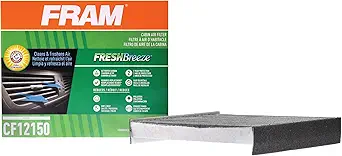 |
| Best Quality Built to a higher standard if you want something more solid | K&N Washable Lifetime Cabin Air Filter (VF2052) |  |
| Best Budget The cheapest option that still gets the job done reliably | COIRWANG Cabin Air Filter with Activated Carbon for Ford Ranger EcoBoost (CW12776-C) |  |
| Most Sold A high-volume bestseller chosen again and again | Bosch 6077C HEPA Cabin Air Filter | |
| Best Value for Money The sweet spot between price and what you get | Motorcraft FP-92 Cabin Air Filter |  |
| Best Overall The best all-around choice for most situations | K&N Lifetime Washable Cabin Air Filter (VF2049) |  |
1. Bosch 6081C HEPA Premium Cabin Air Filter

| Brand | Bosch |
|---|---|
| Model | 6081C |
| Filtration efficiency | 99.97% at 0.3 microns (per Bosch testing) |
This Bosch 6081C HEPA cabin air filter is built to remove very small particles from the air that enters your truck’s HVAC system, using a multi-layer HEPA-style media and an added static cotton layer for higher capacity. In practice it installs like a standard cabin filter and is intended for regular replacement to keep the system clean and reduce dust and allergens inside the cab. Notable features include structural ribs to keep the filter’s shape and a claimed 99.97% filtration efficiency at 0.3 microns based on Bosch testing standards. The practical benefit is cleaner, less dusty air and reduced deposits on blower components, which can help preserve HVAC performance and passenger comfort. Limitations are that HEPA-level media can slightly restrict airflow compared with low-efficiency filters and full HEPA performance is based on specific test conditions rather than in-vehicle measurements, so results may vary by cabin and driving environment.
Best for: Reliability-focused buyers who prioritize consistent cabin air quality and long-term HVAC health and want a durable, well-engineered replacement they can trust.
Less Ideal for: Drivers seeking maximum HVAC airflow for performance tuning or those who prefer the lowest possible purchase cost over filtration performance should consider simpler low-resistance filters instead.
- HEPA-rated media with claimed 99.97% efficiency at 0.3 microns for very fine particle capture
- Multi-layer construction including melt-blown electrostatic and cotton layers for higher capacity
- Structural ribs maintain shape and airflow characteristics over the service interval
- Designed to reduce deposits on HVAC fans and components, supporting system longevity
- HEPA-style density may modestly reduce airflow compared with lower-efficiency aftermarket or basic filters
- Performance claim is based on laboratory test conditions and may not match real-world in-cabin numbers
Verdict A well-built HEPA-style cabin filter aimed at buyers who want reliable, high-efficiency particulate removal to protect cabin air and HVAC components.
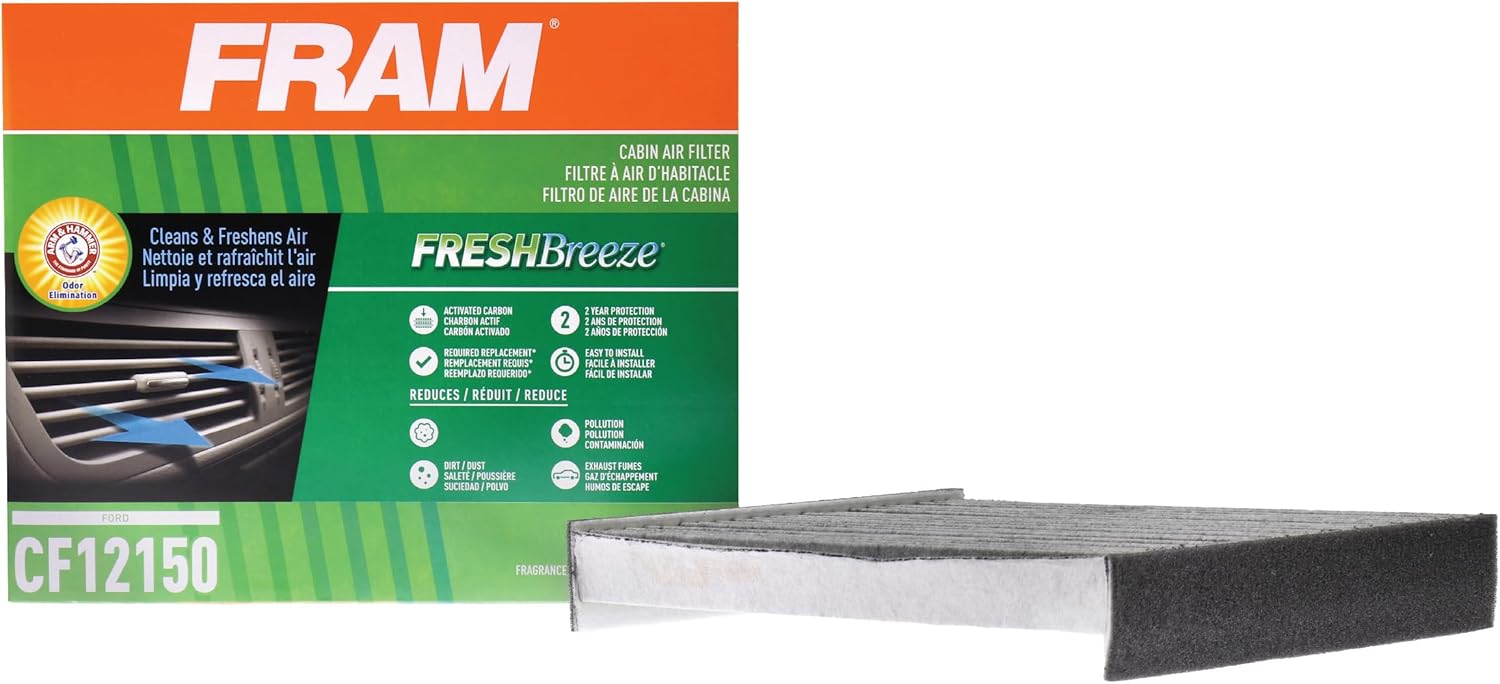
2. FRAM Fresh Breeze Cabin Air Filter with Arm & Hammer Baking Soda, CF12150
| Model Info | CF12150 |
|---|---|
| Material Type | Paper |
| Included Components | cabin air filter |
| Compatible Device | Air Conditioner |
This FRAM Fresh Breeze cabin air filter is a direct replacement designed to filter the air entering the passenger compartment and to reduce odors with embedded Arm & Hammer baking soda and activated carbon. It installs behind the glove box and is intended for routine cabin air filter replacement to keep HVAC airflow efficient and the cabin air cleaner. In practice the pleated media captures common road dust, pollen, and particles and reviewers report an easy, roughly 15-minute install in compatible trucks. The added baking soda and carbon aim to neutralize light odors and help with general cabin freshness. Practical benefits include simple fit-and-forget maintenance and protection for the HVAC blower and vents. Limitations are that it is a disposable paper-based filter so it does not offer high-efficiency particulate filtration at the level of medical-grade or HEPA-style aftermarket units, and odor control is modest for heavy contaminant events like wildfire smoke. Fit, performance, and longevity will follow normal replacement intervals for Ford Ranger HVAC systems.
Best for: Convenience-driven buyers who want a straightforward, easy-to-install cabin air filter that restores factory-level airflow and provides mild odor control with minimal fuss.
Less Ideal for: Drivers needing medical-grade particulate filtration or strong smoke/odor mitigation should consider specialty HEPA or activated-carbon-heavy aftermarket filters instead.
- Factory-style fit for easy drop-in replacement behind the glove box
- Embedded baking soda and activated carbon for basic odor reduction
- Pleated media captures common road dust and pollen to improve cabin comfort
- Quick install typically completed in about 15 minutes
- Paper-based disposable media is not as effective as HEPA-level filters for very fine particulates
- Odor and smoke removal is limited for heavy or prolonged contamination
Verdict A simple, easy-install factory-replacement cabin filter that improves basic dust filtration and mild odor control but is not a substitute for HEPA-grade protection.
3. K&N Washable Lifetime Cabin Air Filter (VF2052)

| Model | VF2052 |
|---|---|
| Brand | K&N |
| Reusable | Yes |
| Pre-treated | Yes |
This K&N cabin air filter is a washable, lifetime replacement intended to drop into the factory cabin air box and improve HVAC airflow and odor control on a Ford Ranger. It is pretreated and plugs in without tools in minutes, so typical use is a straightforward swap of the factory filter followed by occasional low-pressure water cleaning instead of regular replacement. The filter is engineered to deliver higher airflow for stronger heating and cooling performance and is treated to help reduce musty smells that can develop with dirty disposable filters. The practical benefits for a performance-minded Ranger owner are steadier HVAC output, less frequent maintenance purchases, and reduced waste. Limitations to consider are the initial oil smell some users report after unboxing and the higher upfront cost compared with disposable filters; it also requires periodic cleaning rather than a simple toss-and-replace service interval.
Best for: Performance-oriented Ranger owners who prioritize HVAC airflow and long-term value and are willing to perform periodic cleaning rather than replace filters frequently.
Less Ideal for: Drivers who prefer strictly maintenance-free, no-clean disposable filters or who want the lowest possible upfront purchase cost.
- Washable and reusable design eliminates recurring filter purchases
- Built for increased airflow to improve HVAC heating and cooling efficiency
- Pretreated and drop-in installation for quick, tool-free fitment
- Treated media helps reduce cabin odors compared with dirty disposable filters
- Some units have an initial oil-like odor that can take time to dissipate
- Higher upfront cost versus single-use disposable cabin filters
Verdict For Ford Ranger drivers chasing better HVAC airflow and a one-time upgrade, this washable K&N cabin filter delivers long-term performance at a higher up-front cost.
4. COIRWANG Cabin Air Filter with Activated Carbon for Ford Ranger EcoBoost (CW12776-C)

| Brand | COIRWANG |
|---|---|
| Model | CW12776-C |
| Compatible vehicles | Ford Ranger EcoBoost 2019-2023 |
| Replacement for | Fram CF12776; Ford KB3Z-19N619-A |
This COIRWANG cabin air filter is a direct-fit replacement listed for Ford Ranger EcoBoost 2019–2023 and uses a multilayer media with a coconut-shell activated carbon layer to trap dust, pollen, and odors. It installs in the glove-box access area like a factory filter and includes simple instructions for a quick DIY swap. The multi-layer construction aims to balance particle capture with airflow, and many users report improved cabin smell and noticeably cleaner airflow after installation. As a budget option it delivers solid filtration performance compared with more expensive branded filters, and the carbon layer is a practical plus if you often drive in traffic or near exhaust sources. Expect occasional fitment inconsistencies with newer chassis revisions, so confirm compatibility before buying. Some drivers also note a slightly more restrictive feel compared with higher-flow designs, which can matter if you prioritize maximum HVAC airflow. For routine maintenance the manufacturer recommends annual replacement or more frequently in dusty conditions.
Best for: Budget-conscious Ford Ranger owners who prioritize affordable, cleaner cabin air and prefer doing routine maintenance themselves to stretch running costs.
Less Ideal for: Drivers who need the absolute highest HVAC airflow or who own Ranger model years outside the stated fitment should consider higher-flow or specifically matched alternatives.
- Direct-fit listed for Ford Ranger EcoBoost 2019–2023 for easy, no-modification installation
- Coconut-shell activated carbon layer reduces odors and absorbs vehicle exhaust smells
- Multi-layer media designed to capture pollen, dust, and fine particulates
- Clear installation instructions make it a quick DIY maintenance item
- Lower-cost alternative to factory-brand carbon filters with comparable user-reported performance
- May fit some model years inconsistently; verify fitment for your Ranger generation before purchase
- Slightly more restrictive airflow reported by some users compared with high-flow premium filters
Verdict A cost-effective activated-carbon replacement that improves cabin air and odor control for most 2019–2023 Ford Ranger EcoBoost owners, provided you confirm fitment.
5. Bosch 6077C HEPA Cabin Air Filter
| Model | 6077C |
|---|---|
| Filtration efficiency | 99.97% at 0.3 microns |
| Compatible vehicles | Select Ford models (verify fit for Ford Ranger) |
| Layers | Melt-blown electrostatic + static cotton layer |
The Bosch 6077C is a HEPA cabin air filter engineered to capture very small particles down to 0.3 microns and improve the air inside your Ford. It installs like a standard replacement filter and is intended for annual service intervals; typical use is simple DIY replacement behind the glovebox or in the cowl depending on the Ranger’s service access. Key features include a melt-blown electrostatic layer, an added static cotton layer for higher dust capacity, and structural ribs that help the filter keep its shape and airflow. In practice that means stronger filtration against pollen, smoke and fine soot compared with basic paper filters, and fewer odors without chemical deodorizers. Expect slightly reduced vent airflow compared with a low-restriction filter because dense HEPA media resists airflow more. Also this is a vehicle-specific fit so confirm correct application for your Ford Ranger trim and year before buying. The design focuses on filtration performance and durability rather than maximizing airflow or odor removal through activated charcoal.
Best for: Practical, risk-averse buyers who prioritize proven filtration and respiratory protection over marketing claims and want a durable, factory-quality replacement for routine maintenance.
Less Ideal for: Drivers seeking maximum odor removal or those who prioritize unrestricted HVAC airflow should consider filters with activated carbon or lower-resistance designs instead.
- HEPA-rated media offers high filtration efficiency at 0.3 microns
- Electrostatic and cotton layers increase particle capture and capacity
- Structural ribs maintain shape for consistent airflow over life
- Designed for straightforward replacement in compatible Ford vehicles
- Denser HEPA media can slightly reduce cabin vent airflow compared with standard filters
- No activated charcoal layer for active odor or gas adsorption
Verdict If you want near-HEPA level particle protection for your Ford and a straightforward replacement, this Bosch filter delivers strong filtration though it may slightly reduce vent airflow.
6. Motorcraft FP-92 Cabin Air Filter

| Brand | Motorcraft |
|---|---|
| Model | FP-92 |
| Fit type | Vehicle Specific |
| OEM Part Number | FP-79, FP-92 |
The Motorcraft FP-92 is a direct-fit cabin air filter intended to replace the factory unit in compatible Ford vehicles, restoring cabin airflow and filtration. It installs in the Ranger's glove-box/airbox access like the factory part and is used during routine HVAC service or filter replacement intervals. The filter's factory-quality fit reduces installation fuss and prevents gaps that can let dust and debris bypass the media. Buyers can expect consistent airflow and sensible filtration without the reduced airflow or fit issues reported for some aftermarket high-flow or oversized filters. Practical benefits include straightforward installation, predictable performance, and parts engineered by the same brand that supplies Ford, which simplifies parts matching for maintenance. Limitations are minimal for typical daily use on a Ranger: this is a standard paper/pleated cabin filter so it does not offer specialized activated-carbon odor control or HEPA-level filtration for severe allergy needs. If you need advanced odor or ultra-fine particle control, consider a specialty filter instead.
Best for: Practical optimizers who prioritize a no-nonsense, factory-matching replacement that keeps maintenance simple and the Ranger's HVAC performing as intended.
Less Ideal for: Drivers who need enhanced odor absorption or medical-grade filtration should consider specialty activated-carbon or HEPA-style cabin filters instead.
- Factory-quality fit engineered for Ford vehicles reduces installation problems and air bypass.
- Straightforward, vehicle-specific design makes installation quick during routine Ranger maintenance.
- Restores original airflow and cabin ventilation performance compared with ill-fitting aftermarket filters.
- Widely used replacement part with a long track record and extensive user feedback.
- Does not include activated carbon or odor control features.
- Not designed as a high-efficiency HEPA-grade filter for severe allergy or air-quality needs.
Verdict If you want a straightforward, factory-quality cabin filter that restores the Ranger's original airflow without surprises, the Motorcraft FP-92 is a practical value choice.
7. K&N Lifetime Washable Cabin Air Filter (VF2049)

| Compatible vehicles | Ford Ranger (fitment specific) |
|---|---|
| Material | Cotton |
| Reusable | Yes, washable and reusable |
| Included components | Cabin air filter, instruction sheet, decals(2) |
The K&N Lifetime cabin air filter replaces the factory cabin filter to filter incoming air for the passenger compartment while improving heating and cooling airflow. It is built from a washable cotton media treated to help control odors and is intended to be cleaned with low-pressure water instead of replaced every service interval. Typical use is straightforward: drop the filter into the Ranger’s cabin air box during routine maintenance, rinse and let dry when it becomes dirty, and reinstall. Notable features include a reusable design that reduces recurring filter purchases and claimed higher airflow versus disposable paper elements. Practical benefits are lower long-term cost, less landfill waste, and potentially stronger HVAC performance under heavy use. Important limitations are that washable filters require periodic cleaning and proper drying to avoid mold or odor, and some users report that very fine dust may pass more readily than high-efficiency disposable cabin filters, so it may not match HEPA-level filtration for severe allergy situations.
Best for: Balanced buyers who want a low-maintenance, long-term cabin air solution for a Ford Ranger and value improved HVAC airflow and reduced recurring costs.
Less Ideal for: Drivers with severe allergy concerns or those who prefer maximum particulate capture from single-use HEPA-style cabin filters should consider alternatives.
- Washable and reusable so you do not need to buy replacements regularly
- Designed to increase airflow for heating and cooling efficiency
- Pre-treated to help reduce cabin odors
- Fits factory cabin air box for straightforward drop-in installation
- Requires routine cleaning and full drying to maintain performance and avoid odor
- May not trap the finest particulate matter as effectively as some high-efficiency disposable filters
Verdict A durable, reusable upgrade for Ford Ranger owners who want better airflow and lower long-term cost but who can commit to periodic cleaning.
Choosing the Right Ford Ranger Cabin Air Filter: Key Factors to Consider
Filtration Efficiency
Filtration efficiency determines how well a cabin air filter captures pollen, dust, and fine particulate matter. Higher-efficiency media remove a larger share of small particles, which directly affects allergy symptoms and general comfort inside the vehicle. Choose a filter with a rated ability to trap fine particulates if you frequently drive in urban areas or during high pollen seasons.
Keep in mind that very dense filter media can restrict airflow. A balance between particle capture and airflow preservation helps maintain HVAC performance and prevents reduced cabin ventilation.
Fit and Compatibility
Correct physical fit is critical for the Ford Ranger cabin air filter because gaps or an oversized filter can allow unfiltered air to bypass the media. Look for filters that explicitly list Ford Ranger fitment or match the Ranger’s OEM dimensions to ensure a snug, secure installation.
Consider the filter frame and sealing surface as well. A rigid frame and consistent sealing edge reduce the chance of warping or leaks, especially in climates with temperature extremes that affect plastic components.
Durability and Moisture Resistance
Durability affects how long a cabin air filter will perform before replacement is needed. Filters exposed to moisture from rain, snow, or high-humidity environments can experience media degradation or microbial growth if not designed for resistance. Seek filters using treated or synthetic media that hold up to intermittent moisture without losing integrity.
Durable construction extends service intervals and reduces the risk of sagging or tearing during installation and removal. Robust filters also tend to maintain filtration and airflow characteristics across their rated lifespan.
Airflow and HVAC Impact
A cabin air filter must filter contaminants without unduly restricting airflow to the HVAC system. Excessive restriction can reduce cabin ventilation, strain the blower motor, and affect defogging performance. Choose a filter designed to balance filtration with low resistance so that the Ranger’s heating and cooling systems operate efficiently.
If you frequently use recirculation mode or drive in stop-and-go traffic, pay particular attention to filters engineered for low pressure drop to avoid noticeable impacts on fan speed and cabin comfort.
Ease of Installation
Many Ford Ranger owners perform cabin air filter changes themselves, so ease of installation matters. Simple access to the filter housing, clear orientation markers on the filter, and a durable frame that resists bending make replacement faster and less error-prone.
Filters that include clear arrows for airflow direction and fit tightly without force reduce the chance of incorrect installation. A design that does not require special tools is ideal for routine maintenance and seasonal swaps.
Service Life and Maintenance Interval
Service life influences how often you need to replace the cabin air filter and therefore affects long-term convenience. Filters marketed with extended-life media can be beneficial if you prefer less frequent maintenance, but longer-life media should still maintain adequate filtration efficiency over time.
Consider your typical driving conditions when estimating replacement intervals. Dusty or high-allergen environments will shorten usable service life, while mostly highway driving in cleaner areas may allow longer intervals between changes.
FAQ
How often should I replace the Ford Ranger cabin air filter?
Replacement intervals often depend on driving conditions, but many owners change the filter every 12,000 to 24,000 miles or annually as a guideline. If you drive in dusty areas or see reduced airflow and odor, inspect and replace the filter sooner.
What are common symptoms of a failing cabin air filter?
Common signs include reduced HVAC airflow, unpleasant odors from the vents, increased dust on interior surfaces, and more noticeable allergy symptoms while driving. These symptoms often indicate the filter is clogged or saturated and needs replacement.
Can I replace the cabin air filter myself on a Ford Ranger?
Yes. The Ford Ranger cabin air filter is typically accessible and designed for owner servicing. Basic replacement usually requires no special tools and involves removing the housing cover, swapping the filter, and reinstalling the cover while observing the correct airflow orientation.
Should I choose an OEM cabin filter or an aftermarket option?
Both OEM and reputable aftermarket filters can work well. OEM parts are designed to match vehicle specifications precisely, while quality aftermarket options may offer different media types or enhanced filtration. Prioritize clear fitment information and verified filtration claims when selecting an aftermarket filter.
Does a higher-efficiency cabin pollen filter reduce odors?
Higher-efficiency particulate filters capture more pollen and fine dust, which can reduce some odor sources tied to particulates. However, odors from gases or strong VOCs may require activated carbon or specialized media to be reduced effectively, as standard particulate filters do not always address gaseous contaminants.
How We Chose the Best Ford Ranger Cabin Air Filter
To create this list we focused on concrete, vehicle-specific performance and compatibility factors relevant to Ford Ranger owners. Key evaluation criteria included filtration efficiency against pollen and fine particulates, physical fit and mounting reliability for the Ranger’s filter housing, service life under typical driving conditions, and ease of replacement for DIY maintenance. We also considered airflow impact to avoid excessive HVAC strain and material quality to resist moisture and odor buildup. We excluded options that lacked clear fitment information for the Ford Ranger, aftermarket filters with unverifiable filtration claims, and products with inconsistent user reports about installation fit. Our process prioritized filters that balance effective particle capture with good airflow and straightforward installation. The result is a set of top-rated cabin air filters suited to common driving environments and maintenance habits.
Our full evaluation process is outlined in our review methodology.
Conclusion
When choosing a Ford Ranger cabin air filter, prioritize filtration efficiency, correct fit, and low airflow restriction to balance air quality with HVAC performance. Consider durability and moisture resistance if you drive in wet or extreme climates, and favor filters that are straightforward to install if you plan to do regular maintenance yourself. Tradeoffs are common: denser media captures more small particles but can increase airflow resistance, while extended-life filters reduce replacement frequency but must still sustain filtration performance. Use the factors outlined here to match a filter to your driving environment and maintenance preferences.
Explore More:
- Check out all Ford Ranger parts & accessories
- Explore HVAC
- Browse all Auto Parts
