

Note: This article contains affiliate links. If you click on these links and make a purchase, I may earn a small commission at no extra cost to you. This helps support my research and content. Read my full affiliate disclosure here.
Picking the right coolant for a 2011-2016 Ford F-350 matters because the wrong formula can accelerate corrosion, reduce heat rejection, or shorten maintenance intervals. For trucks that tow, haul, or see heavy-duty use, coolant affects engine temperature control, heater performance, and longevity of the entire cooling system.This guide presents seven shortlisted coolants suited to the 2011-2016 F-350. Each option was selected for freeze and boil protection, corrosion control, and compatibility with Ford cooling systems. Below we explain how we evaluated candidates and what to consider before you pour any fluid into your radiator or overflow reservoir.
Top Picks at a Glance
| Best Overall Coolant A balanced, OEM-compatible coolant that combines protection and longevity | Zerex Dex‑Cool 50/50 Ready-to-Use Antifreeze/Coolant 1 Gallon |  |
| Best Budget Coolant An inexpensive ready-to-use 50/50 option that protects on a budget | PEAK 50/50 Prediluted Antifreeze & Coolant, 1 Gal. |  |
| Best OEM Ford Coolant Factory-formulated fluid designed to match Ford specifications and materials | Ford Genuine VC-13-G Yellow Concentrated Antifreeze/Coolant, 1 Gallon |  |
| Best Heavy-Duty Diesel Coolant A nitrite-free or HD formula made for diesel engines and heavy loads | Zerex Heavy Duty Extended Life Nitrite Free Red Antifreeze Coolant (1 Gallon, Case of 6) |  |
| Best Prediluted 50/50 Coolant Ready-to-use premixed coolant for fast top-offs and simple service | Zerex Original Green 50/50 Prediluted Antifreeze/Coolant 1 gal |  |
| Best Concentrate Coolant A concentrated formula you dilute to the desired freeze/boil protection | Zerex G05 Phosphate-Free Concentrate Antifreeze/Coolant (1 Gallon) |  |
| Best Extended-Life Coolant An OAT/extended-life formula engineered for long service intervals and durability | PEAK OET Extended Life Orange 50/50 Prediluted Antifreeze/Coolant, 1 Gal |  |
1. Zerex Dex‑Cool 50/50 Ready-to-Use Antifreeze/Coolant 1 Gallon
Best Overall Coolant

| Type | Organic Acid Technology (OAT) |
|---|---|
| Mix | 50/50 ready-to-use |
| Volume | 1 gallon |
| Formulation | Silicate- and phosphate-free |
| Bittering agent | Contains denatonium benzoate (30–50 ppm) |
Zerex Dex‑Cool 50/50 arrives pre-mixed so you can top off or refill the cooling system without additional dilution. It uses organic acid technology to control corrosion, scale and rust across common cooling system metals including aluminum, and the formulation is silicate- and phosphate-free to avoid deposit buildup. In practice this means fewer coolant-related leaks and cleaner radiators and water pumps over time, which helps extend component life. The orange OAT formula is intended for vehicles that specify Dex‑Cool type coolant and is suitable for routine maintenance or a full system flush. It provides strong freeze and boil protection when used as directed. Limitations: it is a long-life OAT coolant, so it is not interchangeable with conventional green IAT coolants and should not be mixed with them; follow the Ford F-350 coolant spec and perform a complete flush if switching types to avoid compatibility issues.
Best for: A mechanic seeking a dependable, factory‑style long-life coolant for routine maintenance or system flushes on vehicles that require an OAT orange coolant, prioritizing corrosion protection and long service intervals.
Less Ideal for: Do not choose this if you need a conventional green antifreeze or if the vehicle manufacturer specifies a different coolant chemistry without confirming a full flush and compatibility first.
- Ready-to-use 50/50 mix eliminates need for onsite dilution and reduces installation errors.
- Organic acid technology resists corrosion, scale and rust on aluminum and other metals.
- Formulation is silicate- and phosphate-free to minimize deposit formation.
- Suitable for topping off or full system flushes when vehicle requires Dex‑Cool type coolant.
- Not compatible with conventional green IAT coolants and must not be mixed with them.
Verdict: The pick for mechanics who want a reliable, all-around coolant that protects against corrosion, freezing and boiling while matching factory performance expectations.
2. PEAK 50/50 Prediluted Antifreeze & Coolant, 1 Gal.
Best Budget Coolant

| Compatible with Vehicle Type | Car, Truck, Motorcycle, SUV |
|---|---|
| Automotive Fit Type | Universal Fit |
| Liquid Volume | 1 Gallons |
| Size | 50/50 |
This PEAK 50/50 prediluted antifreeze is a ready-to-use coolant intended for routine top-offs and coolant changes in light-duty engines. It provides basic freeze and boil protection without needing dilution, so installation is straightforward: drain or top the Ford F-350 cooling system and add directly. The formula includes inhibitors that protect common cooling-system metals, including aluminum, and PEAK claims long service life, which simplifies maintenance schedules. The jug format makes pouring and storage easy for a garage or pickup truck toolkit. Limitations are that this is a universal, conventional coolant rather than a vehicle-specific formula; for fleets or heavy-duty applications owners who follow manufacturer-specified coolant chemistries may prefer a product matched to Ford recommendations. Also, if you need extended heavy-duty service beyond routine highway use, a coolant marketed specifically for diesel heavy trucks might be more appropriate.
Best for: Buyers who want an affordable, no-mix coolant for routine maintenance and easy top-offs on a 2011–2016 Ford F-350 and prioritize convenience over vehicle-specific chemistry.
Less Ideal for: Owners seeking a heavy-duty diesel coolant tailored to Ford diesel specifications or those requiring a coolant matched to a dealer-recommended formula should consider alternatives.
- Ready-to-use 50/50 formula requires no mixing and speeds top-offs.
- Corrosion inhibitors protect aluminum and common cooling-system metals.
- One-gallon jug is convenient for single-service fills and garage storage.
- Universal fit for passenger cars, SUVs, motorcycles, and light/medium trucks makes it versatile.
- Not formulated specifically for heavy-duty diesel cooling systems or manufacturer-specified chemistries.
Verdict: Choose this when you need a low-cost, pre-mixed antifreeze that gives basic freeze/boil protection and corrosion resistance for routine maintenance.
3. Ford Genuine VC-13-G Yellow Concentrated Antifreeze/Coolant, 1 Gallon
Best OEM Ford Coolant

| Type | Concentrated ethylene glycol antifreeze/coolant |
|---|---|
| Color | Yellow |
| Mix Ratio | 50/50 with distilled water |
| Freeze/Boil Protection | Down to -34°F / up to 265°F |
This Ford Genuine VC-13-G concentrated antifreeze is a factory-formulation coolant intended for use in gasoline and diesel engines that require the manufacturer's yellow formula. You mix it 50/50 with distilled water to achieve freeze protection down to about -34°F and boil-over protection up to roughly 265°F, while built-in corrosion inhibitors help protect aluminum and other cooling-system metals. The concentrate is practical for DIY maintenance because one gallon yields two gallons of ready-to-use coolant and it contains a bittering agent to discourage ingestion. Important to note, the product description warns against mixing different colors or coolant chemistries, so you should fully flush any existing fluid of a different type before switching. This coolant is best used when following Ford service guidance to maintain chemical compatibility with factory seals and hoses rather than as a universal aftermarket substitute.
Best for: DIY owners who prioritize maintaining factory chemical compatibility and want a genuine Ford coolant for scheduled cooling-system service on their vehicle.
Less Ideal for: People looking for a universal or multi-vehicle aftermarket coolant solution or those unwilling to flush an existing different-type coolant before use.
- Factory-formulated concentrate matched to Ford specifications
- Provides year-round freeze and boil protection when diluted 50/50
- Includes corrosion inhibitors for long-term cooling system protection
- One-gallon concentrate yields two gallons of ready-to-use coolant
- Not compatible with different color or chemistry coolants—requires full system flush before switching
Verdict: For DIYers who prefer factory-spec fluids, this slot is for OEM-formulated coolant that ensures chemical compatibility with original cooling-system components.
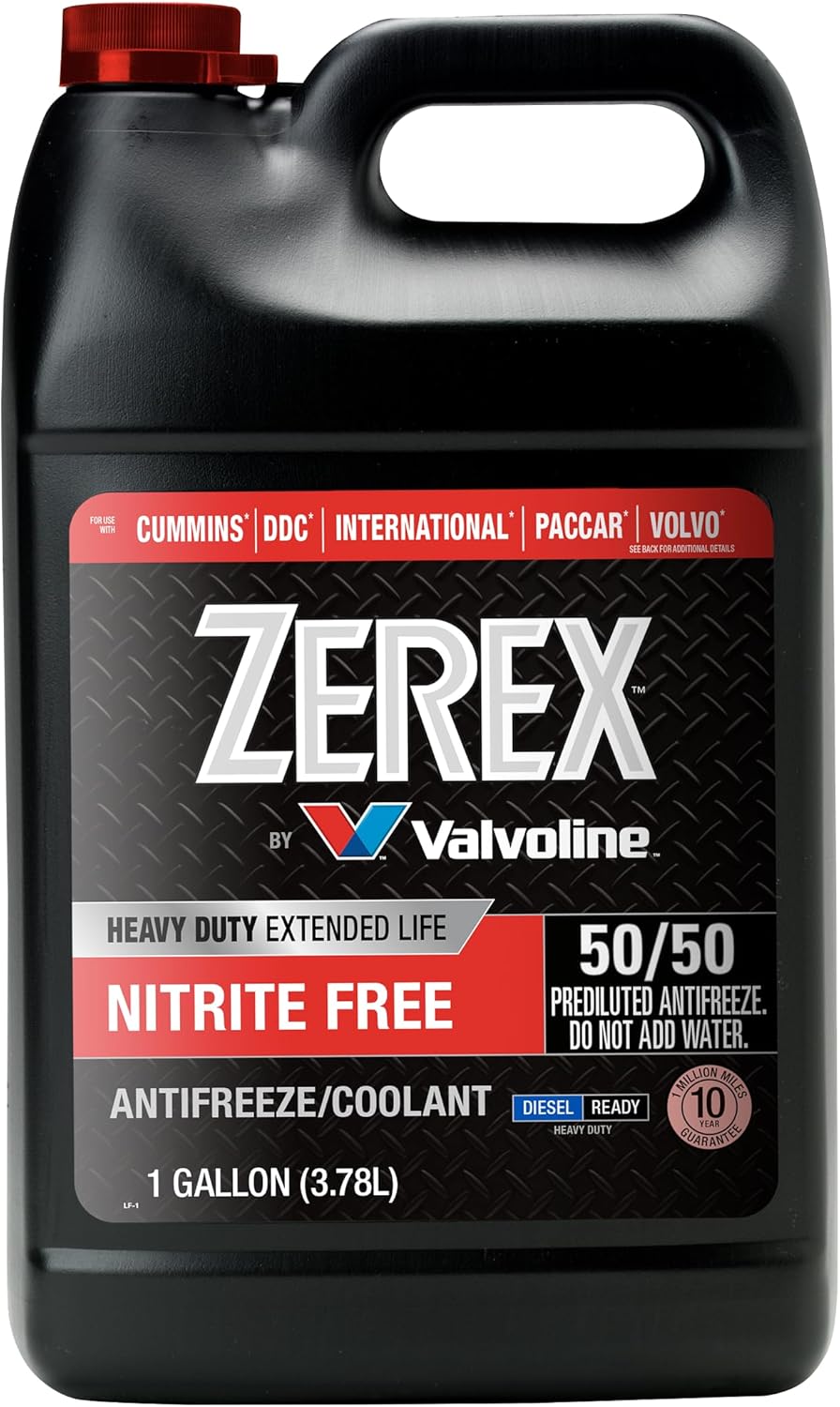
4. Zerex Heavy Duty Extended Life Nitrite Free Red Antifreeze Coolant (1 Gallon, Case of 6)
Best Heavy-Duty Diesel Coolant
| Brand | Zerex |
|---|---|
| Model | Heavy Duty Extended Life Nitrite Free |
| Formulation | 50/50 ready-to-use, Organic Acid Technology |
| Service life claim | Up to 10 years / 1,000,000 miles / 20,000 hours |
| Approvals | Cummins CES-14603, ASTM D6210 |
This Zerex heavy-duty extended life coolant is designed for diesel engines and uses Organic Acid Technology to provide long-lasting protection without silicates or nitrites. It is commonly used as a ready-to-use 50/50 coolant in fleets and owner-operated trucks that face heavy towing, long-haul duty, or frequent high-load cycles. The formulation is registered to Cummins CES-14603, conforms to ASTM D6210, and is backward compatible with systems that accept OAT coolants. Practical benefits include up to 10 years or 1,000,000 miles / 20,000 hours of service life before extenders are needed and improved aluminum corrosion protection to help prevent liner pitting and hard water scale. Because it is nitrite and silicate free, it avoids issues associated with silicate depletion but may not match protective mechanisms found in some nitrite-containing heavy-duty formulas for certain legacy systems. Use in the cooling system should follow Ford F-350 service recommendations for coolant type and change intervals to maintain warranty and cooling system performance.
Best for: Drivers who operate a 2011–2016 Ford F-350 in towing or severe-duty conditions and want a long-life, diesel-rated coolant that minimizes corrosion and liner pitting risk.
Less Ideal for: Owners running older diesel engines that specifically require nitrite-based coolants or fleet programs that mandate a different coolant specification should consider other approved formulas.
- Organic Acid Technology provides long, non-depleting corrosion protection suitable for extended intervals
- Registered to Cummins CES-14603 and meets ASTM D6210 for heavy-duty diesel compatibility
- Silicate- and nitrite-free formula reduces risk of silicate-related deposits and protects aluminum components
- Rated for very long service life up to 10 years or 1,000,000 miles / 20,000 hours
- Not a nitrite-containing formulation so some legacy heavy-duty engines that rely on nitrite protection may need a different spec
Verdict: Pick this heavy-duty coolant if you run a diesel under towing or severe use and need extra protection against cavitation, corrosion and high thermal stress.
5. Zerex Original Green 50/50 Prediluted Antifreeze/Coolant 1 gal
Best Prediluted 50/50 Coolant

| Brand | Zerex |
|---|---|
| Model | Original Green |
| Prediluted | 50/50 ready-to-use |
| Volume | 1 gal |
Zerex Original Green 50/50 comes premixed so you can top off a Ford F-350 cooling system without measuring concentrate or mixing water. It uses an inorganic additive technology with low silicate levels to help protect radiators, water pumps and engine metal from corrosion and scale, which is useful for older cooling systems or vehicles that see long service life. The one-gallon jug is convenient for DIY quick maintenance and for flushing and refilling the system during scheduled service. Because it is a low-silicate, IAT-style formula, it is intended for applications that call for traditional green coolant rather than long-life organic formulations, so you should confirm Ford's coolant spec for your 2011-2016 F-350 before using it. The product is free of borates, amines and nitrites and includes a bittering agent for safety around pets and children.
Best for: DIY owners doing quick maintenance or a routine coolant flush on a 2011–2016 Ford F-350 who want a ready-to-use green coolant that simplifies topping off and reduces mixing mistakes.
Less Ideal for: Owners seeking extended-life or organic acid coolants specified for certain Ford applications should consider manufacturer-recommended long-life formulas instead.
- Comes 50/50 prediluted for instant use and no mixing errors
- IAT low-silicate formula designed to reduce corrosion and scale in metal cooling parts
- Packaged in a one-gallon jug sized for typical flush-and-fill service
- Formulation omits borates, amines and nitrites which some buyers prefer
- IAT green formula is not a long-life organic coolant and may not match all Ford extended-life specifications
Verdict: This slot is for pre-mixed 50/50 antifreeze that saves mixing time and reduces dosing errors during quick DIY maintenance.
6. Zerex G05 Phosphate-Free Concentrate Antifreeze/Coolant (1 Gallon)
Best Concentrate Coolant

| Brand | Valvoline |
|---|---|
| Model | G05 |
| Concentrate type | Phosphate-free HOAT concentrate |
| Volume | 1 gallon |
Zerex G05 concentrate is a long-life, phosphate-free coolant designed to be mixed to the dilution you need for topping off or a full system refill. It uses hybrid organic acid technology and virgin ethylene glycol to protect aluminum and other cooling system metals from corrosion, control deposits and reduce leaks, and includes nitrites for diesel cylinder liner cavitation protection. Typical use is to mix with clean water at the recommended ratios for seasonal freeze/boil protection then drain and refill or top the reservoir as part of routine maintenance. For a 2011–2016 Ford F-350, this formula matches the chemistry many diesel Ford engines require and helps protect radiators, water pumps and hoses while minimizing scale and deposits. The concentrate format lets you set the exact mixture, store spare gallons, and avoid compatibility issues with pre-diluted mixes. Limitations are that correct mixing and flush procedures matter for best results and you must follow Ford service guidance for coolant type and change intervals for heavy-duty duty cycles.
Best for: Buyers who prefer to stock and mix their own coolant to achieve precise dilution and ensure the chemistry matches their 2011–2016 F-350 diesel or gasoline cooling system needs.
Less Ideal for: Drivers who want a ready-to-use pre-diluted product or who prefer dealer service that supplies factory-mixed coolant.
- Concentrate lets you control dilution for seasonal protection and topping off.
- Hybrid Organic Acid Technology protects aluminum and other metals from corrosion.
- Includes nitrites to guard diesel cylinder liners from cavitation.
- Low-silicate, phosphate-free formula reduces deposits and scale.
- Designed for long-life performance in heavy-duty gasoline and diesel applications.
- Requires correct mixing with clean water and proper system flush to avoid contamination.
Verdict: Choose a concentrate when you want to control dilution ratio, stock spare gallons, or match a specific coolant chemistry before topping up the system.
7. PEAK OET Extended Life Orange 50/50 Prediluted Antifreeze/Coolant, 1 Gal
Best Extended-Life Coolant

| Capacity | 1 gallon |
|---|---|
| Dilution | 50/50 prediluted |
| Service life claim | Up to 400,000 miles or 15 years (with flush and fill) |
This PEAK OET Extended Life Orange coolant is a ready-to-use 50/50 formula designed for North American engines that require organic acid technology. It is intended for top-offs or complete flush-and-fill service and claims long service life protection when installed correctly. The formulation focuses on corrosion and rust prevention for aluminum and mixed-metal cooling systems common in modern trucks, and the prediluted mix makes filling quick without measuring. Notable features include extended-life chemistry compatible with other extended-life coolants and a bittering agent to discourage accidental ingestion. Practical benefits for a 2011-2016 Ford F-350 include simplified maintenance with fewer drain-and-fill cycles and solid protection for aluminum radiators, water pumps, and heater cores. Limitations are that this is a specific orange OAT formulation intended for vehicles requiring that chemistry, so it should not be mixed with conventional green IAT coolants or some hybrid formulas without a full system flush. Also, concentrate options require dilution for systems that do not accept prediluted fluid.
Best for: Mechanics and owners who prioritize long replacement intervals and strong corrosion protection for aluminum-heavy cooling systems and want a ready-to-use product to simplify service.
Less Ideal for: Drivers who need a conventional green IAT coolant or who plan to mix different coolant chemistries without performing a complete system flush should choose a different product.
- Prediluted 50/50 mix for easy top-offs and faster installation
- Organic acid technology formulated to protect aluminum and mixed-metal cooling systems
- Extended-life chemistry designed to reduce the frequency of flush-and-fill maintenance
- Includes bittering agent to discourage accidental ingestion
- Orange OAT formula should not be mixed with older green IAT coolants without a full system flush
Verdict: This pick suits mechanics who prefer long-life organic-acid technology coolants that extend replacement intervals while protecting aluminum and mixed-metal cooling systems.
Choosing the Right 2011-2016 Ford F-350 Coolant: Key Factors to Consider
Corrosion Inhibitor Technology
Corrosion inhibitors protect the aluminum head, block surfaces, water pump, radiator, and heater core from electrochemical degradation. For a 2011-2016 F-350, whose cooling systems include aluminum and mixed-metal contacts, the inhibitor package determines how well the coolant prevents pitting, galvanic corrosion, and scale buildup.
Different inhibitor chemistries offer varied lifespans and maintenance needs. Organic acid technology tends to provide longer, more stable protection with fewer deposits, while traditional silicate-based formulas can give robust short-term protection but may require more frequent topping and flushing. Choose a coolant whose inhibitor profile and recommended service interval match how you use the truck, especially if it sees heavy towing or extended idling.
Material Compatibility
Cooling systems contain aluminum radiators, brass or steel fittings, rubber hoses, and elastomer seals. The coolant must be compatible with these materials to avoid seal degradation, hose swelling, or accelerated metal corrosion.
Compatibility matters when topping off with a different type of coolant. Mixing incompatible formulations can neutralize inhibitors and shorten protection life. For F-350 owners, confirming the coolant is suitable for mixed-metal systems and common hose elastomers reduces the risk of leaks and premature part failure.
Freeze and Boilover Protection
Your coolant must protect against freezing in cold climates and prevent boiling under heavy load. Adequate freeze protection avoids block or radiator damage during low-temperature storage or operation, while a sufficient boiling point, often aided by the correct coolant-to-water ratio, prevents vapor lock and maintains cooling efficiency when towing or hauling.
Consider the climates you operate in and the truck's duty cycle. Heavy towing increases thermal load and raises the effective boiling risk, so pick a coolant and mixing ratio that maintain margin above expected operating temperatures.
Service Interval and Maintenance Impact
Some coolants advertise extended service life measured in years or miles, which can reduce the frequency of coolant flushes and the downtime associated with routine maintenance. Longer intervals are beneficial for trucks used frequently in commercial or fleet service.
However, longer-life formulas often require proper initial flushing and correct concentration to achieve their rated life. Consider the condition of your current system and whether a full coolant flush is practical now. If the system has contamination or scaling, a flush and inspection before filling with a long-life coolant is recommended.
Thermal Performance and Heat Transfer
Effective heat transfer keeps engine temperatures stable during towing and sustained highway operation. Coolants differ slightly in thermal conductivity and specific heat, which can affect how quickly heat is moved away from the combustion chamber to the radiator.
While differences between common automotive coolants are modest, for a heavy-duty F-350 operating under high loads, selecting a coolant known for consistent thermal behavior under load helps maintain engine efficiency and reduce the risk of overheating.
Ease of Maintenance and Availability
Consider how easy it is to source the coolant and whether the product uses standard dilution practices. Fluids that require special mixing procedures, additives, or proprietary concentrate dosing complicate routine maintenance.
Availability of premixed options and clear labeling for concentration and interchangeability with existing Ford coolant chemistry simplify upkeep. For fleet or field repairs, readily available premixed coolant minimizes downtime and reduces the chance of improper mixing.
Why Ford-Specified Coolant Chemistry Matters
Ford vehicles from 2011 through 2016 were engineered with certain coolant chemistries in mind to protect aluminum components and to meet warranty and service expectations. Using a coolant that matches the recommended inhibitor profile helps preserve the cooling system over the truck's service life.
If your F-350 previously used a long-life formula, sticking with a compatible long-life replacement avoids mixing different inhibitor classes that can prematurely deplete protection. When in doubt, prioritize compatibility with the vehicle's original specification and the condition of the current coolant.
- Maintains corrosion protection for aluminum engine components
- Reduces risk of seal swelling or hose deterioration
- Supports consistent heater and defroster performance
When to Do a Coolant Flush on the F-350
A coolant flush is advisable if the existing fluid is rusty, has visible particulate contamination, or if you do not know the service history. Trucks used for heavy towing or in harsh climates should be inspected more frequently because thermal stress and contaminants can accelerate degradation.
Even with long-life coolants, an initial flush before switching chemistries ensures the new inhibitor package is not compromised by residue. After a flush, confirm concentration with a refractometer or test strips and top to the recommended level.
- Flush if fluid appears discolored or contains particles
- Consider flush before switching inhibitor types
- Check concentration after refilling
Mixing Ratios and Best Practices
Most coolants achieve optimal protection when mixed with distilled water at the manufacturer-recommended ratio, commonly 50/50. Using tap water can introduce minerals that promote scaling and reduce inhibitor effectiveness. For extreme cold or heavy towing, adjust concentration within recommended bounds to maintain freeze and boil protection.
When topping off, avoid mixing different coolant chemistries unless the manufacturer explicitly states compatibility. Always allow the engine to cool before opening the radiator or reservoir and follow safe disposal procedures for drained coolant.
- Use distilled water for mixing when possible
- Maintain recommended concentrate for freeze and boil protection
- Avoid mixing incompatible chemistries
Signs of Coolant-Related Problems in the 2011-2016 F-350
Warning signs include persistent overheating, visible leaks, a sweet smell in the engine bay, milky oil indicating coolant in the oil, or discolored coolant with debris. Any of these symptoms merit immediate inspection because cooling system failures can cause expensive engine damage.
Early detection and using the correct fluid chemistry can prevent issues that arise from electrochemical corrosion or failing seals. Regular visual checks of coolant level and condition are a low-effort way to catch problems before they escalate.
- Overheating during towing or heavy load
- Discolored or sludgy coolant
- Low coolant level without visible external leaks
Field Tips for Heavy-Duty Use and Towing
For trucks regularly used for towing, monitor coolant temperature closely and allow for recovery time after steep grades or heavy loads. Carry spare premixed coolant matched to your drain concentration for emergency top-offs, and keep an eye on hoses and clamps for signs of stress.
Regularly inspect the radiator, intercooler, and associated plumbing for debris or impact damage that can reduce cooling efficiency. Keeping fans, shrouds, and air passages clear improves airflow and complements the coolant's role in thermal management.
- Carry matched premixed coolant for emergencies
- Inspect hoses and clamps frequently
- Keep airflow paths and radiator fins clear
Still looking for the perfect fit?
Select your Ford F-350 configuration to see the most relevant Coolants recommendations
How We Chose the Best 2011-2016 Ford F-350 Coolant
We evaluated candidates using criteria that matter specifically for owners of 2011-2016 Ford F-350 trucks. Priority went to coolant formulas that offer long-life corrosion inhibition compatible with Ford engine metals and sealing materials, reliable freeze and boilover protection across a wide temperature range, and proven stability under heavy-duty load and towing conditions. Thermal performance and heat-transfer characteristics were assessed to favor fluids that maintain proper engine temperature under sustained loads. We checked compatibility with cooling system components including aluminum radiators, water pumps, hoses, and heater cores to avoid seal swelling or premature component wear.Service interval and maintenance implications were another key filter. Products that support extended drain intervals reduce downtime for trucks used frequently in work cycles. We also considered how easily a coolant integrates with common maintenance procedures like coolant flush and fill, and whether mixing with existing antifreeze could compromise protection.Excluded from consideration were non-automotive or racing-only formulations that require bespoke service procedures, and any fluids lacking documented corrosion-inhibitor chemistry suitable for Ford engines. Our short list reflects a balance of longevity, material compatibility, and thermal protection that aligns with real-world F-350 use.
Our full evaluation process is outlined in our review methodology.
FAQ
Can I mix different coolant types in my 2011-2016 F-350?
Mixing different coolant chemistries is usually not recommended because incompatible inhibitor packages can neutralize protection and reduce corrosion resistance. If you must top off, use the same type as currently in the system or perform a full flush before switching.
How often should I flush the coolant in a 2011-2016 F-350?
Flush intervals depend on the coolant type and usage. Traditional formulas may require more frequent flushing, while long-life coolants can extend intervals. Inspect the coolant condition and follow the vehicle service guidelines for heavy-duty use or towing.
Is premixed coolant better than concentrate for field repairs?
Premixed coolant removes the need to measure water and concentrate, reducing the chance of incorrect mixing in the field. It is convenient for emergency top-offs, but concentrate allows you to set the exact freeze and boil protection when you have distilled water available.
What concentration should I use for towing in hot climates?
A typical 50/50 mix provides balanced freeze and boil protection, but in hot climates with heavy towing you may maintain a slightly higher concentrate within manufacturer recommendations to increase boiling point. Avoid exceeding recommended concentrations as they can reduce heat transfer efficiency.
How can I tell if coolant is causing corrosion inside the system?
Look for rusty or discolored fluid, metallic flakes, or reduced heater performance. Electrochemical testing and a pressure test can reveal leaks caused by corrosion. If you observe these signs, inspect components and consider a flush and replacement with a compatible coolant.
Should I use distilled water when mixing coolant for my F-350?
Yes, distilled water is recommended because it lacks minerals that contribute to scaling and deposit formation. Using distilled water helps the inhibitor package perform as intended and can extend the life of cooling system components.
Final Verdict
Choose a coolant that matches the inhibitor chemistry recommended for the 2011-2016 Ford F-350, offers reliable freeze and boil protection for your climate and duty cycle, and is compatible with mixed-metal cooling system components. Prioritize formulas that support the service interval you prefer and ensure proper flushing if you switch chemistries.Balancing corrosion control, thermal performance, and maintenance practicality will keep the cooling system durable under towing and heavy-duty use. Use the buying factors above to narrow options and make a confident selection that protects engine longevity.
