

Note: This article contains affiliate links. If you click on these links and make a purchase, I may earn a small commission at no extra cost to you. This helps support my research and content. Read my full affiliate disclosure here.
Towing heavier loads with a 2011-2016 Ford F-350 puts extra demands on your truck and trailer braking systems. The right trailer brake controller reduces stopping distances, cuts trailer sway risk, and makes hitching and braking feel more predictable when hauling equipment, livestock, or a camper. This guide focuses on controllers suited to the F-350 across the 2011 to 2016 model years and highlights the short list of top-performing options for typical towing scenarios.We evaluated options that balance braking performance, cab ergonomics, and installation practicality. Below you will find the six shortlisted trailer brake controllers that fit this vehicle scope and a clear explanation of the decision factors to help you choose confidently. Next, we cover installation considerations, wiring basics, and practical setup tips for everyday towing.
Top Picks at a Glance
| Best Overall Trailer Brake Controller Top all-around controller balancing performance, compatibility, and ease of install | Tekonsha Brake-EVN Proportional Trailer Brake Controller |  |
| Best Budget Trailer Brake Controller Low-cost controller that restores trailer braking without breaking the bank | Lrichy N8508211 Proportional Trailer Brake Controller (1–4 Axles) |  |
| Best Direct‑Fit In‑Dash Module Factory-style replacement module that plugs into the original dash location | Marketplace Auto Parts Trailer Brake Control Module — Direct-Fit for 2011–2016 Ford F-350 Super Duty |  |
| Best Universal Proportional Controller Sensor-based proportional unit for smooth braking across a range of trailers | REDARC Tow-Pro Liberty Electric Trailer Brake Controller |  |
| Best Time‑Delay / Simple Controller Straightforward time-based controller with basic adjustable power and ramp settings | CURT Venturer NEXT Time-Delay Trailer Brake Controller |  |
| Best Portable / Wireless Brake Controller Removable or Bluetooth-enabled controllers for temporary use and multiple vehicles | CURT Echo 51180 Mobile Bluetooth Trailer Brake Controller |  |
1. Tekonsha Brake-EVN Proportional Trailer Brake Controller
Best Overall Trailer Brake Controller

| Model | 8508220 |
|---|---|
| Axle support | 1-4 axles |
| Display | Digital LED |
| Warranty | Five-year limited |
The Tekonsha Brake-EVN is a proportional electric brake controller designed to give smooth, automatic trailer braking by sensing how hard and how quickly you apply the truck brakes. It installs with Tekonsha-compatible plug-and-play wiring adapters and mounts within reach of the driver for quick manual override when needed. The unit offers a clear LED display for settings and diagnostics, a boost feature for extra stopping power when hauling heavier loads, and a power-save mode to limit battery drain. In daily use it delivers predictable, proportional braking for trailers with 1 to 4 axles and supports quick tuning via arrow buttons. Practical benefits include straightforward installation for DIY mechanics, compact ergonomics that keep the cab tidy, and accessible manual control for emergency stops. Limitations are that vehicle-specific plug-in harnesses are sold separately and that advanced smart-phone configuration is not available on this model, so expect a simple button-driven setup rather than app-based tuning.
Best for: DIY mechanics who want a reliable, easy-to-install proportional controller that delivers smooth braking and simple, button-driven tuning for common towing tasks.
Less Ideal for: Drivers who require wireless or app-based configuration, or who prefer an all-in-one kit that includes a vehicle-specific wiring harness out of the box.
- Proportional braking provides smooth, automatic trailer brake application based on vehicle deceleration
- Plug-and-play port supports quick installation with Tekonsha vehicle harnesses
- Digital LED display gives real-time diagnostics and easy access to settings
- Boost feature offers up to three levels of additional braking power for heavier trailers
- Wiring harness for vehicle-specific plug-in installation is not included
- No smartphone configuration or advanced app-based tuning available
Verdict: The go-to choice for most DIY mechanics who want a reliable, easy-to-install controller that delivers smooth, proportional braking and broad trailer compatibility.
2. Lrichy N8508211 Proportional Trailer Brake Controller (1–4 Axles)
Best Budget Trailer Brake Controller

| Brake type | Proportional electric |
|---|---|
| Axles supported | 1–4 axles |
| Brakes supported | 2/4/6/8 brakes |
| Display | LED digital |
The Lrichy N8508211 is a proportional trailer brake controller that senses your truck's deceleration and applies matching braking force to the trailer for smoother, more predictable stops than a time-delay unit. It installs with the included mounting bracket and hardware and offers an LED digital display for setting and diagnostics; manual braking is available via a left-mounted lever. The controller supports 2, 4, 6, or 8 brakes (1–4 axles), making it suitable for most medium-to-large trailers you might tow behind a 2011–2016 Ford F-350. It does not include a vehicle-specific plug-and-play harness, so expect a basic wiring job or purchase of an adapter to connect to the truck harness. For buyers on a tight budget this unit delivers proportional control and a clear interface at an entry-level price, but you should plan a little extra time for wiring and verification during installation.
Best for: Owners of 2011–2016 Ford F-350s who need an economical, functional replacement brake controller that restores proportional braking without spending on premium models.
Less Ideal for: Buyers who want a fully plug-and-play factory-style harness or advanced app/vehicle-integrated features should consider higher-end controllers with vehicle-specific connectors.
- Proportional braking for smoother, more natural trailer stop control compared with time-delay units
- Supports 2, 4, 6, and 8 brakes (1–4 axles) for a wide range of trailer setups
- LED digital display provides clear settings, diagnostics, and alarm indications
- Includes mounting bracket and screws for straightforward physical installation
- No vehicle-specific plug-and-play harness included, requiring additional wiring or an adapter
Verdict: Choose this when you need a functional, affordable brake controller or replacement module that gets your trailer brakes working again on a tight budget.
3. Marketplace Auto Parts Trailer Brake Control Module — Direct-Fit for 2011–2016 Ford F-350 Super Duty
Best Direct‑Fit In‑Dash Module

| Compatible Vehicle Type | Truck |
|---|---|
| Fit Type | Vehicle Specific Fit |
| Automotive Fit Type | Vehicle Specific Fit |
This module replaces the factory in-dash trailer brake controller with a plug-and-play unit that matches original fit and function for 2011–2016 Ford F-350 Super Duty trucks. It installs using the factory connector, so swapping the old module is straightforward when restoring a failed controller or upgrading a truck that came without one; programming is required if adding it to a vehicle that did not originally include the feature. The listing emphasizes factory-style fit, testing for service life, and compatibility specific to the F-350, which makes it a tidy repair option that preserves the dashboard appearance and factory wiring. Limitations: it is vehicle-specific so it will not work outside the stated model years, and buyers should be prepared to handle any required programming or have it done by a shop. The product is focused on replacement fit and function rather than added advanced features or user interface upgrades beyond what the original module provides.
Best for: Buyers who want a factory-style, in-dash replacement to restore integrated trailer brake control on a 2011–2016 F-350 and prefer a clean, OEM-like repair over aftermarket pod units.
Less Ideal for: People seeking advanced standalone controllers with extra features like proportional adjustment displays or multi-vehicle compatibility should look at dedicated aftermarket units instead.
- Direct-fit design that matches factory mounting and connector for straightforward replacement
- Plug-and-play installation when replacing the original module reduces wiring modifications
- Designed and tested to replicate factory fit and function for reliable service life
- Can be added to trucks that were not originally equipped with trailer brake control (programming required)
- Limited to 2011–2016 Ford F-350 Super Duty fitment and not a universal or multi-vehicle solution
- May require dealer or technician programming when installed on vehicles that lacked a factory controller
Verdict: This slot is for OEM-style in-dash modules that replace the factory unit for a clean, plug-and-play restore of integrated trailer brake control.
4. REDARC Tow-Pro Liberty Electric Trailer Brake Controller
Best Universal Proportional Controller

| Voltage | 12 Volts |
|---|---|
| Supports | 1–2 axles |
| Item model number | EBRH-ACCNA |
The REDARC Tow-Pro Liberty is a compact proportional brake controller designed to match trailer braking to your vehicle’s deceleration for smoother stops. It mounts with a remote head and cable, and is typically wired using a universal pigtail or a vehicle-specific harness for a near-factory install. The dial-style remote head offers on-the-fly adjustment while Active Calibration and built-in sway control help reduce trailer push and sway whether the trailer is lightly or heavily loaded. It supports 1 to 2 axle trailers and runs on a 12V system, making it suitable for common towing setups. Practical benefits include more predictable braking feel, reduced tugging at stops, and a low-profile dash presence that minimizes visual clutter. Limitations are that you must buy the wiring harness separately for a clean factory-style install and there is no mention of multi-vehicle memory, so swapping between trucks takes extra time to rewire or relocate the unit.
Best for: Buy this if you want a straightforward proportional controller that gives smoother, more controlled braking without a large dash footprint and you plan to hardwire it into a pickup for regular towing use.
Less Ideal for: Not ideal for drivers who need a plug-and-play controller included with a vehicle-specific harness or for fleets that frequently move the controller between multiple tow vehicles.
- Proportional braking that automatically matches vehicle deceleration for smoother stops
- Active Calibration and sway control to reduce trailer pull and sway during towing
- Compact remote head with simple dial control for easy in-cab adjustment
- Supports 1 to 2 axle trailers and standard 12V vehicle systems
- Designed and tested for heavy-duty conditions, offering rugged reliability
- Vehicle-specific wiring harness sold separately for factory-style integration
Verdict: Pick this proportional, universal controller when you want braking that automatically matches your vehicle deceleration for smoother, more controlled stops with different trailer loads.
5. CURT Venturer NEXT Time-Delay Trailer Brake Controller
Best Time‑Delay / Simple Controller

| Model | Venturer NEXT |
|---|---|
| Manufacturer | CURT |
| Item model number | 51116 |
| Compatible systems | 12-volt vehicle systems; electric over hydraulic brakes |
The CURT Venturer NEXT is a straightforward time-delay brake controller designed for drivers who want reliable, no-frills control of electric trailer brakes while towing with a 2011-2016 Ford F-350. It controls up to six brakes (1 to 3 axles) and offers fully adjustable power and ramp settings so you can tune braking intensity and ramp-up to match trailer weight and load. The low-profile housing and included mounting bracket keep the unit unobtrusive in the cab, and LED indicators show ramp progress with adjustable brightness for day or night use. Installation is simple and can be plug-and-play when using CURT wiring harnesses, and the unit requires no internal leveling or moving parts which reduces maintenance points. Because it is time-based rather than proportional, braking is consistent and predictable but will not vary with vehicle deceleration like a proportional controller would. That makes setup and operation easier, though heavier or variable loads may require more manual adjustment to get ideal feel.
Best for: Ford F-350 owners who want a straightforward, dependable brake controller that is quick to install and easy to adjust for consistent trailer braking on routine towing jobs.
Less Ideal for: Drivers who tow frequently with widely varying loads or who want the most natural, deceleration-sensing brake feel should consider a proportional controller instead.
- Simple time-delay design is easy to set up and tune without internal leveling
- Controls up to three axles (six brakes) for larger trailers
- Low-profile bracket keeps the controller unobtrusive in the cab
- LED ramp and power indicators with adjustable brightness for day or night
- Time-based operation cannot match proportional controllers for lifelike brake modulation
Verdict: This slot fits simple, time-delay controllers that are easy to set up and fine-tune when you prefer a no-frills, reliable braking control method.
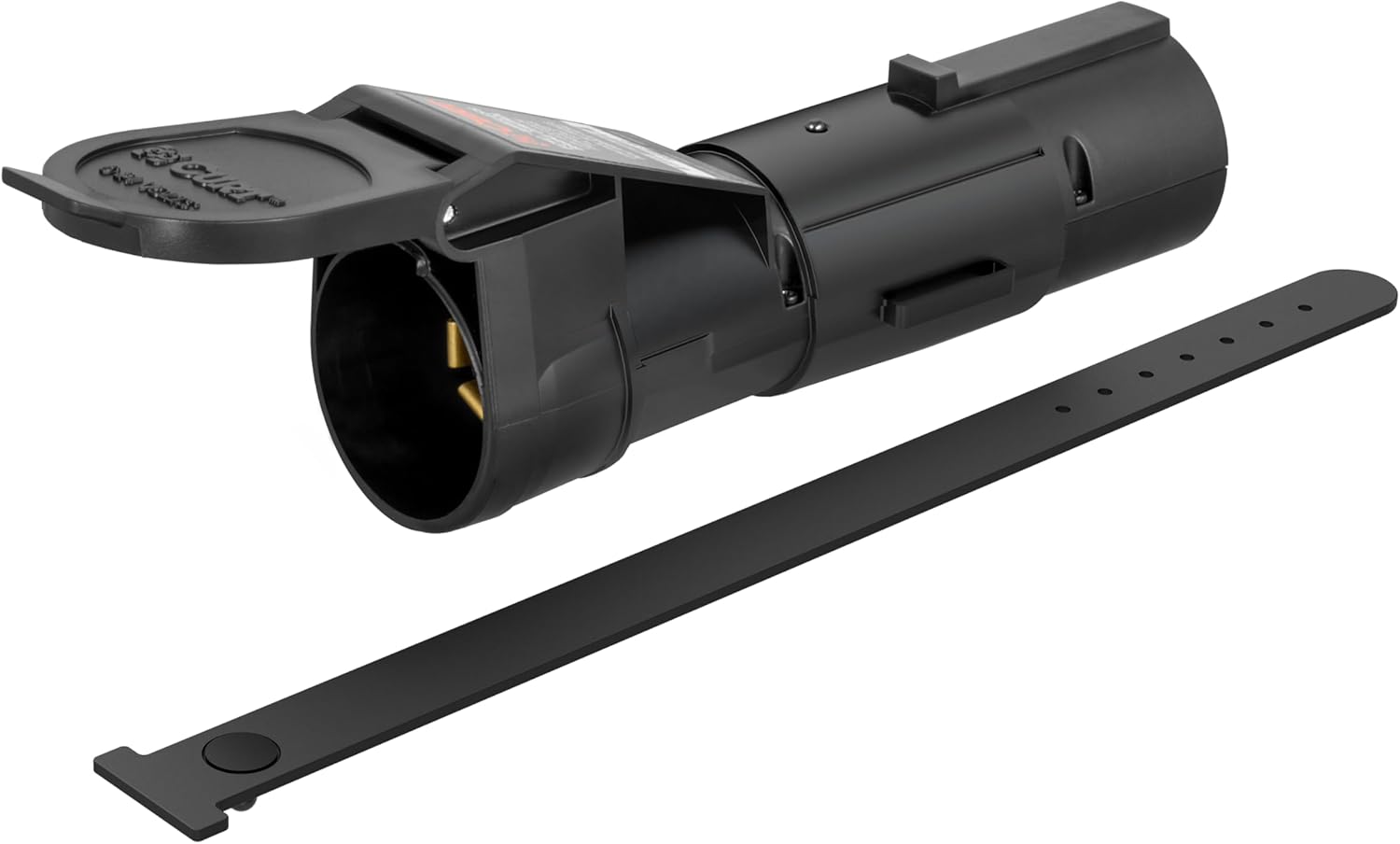
6. CURT Echo 51180 Mobile Bluetooth Trailer Brake Controller
Best Portable / Wireless Brake Controller
| Connection | 7-way RV blade plug |
|---|---|
| Control | Bluetooth smartphone app |
| Brake coverage | 2–4 trailer brakes (one to two axles) |
| Sensing | Tri-axis accelerometer |
The CURT Echo 51180 is a plug-and-play mobile brake controller that connects to your smartphone over Bluetooth so you can manage trailer braking without a permanent dash installation. For use with a 2011–2016 Ford F-350, you simply insert the Echo between the truck and trailer 7-way RV plug and use the OneControl Auto app on iOS or Android to set brake output, sensitivity, and save towing profiles. The unit includes a tri-axis accelerometer for smoother stops on grades and automatic calibration to reduce setup time. Its potted enclosure and locking tab on the connector improve durability and retention under real-world towing conditions. Because it is portable and requires no vehicle-specific harness, it is ideal for swapping between trucks or seasonal use. Limitations include reliance on a smartphone and Bluetooth connection while towing and the need to keep the unit plugged into the 7-way, which may be less tidy than an under-dash install for drivers who prefer a permanent in-cab control.
Best for: Buyers who need a no-permanent-wiring brake controller that can be moved between trucks and want app-based control and profile saving for varied towing setups.
Less Ideal for: Drivers who prefer a permanently mounted, in-cab controller with dedicated physical controls or those who do not want to rely on a phone while towing.
- Truly plug-and-play portable design for quick transfer between vehicles
- Bluetooth control via app lets you adjust output and save multiple towing profiles
- Tri-axis accelerometer and automatic calibration for responsive, smooth braking
- Potted enclosure and locking tab improve water, dirt resistance and connector retention
- Requires an active smartphone Bluetooth connection during use, which may be inconvenient for some users
Verdict: This slot highlights portable or wireless controllers ideal for swapping between trucks or for users who want a zero-permanent-wiring install with app or plug-in control.
Choosing the Right 2011-2016 Ford F-350 Trailer Brake Controller: Key Factors to Consider
Control Method and Braking Behavior
How a controller applies braking power—proportional versus time-delayed—directly affects towing feel and safety. Proportional controllers sense trailer deceleration and match the truck's braking force in real time, producing smoother, more natural stops that reduce jarring between truck and trailer. Time-delayed controllers apply a preset amount of power after the truck brakes, which can work for light loads but often requires more manual adjustment when trailer weights vary.
For the F-350, which commonly tows heavy or varying loads, matching braking behavior to load and trailer brake type reduces wear on brake components and minimizes trailer push or surge. Consider how the controller senses deceleration, the sensitivity range, and whether you can fine-tune settings for different trailers. Drivers who frequently tow different trailers will appreciate controllers with adaptive or adjustable proportional response to maintain consistent performance across loads.
Installation and Wiring Compatibility
Installation complexity matters for a truck owner who may want a clean, secure in-cab mounting without cutting into factory harnesses. Check whether the controller integrates with the F-350's factory tow package, requires an additional harness or adapter, or needs a separate power and ground run. Some controllers connect to the factory brake controller port if the truck was prewired, while others rely on direct-wire installation to the brake light switch and battery.
Wiring compatibility also affects long-term reliability. Proper fusing, secure connections, and routing away from heat or moving parts are essential. If you prefer a quick plug-in solution, prioritize controllers that match the F-350's connectors or have vehicle-specific harness options. For trucks without prewiring, evaluate how difficult it is to access the ignition-switched 12V, brake-switch signal, and trailer output locations inside the cabin.
Mounting Location and Driver Access
Where the controller mounts in the cab affects usability and safety. The unit should be within easy reach and visible without obstructing driving controls. Consider whether the controller supports under-dash mounting, center-console placement, or dash surface mounting that keeps the faceplate and adjustment knobs accessible. For drivers who adjust gain while towing, tactile controls and a clear readout reduce distractions.
Also assess how the mounting solution interacts with F-350 interior features such as center consoles, storage cubbies, and seat positions. A neat installation that avoids dangling wires and preserves cabin ergonomics is preferable. Durable mounting hardware and a secure bracket help prevent vibration-driven loosening on trucks that see off-road use or heavy-duty duty cycles.
Adjustability and Calibration Features
A controller's adjustability determines how precisely you can match braking force to trailer weight and brake condition. Look for clearly labeled gain controls, manual boost or output limits, and incremental settings that let you step through calibration rather than relying on trial-and-error. Some controllers include automatic calibration routines or learning modes that adapt to trailer characteristics over several stops.
For the F-350, having easy calibration means safer towing across a range of trailer weights. Calibration features that return consistent results help you avoid underbraking with heavy loads or excessive trailer brake drag when lightly loaded. Consider whether the unit provides diagnostic feedback, such as output level or error indications, to simplify troubleshooting during setup.
Durability and Environmental Resistance
Truck owners expect components that survive dust, heat, vibration, and occasional moisture. Evaluate the controller's build quality, materials, and any stated ingress protection. Units with robust housings, sealed connectors, and corrosion-resistant terminals tend to last longer in heavy-use towing environments. Heat dissipation is also important since excessive heat build-up can change controller behavior or cause failures during heavy braking.
A durable controller reduces the chance of intermittent faults that can compromise braking. Consider units with proven reliability features such as metal brackets, locked wire terminals, and replaceable fuses. For vehicles used in construction, ranching, or long-haul towing, prioritize controllers rated for tougher environments.
User Interface and Readout
A clear, intuitive interface cuts down on setup time and reduces distraction while driving. Digital displays that show output levels, modes, and error codes help you understand what the controller is doing during braking. Simple dials with detents or labeled steps make repeatable settings possible when switching between trailers.
Also consider night legibility and whether indicator LEDs are overly bright. A controller with mode indicators for proportional or time-delayed operation and separate LEDs for power and output status makes in-cab troubleshooting faster. For owners who often hand the truck to others, an interface that communicates basic status at a glance prevents misconfiguration.
Wiring Basics for the 2011-2016 F-350
Understanding the basic wiring points on the 2011-2016 F-350 simplifies controller installation. Most brake controllers require three primary connections: a fused ignition-switched 12V, a brake-switch signal that detects when you press the brake pedal, and the trailer output wire that feeds the trailer brake magnets. A solid ground is also essential for reliable operation.
If your F-350 has a factory tow package, check beneath the dash and behind trim panels for a prewired port that accepts a plug-in controller harness. When a factory port is not present, route a harness from the controller to the brake switch output and battery, protecting runs with conduit or loom where needed. Always use appropriately sized wire and a dedicated fuse to match the controller's current draw.
- Locate the vehicle's brake switch signal near the brake pedal or on the brake pedal bracket.
- Use a fused ignition-switched 12V source to prevent parasitic drain.
- Route the trailer output cable toward the hitch along factory wiring paths when possible.
- Secure and label connections to simplify future troubleshooting.
Mounting Tips and Recommended Cab Locations
Choose a mounting location that keeps the controller within comfortable reach and sightlines. Under-dash mounts close to the steering column reduce driver reach but must avoid interfering with knee clearance or airbags. Center console or dash-side mounts can be more visible and easier to access for passengers assisting with calibration.
When drilling or using screws, test-fit the bracket first and avoid routing wires near sharp metal edges. Use grommets for any holes through sheet metal and secure wiring bundles with clips to minimize vibration.
- Test the final knob travel and readout visibility from a normal driving position.
- Avoid locations where the controller could be struck when entering or exiting the truck.
- Keep the controller faceplate horizontal or slightly angled toward the driver for easy reading.
Setting Up for Different Trailer Weights
Adjust gain and output settings based on the trailer's curb weight and braking condition. Start with a conservative setting and perform incremental stops in a low-speed area, adjusting until the trailer brakes apply smoothly without locking. Increase output for heavier loads and back off if the trailer tends to lock up or pull the truck.
For frequent load changes, note preferred settings for each trailer and use the controller's memory features or write them down. If the controller includes an automatic or learning mode, validate its settings with a test stop since adaptive algorithms sometimes need several braking events to settle.
- Begin setup on a flat, low-traffic road with the trailer fully coupled.
- Test at 20 to 30 mph with modest braking to observe trailer behavior.
- Record gain settings for each trailer to speed future setups.
Troubleshooting Common Issues
Intermittent braking or no trailer output is often wiring related. Check fuses, ground integrity, and connection security first. Corroded terminals or loose spade connectors at the controller can produce inconsistent output and should be cleaned or replaced.
If braking feels abrupt, reduce gain or test for sticking brake magnets on the trailer. A continuous light output on the controller or visible dragging at rest indicates an output short or improper calibration. Address mechanical trailer brake problems separately from controller tuning to isolate the root cause.
- Verify battery voltage and ignition-switched power to the controller.
- Inspect the ground at a clean metal surface free of paint or undercoating.
- Swap connectors or harnesses if the unit was working and suddenly fails.
Legal and Safety Considerations
Different states have laws regarding trailer brake requirements based on gross trailer weight. Ensure your brake controller provides adequate control for legally required braking systems on your trailers. Using a controller that allows proportional response can help maintain compliant braking behavior under real-world loads.
Safety checks before each tow include verifying hitch security, trailer light function, and that the controller's gain setting matches the trailer load. Regularly inspect wiring and connectors for chafing or corrosion, and replace any suspect components promptly to avoid failures while towing.
- Confirm trailer braking requirements for payload and state regulations before towing.
- Perform a short brake test after any change in trailer load or controller setting.
- Include controller checks in routine pre-departure inspections.
Still looking for the perfect fit?
Select your Ford F-350 configuration to see the most relevant Trailer Brake Controllers recommendations
How We Chose the Best 2011-2016 Ford F-350 Trailer Brake Controller
We focused on criteria that matter specifically to owners of the 2011-2016 Ford F-350 towing medium to heavy trailers. Selection began with compatibility and fitment for the F-350 electrical and hitch interfaces, then narrowed by several technical and practical measures. We prioritized braking performance metrics such as proportional or time-delayed response characteristics, consistency under load, and the ability to modulate power smoothly to trailer brakes.Ease of installation and wiring compatibility with factory tow packages were major filters, including whether the controller works with in-cab mounting locations common to the F-350 and whether additional modules or adapters are typically required. User controls and ergonomics were considered to ensure drivers can safely adjust settings while on the road. Durability and environmental resistance were weighed for trucks that see heavy use or off-road exposure. Finally, we examined setup and calibration features that simplify fine-tuning for different trailer weights and brake types.We excluded controllers that require extensive vehicle modifications, obscure wiring hacks, or that lack clear compatibility with 2011-2016 F-350 electrical systems. The resulting list emphasizes balanced performance, straightforward installation, and reliable operation under typical towing conditions for this truck.
Our full evaluation process is outlined in our review methodology.
FAQ
Does the 2011-2016 F-350 require a special adapter for a brake controller?
It depends on the truck's factory tow package. Many F-350s from 2011 to 2016 have a factory prewire that accepts a plug-in harness; others require a direct-wire installation or a vehicle-specific adapter harness. Check beneath the dash for a controller port and consult the vehicle wiring diagrams before purchasing.
Can I install a brake controller myself on an F-350?
Yes, many owners install controllers themselves if they are comfortable with basic wiring and using common hand tools. Installation ranges from plug-and-play with a factory port to routing power and signal wires for direct connections. If you are unsure about wiring or proper fusing, seek professional installation.
Should I choose a proportional or time-delayed controller for heavy towing?
Proportional controllers usually provide smoother, more responsive braking for heavier loads because they match trailer braking to the truck's deceleration. Time-delayed units can work for consistent light loads but may require more frequent adjustment when trailer weight varies.
How often should I recalibrate the controller for different trailers?
Recalibration is wise whenever trailer weight or brake condition changes significantly. Many drivers check or adjust settings each time they tow a different trailer. If you regularly tow the same trailer, occasional verification is sufficient unless you notice changes in braking behavior.
What are signs the controller wiring is faulty?
Common signs include intermittent or no trailer braking, erratic output indicators, or trailer brakes dragging when the controller shows no output. Inspect fuses, ground connections, and terminal corrosion. Repair any damaged wires and retest before towing.
Will installing a controller affect my truck's ABS system?
Most modern controllers are compatible with factory ABS when installed correctly because they tap into the brake switch or use dedicated tow package outputs rather than interfering with ABS sensors. Ensure proper wiring and follow installation guidelines to avoid unintended interactions.
Final Verdict
When selecting a trailer brake controller for a 2011-2016 Ford F-350, prioritize braking behavior and installation compatibility first. Proportional control and easy, secure wiring integration with the F-350's existing harnesses provide the best balance of safety and convenience. Consider durability, mounting ergonomics, and calibration features based on how often you change trailers and the typical loads you haul.Balance the tradeoffs between simple time-delayed units and more advanced proportional controllers by thinking about your towing patterns. With attention to proper wiring, secure mounting, and conservative initial calibration, you can achieve more predictable braking and safer towing with the right controller for your F-350.
