

Note: This article contains affiliate links. If you click on these links and make a purchase, I may earn a small commission at no extra cost to you. This helps support my research and content. Read my full affiliate disclosure here.
If you tow with a 1999-2007 Ford F-350, the right trailer brake controller makes a big difference in stopping stability and control. A compatible controller smooths out brake application between truck and trailer, reduces trailer sway risk during emergency stops, and helps protect your tow vehicle's drivetrain.This guide gathers the top picks for the 1999-2007 F-350 and explains the criteria used to shortlist them, including fitment, braking performance, and ease of installation. Read on to understand which controller types and features matter for your towing setup and how each choice affects real-world towing behavior.
Top Picks at a Glance
| Best Overall Trailer Brake Controller A balanced, reliable controller with strong braking performance and features | Tekonsha Primus IQ Proportional Trailer Brake Controller (Model 90160) |  |
| Best Budget Trailer Brake Controller An affordable controller that covers basic braking needs without extras | Gihdfer Brakeman IV Time-Delayed Trailer Brake Controller |  |
| Best Proportional Trailer Brake Controller Uses inertia sensors to match trailer braking to vehicle deceleration smoothly | Tekonsha Brake-EVN Proportional Trailer Brake Controller (8508220) |  |
| Best Time-Delay Trailer Brake Controller A simpler, time-based controller that applies trailer brake power on a set ramp | CURT Discovery NEXT Time-Delay Trailer Brake Controller |  |
| Best Plug‑and‑Play / Harness‑Ready Controller Includes or is compatible with vehicle-specific wiring harnesses for quick install | CURT Venturer NEXT Time-Delay Electric Trailer Brake Controller (51116) |  |
| Best In‑Dash / Module Replacement Controller Direct-fit in‑dash replacement modules for restoring factory trailer brake function | APDTY 142480 Trailer Brake Control Module |  |
| Best Bluetooth / Portable Trailer Brake Controller Wireless or portable units with smartphone control and quick, non-permanent installs | CURT Echo Mobile Bluetooth Trailer Brake Controller (Proportional) |  |
1. Tekonsha Primus IQ Proportional Trailer Brake Controller (Model 90160)
Best Overall Trailer Brake Controller

| Compatibility | Trailers with 1-3 axles |
|---|---|
| Voltage | 12 Volts |
| Display | LED display |
| Mounting | Snap-in dash clip with removable connector |
The Tekonsha Primus IQ 90160 is a proportional electric brake controller designed to deliver smooth, automatic trailer braking by sensing how hard and how quickly you apply the truck brakes. For a 1999–2007 Ford F-350, it installs under the dash and connects via a standard wiring harness or adapter, offering snap-in dash mounting and a removable electrical connector so you can quickly unplug and store the unit when not towing. The LED display provides real-time diagnostics and status, while the power output knob and three-level boost let you dial in braking strength for heavier loads. Self-leveling within a 90 degree vertical range and a self-diagnostic check help maintain consistent performance without frequent adjustments. The Primus IQ is compact and user-friendly for DIY installers and delivers proportional braking that improves control during emergency stops and backing maneuvers. It does not include a vehicle-specific plug kit in the box, so factor in the harness purchase or wiring time if your F-350 requires an adapter.
Best for: A hands-on Ford F-350 owner who wants reliable, factory-quality proportional braking with straightforward under-dash installation and practical controls for everyday towing.
Less Ideal for: Buyers who prefer a wireless or app-configured controller or those unwilling to source a separate vehicle harness should consider other options.
- Proportional braking via internal inertia sensor for smooth, responsive trailer stops.
- Compact snap-in dash mount and removable connector make installation and storage simple.
- LED display with real-time diagnostics for easy setup and troubleshooting.
- Three-level boost and power output knob let you fine-tune braking for heavier loads.
- Does not include a vehicle-specific wiring harness, which may require a separate purchase or splicing.
Verdict: The go-to controller for most DIYers who want the safest, most consistent trailer braking with easy installation and useful features.
2. Gihdfer Brakeman IV Time-Delayed Trailer Brake Controller
Best Budget Trailer Brake Controller

| Compatibility | 1 to 4 axle trailers (2-,4-,6-,8-brake systems) |
|---|---|
| Display | LED brake force indicator |
| Activation | Time-delayed brake activation |
| Package contents | Controller, mounting bracket, 6 screws, instruction |
The Brakeman IV is a straightforward, budget-minded time-delayed brake controller designed to restore trailer braking without extra bells and whistles. It mounts under the dash with the included bracket and screws and uses a time-delayed output to apply braking force proportionally over a set interval, which smooths out initial stops compared with raw manual braking. An LED display shows the current output level so you can visibly confirm and tweak brake force for different trailer loads. Installation is intentionally simple and the unit is compact, making it easy to fit into a 1999–2007 Ford F-350 cab with minimal routing and mounting work. Expect reliable basic performance for towing needs where you do not require proportional sensing, anti-lock integration, or advanced diagnostics. The trade-off is that it lacks vehicle-sensing proportional braking and some higher-end safety features, so braking feel will not be as refined as with proportional controllers on varying road grades and speeds.
Best for: A F-350 owner who wants an inexpensive, easy-to-install controller that reliably restores trailer braking for routine towing without needing advanced proportional features.
Less Ideal for: Drivers who frequently tow varying loads over hills or need the most refined, automatic brake modulation should consider a proportional or feature-rich model instead.
- Simple time-delayed control that smooths initial trailer braking compared with manual only braking
- Clear LED display for monitoring and adjusting output level
- Compact, easy-to-mount design with basic hardware included
- Supports 1 to 4 axle trailers (2-, 4-, 6-, 8-brake systems)
- Not a proportional controller so braking is less refined on variable terrain or when trailer inertia changes
Verdict: Choose this slot if you need a simple, low-cost controller that restores trailer braking reliably without premium features.
3. Tekonsha Brake-EVN Proportional Trailer Brake Controller (8508220)
Best Proportional Trailer Brake Controller

| Model | 8508220 |
|---|---|
| Axle support | 1–4 axles |
| Display | Digital LED |
| Warranty | Five-year limited warranty |
The Tekonsha Brake-EVN is a user-friendly proportional trailer brake controller that automatically matches trailer braking to how you slow the vehicle, giving a natural, predictable stop. It mounts within reach of the driver and uses an internal inertia sensor so braking power is applied progressively rather than in fixed steps. The unit includes arrow buttons to set maximum output, a boost feature with three extra power levels for heavier loads, and a manual lever for instant trailer braking when needed. A digital LED display provides real-time diagnostics and makes it easy to confirm settings and activity at a glance. It supports 1–4 axle trailers and offers plug-and-play vehicle wiring connectors, though vehicle-specific Tekonsha harnesses are sold separately. Practical limits include the need to buy a harness for a direct plug-in installation and the lack of wireless or smartphone configuration found on higher-end models. For a 1999–2007 Ford F-350, this controller delivers smooth, dependable proportional braking that suits towing heavier trailers without complex setup.
Best for: Drivers who prioritize the smoothest, most natural trailer braking and want a straightforward, in-cab proportional controller for regular towing with a heavy-duty truck.
Less Ideal for: Buyers seeking wireless controls, smartphone tuning, or a fully integrated OEM solution should consider other higher-end or vehicle-specific options.
- Proportional braking with internal inertia sensor for smooth, natural trailer stops
- Boost feature with three levels to add braking power for heavier loads
- Manual override lever for immediate trailer braking control
- Clear digital LED display for real-time diagnostics and easy adjustments
- Compact design with plug-and-play connector for straightforward mounting
- Vehicle-specific wiring harness is not included so plug-and-play may require an extra purchase
- No smartphone app or wireless setup options for advanced tuning
Verdict: Pick a proportional controller when you want the smoothest, most natural trailer braking that automatically tracks your vehicle's stops.
4. CURT Discovery NEXT Time-Delay Trailer Brake Controller
Best Time-Delay Trailer Brake Controller

| Display Type | LCD |
|---|---|
| Included Components | Discovery NEXT |
| Item Type Name | Fully Adjustable, Low Profile, 1-3 Axles, Plug-and-Play |
| Material Type | Plastic |
The CURT Discovery NEXT is a compact time-delay brake controller built to apply braking power with adjustable ramp time and gain so you can tune how aggressively your trailer brakes engage. Installed under the dash using its low-profile bracket, it gives a clear LCD readout with full-text diagnostics and adjustable brightness for easy in-cab monitoring. It supports 2 to 8 trailer brakes (1 to 4 axles) and is compatible with a wide range of electric brake systems, including low-voltage and electric-over-hydraulic setups. The fully adjustable power and ramp settings make it simple to dial in braking feel without complex setup procedures, and the lack of internal moving parts reduces maintenance. As a time-delay unit, it will never match the instant proportional response of inertial controllers, so drivers who want the most seamless, trailer-synchronized braking may notice a different feel. For straightforward, repeatable control and easy troubleshooting, this controller is a practical, durable choice for older heavy-duty trucks.
Best for: Drivers who prefer a simple, dependable time-delay design and want an easy-to-install controller with clear diagnostics for routine towing with a heavy-duty pickup.
Less Ideal for: Drivers seeking the most natural, trailer-synchronized braking response who prefer proportional controllers for smoother modulation.
- Fully adjustable power and ramp time lets you tune brake engagement to driving conditions
- Low-profile bracket reduces dash intrusion for a cleaner installation
- LCD with full-text diagnostics and adjustable brightness simplifies troubleshooting and monitoring
- Supports 2–8 trailer brakes (1–4 axles) for towing a range of trailer sizes
- Time-delay control delivers less immediate, less proportional braking feel compared with proportional controllers
Verdict: Opt for a time‑delay controller if you prefer a straightforward, proven design that applies braking power with adjustable ramp timing.
5. CURT Venturer NEXT Time-Delay Electric Trailer Brake Controller (51116)
Best Plug‑and‑Play / Harness‑Ready Controller

| Model | Venturer NEXT |
|---|---|
| Item model number | 51116 |
| Compatible system | 12-volt vehicle systems |
| Brake type | Electric and electric-over-hydraulic |
The CURT Venturer NEXT is a slim, time-delay trailer brake controller designed for straightforward in-cab control of electric trailer brakes. It is typically used by drivers who tow single trailers with up to three axles and want an unobtrusive controller that mounts easily and displays ramp-up progress via LEDs. The unit offers fully adjustable power and ramp time so you can match braking to different trailer loads, and its brightness-adjustable LED makes night and day visibility simple. Because it has no internal moving parts and permits mounting at any angle, installation is flexible; pairing it with a CURT plug-and-play wiring harness (sold separately) minimizes hard wiring and speeds fitment. Practical benefits include a low-profile bracket for extra clearance and support for electric-over-hydraulic systems. Limitations are that it is a time-based controller rather than inertia-based, so tuning may require manual adjustment for heavier or variable loads, and a separate harness is recommended for the fastest, cleanest installation.
Best for: Drivers who prioritize quick, low-fuss installation using factory-style harnesses and want a compact, easy-to-adjust controller for routine towing of up to three axles.
Less Ideal for: Towing shoppers who frequently haul varying heavy loads and prefer automatic, inertia-based modulation for the most precise braking feel.
- Compact low-profile design that clears dashboard space and mounts with a slim bracket
- Fully adjustable gain and ramp time to tailor braking to different trailer loads
- LED ramp-up indicator with adjustable brightness for clear day or night feedback
- Supports control of up to 6 brakes (1–3 axles) and works with electric-over-hydraulic systems
- Time-delay operation requires manual tuning and can be less precise than inertia-based controllers for variable loads
- Plug-and-play harness is sold separately, so fastest installation needs an additional purchase
Verdict: This slot suits buyers who want a controller that installs fast using factory-style plug‑in harnesses and minimal wiring work.
6. APDTY 142480 Trailer Brake Control Module
Best In‑Dash / Module Replacement Controller

| Model | APDTY 142480 |
|---|---|
| Compatible years | 2005-2007 Ford F-250/F-350/F-450/F-550 |
| Manufacturer part number | 142480 |
| OEM part numbers replaced | 5C3Z2C006AA, 6C3Z2C006AA |
This APDTY 142480 is an in-dash replacement trailer brake control module that installs in the factory location to restore trailer braking functionality on compatible 2005–2007 Ford Super Duty trucks. It plugs into the existing harness with no programming required, so installation can be completed in minutes and keeps the dash looking factory-original. The unit replaces several Ford part numbers, matching wiring and mounting points for a true direct-fit swap. In use it provides the same integrated control behavior drivers expect from a factory module, so trailer braking integrates with the truck without requiring a dash-mounted aftermarket controller. Because it is an aftermarket replacement, confirm connector and harness condition before install and be prepared to swap connectors if a prior modification exists. This module is best when you want a clean, OEM-style repair that keeps the original in-dash location and functionality rather than adding extra hardware or visible controls.
Best for: Buyers who need a clean, factory-location repair for a 1999–2007 Ford F-350 and prioritize restoring original dash appearance and integrated trailer braking without adding external controls.
Less Ideal for: Drivers who prefer an adjustable aftermarket dash controller with manual gain or additional towing features should consider a dedicated aftermarket brake controller instead.
- Direct-fit replacement that matches factory wiring and mounting for 2005–2007 Ford Super Duty trucks.
- Plug-and-play installation with no programming required for fast swap-in.
- Maintains factory in-dash appearance and integrated trailer braking behavior.
- Replaces multiple Ford part numbers for straightforward cross-reference and fitment.
- Aftermarket unit so long-term durability may vary from the original factory module.
Verdict: Choose an in‑dash module replacement when you need a direct-fit OEM-style unit that drops into the factory location for a clean install.
7. CURT Echo Mobile Bluetooth Trailer Brake Controller (Proportional)
Best Bluetooth / Portable Trailer Brake Controller
| Connection type | 7-way RV blade plug |
|---|---|
| Control method | Bluetooth smartphone app |
| Braking style | Proportional (tri-axis accelerometer |
| Trailer brakes supported | 2–4 brakes (1–2 axles) |
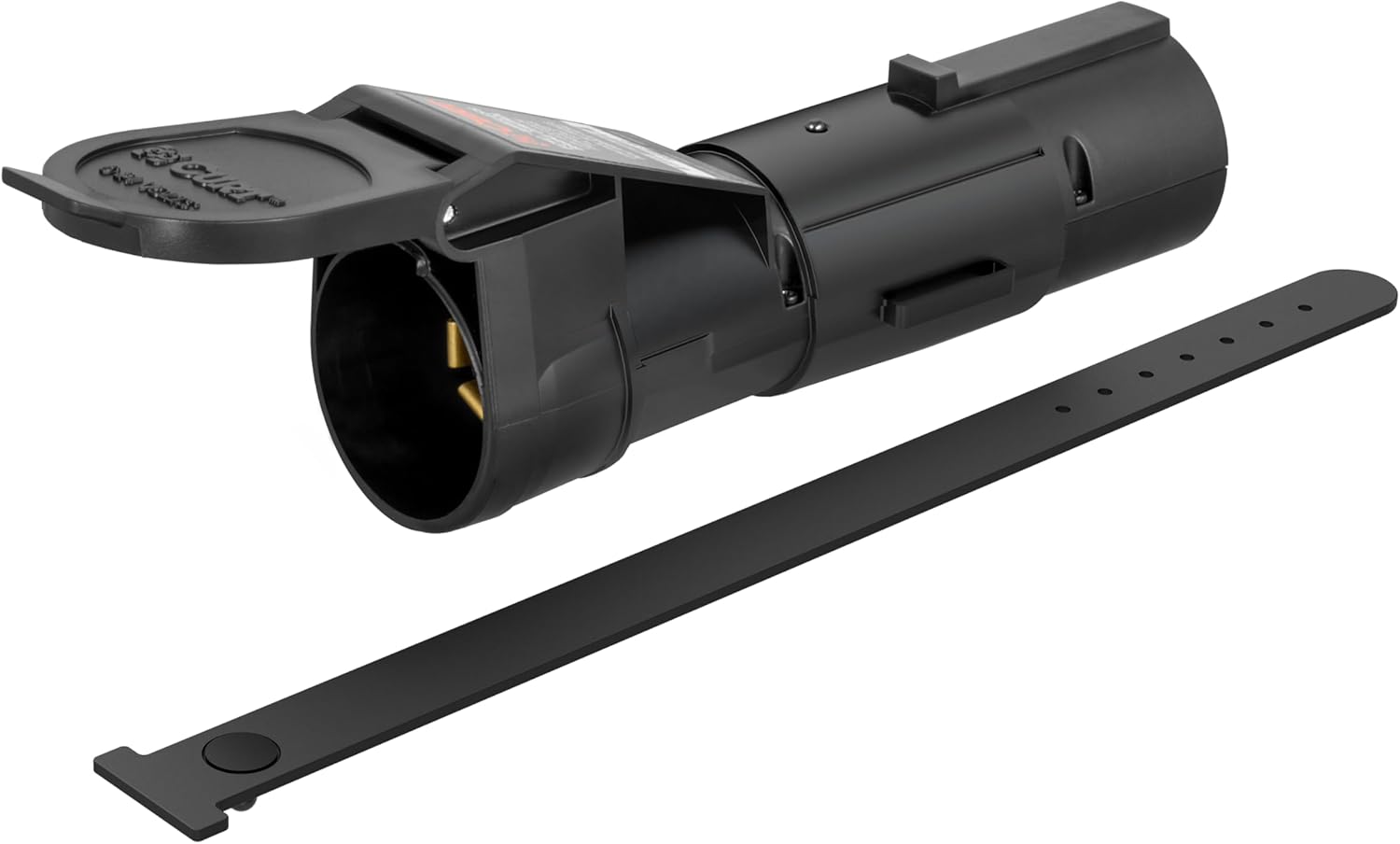
The CURT Echo Mobile is a plug-and-play, Bluetooth trailer brake controller designed for temporary or multi-vehicle use on trucks with a standard 7-way RV outlet. You plug the Echo between the truck and trailer 7-way connector, pair it with the OneControl Auto app on iOS or Android, and then set maximum output, sensitivity, or manually apply the trailer brakes from your phone. Its tri-axis accelerometer provides proportional braking for smooth stops on grades, and the potted enclosure and locking tab help protect the unit and keep the connection secure in wet or rough conditions. Because it is portable and requires no under-dash wiring, it is easy to move between vehicles or remove when not towing. Limitations to consider are that it relies on a smartphone for full control and monitoring, and the portable 7-way plug design is intended as a temporary or transferable solution rather than a permanently mounted controller inside the cab.
Best for: Buyers who tow occasionally with a 1999–2007 Ford F-350 and prioritize wireless control and the ability to move a controller between trucks without an under-dash install.
Less Ideal for: If you want a permanently mounted, in-cab controller with physical controls or you routinely tow heavy loads where a dedicated hardwired controller is preferred, choose a hardwired under-dash unit instead.
- Truly plug-and-play 7-way insertion for zero-tool installation and easy transfer between vehicles
- Bluetooth app control lets you change settings and apply brakes remotely from iOS or Android
- Tri-axis motion sensor provides proportional braking for smoother stops downhill or uphill
- Potted enclosure and retention strap/locking tab improve durability and maintain a secure electrical connection
- Compatible with ABS, cruise control, low-voltage and electric-over-hydraulic systems
- Requires a smartphone and app for full functionality and configuration
Verdict: Use a Bluetooth or portable controller if you value wireless app control, easy transfer between vehicles, and zero‑tool or temporary installation.
Choosing the Right 1999-2007 Ford F-350 Trailer Brake Controller: Key Factors to Consider
Compatibility With F-350 Wiring
Confirming electrical compatibility matters because the 1999-2007 Ford F-350 uses established trailer connector standards and specific towing package wiring. A controller that matches the truck's wiring minimizes the need for splices, aftermarket relays, or extra modules, reducing install time and potential failure points.
Compatibility also affects available features. Some controllers rely on a dedicated brake output or proportional input from the vehicle. Knowing the exact wiring and available circuits on your F-350 ensures the controller will receive the proper signals and provide consistent brake application without creating electrical load issues for the truck.
Control Type: Proportional Versus Time-Delayed
Proportional controllers apply trailer brakes in proportion to how quickly the tow vehicle slows, which yields smoother, more natural stops. For heavy-duty towing with the F-350, proportional control often reduces trailer jackknifing and abrupt trailer push during highway braking.
Time-delayed controllers use a preset ramp to activate trailer brakes and can work well for lighter or simpler trailer setups. However, they may feel abrupt under heavy loads or during emergency braking. Choosing the right control type depends on trailer weight, towing frequency, and how much on-road modulation you need.
Installation Complexity And Mounting
Installation ease matters because many F-350 owners will want a clean, secure in-cab mount with accessible controls. Some controllers place more demands on wiring, requiring access to brake lamp circuits, the auxiliary brake output, or a charge line for electric-actuated units. Units with plug-and-play harnesses that match the F-350 wiring harness cut installation time and lower the risk of wiring errors.
Mounting options also affect usability. Look for controllers that offer adjustable brackets, dash-rail mounts, or quick-detach options so you can position the unit where you can reach it without blocking vehicle controls. Sturdy mounting prevents vibration-related failures and keeps manual gain or overrides accessible while driving.
Adjustability And User Controls
Having clear, precise adjustment for gain, sensitivity, and manual override is important for dialing in the trailer brake feel. For the F-350 towing heavy trailers, the ability to increase braking power incrementally or to use a manual override during a specific maneuver adds control and safety.
Controls should be intuitive and usable while seated. Digital displays or LED indicators help with quick diagnostics, while tactile knobs and levers make fine adjustments easier without taking eyes off the road. Consider units that offer separate tuning for different trailer setups if you switch trailers frequently.
Durability And Electrical Protection
Trailer brake controllers operate in a demanding environment with temperature swings, vibration, and exposure to cab dust. Robust enclosure construction and protected connectors help the unit last longer and avoid intermittent faults. For trucks like the F-350 that see heavy use, component reliability reduces the chance of a failure during a tow.
Electrical protection features such as reverse polarity protection, short-circuit protection, and thermal safeguards are important to prevent damage to both the controller and the truck's electrical system. Look for controllers with well-sealed housings and quality mating connectors to ensure long-term reliability.
Diagnostics And Feedback
Good diagnostic feedback helps you verify that the controller is communicating correctly with trailer brakes and that magnet circuits or electric brake outputs are healthy. Basic diagnostics can include an LED status indicator or audible warnings, while more advanced units provide display readouts of output voltage and applied brake power.
For the 1999-2007 F-350, being able to quickly identify wiring faults or low trailer magnet output without dismounting the trailer saves time and improves safety. Diagnostics also help during setup when calibrating the controller to different trailer weights and tongue loads.
Proportional Controllers: Benefits For Heavy-Duty F-350 Towing
Proportional controllers sense deceleration and apply trailer brakes in direct relation to how hard the truck is braking. That behavior produces a more linear, predictable braking feel that suits heavy towing with the F-350 where trailer inertia is significant.
For typical F-350 towing scenarios, proportional control reduces abrupt trailer braking that can lead to instability. These units are especially useful on grades and during highway braking where variable modulation helps keep the trailer tracking straight.
- Smoother brake modulation during progressive stops
- Better behavior in emergency braking situations
- Preferred for heavier trailers and frequent highway towing
Time-Delayed Controllers: When They Make Sense
Time-delayed controllers apply electric brake output based on a timed ramp rather than sensing vehicle deceleration. They can be simpler to install and set up, and they deliver consistent braking for light to moderate trailer loads.
Choose a time-delayed unit if you tow small cargo trailers or boat trailers infrequently and want a straightforward setup. For heavier loads or varied towing conditions, you may notice less refined braking compared with proportional systems.
- Simple setup and predictable ramping
- Can be adequate for light trailers or occasional towing
- May feel abrupt under heavy or sudden braking
Mounting Locations And Driver Access
Common mounting spots in the F-350 cab include under the dash near the steering column, on the center console side, or clipped to the lower dash panel. Accessibility matters because you may need to adjust gain or use manual override while on the road.
Consider how the mount will affect visibility and reach. A unit tucked out of sight avoids snagging but may be hard to use. Look for mounts that keep controls within easy reach while maintaining a clean installation.
- Under-dash mounts are discreet but ensure reachability
- Center console or dash-rail mounts offer quick access
- Secure mounting reduces vibration and wiring stress
Wiring Basics For The 1999-2007 F-350
Most trailer brake controllers connect to a stoplight signal, ground, battery power, and the trailer brake output circuit. Verify the truck's trailer connector and existing towing harness before installing to determine whether you need a simple plug-in harness or additional splicing.
Use quality connectors and route wiring away from heat sources and moving components. For many F-350 towing packages, straightforward wiring will provide the necessary signals, but confirm that the controller's input requirements match the truck's brake signal type.
- Common connections: stoplight feed, battery power, ground, brake output
- Use routed, secured wiring to avoid chafing
- Confirm truck signal type before selecting a controller
Calibration Tips For Different Trailer Loads
Start calibration with an empty or typical trailer load and perform low-speed stops to judge feel. Increase gain gradually until the trailer brakes contribute noticeably without causing wheel lock or excessive nose-diving on the truck.
Re-check and adjust gain when switching trailers or changing tongue weight. If you use a proportional unit, sensitivity or inertia settings may also need tuning to match trailer mass and brake magnet strength.
- Begin with low gain and increase incrementally
- Test on quiet roads at low speeds before highway towing
- Recalibrate after load or trailer changes
Maintaining Your Controller And Trailer Brakes
Regular maintenance extends system reliability. Inspect connectors and wiring periodically for corrosion, clean contact points, and verify trailer magnet or actuator function. Keep the controller free of dust and moisture where possible.
Check trailer brake adjustment and magnet condition per the trailer manufacturer's recommendations. Addressing small wiring issues or worn components early prevents loss of braking performance while towing with your F-350.
- Inspect wiring and connectors periodically
- Verify magnet or actuator health and brake adjustment
- Keep controller and mount secure and dry
Still looking for the perfect fit?
Select your Ford F-350 configuration to see the most relevant Trailer Brake Controllers recommendations
How We Chose the Best 1999-2007 Ford F-350 Trailer Brake Controller
We focused on features and specifications that directly affect towing safety and fitment for 1999-2007 Ford F-350 owners. Primary evaluation criteria included electrical compatibility with F-350 factory wiring and towing packages, braking modulation performance under varied trailer loads, and whether the controller offers proportional or time-delayed control appropriate to common trailer setups. We also weighed installation complexity, mounting versatility inside the cab, and the quality of the manual controls and diagnostics for on-road adjustments.Additional filters covered build quality and reliability indicators such as solid-state circuitry and protected connectors, plus user-accessible calibration options to fine-tune braking to trailer weight. We excluded models that require major vehicle wiring changes beyond standard four- or seven-pin harnesses, and units without clear compatibility with heavy-duty trucks. The final selection emphasizes controllers that offer dependable braking behavior, manageable installation, and useful adjustment range for varied trailer types and loads.
Our full evaluation process is outlined in our review methodology.
FAQ
Do I need a trailer brake controller for towing with my 1999-2007 F-350?
Often you will, especially when towing trailers with electric brakes. Many heavier trailers require a controller to meet braking needs and legal towing limits. Check trailer braking requirements and local regulations to confirm.
Can I install a controller myself in the F-350?
Usually yes if you have basic wiring skills. Many controllers offer plug-in harnesses compatible with the F-350 wiring, but some installs require tapping the stoplight circuit or routing power to the battery. If you are unsure, consult a qualified installer.
Which control type should I choose for heavy fifth-wheel towing?
Proportional controllers are typically better for heavy fifth-wheel loads because they modulate brake force in line with the truck's deceleration. That modulation helps maintain stability under high-inertia conditions.
Will a controller reduce trailer sway?
A trailer brake controller can help by applying the trailer brakes in a controlled way during corrective maneuvers, but it is not a sway cure-all. Proper load distribution, weight distribution hitches, and safe driving practices remain primary sway controls.
How often should I check the wiring and connectors?
Inspect wiring and connectors before long trips and at regular service intervals. Look for corrosion, loose connections, or damaged insulation, since electrical issues are a common cause of controller faults.
Can I use the same settings for different trailers?
Settings often need adjustment when you change trailers. Trailer weight, tongue load, and brake magnet condition all influence the optimal gain and sensitivity, so re-tune before towing a different trailer.
Final Verdict
Choose a controller that matches the 1999-2007 F-350's wiring and offers the control type suited to your trailer weight. Proportional units usually provide the best modulation for heavy towing, while time-delayed controllers can be adequate for lighter, occasional use. Prioritize reliable electrical protection, durable mounting, and straightforward calibration so you can fine-tune braking for each trailer and situation.Balancing installation complexity against on-road performance will help you pick a controller that improves safety and towing confidence. Focus on compatibility, adjustability, and diagnostics to make the most practical choice for your F-350.
