

Note: This article contains affiliate links. If you click on these links and make a purchase, I may earn a small commission at no extra cost to you. This helps support my research and content. Read my full affiliate disclosure here.
When a radiator hose fails it can cause overheating, loss of coolant, and unexpected breakdowns. Choosing the right Honda Civic radiator hose matters because fitment and material quality affect how reliably your cooling system operates and how often you will need to service it. This guide shortlists seven top options chosen for durability, fit accuracy, and resistance to heat and chemical degradation. It explains the evaluation criteria used and highlights what to watch for when picking a replacement hose. Read on to see the key factors and which hoses matched our editorial filters.
Looking for other parts? See all Honda Civic parts & accessories.
Top Picks at a Glance
| Best Reviewed A top-rated pick with lots of positive feedback | EVIL ENERGY 5/8" Heater Hose Coolant Radiator, 10 ft |  |
| Most Popular A crowd favorite that many people choose with confidence | G-PLUS 9‑Piece Silicone Radiator Hose Kit for Honda Civic 1992–2000 |  |
| Best Quality Built to a higher standard if you want something more solid | G-PLUS Silicone Radiator Hose Kit for Honda CRV MK1 (1998–2001) |  |
| Best Budget The cheapest option that still gets the job done reliably | PIT66 Silicone Radiator Hose Kit for Honda Civic D17 1.7L (2001–2005) |  |
| Most Sold A high-volume bestseller chosen again and again | Skunk2 Racing Silicone Radiator Hose Kit for 2006–2011 Honda Civic Si |  |
| Best Value for Money The sweet spot between price and what you get | G-PLUS Silicone Radiator Hose Kit with Clamps for Honda Civic 1992–2000 |  |
| Best Overall The best all-around choice for most situations | PIT66 Silicone Radiator Hose Kit with Clamps for 1992–2000 Honda Civic 1.6L |  |
1. EVIL ENERGY 5/8" Heater Hose Coolant Radiator, 10 ft

| Material | Epdm,Rubber |
|---|---|
| Size | 5/8" ID |
| Length | 10 feet |
| Working Pressure | 100psi |
| Temperature Range | -40°F to 257°F |
This EVIL ENERGY 5/8" heater hose is a 10-foot length of EPDM rubber intended for coolant and heater-system duties on passenger vehicles such as the Honda Civic. It meets SAE 20R3 standard wall class D-2 and is specified for working pressure around 100 psi with a burst rating substantially higher, so it handles normal cooling-system pressures and temperature swings from -40°F to 257°F. Typical use is as a replacement run, bypass, or for routing to an overflow or heater core; the long length makes it easy to cut to size and fit custom runs. The hose’s thicker wall and EPDM compound give better clamp grip and resistance to coolant and antifreeze than thin generic tubing, and reviewers note it feels heavier duty than some factory hoses. Limitations are that this is a straight section rather than a molded OEM-shaped hose, so installing in tight Civic passages may require bends or additional clamps and trimming for a precise fit. Packaging can arrive compressed so inspect for kinks before installation.
Best for: A reliability-focused DIY owner who prioritizes durable, serviceable cooling lines and prefers buying longer hose to cut and fit specific runs on a Honda Civic.
Less Ideal for: Drivers seeking a direct factory-shaped radiator hose made to the Civic’s exact bends should consider vehicle-specific molded replacements instead.
- Made from EPDM rubber with temperature tolerance suitable for engine cooling systems
- Meets SAE 20R3 standard wall class D-2 for reliable pressure handling
- 10-foot length allows cutting custom lengths for different routing needs
- Thicker wall increases clamp grip and durability compared with thin generic hose
- Straight hose only so it is not a direct molded replacement for Civic-specific radiator hose shapes
- May require trimming and careful routing in cramped engine bays to avoid kinks or interference
Verdict A heavy-duty straight EPDM heater hose that’s a practical, reliability-focused choice for cutting to fit Civic cooling runs but not a direct factory-shaped replacement.
2. G-PLUS 9‑Piece Silicone Radiator Hose Kit for Honda Civic 1992–2000

| Vehicle compatibility | Honda Civic 1992-2000 D15 D16 SOHC EG/EK |
|---|---|
| Material | 3-Ply Nylon Silicone |
| Wall thickness | 4.5 mm |
| Maximum pressure | 245 Pound per Square Inch |
| Working temperature range | -65F to 500F |
This G-PLUS kit supplies all the main radiator and heater hoses needed when refreshing the cooling system on a 1992–2000 Honda Civic with D15 or D16 SOHC engines. The hoses are constructed with a reinforced multi‑ply silicone wall and thicker cross section, which makes them more resistant to heat, chemicals, and pressure than old rubber lines. The set is commonly used during a routine hose replacement or when repairing leaks after overheating and includes hose clamps for installation. In practice the hoses are flexible enough to route around tight engine-bay bends and several users report trimming a hose for a perfect fit, which is easier than sourcing individual pieces. Limitations to note are the supplied clamps, which several buyers found undersized or thin, and a few hoses may require cutting or verification for fitment on non‑D series components. For a convenient one‑purchase refresh of a Civic cooling system this kit covers most needs, but budget installers may want to fit stronger aftermarket clamps during installation.
Best for: Buyers who want a convenient, all-in-one refresh for an older Civic cooling system and prefer a single kit that covers most hose replacements without sourcing parts separately.
Less Ideal for: Drivers planning a full performance engine swap with non‑D series coolant necks or bespoke plumbing should verify fitment or choose vehicle‑specific custom hoses instead.
- Complete 9-piece kit replaces most factory coolant and heater hoses for D15/D16 SOHC Civics
- Reinforced multi‑ply silicone construction resists heat, oils, and chemicals better than old rubber hoses
- Thicker 4.5 mm wall and high burst pressure improve durability under pressure
- Flexible material simplifies routing in tight engine bays and can be trimmed for custom length
- Included metal clamps are reported thin or undersized and many users replace them with heavier clamps
- Some hoses may require trimming or minor fitting adjustments for perfect installation
Verdict A convenient, reinforced silicone hose kit that replaces most Civic D15/D16 coolant lines in one purchase, but plan to upgrade the supplied clamps for long-term reliability.
3. G-PLUS Silicone Radiator Hose Kit for Honda CRV MK1 (1998–2001)

| Material | Silicone |
|---|---|
| Working Temperature | -65F to 500F |
| Bursting Pressure | 301 PSI |
| Nominal Wall Thickness | 4.5 mm |
This G-PLUS silicone radiator hose kit is designed to replace the factory coolant hoses on a 1998–2001 Honda CRV and provide a more heat- and pressure-resistant alternative. The kit uses multi-layer silicone construction with a 4.5 mm wall and is rated for extreme temperatures from -65F to 500F and a burst pressure around 301 PSI, which means it will cope well with higher under-hood temps and performance cooling upgrades. It installs like a standard radiator hose set and includes clamps to secure factory-style connections, while the silicone material stays flexible for routing in tight areas. Practical benefits include improved chemical resistance to coolant and oils and reduced risk of collapse or softening under boost or heavy load. Limitations to consider are fit and shape differences from factory hoses noted by some installers, which can require trimming or careful routing during installation, and the kit is specific to the CRV MK1 plumbing so it is not a universal replacement.
Best for: Performance-oriented buyers who want a durable, high-heat replacement for the factory coolant hoses on a first-generation Honda CRV and prioritize thermal and pressure resilience.
Less Ideal for: Owners seeking a direct plug-and-play visual match to original hoses or those unwilling to modify routing during installation should consider factory-style replacements instead.
- High temperature range (-65F to 500F) suited for performance or hot-engine applications
- Thick 4.5 mm multi-layer silicone construction resists bursting under high pressure
- Chemical-resistant silicone reduces degradation from oils, acids, and common coolants
- Includes clamps for a complete replacement installation
- Not identical in shape to factory hoses, which can make placement and installation more difficult
- Fitment issues reported by some users requiring slight modifications or extra routing effort
Verdict A robust, high-temperature silicone hose kit for CRV MK1 owners who need stronger thermal and pressure performance than factory hoses provide, but expect some fitment tuning.
4. PIT66 Silicone Radiator Hose Kit for Honda Civic D17 1.7L (2001–2005)
| Compatibility | Honda Civic D17 1.7L 2001-2005 |
|---|---|
| Material | Nylon reinforced silicone |
| Working Temperature Range | -65F to 500F |
| Working Pressure | 85 PSI |
| Burst Pressure | 245 PSI |
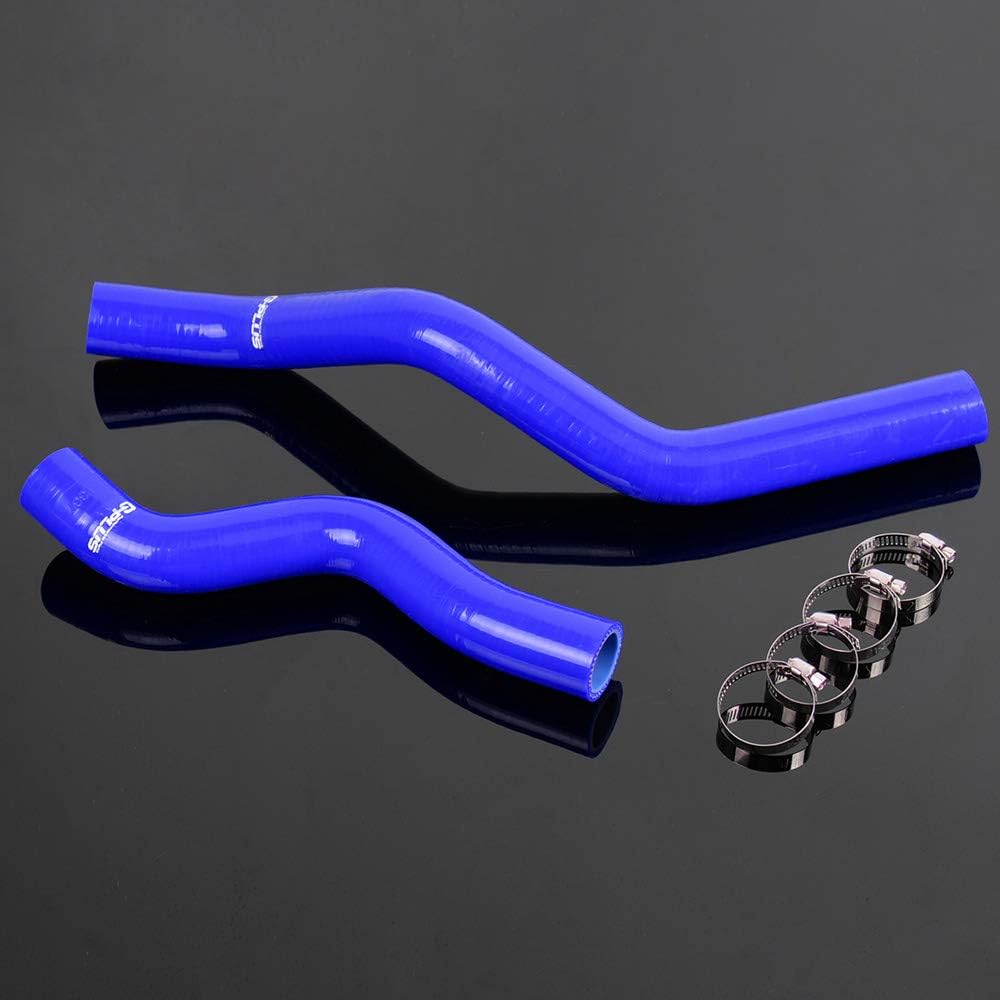
This PIT66 kit replaces the rubber coolant hoses on 2001–2005 Honda Civic D17 1.7L models with silicone tubes reinforced by an inner nylon layer. The hoses are intended for radiator and heater connections and come with basic clamps so you can install them as a direct replacement for worn factory hoses. Silicone construction resists UV, ozone and high temperatures and the vendor lists a working pressure of 85 PSI and burst rating up to 245 PSI, so these should outlast aged rubber in normal driving. Several users report fitment that is slightly tight or a different diameter on a couple of connections, so keep the OEM clamps handy or be prepared to swap to the included screw clamps. The kit is a budget-friendly alternative to molded OEM rubber hoses and can improve longevity and appearance, but buyers should check fit carefully and expect some fiddling during installation on tight connections.
Best for: Budget-conscious DIYers who prioritize low-cost, longer-lasting replacements over exact factory-molded parts and want a simple upgrade to extend hose life on a Honda Civic D17 1.7L.
Less Ideal for: Drivers seeking exact factory-shaped replacements for an immediate plug-and-play fit or those unwilling to adjust clamps or routing during installation.
- Silicone with nylon reinforcement offers better heat and ozone resistance than old rubber hoses
- Rated for high burst pressure which suggests strong construction under normal engine temps
- Includes clamps so you have what's needed for a basic replacement
- Available specifically for Honda Civic D17 1.7L 2001–2005 fitment so it targets a common DIY repair
- Some users report diameter and fit differences that may require different clamps or slight modification
- Not a molded OEM-shaped hose so routing or clearance can be tighter in some engine bays
Verdict A cost-effective silicone hose kit that improves durability over old rubber for 2001–2005 Civic D17 engines but may need clamp or fit adjustments during installation.
5. Skunk2 Racing Silicone Radiator Hose Kit for 2006–2011 Honda Civic Si

| Material | Silicone |
|---|---|
| Compatible Model Years | 2006–2011 Civic Si |
| Manufacturer | Skunk2 Racing |
| Nominal Wall Thickness | 0.5 centimeters |
This Skunk2 Racing kit replaces the Civic Si radiator hoses with multi-layer automotive-grade silicone hoses reinforced with embedded fiber lining. It is designed as a direct-fit replacement for the 2006–2011 Civic Si and is commonly used when stock hoses are cracked, soft, or when upgrading to a more heat- and pressure-resistant material for tuned engines. The silicone construction resists high temperatures and swelling better than typical rubber hoses, and the reinforced inner layers help maintain pressure under higher coolant temperatures, which is useful for mild performance or turbo applications. Installation is similar to factory hoses and may require patience for tight connections. The kit pairs well with an upgraded radiator cap to raise coolant boiling point. Limitations are that silicone can be stiffer than rubber at low temperatures and may need careful fitting into tight OEM routing to avoid interference with nearby components.
Best for: A risk-averse mainstream buyer who wants a durable, factory-quality replacement that lasts longer than stock hoses and reduces the chance of coolant leaks or failure during normal and mildly tuned driving.
Less Ideal for: Not ideal for buyers seeking a cheapest possible repair or who need ultra-flexible hoses for heavily modified engine bays with nonstandard routing.
- Made from multi-layer automotive-grade silicone for improved heat and pressure resistance over stock rubber hoses
- Handmade construction with embedded fiber lining to reduce expansion under high coolant pressure
- Designed specifically for 2006–2011 Honda Civic Si for direct-fit replacement and simpler installation
- Silicone hoses are stiffer than rubber and can be tight to install in original routing
- Requires careful routing and clamp placement to avoid contact with nearby engine components
Verdict A durable, factory-quality silicone hose kit tailored to the 2006–2011 Civic Si that offers better heat and pressure resistance than stock rubber hoses.
6. G-PLUS Silicone Radiator Hose Kit with Clamps for Honda Civic 1992–2000

| Material | Silicone Rubber |
|---|---|
| Vehicle Compatibility | Honda Civic 1.6L SOHC D15 D16 1992-2000 |
| Nominal Wall Thickness | 4.5 mm |
| Maximum Pressure | 245 PSI |
This G-PLUS silicone radiator hose kit replaces the factory coolant hoses on 1992–2000 Honda Civic 1.6L SOHC engines and is intended for routine cooling-system refreshes. The kit uses reinforced 59-ply nylon silicone with a 4.5 mm nominal wall thickness, so it resists heat and aging better than many molded rubber hoses and handles typical operating temperatures from -65F to 500F. Installation is straightforward for a DIYer because the hoses are shaped for direct replacement and the kit includes screw-type clamps for securing connections. In practice the hoses give a firmer feel than stock rubber and should reduce the chance of softening or swelling over time. Some users report the supplied clamps are basic and replaceable, and the upper hose may sit slightly differently on modified cylinder heads. If you want OEM-equivalent fitment for a stock Civic and a durable material upgrade, this kit delivers; if you need precise bracket alignment for an aftermarket head or want premium clamps out of the box, expect to swap hardware or trim for a perfect fit.
Best for: Practical optimizers who want a long-lasting, factory-style replacement for a Civic cooling system and prefer a durable material upgrade without extensive modification.
Less Ideal for: Buyers seeking upgraded bracket-perfect fitment for heavily modified engines or those who want premium clamps included should consider higher-end kits or sourcing stronger clamps separately.
- Direct-fit replacement shaped for 1992–2000 Honda Civic 1.6L SOHC engines
- Reinforced 59-ply silicone construction offering improved heat and aging resistance compared with standard rubber hoses
- Wide operating temperature range and high burst/working pressure ratings for reliable cooling performance
- Includes a full set of hose pieces and screw-type clamps to complete a standard install
- Included screw-type clamps are basic and many buyers replace them with sturdier clamps
- Upper hose may not align perfectly on modified cylinder heads or nonstock installations
Verdict A cost-effective, durable silicone hose kit that gives Civic owners a factory-style replacement with better heat and aging resistance, though you may want to upgrade the supplied clamps for long-term peace of mind.
7. PIT66 Silicone Radiator Hose Kit with Clamps for 1992–2000 Honda Civic 1.6L

| Application | 1992–2000 Honda Civic 1.6L SOHC D15/D16 |
|---|---|
| Wall thickness | 4.5 mm |
| Burst pressure | 245 PSI |
| Working temperature | -65F to 500F |
This PIT66 kit supplies a full set of silicone coolant hoses plus basic clamps intended to replace the factory rubber lines on a 1992–2000 Honda Civic 1.6L. The hoses are three-layer silicone with a 4.5 mm wall and a rated burst pressure of 245 PSI, so they resist heat, ozone, and UV exposure better than old rubber lines. Installation is straightforward for a DIYer or tech: the kit is plug-and-play in concept and includes multiple hoses for the upper and lower radiator, bypass, and heater connections. In practice some hoses may need trimming and a few bends do not match factory routing exactly, so minor modification or an OEM replacement for certain short heater hoses can be necessary. The supplied clamps are adequate for initial fitment but several reviewers replaced them with heavier-duty clamps for long-term security. This kit is a practical, budget-friendly way to refresh an aging Civic cooling system, but expect to check fit and have a few extra clamps or minor trimming tools on hand.
Best for: Convenience-driven buyers who want a single kit to refresh an aging Civic cooling system quickly without hunting down individual hoses and prefer a straightforward DIY install with minimal parts sourcing.
Less Ideal for: Buyers seeking exact factory-form replacements for every small hose bend or those who want heavy-duty professional-grade clamps included should consider OEM hoses or a kit with premium hardware instead.
- Three-layer silicone construction with thicker wall for improved heat and ozone resistance
- Complete kit includes multiple hoses to replace radiator, bypass, and heater lines
- High burst pressure rating provides margin over typical coolant system pressures
- Multiple color options allow visual identification during servicing
- Some hoses may require trimming or minor modification to match factory routing
- Included clamps are basic and many users upgrade to heavier-duty clamps
Verdict A convenient, budget-friendly silicone hose kit that upgrades heat and ozone resistance for older Civics but may need minor trimming and clamp upgrades for a perfect fit.
Choosing the Right Honda Civic Radiator Hose: Key Factors to Consider
Material and Heat Resistance
The hose material determines how well it resists high engine temperatures and coolant chemicals. Materials with reinforced EPDM or silicone construction tend to withstand heat cycling and ozone exposure longer, reducing the chance of cracking over time.
Heat resistance matters because radiator hoses are exposed to repeated thermal expansion and contraction. A material that softens or degrades at operating temperatures can bulge, collapse, or split, leading to coolant loss and overheating.
Fitment and Dimensional Accuracy
Correct hose inner diameter, length, and bend geometry are essential for a leak-free installation. A hose that is too short, too long, or has an incorrect bend can place stress on connections or rub against other components, accelerating wear.
Accurate fitment also simplifies installation and reduces the need for modifications or excessive clamp force. Look for hoses that list specific model-year fitments or include detailed dimensional charts to verify compatibility.
Connection Ends and Clamp Compatibility
The shape and thickness of the hose ends affect how well clamps can secure the joint. Beaded ends or reinforced collars give clamps a reliable surface to compress without cutting into the hose, lowering the risk of leaks at joints.
Consider the type and size of clamps required. Some hoses are designed for worm-gear clamps while others work better with constant-tension or Oetiker-style clamps. Matching clamp style to the hose end prevents slippage and ensures consistent sealing under vibration.
Reinforcement and Structural Integrity
Internal reinforcement such as braided layers or textile plies helps a hose resist collapse under vacuum and maintains shape under pressure. Reinforced hoses also handle intermittent surges in coolant pressure better than unreinforced designs.
Structural integrity influences service life. Hoses with multiple reinforcement layers are less likely to develop weak spots or balloon when stressed, which can be particularly important for vehicles that experience frequent stop-and-go driving or towing.
Chemical Compatibility and Aging
Coolant formulations, additives, and exposure to oil or road contaminants can accelerate hose deterioration. Materials that are chemically compatible with common antifreeze and resistant to oil and grease will last longer and maintain flexibility.
Aging characteristics like resistance to hardening, swelling, or softening determine maintenance intervals. A hose that resists aging will hold clamps securely and maintain a good seal throughout its service life.
Ease of Installation and Maintenance
Hoses that are straightforward to install reduce labor time and the chance of installation errors. Features like pre-formed bends, clear orientation markings, and properly finished ends help a technician position and secure the hose quickly.
Consider how accessible the hose route is in the engine bay. Hoses that require minimal removal of adjacent components or that provide adequate clearance for clamps and tools make routine maintenance and future inspections simpler.
FAQ
What are common radiator hose symptoms I should watch for?
Common signs include visible cracks or bulges in the hose walls, coolant puddles under the vehicle, or a soft, spongy hose when the engine is cool. You may also notice recurring low coolant warnings or overheating that occurs without other obvious causes. Addressing these symptoms early can prevent more serious engine damage.
How often should I replace a Honda Civic radiator hose?
Replacement intervals vary depending on material and driving conditions, but hoses often show wear after several years. Inspect hoses annually for cracks, soft spots, or hardening. If a hose shows any deterioration or the vehicle experiences frequent overheating, replacement is usually warranted.
Can I install a radiator hose myself?
Many owners can replace a radiator hose with basic hand tools if the route is accessible. Proper fitment, correct clamp selection, and bleeding air from the cooling system are important steps. If routing is tight or if you are unsure about proper sealing, seeking professional assistance is a reasonable option.
What causes a coolant hose leak besides visible damage?
Leaks can come from failed clamps, loose connections, or degradation at the hose ends even if the hose body looks intact. Chemical aging can soften ends and reduce sealing ability. Regularly inspecting clamps and hose interfaces helps catch these issues before they develop into larger leaks.
Is OEM radiator hose always necessary for proper fitment?
OEM-equivalent hoses can offer precise fit and known routing, but well-specified aftermarket hoses that match dimensions and material standards often perform similarly. The key is verifying dimensional fitment and material compatibility rather than relying solely on OEM labeling.
How do I choose the right radiator hose size fitment?
Measure inner diameters, lengths, and the bend profile of the original hose and compare those dimensions to replacement specifications. Confirm the inlet and outlet diameters and any orientation-specific bends so the hose seats correctly without tension or interference.
How We Chose the Best Honda Civic Radiator Hose
We evaluated candidate radiator hoses for Honda Civic based on a mix of durability, fitment accuracy, thermal and chemical resistance, and ease of installation. Key criteria included the hose material composition and its resistance to high temperature and coolant exposure, the dimensional fitment accuracy to ensure correct connections with inlet and outlet ports, the quality and compatibility of clamp interfaces, and manufacturer specifications for OEM-equivalent shape and routing. We also considered long-term wear indicators such as reinforcement layers and resistance to collapse under vacuum. Products that showed inconsistent dimensions, ambiguous fitment listings, or lacked clear manufacturing specifications were excluded. We prioritized hoses that explicitly matched common Civic cooling routes and that documented material specs, reinforced construction, and compatible clamp interfaces. Where available, we favored options that minimized installation friction and reduced the chance of premature leaks or cracking under normal driving conditions.
Our full evaluation process is outlined in our review methodology.
Conclusion
Prioritize fitment accuracy and material durability when selecting a Honda Civic radiator hose. The best outcome comes from a hose that matches the vehicle routing precisely, resists heat and coolant chemistry, and offers reinforced ends for reliable clamp sealing. Balance factors like ease of installation and reinforcement against aging characteristics. Regular inspection and choosing a hose with clear dimensional specifications will reduce the likelihood of leaks and help maintain consistent cooling system performance.
Explore More:
- Check out all Honda Civic parts & accessories
- Explore Cooling System
- Browse all Auto Parts
