

Note: This article contains affiliate links. If you click on these links and make a purchase, I may earn a small commission at no extra cost to you. This helps support my research and content. Read my full affiliate disclosure here.
If you want fuller sound and clearer vocals from your Chevrolet Tahoe, swapping the rear door speakers is one of the most effective upgrades you can make. The right rear speakers improve the overall soundstage, reduce distortion at higher volumes, and integrate with factory crossovers or aftermarket amplifiers. This guide shortlists seven top rear door speaker options suitable for the Tahoe and walks through the practical tradeoffs that matter when choosing replacements. We evaluate each option for installation fit, power handling, and tonal balance, so you can pick the solution that best matches how you use your SUV.
Looking for other parts? See all Chevrolet Tahoe parts & accessories.
Top Picks at a Glance
| Best Overall Door Speakers A well-rounded rear door speaker that balances sound and fit | GM Genuine Parts 15201406 Rear Side Door Coaxial Speaker |  |
| Best Budget Door Speakers Affordable rear speakers that restore sound without breaking the bank | Pyle 6.5" 3-Way Triaxial Car Speakers (Pair) PL613BK |  |
| Best OE Replacement Door Speakers Direct-fit, vehicle-specific rear speakers built to original equipment specs | Harmony Audio HA-R5 Rear Door 5.25" Coaxial Speaker Pair with Factory Replacement Harness |  |
| Best Universal 3‑Way Door Speakers Universal-fit multi‑driver door speakers with built-in tweeters and midranges | Pyle PL513BK 3‑Way 5.25" Universal Car Triaxial Speakers (Pair) |  |
| Best Shallow‑Mount Door Speakers Speakers with minimal mounting depth for tight door cavities or retrofits | Kenwood 6.5" KFC Series 2‑Way Flush‑Mount Car Speaker (6.5") |  |
| Best 6×9 / 6×8 Door Speakers Oversized door speakers that boost bass and overall output in larger openings | Pyle PL6183BK 6×8 3-Way Triaxial Car Speakers (Pair) |  |
1. GM Genuine Parts 15201406 Rear Side Door Coaxial Speaker
Best Overall Door Speakers

| Speaker Type | Coaxial |
|---|---|
| Driver Size | 6.5 Inches |
| Surround Sound Channel Configuration | 2.0 |
| Power Source | Corded Electric |
| Included Components | Speaker |
This GM Genuine Parts rear side door speaker is a direct-fit replacement designed to restore factory sound in compatible Chevrolet rear doors. It is a coaxial design with a 6.5-inch driver and an integrated amplifier feature, so it reproduces midrange and high frequencies cleanly for music playback from smartphone sources or vehicle head units. Installation is straightforward for a DIYer because the speaker is built to GM specification for fit and mounting, which reduces trimming or adapter needs. Construction and materials mirror factory-quality standards so the speaker should hold up to regular automotive conditions and deliver consistent performance without extra tuning. Limitations include its single-speaker configuration and wired subwoofer connectivity, so bass extension depends on the vehicle’s existing system or a separate subwoofer rather than this door speaker alone. If you expect deep, punchy low end from a single rear door speaker, a dedicated subwoofer will still be necessary.
Best for: Buyers seeking a straightforward, reliable rear door speaker that restores factory sound and is simple to install themselves on a Chevrolet rear door.
Less Ideal for: Audiophiles wanting powerful bass from a single door speaker or anyone seeking a high-power aftermarket upgrade with heavily modified audio systems.
- Factory-quality fit and engineering for GM rear doors cuts down on installation complications
- Coaxial 2.0 configuration with a 6.5-inch driver reproduces vocals and highs clearly
- Built to manufacturer standards for durability and long-term reliability
- Compatible with standard vehicle head units and smartphones for plug-and-play use
- Does not provide strong low-frequency output on its own and relies on the vehicle system or added subwoofer for bass
Verdict: The pick for readers who want the best overall rear door speaker combining solid audio performance, reliable construction, and straightforward installation for DIY replacement.
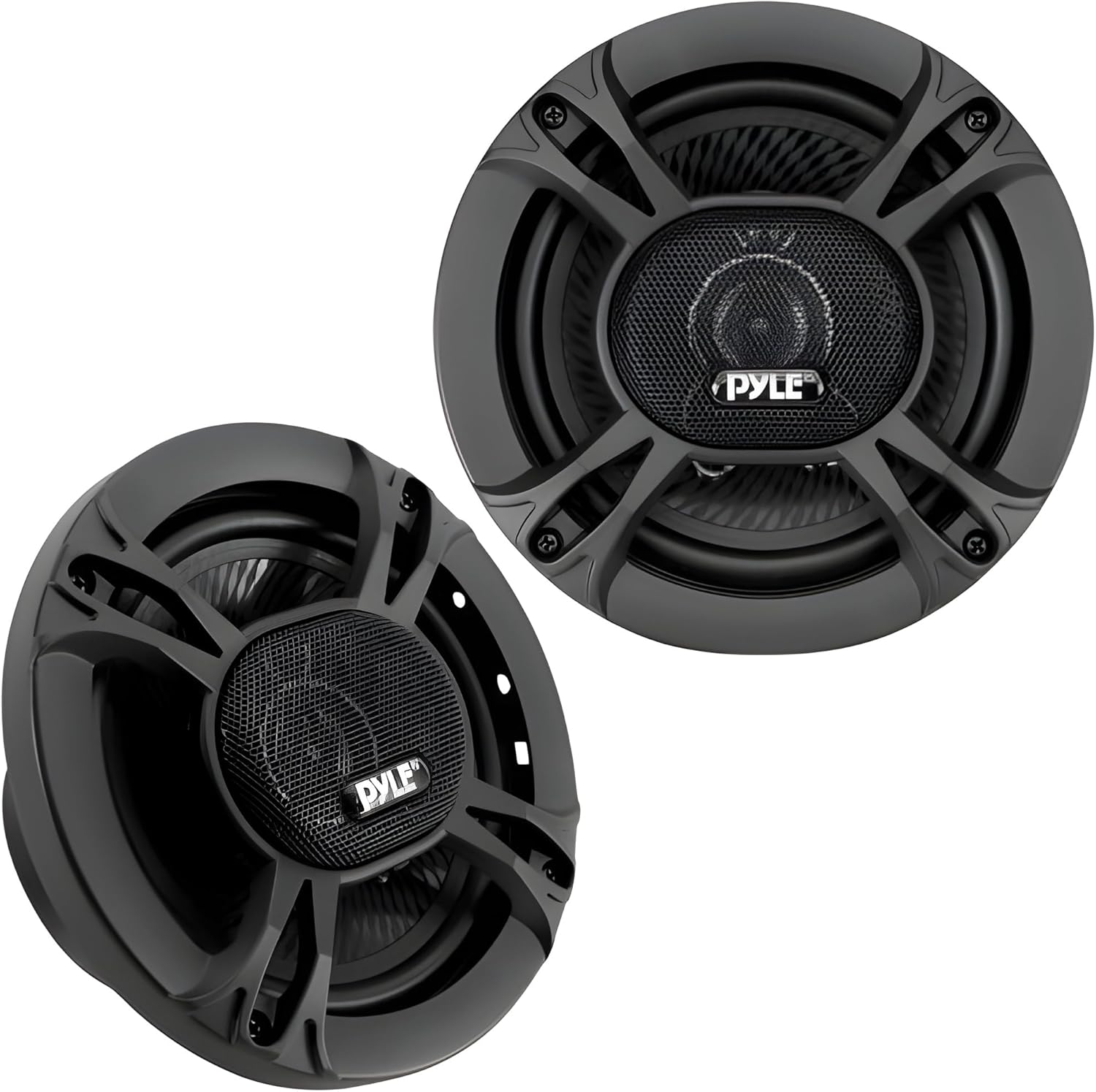
2. Pyle 6.5" 3-Way Triaxial Car Speakers (Pair) PL613BK
Best Budget Door Speakers
| Speaker Size | 6.5 Inches |
|---|---|
| Impedance | 4 Ohms |
| Power Handling | 150 Watts RMS / 300 Watts MAX |
| Sensitivity | 89 dB |
| Mounting Depth | 2.13 inches |
These Pyle 6.5" 3-way triaxial speakers are an affordable, shallow-mount option for rear door upgrades on a Chevrolet Tahoe. Each speaker combines a 5" woofer, a neodymium midrange, and a piezo tweeter to cover lows through highs without needing separate components. They are rated at 150W RMS (300W peak) and 4 ohm impedance, so they will play loud enough for casual listening when driven by a factory or entry-level aftermarket head unit. The 2.13" mounting depth and standard 6.5" size make installation straightforward into most rear door openings without major door modifications, and Pyle includes grills, cables, and mounting hardware for a quick DIY swap. Expect clear midrange and bright highs from the tweeter, but bass authority will be limited compared with larger woofers or a dedicated subwoofer. Also the piezo tweeter and poly cone materials favor durability and economy over refined sound staging. For budget-conscious Tahoe owners who want an easy, louder rear-door replacement, these speakers are a practical choice; audiophiles seeking deep bass or higher fidelity should look higher up the range.
Best for: Tahoe owners who need an inexpensive, easy-to-install rear door speaker upgrade and prioritize louder, clearer mid and high frequencies over deep bass.
Less Ideal for: Drivers seeking high-fidelity imaging, strong low-frequency performance, or those planning a premium component speaker system for critical listening.
- Standard 6.5" size and 2.13" mounting depth for easy rear door fitment
- Includes speaker grills, necessary cables, and mounting hardware for a simple DIY install
- Three-way triaxial design provides usable highs and mids without adding separate components
- 4 ohm impedance and moderate power handling work with factory head units or budget amps
- Bass output is limited compared with larger woofers or dedicated subwoofers
Verdict: Choose this slot if you need a low-cost rear door speaker that delivers acceptable sound and easy DIY fitment on a tight budget.
3. Harmony Audio HA-R5 Rear Door 5.25" Coaxial Speaker Pair with Factory Replacement Harness
Best OE Replacement Door Speakers

| Speaker Size | 5.25 Inches |
|---|---|
| Peak Power | 225 watts |
| RMS Power | 75 watts |
| Frequency Response | 45Hz-20kHz |
| Impedance | 4 Ohms |
These Harmony Audio HA-R5 speakers are a direct-replacement coaxial pair intended to swap into the rear doors of 2007–2014 Chevy Tahoe models. They come with a factory-style replacement harness to simplify installation and match the vehicle wiring, so you can replace worn factory speakers without splicing or adapter hunting. The 5.25-inch dynamic drivers and 1/2-inch tweeters are tuned for a broad 45Hz–20kHz response and rated at 75 watts RMS (225 watts peak), which gives noticeably fuller midbass and clearer highs compared with many tired stock units. Sensitivity is a moderate 90dB, so they play loud enough with a factory head unit while remaining efficient for use with an aftermarket amp if desired. Construction uses a plastic frame and coaxial design, which keeps fitment and mounting depth compatible with the Tahoe door. Limitations include basic materials and the absence of weatherproofing, so long-term durability behind door panels may not match higher-end marine-grade speakers. Installation is straightforward for DIYers comfortable removing door panels, especially since the harness matches factory connectors.
Best for: Buyers who want a straightforward, factory-compatible replacement for aging rear door speakers on a 2007–2014 Chevrolet Tahoe and prefer a simple plug-and-play swap over modifying wiring or mounts.
Less Ideal for: Customers seeking premium materials, weatherproofing for exposed installations, or audiophile-level clarity and separation should consider higher-end aftermarket options instead.
- Factory-style replacement harness simplifies plug-and-play installation with original wiring
- Direct-fit 5.25-inch coaxial design matches rear door mounting and depth
- Higher power handling (75W RMS, 225W peak) delivers stronger midbass than worn stock speakers
- Wide frequency response (45Hz–20kHz) and 90dB sensitivity provide clearer highs and improved efficiency
- Not rated as waterproof so may be less durable in high-humidity or wet conditions
Verdict: Use this pick when you want a factory-style replacement that matches original fit, wiring, and expected reliability for simpler swap-ins.
4. Pyle PL513BK 3‑Way 5.25" Universal Car Triaxial Speakers (Pair)
Best Universal 3‑Way Door Speakers

| Power Handling | 120 Watts RMS / 240 Watts MAX |
|---|---|
| Impedance | 4 Ohms |
| Speaker Size | 5.25 Inches |
| Tweeter Diameter | 0.75 Inches |
| Included Components | Cables, speaker grills, mounting hardware, crossover |
These Pyle PL513BK speakers are a budget-friendly universal 3‑way coaxial set intended as quick door or side‑panel replacements. Each speaker combines a 5.25" midwoofer with a neodymium midrange dome and piezo tweeter to cover a wider frequency range from one unit. They install as wired components using the supplied grills, cables, crossover network, and mounting hardware and fit shallow factory apertures thanks to the short mounting depth. Expect louder, fuller sound than a basic two‑way or single cone speaker at street volumes, with decent midrange detail and crisp highs from the triaxial drivers. Limits include basic materials and a modest sensitivity that mean they will benefit from a decent head unit or amplifier to reach clean high output. Build quality is typical for the price class, so you may notice less refined bass extension and durability compared with premium door speakers. For rear door use in a Tahoe these will be an easy, affordable upgrade that broadens frequency coverage without swapping to speaker‑specific models.
Best for: Buyers who want fuller frequency coverage from a single, easy‑to‑install rear door speaker without buying vehicle‑specific parts and who prioritize value over premium build.
Less Ideal for: If you need deep, tight bass or long‑term high‑power reliability for competition audio, choose a higher‑end, vehicle‑matched component system instead.
- Three‑way triaxial design provides broader frequency coverage from a single speaker
- Includes cables, grills, crossover and mounting hardware for plug‑and‑play door installation
- Shallow mounting depth simplifies fitment into factory rear door locations
- Neodymium midrange and piezo tweeter increase clarity in highs and upper mids
- Materials and construction are budget grade so bass and long‑term durability are limited
- Lower sensitivity means cleaner loud output may require a stronger head unit or external amp
Verdict: Pick a universal 3‑way speaker if you want fuller frequency coverage from a single coaxial unit and don’t require a vehicle-specific part.
5. Kenwood 6.5" KFC Series 2‑Way Flush‑Mount Car Speaker (6.5")
Best Shallow‑Mount Door Speakers

| Speaker Size | 6.5 Inches |
|---|---|
| Impedance | 4 Ohms |
| Frequency Response | 40 – 22000 Hz |
| Sensitivity | 90dB |
| RMS Power (pair) | 60 watts |
These Kenwood KFC 6.5" two‑way speakers are a shallow, flush‑mount option intended to replace factory door speakers where depth is limited. They pair a polypropylene woofer with a 1" balanced dome tweeter to extend frequency response down to 40 Hz and up to 22 kHz and are rated at 60 watts RMS per pair. Typical use is direct replacement in a vehicle door or rear door location with small mounting depth; the treated cloth surround and ferrite motor provide durable, road‑ready performance. In practice they deliver clearer highs and tighter mids than many stock speakers, with a sensitivity around 90 dB that makes them easy to drive from a factory head unit. Limitations include modest power handling and peak power figures that mean larger aftermarket amps are required for high‑output systems, and the speakers are not waterproof so they need proper door sealing. Installation in a Chevrolet Tahoe rear door should be straightforward where the factory cutout matches 6.5" mounting, but confirm depth and adapter needs before buying.
Best for: Buyers upgrading rear door speakers on a Chevrolet Tahoe with limited mounting depth who want clearer highs and tighter mids without adding an amplifier.
Less Ideal for: If you plan to build a high‑output or bass‑heavy system for the Tahoe, choose speakers with higher power handling and consider adding a dedicated amplifier and subwoofer instead.
- Shallow top‑mount depth fits doors with limited clearance
- Balanced dome tweeter improves high‑end detail over typical factory speakers
- Polypropylene cone and treated cloth surround offer durable, road‑worthy construction
- 90 dB sensitivity makes them easy to drive from a factory head unit
- RMS power rating is low for heavy bass or high‑output systems
- Not rated waterproof so exposure to moisture in door cavities could be an issue
Verdict: Choose shallow‑mount speakers when door depth is limited and you need a compact unit that still improves sound over stock.
6. Pyle PL6183BK 6×8 3-Way Triaxial Car Speakers (Pair)
Best 6X9 / 6X8 Door Speakers

| Power Handling | 200W RMS / 400W peak |
|---|---|
| Impedance | 4 Ohm |
| Sensitivity | 91 dB |
| Mounting Depth | 2.36'' |
| Included Components | Grills, wiring, mounting hardware |
These Pyle 6×8 three-way triaxial speakers are built as a drop-in style replacement for rear doors to push more volume and low-end than smaller coaxial speakers. Each speaker combines a 6×8 woofer, a 1" neodymium midrange and a 3/4" piezo tweeter so you get bass presence, midrange clarity, and crisp highs from one assembly. The 200W RMS (400W peak) power rating and 4 ohm impedance mean they respond well to higher-power head units or aftermarket amps and will play loud without obvious strain. Construction features like a butyl rubber surround and high-temperature voice coil improve durability in a car environment, and the included grills, wiring and mounting hardware make rear-door installation straightforward in vehicles that accept 6×8 mounting. Expect stronger low-end and louder overall output compared with standard 4-to-5-inch replacements, but these are not a sealed subwoofer solution so extreme bass demands may still need a dedicated sub. Sound tuning may be necessary to avoid boom or harshness at high volume levels when paired with powerful amplification.
Best for: Buyers who want larger-format rear door speakers to add bass weight and louder overall sound to their Tahoe without installing separate midwoofers or redoing factory speaker locations.
Less Ideal for: Audiophiles seeking ultra-accurate, refined treble or those who want a sealed sub-level bass solution should consider component speakers or a dedicated subwoofer instead.
- Larger 6×8 woofer provides noticeably stronger low-end and fuller mid-bass than smaller door speakers.
- Three-way triaxial design integrates woofer, midrange, and tweeter for broad frequency coverage from one speaker.
- 200W RMS/400W peak power handling supports louder playback and pairing with aftermarket amps.
- Butyl rubber surround and high-temperature voice coil increase durability in vehicle conditions.
- Includes grills, wiring, and mounting hardware for easier rear door installation.
- Piezo tweeters can lack the smoothness of higher-end soft-dome tweeters, affecting high-frequency detail.
Verdict: Select this pick if you want larger-format rear door speakers (6×9 or 6×8) for stronger low-end and louder overall sound.
Choosing the Right Chevrolet Tahoe Rear Door Speakers: Key Factors to Consider
Fit and Mounting Depth
Correct fit is the first practical concern when replacing rear door speakers in a Chevrolet Tahoe. Doors on full-size SUVs often have limited depth behind the grille and specific mounting patterns. Measuring mounting depth and diameter ahead of purchase prevents interference with window mechanisms and ensures the speaker sits flush against the door panel.
Mounting adapters or shallow-mount speakers can address clearance issues, but they add cost and installation steps. Also check whether the speaker requires a separate bracket or spacer to align properly with the factory grille. A speaker that claims universal fit without specifying depth or mounting pattern creates risk of an improper installation that can rattle or reduce audio performance.
Power Handling and Amplifier Compatibility
Power handling ratings tell you how much continuous and peak power a speaker can handle. For a Chevrolet Tahoe, consider whether you will run the speakers on factory head unit power or an aftermarket amplifier. Speakers with higher RMS ratings offer headroom and cleaner output when paired with an amp, while low-power models may distort under moderate volumes.
Sensitivity interacts with power handling to determine perceived loudness. A higher-sensitivity speaker will play louder for the same amplifier power, which matters if you keep the stock radio. Confirm nominal impedance as well; many factory systems expect 4 ohms and mismatched impedance can reduce power delivery or trigger protection circuits on some amplifiers.
Speaker Type: Coaxial Versus Component
Coaxial speakers integrate the tweeter onto the woofer assembly, simplifying installation and keeping wiring minimal. For rear doors in the Tahoe, coaxials often provide an effective balance of improved highs and bass without extensive modification. Component options separate tweeter and woofer for better imaging and higher fidelity, but they usually require additional mounting locations and crossover placement.
Choose coaxials if you want a straightforward swap with solid overall improvement. Select components if you are building a system with dedicated crossovers or planning to upgrade the front stage first and use the rears mainly for ambient support. Decisions here affect labor time, grille modifications, and final sonic cohesion.
Cone and Tweeter Materials
Material choice impacts tonal character and durability in the door environment. Polypropylene cones are common and resist moisture and temperature changes typical of vehicle doors; they deliver a smooth, neutral midrange. Mineral-filled or mica-reinforced cones can add stiffness and punch but may color the sound if not well tuned. Paper cones can sound natural but may be less resilient in humid conditions.
Tweeter materials also matter. Soft-dome tweeters tend to produce forgiving highs and wider dispersion, which is useful in rear positions. Hard-dome or metal tweeters often yield greater detail and extension but can sound bright in some cabin acoustics. Consider materials in light of the Tahoe cabin size and your tonal preferences.
Sensitivity and Loudness Expectations
Sensitivity indicates how effectively a speaker converts amplifier power into sound pressure. In a Chevrolet Tahoe, a higher-sensitivity rear speaker helps maintain volume levels without demanding more power from the stock head unit. If you plan to remain with factory amplification, prefer speakers with sensitivity ratings above average to avoid pushing the radio to its limits.
If you will add an aftermarket amplifier, sensitivity becomes less of a limiting factor because the extra power supplies headroom. Still, matching sensitivity across the system helps maintain a balanced tonal response and makes system tuning more predictable.
Durability and Weather Resistance
Door speakers endure temperature swings, moisture exposure, and vibrations from road use, so durability is crucial. Look for corrosion-resistant mounting hardware, treated surrounds, and dust-protecting baskets. Materials that resist UV and humidity will last longer and maintain sound quality over time.
Consider the warranty and build quality indicators such as robust spider assemblies and reinforced voice coils. A speaker that fails early can lead to additional labor costs and rusted mounting points, so favor units designed for automotive environments rather than low-cost home audio conversions.
How Rear Speakers Influence Soundstage in a Tahoe
Rear door speakers play a supporting role in the overall soundstage by adding ambient detail and bass extension behind the listener. In a Chevrolet Tahoe, the cabin is large so balanced rear output helps fill the space and prevent the sound from feeling front-heavy.
Properly matched rear speakers can improve perceived imaging and make music feel more immersive without overpowering the front stage. However, excessive rear level or overly bright rear tweeters can push vocals forward or create localization issues, so aim for tonal unity with front speakers.
- Rear speakers add depth and sense of space to mixes recorded with ambient cues.
- Balanced rear output prevents the front stage from sounding isolated.
- Level and crossover settings are key to maintaining coherent imaging.
Installation Tips for Smooth Replacement
Before you begin, remove the door panel carefully and disconnect any electrical connectors. Check behind the grille for obstructions like window regulators or sound deadening that may interfere with a deeper speaker.
Retain factory clips and fasteners when possible, and test-fit the speaker with the door panel loosely installed to confirm there is no contact with the glass. Use foam gaskets or mushroom-style spacers if needed to seal the speaker against the door and reduce panel vibrations.
- Measure mounting depth and compare to speaker specs.
- Label wiring before disconnecting to avoid polarity errors.
- Apply a thin bead of silicone around the speaker flange for improved sealing and less rattling.
Matching Rear Speakers to Amplified and Stock Systems
If your Tahoe uses a factory amplifier or high-output head unit, choose rear speakers with power handling and impedance ratings that align with that system. Installing high-power speakers on a low-output stock head unit can result in poor dynamics unless an amplifier is added.
When adding an external amp, plan gain staging so the rear speakers do not overpower the front stage. Use crossovers or time alignment where available to integrate the rears as ambient support rather than a competing source.
- Confirm nominal impedance and RMS power ratings before installation.
- Use a capacitor or high-pass filter if the stock system cannot manage deep bass from new rear speakers.
- Consider retaining factory crossovers if they provide high-pass protection to the tweeters.
Reducing Door Rattle and Improving Bass Response
Speaker upgrades can reveal or worsen door panel vibrations. To maintain clean bass, supplement speaker replacement with targeted sound deadening inside the door cavity. Adding damping to the metal skin reduces flex and lets the speaker move air more efficiently.
Use a combination of sheet damping on large panels and foam backing behind the speaker to prevent sound transfer into the door cavity. Proper sealing also reduces whistling and wind noise at higher volumes.
- Apply butyl-based damping sheets to the inner door skin for best results.
- Use closed-cell foam behind the speaker to isolate the driver from door cavity resonances.
- Tighten mounting screws evenly to avoid warping the speaker frame.
Tuning and Crossover Settings After Installation
Once the rear door speakers are installed, tuning is the final step to achieving balanced sound. Start with the amp or head unit gains low, then raise to the point where music plays cleanly. Adjust the crossover frequency to keep the tweeter from reproducing low frequencies that cause distortion.
Use simple equalization to tame peaks in the rear channel that might clash with the front stage. If your system allows time alignment, delay the rear channels slightly to improve imaging and create a more coherent listening experience for front-seat occupants.
- Set a gentle high-pass filter for rear tweeters to protect them from deep bass.
- Make small EQ cuts rather than boosts to control resonant peaks.
- Perform tuning with familiar tracks at moderate volumes to evaluate changes.
Still looking for the perfect fit?
Select your Chevrolet Tahoe configuration to see the most relevant Door Speakers recommendations
How We Chose the Best Chevrolet Tahoe Rear Door Speakers
Our selection focused on rear door speakers that deliver reliable fitment, true-to-source sound, and the power handling needed in a Chevrolet Tahoe. We prioritized speakers with documented mounting compatibility for full-size SUVs, a range of impedance and sensitivity ratings for factory and amplified systems, and driver materials known for durability in door environments. Tonal balance was assessed by considering woofer cone material and tweeter type to ensure clean mids and coherent highs without excessive brightness.We also filtered for practical installation features such as depth clearance, mounting adapter compatibility, and whether the speakers accept factory wiring connectors or require minimal harnessing. Units lacking sufficient power handling for common Tahoe audio setups or with unclear fitment documentation were excluded. Final choices reflect a balance between sound quality, ease of installation, and long-term durability for rear door use in this vehicle.
Our full evaluation process is outlined in our review methodology.
FAQ
Will rear door speaker upgrades fit without modifying the Chevrolet Tahoe door panels?
Often you can replace Tahoe rear door speakers without major panel modification if you choose units with matching mounting patterns and shallow depth. Verify mounting depth and diameter against the factory location and use mounting adapters if necessary to avoid cutting the panel.
Can I run higher power rear speakers on the stock Tahoe head unit?
You can install higher power speakers, but their performance may be limited by the stock head unit's output. Higher RMS-rated speakers benefit from an aftermarket amplifier to provide clean headroom and prevent distortion at higher volumes.
Should I choose coaxial or component rear speakers for my Tahoe?
Coaxial speakers are generally the easiest route for rear doors because they combine tweeter and woofer in a single assembly and require minimal wiring. Component speakers offer better imaging but need separate tweeter mounts and crossovers, which can complicate installation in rear door locations.
How can I prevent door rattles after installing new rear speakers?
Add sound deadening material to the inner door skin, use a foam gasket behind the speaker, and ensure screws are tightened evenly. These steps reduce panel flex and resonance so the speaker can reproduce bass more cleanly.
Do rear speaker upgrades improve bass in a large cabin like the Tahoe?
Upgraded rear speakers can extend perceived bass and improve midbass balance, but the Tahoe cabin is large so significant low-frequency improvement may require adding a dedicated subwoofer or using an amplifier to drive larger rear woofers effectively.
How important is matching impedance when replacing rear door speakers?
Matching nominal impedance to the factory system or aftermarket amplifier is important to ensure consistent power delivery and avoid triggering protection circuits. Most automotive systems expect 4 ohms, so verify the speaker's impedance before installation.
Final Verdict
When choosing rear door speakers for your Chevrolet Tahoe, prioritize fitment, power handling, and a tonal balance that complements the rest of your system. Decide early whether you will keep the factory amplifier or add an aftermarket one, because that choice affects sensitivity and RMS requirements. Also address mechanical issues such as mounting depth and door damping to get reliable, clean results.Focus on long-term durability and proper integration rather than chasing maximum loudness. With careful selection and attention to installation and tuning, a rear speaker upgrade will noticeably enhance soundstage and overall listening enjoyment in your Tahoe.
Explore More:
- Check out all Chevrolet Tahoe parts & accessories
- Explore Electronics
- Browse all Accessories
