

Note: This article contains affiliate links. If you click on these links and make a purchase, I may earn a small commission at no extra cost to you. This helps support my research and content. Read my full affiliate disclosure here.
Towing with a 2000-2006 Chevrolet Tahoe puts extra demand on your vehicle and trailer braking system. Choosing the right trailer brake controller matters because it directly affects stopping distance, trailer stability, and how the Tahoe responds under load. Whether you tow a small utility trailer or a heavier camper, the right controller helps you match braking power to trailer weight and road conditions.This guide presents seven shortlisted trailer brake controllers that suit the 2000-2006 Tahoe. We evaluated options across installation complexity, control type, and real-world braking behavior so you can pick a unit that fits your towing habits and skill level. Read on for practical buying guidance and installation considerations tailored to this Tahoe model.
Looking for other parts? See all Chevrolet Tahoe parts & accessories.
Top Picks at a Glance
| Best Overall Trailer Brake Controller A balanced, reliable controller that performs well across towing situations | Tekonsha Primus IQ Proportional Trailer Brake Controller |  |
| Best Budget Trailer Brake Controller A low-cost controller with basic features for occasional towing use | Gihdfer Brakeman IV Time-Delayed Electric Trailer Brake Controller |  |
| Best Proportional Trailer Brake Controller Inertia-sensor proportional controllers that match trailer braking to vehicle deceleration | Tekonsha Brake-EVN Proportional Trailer Brake Controller |  |
| Best Time-Delay Trailer Brake Controller Time-delayed controllers with ramped output for predictable, stable braking | Tekonsha Brakeman IV Time-Delay Digital Trailer Brake Controller |  |
| Best Low-Profile Trailer Brake Controller Slim, dash-friendly units designed for tight under-dash space and clean fit | CURT Venturer NEXT Electric Trailer Brake Controller (Low-Profile, Time-Delay, 1–3 Axles) |  |
| Best Portable Wireless Trailer Brake Controller Portable, plug-in or wireless controllers that transfer easily between vehicles | CURT Echo Mobile Bluetooth Trailer Brake Controller (Proportional) |  |
1. Tekonsha Primus IQ Proportional Trailer Brake Controller
Best Overall Trailer Brake Controller

| Model | 90160 |
|---|---|
| Voltage | 12 Volts |
| Axles supported | 1-3 axles |
| Display | LED digital |
The Tekonsha Primus IQ is a compact proportional brake controller designed to deliver smooth, automatic trailer braking by sensing how quickly you apply the tow vehicle brakes. It mounts discreetly under the dash and uses an internal inertia sensor to vary trailer output for predictable stops, with a manual override and a three-level boost for heavier loads. The LED display reports settings and basic diagnostics so you can confirm connection and activity at a glance, and the unit is self-leveling when mounted within a 90-degree vertical range to simplify setup. Installation is straightforward for DIYers when a compatible plug adapter or harness is used, and the snap-in dash clip plus removable connector make stowing the controller easy when not towing. Important limitations: it is built for trailers with one to three axles and requires the correct wiring harness for a 2000–2006 Chevrolet Tahoe to achieve plug-and-play ease, otherwise hardwiring may be needed.
Best for: DIY-minded Tahoe owners who want a reliable proportional controller with clear diagnostics and an installation path that can be plug-and-play when the correct Chevy harness is used.
Less Ideal for: Drivers who tow large multi-axle trailers or who need a controller with advanced smartphone configuration features.
- Proportional braking with internal inertia sensor for smooth, responsive stops
- Compact under-dash design that tucks away yet remains accessible
- LED display with self-diagnostics for quick status checks
- Three-level boost and manual override for added braking power when hauling heavier loads
- Snap-in dash clip and removable connector for easy removal and storage
- Compatible with trailers up to three axles only, so larger trailers are unsupported
Verdict: The all-around pick for most DIY mechanics who want a dependable controller with proportional braking, clear diagnostics, and easy installation options.
2. Gihdfer Brakeman IV Time-Delayed Electric Trailer Brake Controller
Best Budget Trailer Brake Controller

| Fitment | 1 to 4 axles |
|---|---|
| Brake systems | 2-, 4-, 6-, 8-brake systems |
| Display | LED display |
| Included | Mounting bracket and screws |
The Brakeman IV is a budget time-delayed trailer brake controller intended to provide straightforward braking control for occasional towing. It installs compactly using the included bracket and hardware and presents braking force on a clear LED display so you can set and monitor output. The unit supports 1 to 4 axle trailers and uses a time-delay algorithm to smooth trailer braking and reduce abrupt stops compared with no controller. For light, infrequent towing the Brakeman IV delivers predictable, adjustable stopping power without complex setup or vehicle integration. Limitations are that it is a time-delayed controller rather than proportional, so it will not match braking to vehicle deceleration as precisely as a proportional unit and it lacks advanced features like automatic gain sensing or inertia-based braking. Expect a simple, low-cost controller that is easy to fit and tune for occasional towing tasks on an older Tahoe rather than a high-performance towing setup.
Best for: A buyer who tows only occasionally and prioritizes an affordable, easy-to-install controller that gives acceptable, adjustable trailer braking without complicated setup.
Less Ideal for: Drivers who tow frequently, haul heavy loads, or need the most responsive, vehicle-matched braking performance should consider a proportional or feature-rich controller instead.
- Clear LED display for monitoring braking force
- Supports 1 to 4 axle trailers (2-, 4-, 6-, 8-brake systems)
- Compact design with included mounting bracket and hardware for easy installation
- Adjustable time-delayed braking to reduce jerky stops compared with no controller
- Uses time-delayed operation rather than proportional sensing, so braking feel is less smooth and responsive than proportional units
- Lacks advanced automatic gain or inertia-based features found on higher-end controllers
Verdict: Choose this slot if you tow infrequently and need a simple, affordable controller that provides acceptable braking control without advanced features.
3. Tekonsha Brake-EVN Proportional Trailer Brake Controller
Best Proportional Trailer Brake Controller

| Compatible trailer axles | 1-4 axles (2–8 brakes) |
|---|---|
| Control type | Proportional (inertia sensor) |
| Display | Digital LED |
| Boost levels | Up to 3 levels |
| Warranty | Five-year limited warranty |
The Tekonsha Brake-EVN is a proportional electric brake controller designed to give smoother, more natural stops by matching trailer braking to how hard you apply the Tahoe's brakes. It installs with a plug-and-play port and removable connector for easier wiring when using a vehicle-specific harness sold separately. The unit uses an internal inertia sensor to measure deceleration and automatically modulate trailer brake output, while arrow buttons, a manual lever, and a boost function let you fine-tune braking power for heavier loads. The digital LED display shows settings and diagnostics and the unit has a power-save mode to limit battery drain when idle. Its compact housing mounts within easy reach of the driver. Limitations include the need to purchase a separate Tekonsha wiring harness for a 2000–2006 Chevrolet Tahoe and that advanced smartphone features are not offered on this model, so customization beyond basic boost and manual control is limited.
Best for: Drivers who prioritize smooth, proportional trailer braking for safer, more predictable stops and who want a straightforward, driver-adjustable controller for everyday towing with a Chevy Tahoe.
Less Ideal for: Buyers looking for a wireless or smartphone-configurable controller or those who prefer an all-in-one kit that includes a vehicle wiring harness should consider other options.
- Proportional braking with internal inertia sensor for smooth, responsive stops
- Plug-and-play port and removable connector simplify installation with a vehicle-specific harness
- Digital LED display provides real-time diagnostics and clear setting feedback
- Boost and manual override let you increase braking power for heavier trailers
- Compact design mounts within easy reach of the driver
- Requires purchase of a vehicle-specific wiring harness for proper installation
- Does not offer smartphone configuration or advanced wireless features
Verdict: This pick is for drivers who want smoother, more responsive stops—controllers that use internal sensors to apply trailer brakes proportionally to your vehicle's braking.
4. Tekonsha Brakeman IV Time-Delay Digital Trailer Brake Controller
Best Time-Delay Trailer Brake Controller

| Compatibility | 1-4 axle trailers |
|---|---|
| Controller type | Time-delay digital |
| Vehicle interface | Plug & Play port |
| Brake systems | Works with electric and electric-over-hydraulic |
The Tekonsha Brakeman IV is a straightforward time-based trailer brake controller designed for predictable, light-duty towing. It detects when you brake the tow vehicle and sends a ramped output to the trailer brakes over a set interval, with front-panel buttons to adjust overall power and the sync or aggressiveness of braking. The unit includes a manual override lever for immediate application when needed and a digital indicator that shows connection status and diagnostics, including short-circuit protection. Its compact design and plug-and-play wiring port make installation simple and allow mounting above or below the dash in any orientation within reach. Because it is time-delay based rather than proportional, it does not sense deceleration forces and therefore produces consistent, repeatable brake application rather than matching tow vehicle braking dynamics. That makes the Brakeman IV a good, economical choice for owners who tow light trailers and want a reliable, easy-to-install controller rather than advanced proportional control for heavy or performance towing situations.
Best for: Buyers who prefer a simple, predictable braking profile and want an easy-to-install controller for occasional or light towing with minimal setup fuss.
Less Ideal for: Drivers who tow heavy loads frequently or need braking that dynamically mirrors vehicle deceleration should consider a proportional controller instead.
- Time-delay output provides consistent, repeatable braking behavior for light-duty trailers
- Plug-and-play port and compact design simplify installation and mounting location
- Digital display and diagnostic indicators for connection status and short-circuit protection
- Manual override lever allows immediate trailer brake application when needed
- Time-based control does not match tow vehicle deceleration like a proportional unit
Verdict: Select this type when you prefer a simple, time-based braking profile that ramps brake power over a set interval for predictable trailer behavior.
5. CURT Venturer NEXT Electric Trailer Brake Controller (Low-Profile, Time-Delay, 1–3 Axles)
Best Low-Profile Trailer Brake Controller

| Compatibility | 12-volt vehicle systems; electric over hydraulic brakes |
|---|---|
| Brake capacity | Controls 2–6 brakes (1–3 axles) |
| Control type | Time-delay with adjustable power and ramp |
| Display | LED ramp indicator with adjustable brightness |
The CURT Venturer NEXT is a low-profile time-delay brake controller that gives drivers a simple, adjustable way to manage electric trailer brakes from the cabin. It is designed to control 2 to 6 brakes (1 to 3 axles) and offers fully adjustable power and ramp time so you can tune braking response to your trailer load. Mounted with a slim bracket, the unit keeps dash intrusion to a minimum and the LED ramp indicator with brightness control makes monitoring easy day or night. Because it is time-based, setup is straightforward with no leveling required and it can be installed at virtually any angle; using a CURT plug-and-play wiring harness speeds installation. The controller includes a manual override for on-demand trailer braking. Limitations include the inherent behavior of time-delay systems compared with proportional controllers, which may not match trailer braking precisely under all driving conditions. For 2000–2006 Chevrolet Tahoe owners seeking a compact, easy-to-install controller that still provides tuning options and a manual brake function, this unit balances space savings with practical control.
Best for: Owners of 2000–2006 Chevrolet Tahoe who prioritize a compact, unobtrusive brake controller that still lets them adjust output and use a manual override for varied towing loads.
Less Ideal for: Drivers who need the most precise, real-time brake modulation under variable towing dynamics should consider a proportional controller instead.
- Low-profile bracket and slim housing minimize dash intrusion
- Fully adjustable power and ramp time for tuning to trailer load
- LED ramp indicator with adjustable brightness for day and night visibility
- Controls up to 6 brakes (1–3 axles) and includes manual override
- Time-delay control cannot match the real-time modulation of proportional controllers
Verdict: Ideal for owners who need a compact, unobtrusive controller that clears dash space while still offering adjustable output and manual override.
6. CURT Echo Mobile Bluetooth Trailer Brake Controller (Proportional)
Best Portable Wireless Trailer Brake Controller
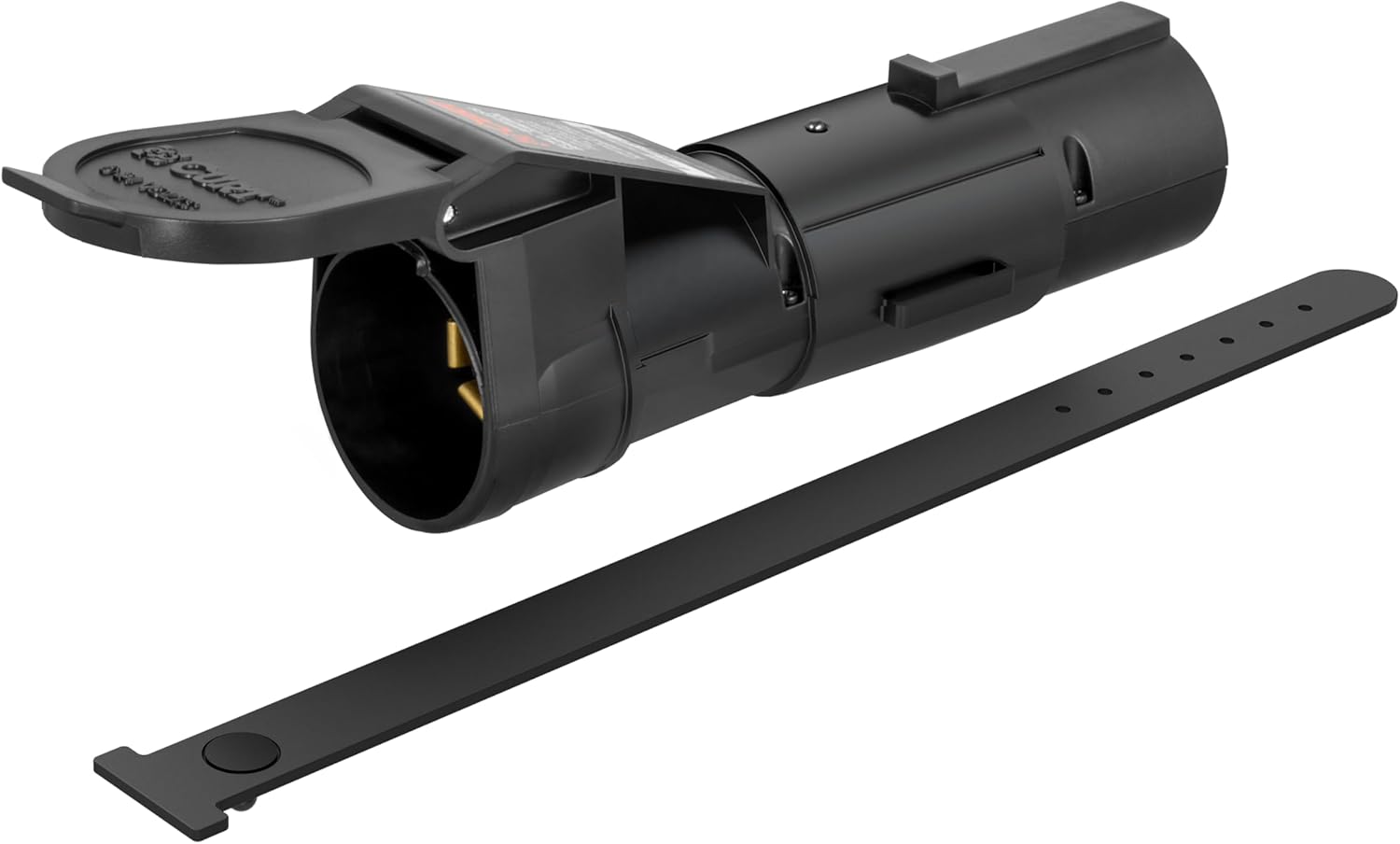
| Compatibility | Plugs into industry-standard 7-way RV blade |
|---|---|
| Braking type | Proportional (tri-axis accelerometer) |
| Axles supported | 1–2 axles (2–4 brakes) |
| Connectivity | Bluetooth for iOS and Android app |
The CURT Echo Mobile is a plug-and-play, portable brake controller that inserts between your vehicle and trailer 7-way connector and uses Bluetooth to let you set and monitor trailer braking from a smartphone. For use with a 2000–2006 Chevrolet Tahoe, it removes the need to hardwire a dash unit: simply plug the Echo into the Tahoe's 7-way when towing and run the OneControl/Smart Control app on an iOS or Android phone. Notable features include a tri-axis accelerometer for proportional braking, the ability to manage one to two axles, automatic calibration and saved towing profiles in the app. The sealed, potted enclosure and locking tab on the connector improve durability and retention in outdoor use. The mobile form factor makes swapping between tow vehicles fast, but it does rely on your phone for a user interface and requires a compatible 7-way outlet; there is no permanent in-cab display. It is compatible with ABS, cruise control and low-voltage systems, which helps avoid integration problems with the Tahoe's systems.
Best for: Buyers who need a mobile, no-fuss solution to tow with a 2000–2006 Tahoe and want to avoid installing a permanent under-dash controller, especially if they use multiple tow vehicles.
Less Ideal for: Drivers who prefer a dedicated in-cab controller or who frequently tow without a smartphone available should choose a hardwired unit instead.
- True plug-and-play portable design that moves between vehicles without hardwiring
- Bluetooth control and a phone app for adjusting output, sensitivity and saving profiles
- Proportional braking via triple-axis accelerometer for smoother stops
- Potted, weather-resistant enclosure and locking tab for durable connection
- Compatible with ABS, cruise control and low-voltage systems
- Depends on a smartphone app for control so no physical in-cab display or manual backup controls
Verdict: Buy this if you need a mobile controller that plugs into a 7‑way or pairs wirelessly so you can move it between tow vehicles without hardwiring.
Choosing the Right 2000-2006 Chevrolet Tahoe Trailer Brake Controller: Key Factors to Consider
Control Type: Proportional Vs Time-Delayed
Control type determines how the controller applies braking force to the trailer relative to the Tahoe's braking. A proportional controller senses vehicle deceleration and applies trailer brakes in direct proportion, producing smoother, more predictable stops. For the 2000-2006 Tahoe, which can have a heavy mass when loaded, proportional control helps reduce trailer sway and harsh tugging during braking.
Time-delayed controllers apply a preset level of braking after the Tahoe's brake pedal is pressed and ramp up according to a timer. They are often simpler to tune but can feel less refined on grades or when towing variable loads. Choosing between these types affects driver confidence, required adjustments, and how forgiving the system is during mixed driving conditions.
Installation and Wiring Compatibility
Installation complexity matters because the 2000-2006 Tahoe has vehicle-specific wiring access points and optional factory tow packages. Some controllers plug into a dedicated tow connector while others require splicing into the factory brake light circuit and running a 12V power lead and ground. Consider whether you are comfortable with basic wiring or prefer a plug-and-play solution that minimizes dash work.
Good wiring compatibility reduces installation time and the chance of wiring faults. Look for controllers that provide clear wiring diagrams and that match the Tahoe's electrical characteristics to avoid issues such as false activation or a drained battery when the vehicle sits for extended periods.
Adjustability and Tuning Options
The ability to adjust gain, braking curves, and sensitivity is crucial for dialing in trailer response for different loads and driving conditions. A controller with simple manual knobs may be faster to tweak on the fly, while digital units can offer memory profiles or step adjustments for multiple trailers.
On the 2000-2006 Tahoe, you will likely tow trailers with different weights or different brake configurations. Robust adjustability helps you achieve smooth, balanced braking without over-energizing the trailer brakes, which can lead to premature wear or poor handling.
Mounting Location and In-Cab Usability
Placement of the controller affects how easily you can reach and adjust settings while driving. Controllers designed for in-cab mounting with clear displays and tactile controls reduce distraction and make it easier to respond to changing conditions.
For the Tahoe, mounting choices include below the dash, on the steering column, or in a center console area. Consider whether the unit's size and control layout will fit the available space without interfering with vehicle controls or legroom.
Power Output and Thermal Handling
A controller must be able to supply sufficient current to activate trailer brake magnets consistently, especially on long descents or when towing heavy loads behind the Tahoe. Units with higher continuous and peak current ratings are less likely to overheat or enter a protection mode during sustained braking.
Thermal handling also ties to long-term reliability. Controllers with temperature compensation or protective shutdown can prevent damage to both the controller and the trailer brakes under heavy use, which is an important consideration for owners who tow long distances or through mountainous terrain.
Diagnostics, Safety Features, and Compliance
Built-in diagnostics such as short-circuit detection, open-circuit alerts, and status LEDs help you identify wiring or brake issues before they become safety hazards. Some controllers include automatic leveling features, boost modes, or reverse lockouts to prevent accidental trailer brake application.
Safety features that align with trailer brake standards and clear user alerts are valuable for Tahoe owners who rely on their vehicle for frequent towing. A controller that proactively communicates faults reduces the chance of towing with compromised braking performance.
Wiring and Harness Options for the 2000-2006 Tahoe
Understanding wiring options helps you plan the installation and reduces the chance of issues after mounting a controller. The Tahoe can have an existing tow connector or require tapping into the tail light and brake circuits. Choose a harness that matches the vehicle side connections to avoid unnecessary splicing.
A plug-in harness designed for a dedicated tow connector simplifies installation, while inline wiring kits provide flexibility if your Tahoe lacks a factory harness. Always route power and signal wires away from heat sources and moving parts, and use proper fuses or breakers sized for the controller's current draw.
- Identify whether your Tahoe has a factory tow wiring connector before buying.
- Use grommets and loom to protect wires where they pass through metal.
- Install an inline fuse on the power lead near the battery for protection.
Mounting Tips and Best Practices
Plan the mounting location with access and visibility in mind. A controller placed low on the dash may be out of sight, while one placed near the center console is easier to reach but must not interfere with gear selection or switches.
Use the provided bracket and hardware, and ensure the control head is secure to minimize vibration. For removable control heads, confirm that the quick-disconnect cable is long enough to allow convenient removal and storage when not towing.
- Test reachability from the normal driving position before final mounting.
- Avoid locations that block airbags, vents, or vehicle controls.
- Consider run length and routing for the cable between the control head and module.
Tuning the Controller for Different Trailer Loads
Start tuning with a light load and work up to heavier conditions so you can observe how adjustments affect braking feel. For proportional controllers, sensitivity should be set so the trailer applies brakes smoothly without causing a forward jolt. For time-delayed units, adjust ramp time and initial output to match trailer weight.
When towing heavy trailers with the Tahoe, test braking on a low-traffic road to validate settings. Recheck and re-tune if you change trailers or add weight to ensure consistent stopping distances and minimal trailer yaw.
- Carry a simple checklist for initial tuning: vehicle speed, empty vs loaded, trailer response.
- Make small incremental adjustments and test each change.
- Document preferred settings for each trailer if the controller supports memory presets.
Maintenance and Troubleshooting for Trailer Brake Systems
Regular maintenance keeps the trailer brake system reliable. Inspect controller connections, ground points, and wiring for corrosion or chafing. Periodically test the controller's output and the trailer magnets to confirm consistent operation.
Common troubleshooting steps include checking the vehicle battery and alternator output, verifying fuses, and using the controller's diagnostic indicators to isolate open or short circuits. Address mechanical brake problems on the trailer before blaming the controller.
- Clean and tighten ground connections at both vehicle and trailer.
- Check magnet resistance on the trailer brakes with a multimeter.
- Verify controller firmware or calibration if the unit supports updates.
Legal and Safety Considerations When Towing
Different jurisdictions require functional trailer brakes above certain trailer weights. Ensure your trailer braking system meets local laws for the combined towing weight and that the controller is set to provide effective deceleration without wheel lockup.
Always perform a brief brake check after connecting a trailer to confirm both vehicle and trailer brakes respond. Use safety chains, proper hitching, and confirm trailer lights are operational alongside the brake controller.
- Know the trailer weight threshold that requires brakes in your area.
- Perform a pre-drive walkaround to confirm connections and lights.
- Include controller checks in routine vehicle inspections before long trips.
Still looking for the perfect fit?
Select your Chevrolet Tahoe configuration to see the most relevant Trailer Brake Controllers recommendations
How We Chose the Best 2000-2006 Chevrolet Tahoe Trailer Brake Controller
We prioritized traits that matter for owners of 2000-2006 Chevrolet Tahoe trucks and SUVs towing trailers of varying sizes. Key evaluation criteria included braking control type, installation compatibility with the Tahoe wiring and tow package, adjustable power output and gain settings, ease of in-cab mounting and user interface, and safety features such as boost or surge protection and diagnostic indicators.We also assessed build quality, manufacturer support for replacement parts, and how well a controller maintains consistent braking under changing loads and speeds. Units that required extensive vehicle modification, lacked clear wiring guidance for the 2000-2006 Tahoe, or offered poor adjustability were excluded. Our shortlist favors controllers that balance dependable stopping performance with straightforward installation and reliable operation specific to this Tahoe range.
Our full evaluation process is outlined in our review methodology.
FAQ
Do I need a trailer brake controller for towing with a 2000-2006 Chevrolet Tahoe?
It depends on the trailer weight and local laws. Heavier trailers typically require an independent trailer braking system. A controller lets you manage trailer braking force from the Tahoe and improves stopping control when towing sizable loads.
Which control type gives the smoothest feel when towing with a Tahoe?
Proportional controllers generally produce the most natural braking feel because they match trailer brake application to the Tahoe's deceleration. Time-delayed units can be adequate for lighter, consistent loads but may feel less refined on variable terrain.
How difficult is trailer brake controller installation on the 2000-2006 Tahoe?
Difficulty ranges from straightforward to moderate. Vehicles with a factory tow connector allow easier plug-in installations. If you must splice into the brake light circuit and run a power lead, the job requires basic wiring skills and tools but is manageable for most DIYers.
Can I mount the controller anywhere inside the Tahoe?
You should mount it where it is reachable and visible without interfering with vehicle controls or safety equipment. Ensure the mounting location does not obstruct airbags or vents and that the cable to the module can reach without strain.
What maintenance does a trailer brake controller need?
Maintenance is minimal but important. Periodically inspect wiring and ground connections, check fuse condition, and verify proper output to the trailer brakes. Address trailer brake hardware or magnet issues as needed to maintain consistent performance.
Will a controller drain the Tahoe battery if left connected?
Most controllers draw minimal standby current, but a defective unit or improper wiring can cause battery drain. Install an inline fuse and route the power connection correctly so the controller does not remain powered when the vehicle is off, if that is a concern.
Final Verdict
When fitting a trailer brake controller to a 2000-2006 Chevrolet Tahoe, prioritize control type, installation compatibility, and adjustability. Proportional controllers provide the most natural braking feel, while simple time-delayed units can work for predictable, lighter trailers. Ensure the unit you choose supports the electrical demands of heavier towing and offers clear diagnostics to avoid unsafe conditions.Balance ease of install and in-cab usability against performance needs for the trailers you tow. With proper wiring, tuning, and maintenance, a well-chosen controller will make towing with your Tahoe safer and more controlled.
Explore More:
- Check out all Chevrolet Tahoe parts & accessories
- Explore Electronics
- Browse all Accessories
