

Note: This article contains affiliate links. If you click on these links and make a purchase, I may earn a small commission at no extra cost to you. This helps support my research and content. Read my full affiliate disclosure here.
If you want a lower center of gravity, firmer cornering, and a cleaner stance for your GMC Sierra 1500 Denali, choosing the right lowering kit matters. Lowering a Denali changes suspension geometry, ride comfort, and wheel fitment, so the decision should balance daily drivability with the visual and handling gains you want.This guide covers seven shortlisted lowering kits selected for the Denali configuration, and explains the criteria used to evaluate them, including ride quality, ease of installation, and compatibility with factory systems. Read on to understand what each type of kit delivers and what to expect during installation.
Looking for other parts? See all GMC Sierra 1500 parts & accessories.
Top Picks at a Glance
| Best Overall Lowering Kit A well-rounded kit that balances fit, finish, and performance | maXpeedingrods 2" Front / 4" Rear Lowering Kit with Spindles and Coil Springs |  |
| Best Budget Lowering Kit Simple, low-cost spacer or shackle kits that cut stance affordably | Rough Country 2" Front / 4" Rear Lowering Kit with N3 Shocks (07-15 Chevy/GMC 1500 2WD) |  |
| Best Rear Shackle Kit Direct-replacement leaf spring shackles for a 1–3" rear drop | KSP Performance 2" Rear Lowering Shackle Kit for Silverado/Sierra 1500 (1999–2019) |  |
| Best Adjustable Rear Shackles Shackles with multiple hole positions to tune rear drop precisely | Tuningsworld Adjustable 2"–3" Rear Lowering Shackle Kit |  |
| Best Front Drop Spindles Dropping spindles that lower the front without altering struts | SCITOO Front Steering Knuckles with 2" Drop Spindles (pair) | 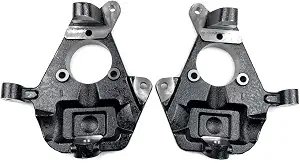 |
| Best Full Spindle + Shock Kit Complete front spindle, rear flip, and shock packages for big drops | Thomletha 2 Drop Lowering Spindles for Silverado/Sierra 1500 and Full-Size GM Trucks |  |
| Best Air‑Assist / Load‑Leveling Kit Rear air springs that add tuning and heavy-load support while lowering | RETRUE Rear Air Bag Suspension Kit for 2019–2026 Silverado/Sierra 1500 (Rear, 5,000 lb Load-Leveling) |  |
1. maXpeedingrods 2" Front / 4" Rear Lowering Kit with Spindles and Coil Springs
Best Overall Lowering Kit

| Fitment years | 2007-2014 |
|---|---|
| Front drop | 2 Inches |
| Rear drop | 4 Inches |
| Included components | Front lowering spindles, rear coil springs, shock extenders, hardware |
| Material | Alloy Steel |
This lowering kit replaces the factory front spindles with 2" drop spindles and fits with 4" rear lowering coil springs plus shock extenders and installation hardware. It is designed for 2007–2014 full-size GM SUVs and trucks and is typically installed by a DIY mechanic experienced with suspension work or a professional shop. The steel spindles are powder-coated to resist corrosion and the rear coil springs provide the advertised 4" drop while the shock extenders restore adequate suspension travel to reduce bottoming out. Practical benefits include a lower stance, improved cornering response from reduced roll, and a complete kit that contains the main components needed for the job. Limitations to expect are that alignment and possible brake or wheel clearance checks are required after installation, vehicles with factory auto-leveling ride systems are not compatible, and changes to ride height will alter suspension geometry which can affect tire wear and ride comfort compared with stock setup.
Best for: DIY mechanics or enthusiasts who want a vehicle-specific, all-in-one lowering solution that balances durable parts with straightforward installation and improved handling.
Less Ideal for: Drivers seeking a factory-matched ride height or those who prioritize an unchanged warranty and factory ride systems should consider alternative approaches or consult a shop.
- Vehicle-specific fit for 2007–2014 GM full-size trucks and SUVs ensures component match
- Complete kit with front spindles, rear springs, shock extenders, and hardware for a single installation
- Powder-coated alloy steel construction improves corrosion resistance and durability
- Shock extenders preserve suspension travel after lowering to reduce bottoming out
- Not compatible with vehicles equipped with automatic ride-leveling systems
Verdict: The all-around pick for DIY mechanics who want a proven lowering solution that combines good materials, complete hardware, and reliable ride quality.
2. Rough Country 2" Front / 4" Rear Lowering Kit with N3 Shocks (07-15 Chevy/GMC 1500 2WD)
Best Budget Lowering Kit

| Fit Type | Vehicle Specific Fit |
|---|---|
| Front Drop | 2 Inches |
| Rear Drop | 4 Inches (adjustable to 4.5") |
| Included Shocks | N3 Series (Rear) |
| Material Type | Alloy Steel |
This Rough Country lowering kit gives a clear, level drop to compatible 2007–2015 1500 2WD trucks using front plate spacers and a rear axle drop assembly paired with N3 rear shocks. Installation is bolt-on for the most part and can be completed in a few hours by a competent DIYer or a shop; the package includes axle saddles, u-bolts, cam plates, and Grade 9 hardware. The N3 shocks help preserve a composed, near-factory ride quality despite the lowered stance, and the adjustable rear drop between 4 and 4.5 inches offers some tuning for fitment. Known issues from owners include occasional missing or non-matching hardware and a need to modify or clearance some factory mounting points to achieve extreme drop settings. Because the kit is vehicle-specific and focuses on a cosmetic and handling drop rather than performance suspension tuning, expect good value for the price but plan on alignment and a post-install inspection to keep steering and driveline geometry correct.
Best for: Drivers who want a dramatic, level lowered look for a 2007–2015 1500 2WD truck on a modest budget and prefer a mostly bolt-on kit that preserves everyday ride comfort.
Less Ideal for: This is not the best choice for owners seeking track-focused suspension performance or for those unwilling to handle post-install alignment and minor fitment adjustments.
- Provides a level, noticeable drop with 2" front and 4" rear for a sleek stance
- Includes N3 series rear shocks to maintain comfortable, balanced ride quality
- Supplied Grade 9 hardware and hardened washers for durable mounting
- Mostly bolt-on design that can be installed in a few hours by a capable DIYer
- Some buyers report missing or incompatible hardware and occasional fitment tweaks
- Achieving the maximum advertised 4.5" rear drop may require trimming or bracket modification
Verdict: A wallet-friendly option for owners who want a noticeable drop or level stance with basic bolt-on parts and minimal install time.
3. KSP Performance 2" Rear Lowering Shackle Kit for Silverado/Sierra 1500 (1999–2019)
Best Rear Shackle Kit

| Fitment years | 1999-2019 |
|---|---|
| Drop range | 1-2 inches |
| Bushing type | Greaseable polyurethane |
| Finish | Powder coated |
These KSP Performance rear lowering shackles are a straightforward way to drop the rear of a Sierra 1500 Denali by roughly 1 to 2 inches while keeping a factory-like ride. The kit replaces the stock rear shackles with welded, powder-coated steel units that use greaseable polyurethane bushings to improve durability and reduce squeak. Installation is bolt-on and requires basic tools; some model years need different orientation during fitment and a couple of reviewers noted a need to remove the hitch for access. The shackles include tapped zerk fitting holes so you can regularly lubricate the bushings for longer service life, though the included grease fittings are reported as low quality and many installers swap them. Build quality is solid with TIG welds and corrosion protection, but precise fit depends on year and 6-lug configuration, and you may need additional washers for 2020 models. For Denali owners who want a tidy, factory-friendly rear drop without changing springs or shocks, this kit delivers predictable results with minimal effect on ride comfort.
Best for: Denali owners who want to lower only the rear end with a heavy-duty, bolt-on shackle that preserves ride quality and can be maintained with periodic greasing.
Less Ideal for: Drivers seeking a larger or front-and-rear overhaul or those who want a height change without any hardware modifications should consider full spring or flip kits instead.
- Adjustable drop of about 1 to 2 inches to correct rear rake
- Greaseable polyurethane bushings for longer service life and reduced noise
- TIG-welded construction and powder coat finish for improved strength and corrosion resistance
- Bolt-on installation without welding; comes with installation instructions
- Included grease fittings are low quality and many users replace them
- May require removing the receiver hitch for installation on some model years
Verdict: Choose this when you only need to lower the rear with heavy-duty replacement shackles that restore fitment and maintain factory ride characteristics.
4. Tuningsworld Adjustable 2"–3" Rear Lowering Shackle Kit
Best Adjustable Rear Shackles

| Auto Part Position | Rear |
|---|---|
| Material | Alloy Steel, Metal |
| Included Components | Installation Hardware |
| Maximum Lifting Height | 3 Inches |
| Automotive Fit Type | Vehicle Specific Fit |
This Tuningsworld lowering shackle kit replaces the factory leaf spring shackles with adjustable units that let you drop the rear 2 inches or reach about 3 inches when the factory block is removed. It is a bolt-on solution intended for trucks with leaf springs and is commonly used to reduce factory rake and give a more level stance. The kit is made from reinforced alloy steel and ships with installation hardware, so it feels durable and aligns with typical aftermarket lowering parts. Installation is straightforward for a competent DIYer with basic hand tools and a jack, and reviewers report a good fit on later-model Silverado/Sierra pickups. Because the kit simply changes shackle geometry and not springs or shocks, ride quality remains similar to factory and handling is largely unchanged for everyday driving. Limitations: it only addresses rear ride height and cannot correct suspension sag caused by worn springs, and achieving the maximum drop may require removing the OEM block which adds complexity.
Best for: DIYers who want precise control over rear stance on a Sierra 1500 Denali and prefer a bolt-on lowering method without changing springs.
Less Ideal for: People trying to fix worn or sagging leaf springs or anyone who needs a full suspension re-tune for heavy towing or performance handling.
- Adjustable drop lets you set rear ride height between roughly 2 and 3 inches
- Reinforced alloy steel construction for strength and long service life
- Bolt-on design with included hardware simplifies DIY installation
- Maintains smooth, factory-like ride quality since springs are not changed
- Maximum 3-inch drop requires removing the factory block which adds extra work and alters suspension geometry
Verdict: For DIYers who want fine control over rear ride height, these adjustable shackles let you dial 1–3 inches of drop without swapping parts.
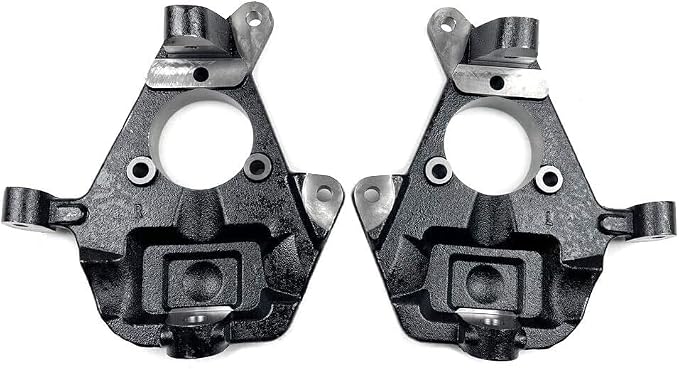
5. SCITOO Front Steering Knuckles with 2" Drop Spindles (pair)
Best Front Drop Spindles
| Fitment years | 2007-2017 (select models listed) |
|---|---|
| Drop | 2 inch |
| Fit position | Front left and right |
| Control arm requirement | Fits cast steel control arms only |
These SCITOO front steering knuckles are a bolt-in lowering solution that replaces the factory spindles to produce about a 2 inch front drop while keeping the stock suspension geometry intact. They are sold as left and right units and include the wheel hub/knuckle assembly needed for installation on compatible 2007–2017 Silverado and Sierra 1500 platforms and related GM SUVs. Typical use is a straight swap of the front spindles to achieve a lower nose without modifying control arms or tie rods, though the listing notes they fit cast steel control arms only and will not fit some 2014+ models with aluminum or stamped steel control arms. Practical benefits include improved stance and potentially crisper turn-in due to lowered center of gravity plus convenience of a direct-replacement design. Important limitations: a minimum 17-inch wheel is required and some wheel/bearing hardware trimming is needed for 17-inch rims to clear the lower ball joint stud, so expect minor modification during install and confirm your truck s control arm type before buying.
Best for: Buyers who want a genuine front drop that preserves steering geometry and prefer a bolt-in spindle swap for lowering the nose on compatible GMC Sierra 1500 Denali-era trucks.
Less Ideal for: Drivers who want a no-modification drop for smaller wheels, or owners of Sierra models with aluminum or stamped-steel control arms should look at other lowering methods or fitments.
- Provides a true front drop via replacement spindles to lower the nose about 2 inches
- Bolt-in design that preserves factory suspension geometry for intended vehicles
- Includes hub/knuckle assembly so you are replacing the spindle and hub together
- Designed for front left and right positions so both sides are matched for installation
- Requires a minimum 17-inch wheel and may need trimming/modification for clearance with 17-inch rims
- Does not fit vehicles with aluminum or stamped steel lower control arms on certain model years
Verdict: Ideal if you want a true front drop with preserved suspension geometry using replacement spindles that bolt in for a lower nose.
6. Thomletha 2 Drop Lowering Spindles for Silverado/Sierra 1500 and Full-Size GM Trucks
Best Full Spindle + Shock Kit

| Fitment Type | Direct Replacement |
|---|---|
| Package Quantity | 2 |
| Applicable Models | 2007–2016 full-size GM trucks (see compatibility) |
These Thomletha lowering spindles replace the factory front spindles to drop the truck approximately 2 inches and preserve steering and suspension geometry for lowered ride heights. They are intended as a direct-replacement part for specified Chevrolet, GMC and Cadillac full-size models and are used when you want a slammed stance without major cutting or suspension changes. Construction is promoted as durable and the kit ships with two spindles ready to bolt in, which simplifies installation for experienced DIYers or a shop. The spindles are stemless and packaged as direct replacements, but this listing does not include rear flip hardware or matched shocks, so you will need complementary components to complete a full spindle-plus-shock lowering kit that maintains ride quality and drivability. Fitment excludes trucks with aluminum or stamped steel control arms, so verifying your control arm type before buying is essential. The product is a budget-friendly way to achieve a front drop while keeping factory-style suspension geometry when paired with the appropriate rear lowering components and tuned dampers.
Best for: Buyers aiming for a substantial front drop who plan to build a full lowered setup and prioritize keeping factory-style suspension geometry when lowering their full-size GM truck.
Less Ideal for: Owners looking for a complete turnkey kit with matched shocks and rear lowering hardware or those whose trucks have aluminum or stamped steel control arms.
- Provides a true 2-inch front drop while preserving steering geometry
- Sold as a matched pair ready for bolt-in replacement
- Designed as a direct replacement for many 2007–2016 GM full-size models
- Constructed for durability to withstand everyday driving
- Does not include rear flip hardware or shocks needed for a complete lowered stance
- Not compatible with vehicles that have aluminum or stamped steel control arms
Verdict: A turnkey full-kit for owners seeking a large, slammed stance that includes spindles, rear flip/flip-hanger hardware, and matched shocks for drivability.
7. RETRUE Rear Air Bag Suspension Kit for 2019–2026 Silverado/Sierra 1500 (Rear, 5,000 lb Load-Leveling)
Best Air‑Assist / Load‑Leveling Kit

| Compatible vehicles | 2019–2026 Silverado/Sierra 1500 (includes Denali, High Country, 2WD/4WD) |
|---|---|
| Load-leveling capacity | Up to 5,000 pounds |
| Installation position | Rear |
| Pressure range | 5–100 Psi |
| Included components | Air bags, brackets, heat shield, air line tubing, fittings, valve, hardware, guide |
This RETRUE rear air bag suspension kit replaces the factory rear support with adjustable air springs and hardware to help level a loaded Sierra or Silverado and reduce rear sag while towing or hauling. It installs at the rear using supplied brackets, heat shields, fittings, and labeled hardware; the kit is set up for no drilling on most applications and lets you tune pressure between 5 and 100 psi to dial in ride firmness and rear ride height. In practice the bags add spring rate as load increases, improving stability, reducing squat under load, and making towing feel safer and less bouncy. Verified installs report clear instructions and straightforward fitment for Denali and other 1500 trims, though lower bracket bolt access can be snug and some buyers needed to source an extra bolt. The kit is a focused solution for rear support only and does not include a compressor or on-board air system, so you will need a portable inflator or add an air compressor if you want in-cab on-the-fly control.
Best for: Drivers who want a lowered look with the ability to fine-tune rear support for towing, hauling, and improved stability while keeping a factory-style installation approach.
Less Ideal for: People who need full on-board air management or instant in-cab adjustments without buying an additional compressor or control system.
- Vehicle-specific fit for 2019–2026 Silverado/Sierra 1500 trims including Denali
- High load-leveling capacity up to 5,000 pounds for heavy towing and hauling
- Pre-drilled brackets and labeled hardware simplify installation on most trucks
- Wide adjustable pressure range (5–100 psi) to fine-tune ride height and firmness
- Does not include an on-board compressor or gauge for in-cab adjustments
Verdict: Pick air-assist kits when you want a lowered look plus adjustable rear support for towing, hauling, and on-the-fly ride-height tuning.
Choosing the Right GMC Sierra 1500 Denali Lowering Kit: Key Factors to Consider
Ride Quality And Damping
Lowering affects spring rates and shock valving, which in turn changes ride comfort on the Sierra 1500 Denali. Softer setups preserve a smoother ride but reduce the handling gains; stiffer setups improve cornering and body control but can transmit more road inputs to the cabin. Pay attention to whether a kit includes matched dampers or is spring-only, because mismatched components often lead to a harsh or unsettled ride.
Damping tuning also matters when the truck carries cargo or tows occasionally. A kit that offers progressive spring rates or adjustable damping gives you more control over tradeoffs between daily comfort and sporty response. For Denali trim, ride comfort is often a priority, so consider kits designed to retain compliant behavior at highway speeds and over expansion joints.
Fitment And Compatibility
Correct fitment is critical for the Sierra 1500 Denali due to unique components and trim-level options. Check whether the lowering hardware is specified for the Denali configuration and accounts for factory ride-height sensors, electronic ride-control modules, and brake line lengths. Poor fitment can lead to rubbing, altered suspension geometry, or issues with steering returnability.
Compatibility extends to wheel and tire packages. Lowering changes available clearance around fenders and wheel wells, so understand the recommended wheel offsets and maximum tire sizes to avoid interference. Kits designed for the Denali will typically document wheel fitment guidance, helping you avoid unexpected modifications.
Installation Complexity
Installation difficulty ranges from bolt-on spring swaps to multi-point conversions that require specialized tools or alignment corrections. A straightforward swap of lowering springs may be manageable for experienced DIYers, but coilover or full-suspension kits often demand a press, spring compressors, and a professional alignment. Consider whether front strut towers, control arm angles, or sway bar end links must be modified as part of the install.
Labor time, available tools, and the need for professional alignment after installation are important cost and convenience factors. For many Denali owners, choosing a kit with clear instructions and hardware that reuses factory mounts reduces installation risk and helps maintain factory serviceability.
Handling And Steering Behavior
Lowering a heavy full-size truck changes roll center, camber under compression, and steering geometry. The right kit will improve body control and reduce nose dive under braking without inducing excessive bump steer or twitchy steering. Look for designs that control camber changes and maintain neutral steering characteristics across normal suspension travel.
Consider how the truck is used: daily driving and occasional highway towing require a different steering balance than aggressive cornering. Kits that include adjustable components allow fine-tuning of handling behavior to match the Denali's weight and intended load conditions.
Durability And Corrosion Resistance
Lowering components are exposed to road debris, salt, and the higher loads that come with full-size truck use. Choose kits with robust construction and corrosion-resistant finishes, such as powder-coated springs and zinc-plated hardware. Bushing materials and mounting hardware should be specified for heavy-duty use to avoid premature wear in harsh climates.
Durable components reduce maintenance and preserve alignment geometry over time. For Denali owners who keep their truck long-term, build quality and warranty coverage on structural parts are practical considerations that affect long-term ownership costs.
Adjustability And Reversibility
Some lowering solutions are reversible and allow you to restore factory ride height without permanent modification, while others require cutting or permanent alterations. Adjustable kits and coilovers offer height tuning for precise ride height, which helps dial in stance and clearance after changing wheels or tires.
Reversibility matters if you plan to return the truck to stock for resale or seasonal use. Kits that use existing mounting points and reversible components preserve factory integrity and simplify future service or warranty interactions.
Types Of Lowering Systems For The Denali
There are several common approaches to lowering the Sierra 1500 Denali, each with distinct advantages. Lowering springs replace factory springs to drop ride height while keeping most OEM components intact; they are generally simpler to install but depend on compatible dampers for the intended ride.
Coilover-style systems combine springs and adjustable damping in a single assembly, allowing precise ride-height control and some tuning of shock valving. Coilovers are more flexible but require more complex setup and sometimes additional modifications to maintain proper geometry.
Other options include drop spindles and adjustable control arms, which change ride height without altering spring rates. These are less common for heavy trucks but can preserve ride characteristics while lowering. Consider the tradeoffs of each system in terms of cost, complexity, and expected driving conditions.
- Lowering springs: simpler, often cheaper, requires compatible shocks
- Coilovers: adjustable, tunable damping, higher installation complexity
- Spindles/control arms: preserve spring rates, may need alignment tweaks
How Lowering Affects Towing And Payload
Lowering the Denali will change rear ride height and the truck's ability to handle heavy loads. Reduced suspension travel can lead to earlier bottoming under heavy payloads or while towing. If you plan to tow regularly, choose a kit that preserves enough travel or includes progressive springs to handle occasional loads.
Manufacturers sometimes provide maximum recommended load limits or note when a kit is intended for street use only. If you regularly haul or tow, prioritize solutions that explicitly account for payload and do not compromise safety or braking distances.
- Expect reduced usable suspension travel after lowering
- Check manufacturer guidance on payload and towing with a lowered setup
- Progressive or dual-rate springs can help maintain load response
Wheel And Tire Considerations After Lowering
Lowering changes the available clearance between tires and fenders. When selecting wheels and tires for a lowered Denali, follow the fitment recommendations that come with the kit to avoid rubbing during full compression or full lock. Offset, backspacing, and tire profile all influence clearance and rubbing risk.
If you plan to change wheel sizes, account for speedometer recalibration and potential effects on brake cooling. Lower ride height can increase the risk of curb contact on steep driveways, so measure clearance at the bumper and lower valence before finalizing wheel choices.
- Consult fitment guidance included with the lowering hardware
- Smaller sidewall tires reduce rubbing but change ride comfort
- Check full lock and full compression clearances during mock-up
Alignment And Suspension Geometry
Any lowering procedure should be followed by a professional alignment. Changes to camber, toe, and caster occur when ride height changes, and correcting these settings prevents uneven tire wear and maintains predictable steering. The Denali's original alignment curves are calibrated for factory ride height, so expect different target values after lowering.
Some kits provide adjustable components to bring geometry back into acceptable ranges without aftermarket control arms. If a kit lacks adjustability, budget for alignment corrections that may include adjustable tie rods or camber correction plates.
- Always perform a four-wheel alignment after installation
- Monitor tire wear closely for the first few hundred miles
- Ask the alignment shop to check bump steer on lowered setups
Common Installation Pitfalls To Avoid
Avoid installing lowering components without assessing brake line length and ABS sensor routing. Some Denali-specific systems include sensor mounts or brake line brackets to keep routing safe through suspension travel. Failing to address these items can cause stretched lines or sensor disconnects under compression.
Do not overlook sway bar end link length and mounting geometry. Shortened links or improper angles change anti-roll behavior and can lead to clunking or binding. If a kit requires additional hardware to maintain correct link geometry, plan to install those parts as part of the kit rather than improvising.
- Check brake line and ABS sensor clearances before final torque
- Replace worn suspension bushings while installing new hardware
- Follow torque specs and re-check fasteners after initial break-in
Maintaining A Lowered Denali Over Time
After installation, perform a short-period service schedule to monitor settling and fastener torque. Springs can settle over the first few hundred miles, and shocks may bed in. Re-torque critical fasteners and recheck alignment if you notice uneven tire wear or handling changes.
Inspect corrosion-prone parts regularly and keep mounting hardware clean. If you use the truck in winter conditions, washing the undercarriage and applying anti-corrosion compound to exposed fasteners will prolong component life and preserve fitment accuracy.
- Re-torque critical suspension fasteners after 100 to 500 miles
- Inspect for rubbing or unusual tire wear every oil change
- Keep an eye on shock leaks and bushing degradation
Still looking for the perfect fit?
Select your GMC Sierra 1500 configuration to see the most relevant Lowering Kits recommendations
How We Chose the Best GMC Sierra 1500 Denali Lowering Kit
We focused editorial selection on components and configurations that suit the GMC Sierra 1500 Denali's weight, suspension layout, and intended use. Our shortlist prioritized kits engineered for full-size trucks and specifically validated for Denali trim fitment where possible. Key criteria included ride quality under typical truck loads, compatibility with factory electronic ride-control systems, and predictable changes to steering and wheel alignment geometry.We evaluated mechanical durability by looking at construction materials and wear points, then checked whether components allowed for proper front and rear rake and preserved tow and payload functions. Ease of installation and the availability of installation documentation were important because many owners perform partial or full DIY installs. Noise, vibration, and harshness impacts were considered along with recommended alignment tolerances.Excluded items included lift-only products, universal kits without vehicle-specific provisions, and kits that required major modification to structural mounting points. The final choices emphasize balance between improved handling and real-world comfort for Denali owners.
Our full evaluation process is outlined in our review methodology.
FAQ
How much lower should I go on a Sierra 1500 Denali?
It often depends on intended use. Dropping 1 to 2 inches typically improves stance and handling without overly compromising ride quality or clearance. Larger drops increase the risk of rubbing and require more geometry corrections.
Will lowering affect my Denali's warranty or factory systems?
Altering suspension can affect warranty coverage for components directly modified, depending on terms and local regulations. Also ensure any kit does not interfere with ride-control electronics or ABS sensors; choose solutions that preserve factory mounts where possible.
Can I tow with a lowered Sierra 1500 Denali?
You can tow, but usable suspension travel is reduced. For regular towing, select a kit that accounts for payload or uses progressive rates so the rear does not bottom out under load. Always follow manufacturer guidance regarding towing with a lowered setup.
Is a DIY install realistic for lowering the Denali?
Simple lowering spring swaps are often within reach for experienced DIYers with the right tools. More complex kits like coilovers or those that alter mounting geometry usually require specialized tools and professional alignment, so factor that into your decision.
Do I need new shocks when I install lowering springs?
Often you do. Stock shocks are valved for factory spring rates and travel. Using lowering springs without matched dampers can result in poor ride control and premature wear. Consider kits that include or recommend compatible shocks.
How does lowering affect tire wear?
Lowering changes camber and toe characteristics, which can accelerate inner or outer tire wear if not corrected. A proper alignment after installation and occasional checks help prevent uneven wear.
Final Verdict
For the GMC Sierra 1500 Denali, prioritize fitment and ride quality when selecting a lowering kit. Balance the desired drop with how you use the truck: modest drops preserve daily comfort and towing capability while more aggressive setups demand careful geometry correction and potentially adjustable components.Ultimately favor kits that document Denali-specific fitment, include or recommend compatible dampers, and allow alignment correction. That approach keeps handling gains predictable and minimizes long-term maintenance tradeoffs, so you can lower the truck with confidence.
Explore More:
- Check out all GMC Sierra 1500 parts & accessories
- Explore Suspension & Steering
- Browse all Accessories
