

Note: This article contains affiliate links. If you click on these links and make a purchase, I may earn a small commission at no extra cost to you. This helps support my research and content. Read my full affiliate disclosure here.
If you depend on your Ford F-150 to tow heavy trailers, upgrading to a properly rated class 4 trailer hitch is one of the most important decisions you will make. The right hitch keeps loads secure, preserves vehicle handling, and reduces wear on suspension and brakes during real-world towing. This guide collects six top-rated options shortlisted for the F-150 and evaluates them against the uses most F-150 owners face, from hauling equipment to towing large campers.Below you will find the top picks followed by the practical criteria we used in our evaluation, plus installation notes and common fitment questions to help you choose the right class 4 trailer hitch for your F-150.
Looking for other parts? See all Ford F-150 parts & accessories.
Top Picks at a Glance
| Best Overall Trailer Hitch A well-rounded hitch balancing strength, fit, and installation ease | CURT Class 4 Trailer Hitch 2-Inch Receiver for Ford F-150 |  |
| Best Budget Trailer Hitch A low-cost hitch that delivers safe basic towing performance | DBXB-RV Class 4 Trailer Hitch 2-Inch Receiver for Ford F-150 (2015–2026) |  |
| Best Premium Trailer Hitch A higher-end hitch with superior materials and long-term durability | CURT Class 4 Trailer Hitch 2-Inch Receiver for Ford F-150 |  |
| Best Heavy-Duty Trailer Hitch Built for maximum towing and towing accessory load capacities | Draw-Tite Class 4 Trailer Hitch 2" Receiver for 2015-2026 Ford F-150 |  |
| Best Compact Trailer Hitch A lower-profile hitch that reduces rear overhang and improves clearance | Rigid Hitch Class 4 Trailer Hitch Receiver (R3-0469) for 2009–2014 Ford F-150 |  |
| Best Class 4 Trailer Hitch A hitch meeting Class 4 specs for higher-capacity towing setups | Reese Towpower Class IV Trailer Hitch 2" Receiver (Fits Ford F-150) | 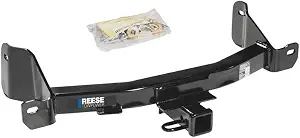 |
CURT Class 4 Trailer Hitch 2-Inch Receiver for Ford F-150
Best Overall Trailer Hitch

| Material | Carbon Steel |
|---|---|
| Finish Type | Gloss Black Powder Coat with liquid A-coat |
| Pull Force | 10000 Pounds GTW |
| Receiver Opening | 2 inches x 2 inches |
| Automotive Fit Type | Vehicle Specific Fit |
This CURT Class 4 hitch equips compatible Ford F-150s with a standard 2-inch receiver and heavy-duty towing capacity, making it suitable for hauling large campers, boats, or utility trailers. It is built from high-strength carbon steel with precision welding and a dual-coat finish designed to resist rust, chipping, and UV damage. The hitch is rated for 10,000 lb gross trailer weight and 1,000 lb tongue weight, and it accepts weight-distributing systems for higher gross limits. Installation is vehicle-specific and comes with the hardware required for a complete bolt-on fit, though the unit is heavy and most installers recommend a second person or a jack to hold it during alignment; some users noted minor shipping nicks on arrival. Its factory-style fit and SAE J684 testing mean it behaves like a robust factory-quality receiver for towing tasks, but proper torqueing of mounting bolts and occasional wiring reroute after installation are practical steps buyers should plan for.
Best for: Buyers who want a heavy-duty, factory-quality Class 4 hitch for a Ford F-150 that balances strong towing capacity and corrosion-resistant finish while keeping installation straightforward.
Less Ideal for: People seeking a lightweight or temporary towing solution or those who need a universal hitch that fits multiple vehicle makes and models.
- High towing capacity: rated 10,000 lb gross trailer weight and 1,000 lb tongue weight
- Durable construction: carbon steel with co-cured liquid A-coat and black powder coat finish for corrosion resistance
- Vehicle-specific design: custom fit for select Ford F-150 years to minimize drilling and simplify installation
- Includes hardware for complete installation and accepts weight-distributing hitches for higher capacity
- Heavy unit requires a second person or support tool for installation
- Some customers report cosmetic chips or dings from shipping on arrival
Verdict: The best all-around trailer hitch that balances towing capacity, build quality, corrosion resistance, and straightforward installation for most buyers.
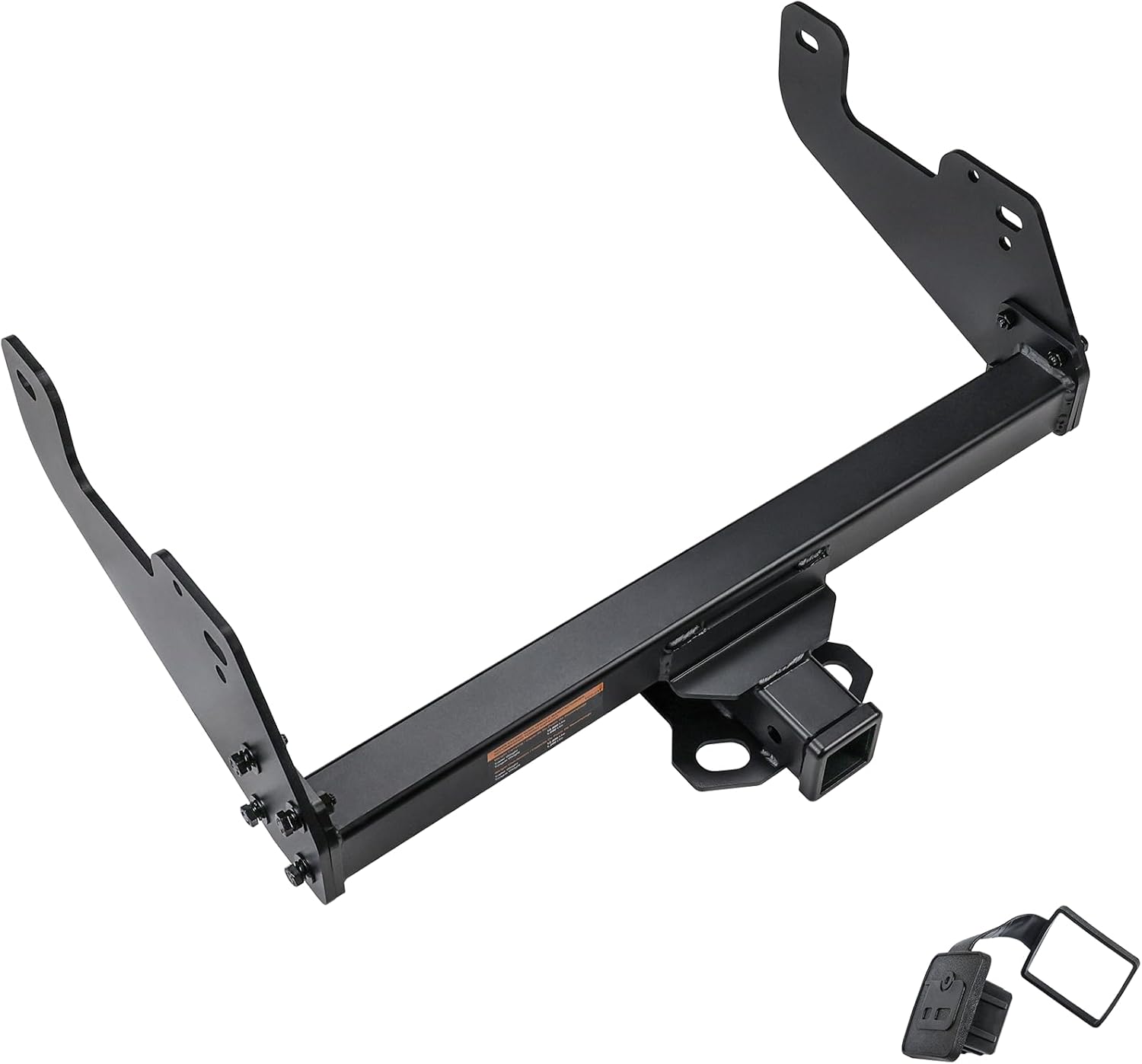
DBXB-RV Class 4 Trailer Hitch 2-Inch Receiver for Ford F-150 (2015–2026)
Best Budget Trailer Hitch
| Compatible with Vehicle Type | Ford F-150 (Without factory receiver, excluding Police Responder) 2015-2026 |
|---|---|
| Pull Force | 10000 Pounds |
| Maximum Towing Capacity | 10000 Pounds |
| Material Type | Carbon Steel |
| Finish Type | Black Matte Powder Coated |
This DBXB-RV Class 4 trailer hitch is designed specifically for Ford F-150 models from 2015 through 2026 and installs using factory mounting points. It provides a 2-inch receiver that accepts standard ball mounts, cargo carriers, and bike racks, and the welded carbon steel construction with a black matte powder coat aims to resist rust in daily use. The hitch is rated to 10,000 pounds pull force and lists maximum towing and tongue weights in its specifications, so it suits heavier towing tasks when paired with the vehicle and trailer components rated to match. Buyers will appreciate that the kit ships with hardware and an anti-drop receiver cover, and several owners reported a snug, factory-style fit once installed. On the downside, some users found the instructions unclear and installation fiddly on certain model years, so expect to spend time aligning brackets or seek professional help if you lack frame-drilling experience. Quality of materials and welds is generally solid but fitment can vary by truck configuration, so verify compatibility before installing.
Best for: Buyers focused on the lowest upfront cost who still want a heavy-duty, vehicle-specific hitch for occasional heavy towing and common receiver accessories; ideal for do-it-yourself installers comfortable troubleshooting fitment quirks.
Less Ideal for: People who want a guaranteed out-of-the-box fit and plug-and-play instructions for every F-150 configuration or who prefer professional-grade documented fitment without any installation adjustments.
- Vehicle-specific design for Ford F-150 (2015–2026) simplifies bolt-on installation to factory mounting points
- Welded carbon steel construction and two-part powder coat finish provide strong, corrosion-resistant durability
- 2-inch receiver accepts common towing accessories like ball mounts, bike racks, and cargo carriers
- Includes installation hardware and an anti-drop receiver cover to protect the tube from dirt and loss
- Installation instructions are sparse and some buyers reported difficult alignment or missing clarity for certain model years
Verdict: The best affordable trailer hitch for buyers prioritizing low upfront cost while still getting acceptable materials, secure mounting, and competent towing capability.
CURT Class 4 Trailer Hitch 2-Inch Receiver for Ford F-150
Best Premium Trailer Hitch

| Material Type | Carbon Steel |
|---|---|
| Finish Type | Gloss, Powder-Coated |
| Receiver Size | 2" |
| Gross Trailer Weight | 10,000 lbs |
| Tongue Weight | 1,000 lbs |
This CURT Class 4 hitch is a factory-style, vehicle-specific receiver designed to upgrade towing capability on select Ford F-150 trucks. Built from carbon steel with precise welds and a co-cured liquid A-coat plus powder-coat finish, it delivers a stout 10,000 lb gross trailer weight capacity and 1,000 lb tongue weight, with compatibility for weight-distribution systems up to 12,000 lb. Installation uses the supplied hardware for a complete mount and the custom fit reduces fitment hassles common with universal hitches. The thicker steel, reinforced welding and corrosion-resistant finish make it a good choice if you prioritize long-term durability and a cleaner under-bumper appearance. Expect a heavy component that may require two people to handle during install and limited vehicle compatibility, so verify the application years before buying. This hitch focuses on towing strength and durability rather than lightweight convenience or cross-vehicle fitment options.
Best for: Buyers who want a heavy-duty, long-lasting hitch for serious towing and are willing to prioritize durability and factory-quality fit over low weight or universal compatibility.
Less Ideal for: If you need a lightweight or multi-vehicle hitch solution or plan only occasional light towing, this heavy, vehicle-specific Class 4 hitch is more capability than necessary.
- Vehicle-specific design for a precise fit and fewer installation adjustments
- High load ratings suitable for large trailers and compatible with weight distribution systems
- Carbon steel construction with co-cured liquid A-coat plus powder-coat for improved corrosion resistance
- Includes all mounting hardware for a complete installation
- Heavy unit that can be awkward to lift and position during installation
Verdict: The best premium trailer hitch for buyers willing to pay more for thicker steel, advanced finishes, superior welds, and longer-term corrosion protection.
Draw-Tite Class 4 Trailer Hitch 2" Receiver for 2015-2026 Ford F-150
Best Heavy-Duty Trailer Hitch

| Vehicle application | 2015-2026 Ford F-150 |
|---|---|
| Receiver size | 2 inch square |
| Maximum towing capacity | 6000 Pounds |
| Maximum tongue weight | 900 Pounds |
| Finish type | Powder Coated |
This Draw-Tite Class 4 hitch is a frame-mounted, all-welded steel receiver built to give F-150 owners a durable towing platform. It installs using vehicle-specific mounting points and includes the hardware needed to attach the hitch to the frame; many owners raise it with a jack or use an assistant during bolt-up. With a 2-inch square receiver it accepts common accessories like bike racks and cargo carriers and is rated to tow 6,000 lb GTW with 900 lb tongue weight, and it supports weight-distribution setups up to 10,000 lb. The black two-stage powder coat helps resist corrosion after road use. Practical benefits are solid construction, a factory-style fit, and compatibility with typical truck towing accessories. Limitations to note are the installation effort on some trucks where fascia or bumper removal is required and mixed reports of shipping scratches and occasional missing or short hardware that may require replacement parts. For heavy towing needs on an F-150 this hitch provides a robust, widely used solution without modifying the vehicle structure.
Best for: Buyers who need a heavy-duty, vehicle-specific hitch for demanding towing on a Ford F-150 and who prioritize strength and factory-quality fit over a minimalist DIY install.
Less Ideal for: Drivers who want a plug-and-play, no-fuss installation or who prefer an enclosed shipping finish without the possibility of touch-up work.
- Solid all-welded alloy steel construction for high strength
- Rated for 6,000 lb gross trailer weight and 900 lb tongue weight
- Custom-fit design for 2015–2026 Ford F-150 for good alignment
- Black powder coat finish helps resist rust and corrosion
- Supports weight-distribution systems up to 10,000 lb WD
- Installation can require removal of bumper fascia and a second person or jack
- Some units arrive with paint chips or scratched finish from shipping
Verdict: The best heavy-duty trailer hitch for users who need higher tongue weight and gross towing capacity and stronger components for demanding loads.
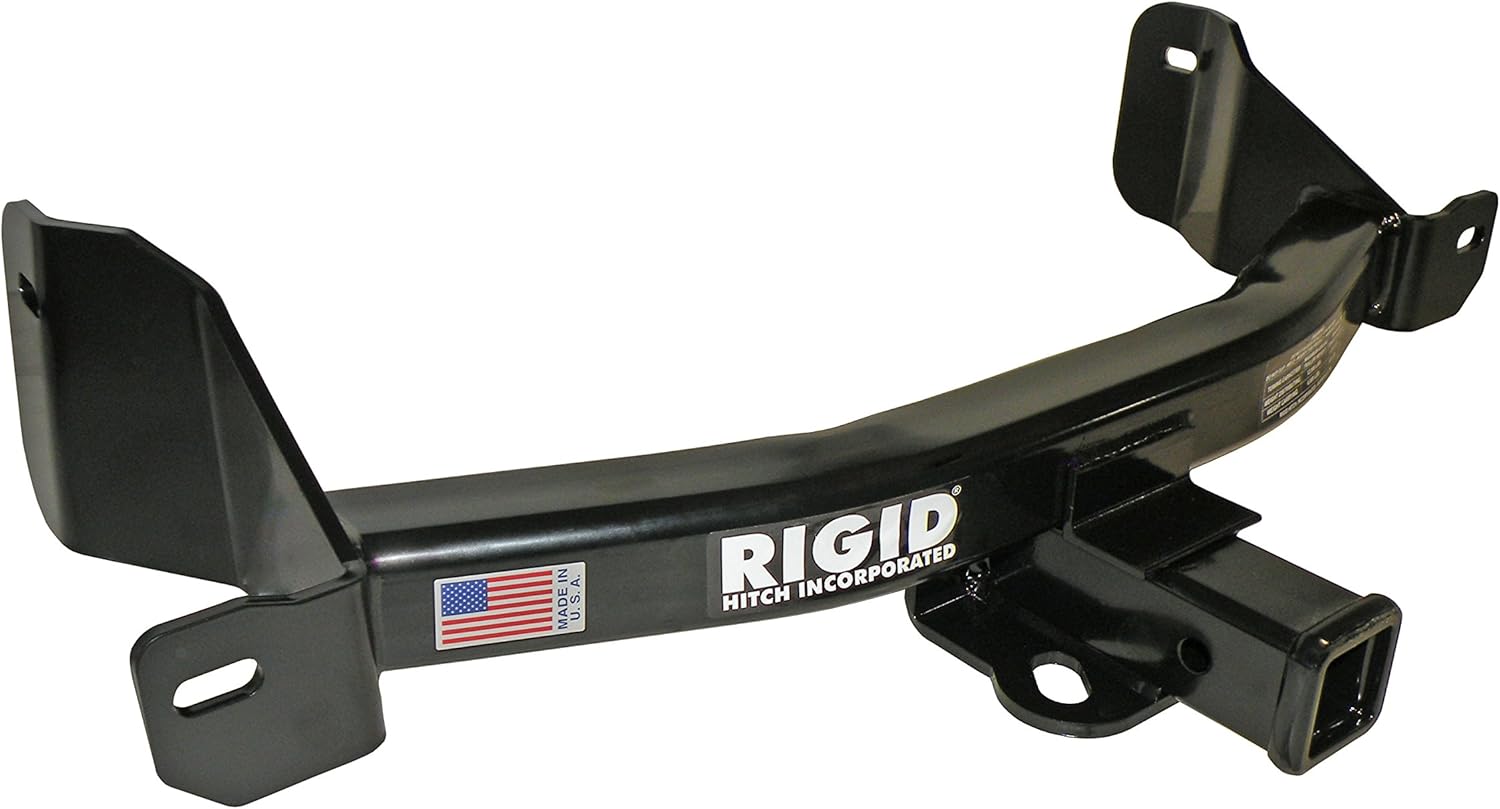
Rigid Hitch Class 4 Trailer Hitch Receiver (R3-0469) for 2009–2014 Ford F-150
Best Compact Trailer Hitch
| Vehicle Service Type | Trailer, Truck |
|---|---|
| Material | Alloy Steel |
| Finish Type | Powder Coated |
| Maximum Towing Capacity | 6000 Pounds |
| Pull Force | 6000 Pounds |
This Rigid Hitch Class 4 receiver is a compact, vehicle-specific hitch made to tuck up behind the bumper on 2009–2014 Ford F-150 pickups while keeping a full 2-inch receiver opening. It supports a 6,000 lb gross trailer weight and 600 lb tongue weight with higher 12,000/1,200 lb ratings when using weight distribution, so it retains heavy-duty capacity despite the low-profile design. The hitch ships with mounting hardware and a black powder coat finish to resist corrosion, and installation is advertised as quick with no drilling required for most truck configurations. Practical benefits include better rear clearance and a cleaner rear bumper appearance since the crosstube is concealed, plus straightforward bolt-on attachment that can be done in about 20 minutes with basic tools. Limitations to note are vehicle fit sensitivity on some model years and configurations where front mount alignment may require adjustment; the product also does not include a ball mount or ball, so you must buy those separately.
Best for: Buyers who prioritize a smaller, tucked-under hitch that preserves full Class 4 towing capacity and cleans up rear bumper clearance and appearance on a 2009–2014 Ford F-150.
Less Ideal for: People who need a universal or multi-vehicle hitch solution or who expect mounting hardware and ball mounts to be included should look elsewhere.
- Compact, low-profile design with concealed crosstube improves rear clearance and appearance
- Rated 6,000 lb gross trailer weight and 600 lb tongue weight, with higher ratings when using weight distribution
- Vehicle-specific fit for 2009–2014 Ford F-150s requires no drilling for most installations
- Powder coat finish and alloy steel construction for long-term durability
- Fits only specified 2009–2014 F-150 configurations and does not fit 2013 F-150 HD models
- Ball mount and ball are not included
Verdict: The best compact trailer hitch for buyers who want a smaller, lower-profile design that maintains rated capacity while improving rear clearance and appearance.
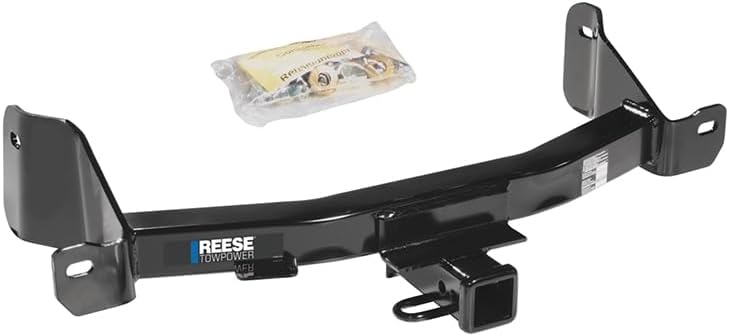
Reese Towpower Class IV Trailer Hitch 2" Receiver (Fits Ford F-150)
Best Class 4 Trailer Hitch
| Receiver size | 2 in. |
|---|---|
| Maximum Towing Capacity | 6000 Pounds |
| Pull Force | 6000 Pounds |
| Material Type | Alloy Steel |
| Finish Type | Powder Coated |
This Reese Towpower Class IV trailer hitch is a custom-fit 2-inch receiver designed for Ford F-150 trucks and intended for medium-duty towing. It mounts to factory frame points with a mostly bolt-on installation and arrives with the required mounting hardware. Constructed from all-welded alloy steel and finished with a two-stage coating, the hitch resists corrosion and should hold up under regular towing use. The hitch is rated for 6,000 pounds gross trailer weight and supports weight distribution systems, making it suitable for boats, small campers, cargo carriers, and bike racks. Buyers will appreciate the precise fitment, straightforward install for one or two people, and the robust fabrication and welds seen in owner photos and reports. Limitations are that it is vehicle-specific to selected Ford F-150 model years and does not include electrical wiring or accessories such as ball mounts or receiver plugs, so expect to buy towing hardware separately. For heavier fifth-wheel or commercial towing you will need a higher capacity solution.
Best for: Buyers who need a factory-quality, vehicle-specific Class 4 hitch for routine medium-duty towing and who prioritize durable construction and a precise fit for their Ford F-150.
Less Ideal for: Drivers planning heavy commercial towing, fifth-wheel setups, or who want an all-in-one kit with wiring and hitch accessories included.
- Vehicle-specific design for a precise fit on compatible Ford F-150 models
- All-welded alloy steel construction for strength and durability
- Two-stage protective finish (E-coat plus powder coat) to resist rust
- 6,000 lb GTW rating with support for weight distribution systems
- Includes required mounting hardware for bolt-on installation
- Limited to compatible Ford F-150 years and configurations rather than universal fit
- Does not include wiring, ball mount, or receiver plug accessories
Verdict: The best Class 4 trailer hitch for buyers specifically seeking the materials, reinforcement, and ratings that meet Class 4 towing requirements.
Choosing the Right Ford F-150 Class 4 Trailer Hitch: Key Factors to Consider
Gross Trailer Weight and Tongue Weight Ratings
Knowing the rated gross trailer weight and tongue weight for a class 4 hitch is essential because these numbers directly determine what you can tow safely. For the Ford F-150 you should match the hitch rating to the heaviest trailer you plan to tow and allow margin for cargo and passenger weight in the truck.
Choosing a hitch with insufficient gross trailer weight or tongue weight capacity forces you to reduce payload or avoid certain trailers. Conversely, selecting a hitch with higher ratings than needed can add unnecessary weight and expense, but it provides headroom for heavier loads and increases safety when encountering steep grades or emergency stops.
Receiver Size and Accessory Compatibility
Most class 4 hitches for the F-150 use a 2 inch hitch receiver, but variations in tongue profile and accessory fitment can affect how accessories sit and operate. Confirm that common inserts, ball mounts, and hitch accessories will seat correctly without excessive play.
Compatibility also extends to whether the hitch accepts weight distribution systems or sway-control attachments. If you plan to use these towing aids, prioritize hitches with reinforced mounting points and enough clearance behind the receiver for proper attachment geometry.
Mounting Design and Vehicle Fitment
The way a hitch attaches to the F-150 frame influences installation complexity, load transfer, and access to underbody components. Bolt-on designs that align with factory holes simplify install and reduce the chance of frame modification.
Consider clearance for the exhaust, spare tire, wiring harness routing, and rear sensor systems. A poorly designed mounting flange can obstruct service access or interfere with factory bumpers. For trucks with specific bed or bumper configurations, choose a hitch whose mounting footprint matches the F-150 frame layout.
Corrosion Resistance and Coating
Hitches are exposed to road grime, salt, and moisture, so coating type and corrosion protection affect long-term performance. Durable powder coatings and multi-stage pretreatments extend service life and maintain structural integrity under heavy use.
Welded seams and hardware should also have protective finishes. Look for hitches with sacrificial zinc plating on bolts or stainless hardware where possible. Good corrosion resistance reduces maintenance, prevents early failure, and preserves the hitch's connection points for trailer safety systems.
Installation Complexity and Required Tools
Installation difficulty affects both cost and the time required to get the F-150 ready to tow. Some class 4 hitches use a straightforward bolt-on process with included hardware and clear instructions, while others require drilling or temporary removal of underbody components.
Plan for available tools, whether vehicle lifting is necessary, and any torque specifications. If you prefer a shop installation, factor in the effort level when evaluating options. Simpler installs usually reduce the chance of improper fitment and make it easier to switch or remove the hitch later.
Impact on Ground Clearance and Rear Access
A heavy-duty hitch can change the rear profile of the F-150, affecting ground clearance, departure angle, and bumper access. Consider how the hitch's cross tube and receiver centerline position will perform off-road or when loading trailers on steep driveways.
Also evaluate how the hitch affects access to the tailgate, backup sensors, and the spare tire. A design that minimizes intrusion into the cargo area and preserves factory sensor function will be more practical for daily use and for owners who alternate between towing and non-towing duties.
Understanding Class 4 Ratings for the F-150
Class 4 denotes a heavy-duty hitch category generally intended for substantial tow capacities. For the Ford F-150, understanding how manufacturers certify gross trailer weight and tongue weight within the class 4 envelope helps you interpret labels and match a hitch to your towing plan.
Pay attention to the published ratings on the hitch plate and compare them against your vehicle tow package and trailer specifications. Ratings should be considered alongside the truck's payload and braking capability to ensure safe operation.
- Gross trailer weight is the total loaded weight of your trailer.
- Tongue weight is the downward force on the hitch and affects rear axle load.
- Vehicle payload limits still apply even with a higher-rated hitch.
Installation Checklist for a Smooth Fit
Before starting an install, verify you have the correct hardware and, if applicable, any factory hole locations to use. A basic checklist includes jack stands or a lift, torque wrench, socket set, and penetration lubricant for stubborn fasteners.
Ensure the hitch aligns with the F-150 frame without forcing and follow torque specifications closely. If wiring or trailer connectors are required, plan their routing to avoid hot exhaust components and moving suspension elements.
- Confirm receiver orientation and clearance behind bumper.
- Check for required trimming or step-bumper adaptations on select beds.
- Test-fit any weight distribution or sway control attachments before final torque.
Wiring and Electrical Considerations
A class 4 hitch does not change electrical needs but often accompanies wiring upgrades for larger trailers. Decide whether you need a dedicated trailer connector, brake-controller wiring, or harness routing that integrates with the F-150 electrical system.
Locate wiring harness access points early in the install and use grommets or conduit to protect cables from chafing. For trailers with electric brakes, ensure the brake controller is installed where it is accessible and properly calibrated for the trailer's weight.
- Route harnesses away from heat sources and moving parts.
- Use dielectric grease on connector pins to resist corrosion.
- Label connectors to simplify future removal or troubleshooting.
When to Use Weight Distribution and Sway-Control
Weight distribution and sway-control systems become important as trailer weights approach the upper range of your hitch or vehicle ratings. These systems redistribute tongue weight across the truck and trailer axles and help stabilize towing at highway speeds.
Decide based on trailer type and usage: long trailers and those with high center of gravity often benefit from these systems. Confirm that the hitch design provides the attachment points and clearance to accept the necessary components without interference.
- Check receiver centerline height relative to trailer coupler.
- Verify the hitch's straight-line clearance for spring bars and sway-control links.
- Consider adjustable ball mounts for precise level towing.
Maintaining Your Hitch for Long-Term Reliability
Regular inspections will extend the service life of a class 4 hitch. Look for loose hardware, coating damage, and corrosion at welds. Clean mounting surfaces and re-torque bolts after the first few hundred miles of towing.
If you routinely expose the truck to road salt or coastal environments, schedule more frequent checks and touch up protective coatings as needed. Proper maintenance preserves rated capacity and ensures safe towing performance year after year.
- Inspect bolts and welds every three months with heavy use.
- Touch up exposed metal with appropriate rust-inhibiting paint.
- Lubricate moving hitch components and check for accessory play.
Still looking for the perfect fit?
Select your Ford F-150 configuration to see the most relevant Trailer Hitches recommendations
How We Chose the Best Ford F-150 Class 4 Trailer Hitch
We focused on factors that matter specifically for class 4 trailer hitches on the Ford F-150. Our selection filters prioritized load capacity and towing stability, bolt pattern and frame compatibility for F-150 chassis, hitch mounting design and clearances that affect exhaust and spare-tire access, and corrosion resistance for long-term durability in varied climates. We also considered receiver size and accessory compatibility to ensure common 2-inch inserts and hitch-mounted gear fit securely.To narrow the field we excluded hitches lacking published weight ratings, items that required major frame modification, and any design that obstructed factory tow hooks or critical service access. We favored options with clear installation documentation and hardware included. Finally, we looked at build quality indicators such as plate thickness, welding consistency, and coating type, while also checking whether the design supports common towing safety features such as sway-control attachments and trailer wiring routing.
Our full evaluation process is outlined in our review methodology.
FAQ
How do I confirm a class 4 hitch fits my F-150 frame?
Check the hitch fitment notes and the F-150 model year or subframe identifiers provided by the hitch manufacturer. Confirm alignment with factory bolt locations and look for any notes about bumper or spare-tire clearance. If fitment documentation matches your F-150 configuration, the hitch should align without frame modification.
Can I install a class 4 hitch myself?
Many class 4 hitches for the F-150 use bolt-on installs that a competent DIYer can complete with a torque wrench and jack stands. Some designs require drilling or temporary removal of components, so assess the installation instructions and your tools before deciding. When in doubt, a professional installation ensures correct torque and alignment.
Will adding a class 4 hitch affect my truck's warranty or sensors?
Properly installed bolt-on hitches typically do not void vehicle warranties, but you should follow torque and installation guidelines to avoid damage. Be mindful of sensor locations; choose a hitch that preserves backing sensor lines and uses recommended mounting points to minimize interference.
Do I need a different ball mount for a class 4 hitch?
Not necessarily. Many class 4 hitches accept standard 2 inch hitch receiver ball mounts, but you should confirm drop/rise and shank length for correct trailer level. If you use weight distribution systems, select a ball mount compatible with those attachments.
How does tongue weight affect my F-150's handling?
Tongue weight transfers load to the rear axle and influences ride height, braking, and steering feel. Excessive tongue weight can overload the rear suspension while too little increases trailer sway. Aim for the trailer's tongue weight to fall within the hitch and vehicle manufacturer recommendations for predictable handling.
Is the 2 inch hitch receiver standard on class 4 hitches for F-150?
Many class 4 hitches use a 2 inch receiver, which supports a wide range of accessories and ball mounts. However, confirm the receiver size in the hitch specifications since some heavy-duty configurations may offer alternate receiver dimensions or multi-receiver options.
Final Verdict
Prioritize towing capacity, mounting compatibility, and corrosion resistance when choosing a class 4 trailer hitch for your Ford F-150. Match the hitch's gross trailer weight and tongue weight ratings to the heaviest trailer you will tow, and verify that the mounting design preserves access to exhaust, spare tire, and sensors.Balance ease of installation against the specific towing equipment you plan to use. With attention to these tradeoffs you can select a durable, well-fitted hitch that improves safety and confidence while towing with your F-150.
Explore More:
- Check out all Ford F-150 parts & accessories
- Explore Other Accessories
- Browse all Accessories
