

Note: This article contains affiliate links. If you click on these links and make a purchase, I may earn a small commission at no extra cost to you. This helps support my research and content. Read my full affiliate disclosure here.
If you haul tools, lumber, or loose gear in a Ford F-150, a proper cargo bar makes the difference between a safe load and a shifting mess. The right Ford F-150 cargo bar keeps items from sliding during sudden stops or cornering, reduces dents and scratches, and saves you time securing loads at each stop. This guide shortlists the top options designed to work with F-150 beds and cab setups and explains the key fitment and performance points you should weigh.Below are our top picks for different hauling needs, followed by detailed guidance on fitment, materials, mounting methods, and real-world tradeoffs to help you select the best solution for your Ford F-150.
Looking for other parts? See all Ford F-150 parts & accessories.
Top Picks at a Glance
| Best Overall Cargo Bar The best all-around cargo bar for most truck owners | KEEPER Extended Ratcheting Cargo Bar, Adjustable 44–74 in |  |
| Best Budget Cargo Bar A low-cost cargo bar that still secures loads reliably | VEVOR Telescoping Ratcheting Cargo Bar (40–73 in) |  |
| Best Premium Cargo Bar Higher-end materials and features for frequent or heavy use | SPAREHAND QSP-360 Steel Adjustable Cargo Bar with Spring Ratchet |  |
| Best Heavy-Duty Cargo Bar Reinforced construction and higher load capacity for tough jobs | Leikius 79-inch Heavy-Duty Adjustable Cargo Bar (200 lb Capacity) |  |
| Best Telescoping Cargo Bar Smooth telescoping mechanism for quick length changes and fit | KILOUPOLE Adjustable Telescoping Cargo Bar (40"–79") with Cargo Net |  |
| Best Compact Cargo Bar Smaller or folding design for easy storage and portability | KEEPER Ratcheting Adjustable Cargo Bar (40"–70") |  |
| Best Corrosion-Resistant Cargo Bar Durable finishes and materials meant to resist rust and salt | Rightline Gear Adjustable Ratcheting Cargo Bar (40–70 in) |  |
KEEPER Extended Ratcheting Cargo Bar, Adjustable 44–74 in
Best Overall Cargo Bar
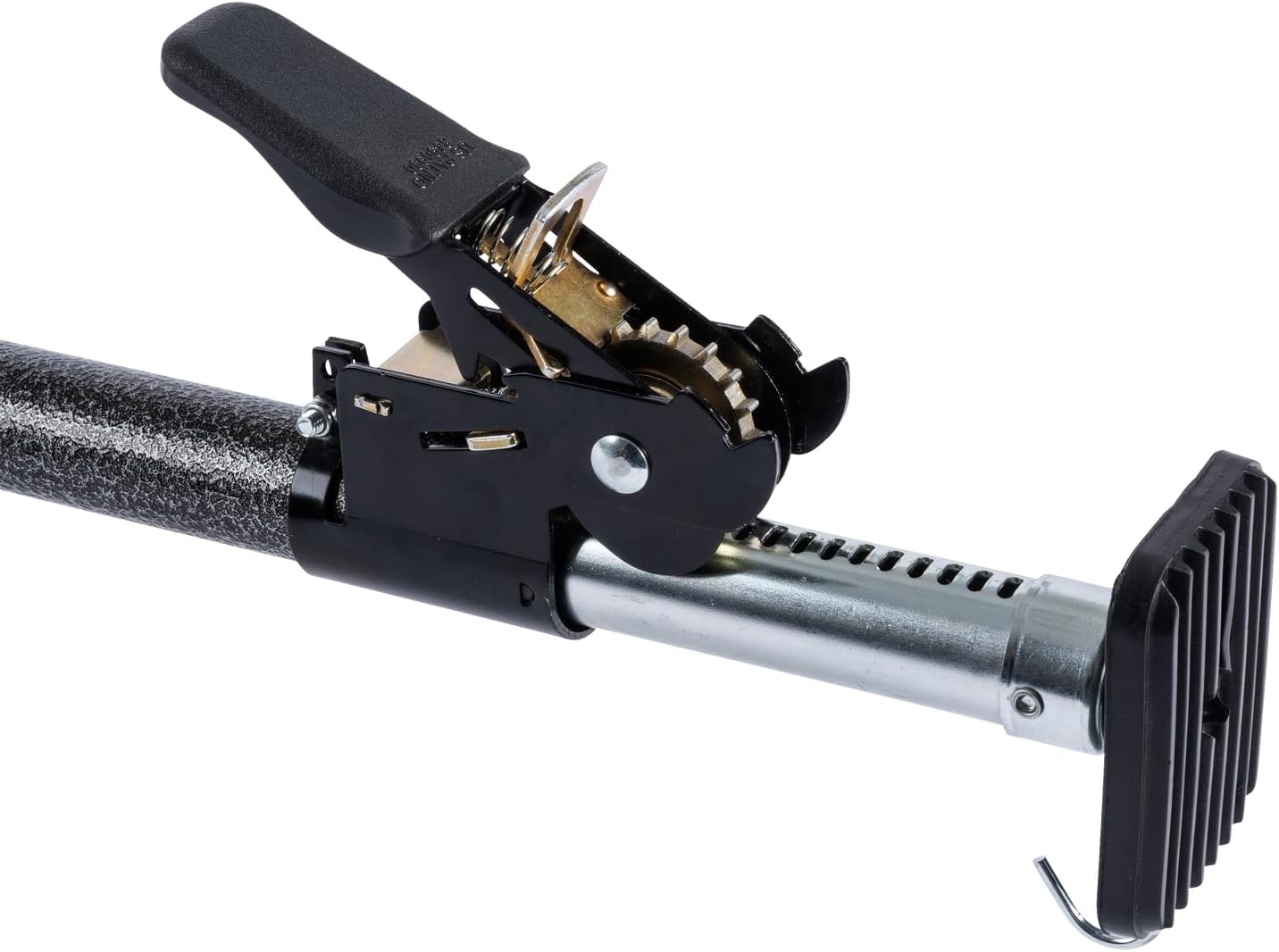
| Adjustable length | 44 to 74 inches |
|---|---|
| Material Type | Metal |
| Mounting Type | Trunk Mount, Truck Bed Mount |
| Compatible with Vehicle Type | Truck, Van |
The KEEPER Extended Ratcheting Cargo Bar is a simple, heavy-duty load restraint that uses a ratchet tensioner and large rubber end pads to hold gear in place during transport. You extend the bar to the approximate width, engage the ratchet to tension it, and the non-marring rubber feet bite into the truck bed or tailgate to prevent sliding. Its 44 to 74 inch range covers the full width of a Ford F-150 bed with or without a bed liner, and the metal construction plus baked-on finish helps resist corrosion from weather exposure. It is straightforward to move between vehicles or remove when not needed, and the ratchet mechanism gives positive locking for heavier items like toolboxes or appliances. The bar is not a permanent tie-down solution so it cannot replace anchor points for extreme loads, and the ratchet offers coarse adjustment rather than micro-fine positioning, but for everyday hauling and keeping cargo from shifting it is an effective, easy-to-use accessory.
Best for: Buyers who want a no-fuss, durable cargo restraint to stop shifting loads during everyday hauling on a Ford F-150 and prefer something quick to install and remove.
Less Ideal for: Not a fit for users who need certified tiedown anchors for commercial heavy hauling or who require permanent, bolted load restraints.
- Wide 44–74 inch adjustment covers standard Ford F-150 bed widths
- Ratcheting tensioner provides secure, positive lock for heavier items
- Large non-marring rubber feet protect vehicle surfaces while preventing slip
- Powdered baked-on finish improves weather and corrosion resistance
- Coarse ratchet increments limit micro-adjustment for very precise positioning
- Not designed as a permanent anchor or rated substitute for tiedown points
Verdict: The best all-around cargo bar that balances strength, adjustability, ease of use, and corrosion resistance for typical loading and hauling tasks.
VEVOR Telescoping Ratcheting Cargo Bar (40–73 in)
Best Budget Cargo Bar
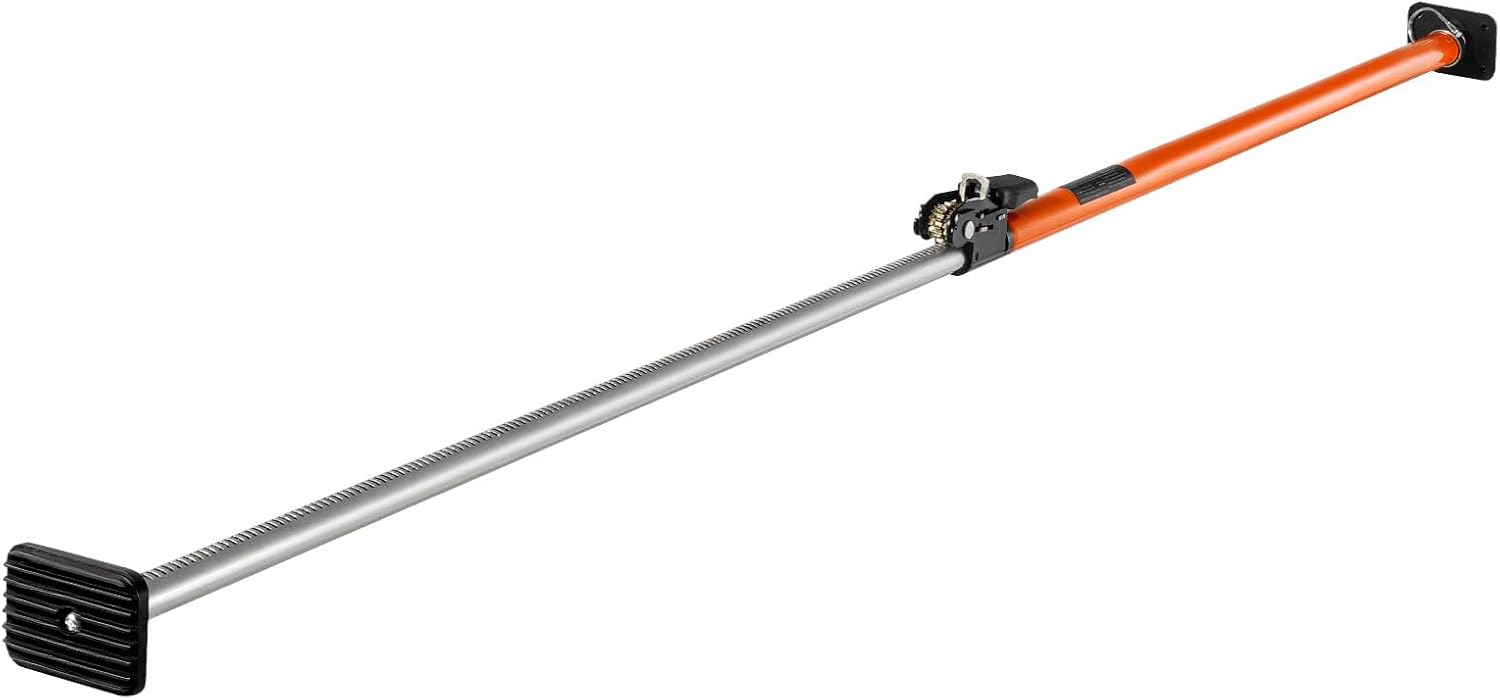
| Adjustable length | 40–73 inches |
|---|---|
| Material type | Carbon Steel |
| Mounting type | Easy Snap |
| Is foldable | No |
This VEVOR cargo bar is a simple, heavy-duty load stabilizer that keeps items from shifting in a truck bed or cabin area. It telescopes from 40 to 73 inches and uses a ratchet-style adjuster with a safety clip so you can tighten the bar quickly and lock it in place. Enlarged non-slip PVC foot pads protect painted surfaces and improve grip on uneven surfaces. In use it feels solid thanks to the carbon steel construction and powder-coated finish, so it resists bending under typical loads encountered during weekend projects or moving errands. Installation is tool-free and straightforward, though a few users say the ratchet can be hard to cinch fully in some mounting situations. The bar is not foldable and is best for occasional hauling rather than professional continuous use, but it offers clear value where strength and ease matter more than lightweight portability or advanced mounting options.
Best for: Buyers who want an inexpensive, no-frills cargo bar for occasional hauling on an F-150 and prioritize a sturdy, tool-free solution over lightweight or feature-rich designs.
Less Ideal for: Do not choose this if you need a compact, foldable bar for frequent professional use or if you require specialized mounts or precision tensioning for heavy commercial loads.
- Adjustable length covers a wide 40–73 inch range for different bed widths.
- Thick carbon steel construction and powder coat increase durability and resistance to bending.
- Ratcheting mechanism with safety clip allows quick tightening and secure locking.
- Non-slip enlarged foot pads protect vehicle surfaces and improve grip on contact points.
- Ratchet may not always cinch tightly against some bed walls, requiring trial adjustments.
Verdict: An affordable cargo bar that delivers acceptable strength and basic adjustability for occasional hauling without unnecessary features or high price.
SPAREHAND QSP-360 Steel Adjustable Cargo Bar with Spring Ratchet
Best Premium Cargo Bar

| Load Capacity | 175 Pounds |
|---|---|
| Extends | 3.6 to 6 ft |
| Material Type | Alloy Steel |
| Mounting Type | Power Grip |
The SPAREHAND QSP-360 is a robust adjustable cargo bar built from alloy steel and designed to keep items from sliding in a truck bed or the cargo area of an F-150. Installation is simple: extend the bar to span the load area, engage the self-locking spring ratchet, then tighten the rubber end stoppers to create pressure against the sidewalls. The construction and aircraft-quality fasteners give it a solid, durable feel and a 175 pound rated capacity that handles heavy toolboxes, fuel cans, or other dense loads. In practice the twist-tighten mechanism holds well on smooth sidewalls and the rubber tips protect painted surfaces. Some users report the screw-tightening can slowly rotate loose over time on rough roads, so occasional re-torquing may be needed if you carry heavy, shifting cargo frequently. The finish is durable and the bar fits the typical width range of an F-150 cargo area, making it a straightforward premium-feeling option for drivers who want a long-lasting, heavy-duty load restraint.
Best for: Ford F-150 owners who prioritize a heavy-duty, long-lasting cargo restraint for hauling dense or shifting loads and who value a premium metal build and reliable tightening mechanism.
Less Ideal for: Drivers who need a hands-free or permanently mounted cargo system or those seeking a collapsible, low-profile solution for frequent removal and storage.
- Heavy alloy steel construction for strong, durable load containment
- Self-locking spring ratchet and twist-tighten ends for quick installation
- Rubber end stoppers protect vehicle surfaces while creating firm grip
- 175 pound maximum load capacity suitable for heavy items
- Screw-tightening ends can slowly loosen over time on very bumpy roads, requiring occasional retightening
Verdict: A premium cargo bar offering superior build quality, smoother adjustment, and longer-lasting finishes for users who need trusted performance and durability.
Leikius 79-inch Heavy-Duty Adjustable Cargo Bar (200 lb Capacity)
Best Heavy-Duty Cargo Bar

| Adjustable length | 40–78.7 inches |
|---|---|
| Load capacity | 200 pound |
| Material | Aluminum, Carbon Steel |
| Fit type | Universal Fit |
This Leikius adjustable cargo bar is built to stop load shift in a pickup bed by telescoping from about 40 to 78.7 inches and locking in place with a ratcheting handle and pin-style height locks. Typical use is setting the bar between the truck bed sides or between the bed and tailgate to create a divider or load stop that prevents boxes, gas cans, and gear from sliding. The aluminum and carbon steel construction plus textured rubber end pads provide a solid grip without damaging surfaces, and the dual spring-loaded pins and quick-release lever make adjustment and removal straightforward. Its 200 pound load rating and reinforced construction suit heavier items carried regularly, though the single-bar kit means very large loads may still need multiple bars or additional tie-downs for full restraint. Some buyers report missing parts on arrival, so inspect the package on receipt. For Ford F-150 use this bar fits most bed widths within its adjustment range and gives a budget-friendly heavy-duty option for organizing and securing cargo.
Best for: Buyers who regularly haul heavy or bulky items in a Ford F-150 and prioritize a rugged, easy-to-adjust restraint to keep gear from shifting in the bed.
Less Ideal for: If you need a complete multi-point load restraint system for commercial heavy hauling or want a permanent installed solution, this single adjustable bar will be insufficient.
- Telescoping range up to 78.7 inches covers most full-size pickup bed widths
- Aluminum and carbon steel construction delivers a sturdy feel for heavier loads
- Non-slip rubber end pads and textured handle reduce movement without scuffing surfaces
- Ratcheting quick-release and spring-loaded pins allow fast, tool-free adjustment
- 200 pound rated capacity gives confidence when hauling bulky gear and containers
- Single-bar kit may not fully restrain very large or uneven loads without additional bars or tie-downs
- Some customers reported missing pieces on delivery so verify all components are present before installation
Verdict: A heavy-duty cargo bar engineered for higher load-bearing capacity and rugged use when you routinely haul bulky or heavy items.
KILOUPOLE Adjustable Telescoping Cargo Bar (40"–79") with Cargo Net
Best Telescoping Cargo Bar
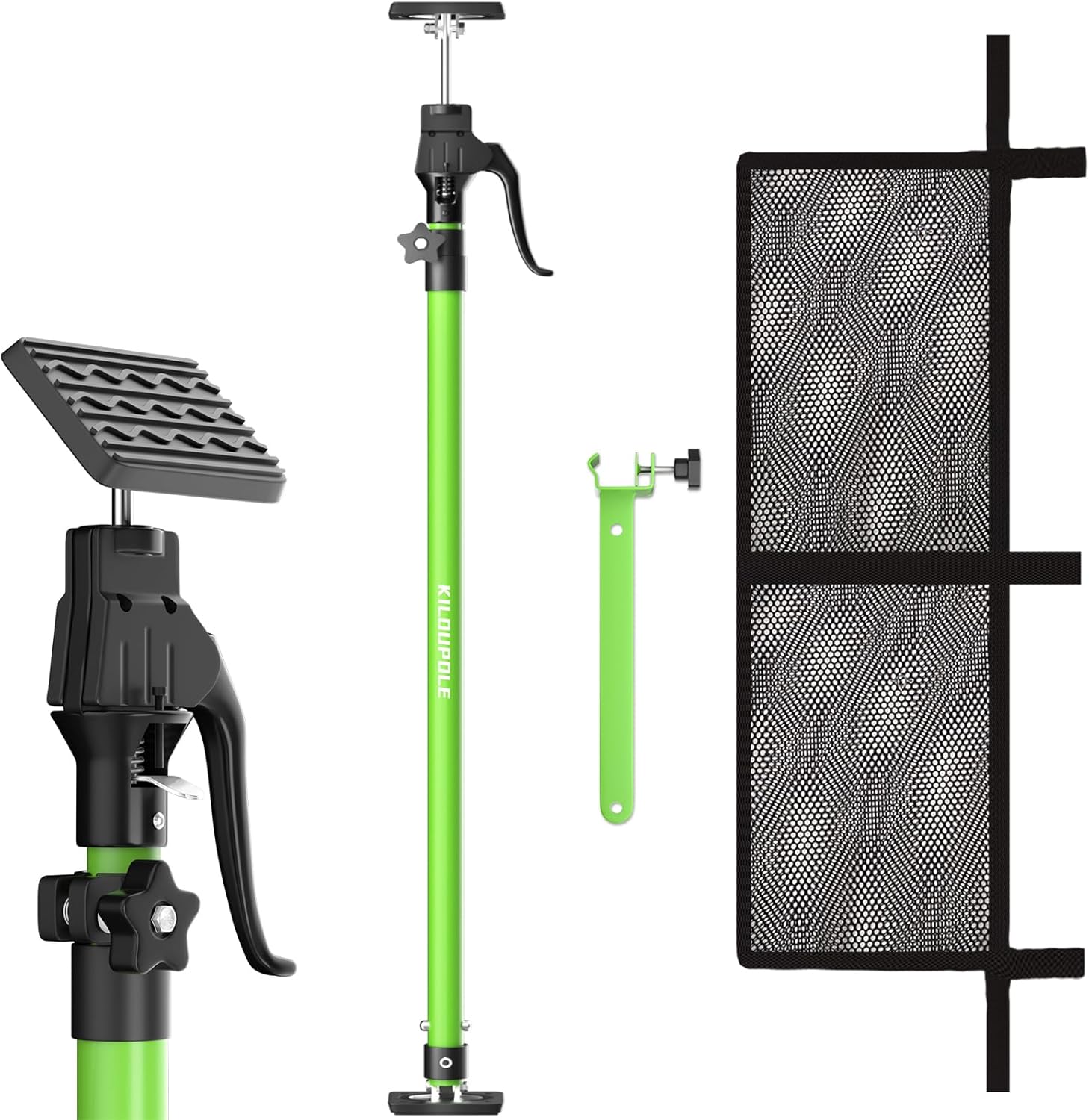
| Adjustable length | 40" to 79" |
|---|---|
| Mounting type | Power Grip |
| Material type | Aluminum |
| Is foldable | Yes |
This KILOUPOLE cargo bar is a telescoping solution for keeping items from sliding in a Ford F-150 bed. It extends from 40 to 79 inches so you can position it across the bed or between the bed rails, then use the ergonomic power-grip handle to tension the bar and lock it in place without tools. Rotating, high-grip foot pads and dual steel ball components help the bar maintain contact on textured or flat bed surfaces. The package includes a cargo net and a divider bar for organizing smaller items, and the aluminum and reinforced steel construction feels lightweight yet sturdy. In practice the bar is quick to install and reposition, making it useful for groceries, luggage, boxes, and light to moderate gear. Some users report the divider accessories are less robust than the main cross bar, and very heavy or shifting loads may push the limit of its clamping force. If you need a fast, tool-free way to create a precise stop or divider in an F-150 bed, this model makes that task simple and repeatable.
Best for: Buyers who want a fast, tool-free telescoping bar to create a precise stop or divider in a Ford F-150 bed and value easy repositioning for everyday cargo.
Less Ideal for: If you frequently haul very heavy, loose, or industrial loads that need professional-grade restraint, choose a dedicated heavy-duty cargo restraint system instead.
- Wide adjustability (40" to 79") covers full-width and partial placements in an F-150 bed
- Power-grip handle enables quick, tool-free tensioning for a precise fit
- High-grip rotating foot pads maintain contact on flat and textured bed surfaces
- Lightweight aluminum with reinforced steel components balances strength and portability
- Includes cargo net for storing small items and a divider for basic organization
- Divider accessories and welds have mixed durability reports compared with the main bar
- May struggle with very heavy or shifting loads that require commercial-grade restraint
Verdict: A telescoping cargo bar designed for fast, tool-free length adjustment and secure tensioning when you need a precise fit across varying bed widths.
KEEPER Ratcheting Adjustable Cargo Bar (40"–70")
Best Compact Cargo Bar

| Adjustable length | 40"-70" |
|---|---|
| Load Capacity | 165.4 Pounds |
| Mounting Type | Trunk Mount, Truck Bed Mount |
| Fit Type | Universal Fit |
The Keeper Ratcheting Cargo Bar is a simple, portable solution for keeping light-to-moderate loads from shifting in a truck bed or rear cargo area. It extends from 40 to 70 inches with a ratcheting mechanism that locks the bar in place and large rubber end pads that grip the sides to reduce sliding and protect surfaces. Typical use is quick one-person installation: set the length, seat the ends against the sides, and ratchet until snug. The painted finish and weather-resistant components mean it tolerates outdoor use without immediate corrosion. Its 165.4 pound listed load capacity and sturdy construction handle grocery runs, toolboxes, and moving boxes reliably, though very heavy or oddly shaped loads will still need straps or tie-downs. The ratchet sits near the center of the bar which can make tightening while standing outside the bed awkward on some trucks. Storage is straightforward since the bar is a single non-folding unit but its compact collapsed length makes it easy to stow behind a seat or under a cover for F-150 owners who want a portable cargo restraint.
Best for: Buyers who want a compact, easy-to-use cargo restraint they can install and remove quickly for light-to-moderate loads and store conveniently when not in use.
Less Ideal for: People who regularly haul very heavy, oversized, or irregular loads that require heavy-duty straps, anchor points, or multiple restraints should choose a more robust cargo control system.
- Adjustable 40"–70" range fits a wide variety of beds and cargo areas
- Ratcheting mechanism provides quick, tool-free tightening
- Large rubber end pads protect surfaces and improve grip
- Weather-resistant finish and materials for outdoor use
- Non-folding design takes up storage space compared with collapsible bars
- Center-mounted ratchet can be hard to operate from outside some truck beds
Verdict: A compact cargo bar that prioritizes portability and convenient storage while still providing enough strength for light-to-moderate load securing.
Rightline Gear Adjustable Ratcheting Cargo Bar (40–70 in)
Best Corrosion-Resistant Cargo Bar

| Adjustable length | 40–70 inches |
|---|---|
| Load Capacity | 50 kg |
| Mounting Type | Truck Bed Mount |
| Material Type | Rubber feet with zinc-plated inner bar |
The Rightline Gear adjustable ratcheting cargo bar is a simple load restraint for pickup trucks that stops gear from sliding in the bed or rear cargo area. It expands from 40 to 70 inches and uses a ratchet to tension the zinc-plated inner tube against a coated outer tube, while swivel rubber feet let you seat the bar at angles or on uneven surfaces. For use in an F-150 this bar works as a quick, tool-free divider or blocker for boxes, toolboxes, and recreational gear. The rubber feet protect bed liners and the universal fit covers full-size beds without permanent mounting. Expect straightforward operation and a compact stowable bar, but the ratchet is aimed at light to medium loads rather than heavy industrial restraint and the listed 50 kg capacity limits very heavy cargo. Some users report the ratchet can feel stiff or less smooth at times, so take care when tensioning and releasing under load.
Best for: Buyers who want a no-fuss, adjustable load bar to keep everyday gear, toolboxes, and loose items from shifting in a Ford F-150 bed, prioritizing convenience and protection of the bed surface.
Less Ideal for: Do not choose this if you need to restrain very heavy equipment or require a heavy-duty commercial-grade anchor system for towing or extreme loads.
- Adjustable 40–70 inch range fits full-size truck beds like the F-150
- Swivel rubber feet protect bed liners and seat securely on uneven surfaces
- Zinc-plated inner tube and coated outer tube resist basic corrosion better than bare steel
- Tool-free ratcheting action makes installation and removal quick
- Compact and stowable when not in use
- Rated load capacity is modest at 50 kg, not suited for restraining very heavy items
- Ratcheting mechanism can feel stiff and is not optimized for continuous heavy-duty use
Verdict: A corrosion-resistant cargo bar built with rustproof coatings or stainless components for long-lasting performance in wet, salty, or winter conditions.
Choosing the Right Ford F-150 Cargo Bar: Key Factors to Consider
Load Capacity and Rating
Load capacity determines how much lateral force the bar can resist before bending or slipping. For F-150 owners, consider both static capacity and dynamic loads from braking and cornering, especially when hauling heavy, concentrated items like lumber or tool chests. A higher rated bar reduces the risk of failure during sudden maneuvers and provides a safety margin when loads shift unexpectedly.
Ratings should be backed by manufacturer specifications or testing information. If you routinely secure mixed or uneven loads, choose a bar with a generous safety margin above your expected load. Also consider how the bar transfers load into mounting points; weak end fittings can reduce effective capacity even if the bar itself is strong.
Fitment Range and Adjustability
The bar must span the exact distance between the contact points you intend to use, whether that is between the F-150 bed walls, between wheel wells, or between the bed and the cab header. Adjustable or telescoping cargo bars let you fine-tune length for different bed widths, bed liners, or when used behind seats inside the cab. Confirm the minimum and maximum lengths match your F-150 configuration and any bed accessories.
Smooth, positive adjustment mechanisms and reliable locking prevent unwanted shortening under load. Look for indexed length stops or clear length markings for repeatable setup. If you plan to move the bar between different positions, quick, tool-free adjustability increases convenience.
Mounting Style and Contact Protection
Different cargo bars use rubber cup ends, threaded pressure caps, spring-loaded pins, or hooked fittings. For an F-150, end-contact design affects how the bar holds against metal, plastic bed liners, or painted surfaces. Protective pads or replaceable rubber tips prevent marring the bed and improve friction, reducing slip risk.
Consider the mounting points available in your truck: some users anchor to the bed rails, others brace between wheel wells or the cab header. Choose a contact design compatible with where you want the bar to bear. Also check whether end pads are replaceable after wear to extend the product's usable life.
Material and Corrosion Resistance
Materials affect strength, weight, and longevity. Steel cores provide high strength but require good corrosion protection for outdoor exposure. Aluminum offers lower weight and natural corrosion resistance but can be bulkier to achieve the same stiffness. Coatings, anodizing, and stainless fasteners all contribute to lifespan when used in road salt or wet conditions.
For F-150 owners who store bars in the bed or leave them mounted during varied weather, prioritize corrosion-resistant finishes and sealed adjustment mechanisms. Consider how the material choice impacts the bar's resistance to repeated impacts and whether denting or permanent deformation is likely under heavy loads.
Locking Mechanism and Security
A reliable locking mechanism prevents the bar from compressing or extending under vibration and load. Options include spring-lock pins, threaded pressure locks, and cam levers. Threaded or cam-style locks often provide fine tension control, while spring pins offer quicker changes but sometimes less micro-adjustment.
If you need to leave a bar in place while driving long distances, select a locking style with positive engagement and minimal chance of loosening. Consider whether locks can be operated by hand or require tools, and whether they are protected against dirt and corrosion that could impair function.
Installation Ease and Storage
How quickly you can install and remove the bar affects daily usability. Tool-free or single-hand installation is preferable for users moving cargo frequently. Weight and bulk affect where you store the bar when not in use; heavier steel bars may be very secure but harder to handle repeatedly.
Also look at whether the bar can be folded, broken down, or telescoped to save space. Storage-friendly designs reduce the risk of leaving the bar loose in the bed where it could cause damage during transit.
Where to Position a Cargo Bar in the F-150 Bed
Deciding where to place a cargo bar depends on the load shape and what you are trying to prevent. For long items like lumber, position the bar near the load center to limit lateral motion. For smaller, loose items, using multiple bars at different heights or pairing a bar with tie-down points gives better restraint.
When placing a bar between the cab and the load, ensure it does not interfere with the back window or any storage compartments. For cross-bed placement, align the ends with solid surfaces like the inner bed walls or wheel well structures for the most reliable contact.
- Single long loads: place bar mid-span to limit pivoting.
- Multiple small items: use lower and upper bars or pair with straps.
- Behind the cab: ensure clearance for rear window and any headrests.
Using Cargo Bars with Common F-150 Bed Liners
Bed liners change contact friction and the effective span of a cargo bar. Spray-in liners add texture and can increase grip, while drop-in plastic liners create ridges and spacing that may require longer minimum lengths. Account for liner thickness when sizing adjustable bars.
Select end pads that conform to the liner surface to maximize contact area. Hard, point-contact tips are more likely to slip on smooth plastic liners, while broad rubber cups distribute load and resist movement better.
- Measure bed width with the liner installed before ordering or adjusting a bar.
- Choose replaceable or soft end pads for textured or plastic liners.
Pairing Bars with Other Load Control Methods
Cargo bars are most effective when combined with other restraint systems. Use tie-down straps, cargo nets, and anchor points to control fore-aft movement while the bars handle lateral containment. For tall or top-heavy loads, secure both lateral and longitudinal directions to prevent tipping.
When using multiple bars, space them to prevent item rotation and ensure each bar bears a share of the load rather than all force concentrating on one bar. Check that additional restraints do not interfere with bar end contact or ability to lock in place.
- Combine straps for fore-aft control with bars for lateral control.
- Use multiple bars spaced evenly for tall stacks or loose boxes.
- Verify that straps and bars do not create pinch points on fragile cargo.
Maintaining Your Cargo Bar for Reliable Performance
Regular maintenance extends the life and reliability of a cargo bar. Keep threads and moving parts clean and lightly lubricated with a corrosion-resistant lubricant. Inspect rubber pads and replace them when worn to maintain proper grip and prevent metal-to-metal contact.
Check locking mechanisms periodically for play or damage, especially after heavy use. If a bar is exposed to road salt or moisture, rinse and dry it after trips and store it in a dry location when not in use to minimize corrosion.
- Rinse and dry after salt exposure.
- Lubricate threads and sliding surfaces annually or after heavy use.
- Replace worn end pads to maintain grip and protect bed surfaces.
Common Installation Mistakes to Avoid
A frequent error is undersizing the bar so it cannot maintain sufficient compression between contact points. Ensure the bar is slightly preloaded when installed so it cannot work loose. Do not rely on friction alone for heavy loads; use mechanical locks or supplemental tie-downs.
Avoid placing end pads on thin sheet metal or poorly supported trim pieces. Secure contact should be against structurally sound parts of the bed. Also avoid overtightening threaded pressure caps to the point of deforming the end pads or bed surface.
- Do not install on flimsy trim; use sturdy structural contact points.
- Preload the bar slightly so it cannot rattled loose under vibration.
- Avoid over-torquing to prevent damage to pads and bed surfaces.
How We Chose the Best Ford F-150 Cargo Bar
We selected candidates based on criteria that matter to Ford F-150 owners who regularly haul gear. Primary filters included load capacity and construction quality, since bars must resist bending and impact when restraining heavy or awkward cargo. Fitment and adjustability were next: we prioritized bars with secure range and end fittings that match common F-150 bed widths and interior mounting points. Mounting method and contact protection were evaluated to ensure bars do not damage paint or bed liners while staying fixed under vibration.Durability indicators such as corrosion resistance, robust locking or spring mechanisms, and replaceable contact pads were considered to estimate service life. Ease of installation and tool requirements were reviewed to favor solutions owners can install quickly without modifying the truck. We excluded any items that require permanent modifications to the vehicle or lack clear load ratings and safety features. Final inclusions balanced strength, fitment versatility, and long-term durability for everyday F-150 use.
Our full evaluation process is outlined in our review methodology.
FAQ
Can I use a cargo bar inside the F-150 cab behind the second row seats?
Often yes. Many adjustable bars fit between the back of the cab and the rear of the bed or interior bulkhead, but confirm the minimum length and end fitting design. Ensure the bar will not press against glass or trim and that end pads protect the contact surfaces.
How many cargo bars should I use for a mixed load of boxes and tools?
It depends on load height and distribution, but two bars spaced to prevent rotation usually work well for medium loads. For very loose or tall stacks, add a third bar or pair the bars with straps to control forward motion.
Will a telescoping cargo bar damage my bed liner?
It can if the end pads are hard or have worn through. To avoid damage, use bars with broad rubber contact pads or replaceable covers and avoid over-tightening. Check pad condition regularly and replace as needed.
Do adjustable cargo bars hold up in winter road salt conditions?
They can, but longevity depends on material and finishes. Choose bars with corrosion-resistant coatings, stainless fasteners, or aluminum construction and rinse them after exposure to salt. Regular maintenance will extend service life.
Are tool-free locking mechanisms reliable for long trips?
Tool-free locks can be reliable if they use positive engagement designs like cam locks or indexed pins. However, threaded pressure systems with clear torque control often provide finer tension. Inspect locks before long trips to ensure they have not loosened.
Final Verdict
For Ford F-150 owners, prioritize a cargo bar with the right balance of load rating, adjustability, and secure end contacts. Think about where you will mount the bar in the bed or cab, the type of bed liner you have, and whether you need quick repositioning or a permanently mounted solution. Tradeoffs typically involve strength versus weight and speed of installation versus fine tension control.Choose a bar that gives a comfortable safety margin above your usual loads, uses protective end pads to preserve your bed, and locks positively so it cannot compress under vibration. Those priorities will help you keep cargo stable and protect both your load and the truck during everyday hauling.
Explore More:
- Check out all Ford F-150 parts & accessories
- Explore Other Accessories
- Browse all Accessories
