

Note: This article contains affiliate links. If you click on these links and make a purchase, I may earn a small commission at no extra cost to you. This helps support my research and content. Read my full affiliate disclosure here.
If you drive a 1997-2003 Ford F-150 you already know how hard a hot engine can work, especially with towing, hauling, or frequent highway miles. A properly matched radiator restores cooling capacity, reduces the chance of overheating, and extends engine life. This guide focuses on the 1997-2003 Ford F-150 scope and walks through the top shortlisted radiators that suit common engine and usage profiles for these model years.The selections below were evaluated for cooling performance, durability, and fitment reliability so you can pick a unit that meets your truck's demands. Read on to see which radiators made the cut and why they are suitable for routine driving, heavy loads, or trucks with higher mileage.
Looking for other parts? See all Ford F-150 parts & accessories.
Top Picks at a Glance


YITAMOTOR Radiator for 1997-2003 Ford F-150 and compatible Ford trucks (4.6L/5.4L V8)

| Compatible engines | 4.6L and 5.4L V8 |
|---|---|
| Core size | 31.9" x 16.4" |
| Manufacturer | YITAMOTOR |
| OEM part numbers | F75H8005MA, F75Z8005JA, FO3010141, FO3010144, XL3Z8005BA |
This YITAMOTOR radiator is a full replacement unit built to match the factory fit for 1997–2003 Ford F-150 and other listed Ford models with 4.6L and 5.4L V8 engines. It uses a high-density aluminum core with aluminum oil cooler to increase heat dissipation and claims 40% to 50% better cooling versus some stainless alternatives, which helps keep engine temperatures stable under load. Inlet and outlet tanks are made from glass fiber reinforced nylon and are seamlessly welded to reduce leak and crack risk. The radiator ships well packaged and includes installation guidance for a straightforward swap. Practical downsides are that the radiator cap and certain transmission cooler plugs are not included, so additional small parts may be needed for automatic transmissions, and long-term durability on some imports can vary. For most owners seeking a balanced, cost-conscious replacement that restores cooling performance and fits without modification, this unit is a sensible option.
Best for: A pragmatic owner who wants a reliable, direct-fit replacement to restore engine cooling on a late 1990s to early 2000s Ford F-150 without paying for an OEM part.
Less Ideal for: Drivers seeking a lifetime warranty, factory-branded OEM replacement, or those unwilling to source missing small parts separately should consider other options.
- High-density aluminum core and built-in oil cooler for improved heat dissipation
- Factory-style fitment for 1997–2003 F-150 and listed compatible models to enable direct replacement
- Seamlessly welded glass fiber reinforced nylon tanks designed to resist cracking and leaking
- Secure, protective packaging to prevent shipping damage and protect cooling fins
- Radiator cap is not included and transmission cooler ports may ship without plugs for automatics
Verdict: A cost-conscious direct-fit radiator that restores cooling performance for 1997–2003 Ford F-150 engines while avoiding the premium of a factory-branded unit.
TRQ Radiator 2-Row Aluminum Core, Direct-Fit for 97-04 Ford F-150 5.4L / 99-03 4.6L

| Core Row Quantity | 2 |
|---|---|
| Core Thickness | 2.25 in |
| Core Material | Aluminum |
| Outlet Diameter | 1.75 in |
| Inlet Diameter | 1.75 in |
This TRQ radiator is a direct-fit replacement built around a two-row, 2.25-inch thick aluminum core with integrated transmission cooler plates, intended for 1997–2004 F-150 5.4L and 1999–2003 4.6L applications. It installs like a factory replacement with inlet/outlet locations and mounting points that align to the chassis, so most DIYers can swap it using basic hand tools and the included mounting hardware. The aluminum core and multiple transmission cooler plates help maintain steady operating temperatures under towing or heavy-load driving, while the preassembled plastic tanks and factory-style fittings reduce installation time. Reported benefits include good fitment, solid build quality, and effective heat rejection on hot days or loaded runs. Limitations to expect are occasional fitment gaps with aftermarket fan shrouds or variations between model years that may require minor adjustments, and plastic end tanks that are common on many replacement radiators instead of full-metal tanks. For owners prioritizing reliable cooling under load, this unit delivers factory-style performance without major modification.
Best for: Buyers who need a performance-minded, direct-replacement radiator that improves cooling for towing, hot-weather driving, or heavy loads and who prefer a straightforward DIY swap over custom cooling solutions.
Less Ideal for: Drivers seeking a full all-metal or high-capacity aftermarket performance radiator for extreme duty or motorsport use should consider purpose-built performance radiators instead.
- Direct-fit design that aligns with factory mounting points for straightforward installation
- Two-row aluminum core with 2.25-inch thickness for improved heat dissipation under load
- Integrated transmission oil cooler plates for vehicles with automatic transmissions
- Preassembled unit reduces installation steps and need for modifications
- Many buyers report solid build quality and reliable temperature control while towing
- Plastic end tanks rather than full-metal tanks which may be less durable long-term
- Some buyers report minor clearance issues with fan panels or aftermarket components
Verdict: If you want a near-factory direct-fit radiator that keeps a 1997–2003 F-150 running cool under towing and heavy-load conditions, this TRQ two-row aluminum unit is an effective, easy-to-install choice.
SCITOO 2136 Radiator replacement for 1997-2003 Ford F-150 and related 4.6L/5.4L models

| Compatibility | 1997-2003 Ford F-150; 1997-2002 Expedition; 1998-2002 Navigator 4.6L/5.4L |
|---|---|
| Row count | 1-Row |
| Transmission oil cooler | Included |
| Outlet diameter | 1.75inch |
This SCITOO 2136 radiator is a straightforward replacement for 1997–2003 Ford F-150s and compatible Expedition and Navigator V8s. It installs like a factory replacement and includes a transmission oil cooler while excluding an engine oil cooler. The unit uses a single-row, high-density multilayer core intended to balance cooling efficiency with a slimmer profile, which makes installation easier in tight engine bays. Most buyers report good fit and leak-free performance when installed per the included guidance or online videos. Practical buyers will appreciate that it addresses common radiator failures without extra bells and whistles. Limitations to consider are the single-row construction and some reports of a thinner core compared with original factory radiators, which can reduce heat transfer under heavy towing or in very hot climates. Handling delicate fins during installation also requires care since they can bend if mishandled. For routine driving and moderate loads this radiator provides a cost-effective, reliable replacement option.
Best for: Buyers who want a practical, factory-style replacement that restores cooling and transmission cooler function without unnecessary upgrades, especially for daily drivers and light-duty towing.
Less Ideal for: Not the best choice for drivers who frequently tow heavy loads, run in very hot climates, or want a high-capacity performance cooling upgrade.
- Direct-fit design for 1997–2003 Ford F-150 and compatible Expedition/Navigator V8 applications
- Includes integrated transmission oil cooler for vehicles that need it
- Manufactured to factory-style fitment for straightforward installation
- High-density multilayer core intended to improve cooling efficiency over basic cores
- Single-row core may offer less cooling capacity than thicker multi-row radiators under heavy towing or extreme heat
- Fins are relatively delicate and can bend during handling or installation
Verdict: A budget-friendly, direct-fit radiator that gets a 1997–2003 F-150 back to reliable cooling and includes a transmission oil cooler for practical, everyday use.
OCPTY 2141 Aluminum Replacement Radiator for 1997-1998 Ford F-150/F-250/Lobo

| Compatible vehicles | 1997-1998 Ford F-150/F-250/Lobo 4.2L and 4.6L |
|---|---|
| Core material | Aluminum core with plastic tanks |
| Replacement part numbers | 2141, F75H8005DB, 2260 |
| Item weight | 15.88 pounds |
This OCPTY radiator is a budget-focused full-aluminum replacement built for specific 1997-1998 Ford F-150, F-250, and Lobo V8/V6 applications. It installs as a direct replacement using the factory mounting points and is intended to restore a failing or leaking core to working condition. The aluminum core with plastic end tanks increases cooling surface area compared with some all-plastic units, and the seller states each unit is leak-tested before shipment. In practice this means you get a straightforward drop-in part that should handle everyday driving and towing demands typical for these older trucks. Expect easier installation thanks to a slightly thinner profile noted by users, though that may reflect a different core thickness than the original. The main limitations are that this is an aftermarket part rather than a factory piece and fit can vary slightly between trim levels, so confirm vehicle match before ordering and be prepared to check hose and bracket alignment during install.
Best for: Buyers who need an affordable, ready-to-install replacement to restore cooling on a late 1990s Ford pickup and prioritize getting the truck back on the road without paying dealer-level prices.
Less Ideal for: Anyone seeking an exact factory-original part certification or a precision match for modified engines and heavy commercial duty use should consider higher-end or vehicle-specific options.
- Full aluminum core for improved heat dissipation compared with basic all-plastic radiators
- Leak-tested at the factory to reduce chance of arrival defects
- Built to use factory mounting points for a largely drop-in installation
- Thinner profile can make installation easier in tight engine bays
- Aftermarket fitment can differ slightly from the original requiring minor alignment checks during installation
Verdict: If you want an economical, leak-tested aluminum replacement to get a 1997-1998 Ford F-150/F-250/Lobo cooling system back to reliable operation, this radiator delivers solid value.
AParts Radiator Replacement for Ford F-150 4.6L (1997–2003)

| Fit Type | Direct Replacement |
|---|---|
| Core Material | Aluminum |
| Fitment | Ford F-150 4.6L 1997-2003 |
| Inlet Diameter | 44.00 mm |
| Outlet Diameter | 45.00 mm |
This AParts radiator is built as a direct replacement for the Ford F-150 4.6L (1997–2003) and aims to return the truck to stable, reliable cooling. It uses a high-efficiency aluminum core and is pressure and leak tested, so installation on the factory mounting points requires no modification. In everyday use it dissipates engine heat to help prevent overheating and maintain consistent operating temperature during highway driving and towing at moderate loads. Buyers will appreciate that the unit matches OE reference numbers and has inlet and outlet diameters sized for a straightforward hose fit. The practical downside is this is a like-for-like replacement rather than an upgraded heavy-duty performance radiator, so it will not provide extra cooling margin for severe offroad or heavy commercial use. For routine driving and restoring a worn or leaking radiator, it offers a reliable, factory-quality swap with minimal fuss.
Best for: Buyers who prioritize restoring dependable, factory-quality cooling on a 1997–2003 F-150 4.6L and want a straightforward, long-term replacement with minimal installation hassle.
Less Ideal for: Those planning heavy commercial towing, extended high-load performance use, or offroad builds requiring increased cooling capacity should consider purpose-built heavy-duty radiators instead.
- Direct-fit design for 1997–2003 Ford F-150 4.6L for easy installation using factory mounting points
- High-efficiency aluminum core that improves heat dissipation compared with older or corroded cores
- Pressure tested and leak tested construction for dependable daily use
- Manufactured to OEM specification and cross-referenced to multiple factory part numbers for compatibility
- Not engineered as an upgraded heavy-duty or performance radiator for extreme towing or racing applications
Verdict: Choose this radiator if you want a factory-spec, direct-fit replacement to reliably restore cooling on a 1997–2003 F-150 4.6L.
DWVO Complete Radiator for 1997–2003 Ford F-150 / F-250 / Expedition (4.6L, 5.4L V8)
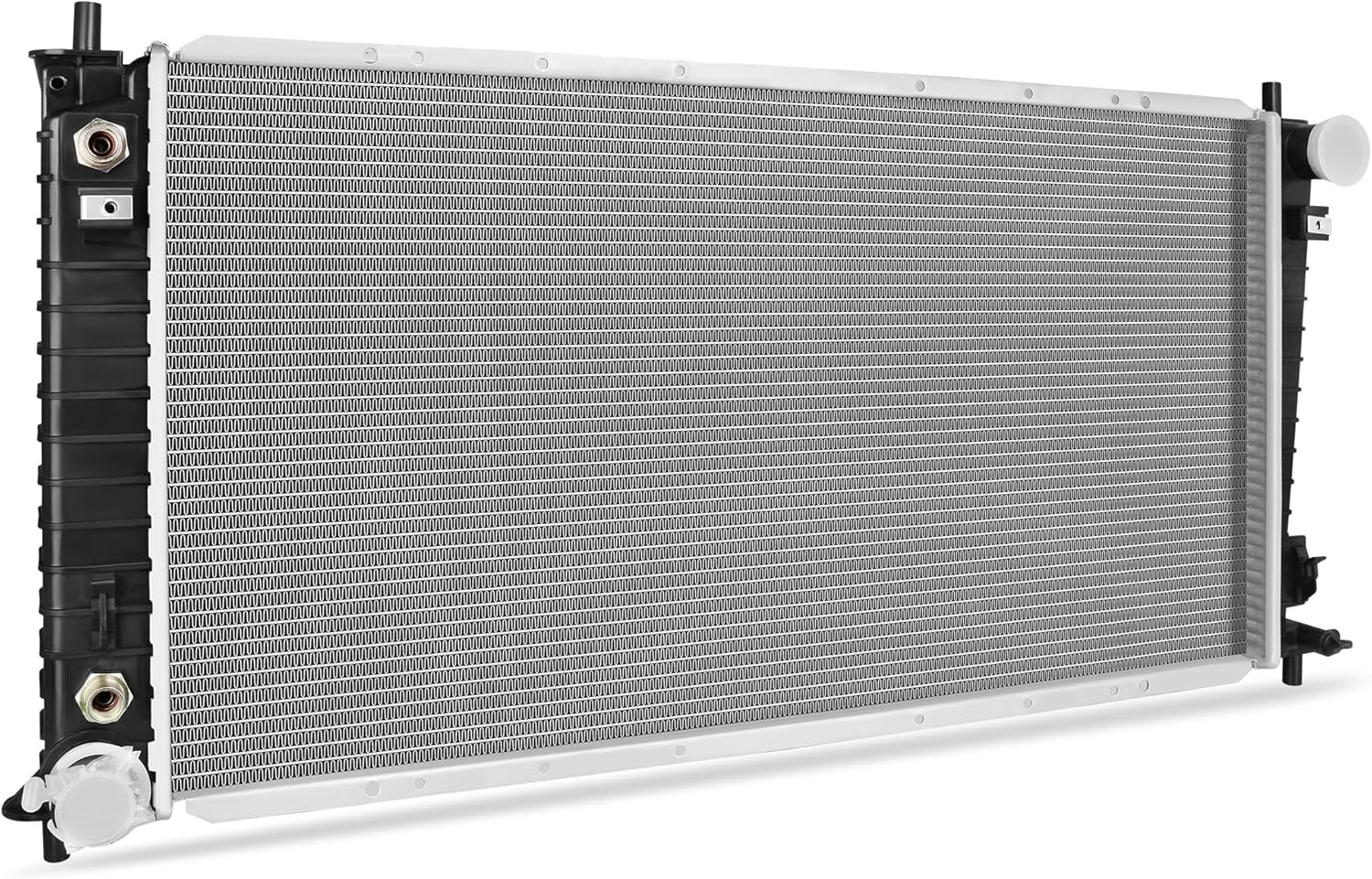
| Brand | DWVO |
|---|---|
| Model | DWVOSX0014 |
| Position | Front Inner |
| OEM Part Number | F75H8005MA, F75Z8005JA, FO3010141, FO3010144, XL3Z8005BA |
This DWVO complete radiator is built as a drop-in replacement for late 1990s and early 2000s Ford trucks and Expedition/Navigator applications with 4.6L and 5.4L V8 engines. It uses a 100% aluminum core with multi-louvered fins, TIG-welded tanks, and an integrated aluminum transmission oil cooler, so it should return cooling capacity close to factory levels after a straightforward install. The package includes foam corner supports and a user manual but does not include a radiator cap, so expect to reuse the existing cap or purchase one separately. Buyers report accurate mounting points and reliable leak-free performance after installation, though one review noted extra ports and different thickness on unrelated vehicle fitment so double-check part numbers before ordering. This radiator is best suited to owners who want a full replacement core and transmission cooler in one unit and who are comfortable confirming OEM part numbers and doing or supervising a professional installation.
Best for: Buyers who prioritize restoring reliable engine cooling on 1997–2003 Ford F-150/F-250/Expedition platforms and value a proven replacement backed by positive customer feedback.
Less Ideal for: Do not choose this if you need a universal or multi-vehicle radiator for custom projects or if you cannot confirm the listed OEM part numbers for fitment.
- Direct-fit design referencing common OEM part numbers for straightforward replacement
- Full aluminum core with high-density multi-louvered fins for improved heat dissipation
- Integrated aluminum transmission oil cooler eliminates separate cooler install
- TIG-welded tank construction and end foam packaging reduce risk of shipping damage and leaks
- Radiator cap is not included so you must reuse or buy a cap separately
Verdict: A factory-style aluminum replacement radiator with an integrated transmission cooler that reliably restores cooling for 1997–2003 Ford F-series trucks.
Auto Dynasty 1-Row Aluminum Radiator Compatible with 1999–2004 Ford Trucks (4.2L/4.6L/5.4L)

| Compatible engines | 4.2L, 4.6L, 5.4L |
|---|---|
| Rows | 1-Row |
| Transmission oil cooler | Yes |
| Core material | T-6061 aluminum |
| Fitment note | Inverted flare fittings for AT/MT models |
This Auto Dynasty radiator is a direct-replacement aftermarket unit for late 1990s and early 2000s Ford trucks with 4.2L, 4.6L, or 5.4L engines and supports both automatic and manual transmissions with inverted flare fittings. It uses a T-6061 aluminum core and a single-row design intended to improve cooling while staying lightweight and bolt-on simple for installers. Typical use is as a factory-style swap when the original radiator is leaking, clogged, or damaged; the radiator includes a transmission oil cooler but not an engine oil cooler. Customers report straightforward fitment in many trucks though some reused fan shroud clips or minor bracket adjustments may be needed. The main benefits are corrosion-resistant aluminum construction and a direct-fit approach that avoids cutting or drilling. Limitations are the single-row core, which offers less cooling margin than multi-row performance radiators, and the lack of installation instructions so a professional or experienced DIYer is recommended for a clean install.
Best for: Buyers who want a straightforward, factory-style replacement to restore cooling reliability on specified late 1990s to early 2000s Ford trucks and prefer a corrosion-resistant aluminum unit that bolts in without major modification.
Less Ideal for: Drivers planning heavy towing, high-performance engine swaps, or frequent extreme-temperature use should consider a multi-row or heavy-duty performance radiator instead.
- Full T-6061 aluminum core resists corrosion and dissipates heat efficiently
- Direct bolt-on replacement for specified Ford 4.2L/4.6L/5.4L models with no drilling
- Includes a transmission oil cooler for automatic transmission models
- Lightweight construction that simplifies handling and installation
- Single-row core provides less cooling capacity than two- or three-row radiators
- No installation instructions included, professional installation recommended
- Some customers needed to reuse or adapt fan shroud clips for perfect fit
Verdict: A direct-fit aluminum replacement that restores cooling for 1999–2004 Ford 4.2L/4.6L/5.4L trucks without major modification, ideal for buyers who prioritize a reliable, factory-style swap.
Choosing the Right 1997-2003 Ford F-150 Radiator: Key Factors to Consider
Core Design and Cooling Capacity
Core design governs how efficiently a radiator moves heat from coolant to air. For the 1997-2003 Ford F-150, choose a core size and tube arrangement that matches the engine bay airflow and expected heat load. A thicker or multi-row core can offer more cooling, which helps if you tow frequently or operate in hot climates. However, increased thickness may affect fan clearance and mounting; verify that the chosen core does not interfere with the fan shroud or A/C condenser.
Cooling capacity also ties to fin density and tube diameter. Denser fins improve heat transfer but can clog with debris over time, while larger tubes move coolant faster but may reduce surface area. Consider your typical driving conditions: stop-and-go urban use benefits from higher fin area for surface cooling, while sustained highway towing needs robust core volume and circulation to avoid boil-over.
Material and Corrosion Resistance
Material choice affects longevity and repairability. Aluminum cores with stamped or welded tanks are common and offer good heat transfer and weight savings. Look for quality brazing or welded seams and corrosion-resistant coatings, since the coolant chemistry and age of the F-150 can accelerate deterioration. Plastic tanks are lighter and less costly but can become brittle over years and high temperature cycles, especially on older trucks.
If your truck has a history of coolant contamination or extended service intervals, prioritize radiators with robust corrosion protection and replaceable parts when possible. Proper material selection reduces the chance of leaks and extends service life, mitigating future repair needs.
Fitment and Mounting Accuracy
Correct fitment ensures the radiator installs without modification and that all factory hookups align. For the 1997-2003 Ford F-150 this means inlet and outlet locations, transmission cooler ports, mounting brackets, and sensor fittings must match the truck's factory layout. Incorrect fitment can create installation delays, require bracket fabrication, or cause clearance issues with the fan, shroud, or A/C condenser.
Check whether the radiator is specified for your F-150 engine option and whether it includes the correct transmission cooler arrangement. Confirm that mounting points line up with the radiator support and that hose connections match OEM diameters to avoid adapter use that can leak or restrict flow.
Transmission Cooler Integration
Many 1997-2003 F-150s use radiators with integrated transmission cooler passages. If your truck has an automatic transmission, ensure the replacement radiator provides the appropriate cooler passages and fittings. Proper transmission cooling helps prevent fluid overheating during towing and reduces internal wear.
If a radiator lacks integrated passages, installing an external transmission cooler may be necessary. While external coolers can be effective, an integrated cooler reduces plumbing complexity and keeps cooling in a single assembly. Verify the routing and fittings to avoid added stress on lines and to maintain reliable fluid flow under load.
Serviceability and Sensor Provisions
Radiator serviceability affects maintenance ease for owners and mechanics. Check for accessible drain plugs, petcock options, and clear provision for coolant temperature sensors used by the F-150's cooling fan and engine management. Sensor port placement should match the vehicle's harness and not require adapter fittings.
Consider how easily the unit can be flushed, repaired, or re-cored if needed in the future. Units that complicate routine coolant changes or lack standard sensor ports can increase labor time and may lead owners to skip important maintenance steps like a coolant flush.
Durability Under Tow and Heavy Use
If you use your F-150 for towing, hauling, or frequent heavy loads, the radiator must withstand higher thermal stress and vibration. Choose radiators designed for reinforced tanks, stronger mounting, and thicker cores that resist collapse under pressure cycles. Vibration resistance in fittings and transmission cooler connections reduces the risk of hairline cracks that lead to leaks.
Durability also includes resistance to road debris and impacts. Reinforced end tanks and protective fin designs can lessen damage from stones and grit. Prioritize units with solid build notes when heavy duty use is part of your truck's routine to avoid premature failures.
Identifying Radiator Symptoms on a 1997-2003 F-150
Knowing the early warning signs helps you address radiator problems before they cause major engine damage. Common indicators on 1997-2003 Ford F-150 trucks include frequent coolant loss without visible puddles, engine temperature creeping above normal, or visible coolant staining around hose connections and tank seams.
Steam from the engine bay, persistent overheating under load, and a sweet smell from the engine compartment also point to cooling system leaks or failing radiator function. Regularly inspect around the radiator, hoses, and transmission cooler connections for wetness or crusted coolant deposits.
Low coolant combined with intermittent overheating while towing often indicates an internal leak or failing core passages. Pay attention to dashboard temperature behavior during highway climbs or long idling periods to catch symptoms early.
- Coolant puddles or wet stains under front of truck
- Engine temperature gauge rising above normal during tow
- Sweet, syrupy residue on radiator seams or hose clamps
- Steam or white vapor from the engine bay at idle
Preparing for Radiator Replacement on Your F-150
Preparation reduces installation time and the risk of mistakes. Start by confirming the engine and transmission type so you get the correct radiator configuration. Gather fresh coolant of the recommended type, replacement hose clamps, and any gaskets or O-rings required for the inlet and outlet fittings.
Drain the cooling system while the engine is cool and capture used coolant for proper disposal. Inspect radiator hoses, thermostat, and water pump while the system is drained; replacing worn hoses and a tired thermostat at the same time avoids repeating the job soon after.
Have tools ready to remove the fan shroud or fan clutch if required and prepare for potential alignment of the upper radiator support. A helper can make aligning the radiator and reinstalling mounting bolts easier and faster.
- Confirm engine and transmission configuration
- Gather recommended coolant and new hose clamps
- Inspect hoses, thermostat, and water pump during replacement
- Have tools to remove fan shroud and align mounts
Transmission Cooler Options for Automatic F-150s
For automatic transmission trucks, review whether the replacement radiator has integrated transmission cooler passages. Integrated coolers simplify plumbing and reduce external line runs, while separate coolers can provide additional cooling capacity if you tow heavily.
An external cooler can be mounted in front of the radiator to supplement cooling, but it requires additional lines and fittings that add leak points. If you tow often or run in hot conditions, prioritize transmission cooling solutions that handle the extra thermal load without restricting fluid flow.
- Integrated cooler reduces plumbing complexity
- External coolers add capacity but increase installation complexity
- Check fittings and line routes to avoid sharp bends or stress
Coolant Choice and Flushing Best Practices
Using the correct coolant formulation and performing a proper flush helps protect the radiator and engine. For older F-150s, a complete flush that removes sediment and old additive packages prevents clogging of core passages and extends radiator life. Follow recommended coolant types for Ford engines and avoid mixing incompatible formulations.
When refilling, bleed air from the cooling system to prevent hot spots. Run the engine to operating temperature with the heater on and top off coolant as air pockets escape. Periodic coolant inspections and scheduled flushes reduce corrosion risk and maintain optimal heat transfer.
- Perform a full system flush if replacing a radiator on a high-mileage truck
- Use the coolant type specified for your engine
- Bleed air using the heater circuit to eliminate hot spots
DIY Vs Professional Radiator Replacement Considerations
Many owners can handle radiator replacement with basic tools, mechanical aptitude, and the right guidance. Tasks include draining coolant, disconnecting hoses and transmission lines, removing the fan or shroud, and aligning the new radiator. Expect moderate mechanical effort and plan for proper coolant disposal.
Professional service may be preferable if you are uncomfortable with transmission cooler lines, sensor fittings, or if your truck has aftermarket fan setups that complicate removal. A shop can also pressure-test the cooling system and verify that the radiator and related components are leak-free under operating conditions.
- DIY is feasible with basic tools and careful preparation
- Seek professional help for transmission line work or complex fan setups
- Have a pressure test performed if you suspect hidden leaks
Still looking for the perfect fit?
Select your Ford F-150 configuration to see the most relevant Radiators recommendations
How We Chose the Best 1997-2003 Ford F-150 Radiator
We prioritized criteria that matter specifically for the 1997-2003 Ford F-150 platform and common owner use cases. Primary evaluation factors included cooling capacity and core design to ensure adequate heat rejection across ambient conditions and towing loads. Build quality and materials were assessed with emphasis on corrosion resistance, brazing quality, and tank construction because older trucks often face coolant contamination and age-related wear. Fitment accuracy and mounting details were judged to reduce installation surprises and to ensure correct clearance with the fan shroud, A/C condenser, and transmission cooler lines.We also considered compatibility with factory transmission coolers and the need for integrated or separate cooler passages where applicable. Serviceability and replacement ease were factored in, including standard inlet/outlet locations and sensor port availability. Units with unclear fitment notes, missing transmission cooler provisions for models that require them, or vague material specifications were excluded. Finally, we prioritized radiators with clear cooling performance specs and robust manufacturing details rather than unverified marketing claims.
Our full evaluation process is outlined in our review methodology.
FAQ
How do I know if my F-150 radiator is leaking or the leak is elsewhere?
Look for coolant residue around radiator seams, hose clamps, and transmission cooler fittings. If you see coolant tracking from the radiator core or tanks, the radiator is likely the source. Puddles under the engine bay and steam at idle also point to radiator leaks, while coolant near the engine block or water pump suggests other sources.
Can I replace the radiator myself on a 1997-2003 F-150?
Yes, many owners can replace the radiator with basic tools by draining the system, removing hoses and the fan shroud, and installing the new unit. Be cautious with transmission cooler lines and sensor fittings; if those steps seem complex, consider professional assistance.
Is it necessary to flush the cooling system when installing a new radiator?
A full flush is recommended, especially on higher-mileage trucks, to remove sediment and old additives that can clog the new core. Flushing helps ensure the new radiator performs optimally and reduces the risk of premature blockage.
What cooling symptoms suggest the radiator core is clogged?
Frequent overheating under load, uneven temperature readings, and low coolant circulation at the heater are common signs of a clogged core. If the engine overheats despite correct coolant level and a functioning thermostat, restricted core passages may be the cause.
Do I need a radiator with an integrated transmission cooler for my automatic F-150?
It depends on your truck's original configuration. Many 1997-2003 F-150 automatics use integrated cooler passages; using a radiator without them will require an external transmission cooler. Integrated coolers simplify plumbing and are often the preferred replacement for direct fitment.
How long should a replacement radiator last on a 1997-2003 F-150?
Lifespan varies with material, coolant maintenance, and operating conditions. With proper coolant care and normal use, a quality radiator can last many years, while exposure to road salts, coolant neglect, or heavy towing may shorten service life.
What are quick steps to stop a small radiator leak temporarily?
Temporary measures include tightening hose clamps, cleaning and drying the area, or using an approved radiator stop-leak as a short-term fix. These steps are temporary; persistent leaks should be addressed with a replacement or professional repair to prevent engine damage.
Final Verdict
When replacing a radiator on a 1997-2003 Ford F-150, prioritize fitment accuracy, core design, and materials that resist corrosion. Consider whether your truck needs an integrated transmission cooler and choose a unit sized for your towing and climate demands.Balance cooling capacity against fitment constraints and serviceability. By focusing on the factors above and confirming compatibility with your engine and transmission, you can select a radiator that restores reliable cooling and minimizes the chance of further downtime.
Explore More:
- Check out all Ford F-150 parts & accessories
- Explore Radiators Maintenance & Repair Guides
- Explore Cooling System
- Browse all Auto Parts
