

Note: This article contains affiliate links. If you click on these links and make a purchase, I may earn a small commission at no extra cost to you. This helps support my research and content. Read my full affiliate disclosure here.
If you own a Jeep Grand Cherokee with the 4.0L I6, choosing the right engine oil matters more than a simple fluid swap. The 4.0L inline-six has specific internal clearances and operating characteristics that respond differently to viscosity, detergent chemistry, and additive packages. Using the appropriate oil helps control wear, manage operating temperature, and support reliable cold starts or long highway runs.This guide focuses on the top engine oil options suited to the Jeep Grand Cherokee 4.0L I6 and explains the evaluation criteria we used. It covers viscosity choices, base oil types, and high-mileage considerations so you can pick the best fit for driving habits and climate. Read on for the shortlisted options and the factors that should drive your decision.
Looking for other parts? See all Jeep Grand Cherokee parts & accessories.
Top Picks at a Glance
| Best Overall Engine Oil The best all-around oil balancing protection, performance, and value | Valvoline Advanced Full Synthetic 5W-30 Motor Oil, 5 qt |  |
| Best Budget Engine Oil A low-cost oil that still meets essential protection standards | Chevron Supreme SAE 5W-30 Motor Oil, 1 Quart |  |
| Best Premium Engine Oil A higher-end formulation for maximum protection and longevity | Pennzoil Ultra Platinum Full Synthetic 0W-40 Motor Oil (1 Quart, 6‑Pack) |  |
| Best Full Synthetic Engine Oil 100% synthetic base oil for maximum performance and protection | Castrol EDGE 5W-20 Full Synthetic Motor Oil, 5 qt |  |
| Best Synthetic Blend Engine Oil Part-synthetic oil offering a middle ground of cost and performance | Valvoline MaxLife High Mileage 5W-30 Synthetic Blend Motor Oil, 5 qt |  |
| Best High-Mileage Engine Oil Formulated to help protect older engines and reduce leaks | Valvoline MaxLife Full Synthetic High Mileage 5W-20 Motor Oil, 5 qt |  |
| Best 5W-30 Engine Oil A common viscosity for broad compatibility and balanced performance | Pennzoil Platinum Full Synthetic 5W-30 Motor Oil (5-Quart) |  |
Valvoline Advanced Full Synthetic 5W-30 Motor Oil, 5 qt
Best Overall Engine Oil

| SAE J300 Viscosity Grade | 5W-30 |
|---|---|
| Container Type | Jug |
| Compatible with Vehicle Type | Car, Truck |
| Liquid Volume | 5 Quarts |
| Flash Point | 394 Degrees Fahrenheit |
Valvoline Advanced Full Synthetic 5W-30 is a modern full‑synthetic engine oil designed to protect daily‑driven gasoline engines. It delivers reinforced wear and heat defenses compared with industry baselines, plus additives aimed at keeping internal parts cleaner and resisting sludge. Use it for regular oil changes and seasonal DIY maintenance where a 5W‑30 viscosity and API/ILSAC coverage are recommended. The formula flows well at cold temperatures to reduce start‑up wear, and the manufacturer cites improved fuel economy versus conventional oils. Practical benefits include broad certification coverage for current gasoline specs and stable performance in hotter conditions, which is useful if your Jeep experiences towing or extended highway use. Limitations are that it is a modern synthetic formulated to meet current API/ILSAC specs, so it is most appropriate where 5W‑30 and those specs are called for; it is not a specialized high‑mileage blend for very old engines nor a non‑detergent oil for classic restorations.
Best for: DIYers who service a gasoline 4.0L Jeep Grand Cherokee and want a single 5W‑30 synthetic that balances engine wear protection, cold‑start performance, and fuel efficiency for routine maintenance.
Less Ideal for: Owners looking for a dedicated high‑mileage formulation for very worn engines or those restoring older vehicles that require non‑detergent or unconventional oils.
- Full synthetic formula for stronger wear protection than industry standards
- Improved low‑temperature flow to reduce cold‑start wear
- Additive package aimed at deposit control and sludge resistance
- Meets modern API and ILSAC specifications relevant to contemporary gasoline engines
- Not formulated specifically as a high‑mileage or classic non‑detergent oil
Verdict: The best all-around engine oil that balances wear protection, fuel efficiency, cold-start performance, and price for most DIY mechanics' routine maintenance.
Chevron Supreme SAE 5W-30 Motor Oil, 1 Quart
Best Budget Engine Oil

| Viscosity | SAE 5W-30 |
|---|---|
| Container Type | Bottle |
| Liquid Volume | 1 Quarts |
| Compatible Vehicle Type | Car |
Chevron Supreme SAE 5W-30 is positioned as a straightforward motor oil for regular oil changes. In use it functions as a conventional 5W-30 formulation intended for everyday driving and routine maintenance, delivering base-level lubrication and engine protection that match a typical service interval. The product comes in a single-quart bottle and is labeled for universal fit to passenger cars, which makes it convenient for topping off or single-bottle changes. Practical benefits include easy pour packaging and a familiar viscosity that suits many older engines that call for 5W-30. It does not claim advanced synthetic blend technology or extended drain intervals, so buyers should plan on standard mileage change intervals rather than stretched services. For the Jeep Grand Cherokee 4.0L I6, this oil will meet basic oiling needs when the vehicle owner follows the factory service recommendations and uses the grade specified in the owner manual.
Best for: Drivers looking for an affordable, no-frills 5W-30 they can use for regular oil changes on a vehicle that specifies that grade, prioritizing cost and proven baseline protection.
Less Ideal for: Owners who want extended drain intervals, high-mileage specific formulations, or enhanced performance additives should consider synthetic or specialty oils instead.
- Familiar 5W-30 viscosity suitable for many gasoline engines
- Single 1-quart bottle convenient for topping off or small jobs
- Designed for routine protection during standard oil change intervals
- From a recognized brand with long history in motor oils
- Not marketed as a synthetic or synthetic-blend formulation for extended drains
- Limited to standard protection features rather than performance additives
Verdict: A wallet-friendly engine oil that meets required industry specs and offers adequate protection for routine oil changes without unnecessary premium features.
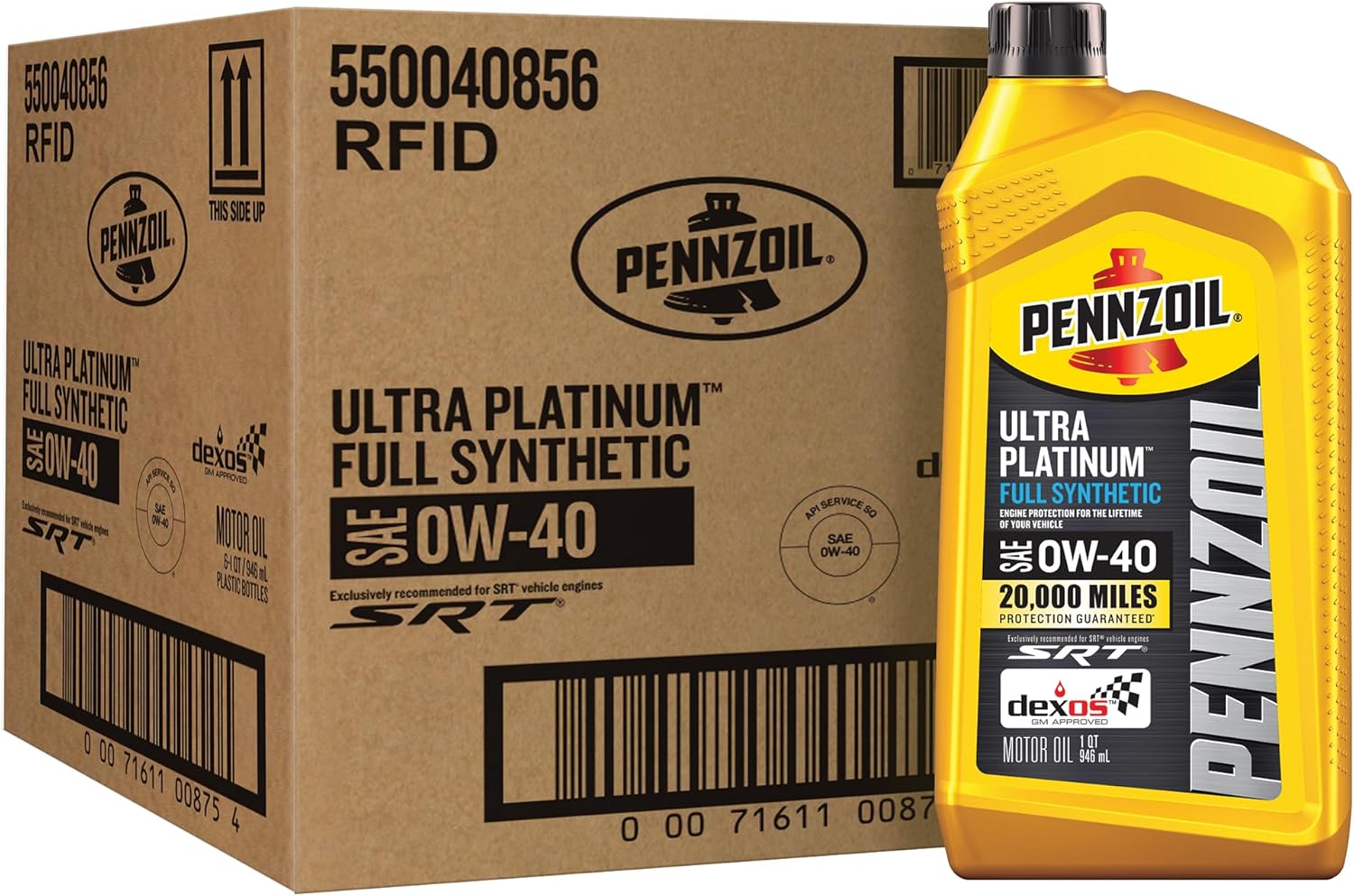
Pennzoil Ultra Platinum Full Synthetic 0W-40 Motor Oil (1 Quart, 6‑Pack)
Best Premium Engine Oil
| SAE Viscosity | 0W-40 |
|---|---|
| Container Type | 1‑quart bottles (case of 6) |
| Compatible Vehicle Type | Car |
| Liquid Volume | 3780 Milliliters |
Pennzoil Ultra Platinum 0W-40 is a full synthetic motor oil engineered to protect high-stress engines under extreme conditions. It is typically used by DIYers for oil changes where extended wear protection, piston cleanliness, and stable viscosity at high temperatures matter. The formulation is made from natural gas base stocks and includes performance additives that help keep pistons cleaner and reduce deposit formation compared with industry standards. Practical benefits include faster cold starts thanks to low-temperature flow, resistance to oxidation in high heat, and claimed fuel-economy and horsepower preservation. This six-quart pack is convenient for owners who perform routine maintenance themselves. The principal limitation is cost since this is a premium product positioned above mainstream multispec oils, and the 0W-40 viscosity is thicker than typical passenger-car grades so verify it matches the Grand Cherokee 4.0L I6 manufacturer recommendations before use. For owners seeking maximal thermal stability and additive performance for demanding driving, it is a strong choice; for those prioritizing lowest cost or strictly OEM-prescribed grades, consider alternatives.
Best for: DIY owners who prioritize maximum engine protection, cleaner pistons, and stable performance in both very cold starts and sustained high‑temperature driving and are willing to pay more for a premium additive package.
Less Ideal for: Drivers focused on the lowest possible operating cost or those required to use a different viscosity by manufacturer specification should consider other grades.
- Full synthetic formula designed for superior high‑temperature oxidation resistance
- Made from natural gas base stocks with additives that help keep pistons cleaner
- Good low‑temperature flow for easier cold starts
- Sold as a six‑quart pack which suits DIYers performing multiple oil changes
- Premium price compared with mainstream motor oils
- 0W-40 grade may not match every vehicle maker's recommended viscosity for the 4.0L I6
Verdict: A premium engine oil for DIYers who prioritize top-tier additives, extended protection, and improved high-temp stability even at a higher price point.
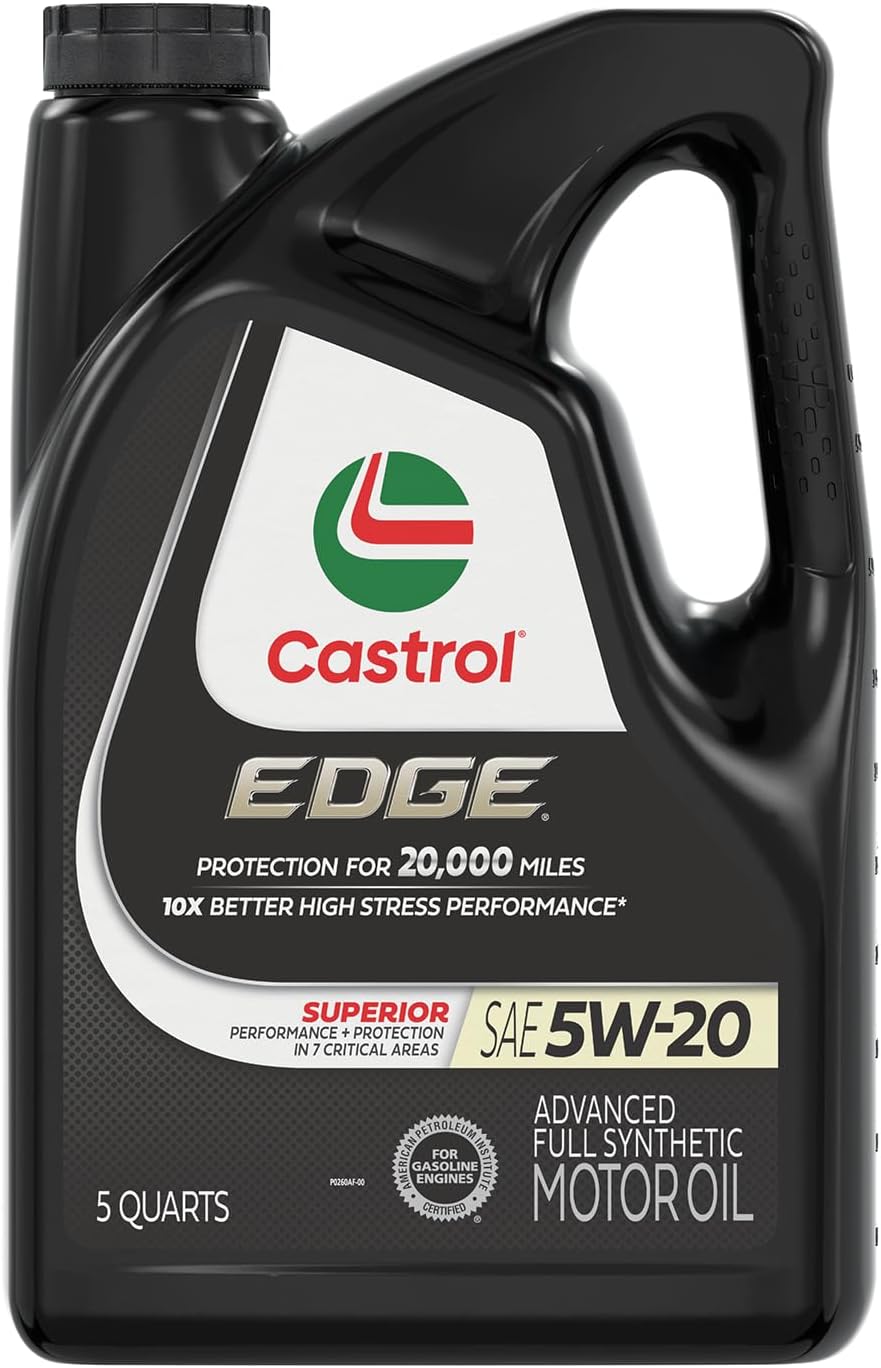
Castrol EDGE 5W-20 Full Synthetic Motor Oil, 5 qt
Best Full Synthetic Engine Oil
| SAE Viscosity Grade | 5W-20 |
|---|---|
| Container Type | Jug |
| Liquid Volume | 5 Quarts |
| Unit Count | 160.0 Fluid Ounces |
| Approvals | Exceeds API SQ/SP/SN PLUS/SN | ILSAC GF-7 |
Castrol EDGE 5W-20 is a premium full synthetic motor oil designed to protect modern gasoline engines under a wide range of conditions. Mechanics typically use it for routine oil changes where they want strong resistance to thermal breakdown, reduced sludge formation, and steady viscosity both at startup and high operating temperatures. Notable features include a 5W-20 viscosity grade suited to tighter-clearance engines, Castrol’s additive technology aimed at wear protection, and manufacturer approvals that meet several current API and ILSAC specifications. In practical terms you can expect good cold-start flow, stable oil film at high temperature, and potential for longer drain intervals when paired with careful maintenance and monitoring. The main trade-offs are higher cost compared with conventional oils and the need to follow the Grand Cherokee 4.0L I6 manufacturer recommendations for viscosity and service intervals rather than assuming extended drains solely because the oil is synthetic.
Best for: Mechanics and owners looking for a factory-quality full synthetic that emphasizes thermal stability and long-term engine protection for regular service on the Jeep Grand Cherokee 4.0L I6.
Less Ideal for: Drivers who plan to follow nonstandard extended drain intervals without oil analysis or those seeking the cheapest option for basic, low-stress driving should consider alternatives.
- Full synthetic formulation for improved thermal stability and deposit control
- 5W-20 viscosity that provides good cold-start flow
- Additive package designed to reduce engine wear and maintain cleanliness
- Meets current API and ILSAC specifications accepted by many modern engines
- Not the lowest-cost option compared with conventional or synthetic blend oils
Verdict: A full synthetic engine oil choice for mechanics who want superior thermal stability, flow at low temperatures, and enhanced long-term engine protection.
Valvoline MaxLife High Mileage 5W-30 Synthetic Blend Motor Oil, 5 qt
Best Synthetic Blend Engine Oil

| Viscosity | 5W-30 |
|---|---|
| Vehicle Service Type | Car, Truck |
| Flash Point | 394 Degrees Fahrenheit |
| Size | 5 qt (Pack of 1) |
| SAE J300 Viscosity Grade | 5W-30 |
Valvoline MaxLife High Mileage 5W-30 is a synthetic blend aimed at cars and trucks with higher mileage that need extra protection. It contains seal conditioners to help reduce leaks and oil consumption in aging engines and includes detergents and friction modifiers for improved wear protection and cleaner internals. In typical use you would drain the old oil and refill with this 5-quart container during a service interval for a Jeep Grand Cherokee 4.0L I6 that calls for 5W-30, where its seal-conditioning chemistry can help with hardened gaskets and higher oil consumption. The oil meets current API and ILSAC specs and claims better wear and sludge defense than industry standards, which translates to quieter operation and potentially longer component life between major repairs. Expect improved cold-start lubrication compared with conventional oils, but remember it is a synthetic blend not a full synthetic, so you will not get the maximum thermal stability or the longest oil-change intervals offered by full synthetic formulations.
Best for: Owners of higher-mileage Jeep Grand Cherokee 4.0L I6 who want better protection, leak control, and improved cold-start behavior without stepping up to a full synthetic.
Less Ideal for: Drivers who prioritize maximum thermal stability or the longest possible oil-change intervals should consider a full synthetic oil instead.
- Formulated with seal conditioners to help reduce leaks and oil consumption in high-mileage engines
- 5W-30 viscosity offers improved cold-start protection compared with many conventional oils
- Extra detergents and additives provide better sludge control and wear protection than industry standards
- Meets multiple API and ILSAC specifications for broad compatibility
- Synthetic blend formulation offers less thermal stability and shorter recommended change intervals than full synthetics
Verdict: A synthetic blend engine oil for buyers seeking better protection and cold-start performance than conventional oils without the cost of full synthetics.
Valvoline MaxLife Full Synthetic High Mileage 5W-20 Motor Oil, 5 qt
Best High-Mileage Engine Oil

| SAE Viscosity Grade | 5W-20 |
|---|---|
| Liquid Volume | 5 Quarts |
| Compatible Vehicle Type | Car, Truck |
| Viscosity Level | Low to Medium |
| Flash Point | 390 Degrees Fahrenheit |
Valvoline MaxLife Full Synthetic 5W-20 is a high-mileage motor oil formulated to protect engines with elevated mileage by combining a full synthetic base with seal conditioners and anti-wear additives. In practice it is used as a direct replacement during oil changes to help reduce leaks, limit oil consumption, and fight sludge in older engines. Notable features include MaxLife seal conditioners that can help restore hardened gaskets and a formulation Valvoline says improves wear, sludge, and heat protection compared with industry baselines. For a Jeep Grand Cherokee 4.0L I6 that calls for 5W-20, this oil offers stable cold-start performance and viscosity control across typical driving conditions, which helps reduce start-up wear and maintain oil pressure. The bottle design and pour spout make refills straightforward. Limitations are that the benefit targets engines over roughly 75,000 miles so gains are less noticeable on low-mileage powerplants and you should double-check your vehicle’s required spec before switching grades or formulations.
Best for: Drivers keeping a high-mileage Jeep Grand Cherokee 4.0L I6 who prioritize extending engine life and reducing oil leaks with a ready-to-use full synthetic replacement.
Less Ideal for: Drivers with low-mileage engines or those needing a different SAE grade or spec than 5W-20 should choose a product matched to their engine requirements.
- Designed for high-mileage engines with seal conditioners to help reduce leaks
- Full synthetic base delivers improved wear and heat protection over conventional oils
- Meets current ILSAC and API gasoline specifications for wide compatibility
- 5 quart bottle volume is convenient for a single oil change without leftovers
- Targeted benefits are most meaningful on engines with 75,000+ miles rather than low-mileage engines
Verdict: A high-mileage engine oil designed for engines with elevated miles, offering conditioners and seal-friendly additives to reduce oil consumption and leaks.
Pennzoil Platinum Full Synthetic 5W-30 Motor Oil (5-Quart)
Best 5W-30 Engine Oil

| SAE Viscosity Grade | 5W-30 |
|---|---|
| Liquid Volume | 160 Fluid Ounces |
| Compatible Vehicle Type | Car |
| Automotive Fit Type | Universal Fit |
Pennzoil Platinum 5W-30 is a full synthetic motor oil designed to give reliable protection and easy cold starts in a wide range of temperatures. For a DIY mechanic working on a Jeep Grand Cherokee 4.0L I6, this oil offers fast low-temperature flow for easier cold starts and strong high-temperature stability to help protect bearings and pistons during extended highway runs. The formula is made via a gas-to-liquid process and includes additives aimed at keeping pistons cleaner and reducing wear, which translates to steadier performance and potentially better fuel economy versus a heavily degraded oil. It meets common industry and manufacturer specifications that apply to many gasoline engines, so it is a practical, do-it-yourself friendly option when you want a dependable 5W-30 for routine oil changes. Note that the product warranty and extended drain claims have conditions and enrollment requirements, and you should follow the Jeep's service intervals and oil life monitoring rather than extending drains beyond OEM guidance.
Best for: DIY mechanics who want a versatile 5W-30 that supports reliable cold starts and stable protection across varied driving conditions for routine maintenance on a Jeep Grand Cherokee 4.0L I6.
Less Ideal for: Drivers who plan to extend drain intervals beyond the vehicle manufacturer’s recommendations or who need an oil specifically formulated for commercial or racing use should consider alternatives.
- Full synthetic 5W-30 provides fast low-temperature flow for easier cold starts
- Formulated to keep pistons cleaner, which can reduce deposit-related power loss
- Designed for strong wear protection and high-temperature stability
- Meets industry specs and several OEM requirements for gasoline engines
- Extended 15,000-mile protection requires enrollment and conditions that exclude severe use
- Single 5-quart bottle may be pricier per quart than bulk options
Verdict: A 5W-30 engine oil pick for DIY mechanics who need a versatile viscosity that provides reliable cold starts and stable protection across a wide temperature range.
Choosing the Right Jeep Grand Cherokee 4.0L I6 Engine Oil: Key Factors to Consider
Viscosity and Operating Temperature
Viscosity determines the oil film thickness that separates moving parts. For the 4.0L I6, choosing a viscosity that matches ambient temperatures and manufacturer guidance preserves oil pressure and reduces wear.
In colder climates a lower winter-rated viscosity helps with faster pumpability and quicker lubrication on startup. In hotter conditions or under sustained highway loads a higher-rated viscosity can maintain film strength and reduce thinning. Consider seasonal changes and driving patterns when selecting a grade to maintain proper oil pressure and protect camshaft, lifters, and bearings.
Base Oil Type: Conventional Vs Synthetic
Base oil chemistry affects volatility, thermal stability, and shear resistance. Synthetic oils resist breakdown and maintain viscosity longer under heat, which helps protect the 4.0L I6 during towing or prolonged high-speed runs.
Conventional oils can be acceptable for low-mileage, low-stress use but may break down earlier and require shorter change intervals. A synthetic or synthetic-blend typically offers better cold-start performance and less oxidation over time, reducing sludge formation and extending component life when used according to recommended change intervals.
Additive Package and Detergency
Additives control wear, neutralize acids, and keep deposits from forming. For the 4.0L I6, an effective detergent and dispersant package helps prevent varnish and sludge on lifters and rocker components.
Anti-wear additives such as zinc dialkyldithiophosphate provide extra protection for flat-tappet cam systems or older valvetrain components. Corrosion inhibitors and foam suppressors also matter because they influence long-term cleanliness and stable oil pressure. Evaluate oil specifications and additive claims in light of engine age and maintenance history.
Compatibility With High-Mileage Engines
High-mileage formulations include seal conditioners and additives that can reduce leaks or slow their development in older engines. For a 4.0L I6 with significant miles, these features can help restore some seal pliability and limit seepage.
High-mileage oils may also include higher levels of detergents to clean accumulated varnish. However, increased detergency can sometimes expose existing leaks, so owners should be aware of tradeoffs. Selecting an oil labeled for high-mileage use is a practical consideration if the engine has softened seals or an older maintenance record.
Oil Service Interval and Maintenance Practice
Recommended change intervals depend on the oil type and your driving conditions. Synthetics often support longer intervals, but the engine's condition and driving patterns should dictate actual service frequency.
If you frequently do short trips, tow, or operate in dusty conditions, adopt shorter intervals even with synthetic oils. Conversely, highway-only drivers may be able to safely extend intervals within manufacturer limits. Always pair oil choice with a consistent filter replacement and periodic condition checks.
Manufacturer Specifications and API Ratings
Always confirm that the oil meets appropriate API service categories and manufacturer viscosity recommendations for the 4.0L I6. These specifications ensure compatibility with engine metallurgy, emissions systems, and recommended additive chemistry.
Using an oil that lacks the proper API rating or viscosity can risk reduced protection, increased deposits, or warranty issues for certain maintenance-sensitive situations. Match the oil to the documented service specifications for your vehicle and driving context.
Choosing the Right Viscosity for Your Climate
Ambient temperature should drive your primary viscosity decision. For moderate climates, a multigrade like 5W-30 often balances cold-start flow with high-temperature film strength. If you live where winters are severe, a lower winter rating helps the oil circulate fast enough to protect bearings and valvetrain on start-up.
Consider seasonal oil changes if your area experiences wide temperature swings. Switching between a winter-grade and a summer-grade can optimize protection and maintain oil pressure across the year without compromising engine longevity.
- Cold regions: prioritize lower winter rating for faster circulation.
- Hot regions or hauling: choose higher high-temp viscosity to maintain film strength.
- Moderate climates: a balanced multigrade reduces the need for seasonal swaps.
Benefits and Tradeoffs of Full Synthetic Oils
Full synthetic oils offer superior thermal stability and lower volatility than conventional oils. That reduces consumption and preserves viscosity under heat, which is beneficial for extended drives and heavier loads in the Grand Cherokee 4.0L I6.
The tradeoffs are mainly cost and potential for revealing existing leaks by cleaning deposits. For engines with good sealing and maintenance history, synthetics provide better long-term protection and cold-start performance compared with conventional oils.
- Better oxidation resistance and longer stable life.
- Improved low-temperature flow for quicker lubrication.
- May uncover leaks in older engines once deposits are dissolved.
High-Mileage Considerations for Older 4.0L I6 Engines
If your Grand Cherokee has high mileage, look for formulations aimed at reducing oil consumption and conditioning seals. These oils include additives that can improve compression retention and reduce external seepage in aging engines.
High-mileage oils can provide a short-term improvement in drivability and may help extend the interval between minor repairs, but they are not a substitute for mechanical inspection. Check for changes in oil consumption and monitor for new leaks after switching formulations.
- Look for seal conditioners and extra anti-wear chemistry.
- Expect improved sealing but monitor for newly exposed leak paths.
- Combine with proper filter changes and condition monitoring.
How Driving Habits Affect Oil Choice
Your typical driving pattern—short trips, highway miles, towing—changes the stress placed on oil. Short trips increase condensation and acid buildup risk, which favors oils with stronger detergency. Highway miles produce sustained thermal load, making thermal stability and shear resistance more important.
If you tow or carry heavy loads, prioritize oil that maintains film strength under higher torque and temperature. For mostly city driving, choose oil that offers good cleanliness and cold-start protection to reduce sludge risk.
- Short trips: prioritize detergency and quick pumpability.
- Highway: prioritize thermal stability and shear resistance.
- Towing: choose a grade that preserves film under load.
Recommendations for Oil Change Practices
Changing oil and filter at appropriate intervals is as important as the oil you choose. Even high-quality oils require fresh filtration to remove particulates and combustion byproducts that accumulate in the 4.0L I6 over time.
Inspect drain plug and oil pan for any signs of metal particles or excessive sludge during changes. Keep records of consumption rates and service intervals to spot trends that could indicate developing mechanical issues.
- Always replace the oil filter with each oil change.
- Check oil level regularly, especially after a formulation change.
- Record mileage at each change to track consumption and interval performance.
Still looking for the perfect fit?
Select your Jeep Grand Cherokee configuration to see the most relevant Engine Oils recommendations
How We Chose the Best Jeep Grand Cherokee 4.0L I6 Engine Oil
Our selection focused on oils that meet the mechanical and operational needs of the Jeep Grand Cherokee 4.0L I6. We prioritized oils that match manufacturer viscosity recommendations for the engine, offer proven wear protection under the higher torque and sustained-load conditions this inline-six can produce, and include detergency packages that help keep older engines clean. Thermal stability and volatility were considered to reduce oil consumption and preserve film strength at operating temperature.We evaluated performance in cold-start conditions and low-temperature pumpability, since the 4.0L benefits from oils that circulate quickly on start-up. Compatibility with seals and gaskets was another filter, especially for higher-mileage engines. For owners who log extended intervals or high-mileage service, we included oils labeled for high-mileage applications that include seal conditioners and extra anti-wear additives.Excluded products: formulations not meeting typical automotive API specifications or those clearly intended for diesel applications only were removed. We also excluded specialty racing-only oils that sacrifice detergency or longevity for short-term friction gains. The final picks reflect a balance of lab-backed performance attributes, owner-serviceability concerns, and real-world durability needs for this vehicle.
Our full evaluation process is outlined in our review methodology.
FAQ
What viscosity should I use in a Jeep Grand Cherokee 4.0L I6?
Viscosity depends on climate and driving style. A balanced multigrade is common for moderate climates. In cold regions choose a lower winter rating for better startup flow, while hotter climates may benefit from a higher high-temperature viscosity to maintain film strength.
Is synthetic oil worth it for the 4.0L I6?
Synthetic oil offers better thermal stability and cold-start performance, which helps protect the 4.0L I6 during sustained drives or in extreme temperatures. For well-maintained engines, synthetics often extend service life and reduce consumption, though they may reveal existing leaks.
Should I switch to high-mileage oil for an older Grand Cherokee?
High-mileage formulations can help condition seals and reduce seepage in aging engines. They can improve drivability for vehicles with significant miles, but they do not replace needed mechanical repairs. Monitor for any changes in leaks after switching.
How often should I change oil in the 4.0L I6?
Change intervals depend on oil type and driving conditions. Synthetics can allow longer intervals within manufacturer limits, but frequent short trips, towing, or dusty conditions warrant shorter intervals. Always pair oil changes with filter replacement and follow service records.
Will switching oil types affect engine leaks?
Switching to a cleaner or synthetic formulation can sometimes expose existing leaks by dissolving deposits. High-mileage oils include seal conditioners that may reduce seepage, but owners should inspect seals and monitor for new or worsening leaks after a change.
Final Verdict
Prioritize viscosity and oil chemistry based on your climate and driving habits when choosing oil for the Jeep Grand Cherokee 4.0L I6. Synthetic or synthetic-blend oils generally offer stronger protection for sustained highway use and better cold-start performance, while high-mileage formulations can help address seal wear in older engines. Match your selection to the engine's condition and maintain regular oil and filter changes to maximize longevity. With those tradeoffs in mind, pick the oil that best balances wear protection, temperature performance, and maintenance frequency for confident, reliable operation.
Explore More:
- Check out all Jeep Grand Cherokee parts & accessories
- Explore Fluids & Chemicals
- Browse all Accessories
