

Note: This article contains affiliate links. If you click on these links and make a purchase, I may earn a small commission at no extra cost to you. This helps support my research and content. Read my full affiliate disclosure here.
If your 1995-2004 Toyota Tacoma is showing rough idle, poor fuel economy, or a persistent check engine light, the oxygen sensor is a common culprit. Choosing the right oxygen sensor replacement matters because it directly affects emissions control, engine fueling, and diagnostics for this generation of Tacoma. This guide shortlists the top options built to fit the 1995 through 2004 Tacoma and focuses on the characteristics that most influence performance on these trucks.The selections below reflect sensors chosen for correct fitment, reliable electrical characteristics, and straightforward installation. We evaluate response time and durability along with installation considerations and testing methods to help you pick the best match for your Tacoma. Read on for the key factors and practical advice before you open the hood.
Looking for other parts? See all Toyota Tacoma parts & accessories.
Top Picks at a Glance
| Best Overall The best all-around choice for most situations | DOSKJOK 234-4162 Heated Oxygen Sensor (2-Pack) |  |
| Best Quality Built to a higher standard if you want something more solid | AISIN OXST-01031 Upstream & Downstream Oxygen Sensor Set (2) |  |
| Best Value The sweet spot between price and what you get | SYKRSS Oxygen O2 Sensor 234-4162 Replacement (2-Pack) |  |
| Best Budget The cheapest option that still gets the job done reliably | YDYKPOWER 234-4162 Replacement Oxygen (O2) Sensor |  |
| Highest Rated A top-rated pick with lots of positive feedback | Denso 234-4162 Oxygen (O2) Sensor, Thread-In Replacement with 4-Wire Harness |  |
| Most Popular A crowd favorite that many people choose with confidence | TRQ O2 Oxygen Sensor (4-Wire Narrow-Band) |  |
| Best Seller A high-volume bestseller chosen again and again | A-Premium Oxygen Sensor (2-Pack) Compatible with Toyota/Lexus |  |
DOSKJOK 234-4162 Heated Oxygen Sensor (2-Pack)

| Brand Name | DOSKJOK |
|---|---|
| Model | 234-4162 |
| Sensor Type | Heated |
| Wire Quantity | 4 wire |
| Upper Temperature Rating | 900 Degrees Celsius |
The DOSKJOK 234-4162 is a heated 4-wire oxygen sensor sold as a two-pack for direct replacement in compatible Toyota trucks and SUVs. It measures exhaust oxygen and sends an electrical signal to the engine control unit so the fuel trim can be corrected, which helps restore fuel economy, emissions and idle stability. Installation is the same as a factory replacement: remove the faulty sensor, thread the new sensor into the exhaust bung and reconnect the harness. Notable features include stainless steel construction, a pre-coated thread for easier install, 100 ms response time and a wide operating temperature range that supports high-heat exhaust environments. Practical benefits are straightforward: it can clear related diagnostic codes, improve driveability and is a cost-effective way to avoid a shop visit. Limitations to consider are fitment sensitivity and occasional issues with the supplied rubber grommet noted by some users, so verify connector and mounting details against your vehicle before installing.
Best for: Buyers who want an affordable, direct-replacement oxygen sensor to restore fuel economy and engine stability on compatible mid‑1990s to early‑2000s Toyota trucks and SUVs and prefer a ready-to-install part they can fit themselves.
Less Ideal for: Drivers who need a long-term OEM warranty or who prefer sensors with documented lifespan ratings and manufacturer-backed support should consider higher-end branded options.
- Heated 4-wire design for fast warm-up and consistent readings
- Stainless steel build tolerates high exhaust temperatures
- Sold as a two-pack so both upstream/downstream replacements are available
- Pre-coated threads simplify installation and reduce risk of seizing
- Fitment can be specific and the supplied rubber grommet may not match every vehicle routing
Verdict: A budget-friendly heated 4-wire replacement sold as a two-pack that lets DIYers fix emissions and driveability issues on compatible 1995–2004 Toyota trucks without a shop visit.
AISIN OXST-01031 Upstream & Downstream Oxygen Sensor Set (2)
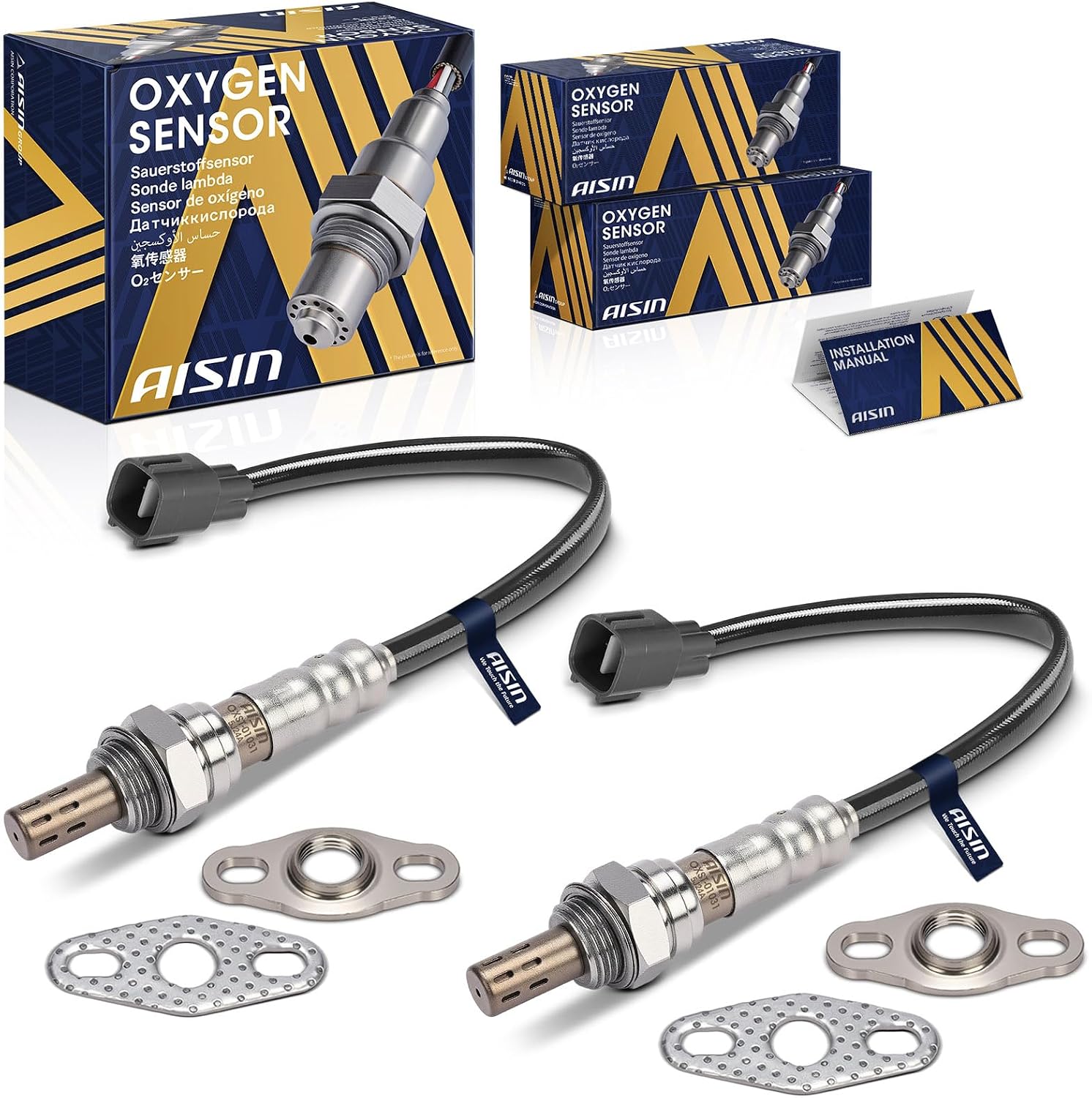
| Manufacturer | AISIN |
|---|---|
| Manufacturer Part Number | OXST-01031 |
| Sensor Quantity | 2 |
| Sensor Type | Narrowband |
| Thread Size | M18 + M18 |
The AISIN OXST-01031 set supplies both upstream and downstream narrowband oxygen sensors intended as direct factory-style replacements for compatible Toyota and Lexus engines. Installation is plug-and-play with the included manual, making this pair useful when addressing a check engine light, poor idle, or fuel trim issues after a failing sensor. Aisin emphasizes factory-quality engineering and supplies sensors with M18 threads and four-wire connectors to match the original harnesses for vehicles in the specified fitment list. Practical benefits include restoring accurate oxygen feedback for proper fuel control and emissions, and avoiding wiring or connector modifications thanks to the matching terminal and connector shapes. Limitations are inherent to narrowband sensors: they provide accurate stoichiometric feedback but are not suited for wideband tuning tasks or precise AFR logging for performance tuning. This kit is best when you want reliable, OEM-style replacements that reinstall quickly and get the engine management back to expected operation.
Best for: Drivers who need dependable, factory-style oxygen sensor replacements to restore proper fuel control and eliminate emissions-related drivability issues on compatible 1995–2004 Toyota and Lexus engines.
Less Ideal for: Enthusiasts seeking sensors for performance tuning, closed-loop mapping, or wideband AFR logging should choose a dedicated wideband sensor and controller instead.
- Includes both upstream and downstream sensors for a complete replacement job
- Designed for direct plug-and-play installation with matching M18 threads and four-pin connectors
- Manufactured to factory-style specifications for reliable long-term operation
- Restores accurate oxygen feedback to the engine control unit for improved fuel control and emissions
- Narrowband sensors are not suitable for wideband tuning or precise air/fuel ratio monitoring
Verdict: Buy this set if you want a direct, factory-style replacement pair that restores correct oxygen sensing and fuel control on compatible 1995–2004 Toyota and Lexus engines.
SYKRSS Oxygen O2 Sensor 234-4162 Replacement (2-Pack)

| Brand | SYKRSS |
|---|---|
| Model | SYES06914-2002 |
| Style Name | 234-4162 |
| Upper Temperature Rating | 1000 Degrees Celsius |
| Warranty Description | 1 year warranty |
This SYKRSS 234-4162 oxygen sensor set provides upstream and downstream replacements intended for older Toyota trucks and SUVs. It installs in the exhaust stream to monitor oxygen levels and feed the engine computer information used to adjust fuel trim, which can restore fuel economy and extinguish a check engine light caused by a failing sensor. The sensors are built with stainless steel and high-temperature materials and come with a 520 mm wiring harness; the listing targets fitment for 1994–2004 Toyota T100, Pickup, 4Runner, Tacoma and Sequoia applications. Practical benefits include correct thread and connector styling for direct replacement when the fitment matches, and the pair covers both upstream and downstream positions so you can replace both at once. Limitations are variable quality control reported by some users and occasional differences in wire color or heater resistance compared with original factory sensors, so double-check connector length and pinout before installing. Budget-conscious buyers get good value, but those wanting guaranteed long-term durability may prefer a well-known OEM-equivalent brand.
Best for: Buyers who prioritize a cost-effective, direct-replacement sensor set to restore fuel trim and clear emissions-related engine codes on mid-1990s to early-2000s Toyota trucks and SUVs.
Less Ideal for: Anyone who needs a guaranteed OEM-grade longevity or who prefers brand-name sensors with documented long-term reliability should consider higher-end alternatives.
- Sold as a two-piece set covering upstream and downstream sensor needs
- Stainless steel and high-temperature materials for exhaust durability
- 520 mm wiring harness included to match common exhaust routing
- Intended to match factory-style thread and connector for direct replacement
- Some buyers reported premature failures or inconsistent electrical heater resistance
- Wire colors and exact connector length can differ from factory parts
Verdict: A budget-friendly two-piece replacement kit that restores oxygen sensing and fuel control on 1995–2004 Toyota Tacomas when fitment and connector length are confirmed.
YDYKPOWER 234-4162 Replacement Oxygen (O2) Sensor

| Model | 234-4162 |
|---|---|
| Mounting Type | Flange Mount |
| Output Type | Push-Pull |
| Measuring Range | 0-25% |
This YDYKPOWER 234-4162 is an economy aftermarket O2 sensor sold as a direct fit replacement for several Toyota models from the mid 1990s to early 2000s. It is designed as a flange-mount sensor with a push-pull output and a measuring range listed in the spec sheet. Typical use is direct swap-in for an upstream or downstream location noted by the seller after verifying connector and length against the original sensor. The practical benefits are straightforward: it lets an older Toyota regain proper exhaust oxygen feedback to the engine management system, which can clear a check engine light caused by a failed sensor and help restore fuel trim accuracy. Expect basic build quality consistent with value-focused parts; some buyers report trouble with fit or function while others had satisfactory, easy installs. This unit is low-cost and useful for quick repairs, but it may not match factory longevity or advanced calibration of higher-end sensors, so replacement intervals and confirmation with a scan tool are recommended after installation.
Best for: Buyers needing an inexpensive, quick replacement O2 sensor for older Toyota trucks who prioritize immediate function and low upfront cost over long-term OEM-level durability.
Less Ideal for: Drivers who want a long-term, high-accuracy sensor for performance tuning or those who prefer premium brand calibration and extended lifespan should consider higher-end options.
- Advertised direct-replacement fit for many 1995–2004 Toyota applications
- Low-cost option suitable for budget repairs
- Flange-mount design matches common installation points
- Simple push-pull output compatible with standard vehicle wiring
- Variable quality reported by buyers with some units failing to work
- May not offer the same longevity or sensor calibration as higher-end branded sensors
Verdict: A budget-friendly, direct-replacement oxygen sensor that gets older Toyota trucks back to working fuel control quickly.
Denso 234-4162 Oxygen (O2) Sensor, Thread-In Replacement with 4-Wire Harness

| Part number | 234-4162 |
|---|---|
| Material | Stainless Steel, Zirconium |
| Mounting type | Thread-In |
| Output type | Push-Pull |
| Upper temperature rating | 800 Degrees Celsius |
This Denso 234-4162 is a direct-fit narrow-band O2 sensor supplied with a 4-wire harness and a machined stainless steel body for corrosion resistance. It replaces the upstream/downstream oxygen sensors on many 1996–2004 Toyota trucks and SUVs and installs with the factory thread-in mounting; the built-in PTFE filter and refined zirconia element aim to protect the sensing element and improve response over time. In real-world use the sensor restores accurate air/fuel feedback, clears related check-engine codes after adaptation and can help the catalytic converter reach readiness during drive cycles. Installation is straightforward for a DIYer with an O2 sensor socket, though seized threads or rusted nuts on older exhausts can slow the job. The harness length and factory-style connector reduce the need for splicing, but this is a narrow-band unit so it is intended for stock engine management and not for wideband tuning or performance logging.
Best for: Buyers who prioritize long-term reliability and a factory-like replacement for a Toyota 1995–2004 truck or SUV, and who want a sensor that simply restores correct emissions and drivability without modifications.
Less Ideal for: People building or tuning engines who need wideband data, or anyone requiring custom sensor placement or advanced logging features.
- Direct-fit design for select 1996–2004 Toyota trucks and SUVs for first-time fit
- Factory-quality zirconia sensing element for reliable, responsive readings
- Stainless steel construction and PTFE filter for corrosion resistance and contamination protection
- Includes 4-wire harness and factory-style connector to avoid wiring modifications
- Narrow-band sensor not suitable for wideband tuning or aftermarket engine management
Verdict: Choose the Denso 234-4162 when you want a reliable, factory-quality O2 sensor that fits Toyota 1996–2004 trucks and restores correct emissions and driveability.
TRQ O2 Oxygen Sensor (4-Wire Narrow-Band)

| Maximum Supply Voltage | 12 Volts |
|---|---|
| Measurement Accuracy | High |
| Mounting Type | Flange Mount |
| Wire Quantity | 4 |
| Upper Temperature Rating | 850 Degrees Celsius |
This TRQ four-wire narrow-band oxygen sensor is a direct-fit replacement intended to restore proper O2 feedback for fuel trim and emissions control. It installs like a factory sensor with a flange mount and M18x1.5 thread, and TRQ supplies a female connector and preassembled wiring to avoid adaptations on most compatible Toyotas and Lexus vehicles. In use it provides fast voltage response and high measurement accuracy so an intermittent or lingering check-engine light related to the upstream or downstream O2 can often be cleared after a drive cycle. The sensor is built with a ceramic sensing element and stainless-steel body rated for high temperatures, and it ships with installation details and vehicle compatibility listings to help confirm fit. Not every user sees the same longevity; some buyers report early failures while others get months of reliable service, so expect variable life compared with higher-cost brand OE replacements. Also verify the connector gender and exact bank/location before installation to avoid wiring work or returns.
Best for: Buyers who prioritize a confirmed-fit, quick DIY replacement to clear O2-related faults on compatible 1995–2004 Toyota Tacomas and similar Toyota/Lexus models and who prefer a cost-conscious alternative to factory parts.
Less Ideal for: Drivers who want guaranteed long-term OEM-level durability or who do not want to check connector gender and location before ordering should consider higher-end or dealer parts instead.
- Vehicle-specific direct-fit design reduces need for modifications
- Preassembled 4-wire connector simplifies installation and diagnosis
- High temperature rating and stainless-steel body for corrosion and heat resistance
- Fast, accurate narrow-band output that helps clear OBD-II O2-related codes
- Reported durability varies between units with some early failures noted by users
Verdict: A cost-conscious, vehicle-specific direct-fit O2 sensor that gets most Tacomas back to normal quickly without wiring changes, making it a solid DIY replacement option.
A-Premium Oxygen Sensor (2-Pack) Compatible with Toyota/Lexus

| Maximum Supply Voltage | 12 Volts |
|---|---|
| Mounting Type | Threaded Mount |
| Output Type | Analog |
| Sensor Type | Heated |
This A-Premium oxygen sensor pair is a direct-fit replacement designed for older Toyota and Lexus models in the 1995–2004 era and is sold as a two-piece set. Each sensor is a threaded, heated type with an analog output for real-time oxygen monitoring so the engine control unit can maintain proper air-fuel ratio. Construction uses stainless steel and includes the wiring harness with a male connector, which makes installation straightforward for a competent DIYer or a technician. Notable practical benefits are the included gasket/bolt flange reported by users, the heater circuit for faster warm-up, and generally reliable fitment that clears check-engine codes when the original sensor has failed. Limitations to consider are that this is an aftermarket part rather than a factory unit and longevity may vary compared with higher-end branded sensors; a few reviews report failures or return issues. Also the product lists an upper temperature rating that is modest by exhaust component standards, so extreme conditions may stress the unit sooner than premium options.
Best for: Buyers who prioritize a proven, easy-to-install replacement that reliably restores oxygen sensing and clears diagnostic codes on older Toyota/Tacoma vehicles without paying for premium OEM-brand sensors.
Less Ideal for: Drivers looking for longest possible service life under extreme driving or heavy-duty conditions should consider higher-end branded sensors or professional-grade replacements instead.
- Direct-fit heated sensor with matching harness makes installation simple for 1995–2004 Toyota/Tacoma applications
- Sold as a two-pack so you can replace both sensors or keep a spare
- Stainless steel construction and included gasket/bolt flange improve fit and corrosion resistance
- Heater circuit helps the sensor reach operating temperature faster for accurate closed-loop control
- Aftermarket quality can vary and may not match longevity of higher-end name-brand sensors
- Upper temperature rating listed is relatively low compared with some premium exhaust components
Verdict: A practical two-pack heated replacement that restores oxygen sensing on 1995–2004 Toyota/Tacoma models with easy fitment and upfront value.
Choosing the Right 1995-2004 Toyota Tacoma Oxygen Sensor: Key Factors to Consider
Fitment and Connector Compatibility
Correct physical fit and matching connector are the first priorities for an oxygen sensor on a 1995-2004 Toyota Tacoma. The sensor must screw into the designated port threads and have the same length and heat-shielding profile so it seats properly without interfering with nearby components.
Equally important is the connector type and pinout. Using a sensor with the same factory connector avoids cutting, splicing, or introducing unreliable aftermarket adapters. Mismatched connectors can cause poor electrical contact, corrosion, or erroneous readings that trigger emissions codes. When selecting a replacement, verify vehicle-side connector images and pin assignments to ensure plug-and-play fitment.
Heater Circuit and Electrical Specs
Many oxygen sensors for this Tacoma era include an internal heater to bring the sensor to operating temperature quickly. Matching the heater circuit resistance and wiring configuration to the original specification is critical; a heater mismatch can leave the sensor cold, causing slow response and triggering check engine light oxygen sensor codes.
Review the replacement's stated heater voltage, resistance range, and whether it uses the same number of wires as the factory unit. Also consider wire insulation and strain relief quality because harsh underbody heat and vibration can degrade wiring over time. Choosing a sensor with correct electrical specs reduces the chance of false diagnostics and ensures consistent operation in typical Tacoma driving conditions.
Sensor Response Time and Signal Quality
Response time describes how quickly the oxygen sensor's voltage output reacts to changes in exhaust oxygen content. Faster response translates to tighter fuel trim control and better transient driveability, which matters when accelerating or climbing grades in a Tacoma.
Look for specifications or test data that indicate signal rise time and recovery. While exact lab numbers are not always provided, product documentation that highlights quick switching, low hysteresis, or matched response to OE expectations is a good sign. Consistent, clean signal output also makes diagnosis easier when using a scan tool to observe live data.
Upstream Vs Downstream Function and Placement
Understanding whether a sensor is intended for upstream (pre-catalyst) or downstream (post-catalyst) service is important for correct replacement. Upstream sensors directly influence fuel control and must have the correct calibration and heater performance. Downstream sensors are primarily used for catalyst monitoring and can have different response and signal characteristics.
Install the sensor in the correct bank and position—commonly referenced in diagnostics as bank 1 sensor 1, etc.—to avoid triggering codes such as oxygen sensor code P0135. Replacing an upstream sensor with a unit intended only for downstream monitoring can cause poor fueling and diagnostic confusion.
Durability and Environmental Resistance
Oxygen sensors on a Tacoma are exposed to high heat, road debris, and moisture. Durable housings, quality ceramic elements, and robust wire sheathing help ensure long service life. Durable materials also reduce the chance of premature failure from thermal cycling or physical impact.
Pay attention to corrosion-resistant threads and protective sleeves over wiring. Sensors rated for extended life or with reinforced heat protection are preferable for trucks that see heavy use, towing, or off-road driving. Longevity matters because replacing sensors in hard-to-reach locations can be labor-intensive.
Ease of Installation and Serviceability
Installation considerations include whether the sensor uses a direct-fit connector, whether the mounting position is accessible, and what basic tools are required. For many Tacoma owners, the ability to install the sensor without cutting or splicing reduces installation time and the risk of future electrical issues.
Look for packaged instructions, correct hardware, and sensors that avoid the need for anti-seize on threads if the manufacturer already applies proper treatment. Clear installation guidance and compatibility notes make the job less stressful and reduce the likelihood of cross-threading or incorrect torque, both of which can lead to leaks or premature failure.
Identifying Which Sensor You Need
On a 1995-2004 Toyota Tacoma, first determine the sensor location you are replacing. Diagnostic trouble codes or live data from a scan tool will typically identify bank and sensor position. Commonly used labels include bank 1 sensor 1 for the upstream sensor and bank 1 sensor 2 for the downstream sensor, so confirm the code before ordering a replacement.
When in doubt, inspect the physical sensor before removal. Upstream sensors are usually located before the catalytic converter and often have a different connector or wiring length than downstream units. Matching the physical characteristics, not just the generic category, prevents installation issues.
- Use the OBD-II code to confirm bank and sensor position.
- Compare connector shape and wire count to the existing sensor.
- Measure thread size and reach if fitment documentation is unclear.
Common Symptoms of a Failing Oxygen Sensor
Symptoms often include a persistent check engine light, poor fuel economy, rough idle, or hesitation on acceleration. These symptoms may fluctuate with engine temperature or load conditions, which reflects a sensor that is slow to reach operating temperature or providing erratic signals.
Some faults present as specific diagnostic codes such as heater circuit failures or slow switching. Recognizing whether the issue is signal-related or heater-related helps you choose a replacement with the right attributes for this Tacoma.
- Rough idle or stalling during warm-up
- Lowered fuel economy over time
- Check engine light with codes indicating heater or sensor drift
Testing an Oxygen Sensor on Your Tacoma
You can perform basic tests using a multimeter and a scan tool. For heater circuit checks, measure resistance across the heater pins and compare to expected ranges. For signal testing, observe the live voltage on an upstream sensor while the engine warms and during throttle changes. A responsive sensor should switch voltage frequently once at operating temperature.
If you see a heater-related code such as P0135, focus your tests on the heater circuit before replacing the signal element. Proper bench and on-vehicle tests reduce unnecessary replacements and point to wiring or connector faults if present.
- Measure heater resistance with the connector unplugged.
- Use a scan tool to watch voltage swing during throttle blips.
- Check wiring continuity and connector corrosion before replacing the sensor.
Installation Tips to Avoid Common Pitfalls
Before installing a new sensor, inspect the thread area for carbon buildup and clean gently to ensure proper sealing. Use the correct torque value to avoid thread damage and ensure a proper exhaust seal. If the replacement sensor requires anti-seize, use a small amount on the threads and avoid getting it on the sensor tip.
Protect the new sensor's wiring from heat and rubbing against metal. Route the cable following factory clips and replace any damaged clips to prevent chafing. After installation, clear codes and verify the sensor reports valid readings with a scan tool.
- Clean threads but avoid abrasive methods that change thread profile.
- Torque to manufacturer recommendations and avoid over-tightening.
- Secure wiring away from heat sources and moving parts.
When to Replace Wiring or Connectors Instead
Sometimes the issue lies with the harness or connector rather than the sensor itself. If testing shows correct heater resistance and plausible signal voltages but intermittent operation persists, inspect the wiring for breaks, melted insulation, or poor pins.
Repairing or replacing damaged connectors can restore reliable sensor operation at lower cost and with less downtime. Use replacement connectors engineered for the vehicle's environment and solder or use high-quality crimp connections sealed against moisture.
- Look for heat damage or exposed wires near exhaust components.
- Check for corrosion in connector pins that can cause voltage drops.
- Consider harness repair kits designed for automotive oxygen sensor applications.
Diagnostic Codes and What They Typically Mean
Common OBD-II codes related to oxygen sensors include heater circuit faults and slow switching or out-of-range voltage. Codes like those referencing bank 1 sensor 1 often point to upstream sensor issues that directly affect fuel control. A code indicating a heater fault suggests the heater circuit or wiring may have failed rather than the sensing element.
When a code appears, pair the trouble code with live data and heater resistance checks to determine whether to replace the sensor, repair wiring, or address upstream exhaust leaks that can contaminate a sensor.
- Heater circuit codes often require resistance checks first.
- Slow switching codes suggest signal or contamination issues.
- Post-catalyst codes may indicate catalyst health if downstream sensor readings are unchanged.
Still looking for the perfect fit?
Select your Toyota Tacoma configuration to see the most relevant Oxygen Sensors recommendations
How We Chose the Best 1995-2004 Toyota Tacoma Oxygen Sensor
We evaluated candidate oxygen sensors for the 1995-2004 Toyota Tacoma by applying filters that matter to owners of this generation. Primary criteria included physical fit and connector compatibility to ensure direct replacement without modifications, and sensor response time which affects fuel trim and driveability. We also prioritized correct calibration for upstream and downstream positioning so the sensor reports accurate oxygen levels to the ECU. Durability under heat and exposure was assessed through specification review, focusing on housing materials and wiring heat protection. Electrical resistance and heater circuit specs were checked to match factory requirements and to reduce the risk of heater-related codes.Additional criteria included ease of installation, verified wiring pinouts, and available technical documentation such as connector diagrams. We excluded sensors lacking clear fitment data for the 1995-2004 Tacoma or those with mismatched heater or signal specifications. Units that required extensive adapters or splicing were not considered. The final list balances reliable operation, correct electrical/physical matching, and straightforward installation for Tacoma owners.
Our full evaluation process is outlined in our review methodology.
FAQ
How do I know whether to replace the upstream or downstream sensor?
Your scan tool or the specific OBD-II code will indicate bank and sensor position. Upstream sensors affect fuel trim and typically trigger drivability issues, while downstream sensors are used to monitor catalytic converter performance.
Can I test an oxygen sensor without specialized tools?
Basic checks like heater resistance with a multimeter and visual inspection of wiring can be done with minimal tools. For signal verification, a basic scan tool or voltmeter that can read live sensor voltage is very helpful to confirm switching behavior.
Will a bad oxygen sensor cause a permanent check engine light?
Often the check engine light will remain until the fault is cleared and the sensor reports nominal values. Persistent lights can indicate ongoing heater circuit issues, wiring faults, or that the replacement sensor was not the correct type for the sensor position.
Is it normal for an upstream sensor to switch rapidly while driving?
Yes. Once at operating temperature, upstream sensors typically switch frequently between lean and rich voltages. If switching is slow or the signal is stuck, that indicates a problem with the sensor, heater, or exhaust contamination.
Should I always replace the wiring harness when replacing the sensor?
Not always. Replace the harness if it shows damage, corrosion, or intermittent connectivity. If the wiring and connector are in good condition, a direct-fit sensor with the same connector will usually suffice.
Can a failed catalytic converter mimic oxygen sensor problems?
Downstream sensor readings can reflect catalyst efficiency, so a failing converter can lead to downstream-related codes. Proper diagnosis uses both sensor data and other checks to distinguish between sensor failure and converter issues.
Do wideband sensors work as direct replacements for narrowband units on this Tacoma?
Wideband sensors are not typically direct plug-and-play replacements for the factory narrowband sensors without ECU modifications. For direct replacement, match the sensor type specified for the upstream or downstream position.
Final Verdict
For a 1995-2004 Toyota Tacoma, prioritize correct fitment, matching heater and signal specifications, and proven durability when selecting an oxygen sensor. Addressing wiring and connector issues during replacement can prevent recurring codes and improve long-term reliability. Balance the need for quick response and correct electrical characteristics with installation ease to restore proper fueling and emissions operation.In most cases, replacing the correctly specified upstream or downstream sensor and verifying installation with live data will resolve driveability and emissions-related symptoms. Focus on accurate fitment and verified electrical compatibility to choose confidently.
Explore More:
- Check out all Toyota Tacoma parts & accessories
- Explore Oxygen Sensors Maintenance & Repair Guides
- Explore Engine
- Browse all Auto Parts
