

Note: This article contains affiliate links. If you click on these links and make a purchase, I may earn a small commission at no extra cost to you. This helps support my research and content. Read my full affiliate disclosure here.
If you own a 2005-2015 Toyota Tacoma and are tracking fuel economy losses, rough idling, or a persistent check engine light, a failing oxygen sensor is a common cause. Replacing the right sensor can stabilize fuel trims, reduce emissions, and clear drivability issues while keeping the engine running as intended. This guide lists seven shortlisted oxygen sensors selected for that model years range and explains the real-world reasons to choose one over another.We evaluated each option for durability, electrical response, and ease of installation so you can match the replacement to how you use the truck. Read on to see the criteria we used and practical tips for installation and diagnosis before you commit to a part.
Looking for other parts? See all Toyota Tacoma parts & accessories.
Top Picks at a Glance
| Best Overall The best all-around choice for most situations | DrCax 234-4260 Downstream Heated Oxygen Sensor |  |
| Best Quality Built to a higher standard if you want something more solid | Denso Oxygen (O2) Sensor 234-4260 |  |
| Best Value The sweet spot between price and what you get | QIJIAUTO Upstream & Downstream O2 Oxygen Sensor Kit for Toyota Tacoma 2.7L (2005–2011) |  |
| Best Budget The cheapest option that still gets the job done reliably | LuxOxyPro Downstream Oxygen O2 Sensor Replace 234-4260 |  |
| Highest Rated A top-rated pick with lots of positive feedback | SYKRSS Oxygen O2 Sensor SY40151-1002 Upstream Stainless Steel |  |
| Most Popular A crowd favorite that many people choose with confidence | nifeida 234-4260 Downstream Oxygen Sensor (heated) |  |
| Best Seller A high-volume bestseller chosen again and again | DriveFix 4-Pack Upstream and Downstream Oxygen Sensors (Replacement Set) |  |
DrCax 234-4260 Downstream Heated Oxygen Sensor

| Mounting Type | Downstream (After Catalytic Converter) |
|---|---|
| Output Type | electrical signal |
| Upper Temperature Rating | 800 Degrees Celsius |
| Measurement Accuracy | ±1% |
This DrCax 234-4260 is a downstream (after-catalytic-converter) heated oxygen sensor intended as a direct replacement for compatible Toyota and Lexus models, including many Tacoma years. It monitors exhaust oxygen content and sends an electrical signal to the engine control unit so the fuel trim and emissions controls can adjust properly. The sensor is factory-tested, rated for high temperature use up to 800 C, and uses ceramic sensing elements with a heated design for faster warm-up and more consistent readings at idle. In practice it is used to restore closed-loop fueling, clear oxygen-sensor related fault codes, and help recover fuel economy and emissions performance. Buyers report a generally straightforward swap and reliable operation when fitment and connector reach match the vehicle, though a few users noted the rubber boot or cable length may differ from the factory part and could require minor modification. This unit offers OEM-equivalent part numbers and aims to balance value and functionality for routine downstream sensor replacement on supported Tacomas.
Best for: Drivers who want an affordable, factory-style downstream O2 sensor to restore emissions control, clear codes, and recover fuel economy on mid-2000s to early-2010s Toyota Tacoma models.
Less Ideal for: People who need a perfect plug-and-play match without any connector or boot adjustments or those who require guaranteed OEM calibration for non-Toyota vehicles.
- Heated element for faster warm-up and stable readings at idle
- Rated to 800 Degrees Celsius for high-temperature exhaust environments
- Factory-tested and advertised as a direct replacement for specified Toyota/Lexus part numbers
- Ceramic sensing core with protective covers for durability
- Rubber boot and wiring length can differ from factory parts and may need modification
- Some users reported inconsistent heater resistance affecting drivability on non-matching vehicles
Verdict: A cost-conscious downstream heated oxygen sensor that delivers OEM-style performance for Tacomas when fitment and connector length match the vehicle.
Denso Oxygen (O2) Sensor 234-4260
| Material | Stainless Steel, Zirconium |
|---|---|
| Mounting Type | Flange Mount |
| Output Type | electrical signal |
| Upper Temperature Rating | 982 Degrees Celsius |
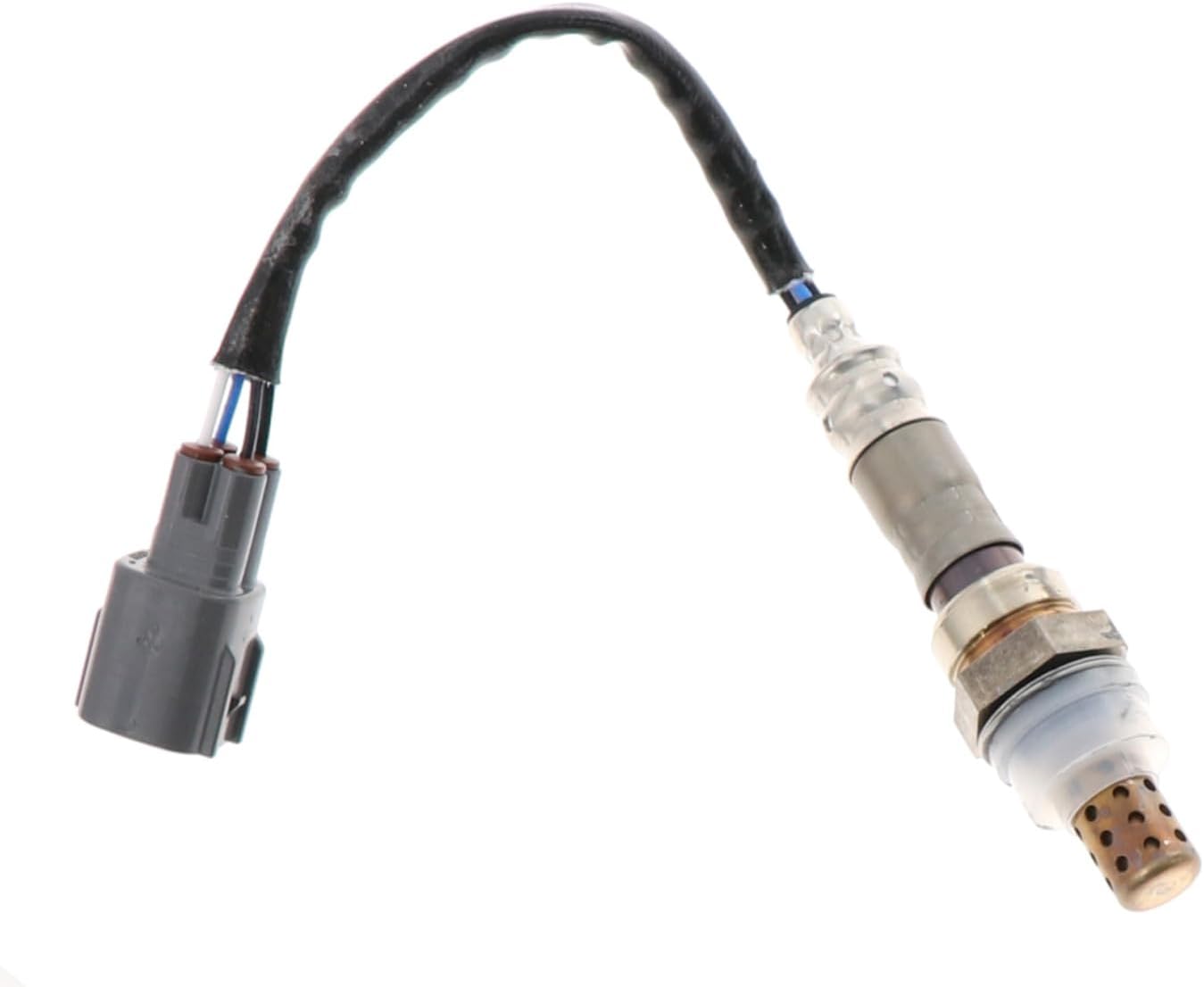
The Denso 234-4260 is a direct-fit narrow-band oxygen sensor built to the same factory-quality standards used by Toyota and Lexus. Intended as a downstream heated O2 sensor, it plugs into the factory harness and reports exhaust oxygen levels to the engine computer to restore proper air-fuel control and clear emissions-related fault codes. In use it installs like a standard replacement part and reviewers report easy fitment and durable stainless steel construction. Notable features include a zirconia sensing element for fast response, a PTFE filter to block contaminants, and a corrosion-resistant body that helps longevity under high exhaust temperatures. For a performance-minded Tacoma owner this sensor helps the ECU recover correct fuel trim after replacing a failed unit, which can improve throttle response and fuel economy compared with a degraded sensor. Limitations to be aware of are the fixed short harness length for some applications and the sensor being a narrow-band type, which is focused on stoichiometric control rather than wideband tuning data.
Best for: Tacoma owners focused on restoring factory engine control and improving drivability after a failing downstream O2 sensor, who value a direct-fit, OEM-quality replacement they can install themselves or have fitted quickly by a shop.
Less Ideal for: Drivers building an aftermarket tuning setup who need wideband AFR feedback or installers who require an extended harness without adapting the factory connector.
- Factory-quality Denso construction for reliable fit and performance
- Zirconia sensing element offers fast response for accurate air-fuel feedback
- PTFE filter and stainless steel body resist contaminants and corrosion
- Direct-fit wiring harness and standard flange mount simplify installation
- Fixed 9.45 inch harness length may be too short for some routing or late-model configurations
- Narrow-band output is not suitable for aftermarket wideband tuning or precise AFR logging
Verdict: Choose the Denso 234-4260 when you want a factory-quality, direct-fit downstream O2 sensor that restores correct fuel control and drivability on Toyota Tacomas.
QIJIAUTO Upstream & Downstream O2 Oxygen Sensor Kit for Toyota Tacoma 2.7L (2005–2011)

| Vehicle compatibility | Toyota Tacoma 2005–2011 2.7L |
|---|---|
| Package contents | 2 sensors (1 upstream, 1 downstream) |
| Connector type | Factory-style connector |
| Mounting | Threaded direct-fit |
This QIJIAUTO kit includes one upstream air-fuel ratio sensor and one downstream oxygen sensor intended as direct replacements for the 2.7L Toyota Tacoma (2005–2011). Both sensors use a threaded mounting and factory-style connector so installation typically requires no cutting, splicing, or wiring changes. The product emphasizes stable, fast signal response to help the engine control unit maintain correct mixture and consistent operation, which in practice can clear a check engine light and improve drivability and fuel economy after old sensors fail. It ships as a two-piece set so you can replace both bank sensors at once, avoiding repeat labor. Limitations include the narrow vehicle fitment (Tacoma 2.7L 2005–2011) and the listing does not provide long-term durability data or an explicit warranty, so longevity versus OEM units is not confirmed. For DIYers and independent shops looking for an affordable direct-fit replacement, this kit is a straightforward option to restore sensor function quickly.
Best for: Buyers who want a practical, no-frills replacement to restore proper sensor feedback and eliminate check-engine codes on a Tacoma 2.7L without paying OEM prices.
Less Ideal for: People seeking long-term, guaranteed factory-quality lifespan or multi-vehicle compatibility should consider branded dealer parts or units with documented warranties.
- Direct-fit design with threaded mount and factory-style connector for plug-and-play installation
- Includes both upstream (air-fuel ratio) and downstream oxygen sensors so both banks can be serviced at once
- Built to provide fast, stable signal feedback to support correct air-fuel mixture and engine operation
- Fitment is limited to Toyota Tacoma 2.7L (2005–2011) and not suitable for other engines or years outside that range
- No clear manufacturer warranty or long-term durability data provided in the listing
Verdict: A budget-friendly two-pack direct-fit replacement that gets a 2.7L Tacoma's oxygen sensor system back to factory-style operation with minimal fuss.
LuxOxyPro Downstream Oxygen O2 Sensor Replace 234-4260

| Measuring Range | 650 °C |
|---|---|
| Specific Uses For Product | automotive, exhaust gas level monitoring |
| Upper Temperature Rating | 650 Degrees Celsius |
This LuxOxyPro downstream O2 sensor is sold as a direct replacement for the 234-4260 family used on many Toyota and Lexus V6 and some 4-cylinder models from roughly 2003 to 2016. It monitors exhaust oxygen downstream of the catalytic converter and sends that signal to the engine computer to help regulate emissions and fuel trim. In practice the sensor installs like a standard threaded O2 unit and is intended for owners doing a budget DIY repair or a quick shop replacement. Notable points include a stated 650 C temperature rating and claims of faster response and longer life versus older sensors. The practical benefits are straightforward: restores closed-loop fueling behavior, can clear check-engine codes tied to a failing downstream sensor, and may improve idle stability and fuel economy when the original sensor has degraded. Limitations are typical for low-cost replacements: fitment must be checked carefully against your vehicle and OEM part number, and long-term durability and exact sensor calibration may vary compared with factory-quality units.
Best for: Practical owners looking for an affordable, do-it-yourself replacement to fix a downstream O2 sensor code and restore normal fueling on mid-2000s to mid-2010s Toyota and Lexus models.
Less Ideal for: Anyone seeking an exact factory-calibrated sensor for long-term fleet use or high-performance tuning should consider a higher-end or OEM replacement instead.
- Designed to replace part number 234-4260 for many Toyota and Lexus models
- Stated high temperature rating of 650 C for exhaust conditions
- Simple threaded installation suitable for DIY replacement
- Can restore fuel trim, idle stability, and clear related check-engine codes
- Aftermarket fit and longevity may vary compared with factory-quality sensors
Verdict: A cost-conscious downstream replacement that gets a failing O2 sensor back in service quickly for Toyota and Lexus vehicles covered by 234-4260 fitment.
SYKRSS Oxygen O2 Sensor SY40151-1002 Upstream Stainless Steel

| Mounting Type | Exhaust Mount |
|---|---|
| Output Type | electrical signal |
| Upper Temperature Rating | 1000 Degrees Celsius |
| Material Type | Stainless Steel |
This SYKRSS upstream oxygen sensor is a direct-replacement style unit built from stainless steel with a high temperature rating and an electrical output for the engine control system. It is used in the exhaust stream to measure oxygen content and feed that signal to the ECU so fuel trim and combustion are kept in balance. The listing calls out compatibility with a number of Toyota and Lexus V6 and V8 engines and highlights an OE-level performance claim, a stainless housing and a 1000 C temperature rating. For a reliability-focused buyer the practical benefits are clear: it reproduces the factory mounting and signal type so it can clear running faults and restore proper fuel control, and reviewers report successful installs and repaired check-engine issues. Limitations to watch are variable long-term durability across units and differences in lead length or connector appearance versus specific factory sensors, so confirm plug length and harness fit before buying and be prepared to use the correct O2 socket or heat-shield trimming during installation.
Best for: Buyers prioritizing a budget-friendly, factory-style replacement that restores proper air-fuel sensing and can clear running faults on older Toyota and Lexus engines.
Less Ideal for: Those who require guaranteed long-term warranty support or a manufacturer-branded sensor with documented lifetime reliability should consider premium OEM-branded alternatives.
- Stainless steel construction and 1000 C upper temperature rating for exhaust exposure
- Electrical output and upstream mounting match factory sensor function to restore ECU feedback
- Covers many Toyota and Lexus applications including Tacoma and Tundra model years listed
- Multiple reviewers report successful code clearance and reliable short-term operation
- Some units show inconsistent long-term durability in user reports
- Wire length and connector appearance can differ from factory parts and may require fitment checks
Verdict: A practical, factory-style upstream replacement that restores proper oxygen sensing on compatible Toyota/Tacoma engines for buyers focused on reliable, affordable repairs.
nifeida 234-4260 Downstream Oxygen Sensor (heated)

| Mounting Type | Flange Mount |
|---|---|
| Output Type | electrical signal |
| Sensing Distance | 400 Millimeters |
| Upper Temperature Rating | 800 Degrees Celsius |
This nifeida 234-4260 is a heated downstream oxygen sensor intended as a direct replacement where the part number and connector match. It monitors exhaust oxygen content and sends an electrical signal to the engine control system so the ECU can adjust fuel trim and keep emissions and fuel economy in check. The sensor is stainless steel construction and comes pretested; many buyers report straightforward installations and a resolved check-engine light when the correct application is used. Practical benefits include compatibility with a long list of Toyota/Lexus models and cross-reference OE numbers so it can be swapped in without modification on correct fitments. Limitations are that fit and connector pin orientation vary between vehicles, so buyers should confirm the exact harness plug and bank/side before ordering, and some users have reported early failures or no signal output on incompatible installs. For a risk-averse buyer, double-check vehicle fitment, verify connector shape, and be prepared to test live sensor voltage after installation to confirm operation.
Best for: Buyers who prioritize a budget-friendly, aftermarket downstream sensor that matches OEM part numbers and want a direct swap when fitment is confirmed and verified.
Less Ideal for: If you prefer to avoid any risk of mismatch or need guaranteed long-term durability under heavy duty use, consider a well-known OEM-brand sensor or purchasing from a supplier with strict vehicle-specific fit confirmation.
- Heated design for faster warm-up and reliable readings at idle
- Stainless steel construction for corrosion resistance in exhaust environments
- Cross-referenced to multiple OEM part numbers for easier fit identification
- Pretested before shipping according to the seller and commonly reported to clear related check-engine lights when correctly matched
- Connector pin spacing and plug orientation can differ between vehicles, causing fitment issues despite listed compatibility
- Some reviewers report premature failures or flatlined voltage output on certain installs
Verdict: A cost-conscious aftermarket heated downstream sensor that works well when the connector and part number are verified for your Tacoma fitment.
DriveFix 4-Pack Upstream and Downstream Oxygen Sensors (Replacement Set)
| Included Components | 4x Oxygen Sensor |
|---|---|
| Material Type | Zirconia, Platinum, Stainless Steel |
| Model | L234-4138 |
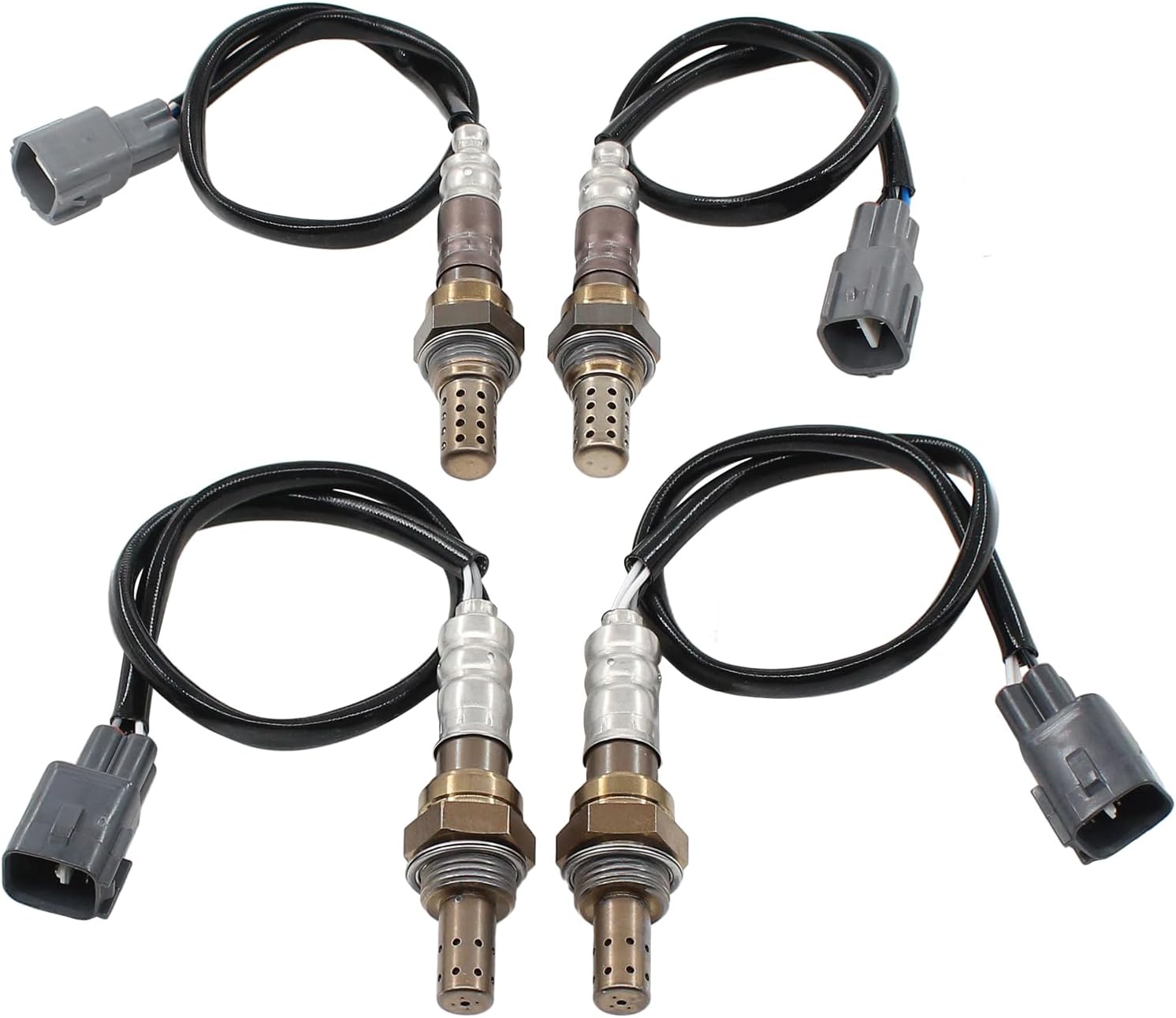
This DriveFix four-pack supplies two upstream and two downstream oxygen sensors intended as a direct replacement set for multiple Toyota and Lexus applications in the listed year ranges. Installation is the usual sensor swap: unplug the old sensor, unthread it from the exhaust, and fit the new unit using the existing harness and mounting location. The set uses zirconia sensing elements with platinum and stainless steel construction, and it ships with four sensors so you can replace both banks at once. In practice buyers report mixed results: many users say the parts fit and cured check-engine issues, while others encountered compatibility problems or heater circuit trouble on some front sensors. The practical benefit is getting a complete set for both upstream and downstream positions in one purchase, which is convenient for roadside repairs or phased maintenance. The main limitation is fitment unpredictability on specific engine variants and occasional electrical/heater mismatches that may require returning to factory sensors or professional diagnosis.
Best for: Buyers who prioritize getting a full replacement set to restore emissions and sensor function themselves and who prefer a lower-cost kit for routine oxygen sensor replacement on covered Toyota Tacoma model years.
Less Ideal for: Drivers who need guaranteed, plug-and-play factory-equivalent sensors for a specific engine variant or who cannot tolerate the risk of electrical mismatches should consider higher-specified or OEM replacements and professional installation.
- Complete kit includes two upstream and two downstream sensors for full-bank replacement
- Uses zirconia sensing element with platinum and stainless steel construction
- Covers many Toyota and Lexus model years commonly in the Tacoma/Tundra range
- Convenient for DIY swap since sensors are supplied with standard connector and thread
- Compatibility is inconsistent for some vehicle/engine variants and may throw heater circuit codes
- Some users reported that not all four sensors fit or functioned correctly on arrival
- Mixed user feedback on reliability compared with factory sensors
Verdict: A cost-conscious full replacement kit that can fix emissions-related issues when it fits, but expect some fitment risk on certain engines.
Choosing the Right 2005-2015 Toyota Tacoma Oxygen Sensor: Key Factors to Consider
Sensor Location: Upstream Versus Downstream
Knowing whether you need an upstream or downstream sensor is the first step because each location performs a different role. Upstream sensors, usually bank 1 sensor 1 on these Tacomas, sit before the catalytic converter and directly influence fuel trims by rapidly reporting oxygen levels to the ECU. Downstream sensors monitor converter efficiency and are less critical for immediate fuel control, but they are essential for emission diagnostics.
Replacing the wrong location can leave drivability issues unresolved, so verify which sensor the check engine light or diagnostic code references. Upstream units generally require faster response times and a heated element to reach operating temperature quickly, while downstream units can tolerate slower response characteristics. For repair planning, factor in accessibility: upstream sensors are often on the exhaust manifold or collector and may be harder to reach than downstream sensor locations on the exhaust pipe.
Heater Element And Warm-Up Time
A built-in heater brings the sensing element up to operating temperature quickly, which is critical for cold starts and short trips. On the 2005-2015 Tacoma, a working heater reduces the time the engine runs in open loop and helps the ECU transition to closed-loop fuel control sooner, improving both emissions and fuel economy.
Check heater impedance and connector quality when selecting a replacement. Sensors with robust heater designs reduce stress from frequent cold-start cycles common in daily driving. If the original sensor had a heater and the replacement lacks one, you will see slower response and prolonged open-loop operation, negatively affecting drivability and emissions testing outcomes.
Response Time And Signal Stability
Response time determines how quickly the sensor reports oxygen changes to the ECU, which directly affects fuel trim correction. Faster response is especially important for upstream sensors on Tacomas because the engine management relies on timely feedback to adjust injector timing and mixture.
Signal stability matters as much as speed. A sensor that fluctuates erratically or produces noisy voltages can trigger intermittent check engine lights and make troubleshooting difficult. Look for sensors specified with tight response characteristics and stable output curves under varying exhaust temperatures and load conditions to ensure reliable engine behavior.
Connector Fitment And Wiring Quality
Proper electrical connections and durable wiring prevent many common failures after installation. Tacoma owners should inspect replacement sensor connectors to ensure they match the vehicle harness and include strain relief to resist vibration and heat exposure.
Poorly made terminals or cheap insulation will lead to wiring failures, intermittent signals, or corrosion-related faults. A sensor that fits the stock harness without cutting or splicing reduces installation time and preserves factory diagnostics. Also consider the length of the pigtail if the replacement is slightly different in location; correct length avoids tension on the connector when the engine moves.
Thread Size, Gasket Type, And Mechanical Fit
Mechanical compatibility prevents exhaust leaks and mounting issues. Verify that replacement sensors match the original thread size and seat type used on the Tacoma. An incorrect thread or sealing surface can create exhaust leaks that mimic sensor failures and produce poor idle or fuel trim readings.
Some sensors rely on crush washers while others use tapered seats. Confirm the sealing style and torque specifications before installation. A proper mechanical fit reduces the risk of cross-threading, broken threads in the exhaust flange, or needing additional adaptors that complicate the repair.
Durability Against Heat And Contaminants
Tacoma exhausts run hot and are subject to road grime and chemical contaminants. Choose sensors rated for high-temperature environments and with protective coatings or ceramic elements designed to resist sulfur and lead contamination. Durability matters for long-term ownership and limits the frequency of replacement.
Consider lifetime ratings and corrosion resistance of the sensor housing and wiring. Units with thicker protective sleeves on the wiring and robust housings will withstand years of thermal cycling and road salt exposure. Durable sensors reduce total ownership hassle and lower the chance of repeat repairs.
Common Symptoms That Point To An O2 Sensor
Certain drivability issues commonly indicate a failing oxygen sensor on the 2005-2015 Tacoma. Watch for a sudden drop in fuel economy, a rough or uneven idle, hesitation during acceleration, or fuel trim values that seem out of range when you check with a scanner.
The check engine light is often the first visible sign, but not every sensor problem triggers an immediate code. If your truck runs rich or lean consistently, or the engine struggles to warm up quickly, those are practical indicators to inspect the sensor and wiring before replacing other components.
- Steady decrease in MPG under similar driving conditions
- Rough idle that improves temporarily after warming up
- Intermittent stalling or hesitation on throttle tip-in
- Check engine light with codes referencing oxygen sensor banks
Interpreting Common Diagnostic Codes
Codes referencing bank 1 sensor 1 typically point to the upstream oxygen sensor. Other P0xxx codes can indicate heater circuit failures, slow response, or out-of-range voltages. Use a diagnostic scanner to read live data and watch the sensor voltage as the engine transitions to closed-loop.
A stalled or stuck voltage reading, or a heater circuit fault code, helps determine whether the sensor itself is failing or if an unrelated wiring or connector issue is to blame. Diagnostics clarify whether you need a replacement sensor, a new connector, or an electrical repair.
- Bank 1 Sensor 1 codes usually implicate the upstream sensor
- Heater circuit codes point to a failed heating element or wiring
- Slow switching between high and low voltages signals aging
How To Test An Oxygen Sensor On Your Tacoma
Testing the sensor before replacement helps avoid unnecessary parts changes. With a basic multimeter and an OBD-II scanner, you can check heater continuity, monitor live voltage, and observe switching behavior during idle and under varying throttle. An upstream sensor should switch frequently between low and high voltage once warmed up.
A continuity test on the heater circuit verifies if the heater draws normal current. Watching the live O2 voltage shows how quickly the sensor responds to throttle changes. If the sensor is slow or stuck, that indicates the sensing element is degraded and warrants replacement.
- Use a scanner to watch voltage swings during closed-loop operation
- Measure heater resistance to confirm the heater circuit is intact
- Introduce a brief throttle snap to observe rapid voltage response
Installation Tips And Torque Guidance
Prepare the exhaust mounting area by removing rust and applying penetrating oil if the old sensor is seized. Heat and corrosion are common after years of service, so allow time for bolts to free up and work carefully to avoid damaging threads. Always let the exhaust cool sufficiently before working on it.
When installing the new sensor, hand-start the threads to avoid cross-threading and torque to the manufacturer-recommended specification. Use anti-seize on the sensor threads only if the replacement instructions specify it, and avoid contaminating the sensing element with lubricants or sealants. Reconnect the harness securely and clear codes after installation to verify normal operation.
- Penetrating oil and patience can prevent thread damage during removal
- Hand-start threads and use correct torque to seat the sensor properly
- Avoid touching the sensing tip and do not apply sealants near the element
When To Replace Wiring Or Connectors Instead Of The Sensor
Sometimes drivability or diagnostic issues stem from damaged wiring, corroded pins, or poor ground connections rather than the sensor itself. Inspect the pigtail and harness for frays, heat cracking, or corrosion before swapping the sensor. Repairing or replacing the connector can restore proper signals and avoid unnecessary parts replacement.
If the heater circuit shows open or intermittent continuity but the sensor voltage looks healthy when warmed, focus on the electrical repair. Replacing only the wiring preserves the original sensor if it still functions and reduces repair cost and complexity.
- Look for melted insulation or exposed conductors near the exhaust
- Check for corrosion on the connector pins and socket
- Measure continuity from the connector back to the ECU to confirm wiring integrity
Considerations For Emissions Testing And Inspections
A failing downstream sensor can cause the vehicle to fail emissions checks by indicating poor catalytic converter efficiency even if drivability is mostly unaffected. If you are preparing for a state inspection, prioritize sensors that reliably report the converter's performance and have stable long-term outputs.
Replacing a suspected sensor prior to testing is only advisable after proper diagnostics. Clearing codes and driving the truck through a complete readiness cycle gives the ECU time to verify the repair and set readiness monitors before an emissions test.
- Downstream sensors affect converter efficiency monitors during testing
- Run a full drive cycle after repair to set readiness monitors before inspection
- Diagnose rather than replace blindly to avoid unnecessary work
Still looking for the perfect fit?
Select your Toyota Tacoma configuration to see the most relevant Oxygen Sensors recommendations
How We Chose the Best 2005-2015 Toyota Tacoma Oxygen Sensor
We prioritized factors that matter specifically for 2005-2015 Toyota Tacoma owners and filtered out options that did not meet minimum durability or fitment expectations. Our editorial selection process focused on five concrete evaluation criteria: sensor compatibility with the Tacoma's engine management system, response time under typical driving conditions, thermal and corrosion resistance for long-term durability, wiring and connector quality to avoid purchase-and-replace hassles, and whether the part supports closed-loop fuel control without additional ECU modification. We also reviewed reported longevity in real-world use and availability of OE-equivalent mounting threads and heating elements for upstream sensors.Excluded items included universal sensors without Tacoma-specific harnesses, units lacking a heater element when the original equipment used one, and parts with persistent fitment complaints in owner reports. We favored sensors that provided clear diagnostic reliability for common error codes such as bank 1 sensor 1 faults and those that simplified straightforward installation. The result is a compact list focused on dependable replacements that balance responsiveness and robustness for the Tacoma's operating conditions.
Our full evaluation process is outlined in our review methodology.
FAQ
How long do oxygen sensors typically last on a Tacoma from this era?
They often last many years, but lifespan depends on driving conditions and exposure to contaminants. Frequent short trips, road salt, and oil or coolant contamination can shorten life, so some sensors may fail earlier than expected.
Can a bad oxygen sensor cause a persistent check engine light?
Yes. A failing sensor commonly triggers the check engine light with diagnostic codes related to sensor response or heater circuit faults. However, similar symptoms can come from wiring issues or other engine faults, so verify with live-data diagnostics.
Is it necessary to replace both upstream and downstream sensors at the same time?
Not always. Replace the sensor indicated by diagnostics first. Upstream sensors impact drivability more directly, so they are prioritized. Replace the downstream sensor if it fails emissions-related checks or shows clear degradation in monitoring performance.
Will replacing the oxygen sensor fix rough idle and poor fuel economy immediately?
Often it helps, especially if the sensor was reporting incorrectly. Expect some improvement once the ECU receives accurate data, but if wiring, vacuum leaks, or injector issues exist, additional repairs may be required to fully restore performance.
How can I tell if the heater circuit in the sensor is bad?
Use a multimeter to measure heater resistance and check for continuity. A completely open circuit or intermittent readings indicate a heater problem. Scanner reports of heater circuit fault codes also point to a problem in that circuit or related wiring.
Does changing the oxygen sensor require special tools?
Basic hand tools and an oxygen sensor socket are usually sufficient. For stuck sensors, penetration and careful heat application help. For electrical diagnostics you will need a scanner and a multimeter to verify live signal and heater continuity.
Should I be concerned about codes like P0135 on this Tacoma?
Codes like P0135 typically reference heater circuit faults and should be addressed promptly. They commonly indicate a failed heater element or wiring issue, and diagnosing heater continuity and connector condition is a practical first step.
Final Verdict
When maintaining a 2005-2015 Toyota Tacoma, prioritize sensor location and electrical integrity when choosing an oxygen sensor replacement. Upstream units demand fast response and a reliable heater element to keep fuel trims accurate, while downstream units are important for emissions monitoring. Balance mechanical fit and wiring quality against expected durability for your driving conditions.Focus on diagnosing the specific sensor or circuit before replacing parts, and plan for the tradeoffs between ease of access and long-term robustness. With correct fitment and a properly installed sensor, you will restore stable idle behavior and better fuel control, helping the truck run as intended.
Explore More:
- Check out all Toyota Tacoma parts & accessories
- Explore Oxygen Sensors Maintenance & Repair Guides
- Explore Engine
- Browse all Auto Parts
