

Note: This article contains affiliate links. If you click on these links and make a purchase, I may earn a small commission at no extra cost to you. This helps support my research and content. Read my full affiliate disclosure here.
If you drive a Honda Pilot and tow, carry heavy loads, or often face stop-and-go traffic, adding a transmission cooler can reduce heat-related wear and help maintain fluid performance. Choosing the right Honda Pilot transmission cooler matters because cooling capacity, fitment, and installation approach directly affect reliability and service life. This guide covers seven shortlisted transmission coolers chosen for their suitability with the Honda Pilot and the features buyers typically value. We evaluated cooling effectiveness and installation practicality to highlight options that match common use cases. Read on to see which types of coolers fit different needs and why those criteria matter.
Looking for other parts? See all Honda Pilot parts & accessories.
Top Picks at a Glance
| Best Reviewed A top-rated pick with lots of positive feedback | Hayden 679 Rapid-Cool Universal 11" Transmission Cooler Kit |  |
| Most Popular A crowd favorite that many people choose with confidence | TRQ Radiator Assembly with Aluminum Core and Built-In Transmission Oil Cooler |  |
| Best Quality Built to a higher standard if you want something more solid | Mishimoto 13-Row Stacked-Plate Universal Transmission Cooler (13-Row) |  |
| Best Budget The cheapest option that still gets the job done reliably | Dueilgo 8-Pass 5/16" Transmission Oil Cooler Kit |  |
| Most Sold A high-volume bestseller chosen again and again | EVIL ENERGY 5/16" Transmission Oil Cooler Kit, 6-Pass Tube-and-Fin |  |
| Best Value for Money The sweet spot between price and what you get | BARTOO 1/2" Transmission Oil Cooler Kit, 16-Pass Tube-and-Fin | 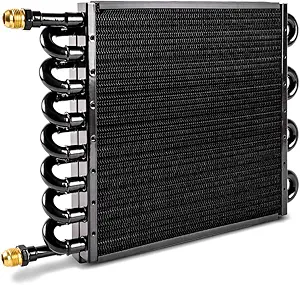 |
| Best Overall The best all-around choice for most situations | Hayden Automotive 678 Rapid‑Cool Universal Transmission Cooler Kit |  |
1. Hayden 679 Rapid-Cool Universal 11" Transmission Cooler Kit

| Model | 679 |
|---|---|
| Mounting Type | Bracket Mount |
| Connector Type | Through Hole |
| Contact Material | Copper |
The Hayden 679 is a small, universal transmission cooler kit intended as an add-on to a vehicle's existing cooling system to reduce transmission fluid temperatures during towing or heavy duty use. It uses a compact plate-and-fin core with patented internal turbulation to improve heat transfer while keeping pressure drop low. The kit ships with 19 mm hose barb fittings, pre-drilled mounting brackets and basic hose and clamps, so typical use is mounting the cooler in front of the radiator or A/C condenser and routing transmission lines through the barb fittings. In practice the cooler consistently drops trans temps by a noticeable margin on trucks and SUVs, and users report multi-year durability when mounted securely. Expect some installation work on a Pilot: the universal design may require trimming hoses, relocating brackets, and careful routing to avoid airflow blockage or overcooling in cold climates. There is no vehicle-specific plug-and-play piping, so installation time and minor fabrication are the main trade-offs for the lower cost and reliable cooling performance.
Best for: A reliability-focused buyer who wants an affordable, effective way to lower transmission temperatures on a Honda Pilot when towing or doing heavy-duty driving and is willing to spend time on a careful DIY installation.
Less Ideal for: Drivers who need a factory-style, direct-fit cooler with no modification or those who prefer professional plug-and-play upgrades with vehicle-specific plumbing.
- Compact plate-and-fin core increases cooling capacity without a large footprint
- Patented internal turbulation improves heat transfer while minimizing pressure drop
- Includes hose, 19 mm barb fittings and pre-drilled mounting brackets for a complete add-on kit
- Proven long-term performance in user reports when mounted securely
- Universal design requires modifications and time for fitment to the Honda Pilot rather than direct bolt-on installation
- No vehicle-specific lines or quick-connect fittings included, so some fabrication and hose trimming are typically necessary
Verdict A compact, proven universal add-on cooler that reliably reduces transmission temperatures for a Honda Pilot if you are comfortable with moderate DIY fitting and minor modifications.
2. TRQ Radiator Assembly with Aluminum Core and Built-In Transmission Oil Cooler

| Fitment | 2006–2008 Honda Pilot V6 3.5L Automatic Transmission |
|---|---|
| Core Rows | 1 |
| Core Material | Aluminum |
| Transmission Oil Cooler | Concentric, included |
This TRQ radiator is a direct-fit replacement for the 2006–2008 Honda Pilot V6 and combines a one-row aluminum core with a concentric transmission oil cooler to restore engine cooling and protect the transmission. It is typically used as a complete swap for a failed or leaking factory radiator and arrives pre-assembled to reduce install time. The aluminum core and single-row design keep cooling straightforward while the built-in transmission cooler eliminates the need for a separate external cooler for many owners. Practical benefits include factory-style mounting, integrated transmission fittings, and manufacturer video guides that simplify a DIY swap. Limitations to note are the one-row core which is closer to stock cooling capacity rather than an upgraded performance cooler, and some owners report transmission line fitting differences that may require swapping factory fittings or adapter work. Expect a like-for-like replacement that prioritizes convenience over high-capacity cooling upgrades.
Best for: Convenience-driven buyers who want a straight replacement that bolts in with minimal fuss and avoids separate transmission cooler plumbing, ideal for routine repairs and DIY replacement projects.
Less Ideal for: Drivers who need increased cooling capacity for towing, performance builds, or severe-duty use should consider a larger multi-row radiator or a dedicated high-capacity transmission cooler instead.
- Direct-fit pre-assembled unit simplifies replacement and reduces modification during install
- Aluminum single-row core provides reliable, factory-equivalent cooling for stock driving conditions
- Integrated concentric transmission oil cooler removes the need to add a separate cooler in most cases
- Machined exterior and OEM-style mounting points make alignment and bolting straightforward
- Single-row core is not a high-capacity upgrade for heavy towing or severe-duty cooling needs
- Some users report transmission line fittings that differ from factory lines requiring fitting swaps or adapters
Verdict A convenient, factory-style replacement radiator with an integrated transmission cooler that restores stock performance but is not intended as a high-capacity upgrade.
3. Mishimoto 13-Row Stacked-Plate Universal Transmission Cooler (13-Row)

| Core | 13-row stacked-plate |
|---|---|
| Hose length | 50" SAE J1532 |
| Material | Aluminum core with powder-coat finish |
| GVW rating | Rated for up to 40,000 GVW |
The Mishimoto 13-row stacked-plate transmission cooler is a high-capacity auxiliary cooler intended to reduce transmission fluid temperatures in demanding driving like towing, steep grades, or extended highway pulls. It installs ahead of the vehicle with the supplied universal brackets and includes a 50-inch SAE J1532 hose, O-ring sealed adapters, stainless-steel clamps, and hose protection sleeve so you have a complete kit for a straightforward aftermarket fit. The stacked-plate core and aluminum construction deliver strong, corrosion-resistant heat rejection and are rated for up to 40,000 GVW, so the unit keeps temps down even under sustained loads. Practical benefits for a performance-oriented buyer include significantly lower fluid temps, reduced thermal wear, and more consistent shift feel during heavy duty use. The cooler can overcool lighter applications and CVTs if left unchecked, and its size may require careful placement on some vehicles to avoid fitment interference. Installation may also require extra transmission fluid to refill the system after plumbing in the auxiliary loop.
Best for: Performance-oriented owners who prioritize the lowest possible transmission temperatures for towing, heavy loads, or spirited driving and want a high-quality, ready-to-install upgrade.
Less Ideal for: Owners seeking a mild or factory-like temperature reduction for daily commuting or CVT-equipped Pilots who prefer a more moderate cooling solution should consider smaller or thermostatic options instead.
- High-efficiency 13-row stacked-plate core for strong heat rejection
- Complete installation kit including SAE J1532 hose, clamps, adapters, and mounting hardware
- Corrosion-resistant aluminum construction with protective finish for long life
- Rated capacity suitable for heavy towing and sustained high-load driving
- Universal design may be physically large and require creative mounting in some engine bays
- Very aggressive cooling can drop fluid temperatures below the optimal range for some transmission types
Verdict If you want top-tier, heavy-duty cooling for a Honda Pilot used for towing or high-load driving, this Mishimoto 13-row cooler delivers exceptional temperature control, but it may be overkill for lighter daily driving.
4. Dueilgo 8-Pass 5/16" Transmission Oil Cooler Kit

| Size | 8 Pass |
|---|---|
| Material | Aluminum |
| Thread Size | 5/16 |
| Connector Type | Adapter |
This kit supplies an 8-pass aluminum tube-and-fin cooler, 5/16" hose, and a set of mounting clips, rods, foam pads and clamps so you can add auxiliary cooling to a Honda Pilot's transmission lines. The cooler’s tube-and-fin layout increases turbulence and surface area to shed heat as fluid passes through, and the aluminum construction is light and corrosion-resistant for under-hood use. The included hose and adapter make it possible to plumb the unit inline with factory transmission lines without sourcing extra fittings. Buyers should expect a mostly DIY install that requires measuring, mounting to the core support or in front of the radiator, and trimming or routing the supplied hose for fitment on a Pilot. Some owners report the cooler performs well at lowering transmission temps while towing or carrying heavy loads, but a few noted the supplied hoses and clamps are not high-end and may be worth replacing for long-term durability. This is a pragmatic, cost-conscious way to add transmission cooling to a Honda Pilot, provided you verify hose length and use quality clamps on installation.
Best for: Budget-conscious Honda Pilot owners who want an economical retrofit to reduce transmission temps during towing or heavy use and are comfortable doing a moderate DIY install.
Less Ideal for: Drivers seeking a plug-and-play, vehicle-specific cooler or those unwilling to replace basic supplied hardware should consider higher-end, vehicle-tailored options or professional installation.
- 8-pass tube-and-fin design for improved fluid-to-air heat transfer
- Aluminum construction offers lightweight, corrosion-resistant core
- Includes hose, adapter and basic mounting hardware for a mostly complete install
- Works to lower transmission temperatures under load or while towing
- Supplied hoses and clamps are basic and may need upgrading for long-term reliability
- Mounting and hose routing often require moderate DIY skill and some trimming or additional fittings
Verdict A cost-effective 8-pass aluminum cooler that lowers transmission temperatures on a Honda Pilot but expect to replace the basic hoses and clamps for long-term durability.
5. EVIL ENERGY 5/16" Transmission Oil Cooler Kit, 6-Pass Tube-and-Fin

| Cooler type | 6-pass tube-and-fin |
|---|---|
| Hose inner diameter | 5/16" ID |
| Hose material | CPE |
| Working pressure | 145 PSI |
| Bursting pressure | 900 PSI |
This EVIL ENERGY transmission oil cooler is a small 6-pass tube-and-fin kit meant to reduce transmission fluid temperatures by adding an auxiliary heat exchanger ahead of the radiator or in any location with good airflow. It comes with a preassembled aluminum cooler, CPE hose rated for high pressure, basic brass adapters, mounting clips, and installation instructions so a competent DIYer can route and secure the unit in the front of the vehicle. In practice the cooler lowers ATF temps noticeably for light towing and stop-and-go driving, and several users report 20–35°F reductions when placed where airflow is good. The kit’s compact size makes it easy to fit into tight openings on the Pilot, but the universal fittings are not a perfect match for every factory line and some buyers needed to flare or modify connections or upgrade clamps to prevent leaks. The included mounting clips and adapters are serviceable but fabricating proper brackets and using higher-quality clamps improves long-term reliability. For routine towing or to reduce heat-related shift problems the cooler is an affordable, effective option if you are willing to do minor fitting work.
Best for: Risk-averse mainstream buyers who prioritize preventing overheating and preserving transmission life on daily-driven Honda Pilot models and prefer a straightforward, low-cost aftermarket safety upgrade.
Less Ideal for: Drivers planning heavy towing, aggressive performance use, or those unwilling to make small fittings modifications should consider a larger, vehicle-specific cooler or professional installation instead.
- Complete kit with cooler, hose, fittings, and basic mounting hardware for straightforward installation.
- Aluminum tube-and-fin core provides measurable ATF temperature drop when mounted in a high-airflow location.
- Hose rated for high working and bursting pressure suitable for transmission service conditions.
- Compact footprint fits into tight front-end spaces like behind the grille or in front of the radiator.
- Many users report solid build quality of the cooler body and longevity under daily driving.
- Universal brass adapters may not seal to factory lines without flaring or modification.
- Provided clamps and mounting clips are basic and often replaced for long-term reliability.
- Three-pass size may be small for heavy towing or high-capacity applications on larger Pilots.
Verdict An affordable, compact auxiliary cooler that reliably lowers transmission fluid temperatures on Honda Pilot daily drivers but may require minor fitting work and upgraded clamps for the best long-term seal.
6. BARTOO 1/2" Transmission Oil Cooler Kit, 16-Pass Tube-and-Fin

| Material | T-6061 aluminum alloy |
|---|---|
| Passes | 16 pass tube-and-fin |
| Working pressure | 145 psi |
| Burst pressure | 900 psi |
This BARTOO transmission oil cooler is a compact, universal-style tube-and-fin unit that reduces automatic transmission fluid temperatures by routing fluid through 16 passes of T-6061 aluminum tubing and fins. It is typically mounted where airflow is available, such as in front of the radiator or behind the grille, and connects to 1/2" ID transmission cooler lines. The aluminum construction and high working and burst pressure ratings mean it handles normal operating demands and DIY installations with basic fittings. Buyers will appreciate the small footprint for tight engine bays and the straightforward install that does not require vehicle-specific brackets. Limits to consider are the universal fit approach which may need custom mounting or adapters for a clean Honda Pilot install, and that some customers report fitting and fitting-tightening sensitivity around the hose/fitting interfaces. For someone optimizing cost versus capability, this cooler delivers measurable cooling in everyday towing and heavy-load scenarios but may require extra parts or fabrication for a factory-quality, permanent installation on a Honda Pilot.
Best for: Practical optimizers who want a low-cost upgrade to lower transmission temperatures during towing or heavy load driving on a Honda Pilot and who are comfortable fabricating or adapting mounts and fittings.
Less Ideal for: Drivers seeking a bolt-in, factory-quality replacement without any modification or those who prefer professional-fitment-only upgrades.
- 16-pass tube-and-fin design gives significant surface area for ATF heat dissipation
- T-6061 aluminum construction rated for high working and burst pressures
- Compact footprint fits tight engine bays and can be mounted in front of the radiator
- Easy, user-friendly installation for DIYers with commonly available fittings
- Universal mounting requires custom brackets or adapters for a clean Honda Pilot fit
- Some users report fragile fittings or chipping when overtightening connections
Verdict A budget-friendly aluminum 16-pass cooler that delivers real temperature reduction for a Honda Pilot but often needs custom mounting and careful fitting selection for a durable install.
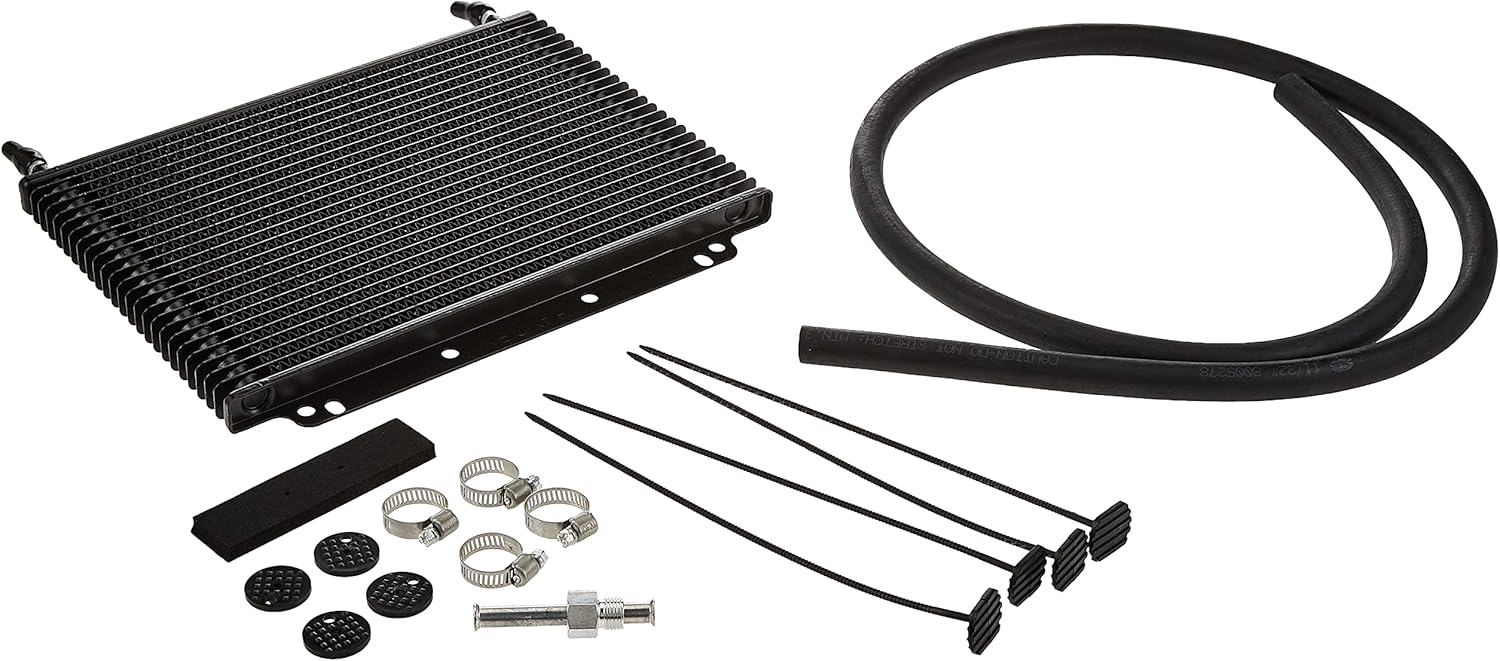
7. Hayden Automotive 678 Rapid‑Cool Universal Transmission Cooler Kit
| Connector Type | Hose Barb |
|---|---|
| Contact Material | Aluminum |
| Mounting Type | Surface Mount |
| Operation Mode | Automatic |
The Hayden 678 Rapid‑Cool is a universal add-on transmission cooler kit designed to lower transmission fluid temperatures by routing fluid through a compact plate-and-fin heat exchanger. It is typically installed in front of the radiator or behind the grille using the included surface-mount brackets and hose barb fittings. Notable features include a patented internal flow path that boosts heat transfer while keeping pressure drop low and 19 mm hose barb fittings for secure hose attachment. In real-world use on a family SUV like the Honda Pilot it provides a straightforward way to protect the transmission when towing or during heavy city driving by trimming operating temperatures by roughly 20 to 40 degrees in user reports. The kit ships with hose and basic mounting hardware, so many owners can complete the job with common hand tools, though some will fabricate brackets or replace the supplied hose and fittings for a cleaner, longer-lasting installation. The cooler is not a direct factory replacement and requires space and basic routing decisions, so plan for installation time and possible small upgrades to hose or fittings.
Best for: Balanced, practical buyers who want a reliable, cost-effective aftermarket cooler to lower transmission temps on a Honda Pilot for occasional towing and daily driving and who are comfortable doing a moderate DIY install or paying a shop for fitment.
Less Ideal for: Owners who need a vehicle-specific factory-style replacement or those who tow heavy loads frequently and require maximum cooling capacity should consider a larger, vehicle-specific solution.
- Plate-and-fin core with patented flow path increases heat transfer while minimizing pressure drop
- Includes hose and basic mounting hardware for a mostly self-contained install
- Compact size fits behind the grille or in front of the radiator where space is limited
- 19 mm hose barb fittings provide a secure connection to transmission lines
- Not a direct factory replacement so requires custom mounting and hose routing
- Supplied hose and fittings may be lower grade than aftermarket options and some owners replace them
- Smaller cooler may be marginal for heavy continuous towing without additional capacity
Verdict A compact, well-built universal cooler that reliably lowers transmission temperatures on a Honda Pilot but requires custom mounting and occasional hardware upgrades.
Choosing the Right Honda Pilot Transmission Cooler: Key Factors to Consider
Cooling Capacity
Cooling capacity determines how much heat a transmission cooler can remove from the fluid, which directly affects transmission operating temperature and component life. Look for coolers with larger surface area, more fins per inch, and multi-pass designs when available to boost heat rejection.
Capacity matters more for towing, hauling, or sustained uphill driving because those conditions generate more heat. For light-duty city driving, a modest cooler may suffice, but if you expect heavy use choose a cooler rated for higher BTU or with proven performance specs to keep temperatures in a safer operating range.
Fitment And Mounting
A cooler must physically fit in the Honda Pilot’s front-end space without interfering with airflow to the radiator or AC condenser. Consider the cooler’s dimensions, mounting hardware, and whether it mounts to the core support, bumper area, or behind the grille.
Ease of access for future inspections and protection from road debris are also important. Some installations require relocating trim or using a specific bracket; others use universal mounting kits. Plan for clearance around the cooler and ensure the mounting approach keeps the unit secure under vibration and road conditions.
Connection Type And Hose Compatibility
Transmission coolers connect to the transmission via cooler lines or hoses, so compatibility with the Pilot’s line fittings or the availability of adapter fittings matters. Some kits come with preformed transmission cooler lines or universal fittings, while others rely on hose clamps and standard hose sizes.
Choosing the right connection type helps prevent leaks and makes installation smoother. Verify whether the cooler requires crimped fittings, barbed hose connections, or threaded adapters, and confirm the hose diameter matches the vehicle’s transmission outlets to avoid unnecessary modifications.
Material And Corrosion Resistance
Material selection affects durability and thermal transfer. Aluminum cores are common because they balance weight and heat conduction, while copper/brass cores offer different heat characteristics. Corrosion-resistant coatings and welded end tanks can extend service life in wet or salty environments.
If you drive in coastal areas or use road treatments in winter, prioritize coolers with protective coatings and robust tank construction. Poor materials can lead to leaks or reduced performance over time, so durability should be weighed alongside thermal specs.
Installation Complexity
Installation complexity ranges from simple inline attachment using existing cooler lines to full kits that require routing new hoses, mounting brackets, and sometimes bleeding procedures. A transmission cooler kit that includes hoses, clamps, and fittings can significantly reduce install time and the chance of mistakes.
Consider your mechanical skill and available tools. If you plan to DIY, look for options with clear instructions and all necessary hardware. Professional installation may be preferable for complex installs or when access to transmission lines is difficult.
Placement And Airflow
Where you place the cooler determines how much ambient air it receives, which greatly influences cooling performance. Front-of-vehicle placements that receive direct airflow provide the best results, while tucked or shielded locations reduce effectiveness.
Also consider potential airflow changes caused by added components or grille guards. Ensure the chosen location balances protection from debris with exposure to cooling air to maintain optimal heat rejection under operating loads.
FAQ
Do I need a transmission cooler for my Honda Pilot?
It often depends on how you use the vehicle. If you tow frequently, carry heavy loads, or experience long periods of uphill or stop-and-go driving, an additional cooler usually helps reduce transmission temperature and wear. For light, everyday commuting without towing, the stock cooling system may be adequate.
Can I install a transmission cooler myself?
Many installations are doable for a competent DIYer and some coolers come as a kit with hoses and fittings to simplify the process. However, complexity varies by mounting location and the need to route lines. If you are unsure about line connections or flare fittings, a professional install can ensure a leak-free job.
Where should an external transmission cooler be mounted?
External coolers perform best when mounted where they receive steady airflow, typically in front of the radiator or behind the grille. Avoid locations that block existing radiator airflow or that expose the cooler to excessive road debris. Secure mounting and adequate clearance are important to prevent vibration-related damage.
How will I know if my transmission cooler or lines are failing?
Common signs include visible fluid leaks under the vehicle, a drop in transmission fluid level, or transmission overheating during heavy use. You might also notice slipping, delayed engagement, or unusual odors when fluid runs hot. Inspect lines and fittings periodically for corrosion or cracks to catch issues early.
Does a bigger cooler always mean better performance?
Bigger generally improves heat rejection but only if it fits and gets good airflow. Oversized units that block radiator airflow can cause other cooling problems, and excessively bulky coolers may be difficult to mount securely. Balance size with fitment and airflow considerations for the best real-world results.
Will adding a cooler change fluid change intervals?
An effective cooler can help stabilize operating temperatures, which may reduce thermal stress on fluid and components. That said, maintenance intervals usually depend on manufacturer recommendations and driving conditions. Consider cooler performance as one factor when planning fluid service, but follow the vehicle’s service guidance for schedule decisions.
How We Chose the Best Honda Pilot Transmission Cooler
We evaluated models that are appropriate for the thermal demands and engine bay layout of the Honda Pilot, focusing on factors that influence long-term transmission health. Key criteria included cooling capacity under load, measured by surface area and fin density; physical fit and mounting options compatible with the Pilot’s front-end space; construction materials and corrosion resistance to ensure durability; compatibility with stock transmission lines and available hose fittings; and the overall ease of installation, including whether a dedicated transmission cooler kit or simpler external cooler setup is required. We excluded units that require extensive vehicle modification or that lack clear fitment information for similar-sized SUVs. We also filtered out coolers with minimal thermal surface area or suspect materials that typically underperform. The final list emphasizes practical balance between heat rejection, straightforward install paths, and durable construction suited to frequent towing and heavy urban driving.
Our full evaluation process is outlined in our review methodology.
Conclusion
Selecting the right Honda Pilot transmission cooler means balancing cooling capacity, ease of installation, and durable construction. Prioritize units that provide adequate heat rejection for your towing and driving habits, fit the Pilot’s front-end space, and use compatible hose or line connections. Remember that placement and airflow are as important as raw size. Factor in corrosion resistance and mounting security for long-term reliability, and choose an installation path that matches your comfort level or a trusted installer’s capabilities.
Explore More:
- Check out all Honda Pilot parts & accessories
- Explore Transmission & Drivetrain
- Browse all Auto Parts
