

Note: This article contains affiliate links. If you click on these links and make a purchase, I may earn a small commission at no extra cost to you. This helps support my research and content. Read my full affiliate disclosure here.
Repair Snapshot
Use a mechanic if your vehicle requires a bidirectional scan tool to cycle the ABS pump and valves, or if the brake pedal still feels soft after a full bleed. A pro is also safer if you are not fully confident working on a critical brake system.
This article is part of our Brake System Maintenance & Repair Guides.
Bleeding an ABS hydraulic unit is different from a basic brake bleed because air can get trapped inside the ABS modulator, pump, or valve body where normal pedal bleeding may not remove it.
If you recently replaced an ABS hydraulic control unit, master cylinder, caliper, brake hose, or let the reservoir run dry, you may have introduced air deep into the system. On many vehicles, that air can only be pushed out properly by using a scan tool that runs the ABS pump and opens the internal solenoids during a special bleed procedure.
Before you start, check the factory service information for your exact year, make, model, and brake system. Some vehicles can be bled with a standard sequence plus a road-test activation step, while others specifically require a bidirectional scan tool. Because brake failure can cause a crash, do not guess if the procedure is unclear.
When an ABS Hydraulic Unit Needs Bleeding
An ABS hydraulic unit usually needs extra bleeding any time air may have entered the modulator assembly instead of staying only in the lines at the wheels. A normal four-wheel bleed can remove air from calipers and wheel cylinders, but trapped air inside the ABS unit often causes a low, spongy, or inconsistent pedal even after fluid runs clear.
- The brake fluid reservoir ran empty during a repair.
- The ABS hydraulic control unit, pump, or modulator was replaced.
- A master cylinder was replaced and the system was not fully bench-bled or primed.
- Major brake line, hose, or caliper work introduced a lot of air into the system.
- The brake pedal stays soft after a proper conventional bleed.
If your only repair was a single caliper or brake hose and the reservoir never ran dry, you may not need to cycle the ABS unit. But if the pedal still feels wrong after a standard bleed, assume air may be trapped in the ABS hydraulic assembly until proven otherwise.
Before You Begin
Confirm the Correct Fluid and Procedure
Use only the brake fluid specified on the reservoir cap or in the owner’s manual. Most U.S. vehicles use DOT 3 or DOT 4, and some use DOT 5.1. Do not mix in silicone DOT 5 unless the system specifically calls for it, which is rare on modern ABS-equipped passenger vehicles.
Also confirm the wheel bleeding order. Many vehicles still use the sequence starting with the wheel farthest from the master cylinder, but some diagonal-split or electronically controlled brake systems use a different order. Following the wrong order can waste time and may leave air in the system.
Work Safely
- Park on level ground and chock the wheels.
- Lift the vehicle securely and support it on jack stands, never on a jack alone.
- Wear gloves and safety glasses because brake fluid damages paint and irritates skin.
- Keep the reservoir cap area clean so dirt does not enter the system.
- Do not reuse old brake fluid collected from bleeders.
If a bleeder screw is badly rusted, stop and soak it with penetrating oil before forcing it. Snapping off a bleeder can turn a routine service job into a caliper or wheel cylinder replacement.
How to Tell Whether You Need a Scan Tool
This is the most important decision in the entire job. Many ABS units contain normally closed valves and internal passages that a manual or pressure bleed cannot fully access unless the control module commands the pump and solenoids on. That command usually requires a bidirectional scan tool with an ABS automated bleed or service bleed function.
- If the service manual says to perform an automated ABS bleed, you need the scan tool.
- If the ABS module or hydraulic unit was replaced, a scan tool is commonly required.
- If the pedal is still soft after conventional bleeding and no external leaks are present, scan-tool cycling is often the next step.
- If your vehicle has electro-hydraulic braking or advanced stability systems, do not attempt a workaround.
A few older systems can sometimes be improved by conventional bleeding followed by carefully activating ABS on a loose or wet surface, then bleeding again. That is not the preferred method for most newer vehicles, and it should only be considered if factory information specifically allows it. Randomly triggering ABS on the road is not a substitute for the correct service procedure.
Bench-bleed or Prime the Master Cylinder First if Needed
If you replaced the master cylinder, deal with that before focusing on the ABS unit. Air trapped in the master cylinder will mimic ABS air and can make the whole system impossible to bleed correctly.
- Secure the new master cylinder level in a vise with soft jaws, or follow the vehicle-specific in-car priming method if specified.
- Install bench-bleed tubes from the outlet ports back into the reservoir.
- Fill the reservoir with fresh brake fluid.
- Slowly stroke the piston with a screwdriver or dowel until no more bubbles appear in the return tubes.
- Install the master cylinder and keep the outlets from draining during installation if possible.
Never push the piston quickly. Fast strokes can aerate the fluid and create tiny bubbles that take much longer to clear.
Tools That Make This Job Easier


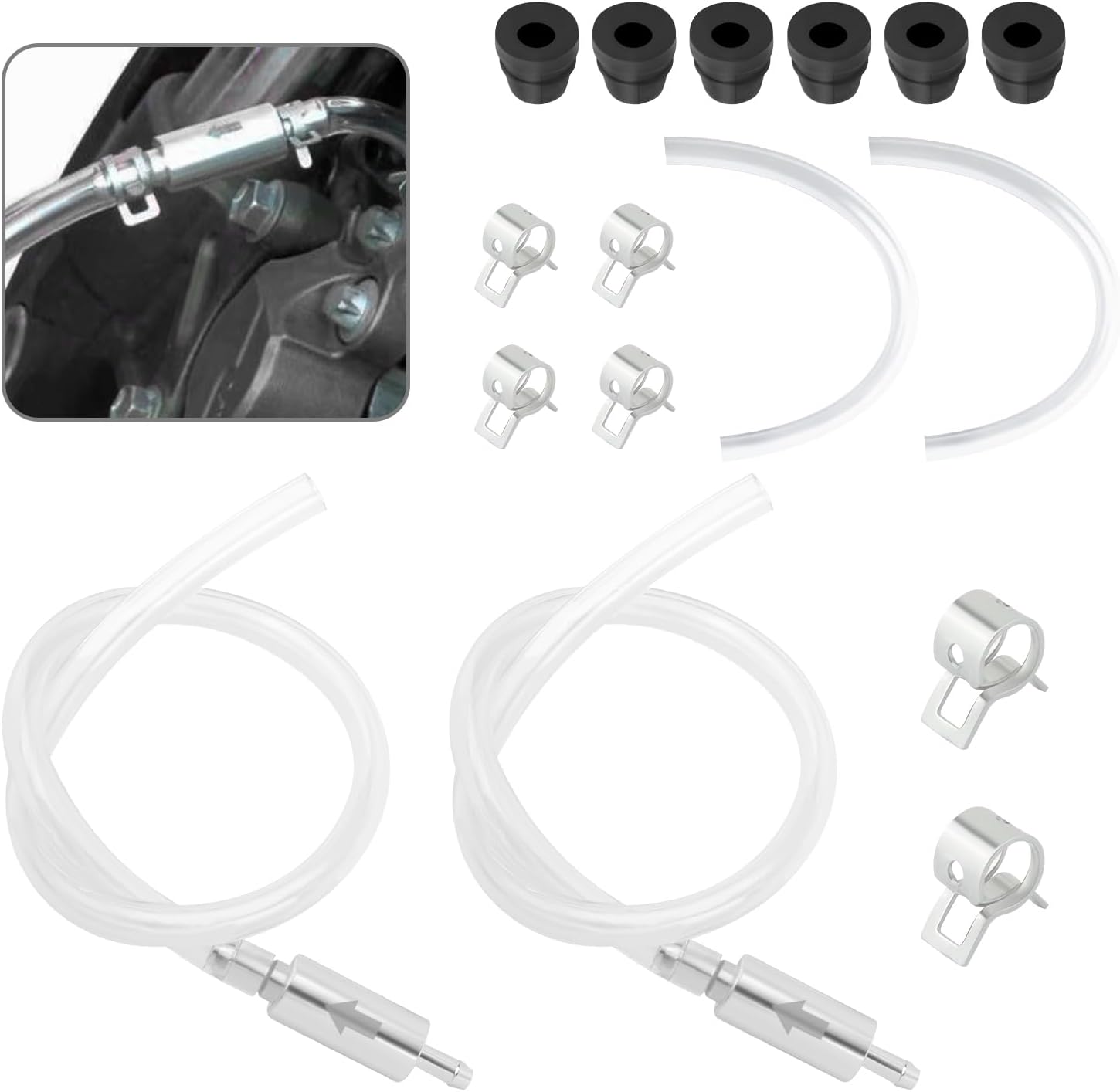
Standard Bleeding Setup
Even if the ABS unit eventually needs a scan tool cycle, you still begin by doing a normal system bleed. That removes most of the air in the lines and calipers first so the automated bleed can finish the job.
Prepare the Reservoir and Wheels
- Clean the master cylinder cap and reservoir area.
- Remove as much old fluid from the reservoir as practical without exposing the ports.
- Refill with fresh, correct-spec fluid.
- Remove the wheels if needed for easier bleeder access.
- Place a clear hose on the first bleeder screw and route the other end into a catch bottle.
Choose Your Bleed Method
A pressure bleeder is usually the cleanest and most consistent option because it keeps fluid moving and reduces the chance of master cylinder overtravel. A helper-assisted pedal bleed also works on many systems, but the helper must follow instructions carefully. Vacuum bleeders can work, though they sometimes pull air around the bleeder threads and make bubble diagnosis harder.
If using the pedal method on an older master cylinder, avoid slamming the pedal to the floor. On a worn unit, forcing the piston into rarely used bore areas can damage internal seals.
How to Bleed the Brake System Before Cycling the ABS Unit
Helper-assisted Pedal Method
- Start at the wheel specified by the service manual.
- Have your helper slowly press and hold the brake pedal.
- Open the bleeder about a quarter turn and let fluid and air escape.
- Close the bleeder before the helper releases the pedal.
- Repeat until no bubbles appear, then move to the next wheel.
- Check and refill the reservoir constantly so it never runs low.
Pressure Bleeder Method
- Fill and pressurize the bleeder according to the tool instructions, usually around 10 to 20 psi.
- Open the first bleeder screw and let fluid run until bubble-free.
- Close the screw and move to the next wheel in sequence.
- Monitor fluid level in the pressure bleeder and reservoir adapter setup.
- Relieve tool pressure before disconnecting.
At the end of this stage, the pedal may improve but still feel slightly soft if air remains trapped in the ABS hydraulic assembly. That is normal on systems that require a scan-tool bleed.
How to Bleed the ABS Hydraulic Unit with a Scan Tool
This step varies by manufacturer, but the overall process is similar. You connect a compatible bidirectional scan tool, select the ABS module, and run the automated bleed function. The scan tool commands the pump motor and opens selected valves so fluid can move through passages that are otherwise isolated.
- Connect a battery charger or maintainer if the procedure calls for it, because low voltage can interrupt the ABS service function.
- Top off the brake fluid reservoir with fresh fluid.
- Turn the ignition on as instructed by the scan tool.
- Select the ABS automated bleed, service bleed, or motor/valve bleed function for your vehicle.
- Follow the on-screen prompts exactly, which may tell you when to open specific bleeders or press the brake pedal.
- Listen for the ABS pump cycling and valves clicking while the routine runs.
- When prompted, perform another conventional bleed at the specified wheels.
- Repeat the automated routine if the tool or service information instructs you to do so.
Do not improvise during an automated bleed. Some procedures require the engine off, others require key-on-engine-off, and some specify a strict wheel order before and after the ABS cycling routine. Skipping those details can leave air in the system.
If You Do Not Have a Scan Tool
If the factory procedure requires an automated ABS bleed and you do not have the proper scan tool, the best DIY choice is often to stop after the conventional bleed and arrange access to the right equipment. Many independent shops can perform only the ABS cycling portion for less than a full repair bill.
Do not keep driving a vehicle with a low or spongy pedal hoping it will improve on its own. Air in the hydraulic system reduces brake performance and can become dangerous in a panic stop.
- You can finish the basic line bleed first to remove obvious air.
- You can verify there are no leaks at bleeders, hoses, calipers, and line fittings.
- You should not assume a firm pedal will return without ABS cycling if the service information says otherwise.
Recommended Tools for This Job


Final Checks After Bleeding
Once bleeding is complete, the brake pedal should feel firm with the engine off and remain reasonably stable when held. With the engine running, some slight drop is normal due to brake booster assist, but the pedal should not sink steadily to the floor.
- Inspect every bleeder screw, brake hose, caliper, and line fitting for leaks.
- Make sure all bleeders are snug and have caps installed.
- Set the brake fluid level to the proper mark and reinstall the cap.
- Clean any spilled fluid from painted surfaces immediately.
- Reinstall wheels and torque lug nuts to spec.
- Test the brake pedal before moving the vehicle.
- Perform a slow-speed brake test in a safe area before normal driving.
If the ABS or brake warning light remains on, scan for trouble codes before assuming the bleed is complete. Some vehicles may set low-pressure or pump-related codes if the procedure was interrupted.
Common Problems and What They Mean
Pedal Still Feels Spongy
The most common causes are trapped air in the ABS unit, the wrong wheel sequence, a master cylinder that was not bench-bled, or a bleeder procedure that let the reservoir run low again.
No Fluid Comes Out of a Bleeder
The bleeder may be clogged, the hose may be blocked, or the passage in the caliper or wheel cylinder may be restricted. Remove the bleeder completely and inspect it. If the bleeder passage is packed with rust, replacement may be smarter than forcing the issue.
Pedal Is Firm with Engine Off but Low with Engine Running
A small change is normal when the booster adds assist, but an excessively low pedal can still mean air remains in the system. It can also point to rear brake adjustment issues on drum-brake vehicles or an internal master cylinder problem.
ABS Light Turns on After the Job
Check for low fluid level, disconnected wheel speed sensor wiring disturbed during the repair, or ABS codes related to an incomplete automated bleed. A scan tool is the fastest way to verify what the module is unhappy about.
Mistakes to Avoid
- Do not let the reservoir run dry at any point.
- Do not use the wrong brake fluid type or old fluid from an open container that has absorbed moisture.
- Do not pump the brake pedal wildly; use slow, controlled strokes.
- Do not over-tighten bleeder screws and crack a caliper or wheel cylinder.
- Do not assume clear fluid means all air is gone.
- Do not road-test a vehicle with a questionable pedal feel.
Many difficult brake bleeding jobs come down to patience and procedure, not force. Slow fluid movement, correct sequencing, and the right tool for the ABS unit matter more than brute effort.
When to Stop and Call a Mechanic
There is no shame in handing off an ABS bleed. This is one of the brake jobs where professional equipment can save a lot of frustration and improve safety.
- The service information requires a factory-level or compatible bidirectional scan tool you do not have.
- The pedal remains soft after a full conventional bleed and automated ABS bleed attempt.
- You suspect an internal master cylinder failure or hydraulic leak.
- A bleeder screw is seized, broken, or leaking.
- ABS, brake, or stability-control warning lights remain on after bleeding.
Key Takeaways
- Always check whether your exact ABS system requires a bidirectional scan tool before starting the bleed.
- Conventional bleeding should be done first, but trapped air inside the ABS unit often needs an automated bleed routine to fully remove.
- Never let the master cylinder reservoir run low, or you may introduce new air and restart the job.
- A brake pedal that stays soft after proper bleeding is a safety issue, not something to ignore or drive around.
- If the procedure is unclear or the pedal feel is still questionable, have the vehicle professionally bled and inspected.
FAQ
Can I Bleed an ABS Hydraulic Unit Without a Scan Tool?
Sometimes, but only if your vehicle’s service procedure allows it. Many modern ABS systems require a bidirectional scan tool to cycle the pump and internal valves. If the factory information calls for an automated ABS bleed, a normal pedal or pressure bleed alone may not remove all trapped air.
What Does It Feel Like when Air Is Trapped in the ABS Module?
The brake pedal usually feels spongy, low, or inconsistent. You may get some improvement after standard bleeding, but the pedal still will not feel fully firm because air remains trapped inside the hydraulic control unit.
Do I Have to Remove All Four Wheels to Bleed the ABS System?
Not always, but removing the wheels often makes access easier and helps you see the bleeder screws clearly. The important part is being able to follow the correct wheel sequence and monitor each bleeder safely.
What Brake Fluid Should I Use when Bleeding the ABS Unit?
Use only the exact fluid type specified for your vehicle, usually DOT 3, DOT 4, or DOT 5.1. Do not guess or mix in silicone DOT 5 unless the vehicle specifically requires it.
Why Is My Brake Pedal Still Soft After Bleeding All Four Brakes?
Common reasons include air trapped in the ABS hydraulic unit, a master cylinder that was not properly bench-bled, the wrong wheel bleeding order, rear drum brakes that need adjustment, or a hydraulic leak. If your vehicle requires an ABS automated bleed, that is often the missing step.
Can I Damage the Master Cylinder by Pedal Bleeding?
Yes, especially on an older master cylinder. Pushing the pedal hard to the floor can move the piston into corroded parts of the bore and damage the internal seals. Slow, controlled strokes or a pressure bleeder are safer.
How Long Does It Take to Bleed an ABS Hydraulic Unit?
For a DIYer, expect about 1 to 3 hours depending on vehicle design, tool access, and whether a scan-tool automated bleed is required. A shop with the correct equipment can often complete it faster.
Is It Safe to Drive if the Brakes Feel Spongy After Bleeding?
No. A soft or sinking pedal means the hydraulic system may still contain air or have another fault. Do not drive normally until the pedal is firm, there are no leaks, and the system has been tested safely.
Need Parts for This Repair?
The right parts and supplies vary by vehicle.
Select your make and model to find compatible parts and accessories for your car.
Exact Fit
Parts that fit your make and model
Quality You Can Trust
Top brands and OEM quality options
Fast Shipping
Get the parts you need, delivered fast