

Note: This article contains affiliate links. If you click on these links and make a purchase, I may earn a small commission at no extra cost to you. This helps support my research and content. Read my full affiliate disclosure here.
Upgrading your Toyota Tundra with a cat-back exhaust system can improve exhaust flow, refine tone, and support modest performance gains. The right system affects daily drivability, fuel efficiency under load, and the character of the exhaust note you hear at idle and under acceleration. This guide presents six shortlisted cat-back exhaust systems chosen for their construction, fitment, and installation characteristics. We evaluated materials, tone options, and how straightforward each system is to install so you can pick a solution that fits your goals. Read on for the criteria that guided our selections and quick notes to help you decide.
Looking for other parts? See all Toyota Tundra parts & accessories.
Top Picks at a Glance
| Best Reviewed A top-rated pick with lots of positive feedback | Flowmaster Outlaw Cat-Back Exhaust System (817854) |  |
| Best Quality Built to a higher standard if you want something more solid | CORSA Cat-Back Exhaust System |  |
| Best Budget The cheapest option that still gets the job done reliably | MagnaFlow 17111 Stainless Steel Cat-Back Performance Exhaust System |  |
| Most Sold A high-volume bestseller chosen again and again | CORSA 24916 Cat-Back Exhaust System for Toyota Tundra |  |
| Best Value for Money The sweet spot between price and what you get | aFe Power MACH Force-Xp 3" Cat-Back Exhaust System |  |
| Best Overall The best all-around choice for most situations | MagnaFlow Street Series Cat-Back Exhaust System for 2014–2021 Toyota Tundra |  |
1. Flowmaster Outlaw Cat-Back Exhaust System (817854)

| Inlet Connection Size | 3 Inches |
|---|---|
| Tailpipe Diameter | 3.00 inch dual tailpipes |
| Tips | 4.00-inch double wall black ceramic coated stainless tips |
| Vehicle Service Type | Car, Truck |
The Flowmaster Outlaw cat-back is a bolt-on exhaust system built to deliver a loud, deep tone and modest performance gains. It replaces the factory back section with mandrel-bent 3.00-inch stainless tubing, a Super 10 Series stainless muffler, and large 4.00-inch double-wall black ceramic-coated tips; the design routes through factory hanger locations and includes hardware and instructions for home installation. In practice this produces a pronounced interior and exterior sound profile and Flowmaster claims up to roughly 10 hp and 13 lb-ft of torque gains under ideal conditions. The system offers selectable tailpipe exit orientations to avoid blowing exhaust onto trailers when towing. Important limitations are fitment restrictions and the high sound level that may be unsuitable for noise-sensitive situations; installation still requires basic mechanical skill and garage space. For drivers who prioritize a reliable, well-made aftermarket exhaust with a strong, attention-getting tone, this system performs as advertised.
Best for: A reliability-focused buyer who values factory-quality, straightforward bolt-on upgrades and wants a durable aftermarket exhaust that reliably increases sound and adds modest performance.
Less Ideal for: Drivers seeking a subtle or quiet upgrade, or those who need a system specifically confirmed for Toyota Tundra fitment, should look for alternatives designed and tested for their vehicle.
- Mandrel-bent stainless steel tubing for consistent flow and corrosion resistance
- Super 10 Series stainless muffler that delivers a deep, aggressive tone
- Uses factory hanger locations for a straightforward bolt-on installation
- Large 4.00-inch ceramic-coated double-wall tips for a durable finished look
- Designed for GM trucks with specific 5.3L configurations so fitment to other models is not guaranteed
- Very loud sound profile that may be excessive for daily driving in noise-controlled areas
Verdict A durable, loud cat-back that delivers big sound and modest gains but requires confirming fitment for the Toyota Tundra before buying.
2. CORSA Cat-Back Exhaust System

| Manufacturer | Corsa Performance |
|---|---|
| Brand | Corsa |
| Item model number | 14916BLK |
| Manufacturer Part Number | 14916BLK |
This CORSA cat-back system replaces the factory exhaust from the catalytic converter back to the tailpipe to increase flow and produce a stronger exhaust note under acceleration while minimizing cabin drone at cruise. It uses Corsa's patented Reflective Sound Cancellation (RSC) to tune sound without sacrificing performance gains, and the dual-walled, precision-engraved stainless steel tips give a factory-quality finish that resists heat distortion. Typical installation is clamp-on and bolt-on to existing hangers, so it is used as a direct replacement to improve throttle response and add a deeper tone during spirited driving. The system is built for durability and designed to preserve comfort on long drives, but its focus on an aggressive sound means it will be noticeably louder than stock when revved. Installation may require standard tools and a lift for access, and buyers seeking the quietest possible system should consider alternatives with more aggressive muffling.
Best for: Performance-oriented buyers who prioritize stronger throttle response and an aggressive, well-tuned exhaust sound for spirited driving and towing confidence.
Less Ideal for: Drivers who prioritize a near-silent daily commute or those unwilling to perform or pay for a professional underbody installation.
- Patented RSC technology reduces cabin drone while allowing an aggressive exhaust note under acceleration.
- Durable stainless steel construction and dual-walled tips resist heat distortion and wear.
- Designed as a direct cat-back replacement that typically bolts or clamps to factory hangers for straightforward installation.
- Will be louder than stock under acceleration and may not suit noise-sensitive drivers.
- Requires basic mechanical skill and access beneath the truck for proper installation.
Verdict A high-quality, performance-focused cat-back that sharpens exhaust tone and flow while controlling cruise drone for a more engaging Tundra driving experience.
3. MagnaFlow 17111 Stainless Steel Cat-Back Performance Exhaust System
| Compatible vehicle | Toyota Tundra (2009-2013 listed fitment in title) |
|---|---|
| Construction | Stainless steel |
| Muffler style | Straight-through |
| Tubing | Mandrel bent |
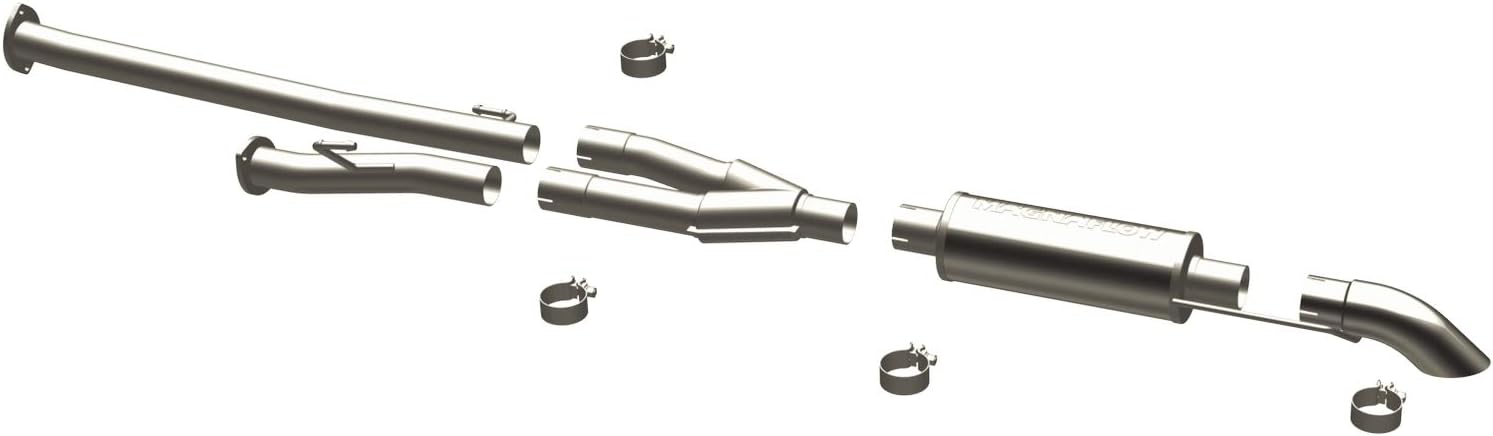
This MagnaFlow cat-back system replaces the factory rear exhaust on compatible Toyota Tundra models and is designed to improve exhaust flow and sound without major modification. It uses mandrel-bent tubing and straight-through mufflers in stainless steel for corrosion resistance and a freer-flowing path that can yield improved throttle response and modest fuel economy gains. Installation is typically a bolt-on job that many owners complete in under an hour, though some reported minor trimming and attention at flange connections during fitment. The system produces a deeper, more aggressive tone under acceleration while staying relatively tame at cruising speeds for many users, with occasional reports of drone at highway speeds. Practical benefits are increased performance feel, a durable stainless finish, and a straightforward install for DIYers. Limitations include variable fitment nuances that may require minor adjustments or replacement gaskets and the possibility of minor exhaust leaks if flange joints are not sealed properly.
Best for: Budget-conscious Tundra owners who want a durable, factory-style cat-back that improves sound and throttle response without complicated installation or premium cost.
Less Ideal for: Drivers seeking a completely silent system, a strictly stock sound, or a precision-fit show-quality exhaust should consider higher-end or vehicle-specific options instead.
- Stainless steel construction resists corrosion for longer service life.
- Mandrel-bent tubing and straight-through mufflers improve exhaust flow and throttle response.
- Relatively easy bolt-on installation for DIY mechanics.
- Produces a deeper, aggressive sound under load without being excessively loud at idle.
- Dyno-proven power claims indicate measurable performance gains on tested setups.
- Some buyers reported fitment adjustments and minor trimming required for perfect alignment.
- No replacement flange gaskets included, so additional hardware may be needed for a leak-free seal.
- A small number of users noted mild highway drone at higher speeds.
Verdict A cost-effective stainless steel cat-back that gives Tundra drivers a stronger sound and improved throttle response with mostly simple bolt-on installation, though expect occasional minor fitment tweaks.
4. CORSA 24916 Cat-Back Exhaust System for Toyota Tundra

| Brand | Corsa |
|---|---|
| Model | 24916 |
| Compatibility | Toyota Tundra |
| Technology | Reflective Sound Cancellation (RSC) |
The CORSA 24916 cat-back replaces the factory rear exhaust on Toyota Tundra trucks to improve airflow and give the truck a deeper, more aggressive tone while minimizing drone. It uses a straight-through, mandrel-bent design and Corsa's patented Reflective Sound Cancellation (RSC) to tune the sound so you get a sporty rumble without the steady highway vibration that many aftermarket systems introduce. Installation is straightforward and many owners report it fits the Tundra without modification and includes the required clamps and gaskets. In practical use the system stays relatively quiet at idle and comes alive above 2000 rpm, so it suits daily driving and spirited acceleration without being intrusive on long drives. Expected benefits are improved exhaust flow and a cleaner tone; the trade-offs are that it is not the loudest option at idle and the price and weight are higher than simple muffler swaps. Buyers should also allow a break-in period for the sound to fully develop.
Best for: A risk-averse mainstream buyer looking for a factory-quality exhaust upgrade for a Toyota Tundra that improves tone and flow without introducing intrusive highway drone.
Less Ideal for: Not ideal for drivers who want a constantly loud or heavily aggressive idle sound or those seeking the cheapest possible modification.
- Reflective Sound Cancellation reduces highway drone for more comfortable long drives.
- Mandrel-bent straight-through construction improves exhaust flow and performance potential.
- Designed to fit Toyota Tundra with included hardware for a mostly bolt-on installation.
- Produces a deep, aggressive tone that remains reasonably quiet at idle.
- Not the loudest system at idle for buyers wanting maximum low-rpm volume.
- Heavier and more expensive than simple muffler-only replacements.
Verdict A Tundra-focused cat-back that balances a deeper, drone-free exhaust tone and improved flow, aimed at drivers who want a refined but noticeable upgrade.
5. aFe Power MACH Force-Xp 3" Cat-Back Exhaust System
| Fits | Toyota Tundra 07-09 V8 5.7L (145.7" wheelbase) |
|---|---|
| Tube diameter | 3" |
| Materials | 409 stainless tubing with 304 stainless tip |
| Performance gains | +13 HP / +31 lb-ft torque (claimed) |
| Flow improvement | Outflows factory exhaust by 57% |
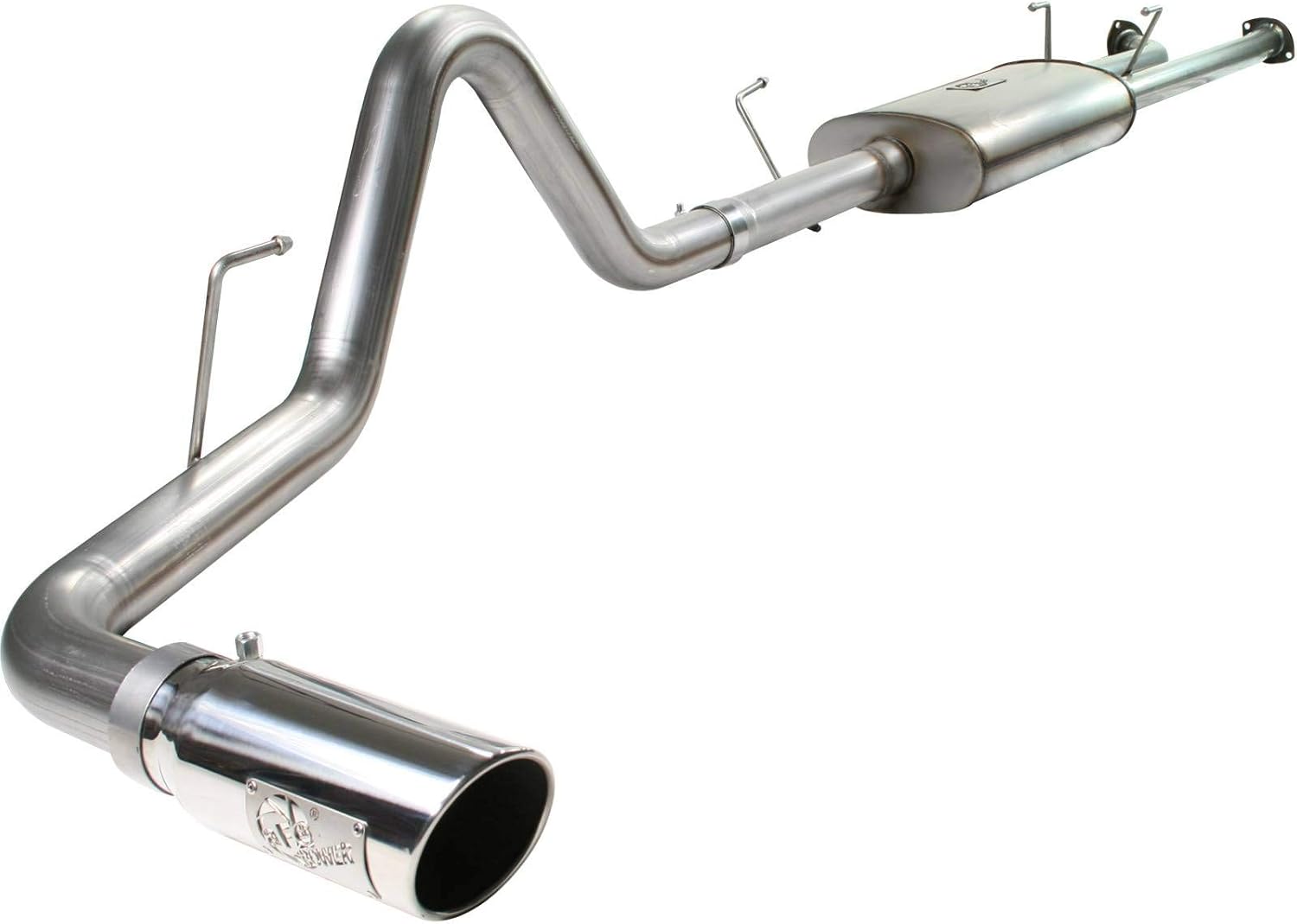
The aFe Power MACH Force-Xp cat-back replaces the factory rear exhaust on a Toyota Tundra (145.7" wheelbase) with a 3" mandrel-bent stainless system designed to improve flow and produce measurable gains. In testing its design increases exhaust outflow and aFe claims up to +13 hp and +31 lb-ft of torque; the straight-through muffler keeps high-pitched tones in check so the sound is only slightly louder than stock at cruise and livelier under throttle. Construction uses 3" 409 stainless tubing with a polished 304 stainless tip for corrosion resistance and a factory-style hanger layout for a bolt-in installation on compatible Tundra models. Typical installation is straightforward for a backyard mechanic but buyers should plan to source cat flange gaskets and some hardware because reviewers report those are not included and occasional minor hanger alignment tweaks may be required. The system favors durability and smooth flow over aggressive sound, making it a practical upgrade that adds drivability and a small economy benefit without becoming intrusive.
Best for: Buyers who want a practical, cost-effective exhaust upgrade for a Toyota Tundra that improves flow and drivability without adding intrusive noise, prioritizing sensible gains and long-term durability.
Less Ideal for: Drivers seeking a very loud, aggressive exhaust soundtrack or those who prefer a fully bolt-on kit that includes every gasket and fastener should consider other options.
- Mandrel-bent 3" tubing improves exhaust flow and supports the claimed horsepower and torque gains.
- Durable stainless construction (409 tubing, 304 polished tip) resists corrosion for long service life.
- Factory-style hangers and band clamps simplify installation and alignment on the specified Tundra wheelbase.
- Straight-through muffler design limits high-pitch resonance so highway driving remains quiet.
- Does not include cat flange gaskets or full fastener kit which reviewers had to purchase separately.
- Sound level is modestly louder than stock rather than aggressively sporty, so it may not satisfy those seeking a loud aftermarket tone.
Verdict A practical, durable cat-back for 2007–2009 Tundra owners who want sensible power and efficiency gains with a mild, refined exhaust note.
6. MagnaFlow Street Series Cat-Back Exhaust System for 2014–2021 Toyota Tundra
| Vehicle fit | 2014–2021 Toyota Tundra |
|---|---|
| Main piping diameter | 2.5" |
| Exit style | Dual same side behind passenger rear tire |
| Tip diameter | 3.5" |
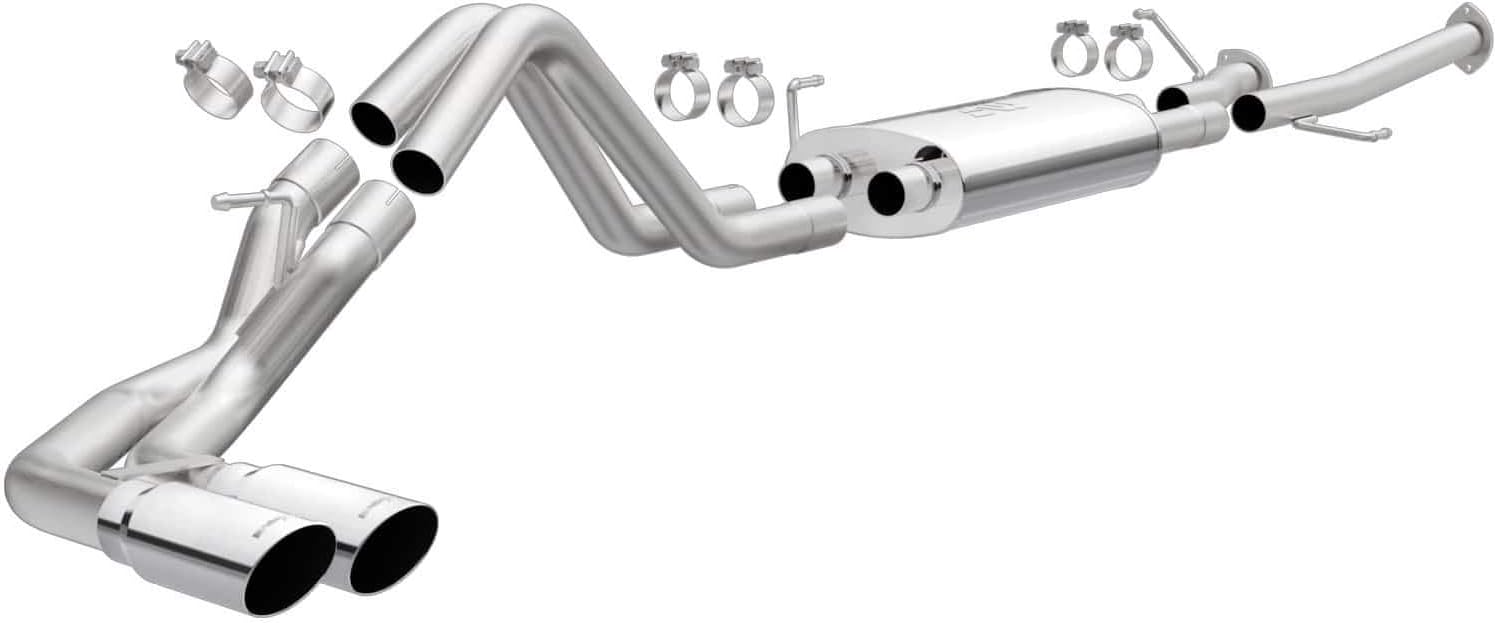
This MagnaFlow Street Series cat-back replaces the stock exhaust from the catalytic converter back with a bolt-on stainless steel system designed specifically for 2014–2021 Toyota Tundra trucks. Typical use is a direct replacement to free up flow, produce measurable power gains on the dyno, and give the truck a deeper exterior tone without excessive cabin drone under normal driving. Notable features include mandrel-bent piping, a single polished muffler and dual same-side polished tips, and a 2.5 inch main pipe for less restriction. The construction is corrosion resistant stainless steel intended for long life and a factory-quality fit. Installation is user-serviceable for someone with basic automotive skills but professional installation is recommended for best alignment. Reported limitations include occasional drone under certain loads such as towing at low RPM and mixed experiences with long-term durability on some units, so buyers should consider installation practices and inspect welds over time.
Best for: A balanced, all-round Tundra owner who wants a reliable, vehicle-specific cat-back that improves power and gives a modest performance sound without an aggressively loud profile.
Less Ideal for: Drivers seeking a completely silent upgrade or those who need a no-drone system under heavy towing loads should consider more muffler-focused or tuned alternatives.
- Vehicle-specific fitment for 2014–2021 Toyota Tundra simplifies installation and reduces fitment issues
- Stainless steel construction and polished finish offer corrosion resistance and lasting appearance
- Mandrel-bent 2.5" piping and straight-through muffler design increase flow for dyno-proven power gains
- Street Series tuning provides a deeper exterior sound while aiming to keep cabin noise comfortable
- Some users report noticeable drone under low RPM or while towing
- Instances of weld or durability issues have been reported by a minority of owners
Verdict A well-engineered, vehicle-specific stainless steel cat-back that balances sound, durability, and measured power gains for most Tundra owners, though some may experience drone in towing or low-RPM conditions.
Choosing the Right Toyota Tundra Cat-back Exhaust System: Key Factors to Consider
Material and Corrosion Resistance
The metal used in a cat-back system determines how long it will last and how it resists rust, especially in regions with road salt or humid climates. Thicker gauge stainless steel or high-quality aluminized steel will resist corrosion and keep joints from seizing over years of use.
Material choice also affects heat retention and the long-term appearance of the system. Corrosion resistance matters more for trucks that tow, carry weight, or see heavy-duty use because increased heat cycles and exposure to exhaust moisture accelerate wear.
Pipe Diameter and Mandrel Bends
Consistent pipe diameter and mandrel bends preserve exhaust gas velocity and reduce turbulence, which helps maintain low-end torque while allowing better flow at higher RPMs. Oversized piping can reduce scavenging and torque, while undersized piping can create excessive backpressure.
Matching pipe diameter to your typical driving demands matters: towing and daily driving benefit from balanced sizing that supports low-end torque, while high-RPM performance goals may justify larger diameters. Smooth bends reduce restriction and keep flow predictable across the rev range.
Muffler and Resonator Design
Muffler architecture and the presence of resonators dictate the system's tone, volume, and the risk of annoying drone at cruising speeds. Chambered, straight-through, or baffled designs each produce different acoustic results and interact with cabin resonance in distinct ways.
Consider how you use the truck: long highway drives favor configurations that minimize drone, while a more aggressive sound preference may accept some increased interior resonance. Look for designs that offer a middle ground or provide optional resonators to tune the sound.
Fitment and Vehicle-Specific Design
A true cat-back designed for the Toyota Tundra will match hanger locations, flange dimensions, and clearances to avoid rubbing, heat contact, or interference with cargo components. Proper fitment reduces install time and the need for aftermarket adapters or modification.
Check whether the system requires any trimming of factory hangers or brackets and whether it retains factory mounting points. Vehicle-specific engineering minimizes exhaust movement under load and ensures adequate ground clearance for common driving conditions.
Installation Complexity and Hardware
Some cat-back systems are bolt-on with supplied gaskets and hardware, while others require cutting, welding, or the use of specialty tools. Ease of installation affects whether you can complete the job in a weekend or need professional help.
Clear instructions, included clamps or bolts, and well-placed hangers all reduce installation time and the chance of leaks. Factor in whether you have access to a lift versus using jacks when estimating labor and safety considerations for DIY installs.
Noise Level and Legal Considerations
Noise output varies widely between systems and can impact comfort, community acceptance, and legal compliance. Measured decibel ratings are not always available, so look for manufacturer guidance on volume and whether a quieter configuration or insert is offered.
Consider local noise regulations and planned use of the truck. Systems designed for street use typically balance tone and volume, while track-oriented options may be louder and less suitable for daily driving. Prioritizing a system with controllable tone options can help avoid compliance issues and keep cabin noise comfortable.
FAQ
Will a cat-back exhaust system increase my Tundra's horsepower?
A cat-back system can provide modest gains by reducing backpressure and improving exhaust flow, but large horsepower increases are unlikely without additional engine tuning or supporting modifications. Gains depend on existing restrictions, pipe sizing, and how the engine breathes. Often the benefits are more noticeable in throttle response and sound than in peak power.
How difficult is catback exhaust installation on a Toyota Tundra?
Many cat-back systems made for the Tundra are designed for bolt-on installation and can be completed with basic hand tools and a lift or jack stands. Complexity rises if the kit requires cutting, welding, or custom hanger work. If instructions and hardware are included and you have basic mechanical experience, a weekend install is common.
Will installing a cat-back affect fuel economy?
Changes to fuel economy are usually minor and depend on driving style and whether the new exhaust encourages more aggressive throttle use. Improved flow can slightly reduce pumping losses at certain engine speeds, but any fuel economy change is typically small. Towing or heavy loads will have a larger impact on economy than the exhaust system alone.
How do I choose the right sound level for my Tundra?
Consider how often you drive on highways, the importance of minimizing cabin drone, and local noise rules. Choose muffler and resonator options that offer a balance between aggressiveness and refinement. If possible, listen to recordings or demos of the system on similar trucks to get a realistic expectation of in-cabin and exterior tone.
What maintenance does a cat-back exhaust require?
Routine checks for loose clamps, hanger wear, and visible corrosion are the main maintenance tasks. Clean external surfaces as needed and inspect joints after a few heat cycles for any signs of leaking. Systems made of higher-grade stainless steel will generally need less attention over time.
Can a cat-back exhaust system cause vibration or drone?
Some designs can introduce drone at specific speeds or RPM ranges, depending on muffler type and resonator placement. Choosing a system with attention to resonator tuning and effective muffler design reduces the likelihood of intrusive drone. If drone appears after installation, adding or relocating a resonator can often mitigate the issue.
How We Chose the Best Toyota Tundra Cat-back Exhaust System
We focused on traits that matter most for Toyota Tundra cat-back exhaust systems. Core evaluation criteria included material quality to resist corrosion and maintain flow characteristics over time; mandrel-bent piping and diameter consistency to reduce restrictions; muffler design and resonator choices to control tone and drone; and vehicle-specific fitment to ensure bolt-on installation without major modifications. We also considered installation complexity and the availability of clear hardware and instructions so buyers can assess whether they need professional help. Durability under towing and load-related use was another filter, given how many Tundra owners tow or haul. We excluded one-off kits without explicit Tundra fitment and any systems that relied on extensive cutting or welding for basic installation. We also left out designs intended only for off-road use where legal or noise compliance could be an issue. The list emphasizes systems that balance longevity, sound control, and straightforward installation for typical Toyota Tundra driving and work scenarios.
Our full evaluation process is outlined in our review methodology.
Conclusion
When selecting a Toyota Tundra cat-back exhaust system, prioritize material quality, proper fitment, and a muffler design that matches your tolerance for volume and drone. Balance pipe diameter and bend quality with your driving needs, whether that is towing, daily driving, or a more aggressive feel. Tradeoffs are inevitable: louder systems may sacrifice interior comfort, and larger-diameter piping may not suit low-end torque needs. Focus on the criteria covered here to choose a system that meets your performance goals and long-term durability expectations.
Explore More:
- Check out all Toyota Tundra parts & accessories
- Explore Exhaust & Emissions
- Browse all Auto Parts
