

Note: This article contains affiliate links. If you click on these links and make a purchase, I may earn a small commission at no extra cost to you. This helps support my research and content. Read my full affiliate disclosure here.
If you drive a Toyota Tundra, replacing a failing catalytic converter matters for emissions compliance and engine performance. The wrong unit can cause fitment headaches, persistent check-engine lights, and uneven exhaust flow that affects drivability. This guide presents seven shortlisted options that meet key fit and emissions criteria. We evaluated each candidate on how well it fits the Tundra exhaust layout and how effectively it supports emissions control and sensor operation. Read on to understand the criteria we used and what to watch for when choosing a replacement.
Looking for other parts? See all Toyota Tundra parts & accessories.
Top Picks at a Glance


1. Walker Ultra Direct-Fit Catalytic Converter (54723) for Toyota Tundra
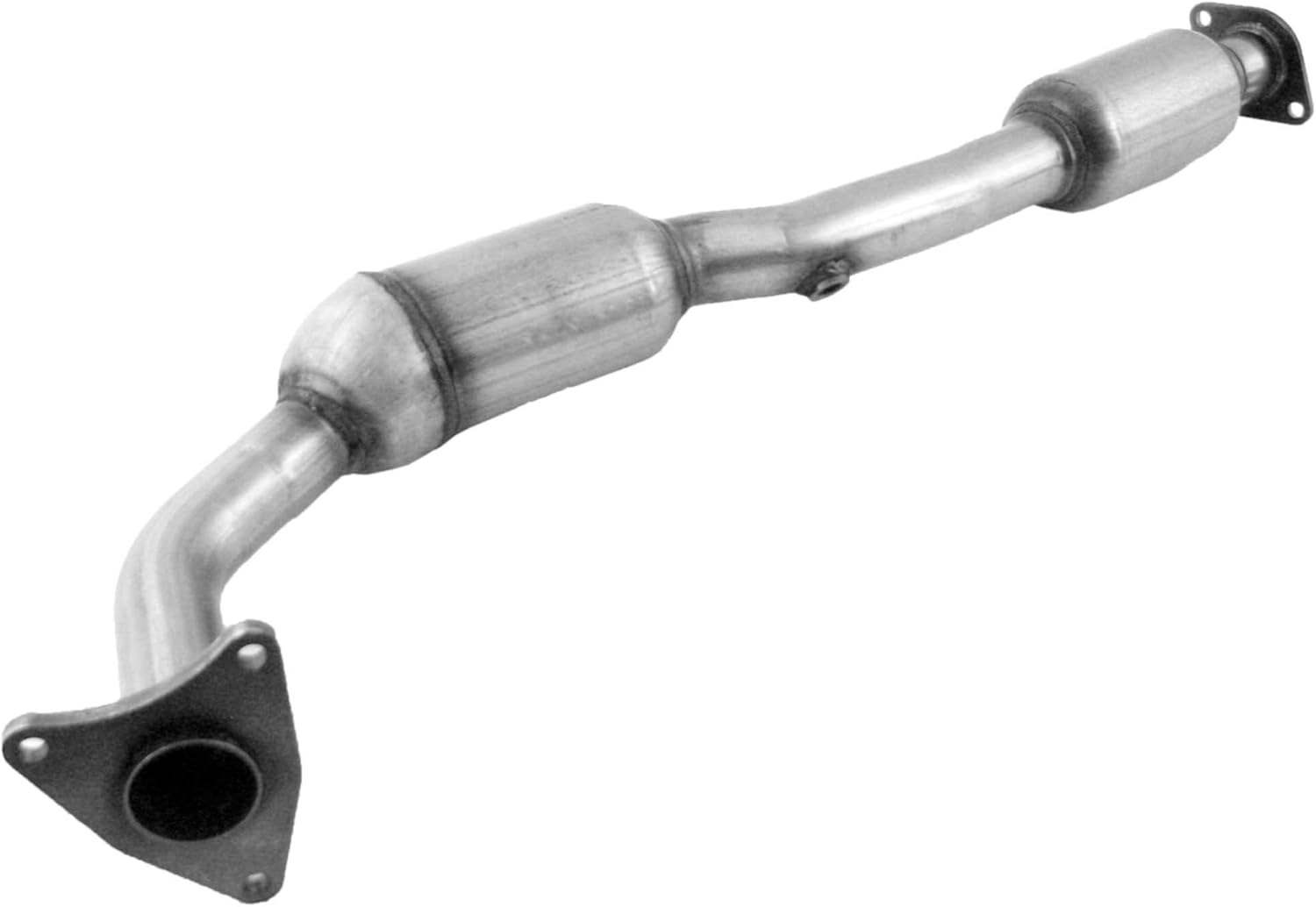
| Brand | Walker |
|---|---|
| Manufacturer | Tenneco (Dynomax, Walker, Thrush) |
| Item model number | 54723 |
| EPA compliance | For OBDII vehicles (1996 and newer) |
The Walker Ultra direct-fit catalytic converter is a bolt-on replacement made to meet EPA standards for OBDII vehicles. It installs using factory-style hangers, flanges and heat shields so it can replace the original unit without cutting or welding in most cases. The unit uses a high-technology washcoat and a calibrated precious-metal load intended to restore emissions control and clear PO430-style codes while returning lost drivability caused by a failing converter. Thick flanges, hangers and OE-style brackets aim to hold up under normal use, and included aluminized heat shields protect undercarriage components when originally equipped. Some buyers report that the converter is slightly smaller than OEM and may require minor adjustments to existing heat shields or fasteners during fitting, and a few received units with welding or finish imperfections. For owners doing the install themselves, it can be a much lower-cost alternative to dealer replacement and generally resolves check-engine issues when the part matches the vehicle fitment.
Best for: Balanced owners who want a factory-style, emissions-compliant replacement that restores drivability and fixes emissions codes without resorting to dealer service.
Less Ideal for: Buyers seeking a custom or high-flow performance converter or those who require guaranteed identical fitment to every factory heat shield should consider alternatives or professional fitment verification.
- Direct-fit design with factory-style hangers and flanges for bolt-on installation
- EPA-compliant for OBDII vehicles and formulated to meet emissions reduction requirements
- OE-style heat shields included when originally equipped to protect undercarriage from heat
- Robust flanges and brackets intended for strength and durability
- Designed washcoat and precious metal loading to help clear emissions-related check-engine codes
- Some units have reported welding or finish defects and pinholes
- May be smaller than the original converter requiring minor adjustments to heat shields or fasteners
- Occasional post-install noise reported by users
Verdict: A factory-style, EPA-compliant direct-fit catalytic converter that delivers a cost-effective factory-replacement solution for Toyota Tundra owners.
2. A-Premium 2‑Piece Catalytic Converter Kit for Toyota Tundra 4.7L (2007–2009)

| Vehicle fitment | Toyota Tundra 2007–2009 V8 4.7L (145.7" wheelbase) |
|---|---|
| EPA compliance | Yes (not legal in CA, CO, NY, ME) |
| Position | Left and right side |
| Inlet type | 3-bolt welded flange |
| Outlet type | 2-bolt welded flange |
This A-Premium kit replaces both left and right catalytic converters on 2007–2009 Toyota Tundra 4.7L trucks and is sold as a direct-fit, EPA-compliant pair for federal emissions applications. Typical installation replaces corroded or failed factory converters to restore exhaust flow, clear diagnostic trouble codes, and recover fuel economy. The kit uses stainless steel piping with welded 3-bolt inlet and 2-bolt outlet flanges to match factory connection points and is intended for bolt-on installation using existing manifold studs and flange hardware. Practical benefits include a factory-style fitment that reduces installation time and a stainless construction that resists corrosion compared with mild steel. Important limitations are that the kit is not legal for sale or use in California, Colorado, New York, or Maine due to state emissions rules, and it does not include mounting hardware for every flange application so you may need to reuse some factory bolts or source replacements. Buyers should also confirm upstream O2 sensors are in good condition when installing to avoid false codes.
Best for: Performance-oriented owners who want a factory-style replacement to restore exhaust flow and drivability on a 2007–2009 Toyota Tundra 4.7L and prioritize maintaining emissions compliance where allowed.
Less Ideal for: Owners in states with stricter aftermarket emissions rules or drivers who prefer a converter that includes every mounting fastener and clamps out of the box should consider alternatives or check local regulations before buying.
- Direct-fit two-piece kit for left and right sides designed for Toyota Tundra 2007–2009 4.7L for quicker installation
- EPA-compliant for federal-emissions vehicles where allowed
- Stainless steel construction offers improved corrosion resistance over cheaper metals
- Welded flange connections match factory-style inlet and outlet interfaces
- Not legal for sale or use in several states with stricter emissions rules
- Mounting hardware is not fully comprehensive so some factory fasteners or aftermarket bolts may be required
Verdict: A factory-style, stainless two-piece catalytic converter kit that restores exhaust performance on 2007–2009 Tundra 4.7L trucks, but check state emissions rules and fastening needs before buying.
3. PHILTOP High Flow Catalytic Converter Kit for Toyota Tundra 5.7L/4.6L (2007–2019)

| Vehicle fitment | Toyota Tundra 5.7L/4.6L 2007–2019 |
|---|---|
| EPA status | EPA compliant |
| Included hardware | Gaskets and mounting hardware supplied |
| Exterior | Machined stainless/aluminized body |
This PHILTOP kit replaces the Toyota Tundra catalytic converter with a high-flow, stainless steel assembly intended to restore emissions control and engine performance. It is supplied as a bolt-on unit with included gaskets and hardware so a technician can install it without major modification. The converter uses an aluminized stainless body and a double-layer ceramic carrier to increase flow area, which can help reduce backpressure and may improve throttle response and fuel economy compared with a clogged unit. Welded flanges and machined sealing surfaces make it practical for direct replacement, though a few buyers report fiddly heat shield bracket alignment that can add installation time. The unit is marked EPA compliant for aftermarket sales outside certain states, but that compliance restricts legal use in places with stricter rules. For owners seeking a budget-friendly replacement that performs close to factory expectations, this kit offers solid construction and necessary hardware; owners in strict-emissions states or those who need perfect OEM fitment should verify local rules and measure clearance before purchase.
Best for: Practical optimizers who want a cost-effective, near-factory replacement to get a Tundra back to reliable emissions performance without paying OEM prices.
Less Ideal for: Drivers in states with strict aftermarket emissions regulations or owners seeking guaranteed factory-exact fit and finish should look at dealer or verified factory-quality replacements instead.
- Direct-fit design with supplied gaskets and hardware for straightforward installation
- Stainless steel/aluminized construction and double-layer ceramic carrier for improved flow and corrosion resistance
- Welded flanges and machined sealing surfaces that help achieve a good exhaust seal
- EPA-compliant construction for sale and use in many states
- Heat shield mounting tabs may not align perfectly and can require extra time to fit
- Not legal for use in states with stricter aftermarket converter rules
Verdict: A well-built, budget-friendly direct-fit catalytic converter for Tundra owners who prioritize practical, cost-effective repairs over factory-only replacements.
4. PHILTOP Catalytic Converter Kit for Toyota Tacoma/Tundra 4.0L (Front Left & Right)
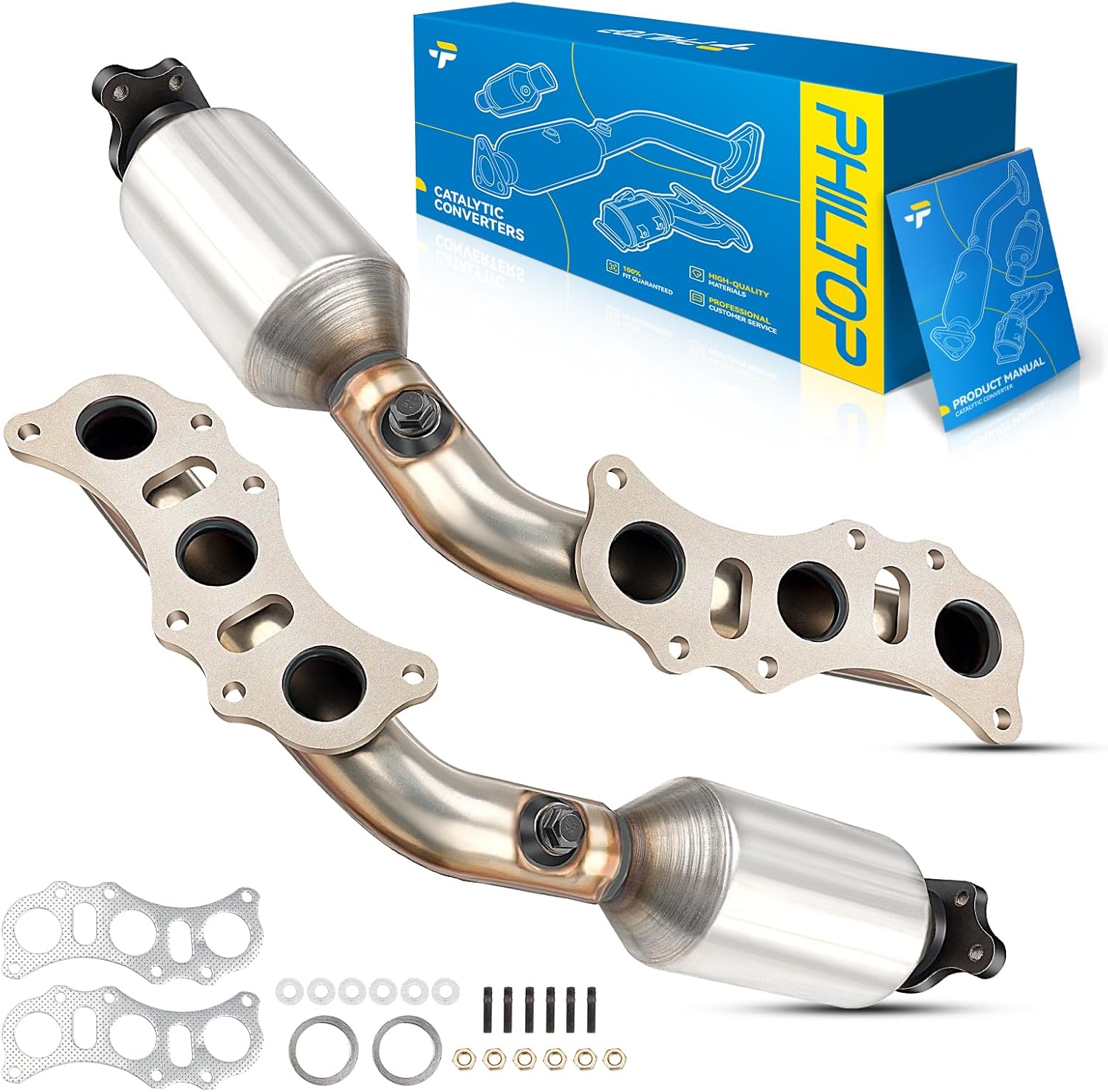
| Fitment | Toyota Tacoma/4Runner/FJ Cruiser/Tundra 4.0L (compatible years listed) |
|---|---|
| Position | Front left and front right kit |
| Certifications | EPA compliant (where permitted) |
This PHILTOP kit provides two direct-fit front catalytic converters intended for Toyota 4.0L vehicles from the 2003–2011 era and is aimed at owners who need an economical replacement. The kit includes the converters plus gaskets and hardware to simplify installation without cutting or modifying the exhaust. Construction uses aluminized stainless piping and a double-layer ceramic carrier designed to balance flow and surface area, which the listing says helps restore oxygen storage and can improve fuel economy and drivability compared with a clogged unit. Buyers should note these are EPA compliant aftermarket converters and therefore cannot be sold or installed in some states with stricter rules. Fit reports are mixed: many users report straightforward bolt-on installation and acceptable quality for the price, while a few experienced check-engine light or inspection failures on some vehicles, so compatibility and emissions performance can vary. This is a cost-conscious option that can return a nonfunctional converter to service quickly but may not match factory-level longevity or guaranteed inspection outcomes in every case.
Best for: Practical, budget-conscious owners looking to replace failed front catalytic converters quickly and cheaply to get a mid-2000s Toyota back on the road without dealership pricing.
Less Ideal for: Owners who need a guaranteed emissions test pass in strict states or who prioritize longest-lasting, factory-quality replacements should consider higher-end or dealer-sourced options.
- Sold as a matched left and right front converter kit for a single replacement job
- Includes gaskets and hardware for direct bolt-on installation without modification
- Aluminized stainless piping and double-layer ceramic carrier aimed at restoring flow and oxygen storage
- EPA compliant where allowed, meeting basic aftermarket emissions requirements
- Not legal for sale or installation in certain states with stricter emissions regulations
- Aftermarket construction may not match factory longevity or inspection consistency for every vehicle
- Some buyers reported check-engine lights or inspection failures after installation
Verdict: A low-cost, bolt-on way to replace front catalytic converters on Toyota 4.0L models, suitable for budget repairs but not a guaranteed solution for strict-state inspections.
5. A-Premium Catalytic Converter Kit, Left and Right Direct-Fit for Toyota Tundra 2005-2006 4.7L

| Vehicle fitment | Toyota Tundra 2005-2006 V8 4.7L |
|---|---|
| EPA compliance | Yes (restricted states apply) |
| Material | Stainless Steel |
| Inlet/Outlet | 3-bolt inlet and 2-bolt outlet welded flanges |
| Position | Left and Right |
This A-Premium kit provides left and right direct-fit catalytic converters intended as factory-replacement parts for the 2005–2006 Toyota Tundra with the 4.7L V8. Each converter uses stainless-steel construction and welded flanges to match the truck's exhaust connections, so installation is similar to swapping the original units and typically involves unbolting the factory pieces and bolting these in place. The parts are labeled EPA-compliant for federal emissions (note they are restricted in certain states), and the listing specifies the mounting hardware is not included so expect to reuse or source gaskets and bolts. In practice this kit removes emissions-related codes and restores exhaust function when the original converters have failed. The one-year unlimited-mileage guarantee offers some post-purchase protection, but buyers should plan for possible extra parts or labor during fitment and verify state legality before installing. These are a cost-effective replacement when a direct-fit, reliability-minded solution is the priority.
Best for: Reliability-focused buyers who want a direct-fit, factory-replacement style catalytic converter pair for a Toyota Tundra 2005–2006 4.7L and value parts that restore emissions function without performance modifications.
Less Ideal for: Drivers in states with stricter aftermarket emissions rules or owners seeking a universal or performance-oriented converter should look elsewhere.
- Direct-fit left and right pair matched to 2005–2006 Tundra 4.7L exhaust routing
- Stainless-steel construction for corrosion resistance compared with cheaper materials
- Welded 2- and 3-bolt flange connections that align with factory exhaust flanges
- EPA-compliant for federal emissions where allowed
- One-year unlimited-mileage guarantee included
- Not legal for sale or use in California, Colorado, New York, and Maine due to state emissions rules
- Mounting hardware and gaskets are not included so additional parts may be required at installation
- May require removal of adjacent exhaust sections for access during fitment
Verdict: A practical, direct-fit stainless-steel replacement pair for 2005–2006 Tundra 4.7L owners who need a reliability-focused, EPA-compliant fix where legal.
6. SPEEDFusion Catalytic Converter for 2007–2009 Toyota Tundra 5.7L V8 (Left and Right, EPA Compliant)

| Vehicle fitment | 2007–2009 Toyota Tundra 5.7L V8 (extended cab, 145.7" wheelbase) |
|---|---|
| Material | 409L stainless steel |
| EPA status | EPA compliant |
| Includes | Left and right catalytic converters |
This SPEEDFusion kit supplies left and right catalytic converters meant as direct replacements for the 2007–2009 Toyota Tundra 5.7L V8 (extended cab, 145.7" wheelbase). Built from 409L stainless steel with a porous ceramic substrate and noble-metal coating, the converters are EPA certified for vehicles meeting federal standards and aim to restore emission control while keeping the check engine light off. Installation is straightforward for a competent technician since the units are described as direct-fit and the package may include flange studs and basic hardware. Practical benefits include corrosion-resistant construction and factory-style function that can resolve P0420/P0430 codes when the original unit has failed. Limitations to note are regional legal restrictions on sale and use in certain states, some variability in included gaskets or bolt sizes reported by users, and occasional fitment or sensor transfer issues that could require additional parts or a shop visit.
Best for: Buyers who prioritize convenience and want a ready-made replacement that restores emission control without sourcing multiple parts or extensive modification.
Less Ideal for: Owners in states with stricter emissions rules or those who need a certified California-compliant converter should look for region-specific options; do not buy if you prefer dealer-sourced factory parts.
- EPA-compliant design intended to meet federal emission standards.
- 409L stainless steel construction resists corrosion in exhaust environments.
- Porous ceramic substrate with platinum, rhodium and palladium to improve catalytic conversion.
- Sold as left and right units for a complete replacement of both bank converters.
- Described as direct-fit to simplify professional installation for the specified Tundra application.
- Illegal to sell, install, or use in some states that have their own emission requirements.
- Some buyers report inconsistent fitment details and missing or ill-fitting gaskets or hardware.
- May require transfer of oxygen sensors or additional parts at installation which adds time and cost.
Verdict: A convenient, EPA-certified direct-fit replacement for both catalytic converters on the specified Tundra that saves time but is restricted in some states and may need minor hardware adjustments.
7. Walker Ultra 54748 Direct-Fit Catalytic Converter for Toyota Tundra

| Fits Models | 2007-2011 Toyota Tundra; 2008-2009 Toyota Sequoia |
|---|---|
| EPA Compliance | For OBDII vehicles (1996 and newer) |
| Direct Fit | Bolt-on replacement with OE-style hangers and brackets |
The Walker Ultra 54748 is a direct-fit catalytic converter made to replace a failed factory unit on specified Toyota Tundra models without fabrication. It installs using existing bolt-on flanges, hangers and brackets so typical use is a straightforward swap by a mechanic or experienced DIYer. Walker specifies EPA compliance for OBDII vehicles and uses a high-technology washcoat and precious metal loading intended to restore emissions performance to factory levels. The unit includes OE-style heat shields and sturdy flanges to resist corrosion and road stress, which helps longevity under normal driving. Limitations are that fitment is limited to the listed Tundra years and emission systems, so you must confirm exact vehicle and engine match before buying, and professional installation is recommended if you do not have exhaust experience. This is a solid replacement option for buyers who want a factory-style emissions solution without custom work.
Best for: Risk-averse mainstream buyers who prioritize a factory-style, compliant replacement and want a straightforward, low-risk swap that restores emissions performance.
Less Ideal for: Shoppers looking for universal or custom-fit solutions for multiple vehicle types or those needing a performance-oriented aftermarket converter should consider other options.
- Direct-fit design with OE-style flanges, hangers and brackets for bolt-on installation
- EPA-compliant for OBDII vehicles to meet emissions requirements
- Factory-style heat shields to protect undercarriage from converter heat
- High-technology washcoat and precious metal load aimed to restore emissions performance
- Compatibility limited to specific Toyota Tundra model years and configurations
- May require professional installation to ensure correct fit and sealing
Verdict: A factory-style, EPA-compliant direct-fit replacement for specified Toyota Tundra models that minimizes installation risk while restoring emissions performance.
Choosing the Right Toyota Tundra Catalytic Converter: Key Factors to Consider
Vehicle-Specific Fitment
Exact fitment matters because exhaust routing, flange dimensions, and sensor placements vary between model years and cab configurations. A converter designed specifically for the Toyota Tundra will align bolt patterns and oxygen sensor ports with the factory exhaust, reducing the need for adapters or cutting. Proper fitment shortens installation time and lowers the risk of leaks that can trigger a check-engine light or degrade emissions control. When evaluating fitment, verify the converter matches your truck's engine size, model year, and whether it mounts upstream or downstream of emissions sensors. If the unit requires modifications, factor in the complexity and potential for introducing failure points.
Emissions Performance and Substrate Type
The core substrate and catalyst loading determine how effectively the converter reduces hydrocarbons, CO, and NOx. Higher-quality substrates with appropriate washcoat and precious-metal loading typically provide more consistent emissions reduction over time. For vehicles that must meet inspection standards, choosing a unit with documented emissions performance helps avoid compliance issues. Consider whether the substrate is optimized for the engine's exhaust temperature and flow. A substrate that is too dense can increase backpressure, while one that is too light may not treat exhaust gases adequately during cold starts.
Oxygen Sensor Compatibility
Oxygen sensors monitor catalyst efficiency and feed data to the engine control unit. A replacement catalytic converter must provide correctly positioned sensor ports and maintain sensor operating temperatures. Misplaced or missing sensor threads can lead to incorrect readings, persistent diagnostic codes, and altered fuel trim that affects fuel economy and drivability. Check that threaded ports match factory sensor sizes and that spacer or bung locations mirror the original component. Maintaining the proper distance between sensors and the catalyst is important for rapid warm-up and accurate emissions monitoring.
Durability and Thermal Resistance
Catalytic converters operate under high temperatures and exposure to corrosive exhaust byproducts. Durable housings and heat-resistant internal materials extend service life, especially for trucks used for towing or heavy loads that generate higher exhaust temperatures. Corrosion-resistant coatings and robust welds reduce the chance of cracks or leaks developing. Assess the converter's material specs, thermal cycling performance, and any reinforcement at common stress points. Long-term durability reduces maintenance headaches and the chance of sudden failures that leave the vehicle inoperable.
Installation Complexity
Some replacements install like direct bolt-ons while others need welding, cutting, or use of adapters. Consider the typical tools and skills required for your situation. A direct-replacement unit that matches factory flanges and hangers will be simpler for most owners and shops, lowering labor time and potential for installation errors. Factor in whether the conversion necessitates exhaust removal, replacement of gaskets, or rethreading sensor bungs. If you plan to have a professional install the part, clarify expected labor steps so you can compare service time estimates accurately.
Backpressure and Engine Performance
The internal design influences exhaust flow and backpressure, which in turn affect engine torque and throttle response. A converter that creates excessive restriction can reduce power and fuel efficiency, while one with too little catalyst surface may not meet emissions requirements. The ideal balance maintains adequate flow without compromising catalytic activity. Consider engine tuning and typical operating conditions when selecting a converter. For heavy-duty use, prioritize units engineered to handle higher exhaust volumes while still providing sufficient catalytic surface area.
How We Chose the Best Toyota Tundra Catalytic Converter
We focused on technical fit and regulatory function when narrowing candidates for this list. Primary evaluation criteria included precise vehicle-specific fitment, compatibility with oxygen sensor locations and mounting points, and adherence to emissions control standards relevant to the vehicle. We also considered build quality of the substrate and housing, thermal durability under heavy loads, and the ease of installation given the typical Toyota Tundra exhaust geometry. We excluded universal or generic converters that require extensive modification, products without clear fitment documentation, and units lacking information about substrate type or sensor ports. The result is a set of options that prioritize correct installation, reliable catalytic function, and long-term durability for the Toyota Tundra platform.
Our full evaluation process is outlined in our review methodology.
FAQ
What are common symptoms that indicate a failing catalytic converter on a Toyota Tundra?
Common symptoms often include a persistent check-engine light, reduced engine performance, and a noticeable drop in fuel economy. You may also notice a rotten-egg odor from the exhaust or rattling noises if the internal substrate is damaged. Many symptoms overlap with other exhaust or engine issues, so diagnostic codes and inspection help confirm the converter as the source.
Will a catalytic converter trigger a check engine light?
Yes, a converter that is clogged or failing commonly triggers diagnostic trouble codes related to emissions efficiency or oxygen sensor readings. The engine control unit often detects reduced catalyst efficiency or abnormal sensor signals and logs codes that illuminate the check-engine light. Proper diagnosis with a scanner and inspection of sensor voltages can indicate whether the converter is the likely cause.
How important is matching CAT converter fitment to my Tundra's model year?
Matching fitment to the correct model year is usually important because exhaust geometry and sensor locations can change between years. Using a unit specified for your truck reduces the need for modifications and helps maintain proper sensor operation. Always confirm compatibility with your vehicle-specific details like engine type and production year.
Can I replace a catalytic converter myself, and what should I know about the process?
Many converters can be replaced by someone with moderate mechanical skills, the right tools, and a safe workspace. Expect to work with exhaust clamps, bolts, and possibly welding if the unit is not a direct bolt-on. You should be comfortable handling oxygen sensors, replacing gaskets, and ensuring leak-free connections. If you do not have the tools or experience, a trained technician can avoid common errors.
How does a catalytic converter affect exhaust emissions on a Toyota Tundra?
The catalytic converter oxidizes hydrocarbons and carbon monoxide and reduces nitrogen oxides to lower the vehicle's harmful emissions. A properly functioning converter helps the engine meet emissions targets and keeps the vehicle within regulatory limits during testing. When the converter degrades, emissions control is compromised and diagnostic systems may detect the change.
What are typical signs of catalytic converter failure to monitor over time?
Typical signs include progressive loss of power, deteriorating fuel economy, unusual exhaust odors, and intermittent rattling from the exhaust region. You may also see fluctuating sensor readings or recurring emissions-related diagnostic codes. Monitoring these signs early can help you address issues before more extensive engine or exhaust system damage occurs.
Conclusion
Choosing the right catalytic converter for a Toyota Tundra is about balancing correct fitment, verified emissions function, and durability for your driving demands. Prioritize units that provide exact sensor compatibility and documented substrate performance to avoid diagnostics and maintain engine operation. Remember that tradeoffs exist between flow and catalyst surface area, and installation complexity can vary. Focus on the criteria discussed earlier when choosing a replacement so the final selection meets both regulatory needs and real-world durability.
Explore More:
- Check out all Toyota Tundra parts & accessories
- Explore Catalytic Converters Maintenance & Repair Guides
- Explore Exhaust & Emissions
- Browse all Auto Parts
