

Note: This article contains affiliate links. If you click on these links and make a purchase, I may earn a small commission at no extra cost to you. This helps support my research and content. Read my full affiliate disclosure here.
What You’ll Need
A quick look at the tools and supplies commonly used for this job.
Tools
Parts & Supplies
- Catalytic converter
- Oxygen sensor
- Brake cleaner
- Penetrating oil
- Replacement exhaust hardware or gaskets
This article is part of our Exhaust and Emissions Maintenance & Repair Guides.
A broken catalytic converter can cause power loss, strange exhaust smells, rattling noises, poor fuel economy, and a check engine light, but those same symptoms can also come from misfires, bad oxygen sensors, or exhaust leaks.
The goal of diagnosis is to prove whether the converter is actually clogged, melted, contaminated, or physically damaged before spending money on a replacement. A good DIY diagnosis uses symptoms, trouble codes, scan data, temperature checks, and a careful visual inspection instead of guessing.
This guide walks through a practical step-by-step process you can do at home, along with the signs that point to root causes that may have ruined the converter in the first place.
What a Catalytic Converter Does and How It Fails
The catalytic converter reduces harmful exhaust emissions by using a coated honeycomb substrate that reacts with unburned fuel, carbon monoxide, and oxides of nitrogen. For it to work correctly, the engine must run properly and the converter must remain physically intact and free-flowing.
Converters usually fail in three main ways. First, the internal honeycomb can melt or break apart, which restricts exhaust flow and causes a loss of power. Second, the catalyst can become contaminated by oil burning, coolant burning, or repeated rich running, which reduces its ability to clean emissions and often triggers efficiency codes. Third, the outer shell or heat shielding can be damaged by impact, rust, or overheating.
- A clogged converter usually causes power loss, sluggish acceleration, high exhaust heat, and sometimes a red-hot converter.
- A chemically worn or contaminated converter often sets a catalyst efficiency code without severe drivability problems.
- A physically broken converter may rattle because the substrate has cracked and shifted inside the housing.
Common Symptoms That Point to a Broken Catalytic Converter
Start with the symptoms you can feel, hear, or smell. No single symptom proves the converter is bad, but a pattern of clues helps narrow the diagnosis.
Drivability Symptoms
- Weak acceleration, especially at higher RPM or under load.
- The engine revs but the vehicle feels choked or unable to breathe.
- Loss of highway speed or power climbing hills.
- Poor fuel economy caused by increased backpressure or rich running.
Noise, Smell, and Heat Clues
- A metallic rattle from under the vehicle, especially on startup or when tapping the converter shell lightly after it cools.
- A rotten egg or sulfur smell from the exhaust, often linked to an overheating or overloaded converter.
- Excessive heat under the floor or a converter that glows after hard driving.
Warning Lights and Code Patterns
The most common code linked to catalytic converter problems is P0420 or P0430, which means catalyst efficiency below threshold on bank 1 or bank 2. But those codes do not automatically mean the converter itself is the root cause. Misfires, air-fuel problems, exhaust leaks, failing oxygen sensors, and coolant or oil contamination can all trigger the same codes.
Safety Before You Start
Catalytic converters run extremely hot. Always let the exhaust cool before touching or inspecting parts underneath the vehicle. If you need to raise the vehicle, work on level ground, chock the wheels, use a floor jack only for lifting, and support the vehicle securely with jack stands.
- Never crawl under a car supported only by a jack.
- Wear safety glasses because rust and debris often fall during exhaust inspection.
- Avoid testing around flammable materials if the exhaust may be overheating.
Tools That Make This Job Easier


Step-by-Step Diagnostic Procedure
Scan for Trouble Codes First
Connect an OBD2 scanner and read all stored and pending codes, not just the catalyst code. If you see misfire codes, fuel trim codes, oxygen sensor heater codes, or coolant-related codes, those may be the real problem. Freeze-frame data is especially helpful because it shows engine load, RPM, and temperature when the fault was recorded.
If the engine has active misfires or obvious air-fuel problems, fix those before condemning the converter. A new converter can fail quickly if the engine is still dumping raw fuel into the exhaust.
Check for Obvious Exhaust Damage
With the exhaust cooled, inspect the converter body, nearby pipes, flanges, and heat shields. Look for dents from road impact, severe rust, cracked welds, loose shielding, and black soot marks that indicate an exhaust leak. A leak upstream of the downstream oxygen sensor can mimic a bad converter by skewing oxygen readings.
Use a light and inspection mirror to check the top and back sides of the converter where damage is harder to see.
Listen for a Loose Substrate
After the converter is cool, tap it gently with your hand or a rubber mallet. A broken internal honeycomb may rattle or sound like loose ceramic pieces moving inside the shell. Keep in mind that loose heat shields can make a similar noise, so make sure the sound is coming from inside the converter and not from the outside shield.
Evaluate Power Loss Under Load
A restricted converter often shows up as a vehicle that starts and idles fairly normally but falls flat during acceleration. If the engine seems strangled above mid-range RPM, or if it loses power more the longer you drive, exhaust restriction becomes more likely.
On some vehicles, a badly clogged converter can even cause hard starting, stalling, or a no-start condition because exhaust cannot escape efficiently.
Tests That Help Confirm a Bad Converter
Compare Upstream and Downstream Oxygen Sensor Behavior
With a scan tool that shows live data, watch the upstream and downstream oxygen sensor signals after the engine is fully warmed up. On many vehicles, the upstream sensor should switch rapidly as the fuel mixture changes, while the downstream sensor should be steadier if the converter is storing and processing oxygen properly.
If the downstream sensor closely mirrors the upstream sensor over time, that often supports a catalyst efficiency failure. But do not stop there. An exhaust leak, lazy sensor, or mixture problem can create misleading data, so use this test as supporting evidence rather than final proof.
Check Converter Temperature
An infrared thermometer can help, though results vary by engine, converter design, and operating conditions. After the engine is fully warm and has been held at elevated RPM or driven briefly, compare inlet and outlet temperatures at the converter shell. In many cases, a functioning converter will show the outlet hotter than the inlet because catalytic reactions generate heat.
A converter that is cooler at the outlet, shows little temperature change, or becomes abnormally hot at the inlet may indicate poor catalyst activity or restriction. This is not a perfect test, but it adds another clue when combined with codes and symptoms.
Inspect Internally if Access Allows
If you can safely remove an upstream oxygen sensor or disconnect a pipe ahead of the converter, a borescope may let you inspect the honeycomb. A healthy substrate usually looks even and intact. Signs of failure include melted passages, collapsed sections, broken chunks, or heavy contamination deposits.
This can be one of the most convincing DIY checks because it lets you see physical damage instead of inferring it from sensor data alone.
Use a Temporary Restriction Check
If a converter is suspected to be clogged, technicians sometimes confirm restriction by comparing engine behavior with an upstream oxygen sensor removed or a test port opened briefly, which gives exhaust an alternate escape path. If power improves dramatically, restriction is likely. This method is noisy, may set codes, and is not ideal for every DIYer, so use it carefully and only when you understand the risks.
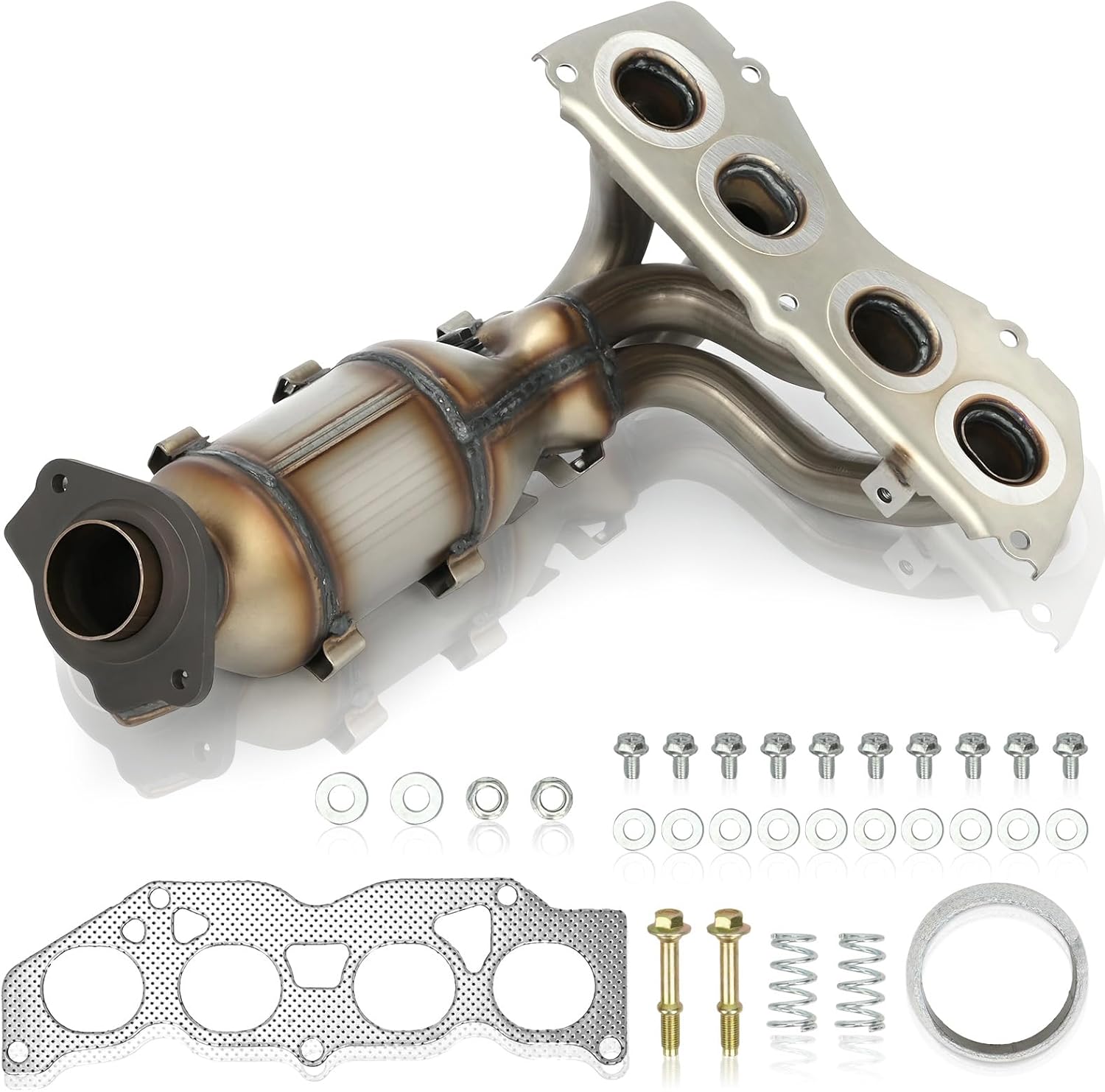
Recommended Tools for This Job


How to Tell a Bad Converter From Other Problems
Catalytic converter symptoms overlap with other common engine issues. This is where many DIY repairs go wrong. The converter may be the victim rather than the cause.
Problems Often Mistaken for Converter Failure
- A bad oxygen sensor can trigger efficiency codes or false fuel-control issues.
- Engine misfires can overheat and damage the converter while also causing hesitation and poor power.
- An exhaust leak ahead of the rear oxygen sensor can mimic poor converter performance.
- A failing ignition coil or worn spark plug can dump unburned fuel into the converter.
- Oil burning or coolant burning can poison the catalyst and shorten converter life.
Clues the Converter Is the Result, Not the Root Cause
If you find misfire history, rich fuel trims, coolant loss, blue smoke, or oil-fouled spark plugs, stop and correct those issues first. Replacing only the converter may temporarily clear the code, but the new part can fail again if the engine is still running poorly.
When the Diagnosis Strongly Supports Converter Failure
You can be more confident the catalytic converter is bad when several of these findings show up together rather than just one by itself.
- Persistent P0420 or P0430 codes after confirming there are no exhaust leaks or active air-fuel issues.
- Rattling inside the converter housing that clearly comes from broken substrate material.
- Severe power loss that improves when exhaust restriction is relieved.
- Visible internal melting, collapse, or breakage seen with a borescope.
- Temperature and live data results that support poor catalyst function or restriction.
What to Do Next if the Converter Is Bad
If testing points to a failed converter, do not immediately order the part until you identify why it failed. A converter can die from age, but many fail because of another engine problem.
Before Replacement, Check for These Root Causes
- Misfires from spark plugs, ignition coils, or fuel injector problems.
- Rich running caused by faulty sensors, fuel pressure issues, or intake problems.
- Oil consumption from worn engine components or valve cover leaks contaminating the exhaust stream.
- Coolant burning from a head gasket or internal leak.
- Physical impact damage from road debris or off-road contact.
Also verify emissions rules in your state. Some vehicles require specific EPA or CARB-compliant catalytic converters. Installing the wrong type can cause inspection failure or recurring check engine light problems.
DIY Limits and When to Call a Professional
A DIYer can usually handle the initial diagnosis, but professional help makes sense if scan data is confusing, rusted exhaust hardware will need cutting or welding, or there are deeper engine issues involved. Shops can also run backpressure tests and use more advanced scan tools to verify catalyst performance.
If your vehicle has multiple catalyst-related codes, repeated converter failures, or signs of internal engine damage, expert diagnosis is often cheaper than replacing parts one at a time.
Key Takeaways
- Do not replace a catalytic converter based on a P0420 or P0430 code alone because misfires, leaks, and sensor issues can trigger the same warning.
- Power loss under load, internal rattling, and visible substrate damage are stronger signs of a physically failed converter than smell or codes by themselves.
- Use multiple checks together, including scan data, visual inspection, temperature readings, and engine performance symptoms, to avoid a wrong diagnosis.
- Fix the root cause such as rich running, oil burning, or misfires before installing a new converter or the replacement may fail quickly.
- Work only on a cool exhaust and always support the vehicle safely with jack stands if you need to inspect underneath.
FAQ
Can I Drive with a Broken Catalytic Converter?
Sometimes, but it depends on how it failed. If the converter is only setting an efficiency code, the car may still drive normally for a while. If it is clogged, the vehicle can lose power, overheat the exhaust, stall, or become unsafe to drive. A rattling converter can also break apart further and restrict flow.
Will a Bad Oxygen Sensor Cause Catalytic Converter Codes?
Yes. A failing oxygen sensor, especially if it is slow or inaccurate, can contribute to catalyst efficiency codes. That is why you should inspect live sensor behavior and check for other fuel-control issues before replacing the converter.
What Does a Clogged Catalytic Converter Feel Like?
It usually feels like the engine cannot breathe. The car may idle acceptably but struggle to accelerate, lose speed uphill, feel weak at higher RPM, or run worse the longer you drive.
Does a Rattling Catalytic Converter Always Mean Replacement?
Usually, internal rattling means the substrate has broken and the converter will need replacement. However, make sure the noise is not a loose heat shield or another exhaust component before you buy parts.
Can a Catalytic Converter Fail Because of Engine Problems?
Yes. Misfires, rich fuel mixtures, burning oil, and burning coolant are common reasons converters overheat, melt, or become contaminated. Replacing the converter without fixing those issues often leads to another failure.
How Accurate Is the Infrared Thermometer Test?
It is useful but not definitive. Temperature differences can support your diagnosis, especially when combined with codes and symptoms, but vehicle design, test conditions, and shielded exhaust parts can affect readings.
Will Removing an Oxygen Sensor Help Diagnose a Clogged Converter?
It can. On some vehicles, temporarily relieving exhaust pressure by removing an upstream oxygen sensor can improve power if the converter is restricted. Because the test is noisy and not ideal in every situation, it should be used carefully and only as one part of a larger diagnosis.
Need Parts for This Repair?
The right parts and supplies vary by vehicle.
Select your make and model to find compatible parts and accessories for your car.
Exact Fit
Parts that fit your make and model
Quality You Can Trust
Top brands and OEM quality options
Fast Shipping
Get the parts you need, delivered fast