

Note: This article contains affiliate links. If you click on these links and make a purchase, I may earn a small commission at no extra cost to you. This helps support my research and content. Read my full affiliate disclosure here.
Repair Snapshot
Use a mechanic if your vehicle requires an ABS automated bleed procedure with a scan tool you do not have, or if the pedal stays soft after proper bleeding. Professional help is also smarter if bleeder screws are seized, brake lines were replaced, or the ABS hydraulic control unit may contain trapped air.
This article is part of our Brake System Maintenance & Repair Guides.
Bleeding an ABS brake system is similar to bleeding standard brakes, but the ABS hydraulic unit can trap air in places a basic two-person bleed may not clear. The exact method depends on whether you only opened a caliper or brake hose, or whether air may have entered the master cylinder, ABS module, or multiple lines.
For many DIY jobs, you can restore a firm pedal with the normal wheel-by-wheel bleeding sequence while keeping the master cylinder full. But on some vehicles, especially after major brake work or a dry master cylinder, you may need a scan tool to run the ABS pump and solenoids during a special bleed procedure.
The key is to follow a clean process, use the correct brake fluid, and stop if the pedal remains spongy after repeated bleeding. ABS systems are not a place to guess, because poor braking performance can be dangerous.
Before You Start
Start by confirming the exact brake fluid specification printed on the reservoir cap or listed in the owner’s manual. Most U.S. vehicles use DOT 3 or DOT 4 fluid, and mixing the wrong type can damage seals or reduce braking performance.
Park on level ground, set the parking brake if it will not interfere with the service, chock the wheels, and support the vehicle securely on jack stands. Brake fluid damages paint, so keep rags handy and wipe spills immediately.
Know when ABS Bleeding Is Different
If you only replaced pads and never opened the hydraulic system, you usually do not need to bleed the brakes at all. If you replaced a caliper, hose, wheel cylinder, or opened a single line, a standard manual, vacuum, or pressure bleed may be enough. If the master cylinder ran dry, the ABS module was replaced, lines near the hydraulic control unit were opened, or the pedal is still soft after conventional bleeding, an ABS service bleed with a scan tool may be required.
- Check the service information for the exact wheel bleeding order.
- Verify whether the vehicle calls for a scan tool to cycle the ABS pump and valves.
- Inspect every bleeder screw before starting so you do not round one off halfway through the job.
- Clean dirt from the reservoir cap and bleeder screws to avoid contaminating the system.
How ABS Brake Bleeding Works
In a conventional brake system, air usually travels to the highest points and can be pushed out through the caliper or wheel cylinder bleeders. ABS adds a hydraulic control unit containing valves, passages, and often a pump motor. When air gets trapped inside that unit, normal pedal bleeding may not move it.
That is why some vehicles have a two-stage process: first a regular base brake bleed, then an automated ABS bleed using a scan tool. During that automated routine, the ABS unit opens and closes internal valves to move trapped air into the brake lines where it can be bled out.
Common Situations
- After replacing one caliper or brake hose, a standard bleed is often enough.
- After replacing the master cylinder, bench bleeding plus wheel bleeding is usually required.
- After the reservoir runs empty, air may enter the ABS unit and require scan-tool cycling.
- After replacing the ABS hydraulic control unit, follow the factory procedure rather than a generic bleed method.
Preparation and Inspection
Check the System Before Bleeding
Bleeding will not fix a mechanical problem. Inspect brake hoses for wetness, line fittings for leaks, calipers and wheel cylinders for seepage, and the master cylinder area for fluid loss. If any component is leaking, repair that first.
Spray a small amount of penetrating oil on each bleeder screw and let it soak for a few minutes. Then crack each bleeder loose gently before starting the actual bleed. If one is seized, it is better to find out now than with fluid dripping everywhere and the vehicle in the air.
Set the Fluid Level Correctly
If the old fluid is dark, use a fluid extractor or turkey baster to remove most of the fluid from the reservoir, but do not expose the ports at the bottom. Refill with fresh fluid to the MAX line. During bleeding, never let the reservoir get low enough to suck in air, or you may have to start over.
Tools That Make This Job Easier


Standard Bleeding Procedure for Many ABS Vehicles
If your service information does not call for a dedicated ABS automated bleed, begin with a normal brake bleeding procedure. The usual wheel order is from the wheel farthest from the master cylinder to the closest, but always confirm for your specific vehicle. Many front-engine vehicles use right rear, left rear, right front, then left front.
Two-person Manual Bleeding Steps
- Remove the wheel if needed for easier bleeder access and clean the bleeder area.
- Push one end of the clear hose over the bleeder screw and place the other end in a catch bottle partly filled with clean brake fluid.
- Top off the master cylinder reservoir with fresh fluid.
- Have your helper slowly press the brake pedal several times and then hold firm pressure.
- Open the bleeder screw about a quarter turn until fluid and air exit, then close it before the pedal reaches the floor.
- Tell the helper to release the pedal slowly.
- Repeat until you see a solid stream of fluid without bubbles.
- Check and refill the reservoir after every few cycles.
- Move to the next wheel in the correct sequence.
Do not allow the pedal to slam to the floor on an older master cylinder unless the service information says it is acceptable. On high-mileage systems, pushing the piston into unused bore areas can sometimes damage internal seals. Slow, controlled pedal movement is safer.
Pressure or Vacuum Bleeding
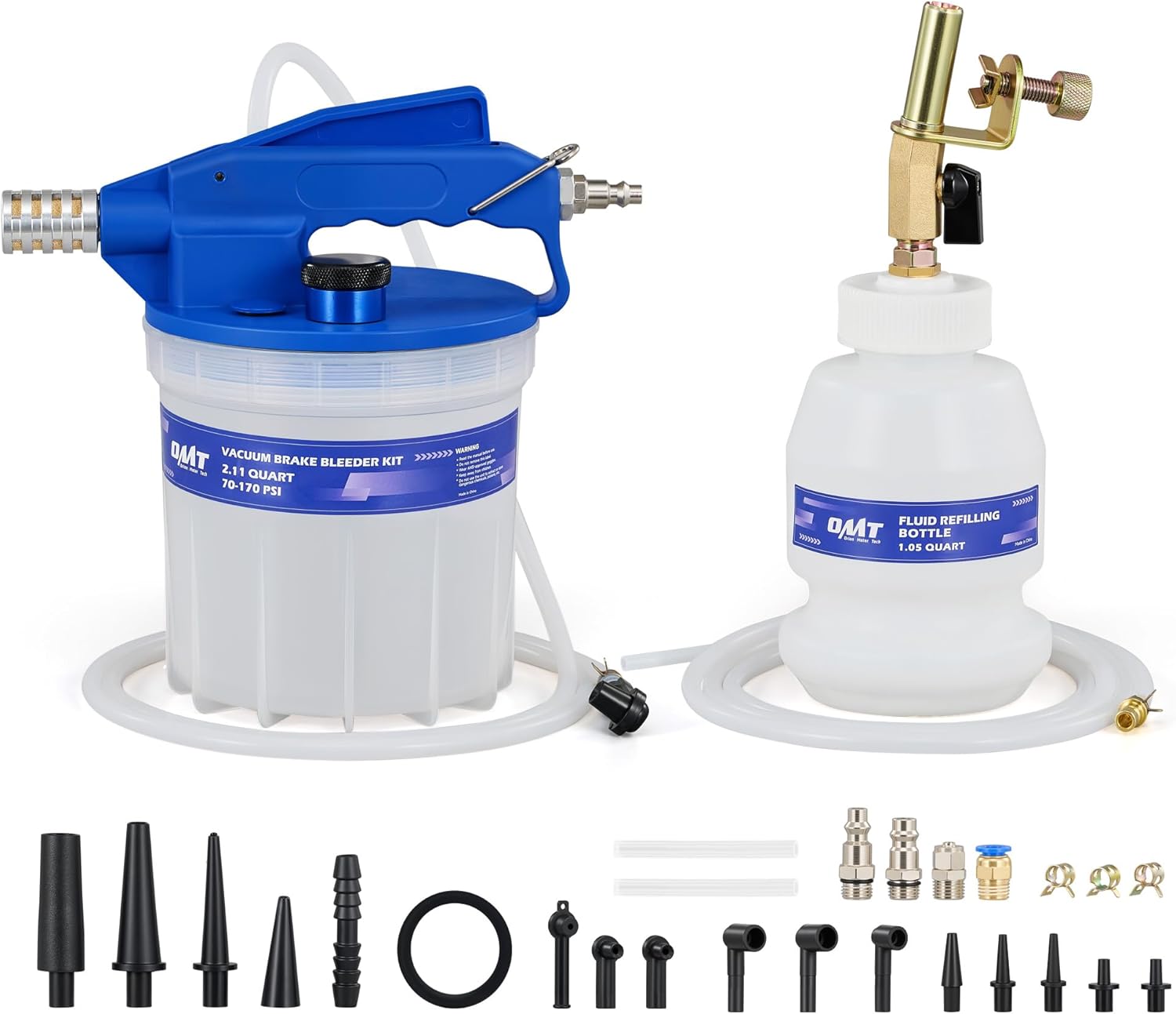
A pressure bleeder is often the cleanest and most effective DIY option because it keeps the reservoir supplied and moves fluid steadily through the system. Vacuum bleeders can work too, but they sometimes show tiny bubbles from bleeder screw threads rather than actual air in the brake line, so results can be misleading.
When You Need a Scan Tool for ABS Bleeding
If air entered the ABS hydraulic control unit, a basic wheel bleed may leave you with a low or spongy pedal. In that case, you may need a scan tool with bi-directional ABS functions. This tool commands the ABS pump and valves to cycle so trapped air can be moved into the brake lines.
Typical Scan-tool Bleed Sequence
- Perform a conventional base brake bleed first.
- Connect the scan tool and select the ABS automated bleed or service bleed function.
- Follow the on-screen prompts exactly, which may include pedal presses, holding pressure, or opening specific bleeder screws.
- Allow the ABS pump and solenoids to cycle as instructed.
- Repeat the wheel bleeding sequence after the automated routine if the procedure calls for it.
- Recheck pedal feel with the engine off and then with the engine running.
Do not try to trigger ABS activation by driving on gravel or a wet surface as a substitute for the correct service procedure. That is unpredictable, unsafe, and often ineffective compared with the proper scan-tool routine.
Master Cylinder and Bench Bleeding Notes
If the master cylinder was replaced, it usually must be bench bled before installation unless the replacement unit came pre-bled and the manufacturer specifically says otherwise. Bench bleeding removes trapped air from the master cylinder itself so you are not trying to push large air pockets through the rest of the brake system.
A master cylinder that was installed dry can create a pedal that never fully firms up, even after repeated wheel bleeding. If that happened, remove it and bench bleed it correctly, then bleed the wheel circuits again. On some ABS vehicles, you may still need the automated ABS cycle afterward.
Recommended Tools for This Job


How to Tell the Bleeding Worked
With the engine off, the brake pedal should feel firm after a few pumps and hold steady under pressure. With the engine running, the pedal may sink slightly because of normal brake booster assist, but it should still feel solid and should not continue drifting toward the floor.
Final Checks
- Inspect every bleeder screw and line fitting for leaks.
- Make sure all bleeders are snug and fitted with dust caps.
- Set the reservoir level to the proper mark and reinstall the cap.
- Wash away spilled fluid with brake cleaner where appropriate.
- Test the brakes at very low speed in a safe area before normal driving.
If the ABS warning light or brake warning light stays on after the repair, scan for trouble codes. A warning light after bleeding can point to a low fluid level, a wheel speed sensor issue, or an ABS fault unrelated to air in the lines.
Common Mistakes to Avoid
- Letting the reservoir run low during bleeding and introducing new air.
- Using the wrong brake fluid type or pouring from an old, moisture-contaminated bottle.
- Bleeding the wheels in the wrong order for the vehicle.
- Overtightening bleeder screws and damaging the seat.
- Mistaking air leakage at bleeder screw threads for air still trapped in the brake system.
- Skipping the ABS automated bleed when the service information requires it.
- Assuming a soft pedal is always trapped air when it may be a leak, bad master cylinder, or flexible hose problem.
Another common mistake is replacing parts without diagnosing why the pedal felt soft in the first place. A brake pedal that slowly sinks under constant pressure can indicate internal master cylinder bypassing. Bleeding will not permanently fix that.
Brake Fluid Service Intervals and Maintenance Tips
Many manufacturers recommend brake fluid replacement about every 2 to 3 years, though some list longer intervals or only inspection schedules. Brake fluid absorbs moisture over time, which lowers its boiling point and can promote corrosion inside calipers, lines, and the ABS unit.
Regular fluid changes are one of the best ways to protect expensive ABS components. If your fluid is dark, the reservoir has sludge, or the brake pedal feels inconsistent during heavy braking, a full fluid flush may be overdue even if no hydraulic parts were replaced.
- Use only fresh fluid from a sealed container.
- Do not store opened brake fluid for long periods because it absorbs moisture.
- Replace missing bleeder caps to keep dirt and water away from the screws.
- Inspect hoses and line fittings whenever you rotate tires or service brakes.
When to Stop and Call a Professional
If you have completed the correct procedure and still have a soft pedal, do not keep driving and hoping it improves. Persistent sponginess may mean air is trapped in the ABS modulator, the master cylinder is failing, a bleeder is pulling air, or there is an external leak you have not found.
Professional help is also worthwhile when the vehicle requires factory-level scan tool commands, the bleeder screws are heavily rusted, or brake lines need fabrication or replacement. Braking performance is too critical to risk an uncertain repair.
Key Takeaways
- Always verify the correct brake fluid and wheel bleeding order for your exact vehicle before starting.
- A normal wheel-by-wheel bleed may work after minor hydraulic repairs, but air in the ABS unit often requires a scan-tool automated bleed.
- Keep the master cylinder reservoir full at all times or you can reintroduce air and extend the job.
- A pedal that remains soft after proper bleeding may point to a leak, a failing master cylinder, or trapped air in the ABS modulator.
- Do not road-test a vehicle at normal speeds until the pedal is firm and the system is leak-free.
FAQ
Can I Bleed an ABS Brake System Without a Scan Tool?
Sometimes, yes. If you only opened one caliper or hose and no air entered the ABS hydraulic unit, a conventional bleed may restore a firm pedal. But if the reservoir ran dry, the ABS module was replaced, or the pedal stays spongy, a scan tool may be required.
What Is the Correct Wheel Order for Bleeding ABS Brakes?
It depends on the vehicle. Many use right rear, left rear, right front, then left front, but some use a different pattern based on brake line routing or ABS design. Always check the service information for your exact year, make, and model.
How Do I Know if There Is Still Air in the ABS Module?
A common sign is a soft or low brake pedal even after repeated wheel bleeding with no visible leaks. If the master cylinder never ran dry and the brake work was minor, air may be elsewhere, but if major components were replaced, the ABS unit is a likely suspect.
Should the Engine Be on or Off While Bleeding Brakes?
Most manual bleeding is done with the engine off. Final pedal feel should be checked both with the engine off and with it running, since the brake booster changes pedal feel slightly. Follow any special instructions in the service manual for your vehicle.
Can Old Brake Fluid Cause a Soft Brake Pedal?
Old fluid usually causes poor performance from moisture contamination and internal corrosion rather than a truly soft pedal by itself. However, degraded fluid can contribute to ABS valve issues, caliper problems, and inconsistent braking, so replacing old fluid is good preventive maintenance.
Why Does My Brake Pedal Still Sink After Bleeding?
If the pedal slowly sinks under steady pressure, the problem may be a failing master cylinder rather than trapped air. Other causes include a hidden leak, rear brake adjustment issues on drum systems, or air still trapped in the ABS hydraulic unit.
Is Vacuum Bleeding Better than Manual Bleeding for ABS Brakes?
Not always. Vacuum bleeding is convenient, but it can sometimes pull air past bleeder screw threads and make it look like bubbles are still in the line. Pressure bleeding is often more consistent, and some ABS systems still need a scan-tool cycle regardless of the basic bleeding method used.
Need Parts for This Repair?
The right parts and supplies vary by vehicle.
Select your make and model to find compatible parts and accessories for your car.
Exact Fit
Parts that fit your make and model
Quality You Can Trust
Top brands and OEM quality options
Fast Shipping
Get the parts you need, delivered fast