

Note: This article contains affiliate links. If you click on these links and make a purchase, I may earn a small commission at no extra cost to you. This helps support my research and content. Read my full affiliate disclosure here.
If your Toyota Tundra is showing fuel smell, rough idling, or an EVAP-related warning, the vapor canister is often the component to check. Choosing the right vapor canister matters because a proper unit restores the EVAP system sealing, reduces evaporative emissions, and prevents persistent check engine codes.This guide covers our shortlisted picks for Toyota Tundra vapor canisters and explains the evaluation criteria we used, including fitment accuracy and seal durability. Read on to understand which features matter most before you replace the canister.
Looking for other parts? See all Toyota Tundra parts & accessories.
Top Picks at a Glance
| Best overall The best all-around choice for most situations | Toyota Genuine Charcoal Vapor Canister Assembly (77740-06170) |  |
| Best Value The sweet spot between price and what you get | KarParts360 Fuel Vapor Canister Replacement for Toyota Tundra |  |
| Best Budget The cheapest option that still gets the job done reliably | Flynsu Vapor Canister Replacement for 2007–2013 Toyota Tundra |  |
| Highest Rated A top-rated pick with lots of positive feedback | Toyota Charcoal Canister Assembly 77740-02130 |  |
| Most popular A crowd favorite that many people choose with confidence | Toyota Vapor Canister (77740-02121) |  |
| Best Seller A high-volume bestseller chosen again and again | Toyota Charcoal Canister Assembly (Part 77740-35392) |  |
1. Toyota Genuine Charcoal Vapor Canister Assembly (77740-06170)

| Manufacturer | Toyota |
|---|---|
| Model | Vapor Canister |
| Item model number | 77740-06170 |
| Made in | China |
This genuine Toyota charcoal vapor canister replaces a failing EVAP storage/venting unit to stop fuel vapor leaks and clear related check-engine codes. It mounts under the vehicle and connects to multiple EVAP hoses and an electrical vent/purge sensor, so installation typically requires lifting the rear of the truck, lowering or loosening the exhaust for access, and carefully labeling hose connections. As a factory replacement it matches original fit and function, which helps resolve common codes like P0440 and P0455 and can restore proper smog test performance. Buyers report improved drivability and fuel economy after correct installation. Limitations: the part requires moderate mechanical skill and time to install because of tight clearances and multiple fittings, and Toyota updated part variations across years so verifying exact fit for your Tundra year and VIN is important before ordering. A small number of buyers received a mismatched revision for certain model years, so double-check compatibility to avoid returns or further diagnostics.
Best for: Balanced, all-round Toyota owners who prioritize reliability and want a factory-quality replacement to fix EVAP faults and pass emissions checks without unnecessary complexity.
Less Ideal for: Buyers looking for a quick, plug-and-play fix with minimal DIY work or those who cannot verify exact year/VIN fitment should consider professional parts-matching or dealer assistance instead.
- Factory-quality replacement designed to match Toyota OEM fit and function
- Directly addresses EVAP-related check-engine codes and emissions failures
- Built-in valve and sensor connections come ready to mate with vehicle harness and hoses
- Durable construction intended for long service life under the vehicle
- Installation can be time-consuming and requires lifting the vehicle and manipulating the exhaust for access
- Part revisions across model years mean you must confirm exact fitment for your truck before buying
Verdict: A factory-quality Toyota canister that reliably fixes EVAP problems when you confirm correct fitment and are prepared for a hands-on installation.
2. KarParts360 Fuel Vapor Canister Replacement for Toyota Tundra

| Manufacturer | KarParts360 |
|---|---|
| Model | TUNDRA |
| Connector Quantity | 1 |
| Port Quantity | 2 |
This KarParts360 fuel vapor canister is an aftermarket replacement intended to restore the evaporative emissions purge system on Toyota Tundra trucks. It replaces factory canisters using listed OEM part numbers and arrives sealed in a box with blade terminals, one female connector and two ports to match the original harness and vacuum plumbing. In practice it is used when the stock canister is cracked, saturated, or causing check engine codes related to EVAP leaks; install follows normal under-body or rear-frame mounting procedures depending on Tundra year and location. The listing emphasizes factory-spec evaluation and durable materials to provide longevity comparable to a factory replacement. Practical benefits include direct interchangeability with common OEM numbers and a ready-to-install connector shape to minimize wiring changes. Limitations are typical for aftermarket parts: fitment must be confirmed against the OEM number before purchase and it may not include vehicle-specific brackets or clips that some factory assemblies provide.
Best for: Practical optimizers who want a cost-effective, ready-to-install replacement that restores EVAP function without unnecessary upgrades or premium branding.
Less Ideal for: Owners seeking an exact factory-branded part or a plug-and-play assembly with all original mounting hardware should consider dealer or OEM sources instead.
- Lists multiple compatible OEM part numbers for straightforward fit verification
- Includes factory-style blade terminal and matching female connector to simplify electrical hookup
- Sealed new-in-box condition reduces risk of receiving damaged or used components
- May not include vehicle-specific mounting brackets or clips needed for some Tundra installations
Verdict: A budget-focused, direct-replacement vapor canister that restores EVAP function for Toyota Tundra owners who prioritize value and practical fitment.
3. Flynsu Vapor Canister Replacement for 2007–2013 Toyota Tundra
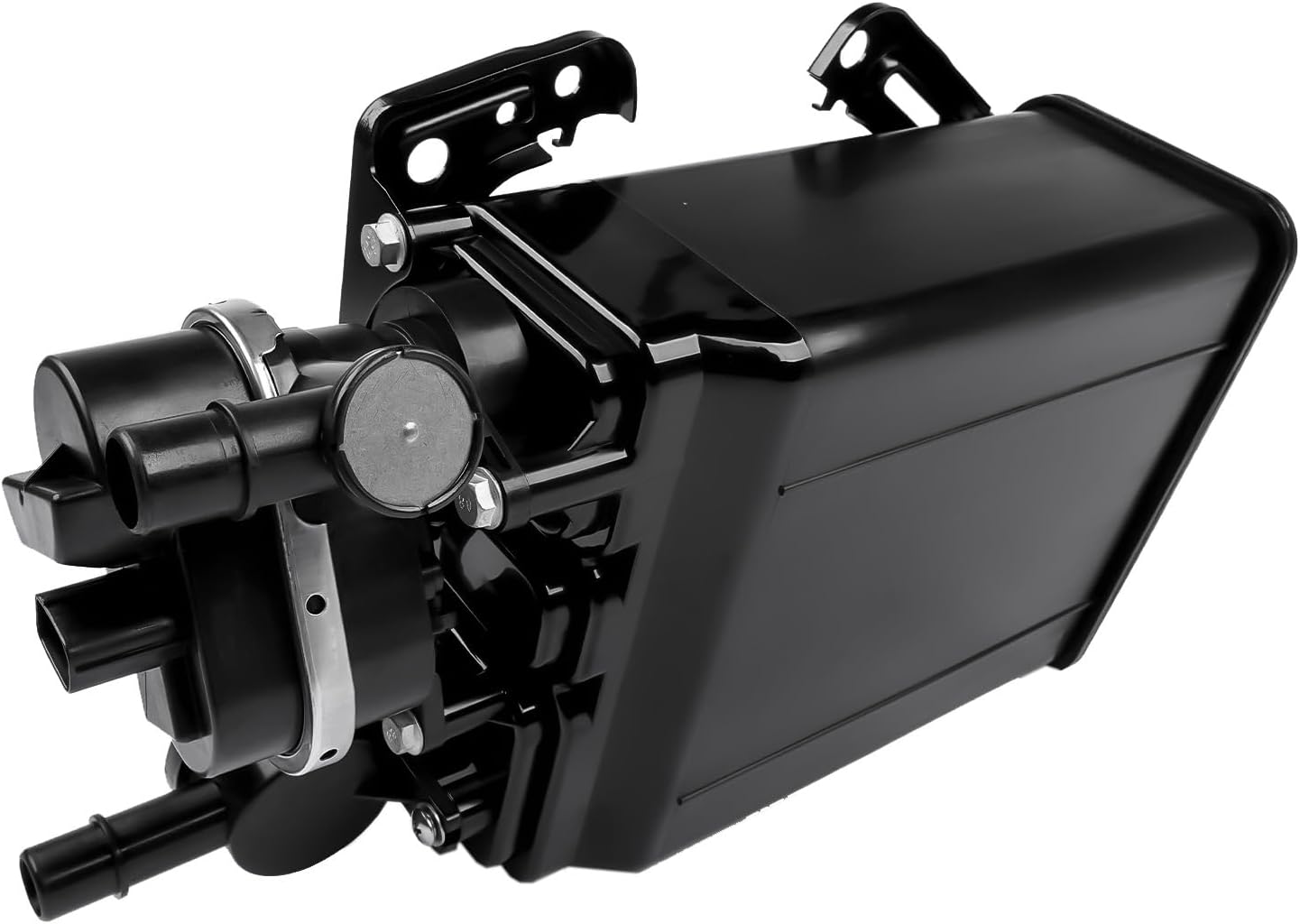
| Compatible Model | Replacement for 2007-2013 Toyota Tundra 4.0L 4.6L 5.7L |
|---|---|
| Manufacturer Part Number | Flynsu 77740-0C050 |
| Brand | Flynsu |
This Flynsu vapor canister is a direct replacement part intended to restore the EVAP system on 2007–2013 Toyota Tundra trucks with 4.0L, 4.6L, and 5.7L engines. It contains activated charcoal to absorb fuel vapors so they can be purged and burned by the engine rather than released as emissions. Typical use is straightforward: remove the failed canister and install this unit in the same mounting location and hose connections as the factory part. The product lists compatible OEM part numbers and aims to match fitment for the specified Tundra years. Practical benefits include returning proper evaporative emissions control and avoiding EVAP-related check engine lights. Limitations are mixed customer feedback on quality and durability, so buyers should inspect for secure hose fittings and expect possible variation in finish compared with factory parts. Installation requires basic mechanical skills and common hand tools; professional installation might be preferred if you want a warranty-backed fit or exact factory finish.
Best for: Budget-conscious Tundra owners who need a straightforward, low-cost replacement to get their EVAP system working again and prioritize price over OEM appearance or extended support.
Less Ideal for: Buyers seeking a factory-backed part, guaranteed long-term durability, or perfectly matched finish should consider OEM or dealer-sourced canisters instead.
- Direct replacement fitment for 2007–2013 Toyota Tundra 4.0L, 4.6L, and 5.7L applications
- Contains activated charcoal to restore EVAP vapor absorption and reduce evaporative emissions
- Lists matching manufacturer part numbers to simplify correct selection for the vehicle
- Customer reviews indicate inconsistent quality and possible fitment or build variations
- No manufacturer warranty information provided in the listing
Verdict: An affordable aftermarket vapor canister that restores EVAP function on 2007–2013 Toyota Tundra models for budget-focused buyers.
4. Toyota Charcoal Canister Assembly 77740-02130

| Manufacturer | Toyota |
|---|---|
| Model | Charcoal Canister |
| Manufacturer Part Number | 77740-02130 |
This is a factory replacement charcoal canister assembly from Toyota intended to restore proper EVAP system function and clear related check engine codes. It installs in place of the failed canister and connects to the vehicle's EVAP hoses and purge circuitry; typical use is direct engine bay or underbody replacement when diagnostics point to a leaking or clogged canister. Notable features include genuine Toyota fitment and factory part numbers for straightforward compatibility, and multiple user reports of resolving EVAP trouble codes and check-engine lights. The practical benefit is a like-for-like repair that avoids guesswork and can save on diagnostic time and recurring codes compared with piecemeal repairs. Limitations are standard for full assemblies: it replaces the entire unit rather than allowing targeted repair of internal components, and buyers should confirm exact Tundra model fitment before purchasing since part numbers must match the vehicle application.
Best for: Reliability-focused owners who prioritize restoring factory emission system performance with a genuine, manufacturer-specified replacement and want a straightforward, lasting repair.
Less Ideal for: Shoppers looking for a lower-cost aftermarket alternative or those wanting to repair individual EVAP components instead of replacing the whole canister should consider other options.
- Genuine Toyota part number for reliable fit and factory-quality replacement
- Direct swap that resolves common EVAP codes and clears check-engine lights
- Several buyers report easy installation with basic hand tools
- Factory build reduces risk of premature failure compared with unknown aftermarket units
- Replaces the entire assembly rather than offering component-level repair options
- Requires verifying exact part compatibility for Tundra submodels before ordering
Verdict: A factory Toyota charcoal canister assembly that provides a direct, reliable fix for EVAP-related faults when you need a dependable OEM replacement.
5. Toyota Vapor Canister (77740-02121)

| Manufacturer | Toyota |
|---|---|
| Model | Vapor Canister |
| Item model number | 77740-02121 |
| Made in | China |
This Toyota vapor canister is a factory replacement unit intended to collect and store fuel vapors from the tank and route them to the engine for controlled purge, which helps clear evaporative emissions trouble codes and prevent fuel odor. It installs in the vehicle's EVAP system and is used when a failed canister triggers a check engine light or when inspection/repair requires replacing the tank vapor storage component. The part is a direct-fit factory-style assembly and includes factory part numbers for straightforward identification. In practice it simplifies repair because buyers get a component that matches factory routing and sensor locations, reducing diagnostic guesswork. Users report simple installation when lines and O-rings are pre-lubricated and that the canister resolves EVAP codes after a drive cycle. This is a single-purpose emissions component and does not address unrelated fuel system faults, so correct fitment verification is important before purchase to avoid returns or extra work.
Best for: Convenience-driven buyers who prioritize straightforward, factory-style replacements that minimize diagnostic time and hassle during routine EVAP repairs.
Less Ideal for: Buyers looking for universal or multi-year aftermarket options or those who need broader fuel-system upgrades beyond evaporative emissions controls should consider other solutions.
- Factory replacement design for consistent fit and routing
- Direct match to Toyota part numbers for easier identification during repair
- Designed to stop fuel vapor leaks and help clear EVAP-related check engine codes
- Customers report reliable long-term operation when installed correctly
- Fitment varies between model years so confirming exact vehicle application is necessary
- Replacement requires access under the vehicle which can be awkward for DIYers
Verdict: A factory-style Toyota vapor canister that simplifies EVAP repairs when you confirm exact fitment for your Tundra.
6. Toyota Charcoal Canister Assembly (Part 77740-35392)

| Brand Name | Toyota |
|---|---|
| Fuel Type | Charcoal |
| Included Components | Charcoal Canister |
| Material | High Density Polyethylene (HDPE), Metal |
This Toyota charcoal canister is a direct replacement assembly meant to restore proper EVAP system function on compatible Toyota trucks. It replaces the evaporative emissions storage device that traps fuel vapors and connects to the factory vacuum and vent lines. In typical use you remove the old canister, transfer any reusable hoses, and install the unit in the same mounting location; several buyer reports note easy bolt-up and straightforward hose routing. The part is made of HDPE with metal fittings and comes as a complete canister unit labeled by Toyota, which reduces fitment guesswork and simplifies troubleshooting for check engine light codes related to the EVAP system. Limitations include dependence on your existing hoses and fittings being serviceable and occasional reports of defective items, so verify part number fitment and inspect connections during installation. This is a repair-focused part intended to correct emissions faults rather than upgrade performance.
Best for: A risk-averse mainstream buyer who wants a factory-quality replacement to reliably fix EVAP-related trouble codes on a Toyota Tundra and prefers the certainty of a manufacturer-branded part.
Less Ideal for: Not for buyers looking to modify performance or those who need a full hose/connector kit included; professional installers seeking aftermarket upgrades may prefer alternative assemblies with bundled hoses.
- Genuine Toyota factory replacement simplifies fit and compatibility
- Complete canister assembly reduces need to source separate components
- Made from factory-grade materials (HDPE and metal) for durability
- Many users report straightforward installation and resolution of EVAP-related check engine lights
- Requires reuse of existing hoses which may need replacement separately
- Occasional customer reports of defective units or fitment issues
Verdict: A factory Toyota charcoal canister assembly that provides a straightforward, reliable fix for EVAP system problems on Toyota Tundra trucks.
Choosing the Right Toyota Tundra Vapor Canister: Key Factors to Consider
Fitment and Port Alignment
Correct fitment is essential because the canister must match the Tundra's mounting points and hose routing exactly to avoid stress on hoses and connectors. Mismatched ports can require awkward hose stretches or adapters that increase leak risk.
When ports align properly, installation is faster and the assembly maintains factory routing, which reduces vibration and chafing. Check the orientation of purge and vent ports and ensure mounting brackets match the vehicle chassis to prevent undue strain on seals and hoses.
Seal Material and Construction
Seal quality determines how well the canister contains fuel vapors over time. Materials that resist gasoline, ethanol blends, and temperature changes help prevent hardening, cracking, or shrinkage that lead to leaks.
Look for canisters with robust sealing flanges and durable gasket materials. Attention to seam welding or bolted flange design also matters because poor construction can be a source of slow leaks even when the rest of the unit appears intact.
Purge and Vent Port Design
The design and accessibility of purge and vent ports affect both performance and serviceability. Ports that match the OEM size and location make connecting the purge valve and vent hose simple and reduce the likelihood of improper routing that causes diagnostic trouble codes.
Accessible ports also ease troubleshooting and replacement of related components. Consider whether the port sizing supports the purge flow your vehicle's EVAP system expects to maintain proper canister saturation and regeneration.
Canister Media and Adsorption Capacity
The internal charcoal media is what captures fuel vapors, so its volume, grade, and containment are important for effective adsorption. More effective media can reduce the frequency of saturation and maintain system performance under heavier vapor loads.
Quality media that resists breakdown reduces the chance of fines or dust that can clog purge valves or lines. Consistent media packing and containment also prevent internal shifting that could compromise adsorption efficiency.
Durability Under Heat and Vibration
Truck use exposes components to wide temperature swings and constant vibration. A durable canister will retain its shape, seals, and mounting integrity under these conditions, lowering the risk of cracks or loose fittings that cause leaks.
Consider construction features like reinforced housings, robust bracket attachments, and materials rated for automotive thermal cycles. Durability reduces the need for repeat replacements and helps maintain EVAP integrity over time.
Serviceability and Installation Ease
Ease of installation affects how quickly you can restore EVAP operation and whether additional parts are needed. Canisters with clear port labeling, accessible mounting hardware, and included gaskets or hardware simplify work and reduce the chance of installation errors.
Serviceable designs that allow replacement of gaskets or reuse of mounting brackets can lower long-term maintenance effort. Also consider whether the design permits basic inspection without full disassembly to spot leaks or media breakdown.
How We Chose the Best Toyota Tundra Vapor Canister
To assemble this list we focused on criteria that directly affect fitment, sealing performance, and long-term reliability for Toyota Tundra vehicles. Key evaluation points included factory-compatible mounting and hose connections, vapor-tight sealing materials and construction, resistance to fuel vapors and contaminants, and the design of purge and vent ports to match OEM routing. We also considered durability under temperature cycles and vibration typical of truck use, plus availability of replacement gaskets or mounting hardware. Units with clear installation documentation and straightforward vehicle-specific fit information were favored.We excluded canisters that lacked vehicle-specific fit details, generic universal assemblies without matching port locations, or units with unclear materials that could degrade when exposed to fuel vapors. The final selection emphasizes components that minimize leakage risk, simplify installation, and restore proper EVAP function for the Toyota Tundra.
Our full evaluation process is outlined in our review methodology.
FAQ
What are common symptoms of a failing vapor canister in a Toyota Tundra?
Common signs include a persistent fuel smell around the vehicle, rough idle, difficulty starting, or intermittent check engine light codes related to the EVAP system. You may also notice failed EVAP readiness during emissions testing. These symptoms often indicate leaks, saturated media, or compromised purge/vent functionality.
How long does a vapor canister usually last before replacement is needed?
Lifespan varies with driving conditions and exposure to fuel contaminants, but canisters often last many years under normal use. Heavy use, frequent short trips, or exposure to excessive fuel vapors can shorten life. Inspecting seals and checking for EVAP codes helps determine when replacement is warranted.
Can I replace just the canister or do I need other parts too?
Often the canister can be replaced on its own, but related items like gaskets, mounting hardware, or cracked hoses should be checked and replaced as needed. If purge valves or vent solenoids show symptoms, addressing them alongside the canister prevents repeat issues and ensures the EVAP system functions correctly.
Will a vapor canister issue trigger a check engine light with an EVAP code?
Yes, canister leaks, saturated media, or blocked purge/vent paths commonly cause EVAP-related diagnostic trouble codes. The check engine light may come on intermittently or remain steady depending on the fault. Proper diagnosis should verify whether the canister is the source before replacing components.
How can I detect a vapor canister leak?
A visual inspection for cracked housings, loose fittings, or degraded gaskets is a good start. You may also notice fuel odor or fail an EVAP smoke test, which highlights leaks in the system. Professional diagnostic tests can pinpoint leak locations if visual checks are inconclusive.
Conclusion
When replacing a Toyota Tundra vapor canister, prioritize correct fitment and durable sealing materials to ensure the EVAP system remains vapor-tight. Pay attention to purge and vent port design, internal media quality, and robustness against heat and vibration.Balancing ease of installation with long-term durability will reduce the chance of repeat repairs. Inspect related hoses and mounting hardware during replacement to address common sources of leaks and restore proper system operation.
Explore More:
- Check out all Toyota Tundra parts & accessories
- Explore Vapor Canister Maintenance & Repair Guides
- Explore Fuel System
- Browse all Auto Parts
