

Note: This article contains affiliate links. If you click on these links and make a purchase, I may earn a small commission at no extra cost to you. This helps support my research and content. Read my full affiliate disclosure here.
If you own a Chevrolet S-10, choosing the right transmission fluid directly affects shift quality, component wear, and long-term reliability. The correct fluid keeps hydraulic circuits operating cleanly, controls clutch friction in automatic units, and protects bearings and synchros in manual gearboxes. Poor choices can lead to rough shifts, faster wear, and costly repairs.This guide shortlists the top transmission fluids suitable for the S-10 and explains the decision factors we used to select them. We focus on compatibility, heat tolerance, and maintenance considerations so you can pick a fluid that matches how you drive and how you maintain the truck.
Top Picks at a Glance
| Best Overall Transmission Fluid The best all-around fluid that balances performance and compatibility | ACDelco Dexron-VI Automatic Transmission Fluid — 1 gal |  |
| Best Budget Transmission Fluid A low-cost fluid that still meets common service specifications | Valvoline MaxLife Multi-Vehicle Full Synthetic ATF 1 Quart |  |
| Best Premium Transmission Fluid Higher-end formulation offering extra protection and longer service life | Castrol TranSynd 668 Synthetic Automatic Transmission Fluid, 1 gal |  |
| Best Synthetic Transmission Fluid Full synthetic base oils for maximum performance and temperature stability | Valvoline MaxLife Multi-Vehicle Full Synthetic ATF 1 Gallon |  |
| Best Dexron/Mercon Transmission Fluid Formulated to meet common OEM Dexron and Mercon specifications | ACDelco DEXRON-VI Full Synthetic Automatic Transmission Fluid, 1 qt |  |
| Best High-Mileage Transmission Fluid Additive package tuned for older gearboxes and higher-mileage units | Valvoline Restore & Protect Full Synthetic Automatic Transmission Fluid, 1 Gallon |  |
| Best Heavy-Duty Transmission Fluid Formulated for towing, heavy loads, and strenuous operating conditions | TCI 950601 Transmission Fluid, 1 Gallon |  |
1. ACDelco Dexron-VI Automatic Transmission Fluid — 1 gal
Best Overall Transmission Fluid
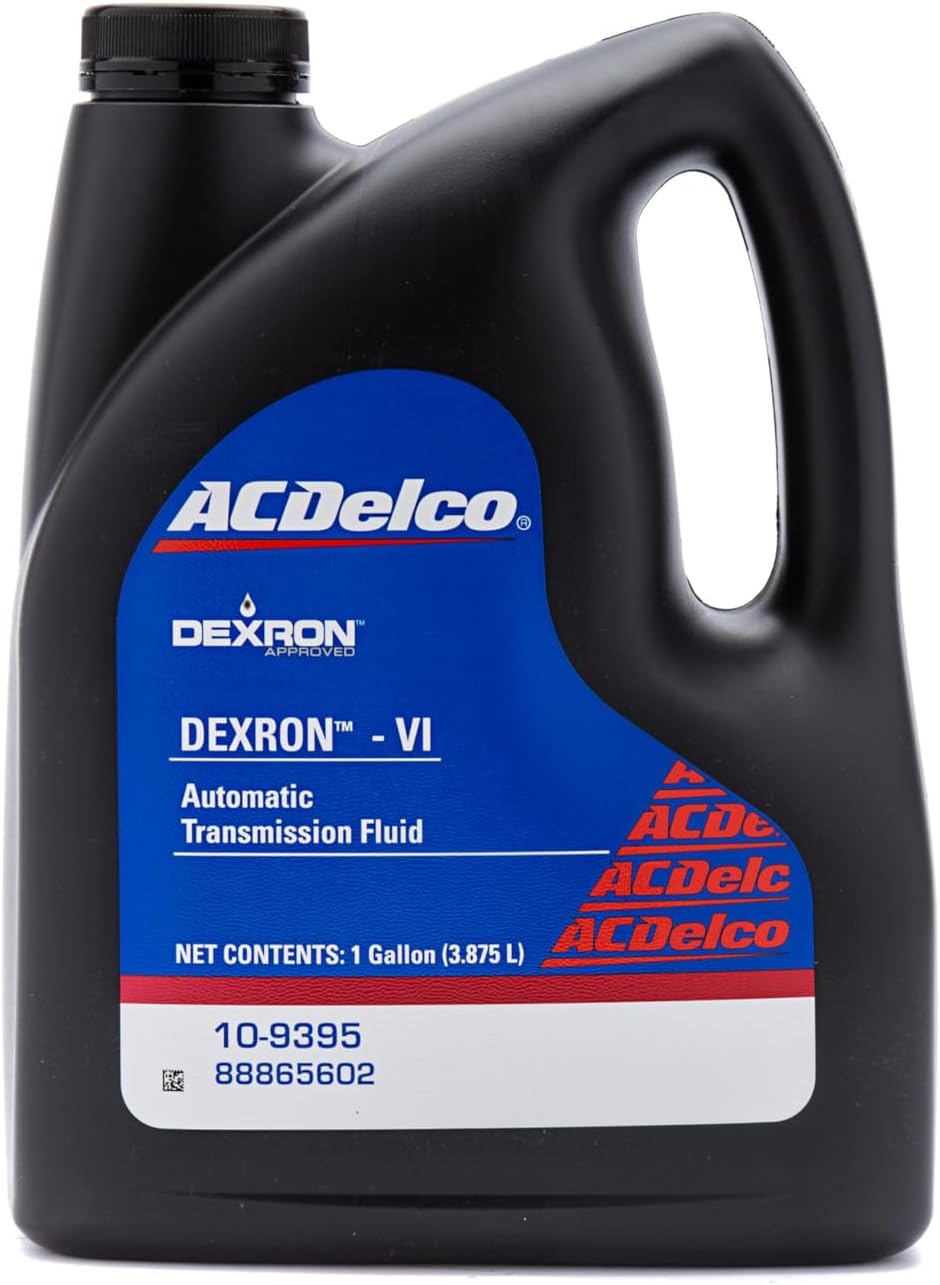
| Brand | ACDelco |
|---|---|
| Liquid Volume | 1 Gallons |
| SAE J300 Viscosity Grade | 5W-40 |
| Flash Point | 180 Degrees Celsius |
This ACDelco Dexron-VI transmission fluid is designed as a direct replacement for earlier Dexron formulations and to meet GM licensing for vehicles that call for Dexron-VI. It is typically used for routine transmission maintenance and fluid changes in vehicles specifying Dexron-VI, where it helps maintain consistent shift quality, reduce foaming and aeration, and resist oxidation under higher temperatures. The one-gallon jug is convenient for a full drain-and-fill or for topping up, and the formula is backward compatible with older Dexron-III and II(E) systems, so it works well when updating older fluids. Notable features include improved viscosity stability and friction durability compared with prior Dexron grades, and it is explicitly not intended for CVT or dual-clutch systems. Buyers should plan service intervals per the vehicle manual since the product description notes extended drain potential but does not replace following manufacturer maintenance recommendations. The product is positioned as a factory-quality choice for Chevrolet transmissions calling for Dexron fluids and balances durability and everyday drivability for light trucks and cars.
Best for: Chevrolet S-10 owners seeking a single, factory-quality fluid for routine transmission service who prioritize consistent shift performance and long-term fluid stability.
Less Ideal for: Drivers with continuously variable transmissions or dual-clutch gearboxes should choose a fluid specifically formulated for those systems.
- Factory-licensed Dexron-VI formulation compatible with vehicles calling for Dexron-VI
- Backward compatible with Dexron-III and II(E) for easy upgrades in older transmissions
- Improved viscosity stability and oxidation resistance for longer fluid life under heat
- Designed to reduce aeration and foam, helping maintain consistent shift feel
- Not suitable for CVT or dual-clutch transmissions that require specialized fluids
Verdict: The best all-around transmission fluid that balances lubrication, thermal stability, and broad compatibility for most routine maintenance and repairs.
2. Valvoline MaxLife Multi-Vehicle Full Synthetic ATF 1 Quart
Best Budget Transmission Fluid

| Liquid Volume | 1 Quarts |
|---|---|
| Material | Synthetic |
| Flash Point | 394 Degrees Fahrenheit |
| Viscosity | 1 |
Valvoline MaxLife Multi-Vehicle ATF is a full synthetic automatic transmission fluid designed for broad compatibility across light-duty vehicles, including the Chevrolet S-10. It is used as a direct-fill or top-off fluid where a multi-vehicle ATF is acceptable and aims to reduce wear, stabilize viscosity, and keep seals conditioned to help prevent leaks. Notable features include advanced anti-wear additives, frictional enhancements for smoother shifts, improved thermal stability for longer fluid life, and compatibility with many belt and chain-driven CVTs in addition to traditional automatics. In real-world DIY use on an S-10 this means straightforward serviceability, predictable shift feel after a drain and refill, and less frequent fluid-related issues compared with conventional fluids. The trade-offs are that it is a multi-vehicle, all-purpose formula rather than a vehicle-specific specialty fluid, so buyers should confirm their S-10 transmission specification before replacing factory-spec fluid and follow the manufacturer service intervals.
Best for: DIY owners of a Chevrolet S-10 who want an affordable, factory-quality full synthetic ATF that delivers reliable wear protection and easier servicing without buying a high-end specialty fluid.
Less Ideal for: Drivers who require a transmission fluid formulated to a specific manufacturer friction specification or who prefer dealer-recommended OEM fluids for warranty-sensitive repairs should consider alternatives.
- Full synthetic formula offers better thermal and viscosity stability than conventional ATF
- Anti-wear and conditioning additives help extend transmission and seal life
- Multi-vehicle compatibility simplifies DIY purchases for common service needs
- Not a vehicle-specific specialty fluid so may not match unique factory friction characteristics for every transmission
Verdict: The best low-cost transmission fluid for DIYers who want reliable basic protection and spec compliance without paying for premium additives.
3. Castrol TranSynd 668 Synthetic Automatic Transmission Fluid, 1 gal
Best Premium Transmission Fluid

| Brand | Castrol |
|---|---|
| Material | Synthetic |
| Liquid Volume | 1 Gallons |
| Container Type | Bottle |
Castrol TranSynd 668 is a fully synthetic ATF engineered to keep a transmission running clean and stable under heavy use. It is typically used as a replacement fluid for vehicles that need high oxidation resistance and consistent friction performance; pour it in during a service or fluid change just like any gallon-sized ATF. Notable features called out by the manufacturer include improved gear protection, extended anti-shudder and clutch-friction durability, and resistance to corrosion and foaming. In practice those properties translate to longer fluid life, steadier shift feel during towing or repeated acceleration, and reduced risk of deposit-related wear. The product comes in a one-gallon bottle and is presented as a universal fit fluid, so confirm compatibility with the S-10 transmission specification before use. Trade-offs are that this is a premium synthetic option intended for owners prioritizing long-term stability rather than a budget refill, and its universal labeling means you should verify your vehicle's required spec before installing.
Best for: A buyer who wants a premium synthetic ATF for demanding driving or towing and prioritizes fluid longevity, stable shift feel, and reduced maintenance intervals for a Chevrolet S-10.
Less Ideal for: Drivers who need a low-cost occasional top-up or who prefer fluids specified explicitly by transmission model without checking compatibility should consider other options.
- Fully synthetic formulation for improved oxidation and thermal stability
- Designed to reduce shudder and extend clutch-friction life
- Claims good corrosion and foaming resistance to protect internal components
- Labeled as a universal fit so you must verify it matches the S-10 transmission spec before use
Verdict: The best premium transmission fluid for users willing to pay more for superior oxidation resistance, shear stability, and extended fluid life under demanding conditions.
4. Valvoline MaxLife Multi-Vehicle Full Synthetic ATF 1 Gallon
Best Synthetic Transmission Fluid

| Material | Synthetic |
|---|---|
| Liquid Volume | 1 Gallons |
| Viscosity | 1 |
| Flash Point | 394 Degrees Fahrenheit |
| Model | MaxLife Multi-Vehicle ATF |
Valvoline MaxLife Multi-Vehicle Full Synthetic ATF is a one-gallon synthetic transmission fluid designed to replace factory fluids in a wide range of light-duty automatic and many CVT applications. For the DIY mechanic working on a Chevy S-10, it delivers improved cold-flow for easier shifting in low temperatures and stronger thermal stability to resist breakdown under towing or high-load driving. The formula includes conditioning agents to help maintain seal elasticity and anti-wear technology to reduce clutch and gear wear, which can lengthen transmission life between services. It also claims frictional enhancements to keep engagements smooth across temperature swings. Practical limitations are that it is a multi-vehicle, generalized ATF rather than a fluid tailored to a single OEM spec, so you should confirm the S-10's required spec before use, and some very old or specialized transmissions may still require a specific factory-designated fluid. Overall it is a convenient, robust synthetic choice for routine maintenance and DIY transmission service on the S-10 when the vehicle accepts a compatible ATF specification.
Best for: DIY mechanics who prioritize improved cold-flow, heat resistance, and consistent shift feel during routine transmission service on a Chevy S-10 and want a single synthetic fluid that covers most light-duty automatic applications.
Less Ideal for: Owners who need a transmission fluid specified exactly by a rare or legacy OEM spec for a modified or nonstandard S-10 transmission should seek the exact factory-designated product instead.
- Full synthetic formula for better high-temperature stability and longer fluid life
- Conditioning agents that help maintain seal elasticity to reduce leaks
- Anti-wear additives to protect clutch packs and gear surfaces
- Designed for broad compatibility including many automatic and CVT applications
- Not a vehicle-specific factory-designated fluid so check the S-10 required ATF specification before use
Verdict: The best synthetic transmission fluid for DIY mechanics who need improved cold flow, heat resistance, and consistent friction characteristics compared with conventional fluids.
5. ACDelco DEXRON-VI Full Synthetic Automatic Transmission Fluid, 1 qt
Best Dexron/Mercon Transmission Fluid

| Material | Synthetic |
|---|---|
| Liquid Volume | 32 Fluid Ounces |
| Specific Uses For Product | Automatic Transmission Lubrication |
| SAE J300 Viscosity Grade | 5W-30 |
This ACDelco DEXRON‑VI full synthetic transmission fluid is designed to meet GM DEXRON‑VI requirements and is backward compatible with older DEXRON specifications. It is used as a direct-service fluid for automatic transmissions that specify DEXRON‑VI, providing more consistent shift quality, improved viscosity stability, and better resistance to oxidation and foaming compared with older formulations. The bottle size and single‑quart packaging make it convenient for top‑offs and small DIY fluid changes. Because it is a factory‑aligned formulation licensed for GM, it supports warranty‑friendly servicing for Chevrolet applications that call for DEXRON‑VI and can help extend drain intervals and transmission life when used as specified. This fluid is not intended for CVT or dual clutch transmissions and does not replace specialized fluids those units require, so confirm the S‑10 transmission spec before use.
Best for: Buyers who need a factory‑compatible Dexron fluid for Chevrolet transmissions and want a full synthetic product that preserves warranty compatibility and improves shift stability.
Less Ideal for: People with vehicles that require CVT or DCT fluids or shoppers looking for bulk workshop quantities for multiple full fluid changes.
- Formulated to meet DEXRON‑VI requirements and licensed for GM use
- Full synthetic base provides improved viscosity stability and oxidation resistance
- Backward compatible with earlier DEXRON specs for older transmissions
- Convenient 1 quart bottle suitable for top‑offs and DIY service
- Not suitable for CVT or dual clutch transmissions that require specialized fluids
Verdict: The best Dexron/Mercon transmission fluid for shoppers who require a product that explicitly meets those widespread manufacturer specs for compatibility and warranty-friendly service.
6. Valvoline Restore & Protect Full Synthetic Automatic Transmission Fluid, 1 Gallon
Best High-Mileage Transmission Fluid

| Unit Count | 128.0 Fluid Ounces |
|---|---|
| Material | Synthetic |
| Recommended Uses For Product | Automotive |
| Flash Point | 408 Degrees Fahrenheit |
Valvoline Restore & Protect ATF is a full synthetic transmission fluid designed to clean, protect, and stabilize automatic gear trains in older vehicles. It uses Active Dissolve Technology to remove deposits and includes conditioners and additives intended to reduce friction, thermal breakdown, and wear that commonly affect high-mileage transmissions. Typical use is a drain-and-fill or top-up during scheduled service on vehicles with elevated mileage; the formula claims broad compatibility with Dexron and Mercon specifications so it can serve as a direct replacement where those fluids are specified. The practical benefits for an S-10 with higher miles are deposit removal without a separate cleaner, smoother shifting from reduced friction, and improved resistance to heat-related breakdown. Trade-offs are that a single drain-and-fill may not fully refresh a heavily contaminated gearbox and compatibility should be checked against the S-10 transmission specification before use.
Best for: Owners maintaining a Chevrolet S-10 with higher mileage who want a full synthetic ATF that both cleans deposits and provides protective conditioning to extend transmission life.
Less Ideal for: Those needing a factory-specified specialty fluid not covered by Dexron/Mercon listings or anyone seeking a complete transmission overhaul solution rather than fluid-based restoration.
- Full synthetic formula with advanced additives for better thermal stability and friction control
- Active Dissolve Technology claims up to 97% deposit removal without a separate cleaner
- Suitable for many applications meeting DEXRON and MERCON specs for broad compatibility
- Designed to improve shifting smoothness and help extend transmission life in higher-mileage units
- A single drain-and-fill may not remove deep-set contaminants in heavily worn transmissions
Verdict: The best high-mileage transmission fluid for extending service life and reducing wear and leaks in transmissions with elevated mileage through conditioners and protective additives.
7. TCI 950601 Transmission Fluid, 1 Gallon
Best Heavy-Duty Transmission Fluid

| Unit Count | 128 Fluid Ounces |
|---|---|
| Liquid Volume | 1 gallons |
| Material | Mineral |
| Container Type | Jug |
TCI 950601 is a mineral transmission fluid packaged in a one-gallon jug and designed to lubricate and help cool automatic transmissions. DIY mechanics will use it during fluid changes or top-offs to maintain gear lubrication and support heat dissipation under load. The product highlights focus on basic transmission lubrication, cooling the transmission, and straightforward handling from the jug container. Because it is mineral-based, it provides a durable lubricating film and simple compatibility with older or conventional transmissions; the heavier base also tends to resist foaming during heavy use. The formula does not advertise advanced synthetic additives or vehicle-specific approvals, so it performs as a solid, conventional fluid rather than a high-performance synthetic replacement. For Chevy S-10 owners running stock or lightly modified transmissions and who tow occasionally, this fluid delivers reliable basic protection, but those who need maximum high-temperature stability or manufacturer-specific spec compliance should consider a modern synthetic alternative.
Best for: A hands-on DIYer looking for a straightforward, conventional transmission fluid to service a Chevrolet S-10 with a stock or lightly used transmission and occasional towing.
Less Ideal for: Not a great choice for technicians or owners who require modern synthetic performance, strict manufacturer spec compliance, or heavy continuous towing at high temperatures.
- One-gallon jug convenient for DIY fluid changes
- Mineral base provides a strong lubricating film suited to conventional transmissions
- Formulated to assist with transmission cooling and reduce foaming under load
- No listed manufacturer approvals or modern synthetic additive claims
- Not labeled with vehicle-specific specifications or performance certifications
Verdict: The best heavy-duty transmission fluid for DIYers who need extra film strength, cooling, and anti-foaming performance under high-load or frequent towing conditions.
Choosing the Right Chevrolet S-10 Transmission Fluid: Key Factors to Consider
Vehicle Compatibility and Specs
Ensuring the fluid meets the Chevrolet S-10's transmission specifications is the first priority. Automatic and manual transmissions call for different base oils and additive packages; using the wrong spec can change clutch friction, hydraulic pressure behavior, or lubrication under load.
Check the owner's manual or service documentation for required ATF or manual gearbox specs and any temperature-related notes. Compatibility also includes seal and gasket friendliness; some formulations can cause premature seal swelling or shrinkage, creating leaks. Using a fluid that explicitly lists compatibility with Chevrolet transmissions reduces these risks and preserves proper operation.
Viscosity and Cold-Start Performance
Viscosity affects how quickly the fluid circulates during cold starts and how it maintains pressure in hydraulic circuits. For the S-10, fluids with appropriate low-temperature flow protect against delayed shifts and excessive wear during initial operation on colder mornings.
Look for fluids with a viscosity range suited to your climate and driving patterns. While thinner fluids help cold shifting, they must still provide adequate film strength at operating temperatures. Balance is key: the right viscosity helps immediate protection without sacrificing high-temperature lubrication.
Heat Tolerance and Oxidation Resistance
Transmissions can run hot, especially under towing, hill climbs, or stop-and-go traffic. Fluids with strong thermal stability resist viscosity breakdown and additive depletion, extending effective service life and maintaining consistent shift behavior.
Oxidation-resistant formulations reduce sludge and varnish buildup that impair valve bodies and clutch friction surfaces. For S-10 owners who tow or drive in hot climates, prioritize fluids with proven high-temperature performance and resistance to thermal degradation to avoid premature service and component wear.
Friction Modifiers and Shift Quality
Automatic transmissions rely on carefully tuned friction characteristics to achieve smooth, consistent shifts. A fluid's friction modifier package determines how clutches engage and how quickly shifts occur. Mismatched friction properties can cause harsh or slipping shifts.
Look for fluids designed to produce the shift feel you prefer while maintaining long-term clutch durability. For manual transmissions, friction management also affects synchro operation and shift crispness. Choosing a fluid with the right friction profile helps preserve drivability and reduces stress on internal parts.
Wear Protection and Additives
Anti-wear additives, corrosion inhibitors, and detergents extend component life by protecting gear teeth, bearings, and clutch faces from abrasion and chemical attack. These additives help keep internal surfaces clean and reduce the chance of pitting or scoring that leads to failure.
For older S-10s, higher levels of wear protection can offset accumulated wear and contamination. However, additive balance matters because overly aggressive dispersants can affect friction. Opt for formulations that emphasize controlled wear protection appropriate for the truck's mileage and use.
Service Life and Maintenance Needs
Different fluids have different drain intervals and maintenance implications. Long-life fluids reduce the frequency of transmission fluid changes but may require filter or pan servicing on a schedule. Shorter-life fluids might be cheaper per bottle but increase service frequency.
Consider accessibility of the transmission pan, filter, and drain points on the S-10 when planning maintenance. Also factor in how you drive: heavy towing or frequent city driving increases fluid stress and may necessitate more frequent changes. Choose a fluid whose recommended service interval aligns with how you maintain your vehicle.
Automatic Versus Manual Transmission Considerations
The S-10 has distinct lubrication needs between automatic and manual gearboxes. Automatic transmissions use hydraulic control and require fluids with specific friction and viscosity control to manage clutch engagement and band friction. Manual gearboxes need fluids that support synchros and gear tooth protection while maintaining tactile shift feel.
When choosing a fluid, confirm which type your truck uses and match the formulation accordingly. For automatics, prioritize fluids that list compatibility with the appropriate automatic transmission spec. For manuals, look for GL-4 or manufacturer-recommended classifications and formulations designed for synchro-friendly operation.
- Verify the transmission type and spec before selecting fluid
- Automatics need friction-stable ATF; manuals need gear and synchro protection
- Some fluids marketed as multi-use may not provide ideal friction for either type
Towing, Load, and Climate Effects on Fluid Choice
If you tow or regularly haul heavy loads with your S-10, choose a fluid with higher thermal stability and anti-foaming properties to maintain hydraulic control under stress. Sustained high temperatures accelerate additive depletion and oxidation, which can lead to shifting problems and increased wear.
Climate plays a big role as well. In colder regions, prioritize fluids with good low-temperature flow to protect components during startup. In hot regions, the ability to resist viscosity breakdown will preserve performance and extend drain intervals.
- Towing requires fluids rated for higher thermal loads
- Cold climates benefit from low-temperature flow characteristics
- Match fluid properties to typical seasonal extremes in your area
Signs You Need A Fluid Change Or Service
Pay attention to changes in shift quality, unusual noises, or fluid appearance. Dark, burnt-smelling fluid, slipping gears, or delayed engagement are common indicators that the fluid has degraded or that contamination is affecting performance. Regular inspection during scheduled maintenance helps catch issues early.
Check fluid level and condition per the service manual intervals and address leaks promptly. For manual transmissions, whining or grinding during shifts can signal gear or syncro wear exacerbated by old or incorrect fluid. For automatics, rough shifts or slipping indicate fluid or internal component issues that may respond to fluid service if caught early.
- Dark, burnt-smelling fluid suggests oxidation and breakdown
- Delayed engagement or slipping are performance warning signs
- Inspect fluid during routine maintenance to catch degradation early
How To Interpret Transmission Fluid Labels And Specs
Transmission fluid labels list specifications, viscosity grades, and application notes. Look for manufacturer-approved specs or common industry classifications that align with the S-10's requirements. The label should also note whether the fluid is suitable for automatic, manual, or both types of transmissions.
Pay attention to listed performance characteristics such as anti-wear ratings, oxidation resistance, and low-temperature pumpability. Avoid fluids that lack clear specification data or those that use vague marketing terms without technical backing.
- Match label specs to the S-10's recommended transmission requirements
- Look for measurable properties like viscosity grade and oxidation ratings
- Avoid formulations without clear specification data
Maintenance Tips When Changing Transmission Fluid
When performing a fluid change on the S-10, follow the sequence recommended by service documentation. This often includes warming the transmission to operating temperature, draining or flushing the fluid, replacing the pan gasket or filter when applicable, and refilling to the correct level. Proper procedure prevents air entrapment and ensures correct hydraulic pressure.
Use clean tools and a clean work area to avoid introducing contaminants. If the transmission has significant metal particles or an unusual smell, consider a more thorough inspection rather than a simple fluid change. Keep records of fluid type and service dates to track performance and schedule future maintenance.
- Warm transmission before draining for more complete fluid removal
- Replace filters and gaskets as recommended to prevent leaks
- Record fluid type and service date for maintenance tracking
How We Chose the Best Chevrolet S-10 Transmission Fluid
We prioritized fluids that meet the mechanical needs and typical use patterns of Chevrolet S-10 owners. Evaluation criteria included fluid specification compatibility with Chevrolet transmissions, friction characteristics for smooth shifts, thermal stability under towing or hot-climate use, and protection against wear for both automatic and manual components. We also considered fluid longevity reflected by oxidation resistance and contamination control to reduce service frequency.Testing and real-world reports were used to judge shift feel and gear protection without relying solely on marketing claims. Viscosity range and additive package balance were used to assess cold-start performance and high-temperature protection. Compatibility with recommended seals and gaskets was another filter to limit the risk of leaks or accelerated component aging.Excluded items were fluids formulated strictly for non-vehicle industrial transmissions, niche racing-only blends that require dedicated servicing, and any products lacking clear specification data. The final list favors widely available, specification-matched fluids that are practical for typical S-10 ownership patterns.
Our full evaluation process is outlined in our review methodology.
FAQ
How often should I change transmission fluid in my Chevrolet S-10?
It depends on the transmission type and driving conditions. Typical intervals range from regular scheduled services every 30,000 to 60,000 miles for standard use, with more frequent changes for heavy towing or severe driving. Always follow the service manual and inspect fluid condition between intervals.
Can I use the same fluid for an automatic and a manual S-10?
Usually no. Automatic transmissions require ATF formulations with specific friction characteristics, while manual gearboxes need fluids that protect synchros and gear teeth. Check the service specifications for the correct type for your transmission.
What are common signs that S-10 transmission fluid is failing?
Common signs include dark or burnt-smelling fluid, slipping gears, delayed engagement, rough shifting, or unusual noises. These symptoms often indicate oxidation, contamination, or additive depletion and should prompt inspection or service.
Does towing require a specific type of transmission fluid for the S-10?
Towing increases thermal and mechanical stress on the transmission, so choose a fluid with higher heat tolerance and strong anti-wear properties. Such fluids help maintain shift quality and reduce the risk of overheating during sustained heavy loads.
Will switching to a higher-performance fluid affect warranty or seals?
Using a fluid that meets the manufacturer's specified classifications is typically safe. Fluids that deviate from recommended specs or are designed for niche applications may affect compatibility with seals. Confirm spec compliance before switching to avoid potential issues.
Can a fluid change fix rough shifting in my S-10?
If rough shifting is caused by degraded or contaminated fluid, a proper service can improve shift feel. However, mechanical problems, worn clutches, or valve body issues may require more extensive repairs. Inspect fluid condition first and consult a technician if symptoms persist.
Final Verdict
Prioritize fluids that match the Chevrolet S-10's specified requirements, focusing on viscosity, friction characteristics, and thermal stability for your typical driving and maintenance patterns. Consider towing habits and climate when weighing heat resistance versus cold-flow performance, and keep a consistent service schedule to protect internal components.Choosing a fluid that aligns with these tradeoffs will maintain shift quality and extend transmission life. Use the decision factors above to pick the option that best balances protection, shift feel, and maintenance needs for your S-10.
