

Note: This article contains affiliate links. If you click on these links and make a purchase, I may earn a small commission at no extra cost to you. This helps support my research and content. Read my full affiliate disclosure here.
If you tow with a Honda CR-V Touring, picking the right trailer hitch matters for safety, legal compliance, and everyday convenience. The wrong hitch can limit how much you tow, create handling or clearance issues, or complicate installation and maintenance.This guide presents the top shortlisted trailer hitches suited to the CR-V Touring and explains the practical tradeoffs you should weigh. We evaluate fit, weight capacity, ease of installation, and compatibility with common towing accessories to help you choose the best option for your needs. Read on to see which hitches made the list and why they suit the Touring configuration.
Looking for other parts? See all Honda CR-V parts & accessories.
Top Picks at a Glance
| Best Overall Trailer Hitch The best all-around hitch balancing fit, strength, and features | Draw-Tite Class 3 Trailer Hitch 2" Receiver for 2017–2026 Honda CR-V |  |
| Best Budget Trailer Hitch A low-cost hitch that provides safe, basic towing capability | HD Ridez 2" Trailer Hitch Receiver for Honda CR-V (2017–2026) |  |
| Best Premium Trailer Hitch A higher-end hitch with superior materials and refined features | B&W Trailer Hitches Class 3 2" Receiver Hitch for 2017–2024 Honda CR-V |  |
| Best Class III Trailer Hitch A mid-to-high-capacity hitch suitable for heavier towing needs | CURT Class 3 Trailer Hitch 2" Receiver for Honda CR-V (fits 2017–2025) |  |
| Best Compact Trailer Hitch A low-profile hitch that preserves ground clearance and appearance | CURT Class 2 Trailer Hitch 12169 for Honda CR-V |  |
| Best Heavy-Duty Trailer Hitch A reinforced hitch built for frequent, demanding towing use | REESE 84128 Class 3 Trailer Hitch, 2" Receiver for 2017-2025 Honda CR-V |  |
1. Draw-Tite Class 3 Trailer Hitch 2" Receiver for 2017–2026 Honda CR-V
Best Overall Trailer Hitch

| Vehicle application | 2017-2026 Honda CR-V |
|---|---|
| Maximum towing capacity | 3,500 Pounds |
| Tongue weight | 525 Pounds |
| Receiver size | 2 Inch Square |
| Material | Alloy Steel |
This Draw-Tite Class 3 receiver is a straightforward, factory-quality hitch for the Honda CR-V Touring that combines heavy steel construction with a clean, tucked-under appearance. It mounts to the vehicle frame using the included hardware and provides a 2-inch square receiver for common accessories such as bike racks, cargo carriers, and light trailers. The hitch is welded steel with a two-part black powder coat to resist corrosion and is tested to V-5 and SAE J684 standards. Its 3,500 lb gross trailer weight rating and 525 lb tongue weight cover most day-to-day towing and accessory needs without requiring a weight-distribution system. Installation is typically a bolt-on job but can require lowering or disconnecting exhaust components on some models and benefits from a second person or a jack to hold the hitch while fastening. Some buyers report scratched or scuffed finish from light shipping damage, so inspect and touch up if needed before installation.
Best for: Buyers who want a reliable, factory-style hitch for everyday towing and accessory use on a 2017–2026 Honda CR-V and prioritize a clean look and strong build over heavy-duty towing upgrades.
Less Ideal for: Anyone who plans to tow heavy trailers that require a weight-distribution system or who needs towing capacity above 3,500 pounds should consider a higher-capacity, weight-distribution compatible option.
- Vehicle-specific fit for 2017–2026 Honda CR-V for precise alignment
- Solid all-welded alloy steel construction rated to industry towing standards
- 2-inch receiver supports common hitch accessories like bike racks and cargo carriers
- Includes mounting hardware and is designed to be a bolt-on installation
- Corrosion-resistant powder coat finish for long-term durability
- Not compatible with weight-distribution systems, limiting heavier trailer setups
- Some units arrive with surface scratches or peeling from poor packaging
Verdict: The best all-around trailer hitch that balances build quality, towing capacity, fitment flexibility, and ease of installation for most owners.
2. HD Ridez 2" Trailer Hitch Receiver for Honda CR-V (2017–2026)
Best Budget Trailer Hitch
| Receiver size | 2 inches |
|---|---|
| Pull force | 3500 Pounds |
| Material | Carbon Steel |
| Finish | Powder Coated |
| Fit type | Vehicle Specific Fit |
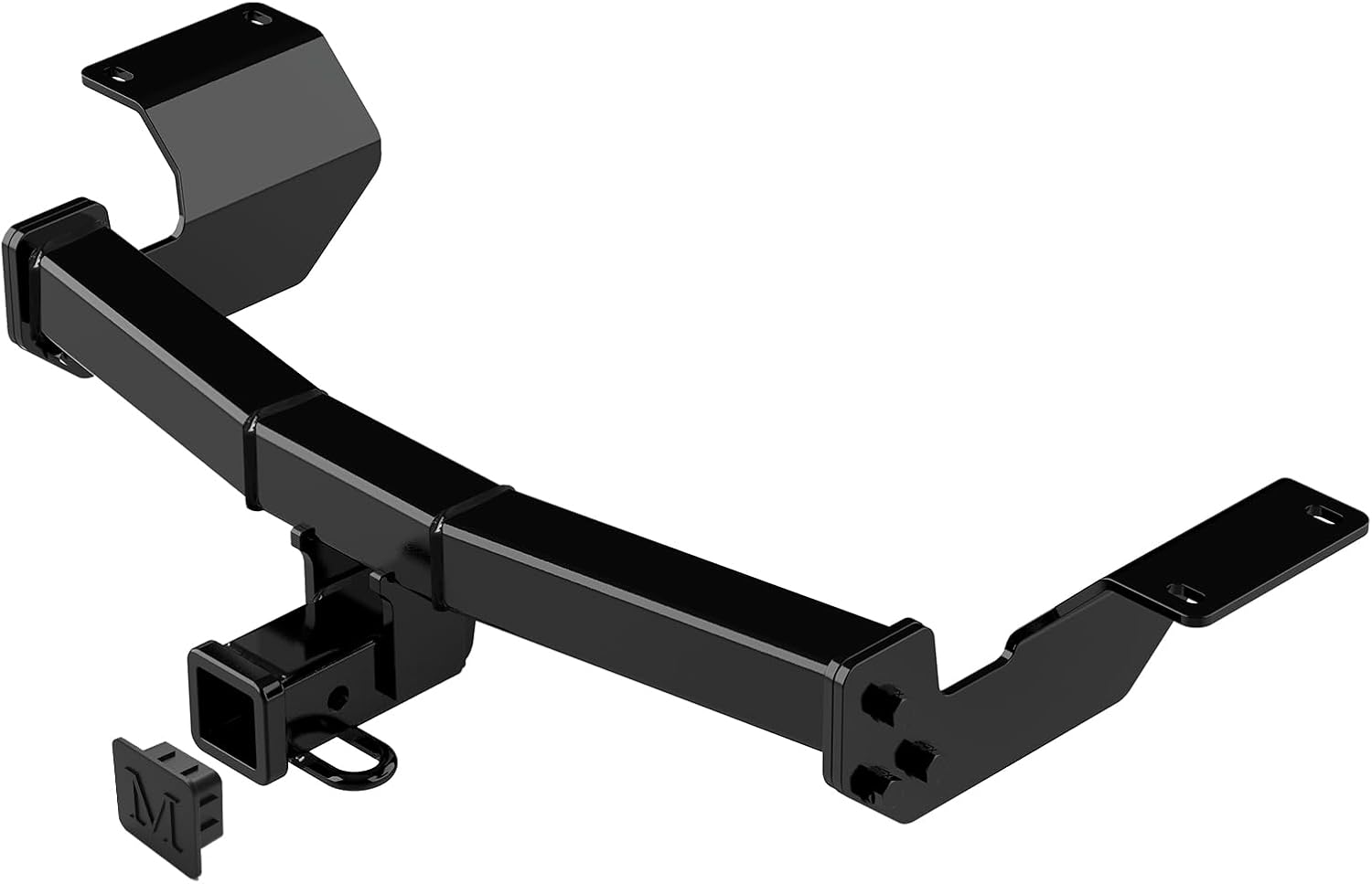
This HD Ridez 2-inch receiver is a straightforward, vehicle-specific hitch made to add towing capability to Honda CR-V models from 2017 through 2026. It installs under the rear bumper and provides a Class 3 2" receiver for everyday towing tasks up to 3,500 pounds. The hitch is made from carbon steel with a high-gloss multi-layer powder coat to resist corrosion and road debris. The package includes all mounting hardware, a rubber hitch cover, and DIY instructions so a competent DIYer can complete the job without drilling. Users report the fit is good on many model years but some 2023 and newer CR-Vs may require trimming of plastic panels or minor bracket modification for clearance, so expect extra time and basic cutting or filing tools for those vehicles. Where fitment matches, the hitch gives a clean finished look and a solid towing option at a lower cost than factory or branded alternatives. If you prioritize a budget-friendly, functional receiver and are comfortable with hands-on installation or minor trimming, this is a practical choice.
Best for: Buyers who want a low-cost, factory-style hitch that provides reliable everyday towing and are willing to install it themselves or handle minor trimming for a secure fit.
Less Ideal for: Shoppers who want a guaranteed bolt-in, no-modification installation experience or who prefer a branded OEM hitch with professional fitment should look elsewhere.
- Vehicle-specific fit for Honda CR-V 2017–2026 simplifies compatibility checks
- Class 3 2" receiver rated 3,500 lb for common towing and hauling
- Carbon steel construction with multi-layer powder coat for corrosion resistance
- Includes all mounting hardware, rubber hitch cover, and DIY instructions for bolt-on install
- Several reviewers report difficult fitment on 2023+ CR-Vs requiring trimming or bracket modification
Verdict: The best budget trailer hitch for buyers who need a safe, economical towing solution that covers everyday hauling without premium frills.
3. B&W Trailer Hitches Class 3 2" Receiver Hitch for 2017–2024 Honda CR-V
Best Premium Trailer Hitch

| Maximum Towing Capacity | 4500 Pounds |
|---|---|
| Pull Force | 4500 Pounds |
| Automotive Fit Type | Vehicle Specific Fit |
| Material Type | Alloy Steel |
| Finish Type | Powder Coated |
This B&W Class 3 trailer hitch is a vehicle-specific bolt-on designed for 2017–2024 Honda CR-V models. It installs using the included side plates, hardware, and step-by-step instructions so most DIYers can fit it without modification. The hitch provides a standard 2-inch receiver that accepts common accessories like bike racks and cargo carriers and is rated for up to 4,500 pounds gross trailer weight and 675 pounds tongue weight, making it suitable for midweight trailers, small boats, and heavy cargo carriers. Construction is heavy-gauge alloy steel with precision welding and a powder-coat finish to resist corrosion and road debris for long service life. B&W claims SAE J684 testing and backs the hitch with a limited lifetime warranty, which adds confidence for buyers focused on longevity. The main compromises are that this is a vehicle-specific, non-adjustable receiver rather than a modular system and it requires proper torque and alignment during installation to meet towing specs. For buyers seeking a premium, long-lasting factory-style hitch that integrates cleanly with the CR-V, this is a solid choice.
Best for: Buyers who prioritize a high-quality, long-lasting hitch that integrates cleanly with a 2017–2024 CR-V and are willing to pay more for premium materials and corrosion resistance.
Less Ideal for: Shoppers who need a universal or adjustable hitch for use on multiple vehicles or those looking for an ultra-lightweight or minimalist carry-only mount.
- Vehicle-specific fit and complete hardware for a straightforward bolt-on installation
- High towing capacity for the class: 4,500 lb gross trailer weight and 675 lb tongue weight
- Durable alloy steel construction with powder-coat finish for corrosion resistance
- Standard 2" receiver works with common towing and cargo accessories
- Built and tested to SAE J684 standards and backed by a limited lifetime warranty
- Not adjustable or modular; designed for a single vehicle fitment rather than multiple applications
- Installation requires correct torque and alignment to achieve rated towing performance
Verdict: The best premium trailer hitch for buyers willing to pay more for top-grade materials, corrosion resistance, smoother integration, and extra convenience features.
4. CURT Class 3 Trailer Hitch 2" Receiver for Honda CR-V (fits 2017–2025)
Best Class III Trailer Hitch

| Receiver size | 2 inch x 2 inch |
|---|---|
| Gross trailer weight | 3,500 lbs |
| Tongue weight | 525 lbs |
| Material | Carbon Steel |
This CURT Class 3 hitch adds a factory-style 2" receiver to compatible Honda CR-V models and is built for everyday towing and hitch-mounted cargo. It installs with vehicle-specific mounting points so most of the structure sits behind the bumper for a cleaner look. The hitch is constructed from high-strength steel with robotic and manual welds, and a co-cured dual-layer finish of liquid A-coat plus black powder coat to resist rust and chipping. With a 3,500 lb gross trailer weight and 525 lb tongue weight rating it covers a wide range of trailers, campers, bike racks and cargo carriers while meeting SAE J684 testing. Installation requires some trim removal, minor bumper trimming and a helper to lift and align the hitch; instructions and cut templates are not very detailed so watching an install video helps. Some users report tight clearances around the exhaust and a heavier-than-expected assembly, but those are common for robust Class 3 units. Overall this hitch gives a strong, low-profile receiver option when you need higher towing capacity on a CR-V.
Best for: Buyers who need a durable, higher-capacity Class 3 receiver for a Honda CR-V and prioritize a factory-style, low-profile installation for towing campers, utility trailers, or using heavy hitch accessories.
Less Ideal for: If you plan only occasional light towing or want a no-modification plug-and-play install, a lighter duty or bolt-on hitch alternative may be a better match.
- Vehicle-specific design keeps most structure hidden behind the bumper for a cleaner look
- Strong 3,500 lb GTW and 525 lb TW rating suitable for trailers, campers and heavy accessories
- Durable dual-layer A-coat plus powder coat finish for rust, chip and UV resistance
- Precision welding and testing to SAE J684 standards for reliable tow performance
- Installation can be awkward and may require trimming bumper fascia, exhaust support and a second person to lift into place
- Instructions and cut templates are sparse which can make DIY installs slower
Verdict: The best Class III trailer hitch when you need higher towing and tongue weight capacity and a robust receiver for trailers and accessories.
5. CURT Class 2 Trailer Hitch 12169 for Honda CR-V
Best Compact Trailer Hitch

| Maximum Towing Capacity | 3500 Pounds |
|---|---|
| Pull Force | 3500 Pounds |
| Material Type | Carbon Steel |
| Finish Type | Powder-Coated |
The CURT 12169 is a custom-fit Class 2 trailer hitch made for the Honda CR-V that provides a low-profile, factory-integrated look while adding light-duty towing and cargo-carrying capability. It installs as a concealed main body so the receiver blends with the vehicle's rear bumper and preserves ground clearance better than many bulky aftermarket hitches. Constructed from carbon steel with a powder-coated finish and robotic welding, it is built for durability and resists rust in everyday use. The 1-1/4" receiver accepts bike racks, cargo carriers, and small ball mounts for towing trailers up to 3,500 lb GTW and 350 lb tongue weight, making it suitable for day trips, weekend gear hauls, and small campers. Because it is vehicle-specific, fit is precise and installation is straightforward for a professional or experienced DIYer. The hitch is focused on light-duty tasks and will not support heavy towing accessories or higher tongue weights, so buyers needing higher capacity should choose a heavier class hitch.
Best for: Buyers who want a discreet, factory-style hitch for everyday use on a Honda CR-V and prioritize preserved ground clearance and vehicle appearance over heavy towing capability.
Less Ideal for: Drivers who need to tow heavy trailers or require higher tongue weight capacity should choose a higher-class hitch designed for heavier loads.
- Vehicle-specific design with concealed main body for a factory-integrated, low-profile appearance
- Rated 3,500 lb gross trailer weight and 350 lb tongue weight for light towing and accessory use
- Powder-coated carbon steel construction and robotic welding for durability and corrosion resistance
- 1-1/4" receiver accepts common bike racks, cargo carriers, and small ball mounts
- Limited to Class 2 capacities so not suitable for heavier trailers or high tongue-weight applications
Verdict: The best compact trailer hitch for shoppers who prioritize a discreet, low-profile design that maintains ground clearance and vehicle aesthetics.
6. REESE 84128 Class 3 Trailer Hitch, 2" Receiver for 2017-2025 Honda CR-V
Best Heavy-Duty Trailer Hitch

| Maximum Towing Capacity | 4500 Pounds |
|---|---|
| Pull Force | 4500 Pounds |
| Automotive Fit Type | Vehicle Specific Fit |
| Material Type | Metal |
| Finish Type | Powder Coated |
The REESE 84128 is a custom-fit Class 3 trailer hitch designed for 2017–2025 Honda CR-V models that gives you a stout, factory-style mounting point for towing and hitch accessories. It bolts to the CR-V frame with included hardware and a fish wire to pull bolts through the access holes, and users typically remove or lower the exhaust to gain clearance during installation. The hitch is all-welded steel with a two-part black powder coat that resists corrosion and keeps the underside tidy. With a 2 inch receiver opening it handles common accessories like bike racks and cargo carriers while supporting up to 4,500 lb GTW and 675 lb tongue weight. It is not compatible with weight distribution systems, so heavier trailers needing load leveling require a different solution. For frequent haulers and DIY installers the solid construction and vehicle-specific fit deliver durable, repeatable performance, though installation can be physically demanding without a lift or at least a second person to help align and torque the mounting bolts.
Best for: Buyers who tow regularly with a Honda CR-V and prioritize a reinforced, vehicle-matched hitch that stands up to repeated use and DIY installation.
Less Ideal for: Those planning to tow heavy trailers that require a weight distribution setup or buyers who want a no-tools, quick-install bolt-on solution.
- Vehicle-specific fit for 2017–2025 Honda CR-V simplifies alignment and produces a clean installation.
- All-welded steel construction with two-part powder coat offers strong durability and corrosion resistance.
- 2 inch receiver compatible with common accessories like bike racks and cargo carriers.
- Includes mounting hardware and fish wires to help feed bolts through frame access holes.
- Cannot be used with weight distribution systems, limiting towing options for heavier trailers.
- Installation often requires lowering the exhaust or strong mechanical skill and specialty tools for clearance.
Verdict: The best heavy-duty trailer hitch for frequent haulers and DIYers who need reinforced construction and higher durability under repeated heavy loads.
Choosing the Right Honda CR-V Touring Trailer Hitch: Key Factors to Consider
Weight Capacity and Tongue Weight
Gross trailer weight and tongue weight determine what you can safely tow and carry on the hitch. For the CR-V Touring, confirm both the hitch's gross trailer weight rating and its tongue weight rating align with the trailer or cargo you plan to haul. Exceeding either rating can cause trailer sway, reduced braking performance, and undue stress on the vehicle frame.
When planning loads, factor in cargo inside the vehicle and on the trailer tongue. Manufacturers often list separate limits for the hitch and the vehicle tow package, so check both and use the lower value as your working limit. A higher tongue weight rating is especially important if you plan to carry heavy rear-mounted cargo boxes or use weight-distributing systems.
Receiver Size and Hitch Class
Receiver size affects what accessories and ball mounts you can use. Many CR-V applications use a 2 inch hitch receiver, which supports common ball mounts, bike racks, and cargo carriers. Matching the receiver size to your intended accessories avoids the need for bulky adapters that can reduce strength.
Hitch class reflects maximum capacities and is an easy shorthand for compatibility. Choose a class that meets your towing needs without overspecifying; an oversized hitch can add unnecessary weight and may require more complex installation. Confirm that the receiver opening, pin size, and class-based ratings meet your trailer and accessory requirements.
Fitment and Bumper Clearance
A hitch must fit the CR-V Touring's frame and bumper geometry without interfering with exhaust, sensors, or trim panels. Proper fitment preserves rear sensor operation and avoids trimming bumper covers. Check whether the hitch tucks close to the frame or protrudes below the bumper; low-hanging designs can reduce ground clearance and snag on steep driveways.
Some installations require partial removal of bumper trim or temporary lowering of the spare tire. Confirm whether the hitch uses existing frame holes or requires drilling, and whether the installation affects the spare tire or factory wiring harness routing.
Corrosion Resistance and Material Finish
Exposure to road salt, moisture, and mud can rapidly degrade lower-quality hitches. Look for robust finishes such as powder-coating or e-coating and corrosion-resistant hardware to extend service life. Steel construction is standard, but protective finishes and plated fasteners make a big difference in long-term durability.
Also consider how the finish ages where salt exposure is common. Rust can weaken welds and mounting points if left unchecked, so choose a hitch with proven protective coatings and accessible fasteners for future maintenance.
Installation Complexity and Required Tools
Some hitches install with basic hand tools and reuse existing factory holes, while others require drilling, raising the vehicle, or temporary removal of exhaust components. Installation complexity affects who should perform the work and the time required. If you plan to install the hitch yourself, verify torque specifications, recommended jack points, and whether vehicle lifting is needed.
Also check whether special fasteners, torque wrenches, or alignment aids are required. Simpler bolt-on designs typically reduce the risk of improper installation, while more involved installs may be better handled by a professional to ensure safety and proper wiring integration.
Wiring Integration and Sensor Compatibility
A trailer hitch often requires wiring for lights and may interact with parking sensors or a rearview camera. Ensure the hitch design allows access to factory wiring harness locations and does not obstruct sensors or the camera field of view. Some hitches include or accommodate a dedicated wiring bracket to simplify plug-in wiring modules.
If the CR-V Touring has advanced driver aids, consider how the hitch mounting might affect sensor calibration or require specific mounting locations to avoid false alerts. Planning ahead reduces the need for trimming bumper covers or rerouting wiring during installation.
Choosing the Right Receiver Size for Accessories
Selecting the correct receiver size ensures compatibility with common towing accessories. For most CR-V Touring owners, a 2 inch receiver offers the best balance of accessory availability and strength for bikes, cargo carriers, and light trailers.
If you expect to use heavier accessories or adapters, prioritize a receiver that matches those accessories without requiring oversized reductions that can add play and stress to the mount.
- 2 inch receiver: common for bike racks and cargo carriers
- Avoid frequent use of big-to-small adapters; they reduce strength
- Match pin diameter and shank length to your ball mount
Preserving Bumper Sensors and Rear Camera Operation
The CR-V Touring often includes parking sensors and a rear camera that can be affected by hitch placement. Choose a hitch that mounts low enough to be functional but high enough to avoid blocking sensors or the camera view.
Look for designs that provide a wiring bracket or maintain a clear area for sensor operation. If the hitch requires trimming of bumper trim, plan for clean, reversible cuts to preserve resale value.
- Confirm sensor clearance after test-fitting
- Use dedicated wiring brackets to avoid harness strain
- Check camera field of view with a temporary mount before final tightening
Ground Clearance and Everyday Driving
Consider how the hitch affects departure angle and clearance over driveways. A low-hanging receiver can scrape on steep inclines or speed bumps, leading to cosmetic or structural damage over time.
If you frequently drive on uneven surfaces or park on slopes, select a hitch with a low-profile design that still meets your weight requirements to minimize daily inconvenience.
- Measure hitch drop relative to rear bumper
- Account for installed accessories when estimating clearance
- Test typical driveway angles to anticipate contact points
Corrosion Protection and Long-Term Maintenance
Road salts and moisture are primary drivers of hitch corrosion. Choose finishes and hardware that resist rust to avoid weakening of mounting points and the need for early replacement.
Plan periodic inspections of welds, bolts, and the finish. Touch-up paint or protective sprays on exposed areas and fasteners will prolong service life and keep the hitch performing safely.
- Prefer powder-coat or e-coat finishes
- Inspect mounting bolts annually
- Keep spare hardware on hand for future replacements
Accessory Compatibility and Practical Use Cases
Think about the accessories you intend to use most often. Bike racks, cargo baskets, and small utility trailers each place different demands on the receiver and tongue weight.
Matching the hitch class and receiver size to your primary use case reduces the chance of needing adapters or switching hitches later. Consider whether you will add a wiring harness, ball mount, or weight-distributing gear when planning purchases.
- List primary accessories before selecting a hitch
- Verify accessory tongue weight against hitch tongue rating
- Consider storage and handling of accessories when detached
Still looking for the perfect fit?
Select your Honda CR-V configuration to see the most relevant Trailer Hitches recommendations
How We Chose the Best Honda CR-V Touring Trailer Hitch
We focused on options that match the Honda CR-V Touring configuration and meet typical owner use cases for light towing, cargo carriers, and bike racks. Our process prioritized correct vehicle-specific fitment, factory bumper clearance, and hitch class compatibility for the CR-V Touring build.Concrete evaluation criteria included verified vehicle fit, gross trailer weight and tongue weight ratings, receiver size and class, corrosion resistance of materials and finish, and how the hitch affects rear ground clearance and access to sensors or wiring. We also assessed installation complexity and whether the hitch preserves rear parking sensors and bumper trim.Excluded items included universal or adjustable hitches that require frame modification, hitches designed exclusively for heavy-duty trucks, and products lacking clear vehicle-specific fit information. The remaining candidates were selected for reliable fit, appropriate weight ratings for typical CR-V towing, and practical installation considerations.
Our full evaluation process is outlined in our review methodology.
FAQ
What receiver size should I choose for a Honda CR-V Touring?
Most CR-V Touring owners use a 2 inch receiver because it supports common accessories like bike racks and cargo carriers while providing adequate strength for light trailers. Choose a different size only if you plan to use specialized accessories that require it.
Can I install a trailer hitch myself on the CR-V Touring?
You can install some hitches with basic tools if the design is bolt-on and uses existing holes. However, installations that require drilling, exhaust removal, or precise torque values may be better handled by a professional. Assess your comfort with vehicle lifting and follow torque specifications closely.
How do I know the hitch will not interfere with parking sensors or the rear camera?
Check fitment documentation for sensor and camera compatibility and inspect the hitch position before fully tightening hardware. Select hitches that provide dedicated wiring brackets and clearances, and test sensor function after installation to confirm no false alerts occur.
What should I look at when matching a hitch to my towing needs?
Compare the hitch's gross trailer weight and tongue weight ratings with your trailer and accessory loads, and use the lower of vehicle or hitch ratings as your working limit. Also consider receiver size, class, and whether you need a weight-distributing system for heavier loads.
Will a hitch change my CR-V Touring's ground clearance?
Yes. Some hitch designs sit lower than others and can reduce departure angle or scrape on steep driveways. Choose a low-profile design if you frequently encounter steep inclines or require minimal change to clearance.
Do I need to worry about corrosion on the hitch?
Corrosion is a practical concern, especially in regions with road salt. Opt for hitches with durable finishes and corrosion-resistant hardware, and inspect mounting points periodically. Touch-up coatings and regular cleaning extend service life.
Final Verdict
When choosing a trailer hitch for the Honda CR-V Touring, prioritize correct vehicle fit and the weight ratings that match your most frequent towing tasks. Receiver size, corrosion protection, and how the hitch interacts with sensors or the rear camera are practical factors that determine real-world usability.Balance capacity with installation complexity and daily driving impacts like ground clearance. Use the listed decision criteria to select a hitch that provides safe, reliable towing and straightforward integration with the Touring's features so you can tow or carry gear with confidence.
Explore More:
- Check out all Honda CR-V parts & accessories
- Explore Other Accessories
- Browse all Accessories
