

Note: This article contains affiliate links. If you click on these links and make a purchase, I may earn a small commission at no extra cost to you. This helps support my research and content. Read my full affiliate disclosure here.
If you tow frequently with a 1999-2007 Ford F-350, choosing the right trailer hitch affects safety, load capacity, and how easily you can hook up trailers or accessories. The right hitch ensures the truck carries rated tongue weight, aligns with your receiver size, and resists corrosion and wear over time.This guide covers our shortlist of the top trailer hitches for the 1999-2007 Ford F-350, focusing on real-world criteria like weight ratings, mounting method, and installation complexity. Read on to understand what matters for your towing setup and how each shortlisted option meets those needs.
Top Picks at a Glance
| Best Overall Trailer Hitch The best all-around hitch balancing strength, fit, and long-term value | ECOTRIC Class 5 Trailer Hitch 2" Receiver for 1999–2016 Ford F-250/F-350 and 2008–2015 F-450 |  |
| Best Budget Trailer Hitch A low-cost hitch that provides dependable performance without high price | KUAFU Front Mount 2-Inch Trailer Receiver Hitch (Direct Fit) |  |
| Best Premium Trailer Hitch A higher-end hitch with stronger materials and refined engineering | CURT 15410 Xtra Duty Class 5 Trailer Hitch, 2-inch Receiver |  |
| Best Class IV Trailer Hitch A hitch rated for higher tongue and gross trailer weight capacity | KUAFU Class 4 Trailer Hitch, 2-Inch Receiver, Black |  |
| Best Heavy-Duty Trailer Hitch Built for maximum towing loads and demanding towing conditions | ECOTRIC Underbed Gooseneck Trailer Hitch with 2-5/16" Flip-Over Ball, 30,000 lb Capacity |  |
| Best Corrosion-Resistant Trailer Hitch Finished or made with materials to resist rust and road salt | CURT Commercial Duty Class 5 Trailer Hitch 2-1/2-Inch Receiver for Ford F-250/350/450 Super Duty |  |
| Best Compact Trailer Hitch Low-profile or slim design that keeps rear clearance and neat appearance | PARTREE Front Mount Receiver Hitch for Ford F250/F350 (1999–2007), 2" Receiver |  |
1. ECOTRIC Class 5 Trailer Hitch 2" Receiver for 1999–2016 Ford F-250/F-350 and 2008–2015 F-450
Best Overall Trailer Hitch

| Pull Force | 17000 pounds |
|---|---|
| Compatible with Vehicle Type | Truck |
| Automotive Fit Type | Vehicle Specific Fit |
| Material Type | Alloy Steel |
| Finish Type | Powder Coated |
This ECOTRIC Class 5 trailer hitch is a heavy-duty, vehicle-specific replacement designed to mount to 1999–2016 F-250/F-350 Super Duty and 2008–2015 F-450 frames. It provides a standard 2-inch receiver that accepts ball mounts, pintles, tow hooks, and winch-mount accessories, making it versatile for towing, hauling equipment, or mounting recovery gear. Constructed from alloy steel with a gloss powder-coat finish, the hitch resists corrosion and everyday wear expected on work trucks. The seller rates the hitch at a 17,000-pound carrying capacity with a 2,550-pound tongue weight, which covers most heavy towing needs short of commercial gooseneck setups. Installation is straightforward for a competent DIYer using common hand tools and is offered as a direct replacement for the factory part number cited, so fitment and alignment are typically predictable. The visible cross-tube design may be bulkier than tucked-frame options and weight and finish details matter if you operate in harsh salt environments, but for most Super Duty owners who need high capacity, durability, and a familiar 2-inch receiver, this hitch is a practical, value-oriented choice.
Best for: Drivers of 1999–2007 Ford F-350 Super Duty seeking a heavy-capacity, durable replacement hitch that balances strength and straightforward installation for serious towing duties.
Less Ideal for: Buyers wanting a recessed or frame-tucked receiver for a cleaner look or those needing a specialized gooseneck/5th-wheel integrated solution should consider alternative hitch types.
- High rated carrying capacity of 17,000 pounds suitable for heavy towing
- Versatile 2-inch receiver accepts common towing accessories
- Alloy steel construction with gloss powder-coat finish for corrosion resistance
- Vehicle-specific fit designed as a direct replacement for the factory hitch
- Relatively simple installation using basic hand tools
- Exposed cross-tube design is bulkier than hidden-frame hitches
- Finish and long-term corrosion resistance not specified to marine-grade standards
Verdict: The best all-around trailer hitch that balances towing capacity, build quality, ease of installation, and long-term value for most buyers.
2. KUAFU Front Mount 2-Inch Trailer Receiver Hitch (Direct Fit)
Best Budget Trailer Hitch

| Compatible with Vehicle Type | Trailer |
|---|---|
| Pull Force | 9000 pounds |
| Automotive Fit Type | Vehicle Specific Fit |
| Maximum Towing Capacity | 9000 pounds |
| Finish Type | Powder Coated |
This KUAFU front-mount trailer receiver is a direct-fit replacement designed for 1999–2007 Ford F-350 Super Duty and similar Ford models, offering a 2-inch receiver opening and a 9,000 pound pull rating. It bolts to the frame or bumper with included hardware and requires temporary bumper removal during installation. Built from steel with a powder-coat finish, the hitch aims to provide corrosion protection and durable service for basic towing jobs and front-mounted pulling tasks. Its 9,000 pound line pull and 500 pound vertical load make it capable for light commercial and heavy recreational tasks like winching, pulling, or carrying accessories that benefit from front attachment. The packaging includes the receiver only and does not include electrical components or fog light replacements that must be removed in some installations. For buyers prioritizing low upfront cost, this hitch delivers a straightforward, vehicle-specific solution, though it lacks advanced finish options and the broader accessory support offered by some higher-end brands.
Best for: Buyers who need the cheapest reliable way to add a front-mounted 2-inch receiver to their 1999–2007 Ford F-350 for towing, pulling, or accessory mounting and who prioritize lower upfront cost over premium finishes.
Less Ideal for: Shoppers who want a fully featured front hitch package with integrated wiring, extra corrosion protection, or a polished finish should consider higher-end alternatives.
- Vehicle-specific fit for 1999–2007 Ford Super Duty models for straightforward installation
- 2-inch receiver opening compatible with common front-mount accessories
- Rated 9,000 pounds pull force with 500 pound vertical load for substantial towing and winching tasks
- Powder-coated steel construction provides basic corrosion resistance and durability
- Includes mounting hardware for a complete receiver-only install
- Requires temporary bumper removal and possible fog light removal during installation
- Does not include wiring, hitch ball, or accessory hardware beyond mounting fasteners
Verdict: The best low-cost trailer hitch that provides dependable towing capability and acceptable durability for buyers prioritizing upfront savings.
3. CURT 15410 Xtra Duty Class 5 Trailer Hitch, 2-inch Receiver
Best Premium Trailer Hitch
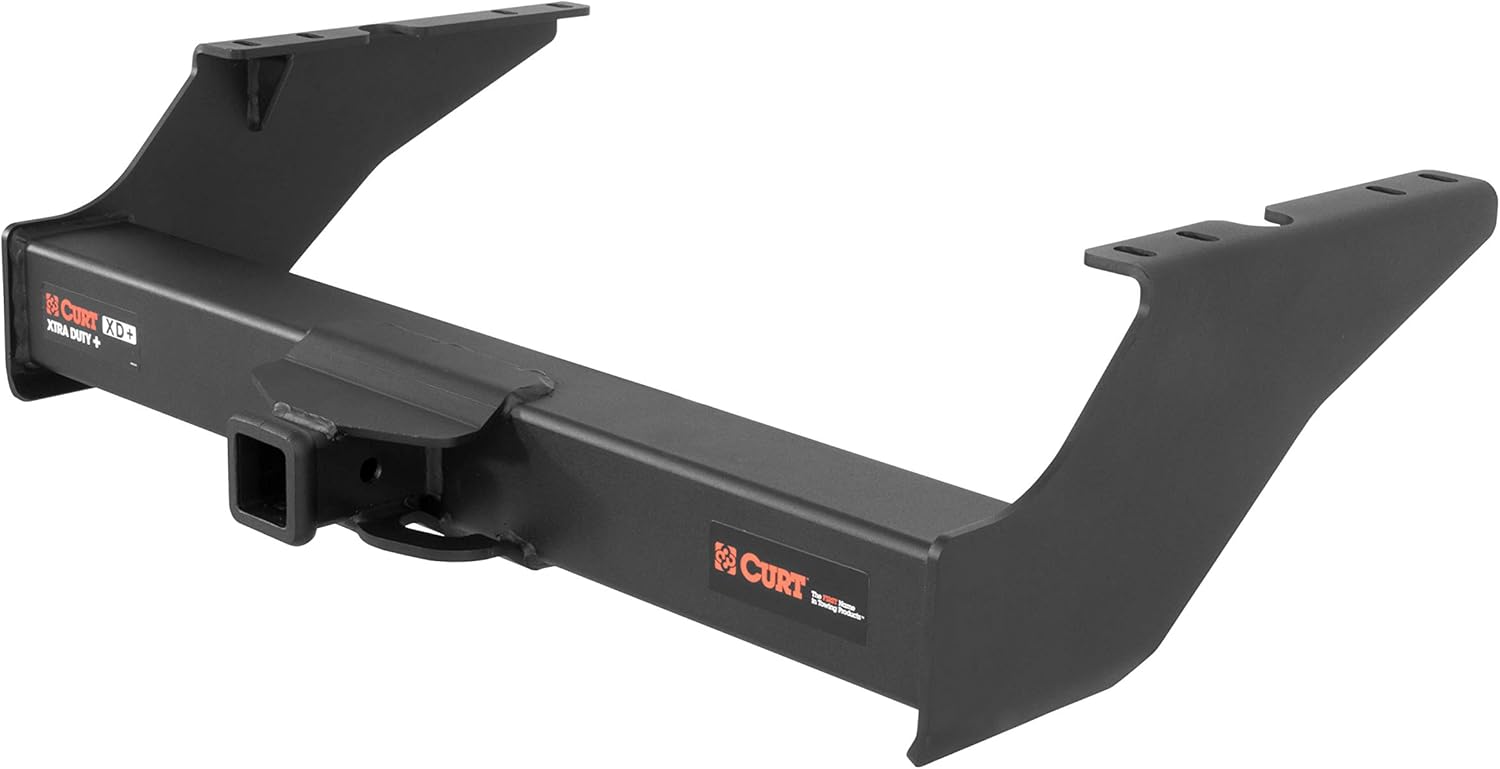
| Gross trailer weight capacity | 17,000 lbs |
|---|---|
| Tongue weight capacity | 2,550 lbs |
| Receiver size | 2" x 2" |
| Material | Carbon Steel |
| Finish Type | Powder Coated with A-coat |
This CURT Class 5 Xtra Duty hitch is built for serious towing on compatible Ford Super Duty trucks and is aimed at users who regularly move heavy trailers. It provides a 2-inch receiver tube and is rated for up to 17,000 pounds gross trailer weight with an extra-high tongue weight capacity, so it will accept heavy-duty ball mounts, pintles, cargo carriers, or winch mounts and can be used with a weight-distributing setup. Constructed from carbon steel, the hitch is welded precisely and protected by an A-coat plus carbide black powder coat for corrosion resistance in tough outdoor conditions. It ships with grade-8 mounting hardware for a robust installation and is tested to SAE J684 standards for on-vehicle performance. The main compromises are size and weight since this is a large, heavy component that requires proper vehicle fit verification and professional or careful installation; it is also vehicle-specific and not a universal solution.
Best for: Buyers who tow very heavy loads frequently and prioritize a rugged, high-capacity, factory-quality trailer hitch and finish for demanding work or hauling use.
Less Ideal for: Casual haulers who tow light trailers infrequently or shoppers who need a universal hitch that fits multiple vehicle makes and models.
- Very high towing capacity rated at 17,000 lbs GTW for heavy trailers
- Extra-high tongue weight rating of 2,550 lbs for stable heavy loads
- Durable corrosion protection with liquid A-coat plus carbide black powder coat
- Includes grade-8 mounting hardware for strong, reliable installation
- Designed and tested to SAE J684 standards for on-vehicle safety
- Large and heavy unit that may require assistance or a shop for installation
- Vehicle-specific fitment limits use to certain Ford Super Duty model years
Verdict: The best premium trailer hitch for buyers who want top-tier materials, superior finish, and higher-rated components for frequent or heavy towing.
4. KUAFU Class 4 Trailer Hitch, 2-Inch Receiver, Black
Best Class IV Trailer Hitch

| Compatible with Vehicle Type | Truck |
|---|---|
| Maximum Towing Capacity | 10000 Pounds |
| Pull Force | 10000 Pounds |
| Finish Type | Powder Coated |
This KUAFU Class 4 trailer hitch is a bolt-on 2" receiver engineered for select Ford F-150, F-250, F-350 and F-450 models and is intended to restore or upgrade towing capability to a heavy-duty spec. Made from high-grade steel with a powder-coated finish, it is rated at 10,000 pounds gross trailer weight and 1,000 pounds tongue weight, with higher capacities when using weight-distributing setups. Installation uses supplied hardware and is described as screw/bolt-in; many buyers will have it installed by a shop for alignment and torque accuracy. The hitch’s compatibility list explicitly calls out fitment for models that use a 20" spare tire configuration, so fitment attention is required. In use this hitch gives the stronger towing margins and a factory-replacement style mounting pattern that suits hauling campers, cargo trailers, and work trailers. Expect a durable finish for corrosion resistance but allow for professional or careful DIY installation to ensure towing safety and correct clearances around the spare tire area.
Best for: Buyers who need a higher-capacity, vehicle-specific Class 4 hitch for hauling heavy trailers on supported Ford Super Duty and F-150 models and who prioritize a durable, factory-style replacement.
Less Ideal for: Drivers seeking a universal or lightweight hitch solution or anyone with an unsupported spare tire configuration should consider different models or consult fitment alternatives.
- Class 4 rating with 10,000 lb gross trailer weight capacity for heavy towing needs
- Powder-coated high-grade steel construction for durability and corrosion resistance
- Fits a standard 2" x 2" receiver to accept common hitch accessories
- Includes installation hardware and instructions for bolt-on mounting
- Designed specifically for the listed Ford model years and 20" spare tire configuration for a vehicle-specific fit
- Compatibility is limited to the specified Ford model years and 20" spare tire fitment so it is not universal
- Some buyers may prefer professional installation to ensure correct mounting and torque rather than DIY
Verdict: The best Class IV trailer hitch for users who need the higher towing and tongue weight ratings that come with this specification.
5. ECOTRIC Underbed Gooseneck Trailer Hitch with 2-5/16" Flip-Over Ball, 30,000 lb Capacity
Best Heavy-Duty Trailer Hitch

| Compatible with Vehicle Type | 1999-2016 Ford F-250 & F-350 Super Duty pickups |
|---|---|
| Pull Force | 30000 Pounds |
| Automotive Fit Type | Vehicle Specific Fit |
| Material Type | Alloy Steel |
| Finish Type | Powder Coated |
This ECOTRIC underbed gooseneck hitch is a complete rail-style kit designed to mount under the bed of 1999–2016 Ford F-250 and F-350 Super Duty pickups so you can tow heavy gooseneck trailers without sacrificing bed space. It installs as a custom-fit system with steel rails and a flip-over 2-5/16-inch chrome-plated ball that stows flat when not in use. The kit is powder-coated for corrosion resistance and includes hardware and safety chain loops for a finished installation. Its 30,000-pound gross trailer weight rating and 7,500-pound vertical load rating make it suitable for commercial or frequent heavy hauling, and the design accommodates standard vehicle suspensions without requiring exhaust modification. Expect a substantial, professional-feeling hitch that restores full bed usability, though installation is substantial and may require moderate mechanical skill, lifting help, and time to position rails and torque fasteners to spec. This is a straight-up heavy-duty option for owners who need a high-capacity, underbed gooseneck solution specifically for the listed Ford Super Duty years.
Best for: Buyers who routinely tow heavy gooseneck trailers and prioritize a factory-style underbed installation that preserves bed space and delivers high towing capacity.
Less Ideal for: Drivers who rarely tow, who need a simple bumper or receiver hitch, or who want a quick no-drill install should consider lighter-duty alternatives.
- Vehicle-specific underbed rail kit preserves full bed area when ball is stowed
- High towing capacity rated at 30,000 lb GW and 7,500 lb vertical load for heavy trailers
- Includes flip-over 2-5/16" chrome-plated ball and all mounting hardware for a complete install
- Powder-coated alloy steel construction for durability and corrosion resistance
- Installation is involved and may require lifting assistance and mechanical experience
Verdict: The best heavy-duty trailer hitch for owners who regularly haul heavy trailers or frequently tow under severe conditions and need extra strength.
6. CURT Commercial Duty Class 5 Trailer Hitch 2-1/2-Inch Receiver for Ford F-250/350/450 Super Duty
Best Corrosion-Resistant Trailer Hitch

| Receiver size | 2-1/2-inch x 2-1/2-inch |
|---|---|
| Gross trailer weight capacity | 20,000 lbs |
| Tongue weight capacity | 2,700 lbs |
| Material | Carbon Steel |
| Finish | Liquid A-coat and carbide black powder coat |
This CURT Class 5 commercial-duty hitch converts a compatible Ford Super Duty into a serious towing platform. Designed for heavy commercial use, it provides a 2-1/2-inch receiver that accepts ball mounts, pintles, winch mounts, and other heavy accessories. The hitch is engineered for high capacities and is rated up to 20,000 lb gross trailer weight and 2,700 lb tongue weight, making it suitable for large trailers, car haulers, and heavy equipment. Construction uses carbon steel and the unit ships with grade-8 mounting hardware for a secure installation. CURT protects the hitch with a liquid A-coat plus carbide black powder coat finish, which is intended to resist corrosion from road salt and outdoor exposure and reduce the need for frequent touch-ups. Installation is vehicle-specific so expect a bolt-on process for the listed Ford Super Duty years. The trade-off is size and weight: this is a large, heavy component that requires proper lifting and correct torque during fitment, and compatibility must be verified for the exact model year and frame option.
Best for: Buyers wanting a long-lasting, work-ready hitch for a compatible Ford Super Duty who prioritize corrosion protection and high towing capacity over lightweight convenience.
Less Ideal for: Casual users who tow light loads infrequently or owners of trucks outside the specified Ford Super Duty applications should consider lighter or more universal hitches.
- Very high towing ratings suitable for commercial and heavy recreational use
- Durable carbon steel construction with included grade-8 mounting hardware
- 2-1/2-inch receiver accepts the strongest heavy-duty towing accessories
- Liquid A-coat plus carbide black powder coat finish for enhanced corrosion resistance
- Designed specifically to fit select Ford F-250, F-350, and F-450 Super Duty trucks
- Heavy and bulky, requiring tools or assistance for installation
Verdict: The best corrosion-resistant trailer hitch for buyers who want long-lasting protection against rust, salt, and harsh weather without frequent touch-ups.
7. PARTREE Front Mount Receiver Hitch for Ford F250/F350 (1999–2007), 2" Receiver
Best Compact Trailer Hitch

| Compatible with Vehicle Type | Fit For Ford F250 350 1999-2007 |
|---|---|
| Maximum Towing Capacity | 9000 pounds |
| Pull Force | 9000 pounds_per_inch |
| Material Type | Carbon Steel |
| Finish Type | Powder Coated |
The PARTREE front-mount receiver is a vehicle-specific front hitch for Ford F250 and F350 models from 1999 through 2007. It installs at the front bumper and provides a standard 2" square receiver for handling small towing tasks, bike racks, or recovery points; the listing cites a maximum gross trailer weight of 9,000 lb and a 500 lb tongue limit. Constructed from carbon steel with a black powder-coat finish, the hitch is intended to resist corrosion and stay durable under routine use. Hardware and an instruction book are included to simplify installation for DIYers or mechanics. Because it mounts forward of the vehicle, it keeps the rear area clear and can be handy for front recovery or loading. The design is utilitarian rather than decorative, so expect a chunky, functional look and the need to follow tongue-weight limits closely; it also occupies front bumper space and may require trimming or adjustments on some trucks. For owners who want a compact, practical front receiver that matches the specified Ford models, this is a straightforward option.
Best for: Buyers who prioritize a low-profile, space-saving front receiver to keep the truck rear clear and need a compact, functional hitch for light towing, bike racks, or recovery work.
Less Ideal for: Drivers wanting a decorative or hidden hitch solution or those who need higher tongue-weight capacity for heavy towing should look elsewhere.
- Vehicle-specific fit for Ford F250/F350 1999–2007 simplifies installation alignment
- Standard 2" receiver accepts common hitch accessories and ball mounts
- Stamped carbon steel construction with powder-coat finish for corrosion resistance
- Includes mounting hardware and installation instructions for easier DIY fitment
- Front-mount location uses bumper area and may require minor trimming or adjustment to fit certain bumper configurations
Verdict: The best compact trailer hitch for people seeking a low-profile, space-saving design that preserves rear clearance and maintains a tidy vehicle appearance.
Choosing the Right 1999-2007 Ford F-350 Trailer Hitch: Key Factors to Consider
Weight Rating and Tongue Weight
A hitch's gross trailer weight (GTW) and tongue weight (TW) ratings determine the maximum load you can tow and how much downward force the trailer exerts on the hitch. For a 1999-2007 Ford F-350, you need a hitch whose ratings meet or exceed both the truck's towing capabilities and the trailer's requirements. Choosing a hitch with insufficient GTW or TW can cause instability, excessive strain on the mounting points, and unsafe driving dynamics.
When evaluating weight ratings, consider the heaviest load you expect to tow and add a margin for dynamic forces such as braking, acceleration, and uneven terrain. A higher tongue weight capacity is especially important when towing heavy utility trailers or carrying cargo on a hitch-mounted carrier. Always cross-check the hitch rating with the F-350's factory towing specs and the trailer's placard to avoid exceeding any component in the system.
Receiver Size and Accessory Compatibility
Receiver size determines what accessories and ball mounts you can use. The most common receiver size for heavy-duty trucks is 2 inches, but some hitches and setups use larger or custom receivers. Matching the receiver size to your intended accessories—ball mounts, hitch-mounted cargo carriers, or accessory adapters—avoids fitment issues and ensures secure connections.
Consider whether you need a drop or rise ball mount for proper trailer geometry, and check shank diameter and pinhole placement. If you plan to use multiple accessories, verify that the hitch supports standard receiver accessories so you do not need special adapters that can reduce rated capacity or introduce additional failure points.
Mounting Method and Frame Fitment
How the hitch attaches to the truck frame affects strength and installation complexity. Bolt-on hitches that use existing frame holes simplify installation and are reversible, while weld-on hitches can offer a lower profile and potentially greater strength but require professional welding and may complicate future removal. For the 1999-2007 F-350, verify that the hitch uses the truck's factory attachment points or provides clear instructions for any drilling required.
Proper fitment reduces stress concentrations and ensures load is transmitted into the truck frame as designed. Pay attention to instructions about torque specs, supplemental bracing, and whether any trims or heat shields must be temporarily removed during installation to avoid interference.
Corrosion Resistance and Finish
Exposure to road salt, moisture, and debris accelerates rust on hitch components. A durable finish such as powder coating or a high-quality plating extends service life and reduces maintenance. For a vehicle often used in harsh weather or on salted roads, prioritize hitches with thicker coatings, sealed welds, and sacrificial hardware like zinc-plated bolts.
Regular inspection and touch-up of chips or scratches helps prevent underlying metal corrosion. Choosing a hitch with better corrosion protection minimizes long-term degradation and preserves structural integrity, reducing the chance of unexpected weakening in critical mounting points.
Installation Complexity and Required Tools
Installation effort ranges from straightforward bolt-on jobs you can complete in a driveway to multi-hour installs needing lifts, welding, or drilling. Consider whether you have the tools, workspace, and mechanical experience to safely install the hitch on a heavy truck like the F-350. Some heavy-duty hitches are large and require two people to lift and maneuver into place.
If the install requires welding or frame modification, factor in professional labor. Also review whether the hitch includes all necessary bolts, nuts, and washers, and whether special torque settings or thread-locking compounds are specified. Proper installation is essential for safety and to preserve rated capacity.
Ground Clearance and Tow Geometry
Hitch design affects ground clearance and trailer pin height, which influence trailer sway tendencies and off-road capability. A low-profile hitch sits closer to the bumper and can reduce step-over height for the truck, while a higher-design or drop-receiver arrangement may be necessary to achieve correct trailer pitch.
Evaluate how the hitch changes rear approach angle and whether it interferes with steps, spare tire access, or towing sensors. Consider the common trailers you tow and choose a hitch that allows the correct ball height without excessive drop or rise, preserving handling and reducing wear on suspension components.
Understanding Weight Ratings and How They Translate to Real Use
Weight ratings listed for hitches are tested under controlled conditions and represent static limits for gross trailer weight and tongue weight. In daily use, dynamic forces such as braking, potholes, and trailer load distribution increase the stresses on both hitch and truck frame. Translating published ratings into safe operation means planning for those dynamic loads and not using the rated limit as a constant target.
When pairing a hitch to your F-350, consider typical cargo and trailer types you tow. For example, towing heavy equipment or commercial trailers requires not only a high GTW rating but also attention to tongue weight so the truck's rear suspension and braking system are not overloaded.
- Use manufacturer-rated GTW and TW values as a minimum threshold.
- Allow a safety margin for dynamic loads and uneven terrain.
- Verify trailer weight with a scale when possible, not just estimated cargo weight.
Deciding Between Bolt-On and Weld-On Hitches
Bolt-on hitches typically require less permanent modification and are often reversible, making them attractive to owners who may change towing setups. They rely on the truck's existing frame holes or included mounting hardware. Weld-on hitches can offer a lower-profile fit and may distribute loads differently, but they require professional welding and are not easily removed without cutting.
For many F-350 owners, a bolt-on hitch that uses factory attachment points balances strength and convenience. If your towing demands are extreme or you need a custom low-profile solution, a welded installation by a certified welder can be appropriate.
- Bolt-on: easier installation, reversible, typically requires torque wrench.
- Weld-on: permanent, can be stronger and lower-profile, needs professional welding.
Installation Tips and Common Pitfalls
Plan the installation with all required tools and safety gear. Heavy-duty hitches for this truck are large and often require two people or a lift for safe positioning. Follow torque specifications for fasteners and re-check hardware after an initial break-in period of several hundred miles.
Common pitfalls include missing or loose hardware, interference with exhaust or heat shields, and inadequate clearance for spare tire removal. If instructions call for trimming plastic splash guards or removing an impact bar, follow guidance closely to avoid interference under load.
- Gather all included hardware and verify fit before raising the hitch into position.
- Use proper torque values and thread locker where recommended.
- Re-inspect bolts after initial road miles and periodically thereafter.
Corrosion Protection and Long-Term Maintenance
A high-quality finish and properly protected welds lengthen a hitch's service life. Regular washing of the hitch area, especially after exposure to road salt, and routine inspection for chips or rust spots prevents long-term damage. Touch-up paint or protective sprays can slow corrosion progression when minor damage appears.
Hardware such as bolts and pins should be inspected for rust and replaced with corrosion-resistant equivalents if necessary. Maintaining the finish extends the safe life of the hitch and reduces the chance of structural issues developing unexpectedly.
- Wash hitch area after salt exposure and inspect for chips.
- Replace rusted hardware with plated or stainless options when needed.
- Apply touch-up coatings to damaged areas to prevent spread.
Practical Considerations for Accessory Use
Think about the accessories you commonly use on the receiver, such as ball mounts, cargo carriers, or mounting points for towing electronics. Ensure the hitch's receiver size and pinhole placement align with the accessories you plan to use so you avoid adapters that reduce capacity or add complexity.
Also consider electrical connector routing and where sensors or backup cameras might interface with trailer wiring. Some hitches include integrated provisions for routing wiring or attaching brackets to keep connectors clear from road debris.
- Match receiver size to accessories to avoid adapters.
- Check for built-in wiring routing or attachment points for trailer wiring.
- Confirm clearance for spare tire access and rear sensors.
How We Chose the Best 1999-2007 Ford F-350 Trailer Hitch
We evaluated candidate hitches for the 1999-2007 Ford F-350 using criteria that reflect real owner priorities for heavy-duty towing. Primary evaluation factors included certified weight ratings and tongue weight limits to ensure compatibility with common trailer types and loads used with this truck. We also looked at mounting style and fitment to the F-350 frame to confirm bolt-on or weld-on options align with factory attachment points and maintain structural integrity.Corrosion resistance and finish quality were assessed because salt, road grime, and heavy use accelerate deterioration; coatings and construction materials affect long-term reliability. Ease of installation and required tools were considered so owners can see whether a professional install is advisable or a competent DIYer can complete the job. Receiver size and accessory compatibility were checked to ensure the hitch pairs with common receivers and towing accessories.We excluded any products that lacked clear manufacturer weight ratings, made unverifiable fitment claims for the 1999-2007 F-350, or used ambiguous hardware specifications. The final list highlights hitches that meet the structural, fitment, and corrosion-protection standards most relevant to this vehicle and typical towing duties.
Our full evaluation process is outlined in our review methodology.
FAQ
What receiver size should I use on my 1999-2007 F-350?
Most heavy-duty towing setups use a 2 inch or larger receiver. Choose a receiver size that matches the ball mount and accessories you plan to use, and ensure the hitch's rated capacity aligns with your trailer weight.
Can I install a heavy-duty hitch myself?
If the hitch is a bolt-on design and you have the right tools and a helper, many owners can complete the install. Hitches that require welding, drilling, or frame modification should be handled by a professional to ensure safety and preserve rated capacity.
How do I know if a hitch will fit my F-350 frame?
Confirm that the hitch lists fitment for the 1999-2007 Ford F-350 and uses factory attachment points or provides clear instructions for any required drilling. Installation guides and fitment diagrams help verify compatibility before purchase or installation.
What maintenance keeps a trailer hitch safe long term?
Regularly wash the hitch area, inspect for chips or rust, retorque fasteners after initial use, and replace corroded hardware. Apply touch-up coatings to any damaged finish to prevent rust from spreading.
Do receiver adapters change the hitch's capacity?
Yes, adapters and drop shanks can alter load paths and often reduce the effective weight rating. Use adapters specified for your hitch and trailer loads and avoid multi-piece adapters that are not rated for your intended GTW and TW.
Final Verdict
When choosing a trailer hitch for a 1999-2007 Ford F-350, prioritize a hitch whose weight ratings meet or exceed your heaviest expected trailer and tongue weight. Balance receiver size and accessory needs with the hitch's mounting method and corrosion protection to ensure long-term reliability for heavy-duty towing.Accept tradeoffs between a lower-profile welded solution and a more convenient bolt-on unit based on how often you tow and whether you want a reversible installation. Focus on verified fitment, correct installation, and routine maintenance to keep towing safely and confidently.
