

Note: This article contains affiliate links. If you click on these links and make a purchase, I may earn a small commission at no extra cost to you. This helps support my research and content. Read my full affiliate disclosure here.
If you tow with a Hyundai Tucson, the right trailer brake controller makes a big difference in safety and drivability. You want predictable stopping power, simple in-cabin controls, and an installation that fits the Tucson's wiring and dash layout.This guide walks through our shortlisted top trailer brake controllers for the Hyundai Tucson and explains the key criteria we used to evaluate them, including ease of installation and braking performance. Read on to see which features matter most for towing with a Tucson before you check product details.
Looking for other parts? See all Hyundai Tucson parts & accessories.
Top Picks at a Glance
| Best overall The best all-around choice for most situations | CURT Echo 51180 Mobile Bluetooth Trailer Brake Controller |  |
| Best Value The sweet spot between price and what you get | CURT Venturer NEXT Time-Delay Electric Trailer Brake Controller |  |
| Best budget The cheapest option that still gets the job done reliably | Lrichy Proportional Trailer Brake Controller N8508211 |  |
| Most popular A crowd favorite that many people choose with confidence | Pro Series POD Time-Delay Trailer Brake Controller (Tekonsha 80500) |  |
| Best Seller A high-volume bestseller chosen again and again | Timilge Proportional Trailer Brake Controller with LED Display (1–4 Axles) |  |
1. CURT Echo 51180 Mobile Bluetooth Trailer Brake Controller
| Manufacturer | CURT |
|---|---|
| Item model number | 51180 |
| Bluetooth control | Yes |
| Trailer brakes supported | 2 to 4 brakes (1 to 2 axles) |
| Compatibility | Industry-standard 7-way RV blade |
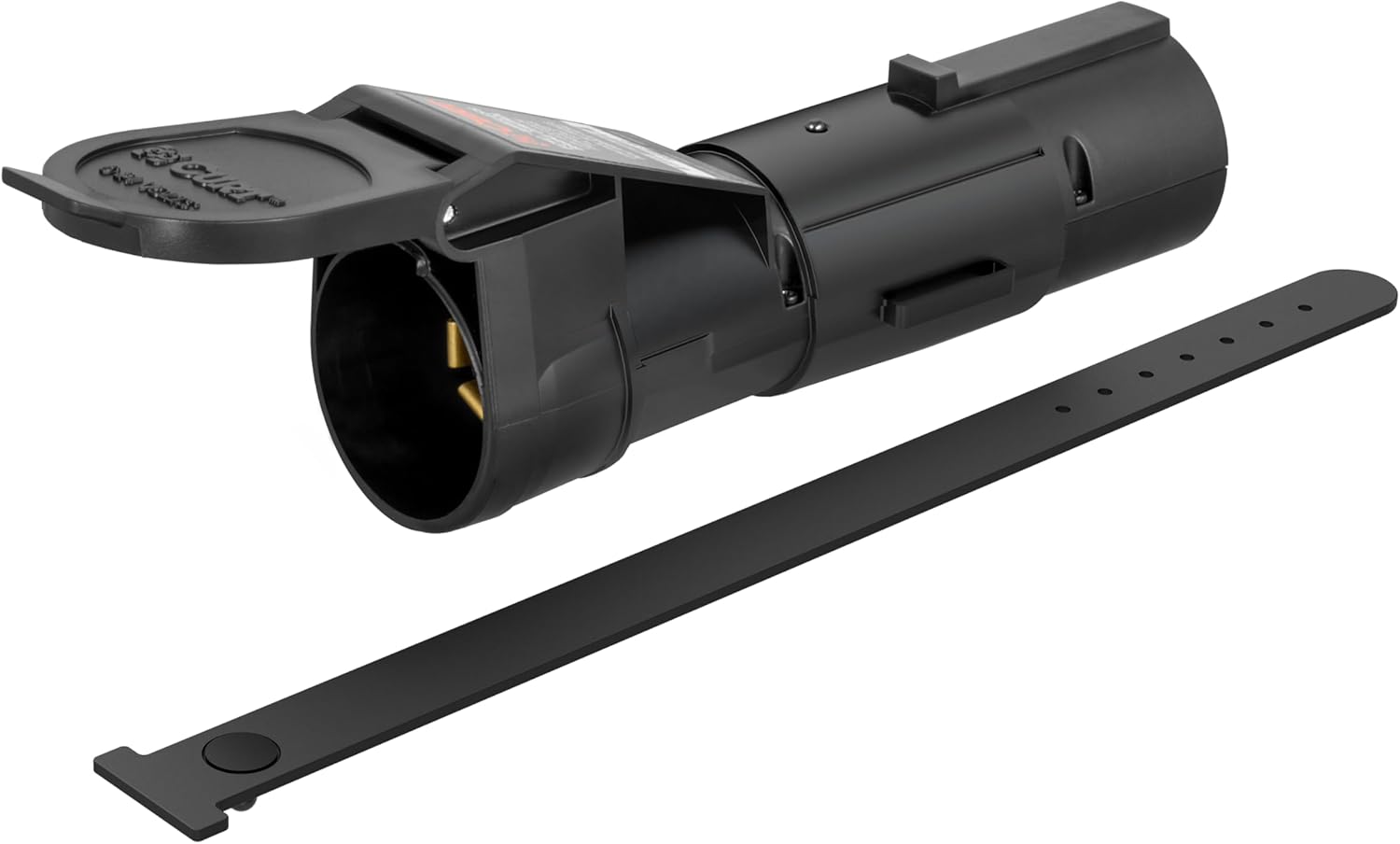
The CURT Echo 51180 is a plug-and-play mobile brake controller that inserts at your vehicle's 7-way RV blade connector and uses Bluetooth and the OneControl app to manage trailer braking. It is typically used by drivers who need a no-fuss, transferable controller for occasional towing without running an in-dash harness. The unit offers automatic calibration, a tri-axis accelerometer for smooth proportional braking, and the ability to save multiple towing profiles in the app. Practical benefits include quick installation, easy transfer between vehicles and remote manual activation from your phone when connected. Because the unit is housed outside at the 7-way, it is potted for weather resistance and includes a retention strap and locking tab for a firmer connection. Important limitations are reliance on Bluetooth and the phone app for live adjustments, potential fit and clearance issues at low or exposed 7-way sockets, and less permanence than a hardwired under-dash controller which some owners prefer for long-term durability and a tidier installation.
Best for: Balanced all-round buyers who want an easy-to-install, transferable controller that simplifies towing setup and lets them manage brake settings from a smartphone.
Less Ideal for: Drivers seeking a permanently mounted, factory-quality in-cab solution or those who prefer a controller that never relies on a phone for operation should consider a wired under-dash unit instead.
- Plug-and-play design inserts at the vehicle 7-way for zero-tool installation
- Bluetooth app lets you adjust settings, save profiles, and manually activate brakes
- Portable and easy to move between vehicles without rewiring
- Tri-axis accelerometer provides proportional, smooth braking and automatic calibration
- Depends on Bluetooth and smartphone app for live control and visualization
- Protrudes from the 7-way and can create clearance or retention issues on low-mounted connectors
- Less permanent and potentially less durable long-term than a hardwired in-cab controller
Verdict: A convenient, phone-controlled plug-in brake controller ideal for Tucson owners who value easy transferability and simple setup, but not for those wanting a permanent wired installation.
2. CURT Venturer NEXT Time-Delay Electric Trailer Brake Controller

| Compatibility | 12-volt vehicle systems, electric over hydraulic brakes |
|---|---|
| Brake control | Time-delay with adjustable power and ramp time |
| Axles supported | Controls 1–3 axles (up to 6 brakes) |
| Display | LED ramp indicator with adjustable brightness |
The CURT Venturer NEXT is a slim, time-based brake controller designed to operate electric trailer brakes from inside the cabin. It controls up to six brakes (three axles) and lets you set both gain and ramp time so you can match the controller to different trailer loads. The unit uses an LED ramp indicator with adjustable brightness for day or night visibility and mounts with a low-profile bracket that frees up dash space. Installation is straightforward for vehicles with a compatible brake-control connector or when using CURT plug-and-play wiring harnesses, and the controller needs no internal leveling or moving parts so it can be mounted at any angle. Practical benefits include simple setup, clear feedback while towing, and compact packaging that hides under the dash. Limitations are that it is a time-delay controller rather than proportional, so brake feel will be less synced to vehicle deceleration compared with proportional units, and the factory-style adhesive mount may not be as secure as a screwed bracket in high-vibration applications.
Best for: Practical optimizers who want a compact, easy-to-install brake controller that covers typical towing needs for a Tucson without paying for a higher-end proportional unit.
Less Ideal for: Drivers seeking the most refined, vehicle-synchronized braking feel for heavy trailers should consider a proportional controller instead.
- Controls up to 6 trailer brakes (1–3 axles) for a wide range of small to medium trailers.
- Fully adjustable power and ramp time to tune braking to load and trailer response.
- Low-profile design with a mounting bracket that keeps the unit unobtrusive in the cabin.
- LED ramp indicator with adjustable brightness provides clear feedback during towing.
- No internal moving parts and angle-independent mounting simplify installation and durability.
- Time-delay operation is less responsive and less smooth than a proportional controller.
- Recommended wiring harness sold separately adds to total install cost and complexity.
Verdict: A compact, budget-friendly time-delay controller that gives Hyundai Tucson owners straightforward adjustability and easy installation, but not the refined braking feel of proportional units.
3. Lrichy Proportional Trailer Brake Controller N8508211

| Brand | Lrichy |
|---|---|
| Model | N8508211 |
| Brake support | 2/4/6/8 brakes (1–4 axles) |
| Display | LED digital |
The Lrichy N8508211 is a proportional brake controller that uses internal sensors to apply trailer brakes in direct response to your Hyundai Tucson's braking intensity and speed. It is designed for electric brake trailers with 2, 4, 6, or 8 brakes and includes mounting brackets, screws, and a plug-and-play style port for quick disconnects. The unit shows settings and diagnostics on an LED display and offers a manual lever for immediate trailer braking when needed. For Tucson owners who tow occasionally, this controller brings smoother, hill-aware braking compared with time-delay units and simplifies setup with clear instructions. Limitations to note are that a vehicle-specific plug-and-play harness for the Hyundai Tucson is not included and some users report inconsistent behavior on a small number of installs, so careful bench testing and secure wiring are recommended before regular towing. For a budget-focused buyer the N8508211 delivers proportional performance and basic diagnostics at a low entry cost, but expect to add or adapt a harness for a neat, reliable installation on a Hyundai Tucson.
Best for: Budget-conscious Tucson owners who tow occasionally and want proportional braking performance without the premium price and are willing to do basic wiring or add a harness for proper installation.
Less Ideal for: Those who need a factory-style plug-and-play solution straight from the box or professional tow operators who demand commercial-grade consistency and support.
- Proportional braking adapts output to vehicle braking for smoother, more natural trailer control
- Supports trailers with 2 to 8 brakes (1–4 axles), covering common small to medium trailers
- LED digital display provides real-time diagnostics and visible settings
- Includes mounting hardware and a plug-and-play style port for easier removal
- Vehicle-specific plug-and-play harness for Hyundai Tucson is not included
- Some user reports of intermittent unintended activation on a minority of installs
Verdict: A cost-conscious proportional controller that gives Tucson owners smoother trailer braking at a low price but requires adding or adapting a harness for a tidy, reliable install.
4. Pro Series POD Time-Delay Trailer Brake Controller (Tekonsha 80500)
| Vehicle application | Works with trailers on Hyundai Tucson with 1-2 axles (plug-in harness sold separately) |
|---|---|
| Brake type | Time-delay (digital) controller |
| Axles supported | 1-2 axles |
| Voltage | 12 Volts |
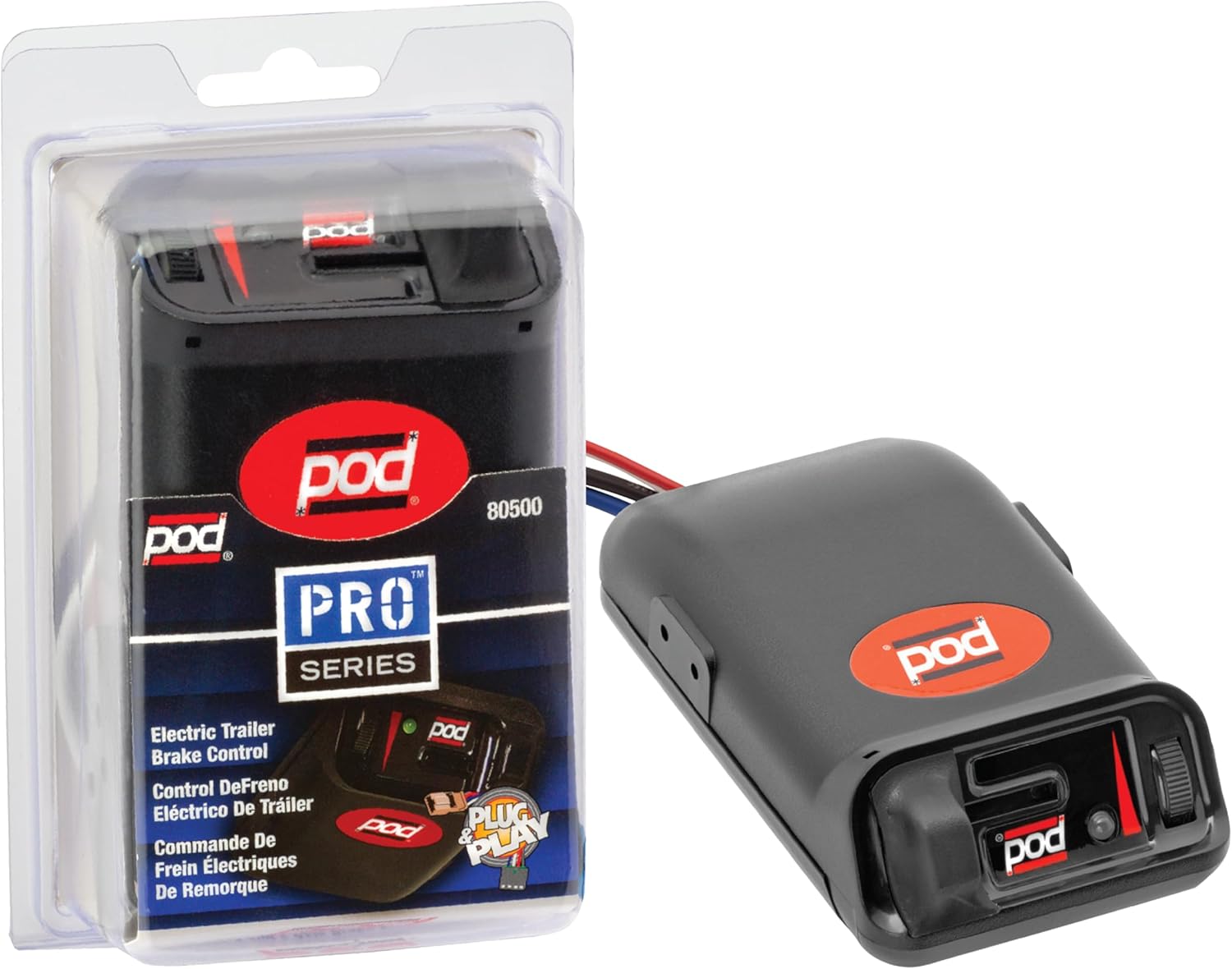
The Pro Series POD (Tekonsha 80500) is a simple, time-delayed trailer brake controller aimed at basic towing. It links your Hyundai Tucson to a trailer and ramps braking power up over a short interval when you apply the vehicle brakes, with an LED dual-digit display that shows output and diagnostics. Installation is straightforward when you use a vehicle-specific wiring harness and the unit can be mounted in any orientation because its control is time-based. You also get a manual override lever for instant trailer braking and internal circuit protection for short circuits and loss of ground. The practical benefit is reliable, no-frills trailer braking for occasional towing without the complexity of proportional controllers. Limitations are that it is not proportional so braking is less smooth on steep descents or varying terrain, and some users report inconsistent quality control or missing mounting hardware, so inspect the kit on receipt and be prepared to source a harness or screws if needed.
Best for: Convenience-driven buyers who prioritize a simple, quick-to-install brake controller for occasional towing with minimal setup and maintenance.
Less Ideal for: Drivers who frequently tow heavy loads, tackle long mountain descents, or want the smoothest, vehicle-synchronized braking should consider a proportional controller instead.
- Plug-and-play installation with vehicle wiring harness compatibility for quick setup in the Tucson.
- Large dual-digit LED display provides clear power output and diagnostic feedback at night.
- Manual override lets the driver apply trailer brakes independently in emergencies.
- Built-in protection circuitry for short circuits and loss of ground improves electrical safety.
- Time-delay operation is not proportional so brake response can feel less refined on long descents.
- Some reported quality-control issues such as dead units or missing mounting screws in a small number of units.
Verdict: A budget-friendly, easy-to-install time-delay controller that fits a Hyundai Tucson well for light, occasional towing but lacks proportional braking finesse.
5. Timilge Proportional Trailer Brake Controller with LED Display (1–4 Axles)

| Brand | Timilge |
|---|---|
| Model | Proportional Trailer Brake Controller |
| Compatible axles | 1 to 4 axle trailers |
| Display | LED digital voltage display |
This Timilge proportional brake controller is a plug-in style unit that automatically senses how hard your tow vehicle is slowing and applies trailer brakes in proportion, with manual boost and gain adjustments for fine tuning. It is intended for trailers with one to four axles and shows the output voltage on a small LED display so you can watch command strength while towing. Typical use is mounting the module inside the Tucson cab near the dash, wiring to the vehicle harness (or using a vehicle-specific pigtail) and adjusting gain and boost until trailer braking feels smooth and matched to the SUV. Practical benefits include reduced trailer brake and tire wear compared with time-delay controllers, straightforward installation with harness ports, and a compact size that fits tight dash spaces. Important limitations: some buyers report intermittent failures and parasitic battery draw on a few units, so verify wiring and consider adding an inline switch; long-term durability is mixed compared with more expensive name-brand controllers.
Best for: A risk-averse mainstream buyer who wants a more secure, factory-replacement style braking response for occasional to moderate towing with a Hyundai Tucson and values easy installation and predictable operation.
Less Ideal for: Drivers who tow very heavy loads frequently or need commercial-grade long-term reliability should consider higher-end branded controllers with proven longevity and dealer support.
- Proportional braking mirrors vehicle deceleration for more controlled stops
- LED display shows real-time output so adjustments are easier
- Fits 1 to 4 axle trailers, covering most small to medium trailer needs
- Compact housing and wiring ports simplify under-dash mounting and plug-in harness use
- Some customers report early failures or units that malfunction after a few trips
- Several reviews mention a constant power draw unless a switch is added
Verdict: A compact, easy-to-install proportional controller that brings smoother, more predictable trailer braking to a Hyundai Tucson without complex setup.
Choosing the Right Hyundai Tucson Trailer Brake Controller: Key Factors to Consider
Compatibility With Hyundai Tucson Wiring
Ensuring the controller integrates cleanly with the Tucson wiring harness matters because it affects both installation time and system reliability. A controller that matches the vehicle's connector types and voltage expectations reduces the need for splicing or aftermarket adapters, which lowers the risk of loose connections and electrical faults.
Compatibility also influences diagnostic clarity. When wiring matches the vehicle harness, fault indicators are more likely to reflect true trailer issues rather than a mismatched installation. That makes troubleshooting faster and keeps the towing setup safer on the road.
Type of Brake Control: Proportional Vs Time-Delayed
Choosing between proportional and time-delayed controllers shapes how braking feels and responds. Proportional controllers sense vehicle deceleration and apply trailer braking in proportion, which usually yields smoother transitions and fewer jerks when slowing or stopping.
Time-delayed controllers apply a preset level of braking over a set interval regardless of vehicle deceleration. They can be simpler to set up but may require more manual tuning to avoid abrupt stops. Consider the typical trailer weight and driving conditions to decide which control type better matches your preferred towing feel.
Ease of In-Cab Installation and Controls
How the controller mounts in the cabin and how intuitive the controls are directly affects daily usability. A unit designed for easy dashboard or under-dash mounting that provides clear knobs, buttons, or a digital display helps you make quick adjustments while stopped.
Controls that are reachable and readable reduce driver distraction. Also evaluate whether the unit's mounting hardware requires drilling or can use existing Tucson dash spaces. Simple setup procedures and accessible wiring paths make installation less invasive and more reversible.
Adjustability and Braking Profiles
Wide and precise adjustability lets you fine-tune trailer braking to the load and road conditions. Look for controllers that offer variable gain settings, boost modes, or multiple preset profiles so you can adapt between light loads and heavier trailers.
Good adjustability reduces trailer sway and uneven braking and can minimize wear on tow vehicle brakes. Having easy-to-change profiles also means you can switch setups quickly when towing different trailers.
Durability and Build Quality
A controller is exposed to vibration, heat, and occasional moisture during towing, so solid construction matters for long-term reliability. Units with robust housings, sealed electronics, and high-quality connectors tend to resist failure and provide consistent performance over many miles.
Durability also affects resale and maintenance costs. A well-built controller will keep its controls responsive and maintain secure wiring connections, reducing the chance of intermittent faults while towing.
Diagnostic Features and Safety Indicators
Clear diagnostics and indicators help you identify trailer wiring faults, low power conditions, or brake output problems before they lead to unsafe situations. LEDs, audible warnings, or display readouts that show output level and fault codes make it easier to confirm correct operation during pre-departure checks.
Controllers with built-in diagnostics speed up troubleshooting and give you confidence that the trailer brakes will engage as expected. That can be especially valuable when hooking up at unfamiliar sites or after long periods of storage.
How We Chose the Best Hyundai Tucson Trailer Brake Controller
We selected units that fit the specific electrical and mounting considerations typical of the Hyundai Tucson and prioritized devices that deliver consistent braking behavior when paired with electric trailer brakes. Our editorial filters emphasized four to six category-specific criteria: wiring compatibility with the Tucson's tow connector and vehicle harness, user-friendly in-cab mounting and controls, adjustable braking profiles including proportional response, robust build quality for frequent towing, and clear diagnostics or indicator readouts.We also considered installation complexity and whether clear wiring guides or concealed mounting options are available for the Tucson interior. Units requiring major vehicle modifications, uncommon adapters, or those that lack documented compatibility with the Tucson were excluded. The final list focuses on controllers that balance reliable braking performance with straightforward installation and useful driver controls for typical Tucson towing scenarios.
Our full evaluation process is outlined in our review methodology.
FAQ
Do I need a special controller for a Hyundai Tucson?
You do not necessarily need a brand-specific unit, but you should choose a controller compatible with the Tucson's wiring and towing connector. Matching the controller to the vehicle harness and connector type reduces installation complexity and helps avoid electrical issues.
What is the difference between proportional and electric brake controllers?
Proportional controllers sense vehicle deceleration and apply trailer braking accordingly, which usually produces smoother stops. Basic electric or time-delayed controllers apply braking based on a preset profile over time, and may require more manual tuning to feel natural during stops.
How difficult is trailer brake controller installation in a Tucson?
Installation difficulty varies by unit and your comfort with vehicle wiring. Many controllers are designed for in-cab mounting with plug-and-play harnesses that simplify hookup, while others may require splicing or running a power lead to the battery. If you prefer to avoid drilling or complex wiring, look for controllers with clear wiring guides and Tucson-compatible harness options.
Can I adjust the braking strength for different trailer weights?
Yes, most modern controllers offer adjustable gain or multiple braking profiles to match different trailer weights. You should fine-tune the settings so the trailer brakes engage smoothly without overwhelming the tow vehicle, and recheck settings whenever towing a significantly different load.
What safety checks should I do after installing a controller?
After installation, verify wiring connections are secure and protected, confirm the controller powers on, and test braking output with the trailer connected on level ground. Check that diagnostics show no faults and perform a low-speed brake test to ensure the trailer responds predictably before driving on public roads.
Conclusion
Prioritize compatibility with the Hyundai Tucson wiring, a control type that matches your towing style, and units that offer clear adjustability and diagnostics. Those factors together determine how safely and comfortably you can tow.Expect tradeoffs between simplicity and responsiveness: time-delayed controllers can be easier to install, while proportional units usually deliver smoother braking. Choose the features that best match the trailers you tow and the level of installation complexity you are comfortable handling.
Explore More:
- Check out all Hyundai Tucson parts & accessories
- Explore Electronics
- Browse all Accessories
