

Note: This article contains affiliate links. If you click on these links and make a purchase, I may earn a small commission at no extra cost to you. This helps support my research and content. Read my full affiliate disclosure here.
Towing with the Hyundai Santa Cruz demands consistent, predictable trailer braking to keep stops smooth and vehicle control sharp. The right Hyundai Santa Cruz trailer brake controller reduces nose dive, shortens stopping distance, and prevents the trailer from pushing the truck during heavy braking. This guide presents seven shortlisted options selected for their performance, usability, and compatibility with Santa Cruz electrical systems.Below you will find an overview of what matters when choosing a controller, followed by focused guidance on installation, wiring, and practical use so you can pick the trailer brake controller that matches your towing style and trailer setup.
Looking for other parts? See all Hyundai Santa Cruz parts & accessories.
Top Picks at a Glance
| Best Overall Trailer Brake Controller Balanced, reliable controller with proportional braking and easy installation | REDARC Tow-Pro Liberty Electric Trailer Brake Controller |  |
| Best Budget Trailer Brake Controller Low-cost controller providing basic braking control for occasional towing | Timilge Time-Delay Trailer Brake Controller (BC05) |  |
| Best Bluetooth Trailer Brake Controller Smartphone‑connected controllers with app control and wireless setup options | CURT Echo Mobile Bluetooth Trailer Brake Controller (Plug‑and‑Play) |  |
| Best Dash‑Mount Trailer Brake Controller Clean, OEM‑style dash controllers with knob or low‑profile mount aesthetics | CURT Spectrum Integrated Electric Trailer Brake Controller (Proportional) |  |
| Best Plug‑and‑Play Trailer Brake Controller Units designed for quick installation with vehicle‑specific or standard harnesses | CURT Discovery NEXT Electric Trailer Brake Controller (Low Profile, Fully Adjustable) |  |
| Best Multi‑Axle Trailer Brake Controller High‑capacity controllers that support more axles/brakes for heavier trailers | Tekonsha Brake-EVN Proportional Trailer Brake Controller (8508220) |  |
| Best In‑Line / Trailer‑Mounted Brake Controller Inline or trailer‑mounted units that sit behind the 7‑way or on the trailer | Autowbrake Trailer-Mounted Electric Brake Controller |  |
1. REDARC Tow-Pro Liberty Electric Trailer Brake Controller
Best Overall Trailer Brake Controller

| Voltage | 12 Volts |
|---|---|
| Axle support | 1–2 axles |
| Item model number | EBRH-ACCNA |
| Item Weight | 8.8 ounces |
The REDARC Tow-Pro Liberty is a proportional electric brake controller built for everyday towing where smooth, predictable braking is the priority. It uses active calibration and proportional sensing to apply trailer brakes in proportion to vehicle deceleration, which reduces jarring and helps control sway when towing light trailers. Installation is straightforward for DIYers when paired with REDARC vehicle-specific or universal pigtail harnesses and the remote dash head mounts neatly for an unobtrusive in-cab control. The unit supports 1 to 2 axles and includes a 3.3 foot remote head cable and bezel hardware for a clean dash fit. Practical benefits include quieter, more controlled stops on highways and a compact dial that blends into the Santa Cruz cockpit without blocking controls. Limitations are its 1–2 axle support only, so it is not suited for larger multi-axle trailers, and full feature integration requires purchasing a vehicle-specific harness for the cleanest factory-style install on the Santa Cruz.
Best for: Buyers wanting a straightforward, factory-style proportional controller that prioritizes smooth braking and an easy DIY install for light towing with the Santa Cruz.
Less Ideal for: Users who tow large multi-axle trailers, heavy RVs, or need advanced networked features like trailer braking telematics should consider higher-capacity or commercial controllers.
- Proportional braking with active calibration for smooth, predictable stops
- Compact remote head and simple dial control for unobtrusive in-cab use
- Supports 1–2 axle trailers common to light towing needs
- Includes remote head cable and bezel for clean installation
- Well tested design with a two year limited warranty from a reputable trailer electronics maker
- Does not support trailers with more than two brake axles
- Vehicle-specific harness sold separately for factory-style wiring integration
Verdict: This is the go-to proportional controller that balances smooth braking performance, straightforward setup, and durable build for most DIY towing needs.
2. Timilge Time-Delay Trailer Brake Controller (BC05)
Best Budget Trailer Brake Controller

| Fits axle count | 1 to 4 axles |
|---|---|
| Controller type | Time-delay |
| Wiring | 4-wire (power, stop, ground, trailer) |
| Display | LED digital voltage readout |
The Timilge Time-Delay Trailer Brake Controller is a straightforward, budget-oriented unit that sends a timed braking signal to trailer electric brakes and displays output voltage on a small LED screen. It is typically used for light or occasional towing where a simple preset braking response is acceptable rather than proportional braking tied to vehicle deceleration. Installation is simplified by wiring ports that match common vehicle harnesses and four clear wire connections for power, stop light, ground, and trailer output. Adjustable initial power and ramp let you tune how aggressively the trailer brakes apply during a stop. Practical benefits include low weight, compact size, and easy visibility of output on the digital readout. Important limitations are that it is a time-delay controller, so braking is not proportional to tow vehicle deceleration which can increase wear and deliver less refined braking on heavier trailers or frequent towing runs. For Hyundai Santa Cruz owners who tow occasionally with small trailers, this controller gives functional braking control without complexity.
Best for: Someone who needs an inexpensive, easy-to-install brake controller for occasional light towing and values simplicity over advanced feature sets.
Less Ideal for: Drivers who tow heavy trailers frequently or who want smoother, proportional braking should choose a proportional controller instead.
- Simple time-delay operation suitable for light or infrequent towing
- LED digital display shows voltage output for easy monitoring
- Adjustable initial power and ramp lets you tune braking feel
- Wiring ports and standard four-wire connections simplify installation
- Not a proportional controller so braking response is less smooth and can increase brake wear on heavier trailers
Verdict: Choose this economical controller when you need a functional, no-frills brake controller for light or infrequent towing without spending much.
3. CURT Echo Mobile Bluetooth Trailer Brake Controller (Plug‑and‑Play)
Best Bluetooth Trailer Brake Controller
| Connection | 7-way RV blade plug |
|---|---|
| Control method | Bluetooth smartphone app |
| Brake type | Proportional, tri-axis accelerometer |
| Axles supported | 1–2 axles (2–4 brakes) |
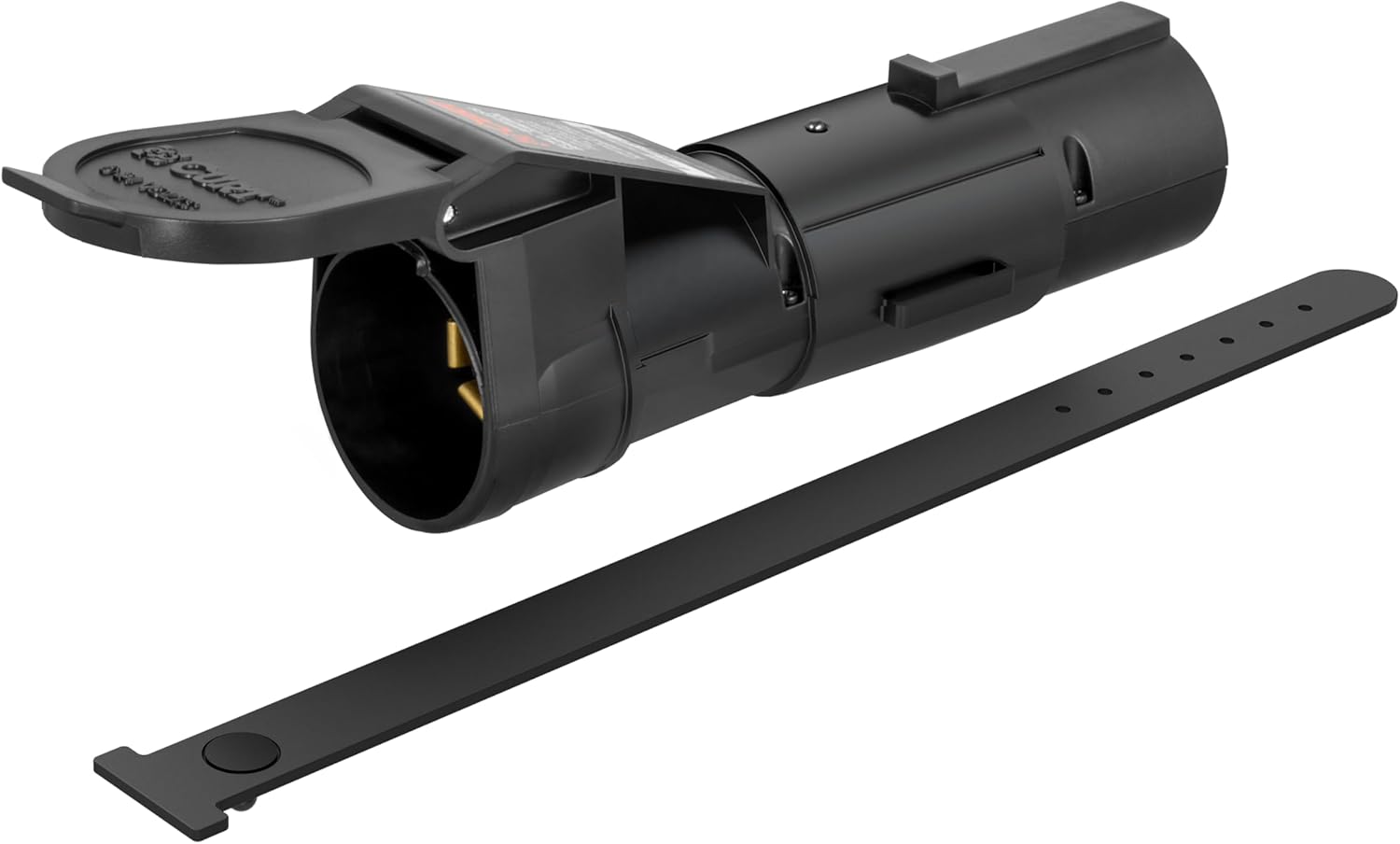
The CURT Echo Mobile brings smartphone control to trailer braking with a truly plug-and-play design. You insert the Echo between the vehicle and trailer 7‑way connector, install the OneControl app on iOS or Android, and you can set brake output, sensitivity, and manually apply the trailer brakes from your phone. Its triple-axis accelerometer provides proportional braking for smoother stops on grades, and the unit supports one to two axles (two to four brakes). The compact, potted enclosure and retention strap on the connector make it durable and resistant to moisture and vibration while remaining easy to move between vehicles. The app stores multiple vehicle-trailer profiles for quick swaps and lets you tow without added dash wiring. Limitations are the reliance on a smartphone for configuration and control and the physical plug design means it occupies the vehicle 7‑way while connected rather than offering a discrete in-cab control pod. For Santa Cruz owners who prefer app-based tuning and want a portable, no-install solution, the Echo is a convenient modern option.
Best for: Drivers who prioritize app-based tuning, quick profile switching, and a no‑wiring, transferable brake controller solution for occasional to moderate towing with the Santa Cruz.
Less Ideal for: Users who want a permanently mounted in-cab controller with a physical display or those who prefer standalone controls without relying on a smartphone.
- True plug-and-play portable design that moves between vehicles without wiring.
- Bluetooth control and a dedicated app for on-the-fly tuning and profile storage.
- Triple-axis accelerometer for proportional, smooth braking on hills.
- Potted enclosure and retention strap improve moisture, vibration, and connector security.
- Compatible with cruise control and ABS systems for broader vehicle compatibility.
- Requires a smartphone and the app for full configuration and manual control.
Verdict: Pick a Bluetooth controller if you want app-based tuning, easy profile storage, and the convenience of adjusting settings from your phone.
4. CURT Spectrum Integrated Electric Trailer Brake Controller (Proportional)
Best Dash‑Mount Trailer Brake Controller

| Brand | CURT |
|---|---|
| Model | Spectrum (51170) |
| Control Type | Rotary knob with push-button and LED indicators |
| Sensing | Triple-axis accelerometer |
The CURT Spectrum provides proportional trailer braking through a main module that mounts out of sight and a slim rotary knob that installs on the dash for a clean, factory-style appearance. It uses a triple-axis accelerometer to sense vehicle motion and apply braking power smoothly whether you are stopping on level ground or negotiating hills. The rotary knob has an integrated push button and ten tri-color LEDs for clear status and quick manual override while towing. Installation is simplified by vehicle-specific quick plug harnesses and automated leveling and calibration, and the hidden module keeps the dash uncluttered. Practical benefits include precise, responsive braking and an unobtrusive control that matches factory controls, making it easy to adjust gain on the fly. Limitations are that it requires a compatible vehicle harness for quick install and a small learning curve to interpret the LED indicators and find the optimal gain setting for different trailer loads.
Best for: Buyers who want a brake controller that looks and operates like factory equipment and who prioritize an unobtrusive dash mount with quick access to manual adjustment.
Less Ideal for: People who prefer a simple plug-and-play inline controller with built-in harnesses for multiple vehicle types or who want a purely digital touchscreen interface.
- Dash-mounted rotary knob offers a low-profile, factory-style appearance and easy on-the-fly adjustments
- Triple-axis accelerometer delivers smooth, proportional braking and compensates for uphill or downhill stops
- Hidden main module keeps the dash uncluttered and allows flexible mounting behind the dash
- Automated leveling and calibration plus vehicle-specific quick plug harnesses speed installation
- Requires a vehicle-specific harness or hardwiring for installation which may add complexity on some vehicles
Verdict: This slot is for controllers that install neatly into the dash area and offer an OEM look plus intuitive physical controls for on‑the‑fly adjustments.
5. CURT Discovery NEXT Electric Trailer Brake Controller (Low Profile, Fully Adjustable)
Best Plug‑and‑Play Trailer Brake Controller

| Display Type | LCD |
|---|---|
| Operates Brakes | 2-8 trailer brakes (1-4 axles) |
| Adjustability | Fully adjustable power and ramp time |
| Compatibility | Works with low-volt, PWM, ABS, cruise control, and electric-over-hydraulic brakes |
The CURT Discovery NEXT is a plug-and-play electric trailer brake controller designed to simplify towing setup while giving precise braking control. It installs quickly using a vehicle or universal harness and mounts low-profile to clear the dash, keeping the cabin tidy. The unit controls 2 to 8 trailer brakes (1 to 4 axles) and offers fully adjustable power and ramp time so you can dial in smooth, consistent stopping for different trailer loads. The easy-to-read LCD shows full-text diagnostics and adjustable brightness for day or night visibility, and the slim bracket improves clearance without sacrificing access. Because it uses time-delay braking with gain and load settings, it works well with a wide range of brake systems including low-voltage, PWM, ABS-compatible, cruise-control-equipped vehicles, and electric-over-hydraulic setups. Expect a straightforward install and practical diagnostics, though time-delay controllers can be less immediately responsive than proportional units in some towing scenarios.
Best for: Buyers who want a fast, wiring-minimal install and straightforward tuning for occasional to regular towing where ease of installation and clear diagnostics matter most.
Less Ideal for: Drivers who prioritize the most immediate, road-speed-synchronized braking feel or who tow highly variable loads at high frequency may prefer a proportional controller instead.
- Plug-and-play installation reduces wiring time and complexity
- Low-profile bracket improves dash clearance and preserves interior aesthetics
- Fully adjustable power and ramp time for tuning to different trailer loads
- LCD with full-text diagnostics and adjustable brightness simplifies troubleshooting
- Time-delay control type can be less responsive than proportional controllers in some towing conditions
Verdict: Choose a plug‑and‑play controller when you want a fast, wiring‑minimal install using a vehicle or universal harness to get towing ready quickly.
6. Tekonsha Brake-EVN Proportional Trailer Brake Controller (8508220)
Best Multi‑Axle Trailer Brake Controller

| Compatibility | 1–4 axle trailers |
|---|---|
| Display | Digital LED |
| Installation | Plug & Play port; harness sold separately |
| Boost levels | 3 levels |
| Manual control | Yes |
The Tekonsha Brake-EVN is a proportional electric brake controller designed to deliver smooth, measured braking for trailers with one to four axles. It senses how hard and how quickly you apply the Santa Cruz’s brakes and applies the trailer brakes proportionally, which improves stability and reduces jerky stops when towing heavier multi‑axle loads. Setup is straightforward on vehicles that accept Tekonsha plug‑and‑play adapters, and the unit’s digital LED display makes it easy to read real‑time diagnostics and adjust output with arrow buttons. A boost feature offers three extra power levels for heavier trailers and a manual lever lets you apply the trailer brakes independently in sudden situations. Its compact housing mounts within reach of the driver and a power‑save mode helps avoid parasitic drain. Limitations to note are that a vehicle‑specific wiring harness is sold separately and some custom installations may require additional wiring or an adapter for the Santa Cruz’s connector layout.
Best for: Tow owners who haul heavier multi‑axle trailers and prioritize predictable, proportional braking and easy in‑cab adjustments while towing the Santa Cruz.
Less Ideal for: Drivers who prefer a completely wireless or factory‑integrated brake solution or those unwilling to install a separate vehicle harness should consider other options.
- Proportional braking with internal inertia sensor for smooth, vehicle‑matched trailer stops
- LED display and arrow controls for clear, on‑the‑fly adjustments and diagnostics
- Boost feature with three power levels to handle heavier multi‑axle trailers
- Compact, driver‑accessible design with manual override lever for immediate trailer braking
- Plug‑and‑play removable connector simplifies installation when a vehicle harness is available
- Vehicle‑specific wiring harness is not included and may be required for plug‑and‑play installation
- May need additional wiring or adapter on nonstandard connector systems
Verdict: This pick fits buyers who tow heavier multi‑axle trailers and need a controller rated to manage additional brakes and greater stopping loads.
7. Autowbrake Trailer-Mounted Electric Brake Controller
Best In‑Line / Trailer‑Mounted Brake Controller

| Manufacturer | AUTOWBRAKE |
|---|---|
| Brand | Autowbrake |
| Model | AUTOWBRAKE |
The Autowbrake is a self-contained trailer-mounted electric brake controller that installs at the trailer plug or on the trailer tongue and communicates wirelessly with its remote hand unit. It provides proportional braking, meaning the unit senses towing vehicle braking and applies trailer brakes with matching force instead of a fixed time-delay output. Typical use is for owners who prefer leaving the controller on the trailer so the Hyundai Santa Cruz stays free of under-dash modules and vehicle wiring changes. Notable features include wireless communication, sleep mode that avoids interference when another controller is present, and weather-resistant packaging for on-trailer mounting. Practical benefits are quick hookup between different tow vehicles, no reprogramming after each tow, and safer, more adaptive braking behavior compared with basic time-delay controllers. Important limitations are that it requires mounting and wiring on the trailer and is not suitable for motorcycles, ATVs, or scooters; some users may prefer an in-cab controller for instant dashboard feedback and manual gain adjustment while driving.
Best for: Hyundai Santa Cruz owners who regularly swap the truck between trailers or want a weather-resistant controller that stays with the trailer rather than modifying the vehicle.
Less Ideal for: Drivers who want in-cab manual control, immediate dashboard display of controller status, or those who prefer to avoid any trailer-side wiring work.
- Trailer-mounted design eliminates the need for under-dash installation on the tow vehicle
- Proportional braking delivers adaptive brake force that matches towing vehicle deceleration
- Wireless remote hand unit enables quick hookup and use with multiple tow vehicles
- Sleep mode prevents interference if another brake controller is detected
- Requires trailer-side mounting and wiring which adds installation work on the trailer
Verdict: Select an in‑line or trailer‑mounted controller if you prefer a protected, weather‑resistant unit mounted at the plug or on the trailer instead of under the dash.
Choosing the Right Hyundai Santa Cruz Trailer Brake Controller: Key Factors to Consider
Braking Modulation and Response
How a controller modulates braking force affects trailer behavior during everyday driving and emergency stops. Proportional controllers sense vehicle deceleration and match trailer braking smoothly, which reduces jerking and trailer sway when compared with simple time-delayed units. For the Santa Cruz, which can tow a range of trailer sizes, predictable modulation helps maintain steering stability and reduces wear on both tow vehicle and trailer brakes.
Response time and the ability to deliver consistent force across repeated stops matter for heavy loads or long descents. Look for controllers with adjustable gain or boost so you can tune braking to trailer weight. A unit with clear feedback on delivered output makes it easier to refine settings during towing.
Installation Complexity and Vehicle Wiring
Installation effort ranges from basic plug-in modules to hardwired controllers requiring a direct connection to the vehicle battery and brake controller port. Consider how much wiring work you are comfortable doing and whether the Santa Cruz you own has a factory brake controller connector or requires splicing. Clean, secure wiring preserves signal integrity and reduces the risk of intermittent braking issues.
Routing the controller cable, securing the mounting bracket, and protecting connections from corrosion are practical concerns. If you prefer minimal vehicle alteration, choose units explicitly designed for simple installation in light trucks and that include clear diagrams or harness options compatible with common Santa Cruz towing packages.
In-Cab Accessibility and User Interface
Ease of use from the driver seat influences how readily you can adjust settings while towing. Controllers with a straightforward dial or sliding control allow quick gain adjustments, while digital displays offer precise numeric feedback for repeatable setup. Mounting location matters: a controller must be reachable but not obstructive, especially in the Santa Cruz cab where dash and console space is limited.
Look for tactile controls that can be operated without taking eyes off the road. Additional features such as a manual override button or an intuitive LED status indicator help manage braking in varied traffic conditions and make troubleshooting simpler.
Compatibility With Trailer Brake Type
Trailers use either electric or electric-over-hydraulic (EOH) brakes, and a suitable controller must support the brake type on your trailer. Pure electric controllers directly drive brake magnets, while some models support EOH systems or include separate settings for hydraulic systems. Ensuring the controller matches the trailer brake mechanism prevents under- or over-braking, which can cause instability.
Verify the controller's rated output current and how it scales for multiple axles. Controllers with higher continuous output ratings reduce the chance of overheating on long descents and better handle multi-axle trailer loads commonly towed behind a Santa Cruz.
Durability and Environmental Protection
Controllers operate in a truck environment exposed to temperature swings, vibration, and occasional moisture. A durable enclosure and quality connectors extend service life and reduce failures in the field. For owners who tow seasonally or in wet conditions, corrosion-resistant terminals and sealed electronics help maintain consistent performance.
Assess build quality, warranty coverage, and access to replacement parts. A controller that remains dependable over thousands of miles pays off by avoiding mid-trip problems and frequent calibration.
Diagnostic Features and Feedback
Onboard diagnostics and clear feedback simplify setup and troubleshooting at the trailhead. LED indicators, audible alerts, or digital readouts that show faults, open circuits, or overcurrent conditions make it easier to identify wiring issues or trailer brake problems before you hit the road. For Santa Cruz owners who may switch between trailers, a controller that remembers settings or offers presets reduces setup time.
Diagnostic clarity also improves safety by making it obvious when the controller or trailer brakes are not functioning as expected, allowing you to stop and fix the problem before continued towing.
Proportional Vs Time-Delayed Controllers
Understanding the difference between proportional and time-delayed controllers is important for matching braking behavior to your trailers and towing style. Proportional units measure the truck's deceleration and apply trailer braking in proportion, which generally yields smoother stops and less trailer agitation. For frequent towing of mixed loads with the Santa Cruz, proportional controllers usually provide the most natural, predictable feel.
Time-delayed controllers apply braking based on an adjustable timer and are simpler by design. They can be effective for lighter loads or for owners who prefer a consistent, repeatable output. However, they may not react to sudden changes in deceleration as neatly as proportional units, which can matter when towing heavier or unevenly loaded trailers.
- Proportional: smoother, reacts to vehicle motion, better for mixed loads
- Time-delayed: simpler, predictable output, easier setup for basic towing
Mounting Locations and Practical Fit in the Santa Cruz
Cab layout and space near the steering column will determine feasible mounting spots. Choose a location that keeps the controller within easy reach without blocking vehicle controls or airbag zones. Ideal mounts are low on the dash or under the steering column where the cable can be routed neatly to the rear.
Consider how the mounting position affects cable length and visibility. Some Santa Cruz configurations may require a longer cable run or creative bracket placement to avoid interference with pedals, shifter, or center console features.
- Mount low on the dash or under the steering column for easy reach
- Avoid airbag zones and ensure cable routing is protected from pinch points
Wiring Basics and Protecting Connections
Solid electrical connections are fundamental to reliable trailer brake operation. Typical wiring includes a brake controller power lead, ground, brake signal, and output to the trailer. Use proper ring terminals, fuse protection close to the battery when required, and route wires away from heat sources or sharp edges.
Protect exposed splices with heat-shrink tubing or sealed connectors and secure wires with clips to minimize vibration-related failures. If you are uncertain about your Santa Cruz wiring, consult the vehicle manual or a professional to verify circuit locations and voltage requirements before making hardwire connections.
- Use fused power leads and solid grounds
- Secure and protect splices with heat-shrink or sealed connectors
Tuning Gain and Brake Feel for Different Trailers
Once installed, tuning the controller lets you match braking force to trailer weight and brake condition. Start with conservative gain settings and perform low-speed tests in a safe area with the trailer connected. Increase gain gradually until the trailer brakes engage firmly without causing wheel lock or harsh tugging.
Keep notes for each trailer you tow. Some controllers allow quick manual adjustments or store settings for multiple trailers, which speeds setup when swapping loads. Regular re-checks are advisable after loading changes or when traveling over long grades.
- Begin with low gain, test at slow speeds, and increase gradually
- Record preferred settings for each trailer to reduce setup time
Maintenance Tips to Keep the System Reliable
Routine checks prevent failures on the road. Inspect wiring for corrosion, verify secure mounts, and confirm the controller responds correctly during a test stop before long trips. Clean connectors and apply dielectric grease where appropriate to minimize moisture-related faults.
Also check trailer brake components such as magnets and shoes for wear. Even the best controller cannot compensate for poorly maintained trailer brakes, so periodic inspection of both vehicle and trailer systems is essential for safe towing with the Santa Cruz.
- Inspect wiring, connectors, and mounts before long trips
- Check trailer brakes and components periodically for wear
How We Chose the Best Hyundai Santa Cruz Trailer Brake Controller
We narrowed candidates by focusing on features and real-world fit for the Hyundai Santa Cruz towing environment. Evaluation centered on braking behavior, installation demands, ease of in-cab control, reliability of electronics, and how well the controller integrates with typical Santa Cruz wiring and towing packages. We prioritized controllers that offer smooth proportional braking or finely adjustable time-delayed control, because those are the most relevant for preventing trailer push or premature locking on mixed loads.Specific criteria included braking modulation quality under varied loads, clarity and accessibility of in-cab controls, compatibility with standard 12V vehicle wiring and available mounting locations, diagnostic or LED feedback for troubleshooting, and long-term durability in the truck environment. We also considered user-configurable settings such as boost, gain, and manual override responsiveness.Excluded items were controllers that require complex vehicle modifications, controllers without clear wiring diagrams, and units known to lack reliable modulation for light trucks. The final shortlist represents units that balance dependable braking performance with straightforward installation and practical controls suited to Santa Cruz owners.
Our full evaluation process is outlined in our review methodology.
FAQ
Do I need a trailer brake controller for every trailer I tow with my Santa Cruz?
It depends on trailer weight and local regulations. Heavier trailers with electric brakes typically require a controller. Even for trailers under towing limits, a controller can improve stopping stability and reduce stress on the tow vehicle. Check local tow laws and trailer specifications to confirm requirements.
Can I install a brake controller in the Santa Cruz myself?
Many owners can install a controller if they are comfortable with basic wiring and follow clear instructions. Some Santa Cruz models provide a factory connector that simplifies installation. If you are not comfortable with vehicle wiring or if the install requires splicing into critical circuits, professional installation is recommended.
How should I set the gain on a new controller for my trailer?
Start with a low gain setting and perform slow-speed brake tests with the trailer attached. Increase gain gradually until the trailer slows in proportion to the truck without causing wheel lock or abrupt jerking. Repeat tests with typical loaded conditions to confirm the setting works across normal towing scenarios.
Will a proportional controller work better on steep descents behind the Santa Cruz?
Proportional controllers generally deliver smoother, more adaptive braking on descents because they match trailer force to vehicle deceleration. That responsiveness helps prevent trailer sway and reduces brake overheating. Still, proper tuning and conservative driving are essential on long grades.
What wiring protections should I add during installation?
Use an inline fuse near the battery on the controller power lead, secure grounds with clean contact surfaces, and protect splices with heat-shrink or sealed connectors. Routing wires away from heat and moving parts and securing them with clips reduces the chance of abrasion or short circuits.
How often should I test the brake controller?
Perform a basic functional test before each significant towing trip and a more thorough check seasonally. Verify manual override function, indicator LEDs or display readings, and that output responds when the vehicle brake is applied. Regular checks catch wiring or trailer issues before they cause a problem on the road.
Final Verdict
Prioritize braking modulation, ease of installation, and solid diagnostics when choosing a controller for the Hyundai Santa Cruz. Proportional units provide the most natural brake feel for mixed loads, while well-built time-delayed controllers can be a practical choice for simpler towing needs. Match the controller output and features to your trailer brake type, and plan for a clean, protected installation and periodic checks.Focus on achieving predictable trailer behavior and quick, repeatable setup. By controlling tradeoffs between complexity and functionality, you can select a controller that gives safer, smoother stops and greater confidence whenever you tow with your Santa Cruz.
Explore More:
- Check out all Hyundai Santa Cruz parts & accessories
- Explore Electronics
- Browse all Accessories
