

Note: This article contains affiliate links. If you click on these links and make a purchase, I may earn a small commission at no extra cost to you. This helps support my research and content. Read my full affiliate disclosure here.
If you tow with a 2022-present Jeep Grand Cherokee, picking the right trailer brake controller matters for safety, braking balance, and everyday drivability. A properly matched controller reduces stopping distance, minimizes trailer sway during braking, and prevents excessive wear on trailer brakes and tow vehicle components. This guide rounds up the top shortlisted options for the Grand Cherokee and focuses on practical decision factors like brake modulation style, installation complexity, and in-cab usability. Read on to see which controllers made the list and why they suit the Grand Cherokee platform before you move on to installation and setup guidance.
Looking for other parts? See all Jeep Grand Cherokee parts & accessories.
Top Picks at a Glance
| Best Overall Trailer Brake Controller The best all-around controller balancing performance, features, and reliability | Tekonsha Primus IQ Proportional Trailer Brake Controller (90160) |  |
| Best Budget Trailer Brake Controller A low-cost controller that delivers essential braking control without extras | Gihdfer Brakeman IV Time-Delayed Electric Trailer Brake Controller |  |
| Best Premium Trailer Brake Controller Higher-end unit with advanced features, smoother control, and superior build | REDARC Tow-Pro Elite Electric Trailer Brake Controller |  |
| Best Compact Trailer Brake Controller A small, low-profile controller suited to tight dash space and neat installs | CURT Venturer NEXT Time-Delay Electric Trailer Brake Controller |  |
| Best Proportional Trailer Brake Controller Units that apply braking force proportionally to tow vehicle deceleration | Tekonsha Pro Series 80550 Pilot Trailer Brake Control |  |
| Best Wireless Trailer Brake Controller Controllers with wireless or Bluetooth control for cable-free convenience | CURT Echo Mobile Bluetooth Trailer Brake Controller (Proportional) |  |
| Best Plug-And-Play Trailer Brake Controller Easy-install controllers that use vehicle-specific wiring harnesses or simple hookups | CURT Discovery NEXT Electric Trailer Brake Controller (Plug-and-Play, Low Profile) |  |
Tekonsha Primus IQ Proportional Trailer Brake Controller (90160)
Best Overall Trailer Brake Controller

| Model | 90160 |
|---|---|
| Voltage | 12 Volts |
| Axles supported | 1-3 axles |
| Display | LED diagnostics |
The Tekonsha Primus IQ is a straightforward proportional brake controller designed to give predictable, smooth trailer braking for light to medium towing. It senses the tow vehicle’s deceleration and applies trailer brakes proportionally, which helps keep stops steady and reduces jerking during routine driving and emergency stops. Installation is typical for aftermarket controllers and is often plug-and-play when a factory tow harness is present; the unit’s small footprint fits under the dash and the snap-in dash clip and removable connector make it easy to stow when not towing. The LED display provides real-time diagnostics and connection status while a power output knob and three-level boost let you fine-tune braking force for heavier trailers. Limitations include a simple LED display rather than a full graphical interface and the need for a vehicle-specific wiring harness in vehicles without a factory connector, which can add installation time. For everyday towing on a Jeep Grand Cherokee the Primus IQ delivers reliable, no-nonsense proportional braking with a reputation for long-term durability.
Best for: Buyers wanting a reliable, easy-to-use proportional controller that provides smooth everyday braking and simple setup for routine towing with a Grand Cherokee.
Less Ideal for: Drivers who need multi-trailer management, advanced touchscreen controls, or professional-grade features for heavy commercial towing should consider a more feature-rich controller.
- Proportional braking via internal inertia sensor for smooth, responsive stops.
- Compact design with snap-in dash mount and removable connector for easy stowage.
- LED display with self-diagnostics helps spot wiring or connection issues quickly.
- Boost feature with three levels adds extra stopping power when hauling heavier loads.
- Widely compatible with vehicles that have a trailer tow harness and well supported by Tekonsha accessories.
- Requires a vehicle-specific wiring harness or splicing when no factory connector is present.
Verdict: The best all-around trailer brake controller for most buyers, offering the right mix of braking performance, ease of use, and dependable build quality for routine towing.
Gihdfer Brakeman IV Time-Delayed Electric Trailer Brake Controller
Best Budget Trailer Brake Controller

| Fitment | 1 to 4 axles, 2- to 8-brake systems |
|---|---|
| Display | LED braking force indicator |
| Activation | Time-delayed brake activation |
| Package contents | Brake controller, mounting bracket, 6 screws, instruction |
The Brakeman IV is a straightforward time-delayed trailer brake controller aimed at buyers who want dependable braking without complexity. It installs quickly and mounts in tight spaces, making it a common DIY fit for older or lightly modified tow vehicles. The unit uses time-delayed activation rather than proportional sensing, so braking is applied over a set delay which smooths stops and reduces abrupt trailer jerks when set up correctly. The front LED display reports current braking force and makes tuning the gain simple while driving. Packaging includes a mounting bracket and basic hardware for a one-person install. Limitations to expect are the lack of proportional braking modes and a plastic housing with modest screw bosses and relatively light-gauge wiring, so heavy commercial use or frequent high-speed towing may favor a sturdier, feature-rich controller. For occasional towing of trailers with electric brakes on a Jeep Grand Cherokee this controller delivers easy installation and reliable basic stopping power at a budget price.
Best for: Buyers who want an affordable, no-frills brake controller they can install themselves and use occasionally for towing basic trailers with electric brakes on a Jeep Grand Cherokee.
Less Ideal for: Do not choose this if you tow frequently at highway speeds with heavy loads or need proportional braking and the extra safety and refinement it provides.
- Simple time-delayed control that's easy to set up and tune while driving
- Visible LED display shows braking force for quick adjustments
- Compact design and included mounting hardware speed up DIY installation
- Compatible with 1 to 4 axle trailers (supports 2-,4-,6-,8-brake systems)
- Uses time-delayed activation rather than proportional sensing, so braking feels less natural on variable terrain
- Plastic housing and light-gauge wiring may limit long-term durability under heavy use
Verdict: A value-focused trailer brake controller that provides reliable, straightforward stopping power and basic features for budget-conscious DIYers who tow occasionally.
REDARC Tow-Pro Elite Electric Trailer Brake Controller
Best Premium Trailer Brake Controller
| Fit | 1–3 axles |
|---|---|
| Voltage | 12V/24V compatible |
| Remote head cable | 3.3 ft (1 m) |
| Main unit connector length | 1.7 ft (0.5 m) |
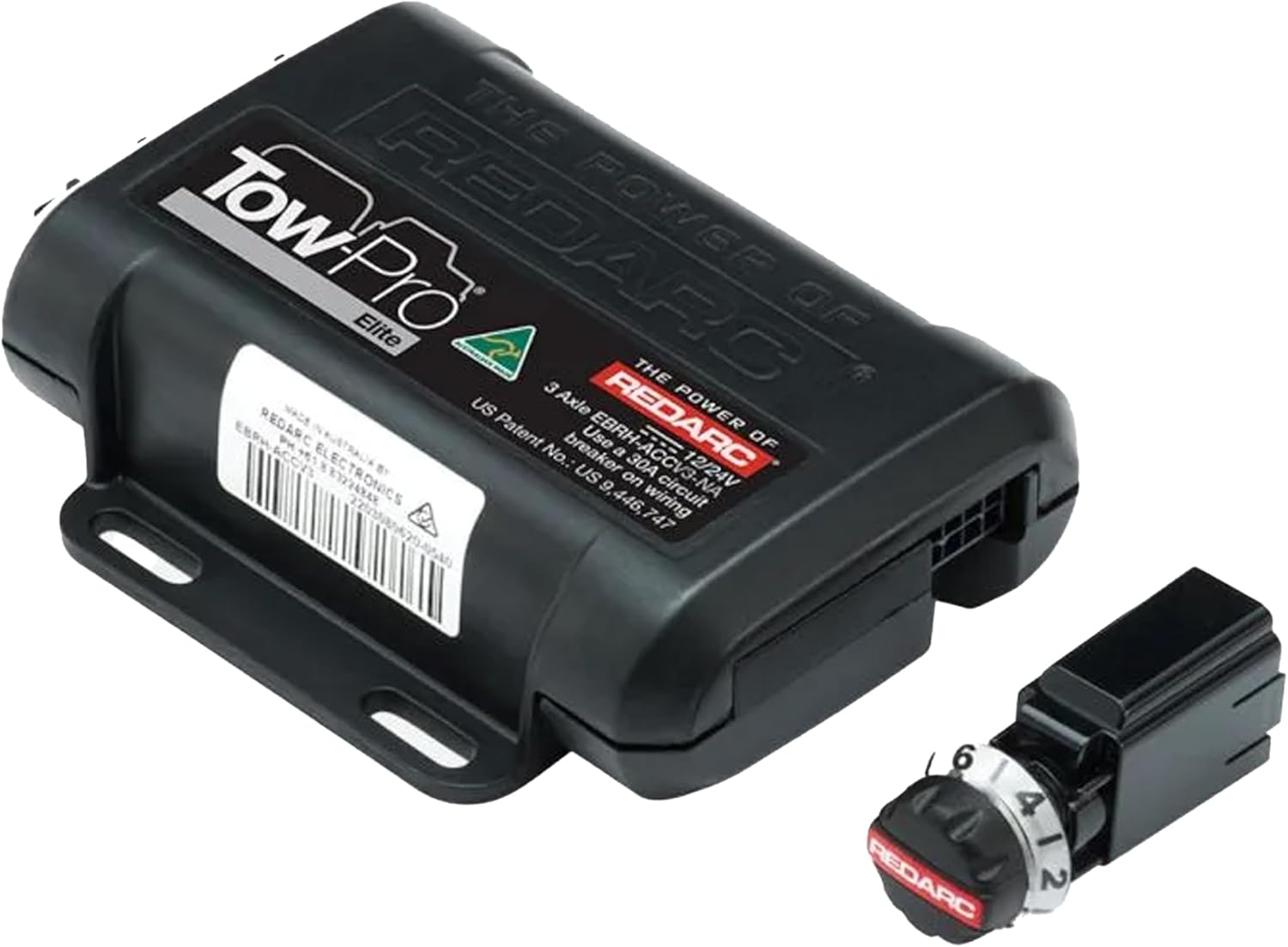
The REDARC Tow-Pro Elite is a premium electric trailer brake controller built around a small dash-mounted knob and a remotely mounted control module. For Jeep Grand Cherokee owners who tow, it provides proportional braking on-road for smooth, predictable stops and a manual mode for low-speed or technical situations. Installation is designed to be factory-style with a universal harness and remote-head cable so the module can be hidden behind trim while the knob mounts neatly in a dash switch slot or drilled bezel. Notable features include active calibration, sway control, and a compact LED indicator that gives quick status feedback without cluttering the cabin. In practice the controller delivers refined modulation that reduces trailer push and improves confidence when towing heavy loads or mountain driving. The main compromises are its reliance on a vehicle-specific wiring plug or splicing if the Grand Cherokee lacks a connector and the small control knob can feel fiddly to adjust compared with larger controllers. Still, for frequent or demanding towing the Tow-Pro Elite packs advanced electronics and a factory-fit appearance that justify its premium positioning.
Best for: Buyers who tow frequently or carry heavy trailers with their Jeep Grand Cherokee and prioritize refined brake modulation, durable electronics, and a near-factory installation aesthetic.
Less Ideal for: Casual or infrequent towers who prefer the simplest possible setup or who want a larger, easier-to-adjust physical controller interface.
- Proportional and manual dual modes for both highway and off-road braking needs
- Remote-mounted module with compact dash knob for a clean, factory look
- Active calibration and sway control for consistent, smooth braking
- Includes universal harness and switch insert for simpler installation
- May require vehicle-specific harness or wire splicing if Grand Cherokee lacks a plug
- Small knob can be less intuitive to adjust compared with larger paddle-style controllers
Verdict: A premium trailer brake controller for buyers willing to pay more for refined braking modulation, advanced electronics, and longer-lasting components for frequent or heavy towing.
CURT Venturer NEXT Time-Delay Electric Trailer Brake Controller
Best Compact Trailer Brake Controller

| Controls | 2–6 brakes (1–3 axles) |
|---|---|
| System compatibility | 12-volt vehicle systems, electric over hydraulic brakes |
| Display | LED ramp indicators with adjustable brightness |
| Mounting | Low-profile bracket, mountable at any angle |
The CURT Venturer NEXT is a slim, cabin-mounted time-delay brake controller designed to give precise control of electric trailer brakes without taking up much dash space. It controls 2 to 6 brakes (1 to 3 axles) and offers adjustable gain and ramp time so you can tune braking force and how quickly it applies. The low-profile housing and included clearance bracket make it easy to tuck the unit under a dash or behind trim for a discreet install, and LED indicators show ramp progress with adjustable brightness for day or night visibility. Installation is straightforward and works well with a CURT plug-and-play harness if your Grand Cherokee has the compatible connector, though harnesses are sold separately. Because it is a time-based controller it does not use inertia sensing, so it relies on your chosen settings rather than vehicle deceleration to modulate braking. That makes setup and occasional tuning necessary as trailer load or conditions change, but it keeps the unit mechanically simple and flexible for tight mounting locations.
Best for: Buyers wanting a compact, unobtrusive brake controller that fits tight dash spaces and delivers configurable braking for light to medium towing with a focus on clean in-cab aesthetics.
Less Ideal for: Drivers who prefer inertia-based automatic modulation or those who tow widely varying loads and want a controller that self-adjusts without manual retuning.
- Very low-profile housing and mounting bracket for discreet dash installation
- Controls up to six trailer brakes (1–3 axles) to cover most small to medium trailers
- Fully adjustable power and ramp time allow precise tuning for different trailer loads
- LED ramp indicators with adjustable brightness for clear feedback day or night
- Simple time-delay design with no internal moving parts reduces mechanical failure points
- Time-delay operation requires manual tuning and does not automatically sense vehicle deceleration
Verdict: A compact trailer brake controller for users who need a discreet, space-saving unit that still delivers effective braking control without a bulky dashboard footprint.
Tekonsha Pro Series 80550 Pilot Trailer Brake Control
Best Proportional Trailer Brake Controller

| Manufacturer | Tekonsha |
|---|---|
| Brand | Pro-series |
| Model | 80550 |
| Item model number | 80550 |
| Customer Reviews | 4.4 out of 5 stars |
The Tekonsha Pro Series 80550 Pilot is a compact time-delayed brake controller that displays connection status and output voltage on a two-digit digital readout. It mounts in virtually any orientation and is typically installed in-cab to manage electric trailer brakes when towing a Jeep Grand Cherokee. The smoke lens keeps the display readable in direct light and the microprocessor maintains display orientation even if mounted upside down. The unit protects against short circuit and loss of ground and includes a standard mounting bracket. In practice the Pilot provides simple, consistent braking by ramping voltage to the trailer over a few seconds rather than matching brake force instant by instant. That makes it easy to set up and reliable for occasional towing, but it does not provide proportional braking or an adjustable ramp rate, which means braking will feel less natural than a proportional controller and can require more driver attention in stop-and-go traffic. For Grand Cherokee owners who tow intermittently and want a straightforward, durable controller the Pilot is a sensible choice; those seeking the smoothest, vehicle-synced braking should choose a proportional unit instead.
Best for: Jeep Grand Cherokee owners who tow occasionally and prioritize a simple, durable controller that is easy to install and lets them monitor trailer brake voltage.
Less Ideal for: Drivers who tow frequently, haul heavy loads, or need the smoothest, vehicle-synced braking performance should consider a proportional controller instead.
- Large two-digit display shows voltage output and connection status for easy setup.
- Flexible mounting and microprocessor design allow readable installation in any orientation.
- Built-in protection against short circuit and loss of ground improves reliability.
- Simple, quick installation with standard mounting bracket makes it user-friendly for occasional towers.
- Time-delayed (timing) control rather than true proportional braking, so braking response is not matched to vehicle deceleration.
- No adjustable ramp rate or advanced tuning options for fine control.
Verdict: A proportional trailer brake controller for buyers who want smoother, more natural trailer braking that responds automatically to vehicle deceleration for improved stability and control.
CURT Echo Mobile Bluetooth Trailer Brake Controller (Proportional)
Best Wireless Trailer Brake Controller
| Item model number | 51180 |
|---|---|
| Compatibility | Works with industry-standard 7-way RV blade connectors |
| Brake control type | Proportional (tri-axis accelerometer) |
| Axles supported | One to two axles (2 to 4 brakes) |
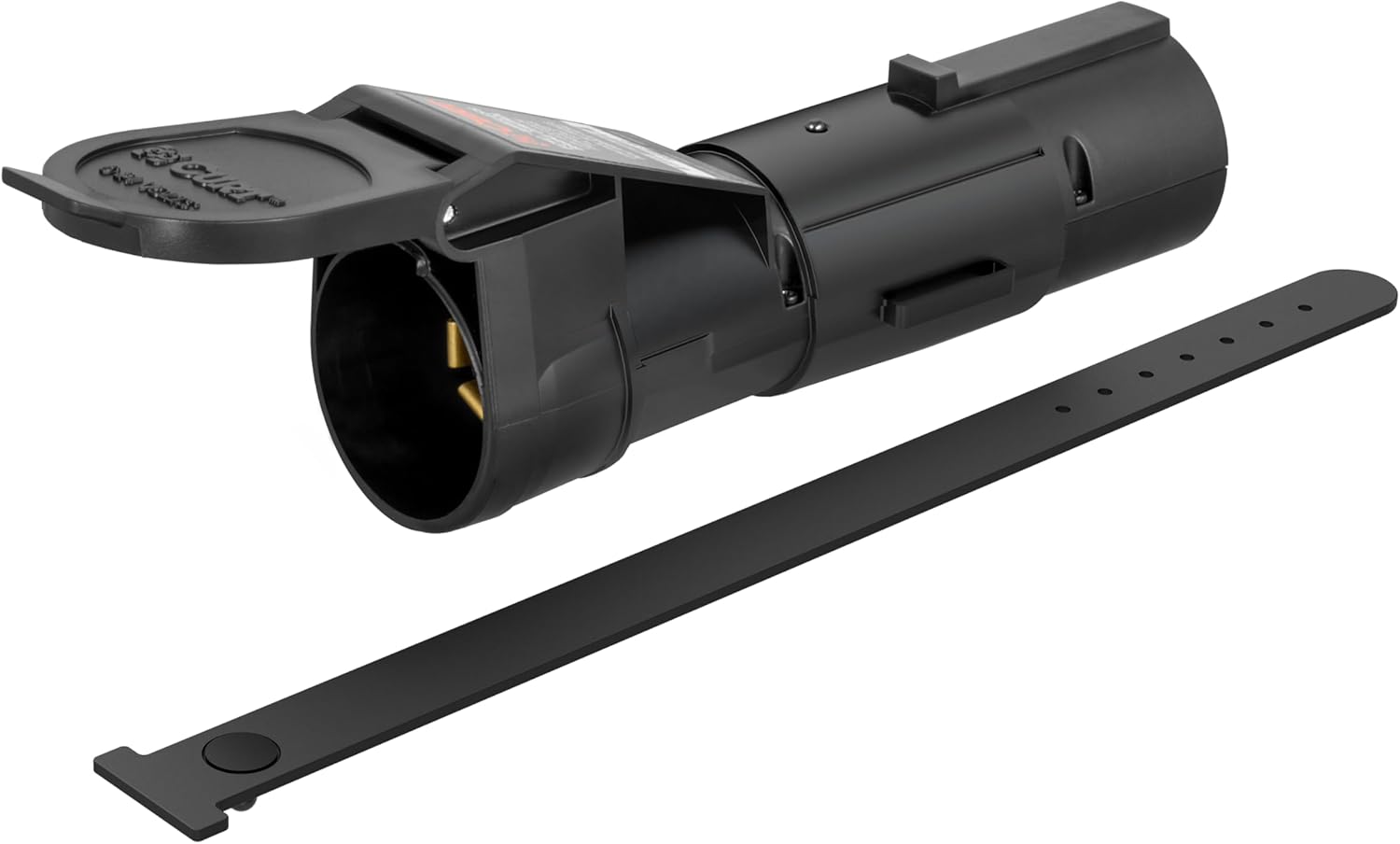
The CURT Echo Mobile is a plug-and-play, Bluetooth trailer brake controller designed for drivers who want a dashboard-free solution. You plug the Echo into your vehicle 7-way connector, pair it with the OneControl/Smart Control app on an iPhone or Android device, then create towing profiles and adjust max output and sensitivity from the phone. It uses a tri-axis accelerometer for proportional braking and can manage one to two axles. The unit is fully portable so it can be moved between vehicles without splicing harnesses, and its potted enclosure plus retention strap aim to withstand moisture and vibration. Practical benefits include fast installation, app-based tuning and the ability to keep the interface off your dash. Limitations to consider are reliance on a phone for full control and occasional Bluetooth pairing or connectivity quirks on some phones, plus the external plug-in design can protrude and may require securing to avoid strain on the 7-way socket during rough roads.
Best for: Drivers who want a wireless, dashboard-free brake controller that is quick to install and easy to move between vehicles and prefer tuning via a smartphone rather than adding in-cab hardware.
Less Ideal for: Users who want a permanently mounted under-dash controller or who prefer a fully wired factory-style installation that does not rely on a phone.
- Truly plug-and-play installation through an industry-standard 7-way RV blade plug
- Bluetooth app lets you create profiles, adjust max output and sensitivity without in-dash hardware
- Portable design easily transfers between vehicles for fleet or multi-vehicle use
- Tri-axis accelerometer provides proportional, hill-aware braking
- Potted enclosure and locking tab on connector improve durability and connection security
- Depends on Bluetooth and a smartphone for configuration and some remote functions
- External plug-in form can protrude and stress the 7-way connector if not secured
- Some phones show intermittent pairing or connectivity issues with the app
Verdict: A wireless trailer brake controller for users who prefer a wireless or Bluetooth interface for quick setup, dashboard-free mounting, and easier installation without extensive wiring changes.
CURT Discovery NEXT Electric Trailer Brake Controller (Plug-and-Play, Low Profile)
Best Plug-And-Play Trailer Brake Controller

| Display Type | LCD |
|---|---|
| Operates | 2–8 trailer brakes (1–4 axles) |
| Material Type | Plastic |
| Included Components | Discovery NEXT |
The CURT Discovery NEXT is a low-profile, fully adjustable electric brake controller built for simple in-cab control of trailer brakes. It uses a clear LCD and full-text diagnostics to show settings and help troubleshoot, and the included bracket improves dash clearance for a neat install. The unit supports time-delay operation with adjustable power and ramp time and handles 2–8 trailer brakes (1–4 axles), which covers most single- and tandem-axle towing setups. For a Jeep Grand Cherokee owner wanting a fast install, the controller works with factory-style harnesses where available for a near plug-and-play fit and does not require leveling or internal moving parts. Users get finer tuning via gain and load settings for smoother stops and less wear on trailer components. Caveats: a few users report intermittent electrical issues when wiring or harness compatibility is incorrect, so confirm the correct vehicle harness and inspect the tow vehicle wiring before installation; professional help may be warranted if you see odd electrical behavior.
Best for: Buyers who prioritize the quickest, simplest installation using factory-style connectors or minimal wiring modifications and want an adjustable, in-cab controller they can set and forget.
Less Ideal for: If you prefer a proportional controller type or need multi-vehicle plug-and-play adapters not specific to your Grand Cherokee, consider alternatives or professional installation assistance.
- Low-profile design and unique mounting bracket for improved dash clearance
- LCD with full-text diagnostics and adjustable display brightness for easy setup and troubleshooting
- Fully adjustable power and ramp time plus gain and load controls for fine-tuned braking
- Supports 2–8 brakes (1–4 axles), covering common single and tandem axle trailers
- No internal moving parts or leveling required, simplifying installation and maintenance
- Some users report electrical compatibility issues that caused vehicle electrical faults when wiring or harnesses were incorrect
Verdict: A plug-and-play trailer brake controller for DIYers who want the fastest, simplest installation using factory-style connectors or straightforward wiring with minimal modifications.
Choosing the Right 2022-Present Jeep Grand Cherokee Trailer Brake Controller: Key Factors to Consider
Control Type and Modulation
How a controller modulates trailer brakes affects brake balance and drivability in the Grand Cherokee. Proportional controllers sense deceleration and apply trailer brakes in direct proportion to vehicle braking, which yields more natural pedal feel and reduces jerk during stops. Time-delayed or user-gain controllers can still work well but require more tuning to avoid abrupt trailer braking or lag. Consider whether you prefer a hands-off proportional setup for varied driving or a manually adjustable controller if you tow trailers with unusual brake characteristics.
Modulation matters when towing heavier loads or when braking on mixed surfaces. A controller with smooth, predictable modulation helps maintain traction and steering control under hard braking. For drivers who do a lot of city driving with frequent stops, better modulation reduces stress on the tow vehicle's suspension and braking system when paired with the Grand Cherokee's weight and brake characteristics.
Installation and Wiring Complexity
Installation difficulty influences whether you can do the job yourself or should seek professional help. Some controllers plug into a factory tow package connector or use a simple spade-and-ring terminal setup, while others require a dedicated brake output wire, ground, and a power feed routed to the fuse box. The Grand Cherokee's dash layout and existing tow wiring determine how straightforward placement and routing will be.
Also factor in ease of accessing vehicle wiring for a clean, reliable connection. A controller that offers a vehicle-specific harness or clear wiring diagram reduces install time and the chance of errors. If you prefer minimal dash intrusion, look for compact in-cab units or models that mount under the dash with remote controls. Plan for securing wiring away from heat sources and moving parts to avoid failures over time.
User Interface and Adjustability
A usable interface makes it safer to tune braking while on the road. Many controllers provide hands-on knobs, digital displays, or simple sliders to adjust gain or sensitivity. For the Grand Cherokee, ergonomic mounting locations and clear feedback indicators are important, because you may need to tweak settings for different trailer weights or road conditions.
Adjustability also includes features like boost modes for heavy loads, separate outputs for multiple axles, and manual override functions that let you apply trailer brakes independently. Consider whether you prefer quick tactile controls that can be adjusted with a glance, or a digital UI that stores presets and provides diagnostic readouts. Interfaces that require minimal driver attention help maintain safety while adjusting.
Compatibility With Vehicle Electronics
Modern Grand Cherokee models include electronic stability control, ABS, and other driver aids that interact with braking behavior. A controller must cooperate with these systems to avoid conflicting inputs. Good controllers detect vehicle deceleration and modulate output without triggering ABS unnecessarily or upsetting stability control calibrations.
Also check that the controller's power draw and wiring method are compatible with the Grand Cherokee's electrical system and fuse layout. Proper grounding and fused power feeds protect both the controller and the vehicle. Avoid controllers that need unapproved modifications to factory wiring; choose solutions that have documented installation paths for the Grand Cherokee or standard 12V systems.
Mounting and In-Cab Placement
Mounting affects usability and aesthetics for daily drivers. The controller should be accessible from the driver's seat without blocking air vents, switches, or interfering with steering wheel motion. Some in-cab controllers mount on the dash, below it, or on the center console; others fit in a cubby or attach with a bracket.
Consider whether you want a permanent visible unit or a low-profile controller for occasional towing. Secure mounting minimizes rattles and prevents accidental disconnection. Evaluate available mounting hardware and whether the controller fits in the Grand Cherokee's typical dash or console clearances.
Durability and Weather Resistance
Trailer brake controllers are exposed to vibration, heat, and occasionally moisture depending on installation site. Durable electronics and corrosion-resistant connectors extend life and reduce maintenance needs. For Grand Cherokee owners who tow frequently or travel in wet climates, weather-resistant housings and sealed connectors are valuable.
Also consider warranty coverage and the availability of replacement parts or service. Devices built with higher-quality components often maintain calibration and sensitivity longer, reducing the need for repeated adjustments and repairs.
Why a Dedicated Controller Matters for the Grand Cherokee
The Grand Cherokee's curb weight and braking system mean that towing can significantly change vehicle dynamics. A dedicated trailer brake controller provides a controlled way to apply trailer brakes independently of the tow vehicle, helping to maintain directional stability and reducing stopping distances.
Using a controller tailored to the Grand Cherokee's wiring and mounting constraints ensures the controller communicates predictably with the vehicle's braking systems. Proper integration reduces the risk of trailer push or instability under heavy braking and allows the driver to fine-tune brake response to match load and road conditions.
- Reduces trailer push and improves braking balance
- Helps maintain vehicle stability under emergency stops
- Allows tuning for different trailer weights and brake conditions
Proportional Vs Time-Delayed Controllers: Which Fits Your Use?
Proportional controllers automatically sense how hard you are braking and apply trailer brakes in a matching manner. That behavior often provides the smoothest and most natural response when towing with a Grand Cherokee, especially at highway speeds or during evasive maneuvers.
Time-delayed controllers apply a preset level of braking after a brief delay and can be simpler to set up for basic towing. They work well for light, consistent loads but can feel less refined with variable towing weights or sudden stops. Choose proportional for frequent highway towing and time-delayed if you tow light loads infrequently and prefer simpler controls.
- Proportional: smoother modulation, better for mixed driving
- Time-delayed: simpler setup, may require manual adjustments
Wiring Paths and Power Sources in the Grand Cherokee
Planning the wiring path before you start the install saves time and reduces mistakes. Identify a fused 12V power source near the dash, a clean ground, and the brake-output line that connects to the trailer plug. Many Grand Cherokee trims have convenient access behind the fuse box or under the dash for tapping power without cutting factory harnesses.
If the Grand Cherokee in your care has a factory tow package, confirm whether it includes a controller harness or an accessible brake-output wire. Using a vehicle-specific harness or routed power makes the installation cleaner and more reliable, while avoiding potential electrical interference with the vehicle's systems.
- Locate fused 12V source and solid chassis ground
- Plan a secure route away from heat and moving parts
- Use a vehicle-specific harness when available
Mounting Locations That Work Best
Common mounting locations for in-cab controllers in the Grand Cherokee include under the dash near the steering column, to the left of the knee panel, or on the center console side. Pick a site that offers good visibility and reach while keeping the controller clear of pedals and major switches.
For a neater installation, consider mounting brackets that put the unit flush with the dash or tucked inside an accessory cubby. Wherever you mount the controller, secure its wiring with zip ties and grommets where it passes through panels to prevent abrasion and long-term wear.
- Mount within easy reach but out of the line of sight
- Use brackets and grommets to protect wiring
- Avoid locations that interfere with airbags or vehicle controls
Basic Setup and Calibration Tips
Start setup with the trailer hitched, level, and loaded to a typical towing weight. For proportional units, take a few progressive brake tests at low speed to let the controller sense deceleration patterns. Adjust sensitivity or gain incrementally until braking feels smooth without trailer lockup.
For time-delayed systems, begin with the lowest gain and increase in small steps while performing short test stops. Check that the trailer brakes engage before the vehicle ABS activates. After initial setup, re-check settings after a short tow to confirm performance with a warm brake system and typical highway speeds.
- Test with a properly loaded and hitched trailer
- Make small adjustments and re-test at low speeds
- Verify trailer brakes engage before vehicle ABS intervenes
Routine Checks and Maintenance
Regularly inspect controller wiring for chafing, corrosion, or loose connectors. Periodically check the mounting hardware and re-torque any brackets to prevent vibration-related looseness. Clean and seal connectors if you operate in wet or salty environments.
Also confirm controller settings after towing different trailers or heavy loads, since gain or sensitivity needs can change with trailer weight and brake condition. Routine checks reduce the chance of unexpected braking behavior and keep both trailer and Grand Cherokee braking systems working together reliably.
- Inspect wiring and connectors before long trips
- Re-check settings after significant load changes
- Keep mounting hardware tight to prevent vibration damage
Still looking for the perfect fit?
Select your Jeep Grand Cherokee configuration to see the most relevant Trailer Brake Controllers recommendations
How We Chose the Best 2022-Present Jeep Grand Cherokee Trailer Brake Controller
We evaluated candidates based on criteria that matter specifically for owners of the 2022-present Jeep Grand Cherokee. Primary considerations included braking control type and modulation quality, because how smoothly a controller applies trailer brakes directly affects tow stability and pedal feel on this vehicle. We also prioritized installation compatibility and wiring simplicity, since the Grand Cherokee often requires clear integration with the factory tow package and dash space for an in-cab controller. User interface and adjustability were scored next, focusing on ease of, and safety during, adjustments while driving. Build quality and weather resistance were included to ensure reliable operation over long trips and in varied climates. Finally, responsiveness and latency under different loads were assessed conceptually to favor controllers that offer prompt proportional response or intuitive manual gain control when appropriate.We excluded devices that require extensive custom fabrication, undocumented wiring hacks, or omit essential safety features such as self-leveling or fail-safe modes. The shortlist reflects controllers that strike a practical balance of braking performance, installation effort, and day-to-day usability for Grand Cherokee owners. Technical fitment checks emphasized wiring harness compatibility, controller mounting options that suit the Grand Cherokee dash and steering column area, and compatibility with standard 12V vehicle electrical systems.
Our full evaluation process is outlined in our review methodology.
FAQ
Do I need a trailer brake controller for my 2022-present Grand Cherokee?
It depends on the trailer weight and local regulations. If your trailer has electric brakes and the total trailer weight approaches your vehicle's towing capacity, a controller is usually necessary for safe, controlled stops and may be required by law in many jurisdictions.
Can I install a controller myself in the Grand Cherokee?
Many owners can install a controller using a vehicle-specific harness or by tapping a fused 12V source, ground, and brake-output wire. If you are not comfortable with wiring or the hatch access on your model is limited, professional installation is a safe option.
How do proportional controllers differ in real-world towing?
Proportional controllers sense vehicle deceleration and apply trailer brakes in proportion, producing smoother, more natural braking. This typically reduces trailer nosedive and abrupt tugging during stops compared with basic time-delayed units.
Will a controller interfere with the Grand Cherokee's ABS or stability control?
A well-designed controller works with vehicle ABS and stability systems by matching brake input to vehicle deceleration. Proper installation, correct wiring, and correct calibration help avoid conflicts; controllers that require invasive wiring changes pose higher risks of interference.
How often should I re-calibrate the controller?
Re-calibration is recommended whenever you change trailers, significantly alter load distribution, or notice different braking behavior. For regular towing, check settings seasonally or before long trips to ensure consistent performance.
What wiring should I inspect if the controller is not powering up?
Check the fused 12V power feed, ground connection, and the brake-output circuit. Look for blown fuses, loose terminals, or corroded connectors. Using a test light or multimeter can help isolate whether the issue is vehicle-side or controller-side.
Final Verdict
Prioritize a controller that matches how you tow with your 2022-present Grand Cherokee. If you do frequent highway towing or haul varying loads, a proportional controller with easy in-cab adjustments and reliable wiring compatibility is often the best long-term choice. For occasional light towing, a simpler time-delayed unit can be easier to install and tune.Weigh installation complexity against the braking performance you need, and plan wiring and mounting to preserve vehicle electronics and dash ergonomics. With the right controller and correct setup, you will improve stopping consistency and driving confidence when towing with your Grand Cherokee.
Explore More:
- Check out all Jeep Grand Cherokee parts & accessories
- Explore Electronics
- Browse all Accessories
