

Note: This article contains affiliate links. If you click on these links and make a purchase, I may earn a small commission at no extra cost to you. This helps support my research and content. Read my full affiliate disclosure here.
If you use your Ford F-450 for heavy towing, the right tow hitch receiver is central to safety and performance. The wrong receiver can limit towing capacity, complicate hookups, or make installation more time consuming. This guide focuses on the top tow hitch receivers suited to the F-450, narrowed to six well-chosen options that cover common mounting styles, load ratings, and installation preferences.You will find clear explanations of the factors that matter for this truck, practical sections on fitment and towing setups, and straightforward guidance on installation considerations and capacity planning. Use the shortlist and evaluation notes to match a receiver to how you tow and what you haul.
Top Picks at a Glance
| Best Overall Tow Hitch Receiver The top all-around hitch that balances strength, fit, and features | ECOTRIC Class 5 2" Trailer Hitch Receiver (fits select Ford Super Duty) |  |
| Best Budget Tow Hitch Receiver A low-cost hitch that covers basic towing without extras | KUAFU Class 4 Trailer Hitch 2-Inch Receiver for Select Ford Super Duty Trucks |  |
| Best Premium Tow Hitch Receiver Higher-end materials, finish, and features for long-term use | CURT Commercial Duty Class 5 Trailer Hitch 2-1/2-Inch Receiver |  |
| Best Heavy-Duty Tow Hitch Receiver Extra-strength receiver built for high tongue weights and heavy loads | maXpeedingrods Rear Gooseneck Hitch with 2-5/16" Tow Ball for Ford Super Duty 2017–2022 |  |
| Best Class V Tow Hitch Receiver A spec-focused Class V receiver for the highest towing classes | CURT Xtra Duty Class 5 Trailer Hitch 2-In Receiver (Ford Super Duty fit) |  |
| Best Corrosion-Resistant Tow Hitch Receiver Extra rust protection and coatings for long-lasting outdoor use | CURT Class 4 2-Inch Trailer Hitch Receiver, Model 14355 |  |
1. ECOTRIC Class 5 2" Trailer Hitch Receiver (fits select Ford Super Duty)
Best Overall Tow Hitch Receiver

| Compatible models | 1999–2016 F-250/F-350; 2008–2015 F-450 (see fitment notes) |
|---|---|
| Receiver size | 2 inches |
| Gross trailer weight | 17,000 pounds |
| Tongue weight | 2,550 pounds |
| Material | Alloy Steel |
This ECOTRIC Class 5 trailer hitch is a direct-fit replacement designed for late-model Ford Super Duty pickups and provides a 2" receiver for heavy towing. It is built from alloy steel with a gloss powder-coat finish that resists corrosion and road debris, and the exposed crosstube accepts standard ball mounts, pintle hooks, winch mounts, or other heavy accessories. Rated for 17,000 pounds gross trailer weight and a 2,550 pound tongue weight, this hitch covers most heavy towing chores for trucks equipped with a 20" or smaller spare. Installation is straightforward using basic hand tools and is stated to be a direct replacement for part number 15410, so it can be swapped in without welding or vehicle modification. The main compromises are its exposed crosstube profile, which may limit some aesthetic or clearance preferences, and the unit is vehicle-specific so fitment must match the covered years and spare tire size. For a buyer seeking a durable, high-capacity factory-style receiver for heavy towing, this is a practical, well-specified option.
Best for: Buyers who need a high-capacity, durable receiver that installs like a factory replacement and supports most heavy towing jobs on compatible Ford Super Duty trucks.
Less Ideal for: Drivers who prioritize a hidden crosstube look, custom bumper integration, or need fitment outside the specified Ford year and spare tire restrictions should look elsewhere.
- High rated capacity of 17,000 lb gross trailer weight and 2,550 lb tongue weight
- Alloy steel construction with a gloss powder-coated finish for corrosion resistance
- Standard 2" receiver accepts a wide range of heavy-duty towing accessories
- Vehicle-specific direct-replacement design for straightforward installation with basic tools
- Exposed crosstube design may be less visually integrated and could affect ground clearance preferences
Verdict: The best all-around tow hitch receiver that balances load capacity, build quality, ease of installation, and useful features for most towing needs.
2. KUAFU Class 4 Trailer Hitch 2-Inch Receiver for Select Ford Super Duty Trucks
Best Budget Tow Hitch Receiver

| Compatible with Vehicle Type | Truck |
|---|---|
| Maximum Towing Capacity | 10000 Pounds |
| Pull Force | 10000 Pounds |
| Finish Type | Powder Coated |
This KUAFU Class 4 trailer hitch is a straightforward vehicle-specific receiver designed to restore towing capability on compatible Ford Super Duty trucks and select F-150s. It installs with supplied hardware and bolts to the truck frame, delivering a standard 2" x 2" receiver opening so you can mount ball mounts, bike racks, or cargo carriers used with heavy trailers. The hitch is made from high-grade steel with a powder-coated anti-rust finish and is rated for 10,000 lbs gross trailer weight and 1,000 lbs tongue weight, with higher weight-distribution ratings noted by the manufacturer. Practical benefits include a heavy-duty build for common towing tasks and a finish intended to resist corrosion, plus a fit engineered for trucks with a 20" spare. Limitations are typical for budget-focused hitches: finish and fitment tolerances may not match higher-end brands and the package relies on screw-type installation that may require professional tightening and alignment for best results. For buyers focused on dependable towing capacity without premium upgrades, this hitch covers the essentials well.
Best for: Buyers who need an affordable, no-frills receiver that restores heavy towing capability on compatible Ford Super Duty trucks and prioritize function over cosmetic refinements.
Less Ideal for: Those seeking a premium, show-quality finish, custom aesthetics, or the tightest factory-level fit; installers who want a fully welded modular system with extra features should look elsewhere.
- Vehicle-specific fit for supported Ford F-150/F-250/F-350/F-450 models simplifies installation
- Class 4 steel construction supports heavy towing tasks up to 10,000 lbs gross trailer weight
- Powder-coated finish provides basic corrosion resistance for long-term use
- Standard 2" receiver works with a wide range of common towing accessories
- Budget manufacturing may mean looser fitment tolerances and a less refined finish compared with premium brands
Verdict: The best low-cost tow hitch receiver for buyers who need reliable towing capability and safe mounting without paying for premium materials or extras.
3. CURT Commercial Duty Class 5 Trailer Hitch 2-1/2-Inch Receiver
Best Premium Tow Hitch Receiver

| Gross trailer weight | 20000 pounds |
|---|---|
| Tongue weight | 2700 pounds |
| Receiver size | 2-1/2 inches |
| Material | Carbon Steel |
The CURT Commercial Duty Class 5 hitch is a beefy, vehicle-specific receiver built for heavy towing on Ford Super Duty trucks. It mounts to select F-250, F-350, and F-450 frames and provides a 2-1/2-inch receiver opening to accept ball mounts, pintles, winch mounts, and other heavy-duty towing accessories. Made from carbon steel with a liquid A-coat plus carbide black powder coat finish and delivered with grade-8 hardware, it emphasizes durability and corrosion resistance for long-term outdoor use. With a 20,000 lb gross trailer weight rating and a 2,700 lb tongue weight rating this hitch is suited to large boat trailers, car haulers, dump trailers, and other commercial loads when paired with matching towing components. Installation is straightforward for the specified vehicles but the unit is vehicle-specific so fit must be verified before purchase. The hitch offers commercial-grade strength and a finish designed to hold up under harsh conditions, making it a good premium choice for owners who need a long-lasting, heavy-capacity receiver for demanding towing tasks.
Best for: Buyers who prioritize heavy-duty, long-lasting towing capability and corrosion-resistant finishes for commercial or frequent heavy towing on Ford Super Duty trucks.
Less Ideal for: Casual users who tow light loads infrequently or owners of vehicles outside the specified Ford Super Duty applications should consider lighter or universal options instead.
- High towing capacity rated at 20,000 lb gross trailer weight and 2,700 lb tongue weight
- 2-1/2-inch receiver accepts the strongest heavy-duty ball mounts, pintles, and winch mounts
- Carbon steel construction with liquid A-coat plus carbide black powder coat for enhanced corrosion resistance
- Includes grade-8 hardware for secure factory-quality mounting
- Vehicle-specific fit limits use to select Ford Super Duty model years and requires compatibility verification
Verdict: The best premium tow hitch receiver for buyers willing to pay more for superior materials, heavier-duty construction, corrosion resistance, and longer-lasting finishes.
4. maXpeedingrods Rear Gooseneck Hitch with 2-5/16" Tow Ball for Ford Super Duty 2017–2022
Best Heavy-Duty Tow Hitch Receiver

| Pull Force | 30000 pounds |
|---|---|
| Automotive Fit Type | Vehicle Specific Fit |
| Material Type | Carbon Steel |
| Finish Type | Powder Coated |
This maXpeedingrods rear gooseneck hitch is a vehicle-specific kit built to replace the factory gooseneck setup on 2017–2022 Ford F-250/F-350/F-450 Super Duty trucks and uses a 2-5/16 inch tow ball for conventional gooseneck connections. Constructed from carbon steel with a powder-coated finish, the assembly is intended for heavy use and resists corrosion from road exposure. Its rated pull force and weight carrying capacity make it suitable for hauling large trailers and equipment that demand high tongue and gross trailer weights. Installation is typical of vehicle-specific hitch kits and will require access under the bed and basic mechanical skills or shop installation for proper torqueing and safety checks. The practical benefits are straightforward: strong, truck-matched fitment, a standard 2-5/16 inch ball for commercial trailers, and a finish that helps longevity. Limitations include the need for correct model-year fitment and professional installation if you do not have the tools or experience to work under a truck bed and ensure secure mounting.
Best for: Buyers who regularly tow very heavy trailers and need a heavy-duty, truck-matched gooseneck hitch with a high tongue and gross towing capacity for Ford Super Duty trucks.
Less Ideal for: Drivers who only tow light loads, need a universal or removable receiver, or who prefer a bumper or conventional rear hitch solution.
- High rated towing capacity suitable for very heavy trailers
- Vehicle-specific design for Ford Super Duty 2017–2022 ensures precise fitment
- Carbon steel construction with powder coat finish for strength and corrosion resistance
- Uses a standard 2-5/16 inch gooseneck ball compatible with commercial trailers
- Requires under-bed access and mechanical skills or professional installation
Verdict: The best heavy-duty tow hitch receiver for owners who regularly tow very heavy trailers or require higher tongue and gross towing capacities.
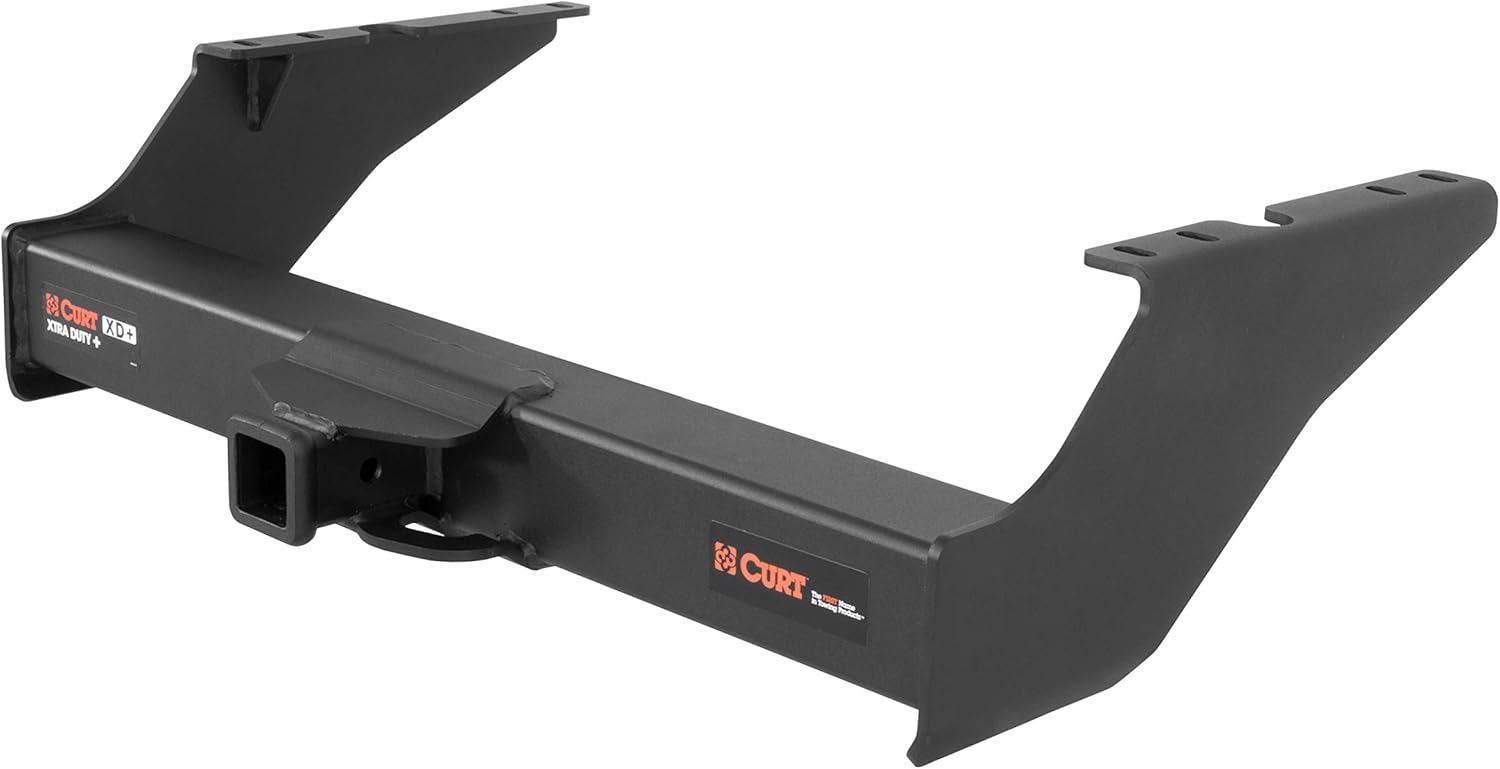
5. CURT Xtra Duty Class 5 Trailer Hitch 2-In Receiver (Ford Super Duty fit)
Best Class V Tow Hitch Receiver
| Receiver opening | 2 in x 2 in |
|---|---|
| Gross trailer weight | 17,000 lbs |
| Tongue weight | 2,550 lbs |
| Material | Carbon Steel |
| Finish Type | Powder Coated |
This CURT Xtra Duty Class 5 hitch is a reinforced, vehicle-specific receiver designed to handle heavy towing on select Ford Super Duty trucks. It installs at the rear of the truck and accepts standard 2-inch ball mounts, pintles, or hitch-mounted accessories, while offering a factory-quality welded construction and a corrosion-resistant liquid A-coat plus carbide black powder coat finish. Rated for up to 17,000 pounds gross trailer weight and an extra-high 2,550 pound tongue weight, it is aimed at demanding uses like hauling toy haulers, dump trailers, or small yachts and can be paired with a weight-distributing hitch for added stability. The package includes grade-8 mounting hardware for secure attachment. Buyers should note that compatibility is limited to specific model years of Ford F-250, F-350, and F-450 Super Duty trucks and that safe towing still requires observing the lowest-rated component in the towing chain.
Best for: Buyers who need a reinforced, high-capacity Class 5 receiver for serious towing on select Super Duty trucks and prioritize maximum towing and tongue weight capacities.
Less Ideal for: Casual users who tow light loads, owners of vehicles outside the specified Ford Super Duty fitment, or those wanting a universal or low-profile hitch alternative.
- Very high gross trailer weight and tongue weight ratings suitable for heavy-duty towing
- Vehicle-specific fit for select Ford Super Duty models helps simplify installation
- Durable welded steel construction with multi-stage corrosion protection
- Standard 2-inch receiver accepts common heavy-duty ball mounts and accessories
- Includes grade-8 mounting hardware for a secure factory-quality installation
- Fitment is limited to specific Ford Super Duty model years so verification is required
- Heavy weight and large profile may require at least two people to install safely
Verdict: The best Class V tow hitch receiver for buyers who need the higher weight ratings and reinforced construction associated with Class V specifications.
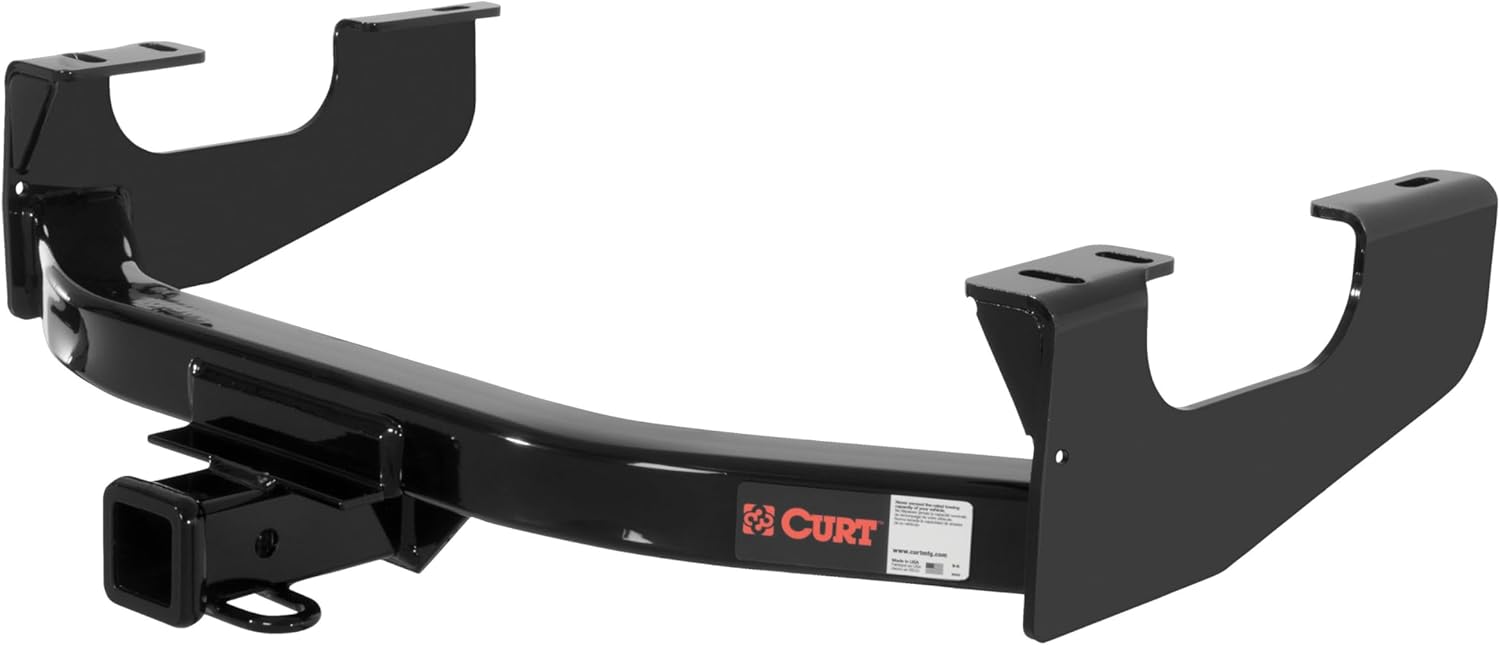
6. CURT Class 4 2-Inch Trailer Hitch Receiver, Model 14355
Best Corrosion-Resistant Tow Hitch Receiver
| Pull Force | 10000 Pounds |
|---|---|
| Material Type | Carbon Steel |
| Finish Type | Gloss, Powder-Coated |
| Included Components | Class 4 Hitch |
This CURT Class 4 hitch is a vehicle-specific 2-inch receiver designed to give Ford Super Duty trucks a heavy-duty, integrated towing solution. It installs using the included hardware and tucks the main body close to the frame for a near-factory appearance while supporting up to 10,000 lb GTW and accepting weight-distribution systems for higher WD ratings. Constructed from carbon steel with a liquid A-coat plus powder-coat finish, the hitch is built to resist corrosion better than bare steel and is tested to SAE J684 for safety. In practice it handles large trailers, campers, and utility loads without feeling undersized, and the concealed design keeps the bumper line clean. The main limitations are that it is vehicle-specific so fitment must be verified for the exact F-450 year and configuration, and steel construction will eventually corrode in extremely harsh marine environments faster than stainless or galvanized alternatives despite the robust coating.
Best for: Buyers of Ford F-450s who prioritize a strong, vehicle-specific hitch with a durable factory-style finish and high towing capacity for heavy trailers and frequent towing.
Less Ideal for: Owners who need maximum long-term corrosion resistance in constant marine or road-salt conditions should consider stainless or specially galvanized alternatives instead.
- High towing capacity rated to 10,000 lb gross trailer weight with weight-distribution compatibility
- Vehicle-specific fit and concealed main body for a near-factory integrated appearance
- Carbon steel construction with liquid A-coat plus powder-coat finish for enhanced corrosion protection
- Includes all necessary hardware for a complete installation
- Carbon steel, even with coatings, will corrode faster than stainless steel in very salty or coastal environments
- Requires confirming exact F-450 year and configuration for proper fitment
Verdict: The best corrosion-resistant tow hitch receiver for buyers in wet or salty environments who need superior coatings or materials to minimize rust over years of use.
Choosing the Right Ford F-450 Tow Hitch Receiver: Key Factors to Consider
Rated Towing Capacity
Rated towing capacity is the most critical number when choosing a tow hitch receiver for the F-450. This rating indicates the maximum trailer weight the receiver is engineered to handle and must align with your truck's towing limits and the trailer's GVWR. Using a receiver with inadequate capacity risks structural failure, compromised braking performance, and unsafe handling under load.
When planning, consider both the trailer gross vehicle weight and any payload in the truck bed or on the trailer tongue. Always allow a margin below the maximum ratings to accommodate real-world variables such as cargo shift, steep grades, or emergency maneuvers. Match the receiver rating to your typical towing scenario rather than an absolute maximum you might never hit.
Tongue Weight and Vertical Load
Tongue weight or vertical load rating determines how much downward force the trailer tongue places on the hitch. For the F-450, heavy trailers and equipment can produce substantial tongue weight that affects rear suspension, steering, and braking balance. Choosing a receiver with an adequate tongue weight rating helps maintain safe ride height and steering response when loaded.
Consider trailer type and load distribution. Fifth-wheel and gooseneck setups transfer weight differently than bumper-pull trailers. Ensure the receiver and any supplemental weight distribution hardware are rated to handle the vertical load you expect, and keep in mind that exceeding tongue weight specs can lead to premature component wear or failure.
Mounting Method and Fitment
How a receiver mounts to the F-450 frame matters for strength, installation time, and future serviceability. Bolt-on receivers use existing frame holes or included brackets and are often quicker to install or remove. Weld-on or custom-fit receivers may offer higher rigidity but require professional welding and can make later replacement more complex.
Assess the receiver's mounting footprint against the F-450 frame layout and suspension components. Look for designs that minimize interference with spare tires, exhaust outlets, or factory wiring. Compatibility with factory tow packages and electrical connectors reduces installation complexity and avoids additional modifications.
Receiver Size and Accessory Compatibility
Receiver size determines which hitch accessories, ball mounts, and adapters you can use. The F-450 commonly uses heavy-duty receiver sizes that accept higher-capacity ball mounts and specialty towing gear. Choosing the correct receiver size ensures you can attach the right ball mount, pintle hook, or fifth-wheel adapter for your towing needs.
Consider whether you need a multi-size receiver or swap-in adapters, and be aware that using adapters can change load paths and sometimes reduce capacity. Confirm accessory ratings independently and ensure any adapter or drop hitch is rated for the combined towing and tongue weight you will encounter.
Corrosion Resistance and Material Quality
Materials and coatings affect how long a tow hitch receiver will last under repeated loading and exposure to road salt, water, and heavy use. High-strength steel with quality powder coating or plated finishes reduces the risk of rust and structural degradation over time. For a working F-450 that sees year-round use, corrosion resistance can be a cost saver in the long run.
Inspect for heavy welds, robust crossmembers, and protective finishes. Consider receivers with replaceable wear components or easily serviced fasteners to simplify repairs. Long-term durability matters most when the receiver is a core part of daily towing operations.
Installation Complexity and Serviceability
Installation complexity affects total downtime and whether you can fit the receiver yourself or need professional help. Bolt-on receivers with clear instructions and hardware are often installable in a garage with basic tools. Receivers requiring frame drilling, welding, or modification should be planned as a shop job.
Also consider access for maintenance. Receivers that allow easy removal for bed work or body repairs save time. Check whether the manufacturer supplies installation templates or hardware specific to the F-450 to avoid fitment surprises.
Understanding Receiver Classes and What They Mean for the F-450
Receiver classes describe capacity ranges and standard receiver opening sizes. For the F-450, focus on heavy-duty classes that are designed for high towing and tongue weights. Class designations affect which ball mounts and adapters you can use and provide an initial screen when matching hardware to expected trailer weights.
While class labels help, always verify the rated towing and tongue weight figures listed for the specific receiver, as capacity can vary within a class depending on design and materials. Prioritize receivers that clearly state ratings for both towing and vertical load.
- Receiver opening size determines accessory compatibility
- Class labels are helpful but not definitive without published ratings
- Higher classes typically offer thicker steel and larger welds
Bolt-On Vs Welded Receivers: Pros and Cons
Bolt-on receivers are popular because they can be installed with basic tools and often avoid altering the vehicle frame. For fleet owners or those who may change setups, a bolt-on design can be easier to replace or service. However, verify that the bolt pattern and bracketry align with the F-450 frame so torque and clamping force distribute correctly.
Welded receivers can deliver a very rigid connection and are sometimes chosen when maximum stiffness is needed. They require professional welding and can complicate future repairs or removal. Balance the need for ultimate rigidity against installation cost and long-term flexibility.
- Bolt-on: easier installation, removable, may rely on existing frame holes
- Welded: often stiffer, usually permanent, requires certified welding
Fifth-Wheel and Gooseneck Provisions
Many F-450 owners use fifth-wheel or gooseneck systems for heavy trailers. Some receivers are designed to accept fifth-wheel rails or integrate with gooseneck hitch plates. Check whether the receiver includes provisions for mounting rails or if an adapter plate is required.
Ensure that any fifth-wheel or gooseneck arrangement maintains the rated capacities for the receiver and the truck. Installation location, bed reinforcements, and rail spacing are important considerations when converting a standard receiver setup to a fifth-wheel application.
- Verify rail mounting compatibility before buying
- Confirm vertical and lateral ratings for fifth-wheel installations
- Plan bed reinforcement if needed for high tongue loads
Wiring, Wiring Access, and Electrical Considerations
A properly installed receiver works with trailer wiring for brake controllers, lights, and auxiliary systems. Consider how the receiver design affects access to the vehicle's trailer wiring harness and whether the installation requires moving connectors or adding junctions. Keeping wiring neat and protected reduces wear and troubleshooting later.
Some receivers include integrated wiring channels or brackets for routing harnesses. When planning installation, account for any additional components such as a heavy-duty brake controller or supplemental power lines needed for trailer brakes.
- Plan wiring routing to avoid chafing and exposure to road spray
- Check for mounting points for brake controllers and junctions
- Use weatherproof connectors and secure wiring harnesses to the frame
Load Distribution and Weight Management Strategies
How you distribute load between the truck and trailer affects handling and component stress. Weight distribution hitches and proper ball mount choices can help keep trailer sway in check and maintain proper ride height. For the F-450, choose systems compatible with the heavy tongue weights typical of large trailers.
Regularly check hitch torque, coupler fit, and suspension preload when hauling heavy loads. Use a certified scale or weight-measuring device to confirm tongue weight and GVWR compliance before long hauls.
- Use weight distribution when towing near the upper range of capacity
- Confirm tongue weight with a scale following load changes
- Inspect mounting hardware and frame contacts after the first few trips
How We Chose the Best Ford F-450 Tow Hitch Receiver
We shortlisted tow hitch receivers based on criteria that matter specifically to Ford F-450 owners who tow large trailers or heavy gear. Primary evaluation metrics included rated towing and tongue weight capacity, because those numbers determine safe hauling limits for common trailer types. Fitment and mounting design were assessed to ensure compatibility with F-450 frame dimensions and factory attachments. Ease of installation was considered, differentiating bolt-on receivers from those requiring frame welding or bumper modification. Corrosion protection and material quality were included to reflect long-term durability for heavy-use fleets and work trucks. Versatility factors such as compatibility with fifth-wheel or gooseneck setups and available receiver sizes were also weighed.We excluded products with insufficient published capacity data, receivers that required irreversible vehicle modification, or options that lacked clear installation guidance for the F-450. The final list prioritizes documented capacity, straightforward fitment paths, and components designed for sustained heavy towing.
Our full evaluation process is outlined in our review methodology.
FAQ
How do I know what receiver size my F-450 needs?
Receiver size depends on the type of towing you do and the accessory shank sizes you use. Match the receiver opening and class to the rated towing and tongue weight you expect. Check the receiver's published specifications and compare them to your trailer's weight values.
Can I install a heavy-duty receiver myself on the F-450?
It depends on the receiver design. Bolt-on receivers with clear hardware and instructions are often installable with basic tools. Receivers requiring welding, frame modification, or drilling are best left to a professional to ensure structural integrity and proper alignment.
Will using an adapter change my towing capacity?
Adapters can alter load paths and sometimes reduce the effective capacity of the system. Always check the adapter's rated capacity and follow manufacturer guidance, and avoid stacking adapters in ways that compromise ratings.
Do I need extra bed reinforcement for fifth-wheel installations?
Many fifth-wheel setups transfer significant vertical loads to bed mounts and rails. Some installations require additional reinforcement or specific rail systems designed for heavy use. Confirm the receiver and rail mounting method and plan reinforcement if ratings or mounting surfaces indicate it.
How often should I inspect the hitch receiver on my F-450?
Inspect the receiver and mounting hardware before any heavy towing trip and perform a more thorough check periodically, such as every few months for frequent use. Look for loose bolts, corrosion at welds, and any deformation around mounting points.
Will installing a higher-rated receiver increase my truck's towing capacity?
A higher-rated receiver alone does not raise the F-450's factory towing limits. Receiver rating must be matched to the truck's specified towing and payload capacities, and other components such as brakes, cooling, and drivetrain must also be considered.
Final Verdict
Prioritize rated towing and tongue weight capacity when selecting a tow hitch receiver for your Ford F-450, and match the mounting method to how you plan to use the truck. Factor in receiver size and accessory compatibility so you can attach the right ball mounts or fifth-wheel hardware without compromising ratings.Balance installation complexity against long-term serviceability: choose bolt-on designs for flexibility or welded solutions for maximum rigidity when appropriate. With attention to capacity, fitment, and corrosion protection, you can select a receiver that supports safe, confident towing for the F-450.
