

Note: This article contains affiliate links. If you click on these links and make a purchase, I may earn a small commission at no extra cost to you. This helps support my research and content. Read my full affiliate disclosure here.
If you tow trailers, campers, or heavy equipment with a Ford F-250, choosing the right tow hitch receiver matters for safety and long-term reliability. The wrong receiver can limit towing capacity, complicate hookups, or increase wear on the truck. This guide shortlists the top-rated tow hitch receivers for the F-250 and explains the practical tradeoffs you need to consider.We evaluated candidates for load capacity, mounting style, material and corrosion protection, and ease of installation. Below are the best F-250 tow hitch receivers that balance strength, fitment, and user needs, followed by the criteria to help you pick the right option.
Looking for other parts? See all Ford F-250 parts & accessories.
Top Picks at a Glance
| Best Overall Tow Hitch Receiver A well-rounded receiver that balances strength, fit, and features | CURT Class 4 Trailer Hitch Receiver 2-Inch 14355 |  |
| Best Budget Tow Hitch Receiver A low-cost receiver that covers basic towing needs reliably | KUAFU Class 4 Trailer Hitch 2-Inch Receiver for Ford Super Duty (1997–2016) |  |
| Best Premium Tow Hitch Receiver A higher-end receiver with superior materials, finish, and features | CURT Class 5 Commercial Duty Trailer Hitch 2-1/2-Inch Receiver (15810) |  |
| Best Heavy-Duty Tow Hitch Receiver A rugged, overbuilt receiver designed for demanding towing and loads | maXpeedingrods Class 5 Commercial Duty 2" Trailer Hitch Receiver |  |
| Best Low-Profile Tow Hitch Receiver A discreet receiver that keeps a low visual profile when unused | maXpeedingrods 2" Rear Trailer Hitch Receiver for Ford Super Duty 1997–2016 |  |
| Best Compact Tow Hitch Receiver A smaller, space-saving receiver for limited bumper or frame clearance | CURT 31310 2-Inch Front Receiver Hitch for Ford F-250/F-350 |  |
| Best High-Capacity Tow Hitch Receiver A receiver rated for the highest towing and tongue-weight capacities | CURT Xtra Duty Class 5 Trailer Hitch, 2" Receiver (15410) |  |
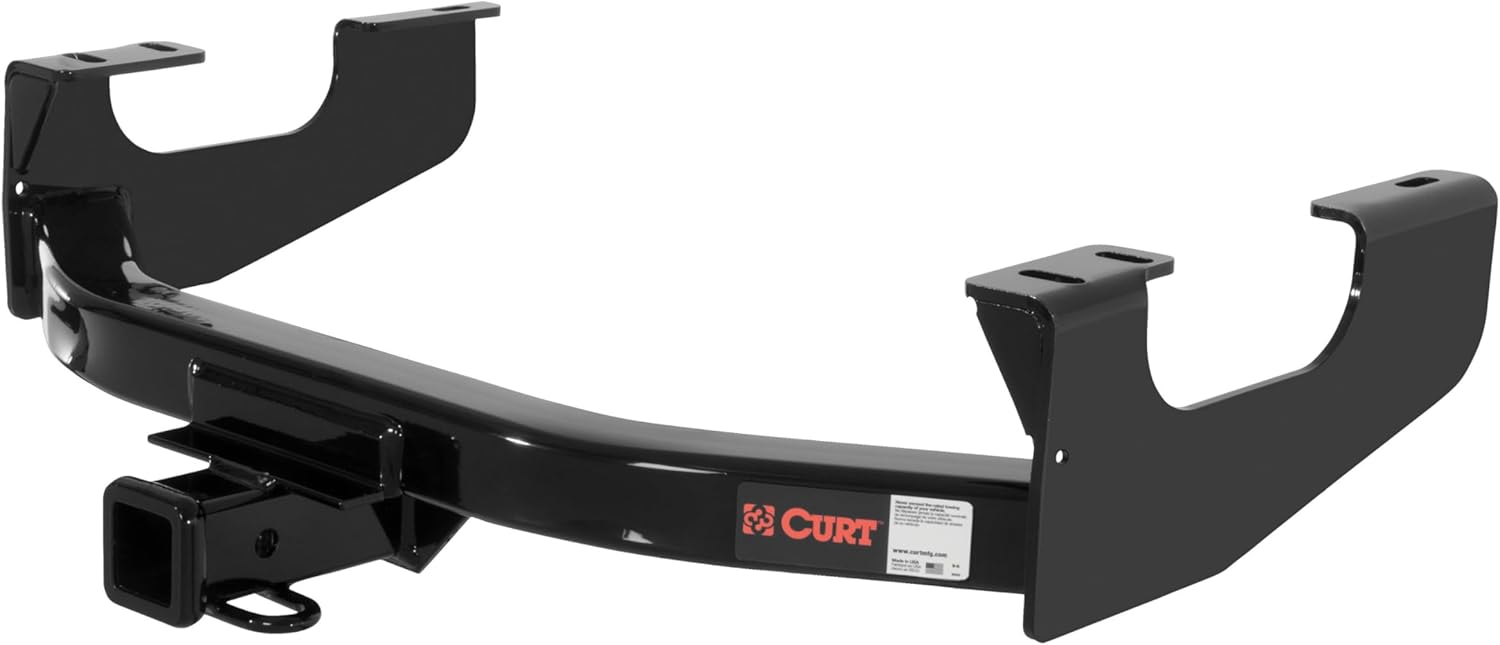
1. CURT Class 4 Trailer Hitch Receiver 2-Inch 14355
Best Overall Tow Hitch Receiver
| Pull Force | 10000 Pounds |
|---|---|
| Material Type | Carbon Steel |
| Finish Type | Gloss, Powder-Coated |
| Included Components | Class 4 Hitch |
This CURT Class 4 trailer hitch is a bolt-on, vehicle-specific 2-inch receiver designed for heavier towing duties on Ford F-250 and similar Super Duty trucks. It is built from carbon steel with a powder-coated finish and a concealed main body for a near-factory appearance once installed. The hitch is rated to 10,000 lb gross trailer weight and 1,000 lb tongue weight and accepts weight-distributing systems up to 12,000 lb GTW when used, which covers most large trailers, campers, and boats. Installation is straightforward for someone comfortable with basic hand tools and the included hardware, and the vehicle-specific fit reduces trimming or modification. The robust construction and SAE J684 testing mean it focuses on dependable performance rather than lightest weight. Trade-offs are that it adds substantial mass to the rear and requires professional installation if you prefer not to torque and torque-check mounting fasteners yourself, and finish longevity depends on local corrosion conditions despite the coated finish.
Best for: Buyers who want a heavy-duty, vehicle-matched hitch for regular towing of large trailers or campers and who prioritize reliable, factory-like fit and tested load capacity.
Less Ideal for: If you only tow very light loads occasionally or need the lightest possible hitch for fuel economy, a lower-class or lighter-weight receiver would be a better choice.
- High towing capacity rated to 10,000 lb GTW and compatible with weight distribution up to 12,000 lb
- Vehicle-specific design for a close, factory-style fit
- Robust carbon steel construction with powder-coated finish for durability
- Concealed main body gives a clean, integrated appearance after installation
- Heavier unit that increases rear mass and may require assistance to install
- Finish is durable but could be vulnerable to road salt over many years
Verdict: The best all-around tow hitch receiver for most buyers, offering a practical blend of build quality, ease of installation, compatibility, and reliable towing performance.
2. KUAFU Class 4 Trailer Hitch 2-Inch Receiver for Ford Super Duty (1997–2016)
Best Budget Tow Hitch Receiver

| Pull Force | 10000 Pounds |
|---|---|
| Maximum Towing Capacity | 10000 Pounds |
| Automotive Fit Type | Vehicle Specific Fit |
| Finish Type | Powder Coated |
This KUAFU Class 4 trailer hitch is a straightforward, budget-focused 2-inch receiver built for late-1990s through mid-2010s Ford Super Duty trucks and F-150 variants that use a 20-inch spare tire. It is made from high-grade steel with a powder-coated finish and is rated at 10,000 lbs gross trailer weight with higher distributed capacity numbers listed, so it handles everyday towing chores like campers, cargo trailers, and utility loads. The kit includes installation hardware and instructions for bolt-up installation, though professional installation is recommended if you are not comfortable working under the truck. You should expect a no-frills fit and finish typical of value-brand hitches: solid structural ratings but a simpler coating and cosmetic appearance compared with premium options. If you need a basic, strong receiver to restore towing capability or replace a damaged hitch without paying for extras, this delivers the essentials; it may not match the refined finish or long-term corrosion protection of higher-end units.
Best for: Buyers who prioritize an affordable, functional replacement or upgrade hitch that provides rated towing strength and straightforward bolt-on installation without premium cosmetic features.
Less Ideal for: Anyone seeking showroom-level finish, advanced anti-corrosion treatments, or extra integrated features like wiring mounts or adjustable receivers should consider higher-end options.
- Vehicle-specific fit for listed Ford F-150/F-250/F-350/F-450 model years simplifies installation planning
- Class 4 2-inch receiver with 10,000 lb gross trailer weight rating covers common towing tasks
- High-grade steel construction for structural strength
- Powder-coated finish provides basic corrosion resistance
- Includes installation hardware and instructions for bolt-on fitment
- Finish and cosmetic quality are basic compared with premium hitches
Verdict: The best budget tow hitch receiver for cost-conscious buyers who need a safe, straightforward hitch that delivers acceptable strength and fit without extra features or premium finish.
3. CURT Class 5 Commercial Duty Trailer Hitch 2-1/2-Inch Receiver (15810)
Best Premium Tow Hitch Receiver

| Receiver opening | 2-1/2 inch x 2-1/2 inch |
|---|---|
| Gross trailer weight | 20,000 lbs |
| Tongue weight | 2,700 lbs |
| Material | Carbon Steel |
| Finish | Liquid A-coat plus carbide black powder coat |
This CURT Class 5 Commercial Duty hitch is built for serious towing on select Ford Super Duty trucks. It provides a beefy 2-1/2-inch receiver that accepts heavy ball mounts, pintle hooks, winch mounts and other commercial accessories. In practice it is used when towing oversized trailers, large boats, equipment haulers or anything that pushes a truck into high-capacity towing duties. Notable features include a 20,000 lb gross trailer weight rating, 2,700 lb tongue weight capacity, and factory-grade mounting with included grade 8 hardware. The finish combines a liquid A-coat with a carbide black powder coat to resist corrosion in harsh outdoor conditions, and the hitch is tested to SAE J684 standards for real-world safety. Installation is straightforward for compatible model years and gives a rigid, professional mounting point for heavy towing setups. The hitch is optimized for durability and frequent use, but it is a large, truck-specific component so ensure exact vehicle fitment before purchase and expect professional installation if you lack heavy-duty tools or lifting equipment.
Best for: Buyers who prioritize long-term durability, corrosion resistance, and commercial-strength towing on a Ford Super Duty and are willing to invest in a premium, heavy-duty receiver.
Less Ideal for: Casual users who rarely tow light loads or owners of other truck makes and models should consider lighter, more universal receivers instead.
- Commercial-grade 20,000 lb gross trailer weight and 2,700 lb tongue weight ratings for heavy towing
- 2-1/2-inch receiver accepts the strongest ball mounts, pintles, and winch or cargo mounts
- Robust corrosion-resistant finish of liquid A-coat plus carbide black powder coat
- Includes grade 8 mounting hardware for a secure, factory-quality attachment
- Engineered and tested to SAE J684 standards for on-vehicle safety
- Fits only select Ford F-250, F-350, and F-450 Super Duty model years so compatibility must be verified
- Heavy unit weight requires tools or assistance for installation
Verdict: The best premium tow hitch receiver for shoppers willing to pay more for corrosion-resistant finishes, tighter tolerances, refined hardware, and long-term durability under frequent use.
4. maXpeedingrods Class 5 Commercial Duty 2" Trailer Hitch Receiver
Best Heavy-Duty Tow Hitch Receiver

| Pull Force | 17000 Pounds |
|---|---|
| Automotive Fit Type | Vehicle Specific Fit |
This maXpeedingrods Class 5 hitch is a beefy 2-inch receiver built for heavy towing on Ford Super Duty trucks. It installs as a vehicle-specific rear hitch for F-250, F-350, and select F-450 Super Duty models and accepts standard 2" accessories like ball mounts, cargo carriers, and weight-distribution gear. The hitch is made from thick carbon steel with heavy welds and a powder-coat finish for corrosion resistance, which helps it stand up to frequent use and harsh conditions. Its 17,000 lb gross trailer weight rating and 2,550 lb tongue weight rating provide higher safety margins than light-duty receivers, making it suitable for large boats, equipment trailers, or heavy-duty towing setups when the rest of the towing system is rated accordingly. Expect a comparatively heavy, rugged unit that demands at least two people or hoisting to handle during installation. Fitment is vehicle-specific so plan for compatibility with the stated Ford Super Duty years and spare-tire configurations. The product comes with one year manufacturing coverage and ongoing technical support from the brand.
Best for: Buyers who routinely tow large trailers or haul heavy loads with a Ford Super Duty and need a reinforced, higher-capacity rear receiver that increases safety margins during heavy towing.
Less Ideal for: Drivers who only tow occasionally with light trailers or need a universal or lightweight hitch solution should consider smaller, less heavy-duty receivers.
- High towing capacity rated at 17,000 lb GTW with 2,550 lb tongue weight
- Heavy carbon steel construction and thick welds for reinforced strength
- Powder-coated finish for corrosion resistance in harsh conditions
- Vehicle-specific fit for Ford Super Duty models to ensure correct alignment
- Very heavy unit that may require two people or lifting equipment to install
- Fitment excludes some configurations so verification against spare tire size and chassis type is required
Verdict: The best heavy-duty tow hitch receiver for users who regularly tow heavy trailers or carry large loads and need reinforced construction and higher safety margins.
5. maXpeedingrods 2" Rear Trailer Hitch Receiver for Ford Super Duty 1997–2016
Best Low-Profile Tow Hitch Receiver

| Compatible with Vehicle Type | Truck |
|---|---|
| Pull Force | 10000 Pounds |
| Automotive Fit Type | Vehicle Specific Fit |
| Material Type | Carbon Steel |
| Finish Type | Powder Coated |
This maXpeedingrods 2" rear trailer hitch is a vehicle-specific replacement for many Ford F-150 and Super Duty trucks from the late 1990s through 2016, engineered to accept standard 2×2 receiver accessories such as ball mounts, cargo carriers, and bike racks. It installs in place of the factory rear hitch on compatible trucks and is built from carbon steel with a black powder coat for corrosion resistance. The hitch is rated to 10,000 lb gross trailer weight and 1,500 lb tongue weight, so it covers a wide range of towing tasks short of the heaviest commercial loads. Its 2" receiver keeps accessories low-profile compared with larger alternatives, helping preserve ground clearance and a less obtrusive rear appearance when not in use. Buyers should note fitment is vehicle specific and installation will require proper alignment to frame mounting points; the listed weight rating is also limited by the weakest component in the towing system. For owners wanting a factory-style replacement that minimizes visual impact while returning solid towing capacity, this is a practical option for supported Ford trucks.
Best for: Buyers who prioritize a low-visibility, factory-style hitch that preserves ground clearance and restores full 2" receiver functionality on supported Ford F-150 and Super Duty trucks.
Less Ideal for: Drivers needing the highest commercial towing capacities, custom-mounted hitches, or compatibility with cab-and-chassis configurations should look at heavier-duty or purpose-built alternatives.
- Vehicle-specific design for direct replacement fit on listed Ford F-150 and Super Duty model years
- Standard 2" receiver accepts a wide range of tow accessories
- High rated capacity with 10,000 lb GTW and 1,500 lb tongue weight for heavy towing within its class
- Durable carbon steel construction with powder-coat finish for corrosion resistance
- Fitment limited to the specific Ford model years listed and may not suit cab & chassis variants
Verdict: The best low-profile tow hitch receiver for buyers who want minimal visual impact and better ground clearance when the hitch is not carrying a load.
6. CURT 31310 2-Inch Front Receiver Hitch for Ford F-250/F-350
Best Compact Tow Hitch Receiver

| Receiver size | 2 x 2 inches |
|---|---|
| Maximum Towing Capacity | 5000 Pounds |
| Pull Force | 9000 Pounds |
| Material Type | Carbon Steel |
| Finish Type | Gloss, Powder-Coated |
This CURT front receiver provides a compact 2" x 2" receiver at the front of compatible Ford F-250 and F-350 models to mount cargo carriers, winches, tow hooks, or to assist with trailer handling at the ramp. It is engineered for a vehicle-specific fit and ships with the hardware needed for installation. The hitch is powder-coated carbon steel for corrosion resistance and is rated for 5,000 lb gross trailer weight, 500 lb tongue weight, and a 9,000 lb straight-line pull for winch or tow-hook style loads. In practice the front location frees up the rear receiver and gives extra attachment options where rear space is limited. The unit is heavier than minimal compact receivers but that mass adds stiffness and strength for light towing and accessory mounting. Buyers should note this is a front-mount receiver designed for select F-250/F-350 applications, so fitment must be verified and it is not a substitute for heavier full-frame towing setups on high-capacity trailers.
Best for: Buyers who need a shorter, compact receiver that fits tight front or rear profiles on select Ford F-250/F-350 trucks and want a reliable mounting point for carriers, winches, and light towing tasks.
Less Ideal for: Drivers planning to tow heavy trailers or who need a high-capacity rear hitch for continuous heavy towing should choose a dedicated heavy-duty towing receiver instead.
- Vehicle-specific design for a close, factory-style fit on compatible F-250 and F-350 trucks
- 2" receiver accepts common hitch accessories and cargo carriers
- Powder-coated carbon steel construction for durability and corrosion resistance
- Rated for 5,000 lb GTW and 9,000 lb straight-line pull for winch or tow-hook use
- Front-mount location and added mass make it heavier than the smallest compact rear receivers
- Rated tongue weight of 500 lb limits heavy tongue-mounted loads
Verdict: The best compact tow hitch receiver for users who need a shorter, lighter receiver that fits tight rear profiles while still providing reliable attachment for accessories and light towing.
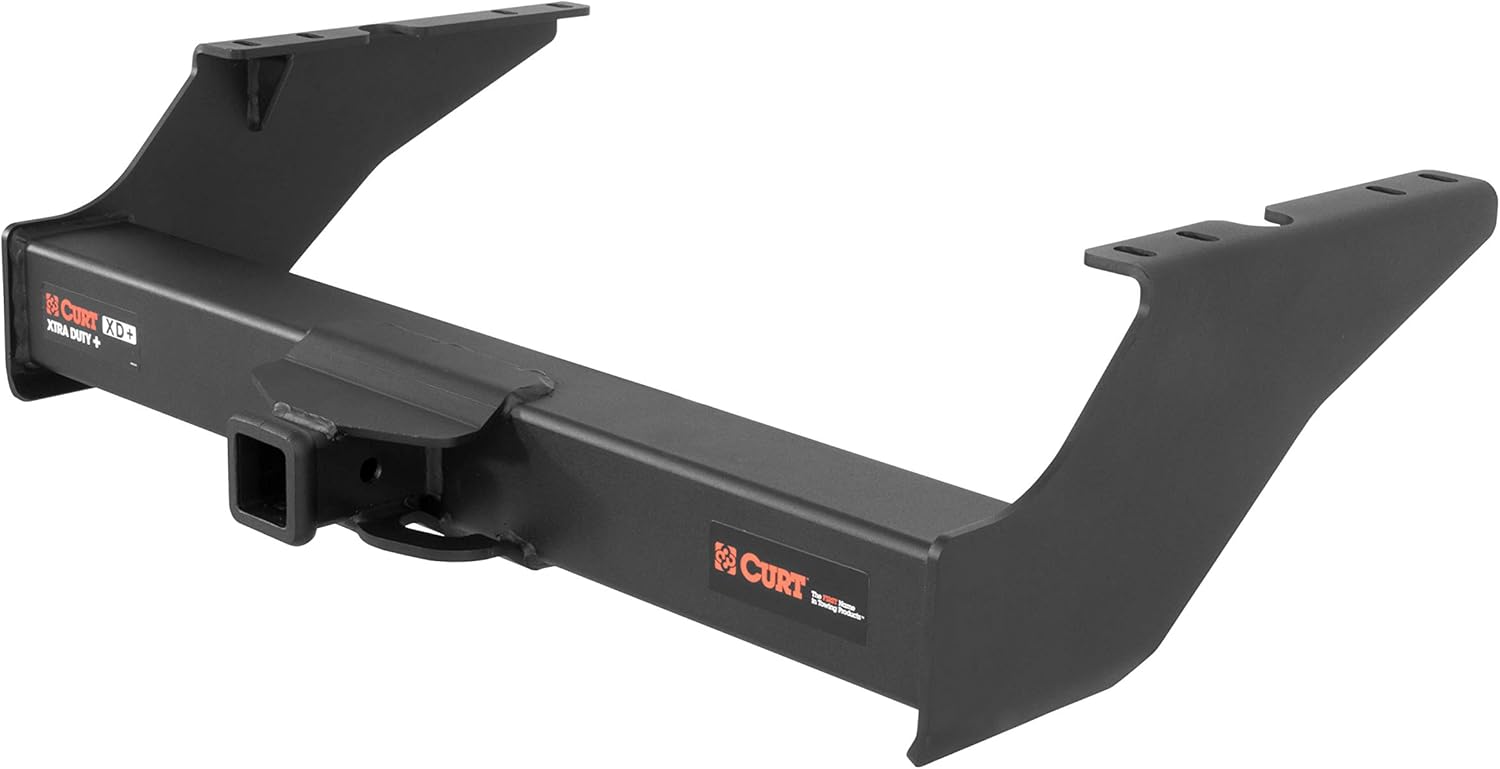
7. CURT Xtra Duty Class 5 Trailer Hitch, 2" Receiver (15410)
Best High-Capacity Tow Hitch Receiver
| Gross trailer weight | 17,000 lbs |
|---|---|
| Tongue weight | 2,550 lbs |
| Receiver opening | 2 in |
| Fitment | Select Ford F-250, F-350, F-450 Super Duty |
This CURT Xtra Duty Class 5 hitch is built as a beefy, factory-quality replacement for Super Duty trucks that need more towing capability than a standard receiver offers. It bolts to factory mounting points and provides a 2-inch receiver opening to accept heavy-duty ball mounts, pintles, or hitch-mounted accessories. Notable features include a 17,000 lb gross trailer weight rating, extra-high tongue weight capacity, grade-8 mounting hardware, and a corrosion-resistant liquid A-coat plus carbide black powder coat finish. In use it delivers solid stability for heavy trailers and can be paired with a weight-distributing system for improved handling. Installation is straightforward for someone comfortable with underbody work, though a second set of hands or a jack helps with alignment. The hitch is very heavy and intentionally large to handle extreme loads, which may require care during handling and adds visible bulk under the bumper. Overall it is a purpose-built option for anyone upgrading a Ford Super Duty for frequent heavy towing who prioritizes strength and durability.
Best for: Reliability-focused buyers who prioritize a stronger-than-stock hitch for regular heavy towing and want a durable, tested upgrade that reduces worry on long hauls.
Less Ideal for: Budget-focused buyers who tow infrequently or only light loads should consider lighter, lower-capacity receivers that are easier to handle and install.
- High published gross trailer weight rating of 17,000 lbs for demanding towing jobs
- Extra-high tongue weight capacity improves stability when hauling heavy loads
- Vehicle-specific design bolts to factory mounting points for a secure fit
- Durable corrosion protection with liquid A-coat and carbide black powder coat finish
- Includes grade-8 hardware for strong, reliable mounting
- Large, heavy assembly that can be awkward to handle during installation
- Supplied mounting holes and hardware may differ from factory-sized fasteners requiring modification by some installers
Verdict: The best high-capacity tow hitch receiver for buyers who require maximum towing and tongue-weight ratings for heavy trailers, equipment, or commercial use.
Choosing the Right Ford F-250 Tow Hitch Receiver: Key Factors to Consider
Load Rating and Tongue Weight
Load rating and tongue weight directly determine what you can safely tow with your Ford F-250. The hitch's gross trailer weight rating sets the maximum trailer mass the receiver can handle, while tongue weight limits how much downward force the trailer places on the truck's hitch. Choosing a receiver with ratings that meet or exceed your trailer and payload is essential to avoid overstressing the hitch and truck frame.
For F-250 owners who tow heavy trailers or use weight-distributing systems, pick a receiver that provides headroom beyond the trailer's actual loaded weight. Underrating the hitch can increase sway, accelerate wear, and create unsafe towing conditions. Always match the hitch rating to the heaviest trailer you plan to tow, not just typical loads.
Mounting Style and Frame Attachment
How the receiver mounts to the F-250 affects strength, installation time, and corrosion resistance. Bolt-on receivers that use existing frame holes or factory attachment points minimize cutting or welding and usually install faster. Weld-on or custom-frame versions can offer greater rigidity but require professional installation and potential frame modifications.
Verify the receiver's mounting design aligns with the truck's frame type and cab/chassis configuration. Tight, torque-specified fasteners and proper washer use are critical to prevent loosening under repeated towing cycles. Consider access to frame bolts and whether any bed removal or trimming is necessary for installation.
Material, Finish, and Corrosion Resistance
The material and protective finish determine how well a hitch receiver stands up to road salt, moisture, and debris. Heavy-gauge steel gives the required strength, but the finish—powder coat, epoxy, or galvanization—affects long-term durability. For trucks regularly exposed to winter conditions or coastal environments, deeper corrosion protection is important to prevent pitting around welds and fasteners.
Pay attention to whether hardware is plated or stainless and whether the manufacturer recommends undercoating or touch-up paint for exposed areas. Preventive maintenance like inspecting for rust and re-coating scratched areas extends the hitch's service life.
Receiver Class and Size Compatibility
Receiver class and opening size determine which ball mounts, bike racks, or accessory inserts will fit. The F-250 often uses heavier-duty receivers, so confirm whether the receiver is a 2-inch, 2.5-inch, or 3-inch opening and whether the class rating matches your towing needs. A larger opening usually supports higher capacities but may require different accessory sizes.
Consider whether you need interchangeable adapters or a specific pin size. Using the correct shank and ball mount rated for the receiver and trailer load prevents mismatches that could compromise safety.
Installation Complexity and Serviceability
Installation complexity affects cost, downtime, and the tools required. Bolt-on designs that use factory holes are faster and can often be completed in a home garage with common tools. Receivers that require welding or frame trimming demand professional installation and add expense. Also consider whether the design allows easy replacement of worn components such as hitch pins, bushings, or breakaway switch mounts.
Serviceability also covers access to electrical connectors, spare tire clearance, and whether the receiver interferes with tailgate operation. A design that eases routine inspections and minor repairs reduces long-term ownership hassles.
Accessory Compatibility and Towing Features
Think about the types of towing you will do and choose a receiver that supports required accessories. For example, fifth-wheel or gooseneck setups need specific mounting arrangements or reinforced crossmembers. Similarly, receivers with integrated mounting points for sway-control brackets or drop-in pintles expand towing versatility.
Check whether the receiver allows attachment of common accessories without additional adapters, and whether its geometry maintains proper hitch height with typical loads. The right receiver simplifies rigging trailers and improves handling under load.
F-250 Bed and Frame Differences That Matter
Ford F-250 trucks come with different bed lengths, cab configurations, and frame reinforcements that change where a receiver mounts and how much clearance you will have for accessories. Knowing your truck's bed length and whether it uses factory tow prep is useful when choosing a receiver.
Some receivers sit higher or lower on the frame, affecting trailer angles and whether a drop or rise ball mount is needed. Confirming vertical clearance behind the bumper and the location of spare tire and exhaust components helps avoid fitment surprises.
- Check bed length and cab configuration for mounting access
- Measure clearance between bumper, spare tire, and exhaust
- Note factory tow prep packages that may change installation steps
Torque Specs, Hardware, and Fastener Quality
The quality of included hardware and adherence to torque specifications influence long-term safety. High-strength bolts and lock washers reduce the chance of loosening under vibration. Using the correct torque values during installation keeps the receiver secure and reduces wear at mounting points.
If hardware is omitted or undersized, plan to upgrade to grade 8 or equivalent fasteners and to use proper locking compounds where recommended. Re-check bolt torque after the first few hundred miles of towing.
- Use specified torque values and re-torque after initial use
- Prefer high-grade bolts and lock washers
- Inspect fasteners periodically for corrosion and tightness
Height and Ball Mount Considerations
Hitch height affects trailer level and handling. Choose a receiver whose centerline aligns with the trailer's coupler height when the trailer is loaded. If the receiver sits too high or too low, you may need a drop or rise ball mount to achieve proper tongue angle.
For F-250 owners who tow multiple trailers, pick a receiver that works with adjustable ball mounts or consider carrying a small selection of mount drops to minimize load mismatch.
- Measure trailer coupler height with trailer loaded
- Plan for adjustable or multiple ball mounts if towing varied rigs
- Confirm receiver-to-ground height and required drop/rise
Wiring and Electrical Access with a New Receiver
Installing a new receiver can change how wiring harnesses are routed or where trailer connectors mount. Ensure the chosen receiver offers accessible mounting points for 7-pin or 4-pin sockets without stretching or exposing wiring to heat or road debris.
Consider whether you will need extension brackets or additional conduit to protect connectors. A receiver that integrates or accommodates a plug mount reduces wiring strain and makes hookup simpler.
- Plan wiring routing before final mounting
- Use protected conduits and weatherproof connectors
- Ensure connector access without removing the hitch
Preparing Your Truck for Heavy Towing
Upgrading the hitch is only one part of preparing for heavy towing. Inspect suspension components, brakes, and tires to ensure they match the increased towing demands. Consider whether weight distribution systems or auxiliary brakes are required for larger trailers.
Regularly inspect frame mounting points and the receiver itself for signs of stress or fatigue after heavy use. Proper maintenance of both hitch and truck components maintains safe towing performance.
- Check brakes and suspension for towing readiness
- Use weight distribution when recommended for heavy loads
- Inspect hitch and frame attachment frequently during heavy-use periods
How We Chose the Best Ford F-250 Tow Hitch Receiver
We focused on build quality and fitment specific to the Ford F-250 when assembling this list. Key evaluation criteria included load rating and tongue weight limits to match typical towing tasks, mounting method and compatibility with F-250 frame points, material grade and corrosion protection for long service life, and proven hardware and weld quality to withstand repeated hookups and highway loads. We also considered installation complexity and whether the receiver supports common towing accessories such as ball mounts and hitch pins.Excluded items were universal receivers that require extensive modification, low-capacity hitches unsuited to the F-250's intended towing range, and any products that rely on sheet-metal mounting without proper frame engagement. We prioritized options offering clear manufacturer load specs, robust mounting designs, and corrosion-resistant finishes. User serviceability, such as replaceable hitch pins and accessible mounting bolts, also influenced selections.
Our full evaluation process is outlined in our review methodology.
FAQ
What receiver size is best for a Ford F-250?
The best receiver size depends on your towing needs, but many F-250 owners use heavier-duty openings. Match the receiver opening and class to the trailer weight and accessory shank size you plan to use to ensure compatibility.
Can I install a tow hitch receiver myself on an F-250?
Bolt-on receivers that use existing frame holes can often be installed with basic tools by a competent DIYer. Receivers requiring welding or frame modification should be handled by a professional to maintain structural integrity.
How do I know if a receiver has enough towing capacity?
Compare the receiver's gross trailer weight and tongue weight ratings with the loaded weight of your trailer plus cargo. Also check the truck's tow ratings and ensure the lowest rating in the system governs your maximum safe load.
Will a new receiver affect my truck's wiring or connector location?
A new receiver may change mounting locations for electrical connectors. Plan wiring routing and use proper weatherproof mounts so connectors remain accessible and protected from road debris and moisture.
How often should I inspect the hitch receiver?
Inspect the hitch and mounting hardware regularly, especially after heavy towing trips. Look for loose bolts, corrosion, cracked welds, or deformation and re-torque fasteners after the first few hundred miles following installation.
Do I need a special receiver for fifth-wheel or gooseneck towing?
Fifth-wheel and gooseneck towing typically require specific mounting arrangements or reinforced crossmembers. Verify the receiver or accessory compatibility for those towing types before purchasing to ensure the truck and hitch support the installation.
Final Verdict
Prioritize a receiver that matches the F-250's towing demands by focusing on load ratings, mounting integrity, and corrosion protection. Consider installation complexity and how the receiver affects accessory compatibility and hitch height.Choose a solution with ratings that exceed your heaviest realistic load, use correct hardware and torque during installation, and maintain the hitch through periodic inspections. Doing so will give you dependable towing performance and clearer tradeoffs between convenience and capacity.
Explore More:
- Check out all Ford F-250 parts & accessories
- Explore Exterior Accessories
- Browse all Accessories
