

Note: This article contains affiliate links. If you click on these links and make a purchase, I may earn a small commission at no extra cost to you. This helps support my research and content. Read my full affiliate disclosure here.
If you want a noticeably quieter Toyota Camry cabin, upgrading to a dedicated sound deadening mat is one of the most effective DIY changes you can make. These mats target road noise, engine and exhaust rumble, and panel vibration without altering driving dynamics. In this guide we shortlisted seven of the best sound deadening mats specifically for the Toyota Camry and evaluated them on how well they reduce noise, how they install under carpet and panels, and how they affect weight and heat management. Read on to understand the tradeoffs and find the option that fits your comfort and installation goals.
Looking for other parts? See all Toyota Camry parts & accessories.
Top Picks at a Glance
| Best Overall Sound Mat Well-rounded mat balancing noise reduction, adhesion, and installation ease | KILMAT 80 mil Butyl Car Sound Deadening Mat — 36 sq ft |  |
| Best Budget Sound Mat Affordable option delivering solid noise reduction without complex installation | AggSound 157mil (4 mm) Closed-Cell Foam Sound Deadening Mat — 6 sq ft |  |
| Best Premium Sound Deadening Mat High-end construction for maximum damping, longevity, and professional results | Dynamat Xtreme Tech Pack Sound Deadening Mat — 28 sq ft (7 sheets) |  |
| Best Thick Sound Deadening Mat Extra-thick material focused on heavy vibration and low-frequency noise reduction | Storystore 394 mil (10 mm) Heat and Sound Deadening Mat, 16.5 sq ft |  |
| Best Pre-Cut Door Kit Pre-shaped pieces that simplify door treatments and minimize trimming | KOIKEY Car Sound Deadening Mat — 197 mil (5mm), 8.7 sq ft |  |
| Best Complete Coverage Kit Large kit supplying enough material to treat multiple panels fully | RUNSUNSPRI Car Sound Deadening Mat 50 sq ft Butyl Foil |  |
| Best Peel-and-Stick Mat Self-adhesive mat for fast, tool-light installation and strong bonding | KILMAT 80 mil Butyl Car Sound Deadening Mat, 18 sq ft |  |
KILMAT 80 mil Butyl Car Sound Deadening Mat — 36 sq ft
Best Overall Sound Mat
| Size | 36 sqft (3.4 sqm) |
|---|---|
| Thickness | 80 mil (2 mm) |
| Material | Butyl with foil facing |
| Coverage | 36 square feet |
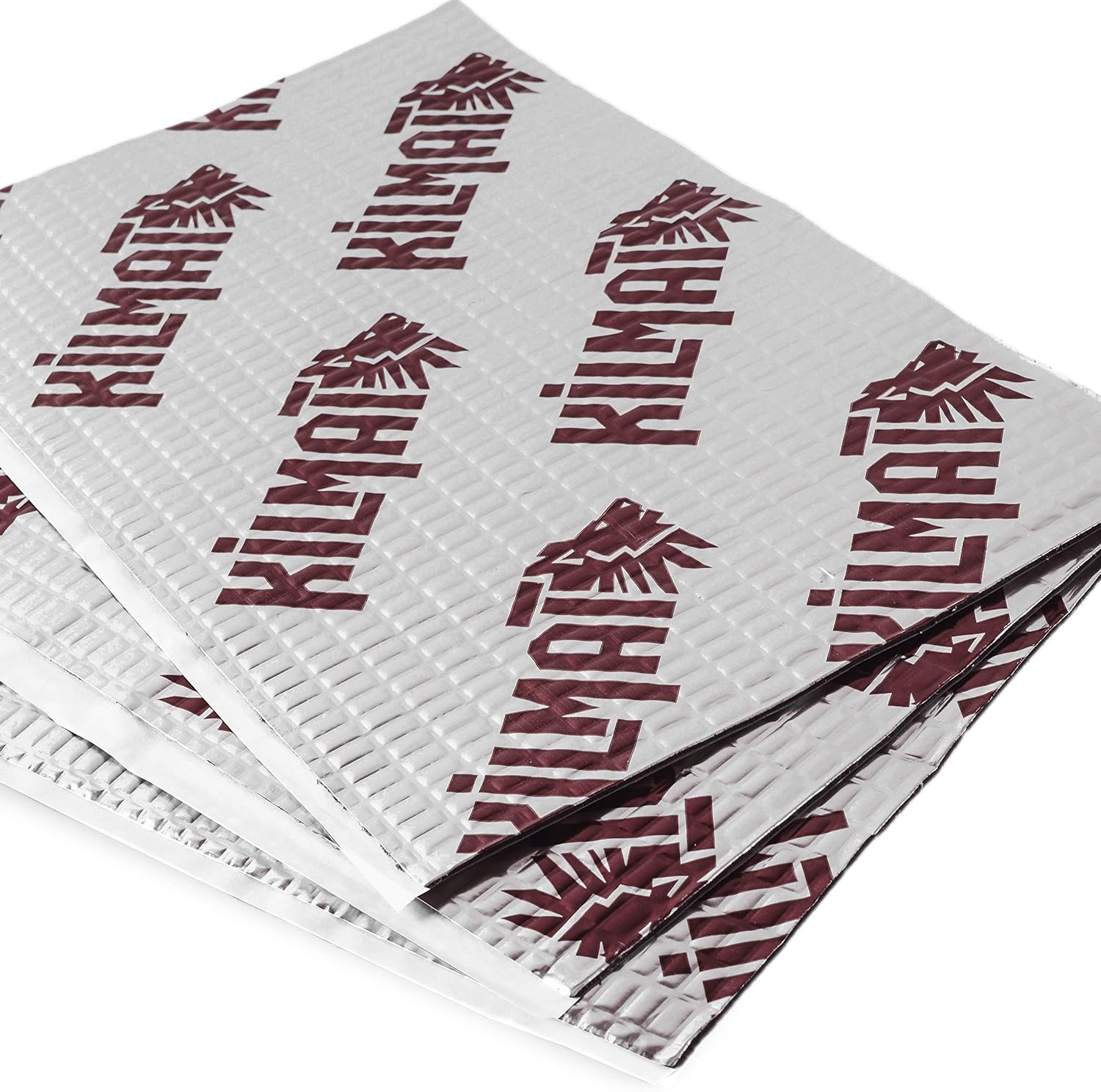
The KILMAT 80 mil sound deadening mat is a self-adhesive butyl-and-foil sheet designed to reduce road noise, panel vibration, and improve in-cabin bass response when installed behind door panels, on floors, trunks, or roof panels of a Toyota Camry. It comes in manageable pre-cut sheets that are easy to trim and position, and the foil face has an embossing indicator that helps confirm correct installation after rolling it smooth. In practice the 80 mil thickness provides firm vibration damping that stiffens metal panels and can noticeably reduce rattles and midrange road noise when surfaces are properly prepped and a roller is used. The adhesive sticks well and allows slight repositioning during fitment, but surfaces must be clean and degreased for a reliable bond. Expect some handling cautions from the aluminum-backed edges and a mild tar smell during installation that usually dissipates. Coverage in the 36 sq ft kit is enough for targeted areas or partial multi-area installs on a Camry but may be insufficient to fully quiet a noisy cabin without adding additional layers or complementary insulation in key spots.
Best for: Camry owners who want an easy, effective, do-it-yourself sound deadening solution that balances noise reduction, strong self-adhesion, and enough coverage for common interior areas like floors and doors.
Less Ideal for: People wanting a single-kit, full-vehicle quieting solution or those who prefer a no-odor, professional shop installation should consider larger coverage options or alternative products.
- Thicker 80 mil butyl construction gives strong vibration damping and panel stiffening
- Self-adhesive backing with forgiving stick allows repositioning during installation
- Foil embossing indicator makes it easier to confirm a smooth, correct installation
- Sheets are sized for easy cutting and fitting into doors, trunk lids, and floor pans
- 36 sq ft pack may not cover a full Camry interior for comprehensive noise control
- Aluminum edges can be sharp during cutting and require gloves for safe handling
- Mild tar odor during installation that can be noticeable until fully cured
Verdict: The best all-around mat for most owners seeking a balanced combination of noise reduction, adhesion, coverage, and straightforward installation.
AggSound 157mil (4 mm) Closed-Cell Foam Sound Deadening Mat — 6 sq ft
Best Budget Sound Mat
| Thickness | 157 Mils |
|---|---|
| Coverage | 6 square foot |
| Material Type | Closed-cell foam |
| Unit Count | 6.0 Square Feet |
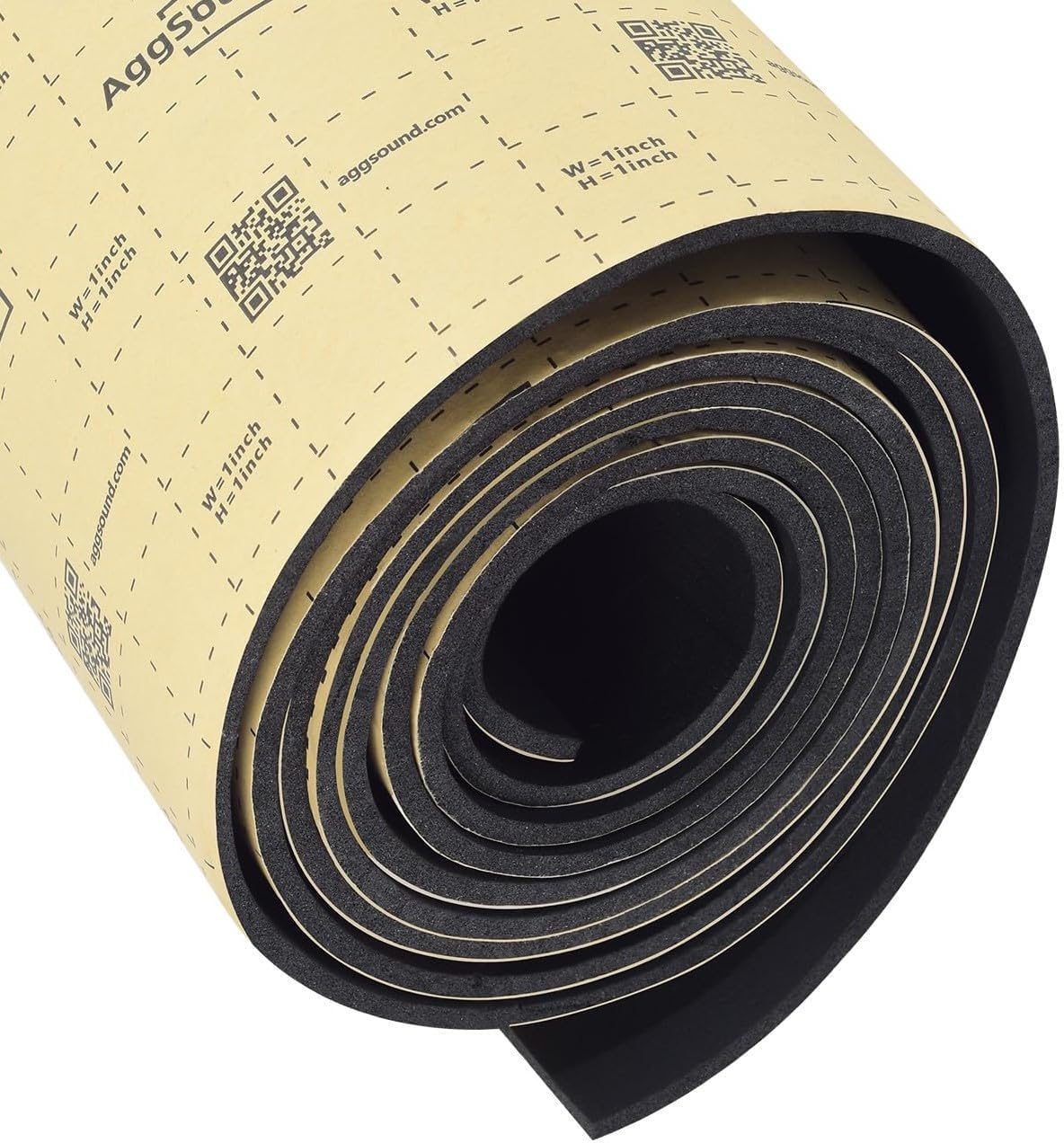
This AggSound 157mil (4 mm) closed-cell foam mat is a lightweight, self-adhesive sound deadener and heat barrier intended for targeted automotive use such as door skins, trunk lids, hood undersides, and speaker mounting areas on a Camry. It cuts and trims easily to fit contours, sticks with a peel-and-stick backing, and resists moisture thanks to its closed-cell construction. In practice the mat reduces mid and high frequency road and wind noise and adds a modest layer of thermal insulation; it is best used over butyl damping sheets or on top of cavities where mass-loading is not required. Installation is simple: clean surfaces, trim to fit, press firmly and seal seams. Expect noticeable improvement around speakers and thinner panels but not the heavy low-frequency damping of thicker butyl products. Some users report adhesive residue and occasional deformation when removed, so plan placement carefully if panels may be disassembled later.
Best for: Budget-minded Camry owners who want a straightforward, DIY-friendly way to cut road and vibration noise without spending much or needing special tools; ideal for drivers looking for noticeable cabin quieting with an easy peel-and-stick installation.
Less Ideal for: People seeking a complete, heavy-duty low-frequency damping solution or a permanent factory-level door-skin reinforcement should consider thicker butyl-based products or professional multi-layer kits instead.
- High-density closed-cell foam that absorbs mid-to-high frequency noise and blocks radiant heat
- Peel-and-stick backing for straightforward DIY fitment to doors, hood undersides, trunk areas, and speaker surrounds
- Flexible and easy to cut so it conforms to curved Camry panels and tight spaces
- Water-resistant material suitable for humid conditions without soaking or collapsing
- Not designed to replace heavy butyl dampers for low-frequency vibration and door solidity
- May leave adhesive residue and can deform if removed after long-term installation
Verdict: The most cost-effective mat for most owners who want noticeable road and vibration noise reduction without a big upfront expense or complex installation.
Dynamat Xtreme Tech Pack Sound Deadening Mat — 28 sq ft (7 sheets)
Best Premium Sound Deadening Mat
| Coverage | 28 square feet |
|---|---|
| Sheets | Seven 18" x 32" pieces |
| Material Type | Rubber |
| Recommended Uses For Product | Sound Insulation |
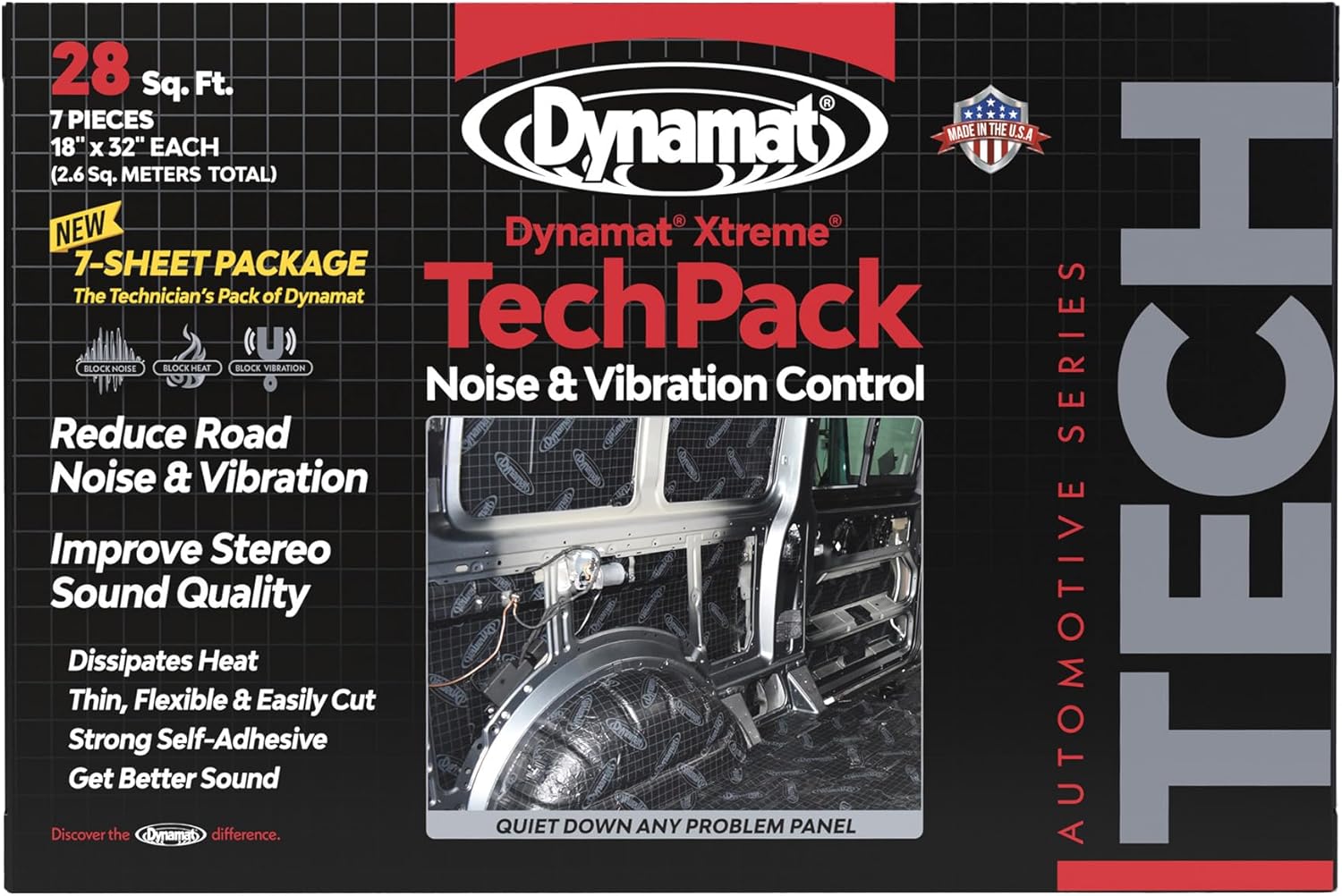
Dynamat Xtreme is a high-adhesion sound deadening mat sold in a 28 sq ft tech pack that targets road noise, panel resonance, and engine heat when applied to doors, floors, trunks, and engine bays. Installation is straightforward for a DIYer working on a Camry: clean the metal, cut sheets to fit, peel the liner, and press with a roller or firm pressure so the butyl rubber adhesive bonds. The material is thin and flexible, which helps it conform to curved door skins and floor contours without creating bulky gaps. Benefits include measurable reduction in rattles and speaker distortion and added thermal insulation under hoods or floor pans. The product is made in the USA and designed for long-term adhesion, but it is a premium option that may require trimming for tight spots and careful surface prep to stick well. Some users report modest results in very large cavities unless multiple layers are applied, so expect installation time for full-vehicle coverage on a Camry.
Best for: Camry owners who want the quietest, most durable factory-quality sound deadening upgrade and are comfortable doing a DIY install to maximize cabin noise reduction and long-term adhesion.
Less Ideal for: If you want a lowest-cost, temporary, or very quick fix without panel removal, look at simpler foam or spray options instead.
- High-tack butyl adhesive that stays in place on interior metal panels
- Thin, flexible sheets that conform to curves and are easy to cut
- Reduces road noise, panel vibration, and speaker distortion when applied correctly
- 28 sq ft pack covers typical door and small-floor applications for a mid-size sedan
- Premium price compared with some generic knockoffs
- May need multiple layers or additional products for deep structural cavities to see large gains
Verdict: A top-tier mat offering thicker construction, superior acoustic damping, and long-lasting adhesive for DIYers who prioritize maximum cabin quieting and durability.
Storystore 394 mil (10 mm) Heat and Sound Deadening Mat, 16.5 sq ft
Best Thick Sound Deadening Mat

| Thickness | 394 Mils (10 mm) |
|---|---|
| Coverage | 16.5 sqft |
| Material | Fiberglass |
| Sheet size | 39 x 60 inches |
This Storystore mat is a heavy, 10 mm automotive sound-deadening sheet intended for lining doors, floors, trunks, roofs and other body panels on a Camry to cut road noise and damp vibration. The product ships as full sheets that you trim to shape, peel the backing and stick in place; several reviewers note a roller is included which helps seat the adhesive. Its fiberglass-backed, foil-faced construction reflects heat as well as reducing airborne and structure-borne noise, so it helps keep the cabin cooler in summer and reduces engine or road heat transfer in confined areas. The large 39 x 60 inch panels cover multiple sections without piecing together many small squares, speeding up installation for a DIYer. Limitations to plan for: surface prep is critical for adhesion, folded sheets may need flattening before use, and one report warns against under-hood placement because of adhesive behavior at high engine temperatures, so avoid engine bay install on a Camry. If you need full-coverage sound control inside the cabin and trunk, this offers strong performance for the cost but requires careful placement and prep.
Best for: Camry owners wanting maximum low‑frequency and road noise reduction who plan to add a heavy, high‑thickness damping layer under carpets, doors, trunk and wheel arches and who prioritize beefy vibration control over minimal added weight or cosmetic invisibility.
Less Ideal for: If you want an under-hood or direct engine-compartment insulation solution or need a product that tolerates very high temperatures, choose a mat specifically rated for engine-bay use instead.
- Thick 10 mm construction for strong vibration damping and heat reflection
- Large full-sheet size reduces seams and speeds installation
- Adhesive-backed design and included roller make application straightforward when surfaces are cleaned
- Multi-use for doors, floors, trunk, roof and interior panels
- Covers 16.5 square feet per sheet to tackle multiple areas without buying many pieces
- Not recommended for high-temperature engine-bay use due to adhesive performance concerns
- Comes folded rather than rolled which can produce creases that require smoothing
- Requires thorough surface cleaning and good pressure to achieve lasting adhesion
Verdict: A higher‑thickness mat designed to target low-frequency vibration and road noise, ideal for users focused on heavy-duty damping performance.
KOIKEY Car Sound Deadening Mat — 197 mil (5mm), 8.7 sq ft
Best Pre-Cut Door Kit

| Coverage | 8.7 square foot |
|---|---|
| Thickness | 197 mil / 5mm |
| Sheet size | 9.8" × 15.7" |
| Material Type | Aluminum faced foam |
The KOIKEY 197 mil sound deadening mat is a budget-friendly peel-and-stick sheet designed for quieter cabin panels and improved audio clarity when applied to metal surfaces in a vehicle. Installers cut the 9.8"×15.7" squares to fit doors, floor pans, trunk decks, roof sections, and wheel wells on a Camry, clean the surface, peel the liner, and press the strong pressure-sensitive adhesive into place. The product uses an aluminum foil face over closed-cell foam with a PSA layer, which reflects radiant heat and resists moisture while absorbing vibration that causes rattles. At this thickness it noticeably reduces mid and high frequency resonance and helps speakers sound clearer without heavy acoustic builds. The material is easy to trim and sticks well in moderate temperatures, but coverage is limited to 8.7 sq ft so you may need multiple packs for a full-vehicle treatment. Audiophiles seeking the highest performance or thicker multi-layer professional mats may prefer heavier, pricier alternatives, but for targeted spot treatments this mat balances ease of use and cost effectively.
Best for: DIY installers working on Toyota Camry doors who want a quick, low-fuss soundproofing upgrade with pre-sized pieces that cut down trimming and speed installation while improving cabin quiet and speaker clarity.
Less Ideal for: Drivers planning a complete, audiophile-grade sound deadening of an entire Camry or those who need thicker multi-layer mats for maximum low-frequency control should consider higher-end, higher-coverage options.
- Peel-and-stick PSA backing for tool-free adhesion and straightforward installation on vehicle panels
- Foil-faced surface reflects radiant heat and resists moisture for added thermal protection
- Closed-cell foam core reduces panel vibration and rattles, improving perceived cabin solidity and audio clarity
- Easy to cut and conform to curves for targeted spot treatments
- Small 8.7 sq ft coverage per pack means multiple packs are needed for full Camry coverage
Verdict: A set of pre-shaped pieces sized for common door panels that speeds installation and minimizes trimming for DIY installers who want precise fitment.
RUNSUNSPRI Car Sound Deadening Mat 50 sq ft Butyl Foil
Best Complete Coverage Kit

| Coverage | 50 square feet |
|---|---|
| Item Thickness | 50 Mils |
| Material Type | Butyl |
| Recommended Uses For Product | Automotive Sound Insulation |
This RUNSUNSPRI kit supplies flexible, peel-and-stick butyl mats with an aluminum foil outer layer intended to cut vibration and lower road, tire, and wind noise when applied to vehicle metal panels. For a Toyota Camry you would typically install the sheets inside doors, under the carpet on the floor, in the trunk, and on the roof or firewall where panels resonate most. The material is easy to cut to shape and the printed grid on the liner helps make accurate templates; adhesive is very strong so a roller is recommended to ensure full contact. The foil layer also reflects heat, so it can reduce heat transfer from the engine bay or roof. Limitations are that it is sound deadening rather than full soundproofing so full cabin quiet requires strategic placement and possibly additional insulation layers, and adhesion performs best above about 50°F so cold installs may be harder. Overall it is a practical DIY solution to noticeably reduce panel vibration and improve in-car audio clarity on a Camry when applied to the main noise-producing areas.
Best for: Buyers who want a single kit that covers an entire Camry cabin—floors, doors, trunk and other panels—and prefer a DIY-friendly, flexible material that is easy to cut and install for full-cabin noise control and improved audio performance.
Less Ideal for: Those seeking complete soundproofing without layering other materials or buyers unwilling to perform moderate disassembly of interior panels should look elsewhere.
- Large 50 sq ft coverage suitable for covering doors, floor, trunk and select roof areas
- Butyl core plus aluminum foil construction reduces vibration and reflects heat for improved cabin comfort
- Printed grid backing makes measuring and cutting easier for DIY installs
- Strong adhesive backing conforms to curves and stays in place once pressed down
- Thin, flexible sheets fit under trim without interfering with panel fitment
- Adhesive requires warm conditions for reliable bonding and can be difficult to reposition once stuck
- Provides vibration dampening but is not a complete soundproofing solution on its own
Verdict: A comprehensive kit with enough material to treat floors, doors, trunk, and other panels, aimed at buyers who want full-cabin noise control in one purchase.
KILMAT 80 mil Butyl Car Sound Deadening Mat, 18 sq ft
Best Peel-and-Stick Mat

| Style | 80 mil 18 sqft |
|---|---|
| Coverage | 18 square foot |
| Material | Butyl with foil |
| Included Components | Combo Set |
The KILMAT 80 mil sound deadening mat is a foil-backed butyl sheet intended to reduce road noise, rattles, and panel vibration when applied to interior metal surfaces. It’s supplied as pre-cut sheets sized for easy DIY trimming and sticks with a strong adhesive backing so it conforms to doors, floors, and hatch panels after warming with a heat gun. The embossed foil gives a visual guide for a smooth, complete install and the 80 mil thickness provides noticeably more damping than thinner mats, making door panels and cargo areas sound firmer and improving bass response for mid-level audio systems. Installation is straightforward for a home mechanic but the adhesive bonds permanently, so panels and clips may need care during reassembly and removal. For high-wattage competition systems you may want a heavier multi-layer approach, but for factory or upgraded systems this kit balances performance, ease of use, and coverage in a compact pack.
Best for: DIY Toyota Camry owners who want a fast, tool-light way to reduce road and cabin noise and prefer a reliable peel-and-stick mat that bonds securely to metal panels for straightforward installation and effective damping.
Less Ideal for: Owners planning an extreme high-power audio build or full-frame restoration who need the heaviest multilayer deadening solutions and professional installation.
- Thicker 80 mil construction increases vibration damping compared with thinner mats
- Strong self-adhesive backing that conforms well after heating or rolling
- Sheets are a convenient size for trimming and fitting into doors and small panels
- Embossed foil helps indicate full adhesion when rolled smooth
- Adhesive bonds permanently which makes removal difficult and can complicate panel reassembly
Verdict: An easy-install self-adhesive mat intended for DIYers who prefer quick, tool-light application and reliable bonding to metal panels.
Choosing the Right Toyota Camry Sound Deadening Mat: Key Factors to Consider
Noise Reduction Performance
How much a mat attenuates road, wind, and mechanical noise is the primary reason to install it. Different materials and thicknesses perform unevenly across frequency ranges; some excel at reducing low-frequency droning from tires and the exhaust, while others are better at taming mid-to-high-frequency rattles and panel buzz. For a Toyota Camry you should focus on products that demonstrate balanced attenuation across both low and mid frequencies since the Camry cabin commonly suffers from tire and vibration noise at highway speeds.
Consider test data or third-party measurements when available, but also rely on descriptions of material composition. Multi-layer mats that combine a heavy damping layer with a closed-cell foam layer often offer broader-frequency control without adding excessive stiffness to panels. Keep in mind that treating large flat panels such as the floor and doors yields the biggest perceptible benefit compared with small focused patches.
Material Type and Thickness
Mats use butyl, asphaltic compounds, foam, or composite laminates. Butyl-based damping layers are common because they conform well to contours, resist cold cracking, and provide strong vibration damping. Closed-cell foam or foil-backed foam layers add acoustic absorption and thermal insulation. Thickness influences both performance and fit: thicker products usually provide better low-frequency control but may interfere with trims or seat mounts if not trimmed properly.
For the Camry, prioritize materials that balance flexibility for door inner skins and sufficient mass for floor pans. Too heavy a mat across the entire floor can add unnecessary weight; targeted placement on doors, tunnel, and trunk lid provides large gains with less material. Also check for foil facings if heat reflection in the trunk or floor is a concern.
Adhesive Quality and Longevity
A reliable adhesive is essential to keep the mat bonded through temperature cycles, moisture exposure, and vibration. Poor adhesives can lift at edges, creating air gaps that reduce effectiveness and can lead to flapping or squeaks. Look for high-tack adhesives formulated for automotive use; these maintain bond at both cold starts and high-heat conditions inside a parked vehicle.
For Toyota Camry owners, adhesive reliability matters particularly on vertical surfaces like door skins where gravity and repeated opening and closing stress the bond. Also consider whether an adhesive backing leaves residue or complicates warranty-sensitive areas. Mats that allow for firm repositioning during install reduce the chance of misalignment and wasted material.
Installation Complexity and Fit
How easy it is to cut, position, and adhere the mat determines whether you can complete the upgrade at home or need professional help. Mats that come in pre-cut sheets or flexible rolls are generally easier to work with. Some products require heating to improve conformability, while others have removable liners and conform by hand. Pay attention to required tools and whether seats, trim, or carpets must be removed for proper coverage.
Within the Camry, access to door cavities, under-seat areas, and the trunk can vary by model year and trim. Choose mats that allow for precise trimming around seat anchors, seat belt mounts, and factory wiring harnesses. Time investment matters too; efficient peel-and-stick installation reduces labor and the risk of surface contamination before the adhesive bonds fully.
Weight and Fuel Economy Impact
Adding sound deadening material increases vehicle mass, and while a few kilograms will not dramatically alter economy, excessive coverage can lead to noticeable weight gain. Heavy asphaltic mats add more mass than lighter butyl-foam composites. Balance the desire for maximum isolation with a sensible coverage plan—targeting doors, floor center, and trunk usually captures the biggest noise reduction per pound added.
For Camry owners mindful of fuel economy or payload, plan selective coverage rather than full-floor saturation. If you intend to install mats in multiple areas, calculate the total added mass from manufacturer specifications to stay within your comfort range.
Moisture Management and Corrosion Risk
Some mats can trap moisture against metal surfaces if they are not breathable or if water ingress occurs through carpet or seals. Trapped moisture can accelerate corrosion on floor pans and inside doors. Look for closed-cell foam layers or adhesive systems that resist water penetration and for mats that include recommendations for drainage and seam sealing.
When installing on a Toyota Camry, pay attention to factory drains and seam locations. Avoid covering drainage points and remove any factory rust-prevention coatings only as recommended. If you live in a wet climate or use the car for winter driving with salted roads, prioritize materials designed to allow moisture escape or that include protective barriers to prevent corrosion.
Where Sound Deadening Works Best on a Toyota Camry
Certain areas of the Camry deliver the most noticeable noise improvement when treated. Doors and floor pans are high-impact locations because they transmit tire and road energy directly into the cabin. The trunk lid and rear shelf are also effective for reducing rear-end resonance and low-frequency boom.
Treating these strategic zones yields the largest perceptible reduction per square foot of material. Full-coverage strategies can improve sound levels further but require more time and add more weight.
- Door skins: reduces panel buzz and road vibration transmitted to the cabin.
- Floor pans: lowers tire and road noise entering underfoot.
- Trunk lid/rear shelf: cuts low-frequency boom and rear resonance.
- Wheel arches and inner fenders: help block airborne noise from tires.
DIY Installation Tips for Clean Results
Preparation is the most important step. Remove dirt, grease, and loose paint, and ensure the surface is dry. Use isopropyl alcohol or a recommended cleaner to remove residues that interfere with adhesive bond. Test-fit pieces before peeling adhesive liners so you can trim accurately around obstacles.
Apply firm pressure across the entire mat after placement, using a roller for flat sections to remove air pockets and ensure full contact. When working on curved surfaces, score the mat lightly to help it conform. Heat with a heat gun at low settings can aid adhesion but avoid overheating and damaging trims.
- Wear gloves and eye protection when cutting materials.
- Label pieces during removal to speed reassembly.
- Protect wiring and plastic clips; reinstall all fasteners securely.
Balancing Thermal Insulation and Acoustic Needs
Some sound deadening mats add a thermal layer that slows heat transfer from the engine bay or road into the cabin. This can improve HVAC comfort but may slightly change how quickly the interior cools. For Camry owners in hot climates, a foil-faced mat or foam-backed system can reduce radiant heat through the floor and trunk.
If thermal management is a priority, choose a mat that explicitly lists heat reflection or thermal R-values. Keep in mind that thicker thermal layers may increase profile and complicate carpet fitment.
- Foil facings reflect radiant heat from the exhaust tunnel and floor.
- Closed-cell foam layers resist heat conduction and also absorb noise.
Common Mistakes to Avoid
Avoid covering factory drains, service ports, or structural seams. Blocking these features can lead to water accumulation and future repair headaches. Do not assume more material equals better results; improperly bonded mats can create new noises and trap moisture.
Also avoid using adhesives or solvents not intended for automotive use, as they can damage paint or trim and void rust protection. Take your time with trimming and aligning around seat mounts and seat belt hardware to maintain safety functions.
- Do not cover drainage holes or seam-weld areas.
- Avoid overlapping mats in ways that create air pockets.
- Test door operation and reassembly before finishing trim panels.
Maintenance After Installation
Once a mat is installed, routine inspection is advisable. Check edges and seams periodically for lifting, especially after temperature extremes or after heavy cleaning. If you notice any loosened areas, reapply pressure or add small patches to secure the bond.
Be cautious when removing carpets for cleaning; lift slowly to avoid pulling the mat away. If you plan major interior work later, document where mats were applied to speed reinstallation.
- Inspect adhesive edges annually in extreme climates.
- Address any lifted sections promptly to prevent flapping or squeaks.
How We Chose the Best Toyota Camry Sound Deadening Mat
We focused on candidates that suit the dimensions and common mounting surfaces of the Toyota Camry, prioritizing materials and formats that work well with modern unibody sedans. Our evaluation used six concrete criteria: noise reduction performance on mid and high frequencies, vibration damping for door skins and floor pans, material thickness and weight impact on fuel economy, surface compatibility with under-carpet and trunk areas, adhesive reliability for repeated thermal cycles, and installation complexity for a typical DIYer. We also considered thermal management where applicable, since some mats act as heat barriers under carpeting and in trunks. Items with poor adhesive systems, excessive weight for no measurable benefit, or materials known to trap moisture were excluded. We did not include specialty products intended only for engine bays or for complete professional isolation setups, because this roundup focuses on practical, Camry-specific sound deadening suitable for owners installing in doors, floors, and trunks.
Our full evaluation process is outlined in our review methodology.
FAQ
Will a sound deadening mat noticeably reduce road noise in my Camry?
Yes, treating doors, floor pans, and the trunk area usually produces a noticeable reduction in road and panel noise. The extent depends on material type and coverage; targeted treatment delivers the biggest bang-for-buck without full-floor saturation.
Can I install these mats myself or do I need a professional?
Many mats are designed for DIY installation with basic tools, but some shapes and areas require removing seats and trim which increases complexity. If you are uncomfortable disassembling interior panels, professional installation reduces risk of damage.
Will these mats cause corrosion under the carpet?
Properly specified mats minimize corrosion risk by using closed-cell foams and adhesives that resist moisture trapping. Avoid covering factory drainage points and ensure surfaces are clean and dry before application to reduce corrosion concerns.
How much material coverage do I need to see a difference?
You will see a meaningful change by treating doors and key floor areas first. Many owners start with door skins and the center tunnel or trunk lid before adding more coverage. Diminishing returns apply to full-coverage installs versus strategic placement.
Will adding sound deadening mats affect seat mounting or airbags?
Mats should not interfere with seat mounts or airbag function if trimmed and positioned correctly. Avoid covering anchor points, sensors, or wiring; follow vehicle service procedures and reinstall hardware to factory torque specifications.
Do sound deadening mats also reduce vibration and rattles?
Yes, damping layers are specifically designed to reduce panel resonance and vibration. Proper placement on thin metal panels like doors and trunk lids is most effective at eliminating rattles and buzzes.
Final Verdict
When upgrading your Toyota Camry, prioritize mats that combine effective vibration damping with manageable weight and strong adhesive systems. Start with doors, critical floor areas, and the trunk lid to capture the largest audible improvements for the least effort. Balance thicker, heavier products against potential fitment and fuel economy impacts and choose materials that manage moisture to avoid corrosion concerns. With thoughtful placement and proper installation, you can achieve a noticeably quieter, more comfortable Camry cabin without unnecessary complexity.
Explore More:
- Check out all Toyota Camry parts & accessories
- Explore Interior Accessories
- Browse all Accessories
