

Note: This article contains affiliate links. If you click on these links and make a purchase, I may earn a small commission at no extra cost to you. This helps support my research and content. Read my full affiliate disclosure here.
Upgrading your Jeep Grand Cherokee with sound deadening mats can make a dramatic difference in cabin comfort, especially on long drives or rough roads. The right automotive insulation mat reduces road and wind noise, lowers rattles, and dampens vibration so music sounds clearer and conversations require less volume.This guide covers seven top picks that suit typical Grand Cherokee use, from all-weather commuting to spirited driving. We shortlisted options based on how well they cut noise, how easy they are to install in the Cherokee's interior, and durability under heat and moisture. Read on to see the evaluation criteria and factors to weigh before you buy.
Looking for other parts? See all Jeep Grand Cherokee parts & accessories.
Top Picks at a Glance
| Best Overall Sound Deadening Mat The top all-around choice balancing performance, ease, and coverage | KILMAT 80 mil Butyl Car Sound Deadening Mat, 36 sq ft |  |
| Best Budget Sound Deadening Mat A low-cost option that still improves cabin noise noticeably | KILMAT 80 mil Butyl Car Sound Deadening Mat, 10 sq ft |  |
| Best Premium Sound Deadening Mat Higher-end materials and performance for maximum noise and heat control | Dynamat Xtreme Tech Pack Sound Deadening — 28 sq ft (7 sheets) |  |
| Best Complete Kit Sound Deadening Mat Includes multiple sheets, precuts, and accessories for full-vehicle coverage | Siless 50 mil (1.3 mm) Car Sound Deadening Mat — 52 sq ft |  |
| Best Heavyweight Sound Deadening Mat Thicker, denser material engineered to block low-frequency road and vibration noise | VOISEN 197 mil (5 mm) Aluminum Foil Foam Sound Deadening Mat, 31 sq ft (28 pcs) |  |
| Best Peel-And-Stick Sound Deadening Mat Easy-to-apply adhesive backing for fast, tool-light installations | Noico 80 mil Butyl Automotive Sound Deadener 10 sq ft |  |
| Best Thin Sound Deadening Mat Low-profile material for tight spaces and minimal clearance loss | Siless VIBRO 50 mil Sound Deadening Mat, 52 sq ft |  |
KILMAT 80 mil Butyl Car Sound Deadening Mat, 36 sq ft
Best Overall Sound Deadening Mat
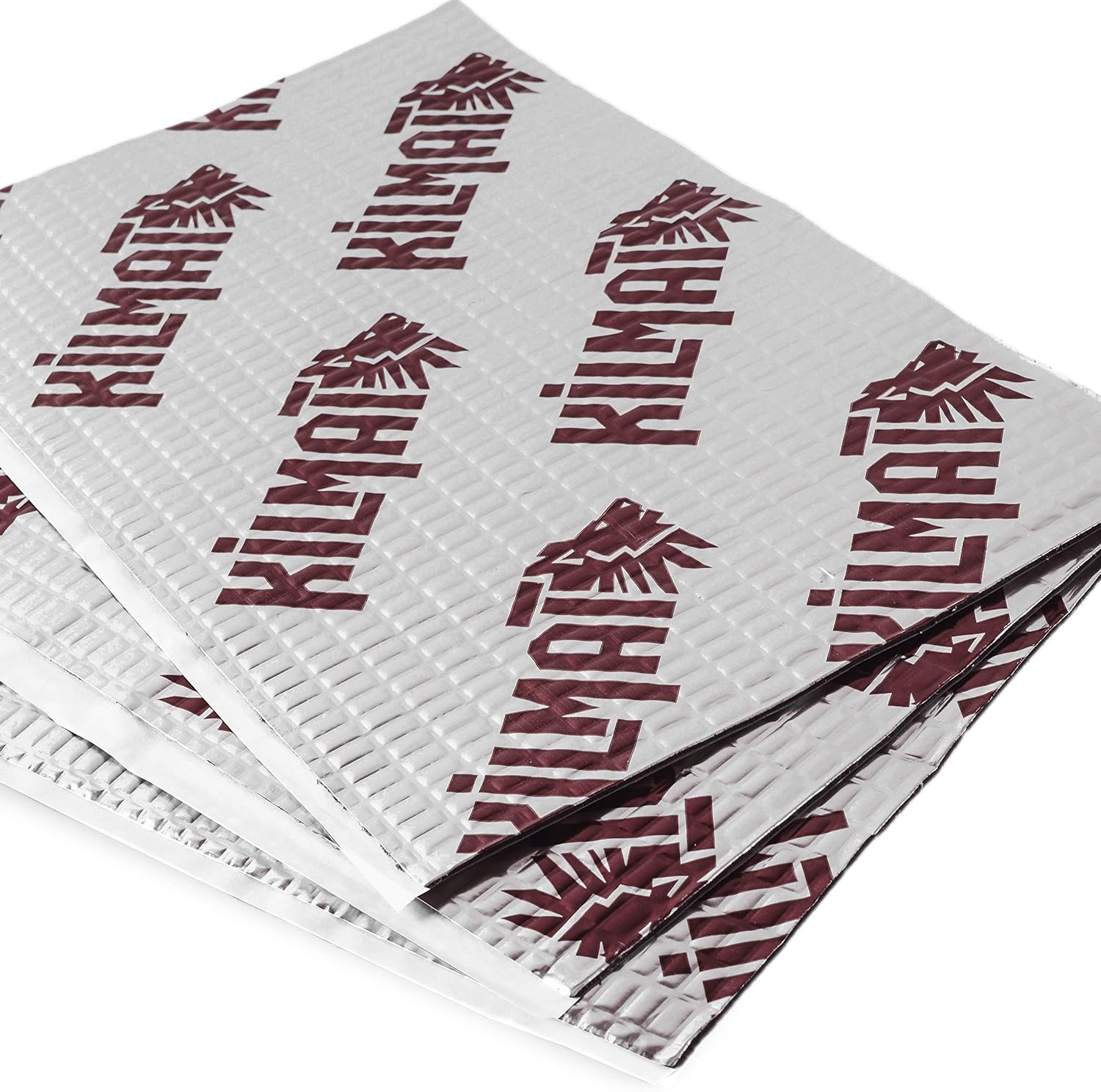
| Thickness | 80 mil (2 mm) |
|---|---|
| Coverage | 36 square feet |
| Material | Butyl with foil face |
| Installation | Self-adhesive, interior application |
The KILMAT 80 mil mat is a thick, foil-backed butyl deadener designed for DIY automotive installation. You apply it from the interior onto clean, degreased metal panels to reduce road noise, panel vibration, and some heat transfer; the foil face also helps with thermal reflection. Sheets are lightweight and come with a self-adhesive backing and an embossed installation indicator so you can tell when a panel has been rolled smooth. In practice the material sticks well, conforms to contours when heated, and firms up panels to cut rattle and improve door and trunk acoustics. It is best used where you can remove trim and roll the material with a hand roller for full contact. Expect clear benefits for cabin quieting and improved bass response when used behind speakers or on doors, but you may need multiple layers or additional insulation for major engine noise reduction. Take care cutting the aluminum foil edges and wear gloves during installation because the foil can be sharp and the adhesive is very tacky.
Best for: DIYers who want a high-performance, easy-to-install mat that balances sound reduction, thermal benefit, and value for typical interior and trunk applications on a Jeep Grand Cherokee.
Less Ideal for: People seeking an out-of-the-box solution for eliminating heavy engine bay or drivetrain noise without additional layers or professional sound deadening systems.
- Thick 80 mil butyl core provides strong vibration damping and panel stiffening.
- Self-adhesive backing with embossed installation indicator simplifies placement and quality control.
- Foil face adds thermal reflection and a finished surface that bonds to trim areas.
- Sheets are manageable for DIY cutting and fitting to doors, floors, trunks, and speaker baffles.
- May require heating and a roller for full adhesion on complex contours.
- Single 36 sq ft kit might not be enough for a full-vehicle, multi-layer install on larger SUVs like the Grand Cherokee.
Verdict: The best all-around sound deadening mat that balances noise reduction, heat insulation, adhesive reliability, and value for most DIY installers.
KILMAT 80 mil Butyl Car Sound Deadening Mat, 10 sq ft
Best Budget Sound Deadening Mat

| Thickness | 80 mil |
|---|---|
| Coverage | 10 sqft |
| Material | Butyl with foil facing |
| Model number | KLM8010 |
This KILMAT 80 mil sheet is a straightforward, budget-focused sound deadening mat that uses a thick butyl layer with a foil facing and a strong self-adhesive backing. Typical uses include lining the Jeep Grand Cherokee floor pans, inner doors, trunk areas, and firewall patches to lower road and engine noise and to reduce rattles. The 80 mil thickness improves low-frequency damping compared with thinner sheets, and the embossed foil provides a visual cue when the material has been firmly rolled smooth during installation. Sheets are sized for easy cutting and contouring into wheel wells and complex floor shapes, and reviewers note the adhesive sticks well to clean metal surfaces. Limitations are the 10 sq ft coverage which will only cover key sections rather than the whole cabin on the Grand Cherokee, and you will need a roller and time to press material fully into tight seams and contours. For budget installs this mat balances thickness and tackiness to give noticeable noise reduction without the cost of premium multi-layer systems.
Best for: Jeep Grand Cherokee owners looking for an affordable, do-it-yourself way to reduce cabin noise in key areas like floors, doors, and the trunk who prioritize effective thickness and adhesive performance over full-vehicle coverage.
Less Ideal for: Owners wanting a turnkey, full-cabin solution or professional multi-layer systems should consider higher-coverage or premium products instead.
- Thicker 80 mil construction improves low-frequency damping compared with thinner mats
- Strong self-adhesive backing that conforms and sticks well to clean metal surfaces
- Embossed foil lets you verify proper installation when rolled smooth
- Sheets are small and easy to cut for fitting around floor contours and door skins
- Good value for noticeable noise and vibration reduction
- Only 10 square feet per pack, not enough to fully soundproof an entire Grand Cherokee cabin
- Requires a roller and careful labor to get full adhesion in complex shapes
Verdict: The best budget sound deadening mat for shoppers who want meaningful noise reduction and decent adhesive performance without spending much.
Dynamat Xtreme Tech Pack Sound Deadening — 28 sq ft (7 sheets)
Best Premium Sound Deadening Mat
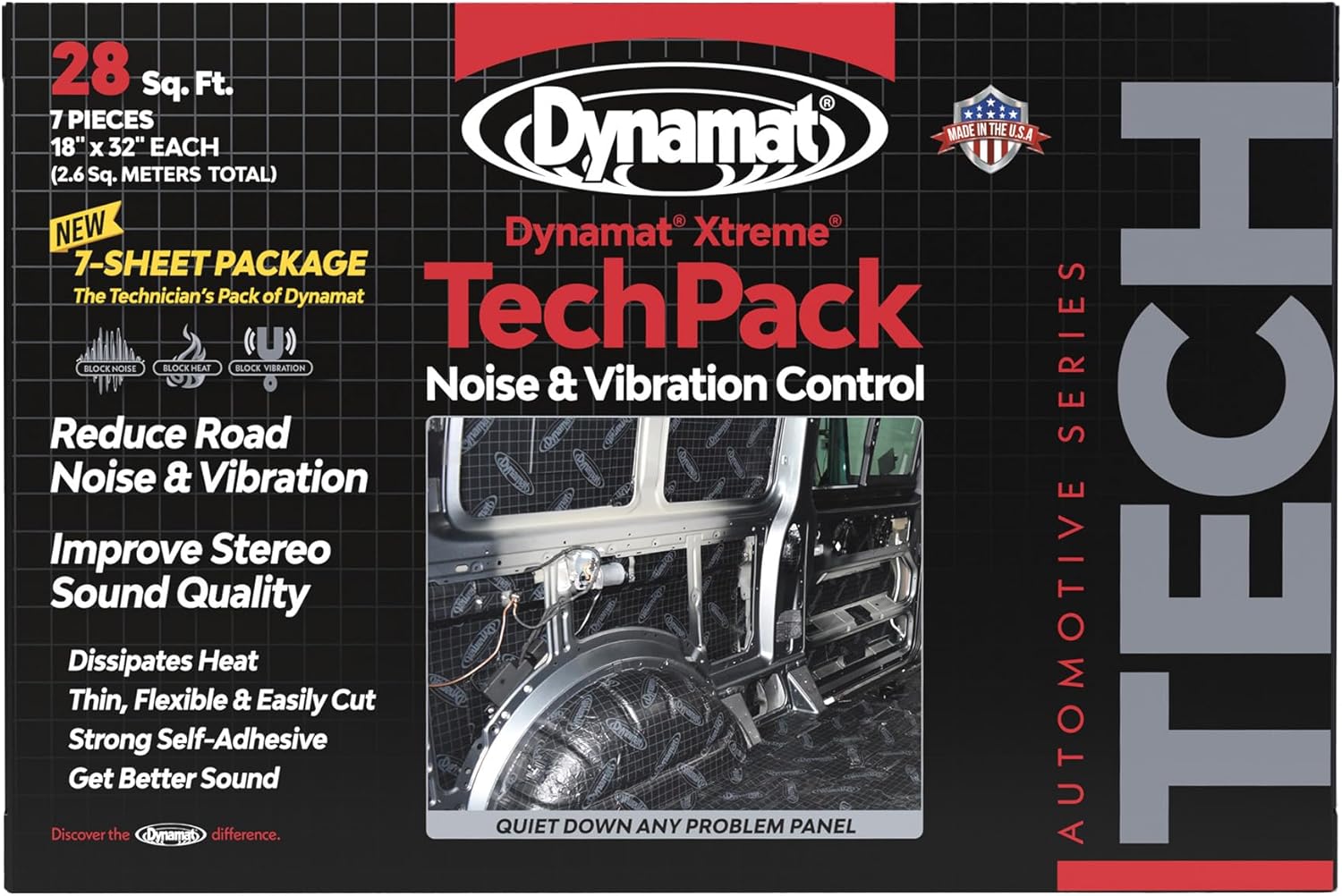
| Coverage | 28 square feet |
|---|---|
| Sheets | 7 sheets, 18" x 32" each |
| Material Type | Rubber |
Dynamat Xtreme is a high-performance sound deadener designed to reduce road noise, vibration, and heat when applied to vehicle panels. For a Jeep Grand Cherokee, installers typically apply it to doors, floor pans, rear cargo area, and the firewall or hood to tighten panel resonance and clean up midbass distortion from door speakers. The product comes in seven 18"x32" sheets with a sticky butyl rubber backing that is thin, flexible, and easy to trim to fit curved surfaces and tight spots. Its proven adhesion and vibration-damping properties make it effective at lowering panel rattles and improving perceived cabin quietness and audio clarity. The material is thinner than some heavy mats, so it is simple to fit behind trim without interfering with closures, but achieving maximum reduction on large cavities may require careful coverage or layering. Installation is straightforward with basic tools, though full-panel prep and firm rolling are important for long-term hold and best results on the Grand Cherokee.
Best for: Buyers who value durable, professional-grade damping and want to noticeably reduce panel resonance and improve in-car audio in a Jeep Grand Cherokee, prioritizing long-term performance over lowest price.
Less Ideal for: Users seeking the cheapest quick-fix or those who need very thick mass-loaded sound barriers without trimming and layering options.
- High-quality butyl rubber adhesive that sticks well to sheet metal and trim surfaces
- Thin, flexible sheets that are easy to cut and conform to curved panels and tight areas
- Designed to reduce vibration, speaker distortion, and road noise across multiple vehicle areas
- Made in the USA and supplied as a large 28 sq ft pack useful for door and floor coverage
- May require layering or extensive coverage to match heavier, thicker damping products for extreme noise sources
- Premium positioning means higher upfront cost compared with basic generic mats
Verdict: The best premium sound deadening mat for buyers prioritizing superior sound attenuation, thicker material, and long-term durability over upfront cost.
Siless 50 mil (1.3 mm) Car Sound Deadening Mat — 52 sq ft
Best Complete Kit Sound Deadening Mat

| Thickness | 1.3 Millimeters |
|---|---|
| Coverage | 52 square feet |
| Material Type | Rubber (butyl) |
The Siless 50 mil sound deadening mat is a peel-and-stick butyl damping material sold in a 52 square foot kit intended to reduce vibration and road noise inside a vehicle. Installers cut the sheets to fit doors, floors, trunk, and roof panels, peel the backing and press the material into place using a roller for best adhesion. At 1.3 mm thickness the mat noticeably smothers panel resonances and improves in-cabin audio clarity when applied behind speakers or on large flat panels. The self-adhesive backing removes the need for separate glues, and reviewers report easy trimming and good long-term stick when surfaces are prepared with a solvent. Limitations include reduced tack at low temperatures which can make vertical installs harder, and the foil edges can be sharp so gloves and a roller are recommended. For a Jeep Grand Cherokee, the 52 sq ft coverage is usually enough for partial to full-area installs depending on trim and how many panels you treat.
Best for: Installers who want a ready-to-fit kit that covers multiple Jeep Grand Cherokee panels and values a peel-and-stick solution for faster, DIY-friendly soundproofing.
Less Ideal for: People who need an ultra-thick multi-layer system for maximum sound isolation or who plan installations in cold conditions without a heated workspace.
- Thick 50 mil butyl layer effectively reduces panel resonance and vibration.
- Peel-and-stick application simplifies installation without separate adhesives.
- 52 square feet kit covers multiple panels for multi-area installs.
- Easy to cut and conforms well to curves and dips when rolled.
- Improves in-cabin audio clarity by reducing rattles and resonance.
- Adhesion can suffer in cold temperatures, making vertical surfaces harder to install.
Verdict: The best complete kit sound deadening mat for installers who prefer a ready-to-go package with enough material and accessories to cover multiple panels.
VOISEN 197 mil (5 mm) Aluminum Foil Foam Sound Deadening Mat, 31 sq ft (28 pcs)
Best Heavyweight Sound Deadening Mat
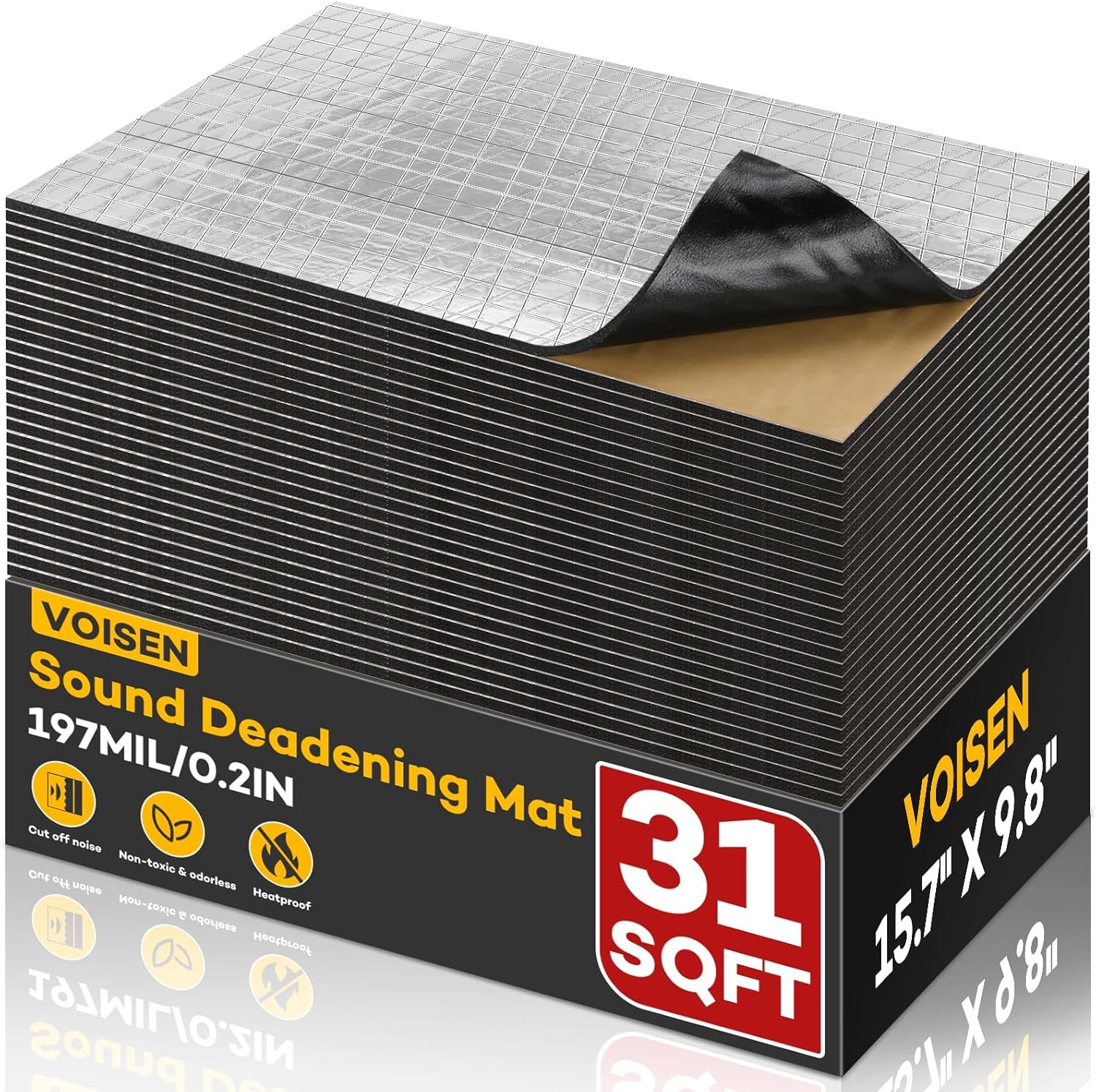
| Thickness | 197 Mils (5 mm) |
|---|---|
| Coverage | 31 sqft |
| Unit count | 28 pcs |
| Material type | Aluminum foil foam |
This VOISEN kit supplies 28 pre-cut 15.7 x 9.8 inch sheets of 197 mil (5 mm) aluminum-foil foam designed to reduce vibration, reflect radiant heat, and damp airborne noise when bonded to sheet metal. Installation is DIY friendly: the sheets are flexible for curved surfaces, easy to cut, and use a pressure-sensitive adhesive backing that sticks well to cleaned metal. In practice the foam layer adds mass and creates a thermal barrier that helps keep the cabin cooler and reduces panel resonance from road and engine vibration. For a Jeep Grand Cherokee this product is useful for lining floors, door skins, roof panels, and firewall areas where extra mass-loading and heat control are wanted. Limitations include a foam core that is less dense than butyl-based mats, so it will not match the low-frequency damping of heavyweight butyl-loaded products; a secondary layer of butyl or additional mass may be needed for the deepest road noise. Adhesive can be tacky to handle during fitment and the foil surface punctures more easily than thicker composite mats.
Best for: Jeep Grand Cherokee owners wanting a mostly DIY solution to reduce heat transfer and cut mid-frequency road and panel vibration while adding moderate mass to vehicle panels.
Less Ideal for: Drivers seeking the maximum low-frequency mass-loading and professional-level vibration control who should choose a dense butyl-loaded heavyweight mat or a multi-layer system instead.
- Thick 5 mm foam layer adds noticeable insulation against heat and mid-frequency vibration
- Pre-cut 15.7 x 9.8 in sheets simplify coverage of floors, doors, and irregular panels
- Strong pressure-sensitive adhesive bonds well to cleaned metal surfaces
- Flexible foil-faced sheets conform to curved automotive panels and are easy to trim
- Foam-based construction is less effective at damping deep, low-frequency panel resonance than butyl-heavy mats
- Foil surface is relatively easy to puncture and adhesive can stick to fingers during installation
Verdict: The best heavyweight sound deadening mat for tackling deep road and panel vibration noise where maximum mass-loading is required.
Noico 80 mil Butyl Automotive Sound Deadener 10 sq ft
Best Peel-And-Stick Sound Deadening Mat

| Thickness | 80 mil (2 mm) |
|---|---|
| Coverage | 10 sqft |
| Material | Butyl with aluminum foil |
| Style | Self-adhesive sheets |
Noico 80 mil is a peel-and-stick sound deadening mat designed for DIY installation on vehicle metal and composite panels. The sheets are self-adhesive, have an aluminum foil face with an embossing pattern that indicates correct roll-down, and are thick enough to add mass for measurable noise and vibration reduction. Typical use is door skins, trunk floors, wheel wells, and other accessible bare metal areas; you clean the surface, cut the sheet to shape, peel the backing and press it in place using a roller for best adhesion. Practical benefits include a heavy, tacky butyl layer that stays put once applied, easier handling because sheets come in manageable sizes, and an indicator pattern that helps confirm full contact. Limits to expect are added weight to treated panels and the need for some disassembly to reach common application areas; the adhesive is aggressive so repositioning after firm contact is difficult and gloves and a roller make installation faster and cleaner. Overall it is a straightforward, effective option for DIY soundproofing projects in a Jeep Grand Cherokee when you want fast peel-and-stick application.
Best for: DIYers who want a fast peel-and-stick solution to reduce road and panel noise with minimal tools and straightforward installation.
Less Ideal for: Users seeking the lightest possible solution or those who need a removable or repositionable product should consider alternative, lighter or non-adhesive options.
- Thick 80 mil butyl adds mass for real noise and vibration reduction
- Strong self-adhesive backing that bonds well to clean metal and composites
- Embossed foil provides a visual cue to ensure complete adhesion
- Sheets come in manageable sizes that are easy to cut and fit into door panels
- Adds noticeable weight to treated panels which may be undesirable in weight-sensitive builds
- Adhesive is aggressive and difficult to reposition once pressed down
Verdict: The best peel-and-stick sound deadening mat for DIYers who want fast, mess-free installation with reliable adhesive bonds to common metal and composite surfaces.
Siless VIBRO 50 mil Sound Deadening Mat, 52 sq ft
Best Thin Sound Deadening Mat

| Thickness | 50 mil |
|---|---|
| Coverage | 52 sqft |
| Item model number | NewSLS50_52 |
The Siless VIBRO 50 mil mat is a thin, adhesive-backed damping layer intended to reduce panel vibration and lower cabin noise where space is limited. You install it by cutting sheets to shape, peeling the liner, and pressing into metal panels or interior surfaces, then rolling to ensure adhesion. At 50 mil thickness it is thin enough to preserve factory fitment behind door panels and under trim while still damping resonant panels and improving mid-bass clarity for car audio. Notable features include a factory-style peel-and-place application, a proprietary Bmastic formulation for vibration control, and a 52 sq ft coverage per kit which is enough for floors or multiple doors on a single vehicle. Practical benefits are reduced rattles, tighter sounding speakers, and easier installation compared with spray or adhesive systems. Limitations are that a single 50 mil layer offers modest low-frequency isolation compared with heavier multi-layer setups and may be less effective alone on very large panels or severe road noise, so pairing with a foam or thicker barrier yields the best results.
Best for: Buyers who need a low-profile, install-friendly damping layer that reduces rattles and improves in-cabin sound while preserving factory fitment around trim and panels.
Less Ideal for: Users seeking maximum bass isolation or full vehicle soundproofing without adding a second, thicker layer should consider heavier or multi-layer materials instead.
- Thin 50 mil profile preserves original panel fitment and trim clearance
- Peel-and-place adhesive makes installation straightforward without extra glue
- Designed to reduce vibration and eliminate panel rattles for clearer audio
- 52 sq ft kit provides enough coverage for doors and selective floor or roof sections
- Single 50 mil layer provides limited low-frequency isolation compared with thicker or multi-layer systems
- May require preheating and surface cleaning for best adhesion in cold conditions
Verdict: The best thin sound deadening mat for applications with limited clearance or where maintaining original fitment is critical while still reducing noise.
Choosing the Right Jeep Grand Cherokee Sound Deadening Mat: Key Factors to Consider
Noise Reduction Performance
How effectively a mat attenuates airborne and structure-borne noise determines how quiet your Grand Cherokee becomes. Thicker, denser materials better suppress low-frequency road and tire noise, while composite layers that combine mass with damping address both vibration and resonance. Consider how much of the cabin you plan to cover because partial coverage yields diminishing returns compared with a coordinated approach to doors, floor, and trunk.
Evaluate manufacturer data on transmission loss and real-world user feedback about reduced highway drone. For the Grand Cherokee, pay attention to mats that perform well on broad metal panels and around wheel wells where thumps and road texture tend to transfer into the cabin.
Adhesion and Long-Term Hold
Adhesive strength is critical in a vehicle that sees both temperature extremes and vibration. A mat that peels away at edges or bubbles under heat will stop dampening effectively and may create new noise issues. Look for high-tack adhesives rated for automotive use and that bond to painted metal, plastic trim flanges, and factory carpet backings.
Also consider whether the backing allows repositioning during install; some adhesives set quickly and make placement difficult. For the Grand Cherokee, choose mats with proven hold on vertical door skins and around irregular contours to minimize rework after driving.
Material Thickness and Density
Thickness and density control how much mass you add to the vehicle and how well the mat absorbs vibrational energy. Thicker mats often deliver better low-frequency damping but add weight and can be harder to fit under carpet or trim. Density affects stiffness and damping characteristics; a balance of mass and viscoelastic layers generally works best for automotive panels.
When working on a Grand Cherokee, plan where extra thickness is acceptable—floors and trunk lids tolerate more mass than door cavities where trim fitment can be tight. Check clearance under seats and around seat rails to avoid interference.
Conformability and Cutability
A mat that conforms to compound curves, tight corners, and stamped features will make installation faster and produce better results. Mats that are stiff or only available in large sheets may require extensive cutting and shaping, increasing installation time and the chance of gaps. Look for products with flexible foil or viscoelastic layers and clear cut lines or peel guides.
For the Grand Cherokee's door skins and wheel-arch pockets, good conformability reduces trapped air pockets that reduce effectiveness. Evaluate whether the mat can be trimmed to fit under carpet edges and around seat brackets without bunching.
Thermal and Corrosion Resistance
Materials exposed to heat from the engine bay or sunlight through glass must resist breakdown and not promote corrosion of metal panels. Mats with closed-cell foam or sealed foil layers limit moisture ingress and reduce the risk of trapped water creating rust. Adhesives should remain stable across automotive temperature ranges and not degrade into residues that attract dirt.
In the Jeep Grand Cherokee, floors and trunk areas can see moisture from cargo and slush, so choose mats that resist water entrapment and are rated for use under carpets and in cargo areas to avoid long-term corrosion issues.
Installation Time and Tools Required
Some mats install in a few minutes per panel with only a roller and utility knife, while others require heat guns, primers, or professional tooling. Faster installs reduce the barrier to a DIY project, but more involved systems can deliver superior results when done correctly. Factor in whether you will remove door panels, seats, or carpet to get full coverage.
For the Grand Cherokee, anticipate time for panel removal in tight areas like the rear doors and center tunnel. Consider pre-cut kits or easily trimmed rolls if you prefer a weekend DIY install versus professional fitting.
Where to Apply Sound Deadening in the Grand Cherokee
Targeting the right panels yields the biggest improvement for the least effort. Prioritize doors, floor pans under the driver and passenger footwells, the rear cargo floor, and the trunk lid if your model uses one. These areas transmit the most road and tire noise into the cabin.
Addressing expansion joints and seams around the firewall and wheel wells helps reduce vibration paths. A coordinated plan that pairs door treatment with floor and trunk coverage will reduce resonant peaks and lower perceived cabin noise more than treating isolated spots.
- Doors: reduce panel resonance and improve speaker performance
- Floor pan: cuts road and tire noise entering the cabin
- Trunk/cargo area: reduces rear-end turbulence and trunk lid vibration
- Wheel wells and inner fenders: dampens impact and gravel noise
DIY Installation Tips for a Clean Result
Proper surface prep is the foundation of a durable installation. Clean painted metal with isopropyl alcohol or a dedicated degreaser, and remove any loose rust or contaminants. Work in a warm environment or use a heat gun to improve adhesive flow during application.
Use a firm roller to seat the material and eliminate air pockets. Trim openings for bolts, wiring harnesses, and speaker placements, and avoid covering drain holes. Take your time on door cavities where tight radii and internal clips can complicate placement.
- Measure and dry-fit pieces before removing backing
- Score mats with a utility knife rather than tearing
- Roll seams and edges thoroughly to ensure long-term adhesion
- Allow adhesive to cure per manufacturer guidance before reassembling trim
Combining Mats with Under-Carpet Insulation
Layering mass-loaded mats with a softer under-carpet insulation creates a complementary system: the heavier mat handles panel damping while the foam or fiber layer absorbs airborne noise. This two-stage approach improves mid- and high-frequency attenuation for a more balanced reduction in cabin noise.
Be mindful of overall thickness when adding multiple layers. In areas with limited trim clearance, use thinner closed-cell underlayment or cut back mat edges so carpet and seats fit without binding. Proper sequencing helps avoid moisture traps beneath the carpet.
- First layer: adhesive mass-damping mat on metal panels
- Second layer: closed-cell foam or fiber underlayment for airborne noise
- Ensure moisture-resistant materials in cargo and trunk spaces
Weight Considerations and Fuel Economy
Adding deadening material increases vehicle weight, which can slightly affect fuel economy and payload capacity. The impact is proportional to the amount of coverage and material density. For many owners, the comfort and noise reduction benefit outweigh the minor fuel penalty, especially when treating doors and key panels rather than sheeting the entire vehicle.
If weight is a concern, focus on targeted damping in problem areas and choose lighter composite mats in noncritical zones. Track total added mass if you frequently carry heavy loads so you do not exceed vehicle payload recommendations.
- Prioritize panels that provide the most noise reduction per pound added
- Avoid unnecessary full-floor coverage if it adds significant weight
- Use lighter underlayment where full damping mass is not required
Maintenance and Long-Term Care
Once installed, sound deadening mats require little maintenance. Periodic inspection of seams and exposed edges helps catch any lifting before it grows. If you remove trim or carpet for other service, check adhesive bonds and re-roll any loosened sections.
Avoid soaking mats with water during cleaning, and dry wet areas promptly to prevent moisture accumulation. If a mat becomes contaminated with oil or corrosive substances, clean and evaluate the adhesive integrity to prevent long-term damage.
- Inspect door cavities after heavy use or water exposure
- Re-seat any lifted edges with a roller and appropriate adhesive
- Replace waterlogged or delaminated sections rather than reinstalling
How We Chose the Best Jeep Grand Cherokee Sound Deadening Mat
We focused on attributes that matter specifically for Jeep Grand Cherokee owners and the cabin spaces they typically treat. Primary evaluation criteria included tested noise reduction performance on sheet metal and carpeted surfaces, thermal stability for hot-engine bay and sun-exposed floors, and adhesive strength for long-term hold under vibration. We also considered material thickness and density because these directly affect low-frequency damping and rattle control in the Grand Cherokee's doors, floor pans, and trunk.Installation practicality was another key filter: products that conform to curved door skins, cut easily, and offer strong peel-and-stick backing scored higher. We looked at corrosion resistance and compatibility with under-carpet placement to avoid trapping moisture. Durability under temperature cycles and resistance to odor or off-gassing were also weighed.Excluded from the list were thin foam films intended only for surface insulation, temporary peel-and-stick pads with weak adhesives, and products designed solely for engine-bay heat shielding. Our final selections prioritize long-term cabin quieting, fitment-friendly formats for the Grand Cherokee interior, and reliable adhesive systems.
Our full evaluation process is outlined in our review methodology.
FAQ
Will sound deadening mats prevent rattles in my Grand Cherokee?
Often they reduce or eliminate many common rattles by adding mass and damping to vibrating panels. Success depends on placing material where the rattles originate and ensuring a secure adhesive bond.
Can I install sound deadening mats myself in a Grand Cherokee?
Usually yes. Many mats are peel-and-stick and can be installed with basic tools, though removing door panels, seats, or carpet may be needed for full coverage. Allow extra time for trimming and proper surface prep.
How much of the vehicle should I treat for noticeable improvement?
Treating doors plus the primary floor areas and trunk usually produces the most noticeable improvement. Partial, targeted treatment can be effective, but coordinated coverage across panels reduces resonant peaks more consistently.
Will adding deadener cause corrosion under the carpet?
It depends on material choice and installation. Use closed-cell or foil-backed products and ensure surfaces are dry and free of rust before installing to reduce moisture trapping and corrosion risk.
Does adding sound deadening affect airbags or seat function?
No, if installed correctly. Avoid covering airbag deployment zones, seat mount points, or wiring harnesses. Follow vehicle service manual guidance for any panel removal and reassembly.
How long do sound deadening mats last in a Grand Cherokee?
They typically last many years when properly installed. Longevity depends on adhesive quality, exposure to moisture and heat, and whether the vehicle sees frequent panel removal for service.
Final Verdict
Prioritize mats that balance high damping performance with durable automotive adhesives and good conformability for the Grand Cherokee's panels. Focus first on doors, floors, and cargo areas to get the biggest reduction in road and vibration noise per hour of work or pound of material added. Expect a tradeoff between thickness and fitment: thicker mats damp better but can complicate trim reinstallation.Choose a solution that matches how you use the vehicle and your willingness to DIY. When you select a product that adheres reliably and conforms to the Cherokee's interior shapes, you will gain a noticeably quieter, more comfortable cabin without major modifications.
Explore More:
- Check out all Jeep Grand Cherokee parts & accessories
- Explore Interior Accessories
- Browse all Accessories
