

Note: This article contains affiliate links. If you click on these links and make a purchase, I may earn a small commission at no extra cost to you. This helps support my research and content. Read my full affiliate disclosure here.
If you spend a lot of time driving a Honda Odyssey, unwanted road and drivetrain noise can make trips tiring and reduce the enjoyment of the ride. Choosing the right sound deadening mat can noticeably cut road noise, reduce panel vibration, and make conversations and media clearer. This guide covers the top shortlisted options for the Honda Odyssey and explains which features matter for long-term comfort and durability. Below we summarize the evaluation criteria used and present the best picks for different installation goals.
Looking for other parts? See all Honda Odyssey parts & accessories.
Top Picks at a Glance
| Best Reviewed A top-rated pick with lots of positive feedback | Siless VIBRO 80 mil (2mm) Sound Deadening Mat — 36 sq ft |  |
| Most Popular A crowd favorite that many people choose with confidence | Noico 80 mil Butyl Sound Deadening Mat, 10 sq ft |  |
| Best Quality Built to a higher standard if you want something more solid | Siless Hybrid 3-in-1 200 mil Car Sound Deadening Mat, 25 sq ft |  |
| Best Budget The cheapest option that still gets the job done reliably | NLXCXUCY Butyl Automotive Sound Deadener 80 mil (10 pcs) |  |
| Most Sold A high-volume bestseller chosen again and again | CUKWUYBY 80mil Car Sound Deadening Mat, 36 sq ft |  |
| Best Value for Money The sweet spot between price and what you get | Amazon Basics Car Sound Deadening Mat — 34-Piece Kit |  |
| Best Overall The best all-around choice for most situations | KILMAT 80 mil Butyl Car Sound Deadening Mat — 36 sq ft |  |
1. Siless VIBRO 80 mil (2mm) Sound Deadening Mat — 36 sq ft

| Thickness | 80 mil / 2mm |
|---|---|
| Coverage | 36 square feet |
| Material | Butyl damping compound |
Siless VIBRO is a peel-and-place butyl sound deadener marketed as a 2mm (80 mil) sheet that covers 36 square feet and sticks to metal panels to cut noise and vibration. In real-world use you trim the sheets to size, peel the backing, press them to door panels, trunk lid, floor or roof, and roll or press for full adhesion. The material is very tacky and conforms to contours, so a single sheet on a body panel often reduces resonance and rattles; users report clear improvements around speakers and subwoofers. Installation is straightforward for a DIYer but benefits from a roller for best contact and from surface prep to remove dirt and grease. The practical limits are coverage and thickness: one 36 sq ft kit covers key areas but may not be enough for a full-vehicle project, and a few buyers questioned consistency of the listed thickness. If you need extreme thermal insulation or a bonded foam layer, this product is focused on vibration damping rather than multi-layer thermal control.
Best for: Reliability-focused buyers who prioritize durable, long-lasting reduction of rattles and resonance and want a proven damping layer they can install themselves to improve cabin quietness and speaker performance in a Honda Odyssey.
Less Ideal for: Those seeking full thermal insulation or a complete multi-layer soundproofing kit for an entire vehicle should consider larger coverage kits or combined foam/insulation systems instead.
- True-butyl adhesive that sticks well to cleaned metal and reduces panel resonance
- 2mm nominal thickness provides substantial damping for doors, trunk lids, and rear decks
- Peel-and-place application is simple for DIY installs and trims easily to fit contours
- 36 sq ft coverage is enough for common focal areas like trunk and several doors
- 36 sq ft may be insufficient for complete full-vehicle coverage
- Some buyers reported received sheets thinner than advertised
- No roller tool included, which reduces ease of achieving full adhesion
Verdict A tacky, true-butyl 2mm deadening mat that reliably reduces rattles in key panels but may require additional material or layers for full-vehicle insulation.
2. Noico 80 mil Butyl Sound Deadening Mat, 10 sq ft

| Thickness | 80 mil (2 mm) |
|---|---|
| Coverage | 10 square foot |
| Material | Butyl with aluminum foil facing |
| Style | Self-adhesive sound deadening |
This Noico 80 mil mat is a self-adhesive sound deadener sold in 10 square foot packs intended for automotive use. Installers typically cut sheets to fit door skins, trunk floors, rear quarters, and other exposed metal on a Honda Odyssey to reduce road and panel resonance. The heavy, full-weight butyl layer plus foil facing provides mass and damping that lowers rattles and smooths mid and low-frequency noise. The foil has embossed indicators that help confirm a proper roll-down, and the adhesive grips well after cleaning the metal. It is user-friendly for DIYers when paired with basic tools like a utility knife, alcohol cleaner, and a roller; gloves are recommended because the material is tacky. Limitations are the added mass to treated panels and the need to access interior panels on the Odyssey for best results, plus some trimming effort in tight corners. Also the thin foil facing can be damaged by aggressive rollers if not handled carefully.
Best for: Convenience-minded DIYers who want a straightforward, effective way to reduce road and panel noise in a Honda Odyssey without professional installation.
Less Ideal for: Buyers seeking a zero-weight solution or those unwilling to remove trim panels and invest time cutting and fitting material should consider other noise-control approaches.
- Thick 80 mil butyl adds mass and effective vibration damping on bare metal.
- Strong self-adhesive backing sticks reliably after proper surface cleaning.
- Embossed foil provides a visual cue when the mat is fully rolled and installed.
- Sheets come in a manageable pack size suitable for door panels and tight areas in an Odyssey.
- Easy to cut to shape with a utility knife for custom fits around speakers and brackets.
- Adds noticeable weight to treated panels which may be a concern for weight-sensitive builds.
- Requires removal of interior trim to access many mounting locations on the vehicle.
- Foil layer can be scratched or torn if rolled too aggressively in tight corners.
Verdict A thick, easy-to-apply butyl mat that reliably reduces cabin noise in a Honda Odyssey when you can access and treat the vehicle's metal panels.
3. Siless Hybrid 3-in-1 200 mil Car Sound Deadening Mat, 25 sq ft

| Thickness | 200 mil (0.2 in / 5 mm) |
|---|---|
| Coverage | 25 sqft |
| Construction | Butyl + foam + mass-loaded membrane |
| Installation | Peel-and-place, hand-roll recommended |
The Siless Hybrid 3-in-1 mat is designed to reduce road and exhaust noise while adding a thermal barrier and vibration damping in vehicle panels. It ships as pre-cut sheets that you trim, peel, and press into place for floors, doors, and other exposed metal panels; installation is straightforward and works without spray adhesives or special tools, though a roller speeds up full contact. The composite construction—butyl layer for stick and damping, foam for absorption, and a mass-loaded membrane for blocking sound—makes it effective across a range of frequencies, especially high frequencies and airborne noise. Users report noticeably quieter cabins and improved perceived build quality after straightforward installs. Limitations: it is not a thin foil deadener focused solely on panel resonance so it may not replace a foil-backed dampener if your priority is eliminating structural panel vibration at very low frequencies, and the adhesive side is very tacky which can be messy during fitting. For a performance-minded treatment on an Odyssey, this product is a practical way to lower cabin noise and heat transfer without a complex multi-product approach.
Best for: Performance-oriented Honda Odyssey owners who prioritize measurable reductions in cabin noise and improved in-cabin acoustics during driving and road trips.
Less Ideal for: Drivers wanting a single thin foil product solely to stop metal panel resonance or those who prefer a turnkey professional install service rather than a hands-on DIY project.
- Three-layer composite (butyl, foam, mass-loaded layer) addresses vibration, absorption, and blocking in one material
- Peel-and-place installation makes coverage of doors and floors fast without spray adhesives
- Thick 200 mil construction gives strong thermal insulation as well as acoustic benefit
- Flexible and easy to trim so it conforms to curved panels and tight areas
- Not optimized as a dedicated foil-backed resonant panel deadener for very low frequency panel vibration
- Adhesive is extremely tacky and can stick to clothing or tools during install
- May require complementary products or additional layers for full low-frequency sound control
Verdict A thick, multi-layer mat that delivers strong all-around noise and heat reduction for a Honda Odyssey when you want a performance-focused DIY solution rather than a thin panel-only deadener.
4. NLXCXUCY Butyl Automotive Sound Deadener 80 mil (10 pcs)
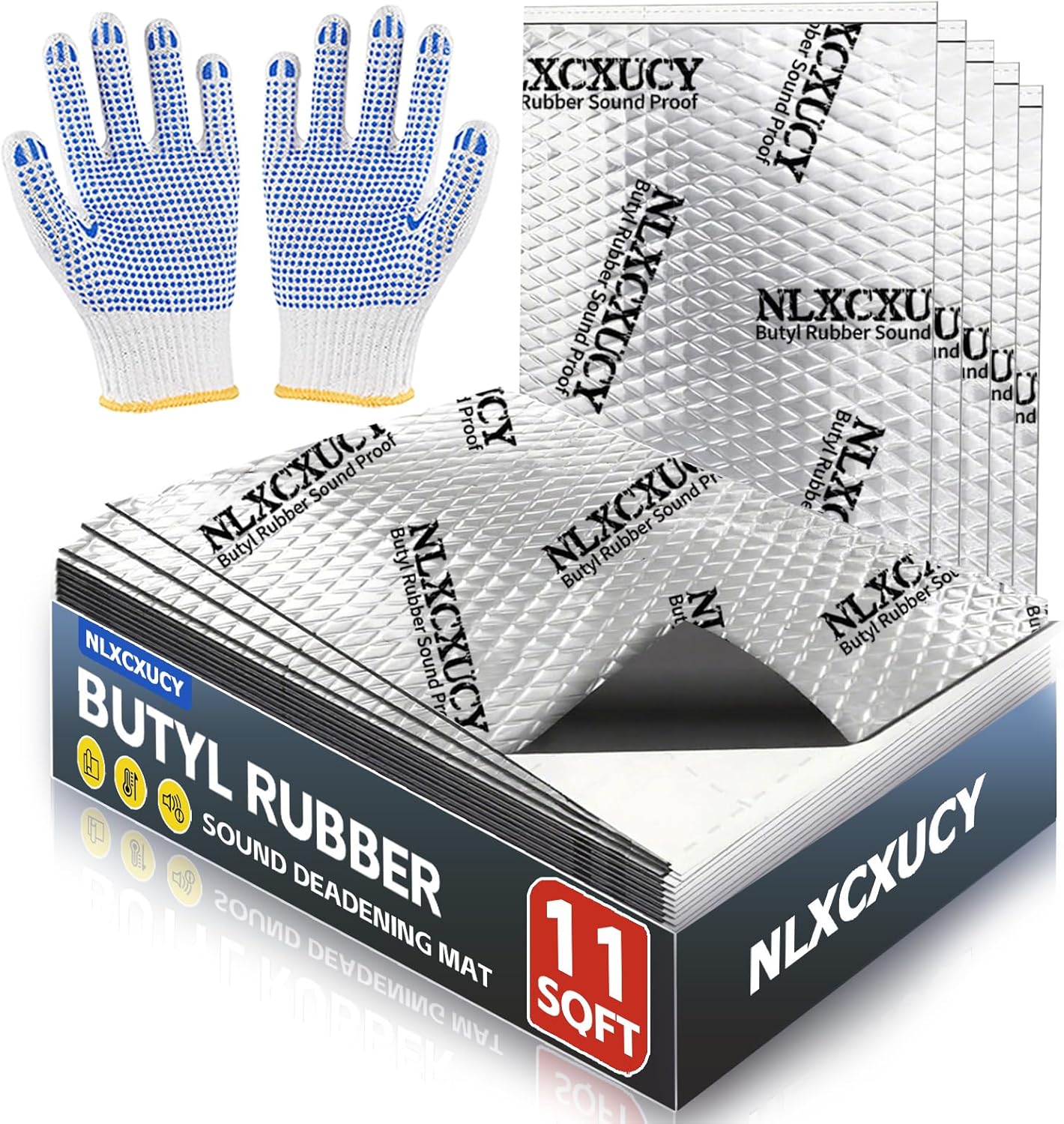
| Thickness | 80 mil (2 mm) |
|---|---|
| Coverage | 10.8 sqft (1 sqm) |
| Pieces | 10 pcs |
| Adhesive | Self-adhesive backing |
This kit supplies ten 80 mil (2 mm) self-adhesive butyl panels with an aluminum foil surface designed for DIY installations in a Honda Odyssey. The mats cut and conform easily to contours like door skins, floor pans, and the trunk area and stick firmly with the included adhesive backing. In practice the product reduces low-frequency drone and rattles when applied to flat sheet metal or inside door cavities; reviews and the foil layer also indicate useful radiant heat resistance near firewall or floor areas. Installation is straightforward for a weekend project but benefits from a roller to ensure full adhesion and to remove trapped air. Expect the material to be thinner than some premium competition, so you will get good value for damping and heat blocking on budget installs but not the maximum mass or absolute bass control that thicker, heavier products provide. The kit includes gloves for handling but plan to trim precisely since the adhesive is aggressive and repositioning is difficult once stuck.
Best for: Budget-conscious Honda Odyssey owners who want an inexpensive, DIY-friendly way to quiet common rattles and reduce road and exhaust drone without replacing factory parts.
Less Ideal for: Owners seeking competition-grade bass isolation or a full-vehicle, professional-level soundproofing solution should consider thicker, heavier premium mats instead.
- Self-adhesive butyl layers stick well to vehicle sheet metal for a secure DIY install.
- Aluminum foil face adds heat reflectivity and moisture resistance for firewall and floor use.
- Flexible and easy to cut so panels conform to door skins, floors, and trunk cavities.
- Included gloves and ten pieces cover about 10.8 sq ft, enough for targeted noise hotspots in an Odyssey.
- At 2 mm thickness this is lighter than premium mats and provides less mass-loaded bass attenuation.
- Adhesive bonds strongly and is hard to reposition once applied.
- Coverage is limited so larger installs will require multiple kits.
Verdict A cost-effective, easy-to-install sound deadening kit that delivers noticeable noise reduction for Honda Odyssey touch-ups but lacks the mass for top-tier bass control.
5. CUKWUYBY 80mil Car Sound Deadening Mat, 36 sq ft

| Thickness | 80mil (2mm) |
|---|---|
| Coverage | 36 sqft |
| Material layers | Aluminum foil + butyl core + adhesive backing |
This 80mil (2mm) sound deadening mat is a peel-and-stick kit that combines a reinforced aluminum face, a butyl rubber core, and a high-tack adhesive to reduce road, engine, and wind noise. Typical installs involve fitting sheets to floors, doors, trunk panels and roof sections; for a Honda Odyssey you would apply it inside door skins, under the rear cargo area and on exposed floor panels to damp rattles and lower interior noise. The advertised three-layer construction helps reflect heat while the butyl layer absorbs vibration, and the strong adhesive holds the material in place once rolled down. Benefits include simple DIY installation, compatibility with covering most of a minivan’s panels using the 36 sq ft kit, and durability that resists peeling. Limitations are that full effectiveness requires careful surface prep, a roller for best adhesion, and trimming for irregular cavities; the 36 sq ft pack may not cover every cavity on larger projects or multiple vehicles, so you may need additional material for complete coverage of an Odyssey.
Best for: Risk-averse mainstream buyers who prioritize reliable, factory-quality improvements to cabin quietness and want a straightforward DIY solution that delivers predictable results.
Less Ideal for: People seeking a temporary or removable solution, or those who need full-vehicle coverage for multiple vehicles from a single kit should consider larger or multi-pack options.
- Three-layer construction combines aluminum heat reflection with a butyl core for vibration absorption
- High-tack adhesive backing provides a permanent bond on clean surfaces
- 80mil (2mm) thickness offers stronger damping than thinner sheets commonly sold
- 36 sq ft coverage is enough to treat major panels like floors and many doors in one kit
- May not provide full coverage for every cavity or for multiple vehicles without buying extra material
- Requires a roller and careful trimming to achieve best adhesion and fit into tight or irregular spaces
- Aluminum top edge can be sharp during handling so gloves are recommended
Verdict A durable, easy-to-install 2mm deadener that gives Honda Odyssey owners a reliable reduction in road noise when you need a practical, permanent DIY upgrade.
6. Amazon Basics Car Sound Deadening Mat — 34-Piece Kit

| Coverage | 36 square feet |
|---|---|
| Pieces | 34-piece kit |
| Material | Butyl rubber substrate with aluminum foil |
| Sheet size | 9.8 x 15.7 inches |
These mats are a budget-focused sound-deadening solution you can cut and stick to body panels, doors, floor pans, or the trunk to reduce rattles and lower cabin noise. The butyl rubber substrate with reflective foil offers both vibration damping and some thermal insulation, and the strong peel-and-stick backing means pieces stay in place once rolled into position. The kit includes 34 pliable sheets sized for flexible application around contours and is easy to shape with scissors and a roller. For a practical optimizer working on a Honda Odyssey the material lets you target doors, the floor, and cargo area to tighten up door thuds and reduce highway hum without a big expense. Limitations are that it is not the thickest premium compound so extreme low-frequency road noise may need additional layers or heavier mats, and installation is labor intensive if you cover large areas. Also adhesion can be affected by old body sealers or poorly cleaned surfaces, so prep matters.
Best for: Practical optimizers who want noticeable noise reduction on a Honda Odyssey without spending on premium products and who are willing to do hands-on installation to improve cabin comfort.
Less Ideal for: Buyers seeking the absolute maximum low-frequency isolation or a plug-and-play professional installation should consider heavier commercial-grade mats or professional soundproofing services instead.
- Large 34-piece kit provides broad coverage for multiple doors and the cabin.
- Pliable butyl-based material conforms around curves and is easy to cut to fit openings.
- Strong self-adhesive backing keeps sheets secured when properly prepped and rolled.
- Reflective aluminum face adds thermal insulation in addition to sound damping.
- Good value compared with specialty brands for targeting problem areas on a budget.
- Not as thick as high-end deadeners so may require double layering for best low-frequency reduction.
- Installation is time-consuming for full-vehicle coverage.
- Adhesion can fail on surfaces with existing body glue or contaminants without thorough prep.
Verdict A cost-effective, easy-to-fit sound deadening kit that gives Honda Odyssey owners meaningful noise and vibration reduction if you are prepared to do the prep and installation yourself.
7. KILMAT 80 mil Butyl Car Sound Deadening Mat — 36 sq ft
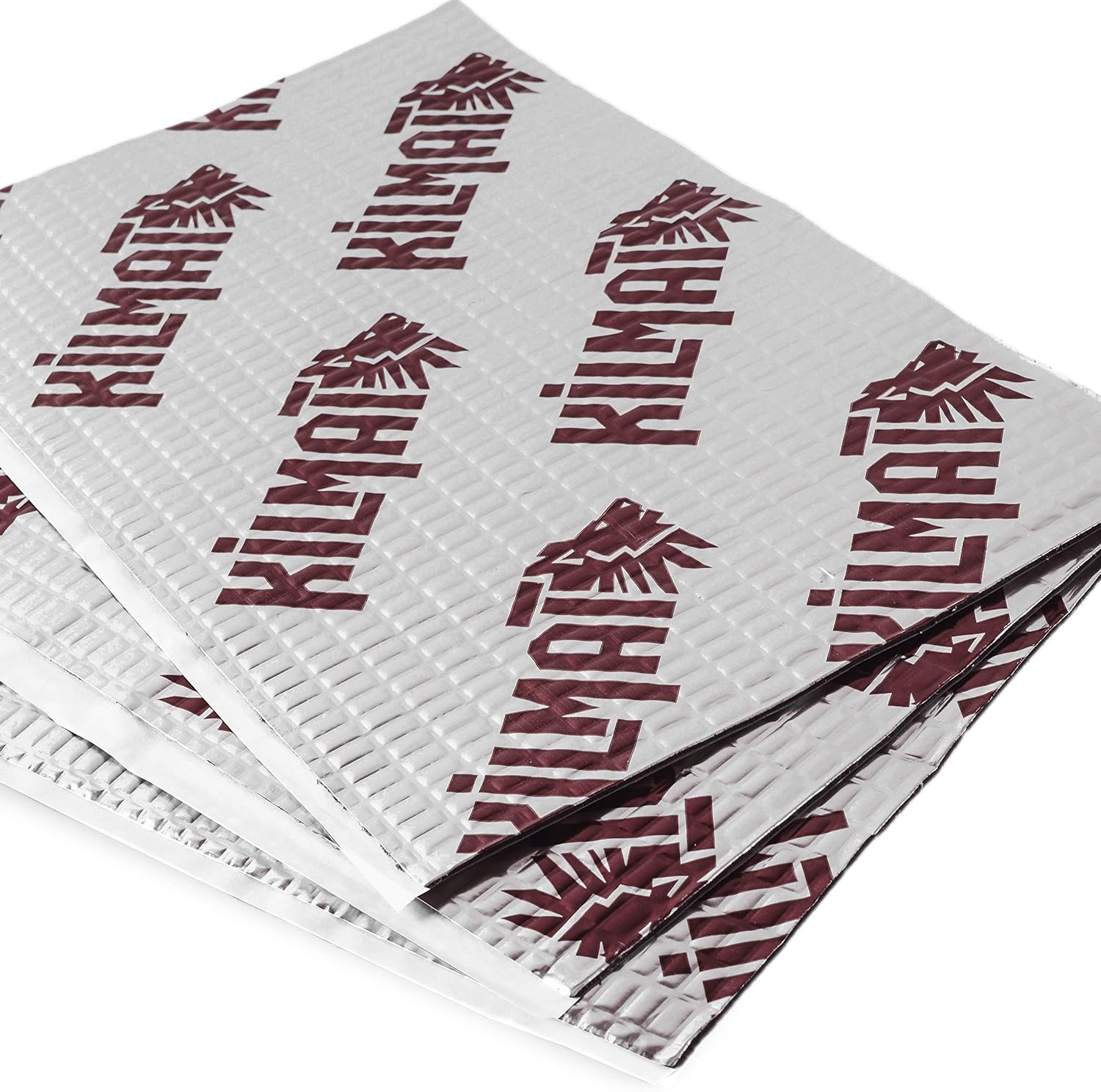
| Thickness | 80 mil (2 mm) |
|---|---|
| Material | Butyl with aluminum foil |
| Coverage | 36 square feet |
| Adhesive | Self-adhesive |
The KILMAT 80 mil sound deadening mat is a self-adhesive butyl sheet with an aluminum foil surface intended for lining vehicle panels to cut noise and vibration. For a Honda Odyssey it is typically applied behind door panels, on floor pans, inside the trunk area and under the headliner to stiffen metal panels and reduce road, wind and structural resonances. Notable features include a thick 80 mil (2 mm) profile for strong damping, a foil face with an embossing indicator that shows when the sheet has been properly rolled flat, and an aggressive adhesive that bonds once surfaces are cleaned and degreased. In practice this product firms up panels, reduces rattles and improves bass response from the cabin, and the sheet format makes cutting and fitting into curved door and floor sections straightforward. Important limitations are the need to remove trim or work in tight spaces for full coverage and the potential for sharp aluminum edges during trimming, so gloves and a roller are recommended. Multiple layers may be required for heavy vibration sources rather than a single pack.
Best for: Balanced DIY owners who want a noticeable reduction in road noise and improved audio performance in a Honda Odyssey without overcomplicating the install, and who are comfortable doing moderate trim removal and panel work.
Less Ideal for: People who need a purely plug-and-play solution that requires no trim removal or who prefer professional installation-only products; also not ideal if you want a single ultra-thick material and expect to solve severe vibration sources with one layer.
- Thicker 80 mil construction delivers stronger vibration damping than thinner mats
- Self-adhesive butyl backing bonds securely to cleaned metal surfaces
- Foil face with embossing provides a visual installation check for consistent coverage
- Comes in 36 sq ft kit sized for covering multiple doors, trunk areas or selective floor sections
- Requires surface prep and some disassembly to achieve full effectiveness
- Cut edges can be sharp and require caution during trimming and handling
Verdict A thick, DIY-friendly butyl mat that gives Honda Odyssey owners a cost-effective way to cut rattles and improve cabin sound when surfaces are properly prepped and installed.
Choosing the Right Honda Odyssey Sound Deadening Mat: Key Factors to Consider
Material Density and Mass
Denser materials generally block and absorb more sound, especially low-frequency road and drivetrain noise. Heavier mass-loading layers add inertia to panels, which reduces their tendency to vibrate and radiate sound into the cabin.
When assessing density, consider how much added weight the mat introduces across the vehicle floor and doors. Too light a material will provide limited benefit, while excessively heavy materials can affect reassembly and may be unnecessary in all areas.
Adhesive Type and Bond Strength
A durable, heat-resistant adhesive ensures the mat stays in place over time and under temperature swings inside a vehicle. Good bond strength prevents edges from peeling, which can reduce effectiveness and create squeaks or rattle points.
Look for adhesives rated for automotive use that tolerate cleaning solvents and occasional moisture. Ease of initial tack also matters for single-person installation—strong but forgiving adhesives reduce alignment errors during placement.
Thermal and Moisture Resistance
Interior mats may be exposed to temperature extremes and accidental moisture, especially when installed under carpets or near doors. Materials that resist heat and do not absorb water maintain their acoustic properties and avoid mold or odor issues.
Thermally stable mats also withstand heat from sunlight and HVAC without softening or losing adhesion. Moisture-resistant facings or closed-cell constructions help preserve long-term performance in areas prone to dampness.
Thickness and Fitment Considerations
Thickness affects both acoustic performance and how well the mat fits beneath carpets, seats, and trim. Thicker multi-layer products often deliver better vibration damping but can complicate reinstallation of interior panels if space is tight.
Evaluate where the mat will be placed and measure clearance before choosing thickness. Thinner, high-density options can be preferable in door skins and tight seams, while thicker pads may be ideal for floor pans and large flat panels.
Ease of Cutting and Shaping
Many installations require trimming mats to fit contours, bolt holes, and brackets. Materials that score and cut cleanly speed installation and reduce the risk of gaps that compromise performance.
Consider whether the mat holds its shape after cutting and whether it requires heat or special tools to conform to complex curves. Reusable templates or pre-scored sections can simplify the process for DIY installers.
Vibration Damping Vs Sound Absorption Balance
Some products focus more on damping panel vibration, while others prioritize absorbing airborne noise. The best outcomes typically come from combining both approaches in targeted areas: damping on panels, absorption under carpets or headliners.
Understand the specific noise issues you want to address and choose a mat that provides the appropriate balance. Excessive absorption without damping may leave panels still vibrating, and vice versa.
FAQ
Will adding a sound deadening mat affect my Honda Odyssey's interior fit?
Adding a properly chosen mat usually has minimal impact if you account for thickness and placement. Thinner high-density mats fit under carpets and behind trim without altering seat or door clearance. For thicker products, focus on floors and large panels where small increases in thickness are less noticeable.
How long does automotive soundproofing last once installed?
When installed with a heat-resistant adhesive and on materials rated for automotive use, sound deadening mats often remain effective for many years. Longevity depends on exposure to moisture, temperature cycling, and installation quality. Proper surface preparation and full contact help maximize lifespan.
Can I install these mats myself, or should I get professional help?
Many mats are designed for DIY installation and come with peel-and-stick backing that simplifies placement. Complex areas, full-vehicle installs, or spots requiring removal of trim and seats may benefit from professional experience. Consider your tools, patience, and access to service manuals when deciding.
Where should I prioritize placing sound deadening material in a Honda Odyssey?
Prioritize large flat panels and common vibration sources: floor pans, doors, and the rear cargo area typically yield the biggest reductions in road and panel noise. Use thinner damping layers on door skins and thicker or layered solutions on floors for a balanced result.
Will sound deadening mats help with road noise from tires and wind?
They can reduce the amount of road and drivetrain noise that enters the cabin by limiting panel vibration and absorbing some airborne sound. Road and wind noise sources vary, so combining damping with absorption and addressing seals or tires may be necessary for the largest improvements.
How We Chose the Best Honda Odyssey Sound Deadening Mat
We selected mats that address the specific acoustic and installation needs of a Honda Odyssey by focusing on performance, fit, and longevity. Key evaluation criteria included material density and mass-loading effectiveness, attachment method and adhesive strength, thermal and moisture resistance for under-carpet use, and ease of trimming and fitting into complex interior panels. We also considered overall thickness and how it affects reassembly and seat or carpet fitment, plus vibration damping across a range of engine speeds.Products were excluded if they lacked clear specifications on material composition or adhesive type, if they were not rated for automotive interior use, or if they relied solely on temporary or non-heat-resistant adhesives. We prioritized options with documented durability, installability in tight areas, and the ability to balance noise reduction with minimal impact on interior clearance.
Our full evaluation process is outlined in our review methodology.
Conclusion
Choose mats that match the specific acoustic issues you want to address on the Honda Odyssey and prioritize durable materials and adhesives. Balance mass and thickness with the available interior clearance to maintain fit and functionality.Plan placement strategically: focus on doors and large panels for vibration damping and under-carpet areas for absorption. Proper installation and attention to thermal and moisture resistance will preserve performance over time.
Explore More:
- Check out all Honda Odyssey parts & accessories
- Explore Interior Accessories
- Browse all Accessories
