

Note: This article contains affiliate links. If you click on these links and make a purchase, I may earn a small commission at no extra cost to you. This helps support my research and content. Read my full affiliate disclosure here.
If you spend time driving a GMC Sierra 1500, addressing cabin noise and vibration can make daily commutes and long trips far more comfortable. The right sound deadening mat reduces road and tire roar, cuts panel vibration, and helps factory audio sound clearer without requiring extensive modifications.This guide spotlights seven shortlisted sound deadening options selected for the Sierra 1500. We focus on effectiveness at lowering noise, how simple the installation is, and long-term durability so you can pick a solution that fits your goals and skill level. Read on for what mattered in our selection and practical tips for installation and placement.
Looking for other parts? See all GMC Sierra 1500 parts & accessories.
Top Picks at a Glance
| Best Overall Sound Deadening Mat A well-rounded mat balancing noise reduction, fit, and ease of install | KILMAT 80 mil Car Sound Deadening Mat — 36 sq ft |  |
| Best Budget Sound Deadening Mat Low-cost material that still improves cabin noise on a budget | KILMAT 80 mil Butyl Car Sound Deadening Mat, 10 sq ft |  |
| Best Premium Sound Deadening Mat Higher-end materials and thicker constructions for maximum performance | Dynamat Xtreme Tech Pack Sound Deadening Car Insulation, 28 sq ft (7 sheets) |  |
| Best Full-Coverage Sound Deadening Mat Kits or large rolls designed to cover entire doors, floors, or panels | Siless 50 mil (1.3 mm) Car Sound Deadening Mat — 52 sq ft |  |
| Best Peel-and-Stick Sound Deadening Mat Self-adhesive mats that simplify placement and speed up installation | Noico 80 mil Butyl Sound Deadening Mat, 10 sq ft |  |
| Best Thick Sound Deadening Mat Heavier, thicker material for maximum vibration and low-frequency reduction | Datanly 10mm Thick Car Heat and Sound Deadening Mat, 43 sq ft (2 Rolls) |  |
| Best Low‑Profile Sound Deadening Mat Thin, flexible mats for tight spaces and minimal clearance loss | MAT66 ProBlack 50 mil Butyl Sound Deadening Mat — 50 sq ft |  |
1. KILMAT 80 mil Car Sound Deadening Mat — 36 sq ft
Best Overall Sound Deadening Mat
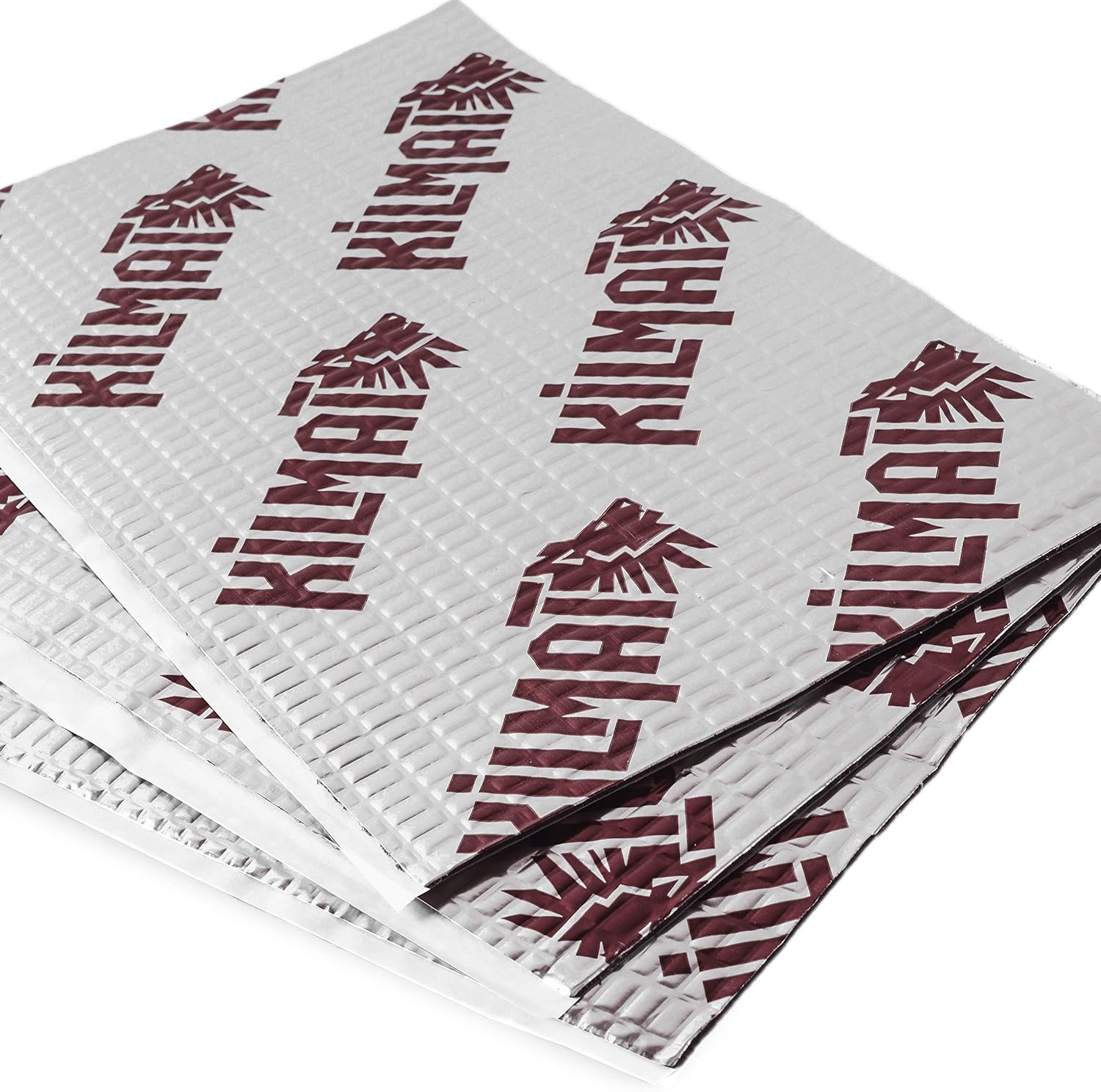
| Thickness | 80 mil (2 mm) |
|---|---|
| Coverage | 36 square feet |
| Material | Butyl with foil facing |
| Adhesive | Self-adhesive |
This KILMAT kit is a practical, DIY-friendly sound deadening mat designed to reduce panel vibration and road noise in a pickup cabin. The 80 mil (2 mm) butyl core with foil facing offers strong damping that firms up doors, floor pans, trunk lids, and other sheet-metal areas when applied from the interior side. Sheets come pre-backed with adhesive so installation is mostly peel, stick, and roll; the included embossing indicator helps confirm full contact. In use it noticeably reduces rattles and improves bass transfer into the cabin while also giving panels a more solid feel. The material trims easily for tight contours but can produce sharp aluminum edges when cut, and installers should prep and degrease surfaces and wear gloves. At 36 square feet this pack covers common areas of a full-size truck cabin for targeted treatments, and the adhesive grips well after warm-up, though heavier multilayer projects may require additional mats or thicker products for maximum low-frequency suppression.
Best for: DIY mechanics who want a balance of effective damping, manageable thickness, and an easy peel-and-stick installation to noticeably reduce cabin noise without professional help.
Less Ideal for: Those seeking maximum low-frequency isolation for heavy-duty or competition audio systems who need thicker multi-layer solutions or full-vehicle coverage.
- 80 mil thickness provides strong vibration damping and firmer panels
- Self-adhesive butyl backing sticks well after surface prep and warming
- Embossed foil indicates correct installation for consistent contact
- Sheets are easy to cut and conform to contours for DIY fitment
- Aluminum foil edges can be sharp after cutting, so gloves are required
- 36 sq ft may be insufficient for full-coverage multilayer treatments
Verdict: The best overall sound deadening mat balances effective vibration damping, manageable thickness, strong adhesive, and easy trimming so most DIY mechanics get noticeable noise reduction without installation headaches.
2. KILMAT 80 mil Butyl Car Sound Deadening Mat, 10 sq ft
Best Budget Sound Deadening Mat

| Manufacturer | KILMAT |
|---|---|
| Thickness | 80 mil |
| Coverage | 10 sqft |
| Material | Butyl with foil face |
This KILMAT 80 mil sound deadener is a budget-friendly self-adhesive butyl sheet aimed at trimming road and panel noise in vehicles. For a GMC Sierra 1500, the 10 sq ft pack is useful for targeted spots like floor sections, door skins, or the spare-tire well rather than full-coverage installs. The 80 mil thickness and foil face provide solid damping for midrange resonance and reduce vibration from panels, while the sticky backing and pre-sized sheets make it straightforward for a one-person DIY job. The foil embossing also serves as an installation guide—roll it smooth to confirm good adhesion. Trade-offs are the limited total coverage in a 10 sq ft kit and the thinner overall mass compared with larger, heavier premium mats, so you may need multiple packs for full-floor coverage or to tackle heavy road noise. Overall this mat balances cost and performance and works well for spot treatments and finishing work on a Sierra without professional tools.
Best for: Buyers who want an affordable, easy-to-install mat for targeted noise reduction on a GMC Sierra 1500 and prefer DIY spot treatments over full-vehicle coverage.
Less Ideal for: Drivers seeking complete, factory-quality full-floor soundproofing or those who need maximum mass-loaded damping for heavy road noise should consider larger or heavier mats instead.
- 80 mil thickness offers measurable damping for panel resonance and midrange noise
- Strong self-adhesive butyl backing simplifies DIY installation and conforms to shapes
- Foil surface with embossing helps verify proper roll-out and adhesion
- Lightweight sheets are easy to cut and handle for spot treatments
- 10 sq ft package is limited if you plan to fully soundproof the Sierra interior
Verdict: The best budget sound deadening mat gives acceptable noise and vibration reduction at a low price, trading some thickness or coverage for affordability while remaining workable for DIY installation.
3. Dynamat Xtreme Tech Pack Sound Deadening Car Insulation, 28 sq ft (7 sheets)
Best Premium Sound Deadening Mat
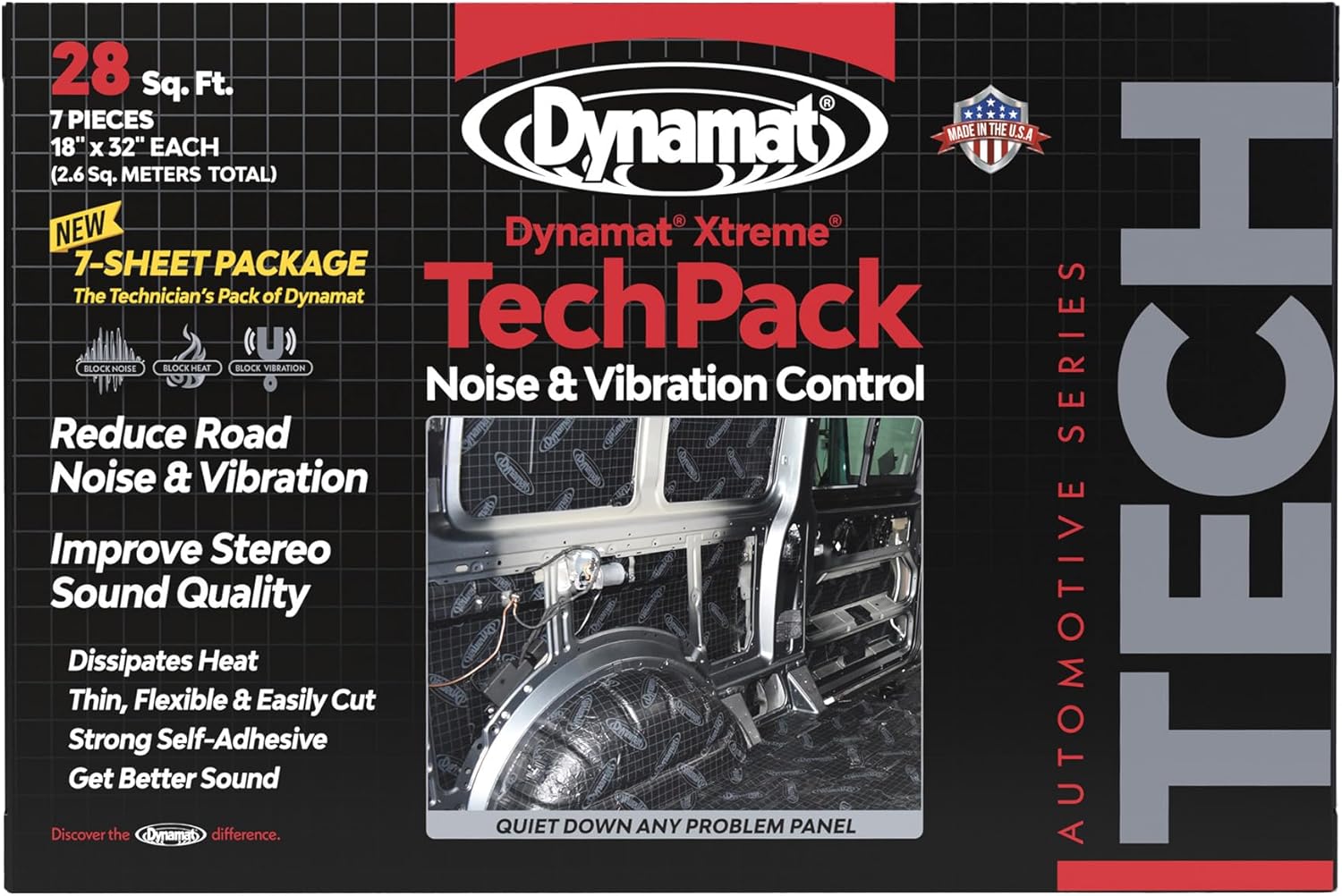
| Coverage | 28 square feet |
|---|---|
| Sheet size | 18" x 32" |
| Material Type | Rubber |
| Included Components | Car Insulation |
Dynamat Xtreme Tech Pack is a premium peel-and-stick sound deadening kit intended for vehicle panels, floors, doors, hoods, and trunks. The pack contains seven 18"x32" sheets that lay down with a thick, flexible butyl rubber that conforms to contours and stays put once applied. In real-world use it helps reduce road and engine noise, lowers panel rattles, and can reduce speaker distortion by damping resonance. Installation is straightforward for a DIYer: remove trim, cut the sheets to shape with a razor, peel the liner, and press with a roller or firm tool for full adhesion. The material is thin enough to fit behind trim yet dense enough to provide noticeable noise reduction and some heat barrier properties. The main compromises are cost and coverage versus multi-layer approaches: this premium mat is pricier than economy alternatives, and heavy-duty projects may need additional layers or specialized thermal liners for maximum heat control. Some users report variable results in large open areas, so plan placement around doors and floors where damping is most effective.
Best for: Buyers who want top-tier, long-lasting damping for a premium install and are focused on quieting doors, floors, and panels with a durable, professional-feeling product.
Less Ideal for: People on a tight budget or those looking to blanket large cargo areas cheaply should consider lower-cost mats or calculate additional material needs before starting.
- High-performance butyl rubber adhesive that sticks and resists lifting
- Dense, flexible sheets that conform to curved panels for effective vibration damping
- 28 square feet total coverage suitable for doors and selective floor/trim areas
- Made in USA production and a long-standing industry reputation
- Higher price point than budget sound-deadening sheets
Verdict: The best premium sound deadening mat prioritizes superior damping materials, thicker layers, and long-lasting adhesives for DIYers who want top-tier noise control and durability and are willing to pay more.
4. Siless 50 mil (1.3 mm) Car Sound Deadening Mat — 52 sq ft
Best Full-Coverage Sound Deadening Mat

| Thickness | 1.3 Millimeters |
|---|---|
| Coverage | 52 square feet |
| Material Type | Rubber |
This Siless sound deadening mat is a full-coverage style sheet sold in a 52 square-foot kit and built to be applied across large panels and cabin areas. It uses a 50 mil (1.3 mm) butyl damping layer with a peel-and-stick backing so you can trim large pieces to cover floors, doors, roof, and inner panels on a GMC Sierra 1500 for comprehensive reduction of road and panel resonance. Installation is straightforward: wipe bare metal, cut to shape, peel the release liner and press with a roller to seat the material; working in warm conditions improves adhesion. In use the material noticeably mutes panel vibration and tightens midbass from factory speakers when used behind doors or under the dash. The foil face helps with handling and provides a clean surface for carpets or trim. Limitations are its temperature-sensitive stickiness during cold installs and the need for a roller and solvent for best results; edges of the foil can be sharp so gloves are recommended. For a DIY full-cabin application it provides wide coverage per kit and strong damping for the price.
Best for: DIY owners fitting a GMC Sierra 1500 who want to treat whole panels or cover large cabin areas in one kit and value straightforward peel-and-stick installation for comprehensive noise reduction.
Less Ideal for: Buyers who need a very thin, minimal add-on or who prefer a spray-on or proprietary professional installation method should look elsewhere.
- Thick 50 mil butyl layer gives strong vibration damping on large panels
- 52 sq ft kit covers full doors and significant cabin areas in one purchase
- Peel-and-stick backing allows straightforward trimming and placement without extra adhesives
- Foil-faced side handles easily and provides a tidy surface under carpet or trim
- Adhesion weakens at low installation temperatures requiring warmer conditions or preheating the metal
Verdict: The best full-coverage sound deadening mat is sold in large sheets or kits sized to cover whole panels or cabin areas, ideal for DIYers who want comprehensive noise reduction in one purchase.
5. Noico 80 mil Butyl Sound Deadening Mat, 10 sq ft
Best Peel-and-Stick Sound Deadening Mat

| Thickness | 80 mil (2 mm) |
|---|---|
| Coverage | 10 square foot |
| Material | Butyl with aluminum foil |
| Style | Self-adhesive, removable backing |
Noico 80 mil is a thick peel-and-stick sound deadener designed for DIY installation across exposed metal panels in a truck cab and bed. The material uses full-weight butyl with an aluminum foil facing and a removable paper backing so you peel, position, and press it into place; the embossed foil also serves as an indicator that the mat has been properly rolled flat. Typical uses on a GMC Sierra 1500 would be door inner panels, floor pans under the carpet, rear deck or firewall sections where you can access bare metal. The 80 mil (2 mm) thickness gives noticeable mass for lower-frequency damping and improved door solidity while staying thin enough to fit under trim. It is very sticky once pressed and benefits from a roller during installation; cleaning the metal first is important for adhesion. Limitations are the added weight if you cover large areas and the strong tack that makes repositioning difficult once applied, so careful layout and gloves are advisable for a clean, trouble-free retrofit.
Best for: A GMC Sierra 1500 owner who wants a straightforward, DIY-friendly peel-and-stick solution to reduce road and door noise and who prioritizes fast installation and reliable adhesion.
Less Ideal for: Not the best choice for someone who needs the lightest possible setup or expects to frequently remove and reposition material during repeated mockups.
- Thick 80 mil butyl adds real mass for vibration damping and firmer door sound
- Self-adhesive with removable backing enables quick peel-and-stick installation
- Embossed foil pattern provides a visual cue when the mat is properly rolled flat
- Sheet size and folded packaging make it easy to cut and fit into tight or curved truck panels
- Very aggressive adhesive makes repositioning difficult once pressed down
Verdict: The best peel-and-stick sound deadening mat features reliable factory adhesive and a removable backing for fast, mess-free installation that suits DIY mechanics seeking a straightforward retrofit.
6. Datanly 10mm Thick Car Heat and Sound Deadening Mat, 43 sq ft (2 Rolls)
Best Thick Sound Deadening Mat

| Thickness | 10 Millimeters |
|---|---|
| Coverage | 43 square feet |
| Material Type | Aluminum, Plastic, Rubber |
| Unit Count | 2.0 Count |
This Datanly kit is a dense, 10 mm (394 mil) rubber-plastic sound deadener with an embossed aluminum face sold as two rolls that together cover about 43 sq ft. It is designed to be cut and applied to vehicle panels—hood, roof, trunk, doors, firewall and floor sections—to reduce vibration and block heat. In practice the closed-cell rubber-plastic core and heavy foil layer help damp low-frequency panel resonance better than thin foil mats, so you should notice reduced road and engine rumble on larger metal panels. The adhesive backing is strong and makes installation straightforward, though careful trimming is needed to fit tight contours. The material is resistant to oil and aging and the aluminum surface adds waterproofing and heat reflection. It is thick and somewhat bulky, so expect to spend more time fitting around seams and components and to lose a bit of usable cargo or cavity space where applied. Overall this is a solid, high-mass option when maximal damping per square foot is the priority for a Sierra 1500 project.
Best for: Buyers restoring or upgrading a GMC Sierra 1500 who want the maximum noise reduction per square foot and are willing to fit heavier material for improved panel damping.
Less Ideal for: Drivers seeking a near-stock install with minimal panel modification or those who need an ultra-thin, space-saving solution should consider thinner options.
- Thick 10 mm rubber-plastic core offers strong low-frequency damping and resonance control
- Embossed aluminum face provides heat reflection, waterproofing and abrasion resistance
- Strong adhesive backing simplifies placement and sticks well to metal panels
- Closed-cell construction resists oil, moisture and aging for longer service life
- Bulk and thickness make trimming and fitting around tight curves and seams more time-consuming
Verdict: The best thick sound deadening mat uses denser, heavier construction to maximize low-frequency damping and reduce panel resonance for users prioritizing the greatest noise reduction per area.
7. MAT66 ProBlack 50 mil Butyl Sound Deadening Mat — 50 sq ft
Best Low‑Profile Sound Deadening Mat

| Thickness | 50 Mils |
|---|---|
| Coverage | 50 square feet |
| Material Type | Butyl |
| Sheet Size | 9.84 x 15.74 inches |
MAT66 ProBlack is a foil-faced butyl sound deadener sold as pre-cut sheets that you press and roll onto metal panels to cut rattles and lower road and rain noise. Use it inside doors, floors, roof panels, trunk lids, and other cabin cavities where you need to dampen panel resonance without a complex install. The 50 mil thickness keeps the material relatively low profile, so it fits into tighter spaces and under trim while still adding stiffness to sheet metal. Sheets come with peel-back liner and embossed foil that helps confirm a full adhesion after you roll it smooth. In practice the mat sticks well to clean surfaces and shapes around modest contours when warmed; a hand roller is recommended for best contact. Limitations include the manual labor of measuring, trimming, and rolling many small sheets and the fact that 50 mil is a compromise between damping and bulk so it will not match multi-layer, heavy-mass systems for maximum thermal or SPL control. For a Sierra 1500, expect clear reductions in panel vibration and cabin noise when applied to doors, floor pans, and the roof where clearance is limited.
Best for: GMC Sierra 1500 owners looking to reduce door, floor, and roof panel vibration in tight cavities while retaining factory clearance and trim fitment.
Less Ideal for: If you need extreme mass-loading for high-SPL audio builds or want a full thermal insulation upgrade, heavier multi-layer or foam-backed systems are a better choice.
- 50 mil thickness provides a low-profile balance of damping without large loss of clearance
- Pre-cut sheets with peel-back liner simplify layout in confined spaces
- Foil face with embossing gives a visual cue when sheets are fully rolled and adhered
- Butyl adhesive bonds strongly to cleaned metal surfaces for long-lasting attachment
- Covering large areas is time-consuming due to many small sheets and required rolling
Verdict: The best low-profile sound deadening mat is thin and flexible to fit confined cavities and preserve clearance while still improving noise control where thicker products won't fit.
Choosing the Right GMC Sierra 1500 Sound Deadening Mat: Key Factors to Consider
Material Composition and Density
Material composition determines how the mat absorbs and dissipates sound energy. Heavier, butyl-based or thick foam-core mats offer better low-frequency damping, which matters for pickup trucks where tire and road noise can be pronounced. Lighter foil-backed products help reduce high-frequency hiss but usually do little for bass or panel resonance.
Density also affects longevity. Denser mats resist compression over time and maintain effectiveness even after repeated temperature cycles. For the Sierra 1500, choose materials rated for vehicle interiors and exposure to heat so the mat keeps its shape and acoustic properties through seasons.
Adhesive Strength and Compatibility
A reliable adhesive ensures the mat stays bonded to metal floors, door skins, and wheel wells under vibration and temperature changes. Strong adhesives reduce the risk of edges peeling, which can trap dirt and reduce performance. Look for adhesives formulated for automotive use that tolerate cold starts and hot cabin temperatures.
Compatibility matters when installing over factory carpet backing or painted surfaces. Some adhesives leave residue if removed, so consider whether you want a permanent installation or something reversable. For areas prone to moisture, choose adhesives that resist water ingress to prevent rust risks under the mat.
Thickness and Layering Options
Thickness influences both acoustic outcome and fitment. Thicker mats typically block and absorb more sound, but too much thickness can interfere with door closures, seat tracks, and under-dash clearance. Many installers use a combination approach: a dense base layer on large metal panels and a thinner top layer where clearance is critical.
Products that are easy to trim and layer give you more control over balancing performance and fit. For the Sierra 1500, check clearance under carpet and around seat mounts before committing to multi-layer applications.
Coverage and Sheet Sizing
Efficient coverage reduces seams and installation time. Larger sheets cover more surface area quickly but can be harder to fit around contours and complex shapes. Smaller tiles make precise placement around wells and braces easier but increase seams, which can slightly reduce overall effectiveness if not overlapped properly.
Consider how much of the cabin you plan to treat. Full-floor and door-panel coverage offers the best results for a substantial noise reduction, while targeted treatment of the floor pan, firewall, and doors can yield meaningful improvements with less material.
Thermal Performance and Moisture Resistance
Some deadening mats also provide thermal insulation, reducing heat transfer from the engine bay or floor into the cabin. For owners in hot climates, mats that reflect radiant heat or add a thermal barrier can improve comfort without separate insulation work. However, thermal layers should not trap moisture against metal.
Moisture resistance prevents corrosion under the mat. Choose materials and adhesives that are water-resistant and will not absorb road moisture. Proper sealing at seams and around drains helps maintain both acoustic and structural integrity over time.
Installation Complexity and Tool Needs
Installation difficulty varies from simple peel-and-stick sheets to mats requiring heat, rollers, or adhesive primers. Peel-and-stick products are the fastest for DIYers, but thorough prep such as cleaning and degreasing surfaces is still necessary for reliable adhesion. More advanced materials may require a heat gun or roller to conform to contours fully.
Factor in whether you plan a DIY install or professional fitment. Complex areas like the firewall, under-dash, or inside door skins may be best left to experienced installers if you lack tools or confidence. Also consider time: a full-cabin job can take several hours to a full day depending on work scope.
Where to Prioritize Deadening in the Sierra 1500
Focusing treatment on the biggest noise sources yields the most noticeable gains. For the Sierra 1500, prioritize the floor pan, lower door skins, and firewall. These areas transmit road and engine noise directly into the cabin and offer broad flat panels where mats adhere well.
- Floor pan: reduces tire and road roar entering through the floor.
- Door skins: cuts vibration and improves the perceived bass response of audio.
- Firewall: attenuates engine and HVAC noise coming into the cabin.
Layering Strategy for Balanced Results
Use a two-stage approach for best balance between weight and performance. Apply a dense base sheet to major metal panels to stop vibration, then add a thinner foam or insulation layer above where you want extra airborne noise reduction and thermal benefits. This keeps weight manageable while improving acoustic comfort.
- Base layer for structure-borne vibration damping.
- Top layer for airborne noise and thermal insulation.
- Trim layers around seat rails and pedal areas to maintain clearance.
Tools and Prep Work You'll Need
Successful installation depends more on surface prep than on exotic tools. Start by removing carpet and trim panels carefully and clean all metal surfaces with a degreaser to remove oils and wax. Have a sharp utility knife, a set of trim tools, a hand roller to press mats into place, and gloves for handling heavier sheets.
Proper planning of cut patterns and test-fitting panels saves time once adhesive contacts the metal. For tight contours, a heat gun can make the mat more pliable, but take care not to overheat adhesives or surrounding plastics.
- Degreaser and clean rags.
- Hand roller and utility knife.
- Trim removal tools and optional heat gun.
Maintaining and Replacing Mats Over Time
Inspect mats after the first few months and again annually for any signs of peeling, moisture trapping, or compression. Areas near door sills and under seats can collect debris; remove and clean these spots if you notice reduced adhesion. If a mat section peels, reapply with an appropriate automotive adhesive or replace the section to prevent corrosion under the material.
When removing old material, do so slowly and use adhesive remover if necessary. Seat and carpet reinstallation should include checking that wiring and clips are reattached correctly to avoid rattles introduced during reassembly.
- Check adhesion and seams annually.
- Address peeled edges promptly to avoid moisture buildup.
- Use compatible adhesives for repairs or replacements.
How We Chose the Best GMC Sierra 1500 Sound Deadening Mat
Our editorial process prioritized materials and attributes that directly affect noise reduction and longevity in a truck environment. We evaluated thermal and acoustic density, adhesive quality, and recommended mounting locations for pickup-bed-style cabs. Effectiveness at damping both airborne noise and structure-borne vibration was a key filter, along with compatibility with under-carpet and door-panel installations common on the Sierra 1500.We also considered ease of trimming and fitting to the Sierra 1500's contours, whether the material resists moisture and road salt, and whether the product can tolerate the temperature ranges trucks commonly see. Installation complexity and the need for specialty tools were factored so owners can choose between quick peel-and-stick sheets and solutions that require professional application.Exclusions: we excluded thin decorative foils and products intended only as thermal barriers. Products that lack clear adhesive specifications or that are unsuitable for vehicle interiors were not considered. The remaining options met durability, adhesion, and acoustic performance thresholds relevant to GMC Sierra 1500 owners.
Our full evaluation process is outlined in our review methodology.
FAQ
Will adding sound deadening mats add a lot of weight to my Sierra 1500?
It depends on how much coverage you install. Full-floor and full-door treatments add noticeable weight, but most mats are relatively dense so targeted application on large panels delivers much of the benefit without excessive added mass.
Can I install sound deadening mats myself or should I hire a pro?
Many owners complete peel-and-stick installations themselves with basic tools, surface prep, and patience. Complex areas or multi-layer installations can be time-consuming, so hire a professional if you lack time or the necessary tools.
Are sound deadening mats safe around electronics and wiring?
Yes when installed correctly. Keep mats clear of electrical connectors, vents, and moving parts. Use manufacturer-recommended adhesives and avoid covering components that need airflow or access for maintenance.
How long do these materials last once installed?
Good-quality vehicle-grade mats typically last many years if adhesion remains solid and they are not exposed to constant moisture. Longevity depends on material quality, installation care, and exposure to temperature extremes.
Will adding mats improve my truck's audio performance?
Yes. Reducing panel resonance and road noise lets your audio system reproduce cleaner sound at lower volumes. Dampening door skins in particular often improves perceived bass and clarity.
Final Verdict
When picking a sound deadening approach for a GMC Sierra 1500, prioritize materials and locations that target the largest noise sources: floor pans, door skins, and firewall. Balance thickness and layering to avoid clearance issues while achieving meaningful vibration damping and thermal benefits.Decide based on intended coverage, installation skill, and long-term durability. For most owners, targeted high-density base layers combined with a lighter top layer deliver the best tradeoff between weight, ease of installation, and cabin comfort.
Explore More:
- Check out all GMC Sierra 1500 parts & accessories
- Explore Interior Accessories
- Browse all Accessories
