

Note: This article contains affiliate links. If you click on these links and make a purchase, I may earn a small commission at no extra cost to you. This helps support my research and content. Read my full affiliate disclosure here.
A Ford Maverick sound deadening mat can transform how your truck feels and sounds on every drive. If road noise, rattles, or vibration make the cabin less comfortable, the right insulation mats quiet panels, reduce resonance, and improve audio system clarity. This guide lists seven top-rated options selected for their material performance, coverage, and installation approach specifically for the Maverick.You will find concise explanations of what matters when choosing soundproofing for this vehicle, practical installation notes, and short summaries of the shortlisted mats. Read on to compare how each option addresses noise reduction and ease of fitment for the Maverick.
Looking for other parts? See all Ford Maverick parts & accessories.
Top Picks at a Glance
| Best Overall Sound Deadening Mat The strongest all-around choice balancing coverage, adhesion, and noise reduction | Dynamat Xtreme Tech Pack Sound Deadening — 28 sq ft (7 sheets) |  |
| Best Budget Sound Deadening Mat A low-cost option that still reduces road and vibration noise effectively | KILMAT 80 mil Butyl Car Sound Deadening Mat, 10 sq ft |  |
| Best Premium Sound Deadening Mat Higher-end materials and performance for maximum long-term noise control | Second Skin Damplifier Pro 2mm Butyl Sound Deadening Mat, 20 Sq Ft | 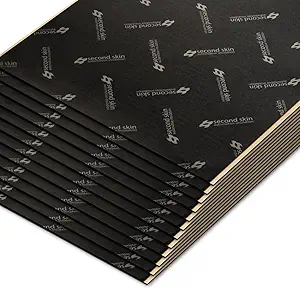 |
| Best Complete Sound Deadening Kit Includes multiple sheets, trims, and accessories for full-vehicle coverage | AutoChat 80 mil (2 mm) Car Sound Deadening Mat — 36 sq ft Butyl Kit |  |
| Best High‑Density/Thick Sound Deadening Mat Thicker, denser material focused on blocking low-frequency road and engine noise | Storystore 394 mil (10 mm) Car Heat and Sound Deadening Insulation Mat |  |
| Best Self‑Adhesive (Peel‑and‑Stick) Sound Deadening Mat Easy peel‑and‑stick backing for faster, tool-light installations | Noico 80 mil Butyl Automotive Sound Deadening Mat — 10 sq ft |  |
| Best Low‑Profile Sound Deadening Mat Thin, flexible mat for tight spaces and minimal fitment interference | KILMAT 50 mil Butyl Automotive Sound Deadening Mat, 50 sq ft |  |
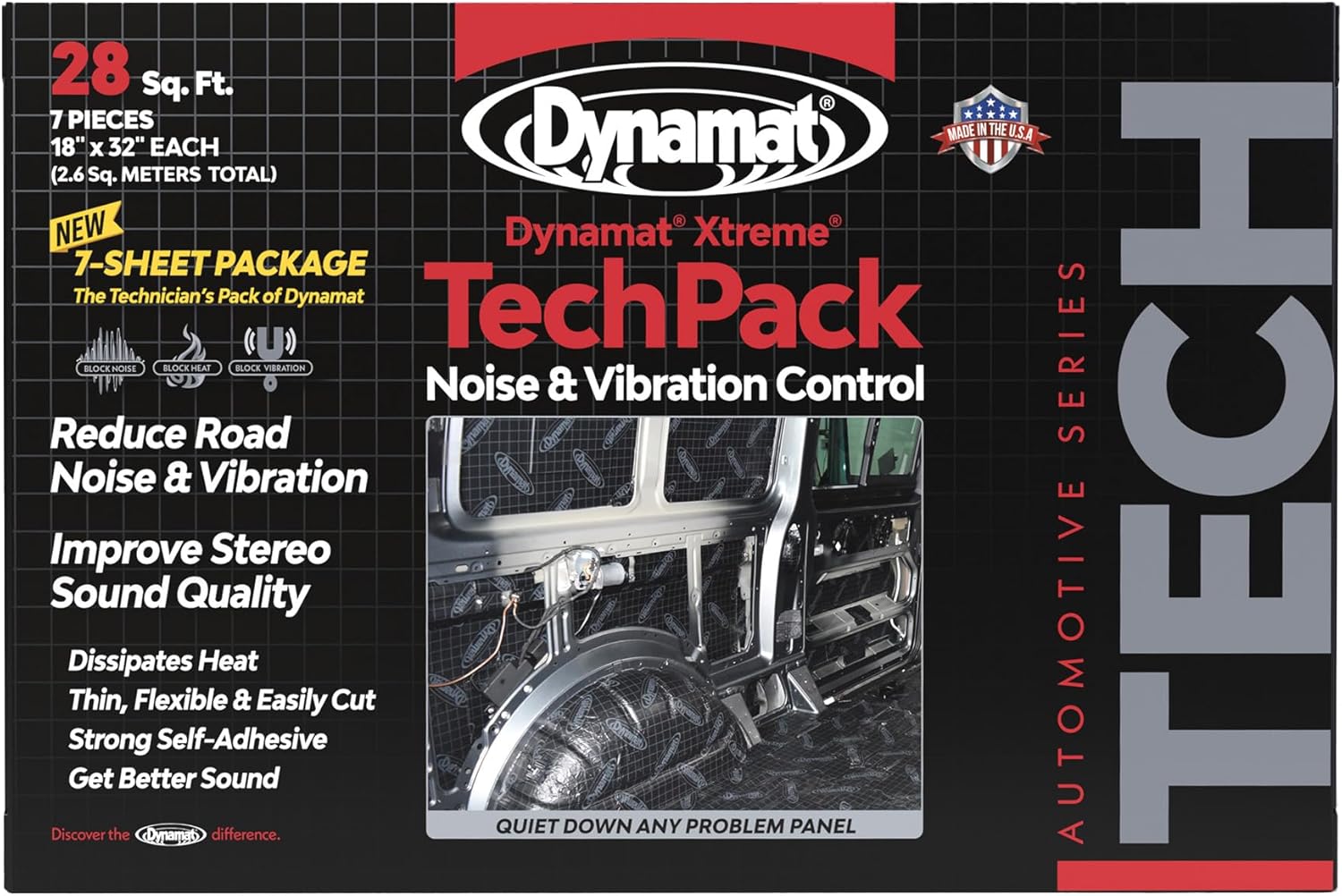
1. Dynamat Xtreme Tech Pack Sound Deadening — 28 sq ft (7 sheets)
Best Overall Sound Deadening Mat
| Coverage | 28 square feet |
|---|---|
| Sheets | 7 sheets |
| Sheet size | 18" x 32" |
| Material Type | Rubber |
| Intended use | Sound Insulation |
Dynamat Xtreme is a familiar peel-and-stick sound deadening mat intended for floors, doors, panels, trunk and hood areas. In practice you cut sheets to fit, peel the backing and press into place; the butyl rubber layer bonds quickly and holds on curved or flat metal. The kit’s 28 square feet supplied as seven 18×32 sheets covers most interior jobs on a compact truck and makes layout and trimming straightforward. The material is thin and flexible, so it conforms into door skins and around wells without bulky buildup, and it provides noticeable reduction in road and panel resonance as well as helping with speaker clarity. Installation is DIY-friendly with common tools and a roller for full contact. Downsides are that coverage may be limited for full-vehicle builds on larger trucks, and the sheets still require trimming and time-consuming placement to get edge-to-edge coverage in tight areas. Adhesion performs best on clean, bare metal so prep work is necessary for long-term hold.
Best for: Ford Maverick owners who want a straightforward, professional-grade mat that balances noise reduction, ease of installation, and reliable adhesion for common interior areas.
Less Ideal for: Buyers planning a full-vehicle or heavy-duty soundproofing overhaul that needs complete coverage without purchasing multiple packs should consider larger bulk options or additional kits.
- Made-in-USA butyl rubber compound for strong, lasting adhesion to metal surfaces
- Seven pre-cut 18×32 sheets simplify layout and reduce waste for typical interior panels
- Thin, flexible material conforms to curved door skins and floor contours
- Effective at reducing road noise, vibration and speaker distortion when applied over panels
- 28 sq ft may not be enough for a complete, full-cab treatment on larger vehicles without buying additional packs
Verdict: The best overall sound deadening mat offers a balanced mix of noise reduction, easy installation, durable adhesion, and material quality that suits most DIY automotive projects.
2. KILMAT 80 mil Butyl Car Sound Deadening Mat, 10 sq ft
Best Budget Sound Deadening Mat

| Material | Butyl with foil |
|---|---|
| Thickness | 80 mil |
| Coverage | 10 sqft |
| Style | 10 SqFt |
This KILMAT 80 mil mat is a self-adhesive butyl-and-foil damping sheet sold in 10 square foot sheets for do-it-yourself installation. Use it to reduce road noise, panel vibration, and improve bass response by applying to door panels, floor pans, or inner body panels on a Ford Maverick; the heavy 80 mil thickness and foil face help block airborne noise and add mass to vibrating surfaces. The material ships in manageable sheets that are easy to trim with scissors or a utility knife, and an embossed foil pattern acts as an installation cue so you can roll the surface smooth for full adhesion. Practical benefits include thicker-than-average coverage for the price and a tacky adhesive that sticks to cleaned metal and polymer surfaces. Expect some effort on complex contours where you may need heat and repeated rolling to avoid air pockets, and a single 10 sq ft kit will only cover limited areas so you may need multiple packs for full-door-and-floor treatment on the Maverick.
Best for: Budget-minded DIYers upgrading a Ford Maverick who want noticeable noise and vibration reduction on doors, floors, or panels without pricey professional kits; they value thickness and ease of installation over full-vehicle coverage in a single pack.
Less Ideal for: Buyers seeking one-kit full-vehicle coverage or a ready-made multi-piece door-and-floor kit should consider larger coverage packages or pro-grade systems instead.
- Thicker 80 mil material provides stronger vibration damping and improved bass control compared with thinner mats
- Self-adhesive butyl backing offers good initial tack for DIY installation
- Embossed foil surface gives a visual cue to confirm proper rolling and adhesion
- Sheets are a practical size for trimming and fitting door skins, floors, and other flat or moderately contoured panels
- 10 sq ft coverage is limited so multiple sheets are required for complete cabin or floor coverage
Verdict: The best budget sound deadening mat gives DIYers decent NVH (noise, vibration, harshness) improvement at a low price while sacrificing minimal thickness or coverage.
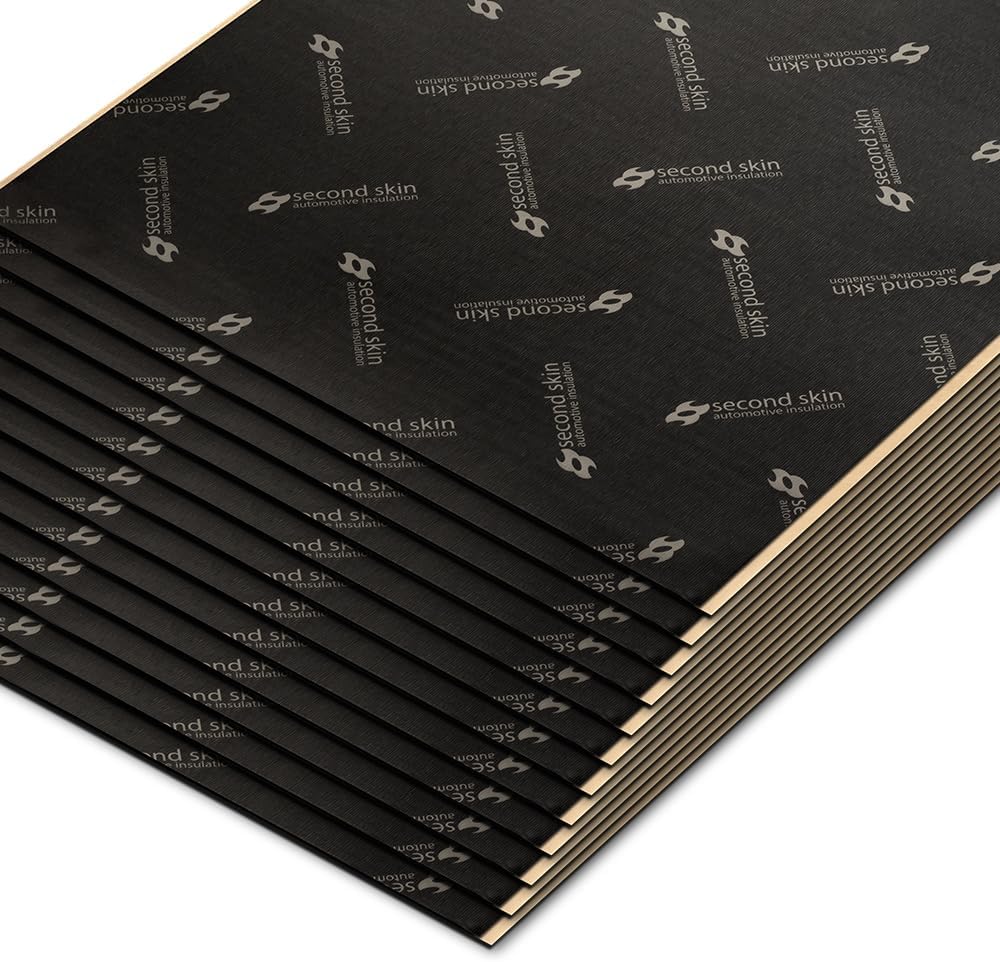
3. Second Skin Damplifier Pro 2mm Butyl Sound Deadening Mat, 20 Sq Ft
Best Premium Sound Deadening Mat
| Thickness | 2mm |
|---|---|
| Coverage | 20 Sq Ft (12 sheets) |
| Heat rating | 450°F |
| Material | Butyl rubber with annealed foil |
Second Skin Damplifier Pro is a premium 2mm butyl rubber sound deadening mat sold in 12 sheets covering 20 square feet and built for heavy-duty automotive damping and heat management. Installed on floor pans, doors, trunk floors, and firewalls of a Ford Maverick, the material reduces panel resonance and metal rattles, improves cabin quietness, and helps audio systems perform with tighter bass. The annealed foil facing and high heat rating (450°F) make it suitable for areas near the engine bay and under-hood panels while remaining RoHS compliant and low-odor. Sheets are sized for small to medium surface coverage and bond well when applied with a roller, though full-vehicle application requires multiple kits for complete coverage. The product is made in the USA and favored by professional installers, so it is a solid long-term choice for drivers who prioritize durability and acoustic performance over lower-cost alternatives.
Best for: Drivers fitting a Ford Maverick who want top-tier acoustic results and long-term durability and are prepared to install professional-grade damping across key panels for noticeably quieter cabin and better audio.
Less Ideal for: People seeking a one-kit solution for full-vehicle coverage on a Maverick or buyers on a tight budget who prioritize lower upfront cost over maximum acoustic performance.
- High heat tolerance up to 450°F allows use near engine bay and hot panels
- Butyl rubber with foil facing provides strong vibration damping and improved bass response
- RoHS compliant and formulated to be low-odor for in-cabin installation
- Made in the USA and offered in professional-sized sheets preferred by installers
- 20 sq ft kit may not cover an entire Ford Maverick interior, requiring additional kits for full coverage
- At 2mm thickness it may be less effective than thicker premium mats for extreme low-frequency isolation
Verdict: The best premium sound deadening mat delivers superior material density, longevity, and acoustic performance for buyers willing to pay more for top-tier results.
4. AutoChat 80 mil (2 mm) Car Sound Deadening Mat — 36 sq ft Butyl Kit
Best Complete Sound Deadening Kit

| Coverage | 36 sqft |
|---|---|
| Thickness | 80 mils |
| Material Type | Butyl |
| Included Components | Gloves, roller |
This AutoChat kit is a full-coverage sound deadening pack intended to reduce road, engine, and panel vibration noise on a Ford Maverick. The 80 mil (2 mm) three-layer construction pairs a butyl rubber core for damping with an aluminum foil face for heat reflection and a strong adhesive backing for permanent mounting. The 36 sq ft total and included gloves plus a roller make it practical for DIY installs across doors, floor pans, trunk area, and the firewall without sourcing extra tools. Sheets are flexible and can be cut to shape to follow Maverick door cavities and body contours; the adhesive firms up after rolling to minimize bubbles and edge lift. Important limitations are adhesion problems on plastics with mold release agents or silicone and reduced stickiness if installed in very cold conditions, so surface prep and ambient temperature matter. For a Maverick owner who wants to tackle a multi-panel sound package at home, this kit covers the basics and delivers noticeable reduction in vibration and interior noise levels.
Best for: A Maverick owner who wants a single kit that supplies enough material and basic tools to soundproof multiple panels themselves and prioritize quieter cabin and reduced vibration.
Less Ideal for: Not a good choice for installers planning to treat specialty plastic parts without prepping or for those needing thicker multilayer insulation for extreme soundproofing goals.
- Full 36 sq ft coverage suitable for multi-panel installs on a compact truck
- 80 mil (2 mm) three-layer construction combines damping and heat reflection
- Strong adhesive backing that firms when rolled to reduce bubbles and edge lift
- Includes gloves and a roller so you can start a DIY install without buying extra accessories
- Adhesion can fail on PE, PP, silicone-coated or greasy surfaces and in low-temperature installations
Verdict: The best complete sound deadening kit contains enough pre-cut or full sheets plus necessary accessories so DIYers can insulate multiple panels without sourcing extra parts.
5. Storystore 394 mil (10 mm) Car Heat and Sound Deadening Insulation Mat
Best High‑Density/Thick Sound Deadening Mat

| Material | Fiberglass |
|---|---|
| Thickness | 394 Mils (10 mm) |
| Coverage | 16.5 sqft |
| Sheet size | 39 x 60 inches |
This Storystore 10 mm (394 mil) sound deadening mat is a heavy, high-density insulation sheet meant to reduce low-frequency vibration and add structural stiffness when applied to vehicle body panels. DIY installers typically cut the 39×60 inch sheet to fit doors, floor pans, trunk lids, roof sections, or firewall areas on a Ford Maverick and adhere it to clean metal to reduce road and drivetrain rumble. The fiberglass core and 16.5 sq ft coverage provide strong thermal isolation as well, helping block engine and exhaust heat. Installation is straightforward for a hands-on owner but the mat is thick and less conformable than thinner foams, so trimming and firm pressure are needed to get a good bond in tight contours. The product suits projects where maximum damping and panel stiffening are the priority, but expect added mass and some difficulty shaping around complex curves compared with softer, thinner alternatives.
Best for: DIYers restoring or upgrading a Ford Maverick who want the maximum low-frequency noise reduction and increased panel rigidity and are comfortable cutting and fitting a heavier material.
Less Ideal for: Drivers prioritizing the lightest possible solution, extremely complex contour coverage, or a plug-and-play pre-cut kit tailored to specific panels should consider thinner or vehicle-specific options instead.
- High 10 mm (394 mil) thickness for improved low-frequency damping and panel stiffening
- Fiberglass construction offers effective heat insulation as well as noise reduction
- Large 39×60 inch sheet gives 16.5 sq ft of coverage for multiple panels or a single large area
- Simple cut-and-stick installation workflow suitable for DIY projects
- Thicker, heavier mat is harder to conform to tight curves and adds vehicle weight
Verdict: The best high-density or thicker sound deadening mat is ideal for DIYers prioritizing maximal low-frequency damping and structural stiffening over minimal weight.
6. Noico 80 mil Butyl Automotive Sound Deadening Mat — 10 sq ft
Best Self‑Adhesive (Peel‑and‑Stick) Sound Deadening Mat

| Size | 10 sqft |
|---|---|
| Thickness | 80 mil (2 mm) |
| Coverage | 10 square foot |
| Material | Butyl with aluminum foil |
This Noico 80 mil self-adhesive sound deadening mat is a peel-and-stick butyl sheet with an aluminum foil face designed to cut noise and vibration in vehicle panels. You apply sheets directly to clean metal surfaces such as floor pans, doors, roof and trunk areas; the heavy 80 mil thickness gives stronger damping than thinner 50 mil sheets, and the foil face helps with heat reflection and a finished look. The material is supplied in small foldable sheets that are easy to trim for tight spots and the adhesive is aggressive enough to stick without additional glue when installed on properly prepared bare metal. A simple roller or hand pressure smooths the embossed foil to show correct installation. Limitations are that a single 10 sq ft kit covers only small areas of a cab, so you may need multiple packs for full-floor or door packages, and working around complex contours can still require cutting and patience despite the sticky backing.
Best for: Buyers who want a quick, mess-free peel-and-stick damping solution for selective noise control areas on a Ford Maverick and prefer an easy DIY install with strong adhesive.
Less Ideal for: People planning a full-vehicle soundproofing overhaul who want to cover large areas in a single purchase or who need a liquid-applied or professional spray-on system.
- Thick 80 mil construction provides stronger vibration damping than common thinner mats.
- Peel-and-stick butyl adhesive adheres firmly to clean metal surfaces for quick installation.
- Aluminum foil face helps with heat reflection and gives a tidy finished surface.
- Sheets come in manageable sizes that are simple to cut and fit into tight areas.
- Embossed indicator on the foil shows when the material has been rolled smooth for proper installation.
- 10 sq ft coverage is small for full-cabin or full-floor projects so multiple packs are needed.
- Adhesion depends on proper surface prep; paint, rust, or contamination reduce bond strength.
Verdict: The best self-adhesive sound deadening mat is designed for quick, mess-free installation with strong adhesive backing that bonds well to common automotive surfaces.
7. KILMAT 50 mil Butyl Automotive Sound Deadening Mat, 50 sq ft
Best Low‑Profile Sound Deadening Mat

| Nominal thickness | 50 mil (1.3 mm) |
|---|---|
| Coverage | 50 square foot |
| Material | Butyl with foil |
| Sheet count | 47 sheets |
The KILMAT 50 mil sound deadening mat is a flexible, self-adhesive butyl/foil sheet designed to reduce road noise, panel vibration, and rattles in tight vehicle spaces. Supplied in pre-cut sheets that total 50 square feet, it is straightforward for DIY installation: peel the backing, stick to cleaned metal, and roll the foil smooth to ensure adhesion. The 1.3 mm thickness strikes a balance between damping effectiveness and low profile, so it adds mass without significantly reducing clearance behind trim panels or in door skins. Notable features include the aggressive adhesive for long-term hold, embossed pattern that shows when the sheet is fully smoothed, and manageable sheet sizes for cutting around brackets and wiring. For a compact truck like the Ford Maverick, this mat is useful for treating doors, floor pans under carpet, and small cavities where thicker products would interfere with trims. Limitations are that at 50 mil it will not match the deep bass control of heavier multi-layer systems and full-coverage installation requires several sheets and time for trimming and rolling.
Best for: Buyers who want a slim, DIY-friendly damping solution for confined areas of their Ford Maverick where keeping clearance matters more than maximum mass loading.
Less Ideal for: Drivers seeking maximum low-frequency bass isolation or a ready-made multi-layer kit for full cabin coverage should consider thicker or layered alternatives.
- Low-profile 1.3 mm thickness reduces noise without significant loss of clearance behind trim
- Strong self-adhesive butyl backing for durable stick to metal panels
- Pre-cut manageable sheets simplify cutting around interior features
- Embossed foil pattern provides a visual cue for correct installation
- Less effective at controlling very low-frequency bass compared with heavier multi-layer damping systems
- Full-coverage noise reduction requires multiple sheets and careful trimming, which adds installation time
Verdict: The best low-profile sound deadening mat provides effective vibration damping in confined areas where added clearance and flexibility matter more than maximum thickness.
Choosing the Right Ford Maverick Sound Deadening Mat: Key Factors to Consider
Material and Mass
The base material and mass per square foot determine how much vibration and airborne noise the mat can damp. Heavier, but flexible, mass-loaded compounds absorb panel resonance better than thin foils, which helps reduce low-frequency door and floor droning.
Different composite constructions combine butyl, asphalt, or closed-cell foam layers. Butyl-based mats are common for damping and staying pliable in fluctuating temperatures. Consider how the material will behave in hot summer heat or cold winters to ensure long-term performance in the Maverick.
Adhesive Strength and Longevity
Strong adhesive is necessary to keep the mat bonded to door skins, floor pans, and other metal surfaces through vibrations and thermal cycles. A low-tack or brittle adhesive can peel at edges and lose effectiveness over time, especially where moisture or road salt is present.
Look for adhesive formulations rated for automotive use that remain pliable and corrosion-safe. Good adhesion reduces the chance of trapped moisture and prevents noise from loose edges or flapping sections.
Thickness and Layering Strategy
Thickness influences both damping and available space under trim or carpet. Thicker mats generally provide better low-frequency damping, but too much bulk can prevent carpets from laying flat or interfere with seats and panels.
A layered approach often works best on the Maverick: a thinner damping layer on door skins to stop panel resonance and a thicker foam-backed layer on floors or the firewall to address airborne noise. Plan layering to balance sound reduction and fitment constraints.
Coverage and Cutability
How a mat covers irregular shapes and how easily it can be cut affects installation time and effectiveness. Mats that come in pre-cut shapes for common panels can speed installation, but universal sheets that cut cleanly let you tailor coverage to the Maverick's doors, floor wells, and bed bulkheads.
The ability to conform into tight corners without lifting ensures good surface contact, maximizing damping. Consider access points, fastener locations, and areas where trimming will be required when estimating material needs.
Thermal Insulation and Moisture Resistance
Some sound deadening mats add thermal insulation which can reduce heat transfer from the bed or floor into the cabin. That can be a benefit in both hot and cold climates, improving occupant comfort and protecting sensitive components.
Moisture-resistant or closed-cell constructions prevent water absorption and help avoid corrosion between the mat and bare metal. For a truck that may see wet use, prioritize products that resist water ingress and allow trapped moisture to escape.
Installation Complexity and Required Tools
Installation difficulty affects whether you can complete the job yourself and how long the process takes. Mats that require heating to conform or adhesive activators add steps and tools, while peel-and-stick mats simplify DIY fitting.
Consider whether you will remove interior trim, seats, or carpets. Some panels are easy to access on the Maverick, while others require careful disassembly. Factor in time for surface prep, roller tools for adhesion, and potential reassembly when planning the project.
Where Road Noise Enters the Ford Maverick
Understanding common noise sources helps you target sound deadening effectively. In the Maverick, road and tire noise commonly transmit through the floor and wheel wells, while door panels can act as vibrating radiators that amplify wind and traffic sound.
Addressing these high-impact areas first yields the biggest subjective improvement. Prioritize floor pans, door skins, and the firewall for initial treatments, then add targeted damping in the bed or behind the headliner if you still notice significant noise.
- Floor pans and transmission tunnel: primary path for road and tire noise
- Door skins: often responsible for midrange rattles and resonance
- Firewall and under-dash: source of engine and HVAC noise transmission
DIY Installation Tips for a Clean Result
Good preparation is crucial: remove loose debris, degrease metal surfaces, and ensure panels are dry before applying any mats. Use a heat gun sparingly when conforming material into tight curves, and apply consistent pressure with a roller to eliminate air pockets and secure adhesion.
Label fasteners and trim pieces as you remove them to simplify reassembly. Work in sections and test fit pieces before peeling adhesive backing. Keep a sharp utility knife and straight edge handy for precise cuts that follow the Maverick's contours.
- Prep surfaces: clean and dry to maximize adhesive bond
- Use a roller for even adhesion and fewer gaps
- Trim carefully around clips and bolt holes to avoid interference
Layering Strategies for Different Areas
Different cabin zones benefit from tailored layering. On door skins, a single layer of thin butyl-based mat usually eliminates panel vibration without adding bulk. For floors, combine a damping layer with a thin foam or carpet-backed mat to reduce both structure-borne and airborne noise.
For the firewall and under-dash areas, use thinner, high-conformity materials to avoid interfering with pedals, wiring, or controls. The goal is to treat the most reverberant surfaces first, then add mass selectively where needed.
- Doors: thin damping layer to stop rattles
- Floors: damping plus foam layer for airborne noise
- Firewall: thin, conformable mat to preserve clearance
Tools and Materials You Will Need
A few basic tools make installation faster and neater. Essential items include a solvent-based cleaner, a hand roller for adhesion, a utility knife, and a heat gun for shaping larger pieces. Gloves and eye protection are advisable when working with adhesives and trimming.
Optional tools such as an electric jigsaw or metal shears are useful if you plan to cut through thicker composite panels or make many custom shapes. A measuring tape and marker help ensure efficient layout and minimal waste.
- Essential: cleaner, roller, utility knife, heat gun
- Helpful: measuring tape, straight edge, shears for heavy materials
- Safety: gloves and eye protection
Maintaining Treated Areas Over Time
Once installed, periodically check accessible treated areas for lifting edges or trapped moisture. If any sections begin to peel, clean the metal underneath and reapply with a compatible adhesive or replace the affected piece to prevent corrosion.
When removing carpets or trim later for other maintenance, take care not to tear or leave adhesive residue. Properly fitted mats should remain stable across seasons, but exposure to sustained moisture or road salt may require more frequent inspections on trucks used in harsh conditions.
- Inspect edges for peeling after seasonal changes
- Dry and re-bond any sections showing trapped moisture
- Protect treated areas from abrasive contact during other repairs
How We Chose the Best Ford Maverick Sound Deadening Mat
We focused on criteria that directly affect how well a sound deadening mat performs on a Ford Maverick and how practical it is for owners to install. Core evaluation points included material composition and mass loading to judge acoustic damping, adhesive strength and flexibility for reliable panel adhesion, and surface coverage options that fit door skins, floor pans, and trunk or bed areas without excessive trimming. We also weighed thermal properties since some mats add insulation that can affect cabin temperature and component longevity.Durability and resistance to moisture or corrosion were important filters because trucks face wet and variable conditions. Ease of installation and whether a product can be used under carpet or behind trim influenced suitability for DIY owners. We excluded products intended solely for engine bays or sound absorption quilts that require professional fitting. Our shortlist emphasizes mats that balance measurable noise reduction, corrosion-safe adhesives, and practical fitment for the Maverick's common noise sources.
Our full evaluation process is outlined in our review methodology.
FAQ
Will adding sound deadening mats void anything on my Maverick?
Adding sound deadening mats does not void typical warranties on the vehicle itself, but modifications that affect factory-installed components could. Keep factory-fastened parts intact and avoid altering safety systems. If concerned, check warranty terms before modifying.
How much time does a full interior treatment usually take?
A full interior installation for the Maverick often takes a weekend for an experienced DIYer. Time varies with how much disassembly you perform and whether you layer materials. Plan extra time for surface prep and cautious trimming.
Can I install mats without removing the seats and carpet?
Partial installations are possible without full removal, especially on accessible door panels and some floor areas. For comprehensive coverage and cleaner results, removing seats and carpet is recommended so you can properly prepare surfaces and apply material flush to metal.
Are there any areas I should avoid treating?
Avoid covering components that require heat dissipation, moving mechanisms, or factory drainage channels. Do not obstruct airbags, wiring harnesses, or ventilation openings. Leave access to fasteners and service points clear for maintenance.
How soon will I notice a difference after installing a mat?
You will typically notice immediate improvements in panel vibration and midrange noise after installation. Broader reductions in road and low-frequency noise are noticeable once multiple zones are treated and materials have fully adhered.
Will sound deadening mats affect cabin temperature?
Some mats provide additional thermal insulation which can slightly reduce heat transfer into the cabin. The effect varies by material and coverage; closed-cell foam layers offer better thermal resistance than simple butyl damping sheets.
Final Verdict
Prioritize treating the Maverick's highest-impact areas first: floors, door skins, and firewall. Balance heavier damping where panel resonance is the issue with thinner, conformable layers in tight spaces to avoid fitment problems and preserve clearance. Consider moisture-resistant options if the truck will see wet conditions and choose adhesive systems that remain pliable across seasonal temperature swings.Your final decision should weigh noise reduction, installation complexity, and any thermal benefits. Focus on consistent surface contact and good edge sealing to maximize long-term performance so you end up with a noticeably quieter and more comfortable Ford Maverick cabin.
Explore More:
- Check out all Ford Maverick parts & accessories
- Explore Interior Accessories
- Browse all Accessories
