

Note: This article contains affiliate links. If you click on these links and make a purchase, I may earn a small commission at no extra cost to you. This helps support my research and content. Read my full affiliate disclosure here.
Driving a GMC Sierra 2500 HD in winter conditions demands reliable traction and confidence when roads are icy or snow-packed. Choosing the right snow chains matters because incorrect fitment or insufficient strength can leave you stranded or damage tires and wheel wells. This guide focuses on the best snow chains for GMC Sierra 2500 HD owners, highlighting options that match the truck's tire sizes, load capacity, and typical winter driving scenarios.Below you will find a short list of seven top-rated snow chains shortlisted for durability, ease of installation, and compatibility with heavy trucks. We also outline the criteria used to evaluate them and practical advice for fitting and using chains safely on your Sierra 2500 HD before the product blocks below.
Top Picks at a Glance
| Best Overall Snow Chains A reliable, all‑around chain that balances traction, fit, and durability | SCC Peerless Auto-Trac Tire Chains for Light Truck/SUV (2-count) |  |
| Best Budget Snow Chains Affordable, functional traction options for occasional winter use or emergencies | SCITOO KN140 Universal Quick-Fit Snow Chains (Set of 2) |  |
| Best Auto-Tightening Snow Chains Chains with built-in automatic tensioners for faster, tool-free installs | YHTAUTO 12mm Auto‑Tightening Snow Chains, Set of 2 |  |
| Best Heavy-Duty Steel Snow Chains Thicker manganese or alloy steel chains built for long life and grit | DEDC KS1619 Heavy Manganese Steel Snow Chains, Set of 2 |  |
| Best Cable / Low-Clearance Snow Chains Thin cable-style chains designed to fit vehicles with limited wheel clearance | SCC Super Z6 SZ143 Cable Tire Chains (set of 2) |  |
| Best Textile Snow Alternatives Fabric tire socks and textile covers for easy install and rim safety | VEADONS Textile Snow Socks — Emergency Tire Traction Covers (4pcs) |  |
| Best Portable Zip‑Tie & Strap Chains Lightweight plastic or zip‑tie style straps for compact emergency traction | Deaelf 12‑Piece Portable Plastic Snow Tire Chains with Anti‑Slip Nodes |  |
1. SCC Peerless Auto-Trac Tire Chains for Light Truck/SUV (2-count)
Best Overall Snow Chains

| Compatible with Vehicle Type | Light Truck, SUV |
|---|---|
| Material Type | Alloy Steel |
| Automotive Fit Type | Vehicle Specific Fit |
| Unit Count | 2.0 Count |
The SCC Peerless Auto‑Trac chains deliver reliable winter traction through a patented self‑tightening ratcheting system that keeps the chains centered and tensioned without stopping to re‑adjust. Designed for light trucks and SUVs, the installation is straightforward: connect the inside cable, attach the outside self‑tighteners and drive to activate the ratchets. Cross members use manganese alloy steel with a low‑mass D‑section profile and shorter links to reduce noise, limit fling, and increase road gripping points. The diamond cross‑chain pattern helps smooth ride quality while improving braking and cornering compared with basic cable styles. Important limitations: these are vehicle‑specific fit chains so you must confirm correct sizing for the GMC Sierra 2500 HD, and driving speed should remain below 30 mph when chains are fitted. For regular winter use they are durable and easy to use, but they do require proper fit verification and care to avoid damage to tires or vehicle components.
Best for: Mechanics and owners who need a dependable, easy‑to‑fit traction solution for most winter driving on a heavy pickup and prioritize straightforward installation and durable construction.
Less Ideal for: Drivers who need continuous high‑speed winter mobility or who prefer a universal chain fit without vehicle‑specific sizing should consider alternatives.
- Self‑tightening ratcheting system keeps chains centered and tensioned without stopping to re‑adjust
- Manganese alloy steel cross members with D‑section reduce chain fling and increase wear life
- Diamond pattern cross chains provide smoother ride and improved traction for braking and cornering
- Quick installation by connecting inside cable and attaching outside self‑tighteners
- Requires correct vehicle‑specific sizing check before purchase
- Speed limited to 30 mph when installed
Verdict: The go-to choice for mechanics who want dependable traction, straightforward installation, and durable construction for most winter driving conditions.
2. SCITOO KN140 Universal Quick-Fit Snow Chains (Set of 2)
Best Budget Snow Chains

| Material | Alloy Steel |
|---|---|
| Vehicle Service Type | Car, Light Truck, Pickup, SUV, Semi Truck |
| Automotive Fit Type | Universal Fit |
| Speed Limit | 40 km/h |
These SCITOO KN140 snow chains are a simple, low-cost option for emergency traction when roads turn icy or snowy. The chains use thick alloy manganese steel with self-tightening ratchets and mechanical tensioners so they auto-center and stay snug without repeated adjustments. Installation is advertised as very fast and can be done without moving the vehicle, which is helpful for roadside fits in bad weather. In real use the chains provide clearly improved grip for short drives and slow-speed maneuvering, and the manufacturer lists a 40 km/h speed limit. Expect the set to be best for occasional winter use rather than daily heavy-duty service; the metal links and basic design are durable for occasional outings but lack the refinement and noise control of premium models. Fitment is universal within listed tire sizes, so confirm compatibility with your truck tire dimensions before buying. These are a pragmatic choice if you want inexpensive emergency traction that is easy to install and effective for short, low-speed trips in snow and ice.
Best for: Drivers who want an affordable, easy-to-fit emergency traction solution for infrequent winter drives and short low-speed runs.
Less Ideal for: Those who need heavy-duty, long-distance or daily winter traction for a large pickup under constant snowy conditions should choose a more robust commercial-grade chain or studded solution.
- Self-tightening ratchets and mechanical tensioners for automatic centering and snug fit
- Thick alloy manganese steel links that provide solid traction on snow and ice
- Very quick, no-move installation suitable for emergency roadside use
- Universal fit design covers a wide range of common tire sizes
- Designed for occasional, low-speed use and may wear faster with frequent heavy-duty use
- Limited comfort and noise control compared with premium chain designs
Verdict: A wallet-friendly set that provides emergency traction on snow and ice for drivers who need basic, infrequent winter protection.
3. YHTAUTO 12mm Auto‑Tightening Snow Chains, Set of 2
Best Auto-Tightening Snow Chains

| Material Type | Alloy Steel |
|---|---|
| Wheel Size | 16 inches |
| Compatible with Vehicle Type | Listed tire sizes (see product) |
| Automotive Fit Type | Universal Fit |
These YHTAUTO chains are a self‑tightening diamond‑mesh set intended to give quick roadside traction when tires lose grip. Designed around a 12mm hardened alloy‑steel link, they wrap fully around the tire and use an automatic tightener that locks and centers the chain after you drape it over the wheel, so you can install them in minutes without tools. The kit includes gloves, spare link segments, an instruction manual and a storage box for easy stowage. In real use they deliver predictable grip on snow, ice and packed surfaces and keep you moving at low speeds in winter emergencies; the manufacturer recommends a maximum of 30 MPH and avoiding dry pavement to limit wear. These chains are optimized for shorter mountain or highway trips rather than daily use on bare roads, and the 12mm thickness is less heavy‑duty than thicker options for prolonged exposure to deep ice or very rough terrain. Expect faster mounting and fewer roadside adjustments but plan routes and speeds accordingly to protect tires and chains.
Best for: Drivers who need a fast, dependable way to add traction during winter emergencies and want minimal fiddling at the roadside while working on a heavy pickup like a Sierra 2500 HD.
Less Ideal for: People who drive continuously in deep snow, on extended icy mountain routes, or who need a heavy‑duty chain for constant winter use should choose a thicker, heavy‑duty option instead.
- Auto‑tightening mechanism centers and locks the chain for tool‑free, quick roadside installation
- Full 360° diamond mesh provides continuous traction on snow, ice, mud and packed surfaces
- 12mm hardened alloy steel construction offers corrosion and wear resistance for seasonal use
- Includes gloves, spare link segments and a storage box for convenient maintenance and storage
- 12mm link thickness is intended for short trips and is not the most heavy‑duty choice for extended, aggressive mountain use
Verdict: For drivers who value quick roadside installation and fewer adjustments, these self‑tightening chains lock and center themselves after mounting.
4. DEDC KS1619 Heavy Manganese Steel Snow Chains, Set of 2
Best Heavy-Duty Steel Snow Chains

| Material | Manganese Steel Alloy |
|---|---|
| Chain Diameter | 4.5 mm |
| Wheel Size | 18 Inches |
| Fit Type | Universal Fit |
The DEDC KS1619 snow chains are a heavy‑duty set built from 4.5 mm manganese steel to give aggressive bite on icy, snowy, and off‑road winter surfaces. They install without moving the vehicle and the manufacturer emphasizes a quick one‑minute fit process and tangle‑resistant layout, which makes roadside installation simpler when conditions are poor. In practice these chains suit repeated mountain or worksite use where durability matters: the thick links resist breakage and rinse‑cleaning after use keeps maintenance straightforward. The chains cover a long list of large tire sizes commonly found on heavy pickups, and the universal fit approach plus solid connection points help keep them seated under load. The main trade‑offs are bulk and weight when storing and handling the set, and the aggressive pattern will increase road noise and vibration when driven on cleared pavement, so they are best used for stretches of snow or ice rather than daily highway driving.
Best for: Drivers who prioritize maximum durability and aggressive grip for repeated mountain or off‑road winter use on heavy pickup tires and want chains built to withstand hard service.
Less Ideal for: Drivers who need a lightweight or low‑noise temporary solution for occasional urban snow; those looking for chains to drive long distances on dry pavement should consider alternatives.
- 4.5 mm manganese steel links for strong, wear‑resistant traction
- Designed for quick installation without moving the vehicle, reducing roadside hassle
- Tangle‑resistant chain layout speeds fitting and removal
- Covers a wide range of large pickup tire sizes common on heavy trucks
- Simple rinse and air‑dry cleaning after use
- Bulky and heavy to store and handle compared with lighter cable options
- Significant road noise and vibration if left on cleared pavement
Verdict: Choose these reinforced steel chains when you need maximum durability and aggressive grip for repeated mountain or off‑road winter use.
5. SCC Super Z6 SZ143 Cable Tire Chains (set of 2)
Best Cable / Low-Clearance Snow Chains
| Compatible with Vehicle Type | SUV |
|---|---|
| Wheel Size | 295 Millimeters |
| Automotive Fit Type | Vehicle Specific Fit |
| Unit Count | 2.0 Count |
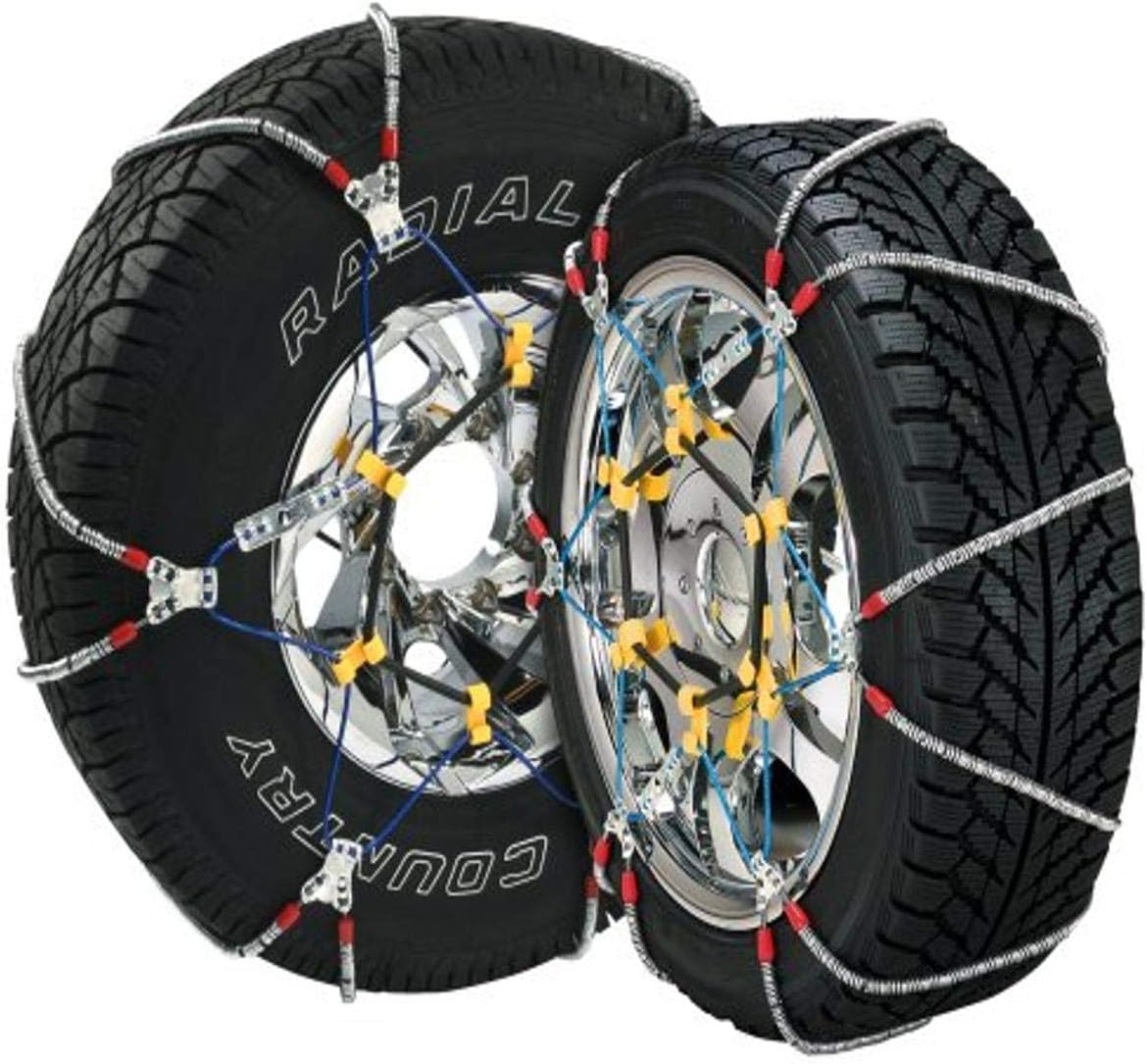
The SCC Super Z6 SZ143 is a cable-style winter traction system built around a diagonal "Z" crossmember pattern that increases bite while keeping clearance requirements minimal. It installs quickly on the outside of the tire using a split cable and two fastening positions so you can fit them without moving the vehicle, and the package includes rubber tensioners, gloves, and a storage bag for easy reuse. The coils are alloy steel for improved durability and the design minimizes contact with alloy wheels and vehicle components, which helps preserve rims on heavy trucks. Because the Super Z6 needs only about 6.33 millimeters of sidewall clearance, it is suitable where traditional chains would rub. It is also made to work with ABS, traction control, and AWD systems so it should not upset electronic stability systems when fitted correctly. Limitations are that cable chains do not match the absolute traction of heavy ladder-style chains on deep ice and snow and you must confirm adequate clearance on the Sierra 2500 HD before use and follow the 30 mph speed recommendation when installed.
Best for: Drivers who need a low‑clearance traction solution for a heavy pickup with minimal wheel well space and who prioritize quick install and compatibility with vehicle stability systems.
Less Ideal for: If you regularly encounter deep ice, heavy packed snow, or need maximum bite for off-road snow duty, heavier link-style chains are a better choice.
- Very low operating clearance requirement (about 6.33 mm) for tight wheel wells
- Fast, outside installation with split cable and two fastening positions
- Alloy steel traction coils for improved durability compared with basic cables
- Includes rubber tighteners, gloves, and a reusable storage bag
- Designed for compatibility with ABS, traction control, and AWD systems
- Not as aggressive on deep packed ice or heavy snow as heavier ladder-style chains
Verdict: Cable chains are the right pick if you need a traction device that meets Class S/low‑clearance fitment and won't interfere with brake or suspension components.
6. VEADONS Textile Snow Socks — Emergency Tire Traction Covers (4pcs)
Best Textile Snow Alternatives

| Fitment note | Designed for drive wheels; select correct size for tire |
|---|---|
| Intended use | Emergency traction on snow and ice only |
| Maximum recommended speed | About 30 MPH / 50 km/h |
| Units in box | 2 or 4 pieces |
These VEADONS textile snow socks are a lightweight, fabric traction aid designed to get a GMC Sierra 2500/3500 HD moving again in snowy or icy conditions. They stretch over the drive wheels and are intended for emergency, short-distance use at low speeds (manufacturer recommends up to about 30 mph). Installation is simple: fit the sock over the top half of the tire, move the truck a short distance, then pull the rest over the tire; the elastic fit and 3D-woven high-tenacity textile hold the cover in place while driving. Compared with metal chains, these are quieter, gentler on rims and pavement, and store compactly in the truck. The main limitation is wear if used on cleared, gritted, or dry pavement and the restriction to snow and ice only, so they are not a substitute for winter tires or full chains when prolonged traction is required. For emergency stops or short stretches of snowy road, they are a fast, rim-friendly option for your Sierra's drive wheels.
Best for: Drivers who want a lightweight, easy-to-fit emergency traction aid for short trips on snowy or icy roads and prioritize fast installation and rim-friendly coverage.
Less Ideal for: Drivers who need sustained high-traction performance for long mountain passes, heavy-duty towing in winter, or who drive frequently on mixed or cleared roads should choose heavy-duty chains or dedicated winter tires instead.
- Quick, tool-free installation that can be fitted in minutes on the drive wheels
- Textile construction reduces noise and vibration compared with metal chains
- Gentle on rims and road surfaces so less risk of curb or pavement damage
- Compact and lightweight for easy storage in a truck
- Intended only for short, low-speed use on snow and ice and will wear rapidly on clear or grit-covered roads
Verdict: Snow socks are ideal for drivers seeking a lightweight, rim‑friendly traction option that’s simple to put on for short emergency use on snow and slush.
7. Deaelf 12‑Piece Portable Plastic Snow Tire Chains with Anti‑Slip Nodes
Best Portable Zip‑Tie & Strap Chains

| Material Type | PE |
|---|---|
| Included Components | 12 Car Snow Tire Chains, 1 Pair Gloves |
| Compatible with Vehicle Type | Car |
| Automotive Fit Type | Universal Fit |
These lightweight plastic traction straps are a grab‑and‑go emergency solution for gaining temporary traction when a wheel of your GMC Sierra 2500 HD is slipping in snow or mud. Each strap has raised anti‑slip nodes that bite into soft snow and ice and a simple zip‑tie style locking hole that lets you fasten the strap to the tire without removing the wheel or using a jack. They are made from PE for cold resistance and are reusable after cleaning and drying. The kit includes a full set of straps and a pair of gloves for easier installation. Expect noticeably better grip at low speeds for short distances, such as pulling out of a snowbank or reaching a cleared road, but these are not a long‑term replacement for steel chains or dedicated traction devices and should be used at low speed only. Installation is straightforward for one person, but proper tensioning and checking before driving are important to avoid shifting or damage to the tire or wheel well.
Best for: Drivers who want a compact, inexpensive emergency traction solution to keep in their Sierra 2500 HD for quick recoveries from snow or mud without the hassle of heavy chains.
Less Ideal for: Those who routinely drive through deep snow, long winter highway stretches, or require maximum traction for heavy towing should choose heavy‑duty steel chains or dedicated winter tires instead.
- Very compact and lightweight for easy storage in a truck toolbox or underseat compartment
- No wheel removal or jack required so you can install quickly roadside
- Raised anti‑slip nodes provide measurable additional bite on packed snow and ice
- Made from cold‑resistant PE so straps remain flexible in low temperatures
- Comes as a 12‑piece kit plus gloves to equip multiple wheels or aid installation
- Plastic straps are intended for temporary, low‑speed use and will not match durability or traction of steel chains
Verdict: These compact, inexpensive traction straps are perfect for keeping in the truck as an emergency solution when you need quick, temporary grip in snow or mud.
Choosing the Right GMC Sierra 2500 HD Snow Chains: Key Factors to Consider
Correct Fitment and Tire Size Match
Getting the right fit starts with matching chains to the exact tire size on your Sierra 2500 HD. Tires for this truck can vary by trim, axle, and aftermarket changes, so confirm the numeric tire code on your sidewall before buying. A mismatch can cause rubbing against suspension components, damage to wheel wells, or rapid chain failure.
Fitment also includes clearance for brakes, ABS sensors, and wheel offset. Some chains are designed with low-profile links specifically to reduce the risk of contact on vehicles with tight wheel well tolerances. Choosing chains with clear sizing charts and adjustable tension systems reduces the chance of improper installation that compromises safety and performance.
Load Capacity and Build Strength
A Sierra 2500 HD carries and tows heavier loads than a typical passenger vehicle, which places greater stress on snow chains. Look for chains with thicker steel links, high-grade alloy construction, and heat-treated cross members to withstand the truck's weight. Reinforced connectors and robust clasping mechanisms prevent link separation under strain.
Durability also matters for repeated use. Chains with replaceable wear parts, solid cross-links, or hardened rivets typically last longer through multiple winters and reduce the risk of catastrophic failure while driving. Prioritize designs that specify compatibility with heavy-duty trucks rather than light-duty passenger applications.
Traction Pattern and Snow Conditions
Different link patterns perform better in specific winter conditions. Diamond and square patterns provide more continuous contact and improved lateral grip, which helps with steering control on packed snow. Ladder-style chains offer strong traction in deep, soft snow but can be rougher on hard-packed ice and pavement.
Consider the typical roads you drive. If you encounter mixed conditions—ice patches, plowed packed roads, and occasional deep snow—a hybrid pattern or chains with added ice-sawing cross links can give more balanced performance. Choose a pattern that matches the prevailing winter hazards in your area.
Ease of Installation and Tensioning
You may need to fit chains in cold, windy, or wet conditions, possibly alone. Systems engineered for one-person installation, with quick-connect tensioners or built-in cams, reduce the time spent by the roadside and improve safety. Clear visual cues and simple steps matter more when you are wearing gloves in subfreezing temperatures.
Also consider how the chain maintains tension while driving. Self-tensioning designs reduce the need for mid-trip readjustments. If a system requires frequent retightening, it can be impractical on long routes or when stopping is unsafe. Invest in chains with straightforward adjustment mechanisms and durable tensioners.
Road Impact, Noise, and Legal Considerations
Chains inevitably change ride quality. Heavier link designs transmit more vibration and noise, especially at the upper end of legally permitted speeds. If you travel long stretches of plowed highway, factor in comfort and potential wear to suspension components. Some traction devices claim quieter operation through optimized link geometry or rubber traction pads.
Check local and state regulations for allowable chain types and speed limits when fitted. Certain highways set restrictions on chain usage or require specific clearances. Selecting chains that meet regulatory guidance for highway use helps avoid fines and ensures lawful operation on routes you commonly use.
Maintenance, Storage, and Longevity
Chains need maintenance to remain reliable. After use, rinse to remove salt and grit, dry thoroughly, and inspect for bent links or worn connectors. Look for designs with replaceable parts or widely available repair kits to extend service life. Proper storage in a carry bag with quick-reference install guides saves time and prevents tangling.
Longevity also depends on wear items such as tensioners and rubber components. Opt for chains with durable tensioning hardware and corrosion-resistant finishes. For a heavy truck, the ability to service or replace high-wear components economically will improve long-term value.
How to Choose Chains for Your Sierra 2500 HD Tires
Start by reading your tire sidewall for the exact size code and consult any manufacturer recommendations for traction devices. Consider whether you drive primarily on plowed highways, rural snow-covered roads, or steep grades, as this will influence the pattern and strength you need. For a heavy pickup, prioritize chains rated for truck use and with explicit fitment charts that list compatible tire sizes for Sierra 2500 HD variants.
Also assess wheel clearance and whether your truck has aftermarket wheels or spacers. If clearance is tight, low-profile or cable-style systems designed for limited space can be necessary, but ensure they are rated for the truck's load. Finally, think about whether you need a system that allows quick on-road removal or a design intended for temporary use only.
- Confirm tire size and wheel clearance before purchasing
- Match pattern to typical road conditions
- Prefer heavy-duty ratings for towing and payloads
Installation Tips for Faster, Safer Fitting
Practice installation in dry conditions to familiarize yourself with the steps and components. Lay out all parts, check that clasps and tensioners move freely, and position the truck on a flat, stable surface with the parking brake engaged. Using gloves and a mat can make the process more comfortable and cleaner.
For rear-wheel drive or four-wheel-drive configurations, fit chains to the drive wheels as recommended by the vehicle manual. After the initial mount, drive slowly for a short distance then re-tension according to the chain instructions. Carry a basic repair kit and a small tool for quick on-road fixes if a link or tensioner loosens.
- Practice at home before heading into winter conditions
- Tighten, test, and re-tension after a short drive
- Pack basic repair tools and a compact carry bag
When to Use Chains Vs Other Winter Traction Devices
Chains remain the most robust solution for heavy trucks on deep snow and steep grades because of their mechanical bite and durability. Alternative devices such as textile traction socks or rubber traction aids may be quieter and easier to install but often lack the strength and longevity needed for a loaded Sierra 2500 HD or sustained mountain passes.
Consider chains when legal requirements or extreme conditions demand high traction. For short, light-duty trips on plowed roads, supplemental devices may suffice, but they are generally less suitable for frequent heavy-duty use. Balance convenience against the level of traction required for safe operation.
- Chains for heavy-duty use on steep or unplowed routes
- Textile devices may work for light, occasional needs
- Choose based on expected severity of winter conditions
Care and Storage to Extend Service Life
After using chains, clean off salt and road debris with water, dry them to prevent corrosion, and lightly lubricate moving parts if recommended. Inspect for cracked links, worn rivets, or damaged tensioners and replace worn components before the next season. A thorough inspection each fall can identify issues early and avoid failure when you need chains most.
Store chains in a dry bag or container away from moisture and direct sunlight. Keep an installation guide or quick-reference chart with the kit so you or another driver can install them quickly when weather turns. Proper care reduces noise, improves fit over time, and prolongs useful life.
- Rinse and dry chains after every use
- Inspect wear points and replace parts as needed
- Store in a labeled bag with sizing info
Common Fitment Problems and How to Avoid Them
Rubbing against the inner wheel well or suspension components is often due to incorrect sizing or worn tensioners. Confirm the tire size again and follow the chain maker's adjustment recommendations. If rubbing persists, inspect for bent studs or wheel spacers that alter clearance and address those mechanical issues before attempting another fit.
Difficulty tensioning usually stems from frozen or stiff hardware. Keep tensioners and clasps moving with occasional lubrication and practice the sequence of steps in warmer conditions. If a design consistently requires complex mid-trip adjustments, consider switching to a self-tensioning design for greater reliability.
- Double-check tire size and chain compatibility
- Maintain tensioners to avoid mid-trip loosening
- Address mechanical clearance issues on the truck first
How We Chose the Best GMC Sierra 2500 HD Snow Chains
We evaluated candidates using criteria that matter specifically for a heavy-duty pickup like the GMC Sierra 2500 HD. Fitment accuracy was a primary filter; we confirmed each chain design fits common Sierra 2500 HD tire sizes and leaves required clearance for wheel wells and brake components. Load and durability checks focused on link thickness, material grade, and reinforcement patterns that resist breakage under the truck's higher curb weight and towing loads. Ease of installation was assessed by the number and complexity of adjustment steps, whether the design supports one-person fitting, and how intuitive tensioning systems are under cold conditions.Performance in ice and packed snow was judged by pattern type (ladder, diamond, square) and presence of cross-links or traction-enhancing inserts. Driver comfort factors included noise and vibration characteristics reported for highway speeds when chains are permitted. We also considered regulatory compliance for highway use in snow-prone regions. Exclusions: light passenger-car-only designs, products without clear sizing guidance for heavy trucks, and options lacking documented durability or manufacturer fitment tables. The resulting shortlist prioritizes safety, robust construction, and realistic installability for Sierra 2500 HD owners.
Our full evaluation process is outlined in our review methodology.
FAQ
Which wheels should I fit chains to on my Sierra 2500 HD?
Fit chains to the drive wheels as specified in your vehicle manual. For rear-wheel-drive Sierra 2500 HD models, that means the rear wheels. If you have a four-wheel-drive configuration, follow manufacturer guidance for traction device placement under varying drive modes.
Can I drive at highway speeds with chains on?
Chains are typically limited to reduced speeds by law and safety recommendations. Driving too fast with chains increases wear, vibration, and the risk of chain failure. Check local regulations and the chain manufacturer's speed guidance before using them on longer stretches of highway.
How tight should snow chains be fitted?
Chains should be snug against the tire with no large slack loops. After the initial short drive, stop and re-tension them to eliminate slack. Well-tensioned chains minimize impact on handling and reduce the chance of contact with vehicle components.
Will chains damage my tires or truck?
Properly sized and installed chains should not damage tires or the vehicle. Damage typically results from incorrect sizing, loose installation, or using chains not rated for heavy trucks. Regular inspection and correct tensioning reduce the risk of damage.
Are cable-style chains acceptable for a Sierra 2500 HD?
Cable-style systems may be suitable for tight-clearance situations, but they generally offer less durability and traction than heavy-duty link chains. For frequent or heavy-duty use on a Sierra 2500 HD, prioritize chains rated for truck loads and steep grade performance.
How often should I replace my snow chains?
Replacement depends on frequency of use, road surfaces, and maintenance. Inspect chains annually and replace when links are worn, rivets are loose, or tensioners fail. Well-maintained chains used sparingly can last several seasons, while heavy use shortens their service life.
Final Verdict
For a GMC Sierra 2500 HD, prioritize heavy-duty snow chains that match your exact tire size, provide robust link construction, and offer installation systems you can manage in cold conditions. Balance traction pattern against the roads you drive most often: choose aggressive patterns for deep snow and reinforced designs for steep, icy grades.Ultimately, the best choice weighs fitment accuracy, durability under load, and ease of installation. Focus on chains that explicitly support heavy trucks and have clear sizing guidance to ensure safe, reliable winter driving for your Sierra 2500 HD.
