

Note: This article contains affiliate links. If you click on these links and make a purchase, I may earn a small commission at no extra cost to you. This helps support my research and content. Read my full affiliate disclosure here.
If you drive a 2018-present Jeep Wrangler you know cold weather and winter trails can demand more traction than street tires provide. The right snow chains keep your Wrangler moving on packed snow and hard ice without risking damage to wheels or bodywork. This guide presents the seven top snow chains shortlisted for fit, durability, and ease of installation specifically for 2018-present Jeep Wrangler owners, covering common Wrangler chassis generations such as JL and JLU where relevant. We evaluated each option against real-world concerns for Wranglers: whether the chains clear fenders on lifted rigs, how they handle off-road and highway use, and how easy they are to fit when temperatures are low. Read on for practical guidance on choosing, fitting, and maintaining snow chains for your Wrangler, plus answers to common installation questions.
Looking for other parts? See all Jeep Wrangler parts & accessories.
Top Picks at a Glance
| Best Overall Snow Chains A well-rounded, reliable set that balances fit, durability, and install time | SCC Peerless Auto-Trac Tire Traction Chains (2 pack) |  |
| Best Budget Snow Chains Affordable, no-frills traction that covers emergency winter driving needs | GandRmim Reusable Nylon Tire Zip Ties for Snow and Ice, 10-Pack |  |
| Best Auto-Tightening Snow Chains Chains with built-in auto or cam tighteners for faster, secure installs | NITEVIZ Auto‑Tightening Snow Chains, Set of 2 (HKN140) |  |
| Best Heavy-Duty Steel Snow Chains Thicker manganese/high‑carbon steel links for maximum durability and grip | Coco Bird Auto-Fixing Heavy-Duty Snow Chains (Set of 2) |  |
| Best Plastic / Zip‑Tie Emergency Chains Lightweight polymer or zip‑tie style traction pieces for quick emergency use | Generic Nylon Zip‑Tie Snow Tire Chains (20 pcs) |  |
| Best Cable‑Style Low‑Clearance Chains Cable or thin‑link designs that fit vehicles with limited wheel well clearance | SCC Super Z6 SZ143 Cable Tire Chains (set of 2) |  |
| Best Snow Socks Alternative Textile sock traction devices that install like covers for temporary grip | K&K Auto Pro Series Snow Socks – Ultimate Grip (3XL, 2pcs) |  |
1. SCC Peerless Auto-Trac Tire Traction Chains (2 pack)
Best Overall Snow Chains

| Compatible with Vehicle Type | Light Truck, SUV |
|---|---|
| Material Type | Alloy Steel |
| Automotive Fit Type | Vehicle Specific Fit |
| Unit Count | 2.0 Count |
These Peerless Auto-Trac chains use a patented self-tightening ratchet system that automatically centers and tensions the chain as you drive, so installation requires less crawling under the vehicle than traditional chains. They are built with alloy steel cross members in a diamond pattern that gives a smoother ride and steady grip for starting, braking, and cornering on packed snow and light ice. Typical use is seasonal backup for winter trips or access to unplowed driveways and forest roads; users praise quick fitment once size is confirmed and the faster on/off compared with heavy-link radial chains. Practical benefits include reduced post-install adjustments and improved ride quality versus chunky chains. Important limitations are fit sensitivity and occasional quality control problems on tensioners or connectors, so check sizing carefully and inspect the set before you need it; do not exceed 30 mph while chained and expect some wear if driven on bare pavement.
Best for: A DIY-oriented Jeep Wrangler owner who wants a dependable, driveable snow chain that installs quickly and stays centered for winter access and occasional off-road snow usage.
Less Ideal for: Drivers who need aggressive, heavy-duty chains for constant commercial plowing or long highway runs on mixed bare pavement should consider heavier-duty alternatives.
- Self-tightening ratchet system centers and tensions automatically during initial driving
- Diamond-pattern alloy steel cross members for smoother ride and consistent traction
- Relatively fast installation compared with traditional heavy-link chains
- Designed for light trucks and SUVs with vehicle-specific fit guidance
- Fitment can be inconsistent between sizes so mis-sized sets may be too tight or too loose
Verdict: The go-to choice for most DIY mechanics who want dependable traction, straightforward installation, and durable construction in one kit.
2. GandRmim Reusable Nylon Tire Zip Ties for Snow and Ice, 10-Pack
Best Budget Snow Chains

| Material Type | Nylon |
|---|---|
| Unit Count | 10.0 Count |
| Compatible with Vehicle Type | Car, SUV, Pickup Truck |
| Automotive Fit Type | Universal Fit |
These nylon tire zip ties are a low-cost, lightweight alternative to metal snow chains intended for short-term traction or emergency use. You loop the serrated strips across the tire tread and tighten them by hand to create extra grip on snow, ice, or mud; the set is compact and easy to store in a trunk. Practical benefits include tool-free installation, universal fitment for most tire profiles, and reusability for occasional trips when a full chain would be overkill. The layered serrated pattern helps bite into slick surfaces better than smooth straps. Limitations are clear: the thin plastic construction struggles under continuous driving and several buyers report breakage or detachment after a short distance, so these are best for low-speed maneuvers to get unstuck rather than extended highway use. Expect an inexpensive, simple emergency solution rather than a durable replacement for heavy-duty chains.
Best for: Buyers who need the cheapest possible way to gain temporary traction in an emergency or for occasional low-speed use and who prioritize cost and compact storage over durability.
Less Ideal for: Drivers who regularly encounter deep snow, steep climbs, or high-speed winter travel should choose heavier-duty metal chains or higher-grade textile traction devices instead.
- Very affordable and sold as a 10-pack for multiple uses or spare pieces
- Tool-free, quick installation that is easy to store in a vehicle
- Lightweight nylon design resists corrosion and is reusable for occasional use
- Serrated pattern improves short-term grip on snow and ice compared with smooth straps
- Thin plastic can break or shred quickly under load, making them unreliable for prolonged driving
- Several reports of ties detaching shortly after installation, limiting usefulness to very low speeds
Verdict: For buyers prioritizing price over premium materials—gives basic anti‑slip performance for occasional winter use or emergency backup.
3. NITEVIZ Auto‑Tightening Snow Chains, Set of 2 (HKN140)
Best Auto-Tightening Snow Chains

| Material Type | Metal |
|---|---|
| Included Components | Fixator |
| Unit Count | 2.0 Count |
| Automotive Fit Type | Vehicle Specific Fit |
These NITEVIZ auto‑tightening chains are built as a fast, one‑person emergency traction solution. The system uses a quick‑install buckle and a self‑tightening ratchet so you can mount the chain, drive a short distance, and have it cinch itself without repeated stops to retension. Constructed from manganese steel with a diamond pattern and center chain, they deliver solid bite on packed snow and light ice while muting some of the typical thump felt with ladder‑style chains. The kit comes as a pair with a hard storage case and is sized for specific tire dimensions, so confirm fit for your Wrangler tires before buying. These are best used for short stretches, steep driveways, or getting unstuck; prolonged driving on dry pavement will accelerate wear and can be noisy. Some buyers report the instructions are not the clearest, so a quick practice install in a dry setting is advisable to speed roadside use in cold weather.
Best for: A mechanic or owner who prioritizes a fast, single‑technician install and wants a self‑tensioning chain set for quick deployment during winter roadside service or shop calls.
Less Ideal for: Drivers seeking a long‑term winter traction solution for daily highway use or those unwilling to practice installation ahead of an emergency should consider dedicated winter tires or heavier commercial chain systems instead.
- True one‑person, quick‑install buckle that significantly reduces setup time
- Self‑tightening ratchet keeps chains snug without frequent roadside readjusting
- Diamond pattern with center chain reduces thumping and improves ride smoothness
- Durable manganese steel construction suitable for repeated emergency use
- Compact hard storage case keeps the kit organized in the trunk
- Intended for temporary or emergency use rather than continuous driving on cleared roads
Verdict: Designed for mechanics who want a faster one‑person install and self‑tensioning fit so you can mount and go without repeated readjusting.
4. Coco Bird Auto-Fixing Heavy-Duty Snow Chains (Set of 2)
Best Heavy-Duty Steel Snow Chains

| Material Type | Carbon Steel |
|---|---|
| Unit Count | 2.0 Count |
| Compatible with Vehicle Type | Light Truck, Pickup Truck |
| Automotive Fit Type | Universal Fit |
These Coco Bird chains are a heavy-duty, self-tightening tire chain kit intended to give reliable traction in severe winter conditions. The diamond-pattern cross chains and robust titanium alloy steel construction provide multiple contact points with the road and resist corrosion from salt and moisture. Installation is aimed to be quick: lay the chain over the tire, attach the rear cable and front fastener, then drive forward a few feet while the built-in automatic tensioner pulls the assembly snug. That automatic tensioning reduces the need to stop and readjust during a run, which is helpful on steep or remote routes. The kit includes gloves, a hard clamshell case, and instructions for practice installs. Practical limits: these are designed for light trucks and pickups and require slower speeds when fitted, and they will be noisy on pavement and should be removed once road conditions improve. Buyers should measure tire size to confirm fitment and allow time to practice installation before using them in freezing weather.
Best for: Drivers who prioritize rugged, metal chains built to withstand heavy use and give aggressive traction in deep snow or off-road winter conditions, and who are willing to practice installation before heading into remote or steep terrain.
Less Ideal for: Drivers who need chains specifically confirmed for 2018-present Jeep Wrangler fitment should consult Wrangler-specific sizing and may prefer products with explicit Wrangler fit listings or models made for tighter wheel clearances.
- Very durable titanium alloy steel construction resists corrosion and wear.
- Automatic self-tensioning design simplifies installation and keeps chains snug while driving.
- Diamond-pattern cross chains give multidirectional bite for better acceleration, braking, and turning on snow.
- Includes carrying case, anti-slip gloves, and clear instructions for practice installs.
- Made for light trucks and pickups only, so fitment must be checked against tire measurements.
- Noticeable noise and vibration on pavement; not intended for prolonged use on bare roads.
Verdict: Picked for drivers who need rugged, long-lasting metal chains that resist breakage and deliver stronger bite in deep snow or off‑road conditions.
5. Generic Nylon Zip‑Tie Snow Tire Chains (20 pcs)
Best Plastic / Zip‑Tie Emergency Chains

| Material Type | Nylon |
|---|---|
| Wheel Size | 22 Inches |
| Compatible with Vehicle Type | Car, SUV, Trucks |
| Automotive Fit Type | Universal Fit |
These nylon zip‑tie snow chains are a lightweight emergency traction option that installs quickly around a tire. Each kit supplies 20 straps (enough for two wheels) made from fire‑rated Nylon66 with molded teeth and textured pads to bite into snow and ice. Installation is straightforward: wrap the strap, thread the tail through the locking head, and pull tight so the anti‑slip features contact the tread. In practice they work best for short, low‑speed situations where you need to get a vehicle unstuck or move to a safer location. They are not a permanent substitute for steel chains and several buyers reported breakage after limited use, so expect single‑use or short‑duration performance rather than long highway drives. The universal fitment up to 22‑inch rims and compact packaging make them easy to store in a Jeep’s cargo area, but reliability varies by surface and tire sidewall material. Use them as an emergency backup, carry spares, and remove them as soon as you reach clear pavement to avoid damage.
Best for: Drivers who prioritize a lightweight, compact emergency traction solution to get unstuck quickly and prefer a rim‑friendly alternative to metal chains for temporary use.
Less Ideal for: Not suitable for drivers who need durable, long‑distance winter traction or who frequently travel on steep, icy roads; choose a robust steel chain or dedicated winter tire instead.
- Very quick and simple install using the zip‑tie locking head
- Lightweight and compact for easy storage in a Jeep's cargo area
- Textured tooth and pad patterns increase grip on packed snow and ice
- Made from Nylon66 with flame‑resistant rating for durability in cold conditions
- Designed for short, low‑speed emergency use and may break under prolonged driving
- Reported inconsistent durability on some tire sidewalls and quick failure in multiple user reviews
Verdict: Ideal as a compact, rim‑friendly emergency option when you need temporary traction without heavy metal chains or complex installation.
6. SCC Super Z6 SZ143 Cable Tire Chains (set of 2)
Best Cable‑Style Low‑Clearance Chains
| Compatible with Vehicle Type | SUV |
|---|---|
| Wheel Size | 295 Millimeters |
| Automotive Fit Type | Vehicle Specific Fit |
| Unit Count | 2.0 Count |
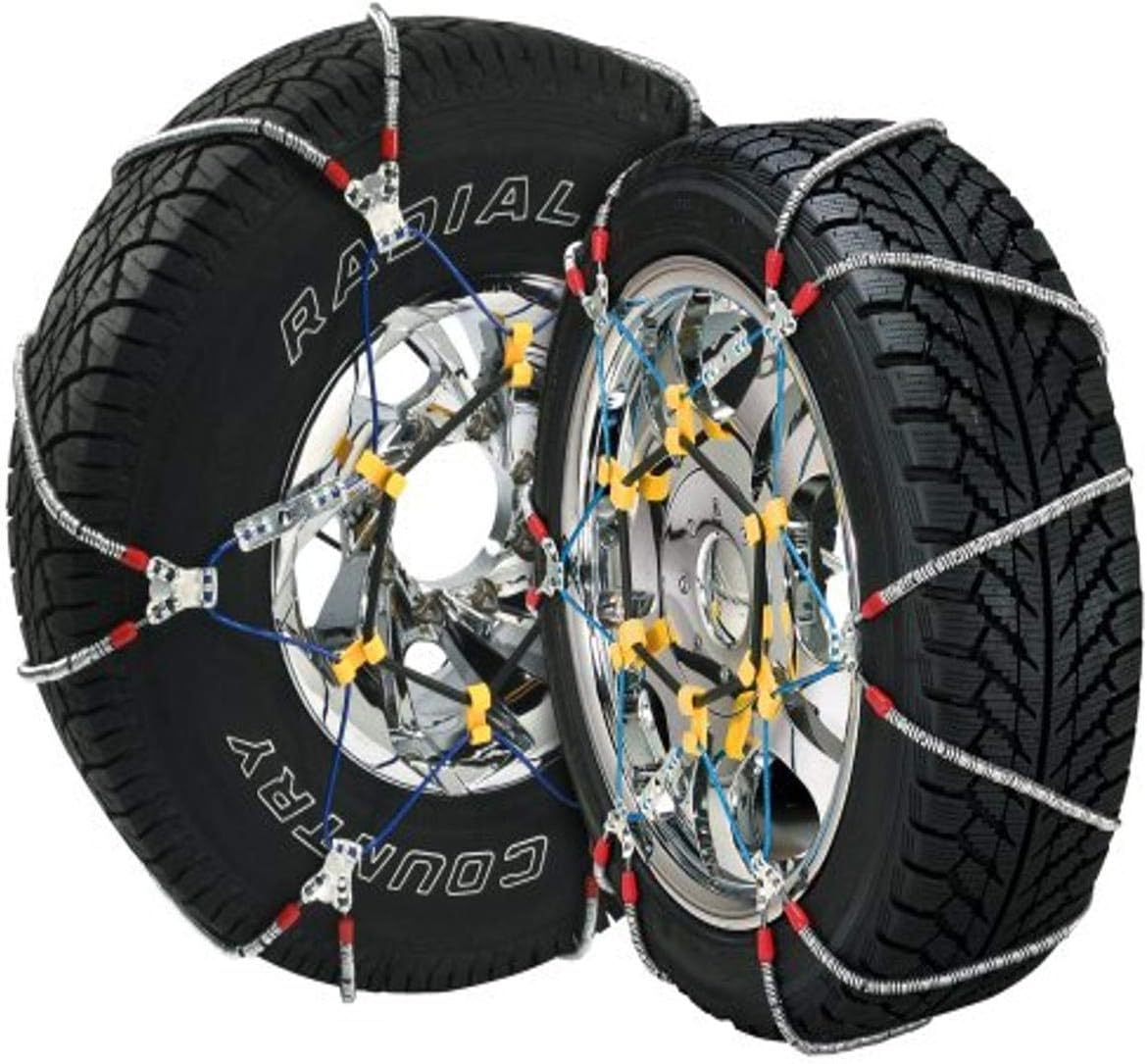
The SCC Super Z6 SZ143 is a low-clearance cable traction system intended for vehicles that need a slim-profile solution. Its Z-pattern cable and diagonal crossmembers give more bite than simple cables while requiring only about 6.33 mm (0.25 in) of sidewall clearance, so it is made to avoid contact with brakes and suspension on tight wheel wells. Installation is straightforward: the split outside cable and two fastening positions let you fit the chain without moving the vehicle, and included rubber tensioners hold the assembly in place. The kit comes with gloves, a nylon storage bag, and illustrated instructions. In use the Super Z6 offers good grip on packed snow and icy roads and is compatible with electronic traction systems when clearance is constrained. Limitations: cable-style chains are best for light to moderate winter conditions rather than frequent heavy off-road or deep-snow work, and the rubber tensioners are a wear item that may need replacement after extended use. Proper size selection and pre-checking clearance are essential to avoid interference or damage.
Best for: Buyers who need a legal, low-profile traction solution for tight-clearance vehicles and prioritize easy, fast installation when occasional winter traction is required.
Less Ideal for: Drivers who regularly tackle deep snow, steep unplowed backcountry routes, or need heavy-duty metal chains for continuous professional use should choose a more robust chain designed for extreme conditions.
- Very low operating clearance suitable for tight wheel wells
- Z-pattern crossmembers provide better traction than simple cable designs
- Easy installation with split outside cable and two fastening positions
- Includes rubber tensioners, gloves, and a carry bag for convenience
- Designed to work with ABS, traction control, and AWD systems
- Cable-style design is not intended for heavy continuous use in deep snow or off-road conditions
- Rubber tensioners can wear or fail and may need replacement over time
Verdict: Chosen for vehicles with restricted clearance—provides legal, effective traction while avoiding contact with brake or suspension components.
7. K&K Auto Pro Series Snow Socks – Ultimate Grip (3XL, 2pcs)
Best Snow Socks Alternative
| Brand | KNK Boutique |
|---|---|
| Model | Ultimate Grip |
| Item model number | 3XLarge – Pro |
| GVWR rating | Class 4, up to 16000 lbs |
| Certification | EU EN-16662-1 Certified / Approved Alternate Traction Device |
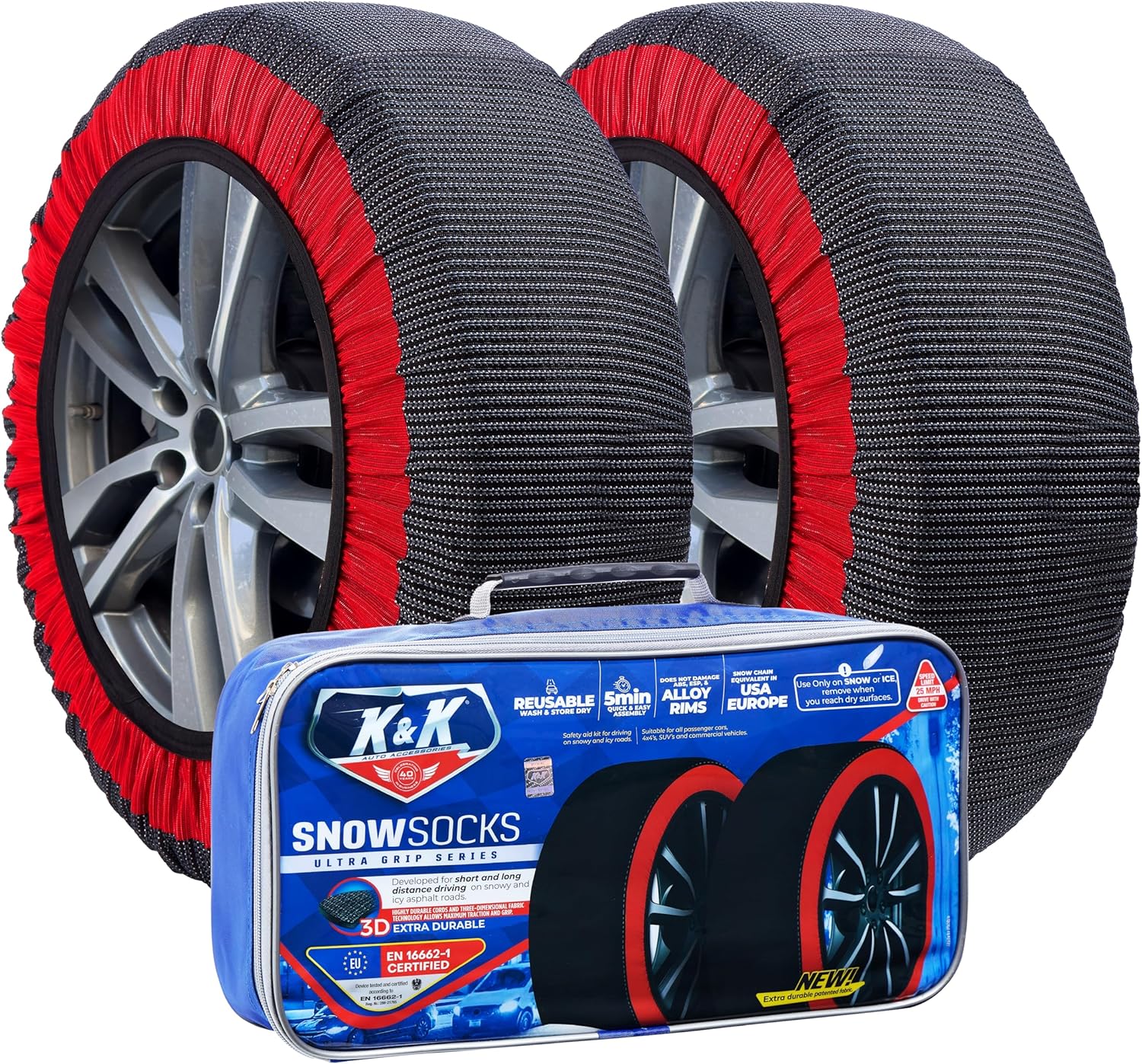
K&K Auto Pro Series snow socks are fabric traction covers that slip over tires to add grip on snow and icy roads without the complexity or rim contact of metal chains. They arrive with a storage bag, gloves, and instructions and are sized to match tire sidewall markings. Installation is straightforward and can be done roadside in minutes; the 3D fabric and thick cords bite into packed snow to help with steering and braking at low speeds. Because they are fabric, they give a smoother ride and do not rust or damage wheels the way metal chains can. Practical benefits include legal acceptance as an alternate traction device on many mountain passes and easy machine washing for reuse. Limitations are inherent to snow socks: they wear quickly if driven on dry pavement or long distances, can be difficult to remove when frozen to the tire, and are not a substitute for dedicated snow tires in heavy or prolonged winter conditions. For short climbs, emergency use, or for drivers who want a non‑metal option that is easier on rims, these perform well.
Best for: Drivers who want a non‑metal, easy‑to‑fit traction option to get unstuck or climb short snowy grades and who prioritize preserving wheels and a smoother ride over long‑term durability.
Less Ideal for: Drivers who frequently encounter deep snow, extended icy highway stretches, or need a long‑lasting, heavy‑duty traction system for continuous winter driving should choose full snow tires or robust metal chains instead.
- Quick to fit on the tire and designed for roadside installation with included gloves and instructions
- Fabric construction avoids rim damage, rust, and vibration common with metal chains
- 3D fabric and reinforced cords provide strong bite on packed snow and ice for improved steering and braking
- Machine washable and reusable with a compact storage bag for trunk stowage
- Not durable if driven on dry pavement or for long highway distances
- Can be hard to remove when frozen or after prolonged use and may fray under extreme conditions
Verdict: For drivers who prefer a fabric‑based alternative to chains that’s easy to fit, gentler on rims, and effective for short stretches on packed snow.
Choosing the Right 2018-Present Jeep Wrangler Snow Chains: Key Factors to Consider
Fit and Clearance
Accurate fit is the top priority for any snow chains on a 2018-present Jeep Wrangler. Wranglers come with varying wheel diameters, offsets, and aftermarket lifts that change clearance between the tire and inner fender. Chains that are too bulky or lack a low-profile design can contact suspension components or fender flares during turns, leading to damage or sudden failure. When evaluating fit, check the chain profile relative to your tire size and any lift or aftermarket wheels. Some chain designs are explicitly low-clearance and intended for vehicles with limited inner wheel well space. Measure the available gap and verify manufacturer guidance for Wrangler JL and JLU generations when applicable. Also consider whether chains can be fitted to only the drive wheels or if a four-wheel application is required for certain conditions.
Installation Speed and Ease
Cold weather, gloves, and roadside conditions make installation difficulty a practical safety issue. Fast, intuitive installation reduces exposure to cold and improves the chance you will actually carry and use chains when needed. Look for systems that offer a single-sided layout, color-coded parts, or self-tensioning mechanisms that simplify the fit process. Practice fitting your chosen chains in a warm garage before the first winter drive. Some designs allow rear mounting from inside the wheel arch or use a drive-on system that is easier for one person. Consider whether the system requires repeated adjustments after a short drive and whether those adjustments are feasible in cold, icy conditions.
Durability and Material Quality
Durability matters because worn or broken links can strand you or damage the vehicle. Chains with thicker links, hardened steel treatment, and corrosion-resistant coatings last longer and tolerate occasional low-speed off-road use typical of Wrangler drivers. Robust tensioning hardware and replaceable links are signs of a chain built for repeated winter seasons. Also evaluate how the chain handles mixed surfaces. Wrangler owners often encounter both soft snow and patches of ice or bare pavement. Durable chains resist rapid wear when briefly driven on cleared sections and maintain traction on ice. Check for reinforced cross-members at stress points and easy access to replacement pieces if a link fails.
Traction Pattern and Performance
Different chain patterns produce different bite and handling characteristics. Ladder-style chains offer consistency and durability, while diamond or mesh patterns typically give smoother traction and reduced vibration. For a Wrangler used on packed trails and icy roads, a pattern that balances strong lateral grip with stable braking performance is preferable. Consider how the pattern affects noise and vibration at the low legal speeds you may need on snow-plowed roads. A pattern that spreads contact evenly across the tread reduces localized wear and improves steering feel. Evaluate whether the design is optimized for braking and cornering on ice rather than only forward traction.
Compatibility With Tire Types and Sizes
Wranglers are commonly fitted with a wide variety of tire types, from all-terrains to mud-terrain tires that have aggressive tread and larger overall diameters. Some chain models are not recommended for very aggressive tread blocks because they can shift or catch on the tread, affecting stability. Confirm that the chain manufacturer lists the tire size range and tread types compatible with the product. If you run oversized tires or a lift kit, you may need a low-clearance chain or to size the chain carefully. Keep in mind that a correct chain size should provide consistent tension across the tread and sidewalls without leaving overly loose segments that could snag while turning.
Maintenance and Serviceability
Snow chains need seasonal upkeep to last multiple winters. After use, they should be rinsed of road salt and debris to prevent corrosion. Systems with replaceable links, spare parts, and simple tensioning adjustment are easier to keep serviceable. Chains that require specialized tools for repairs increase downtime and complicate roadside fixes. Also consider storage and portability. Chains that fold compactly and include a durable carry case are less likely to be left at home. Check for clear instructions and accessible replacement parts so you can repair bent or broken links without replacing the entire set.
Generations and Fit Notes: JL and JLU Considerations
The 2018-present Jeep Wrangler span includes multiple generation considerations that affect chain choice. JL and JLU generation Wranglers introduced in the later parts of the range may have different wheel offsets and fender clearance than earlier JL and JLU examples. Some older JL and JLU-style setups — often present on heavily modified Wranglers — can further change clearance or wheelback dimensions.
When selecting chains, confirm fit guidance for the specific chassis generation where available. Low-clearance designs are particularly important for JL and JLU models with stock fender configurations and for any Wrangler with aftermarket flares or lift kits. If you run aggressive tires, pay attention to manufacturer notes that limit use with certain tread patterns.
- Check wheel diameter and offset against chain size charts.
- Note whether your Wrangler has a lift kit or oversized tires before sizing.
- Low-clearance chains reduce the risk of fender or suspension contact.
Preparing Your Wrangler for Chain Installation
Before you encounter snow, inspect tires for wear and confirm recommended sizes stamped on the sidewall. Park on a flat surface, engage the parking brake, and practice a dry run of the installation so you can confidently deploy chains in cold weather.
Gather a few accessories before heading out: a set of gloves, a small flashlight, and a mat to kneel on. Keep the chain instruction manual in the vehicle and note any steps that differ depending on whether the chains are front-drive only or can be mounted on multiple axles.
- Measure tire diameter and width to pick the correct chain size.
- Practice fitting chains at home to reduce installation time.
- Confirm local regulations about chain use and speed limits.
Installation Tips for Faster, Safer Fitting
Most Wrangler owners will benefit from practicing a single-person installation method. Lay the chain flat behind the wheel, drive forward slightly to position the tire on the chain if required, and then secure the inner and outer fasteners in sequence. Self-tensioning designs reduce the need for re-adjustment after the first short drive.
If your model is a JL and JLU with tighter wheel well space, install with small incremental adjustments and test clearance after a slow drive. Keep a compact tensioning device or rubber tightener in your kit to correct slack quickly at the roadside.
- Wear gloves and work from the wind-protected side of the vehicle.
- Follow the sequence in the manual: inner hookup, outer fastening, tensioning.
- Drive a short distance and re-tension to ensure even fit.
Legal and Safety Considerations
Many jurisdictions require chains under certain weather conditions and impose speed limits when chains are fitted. For safety, never exceed the recommended chain speed and avoid sustained highway speeds even if conditions appear clear. Chains are typically intended for low-speed traction, not for continuous high-speed travel.
Inspect chains for loose links before each trip. Replace worn or damaged parts to avoid sudden failure. If you hear abnormal noise or feel vibration after installation, stop and re-check fitment and tension immediately.
- Observe local chain-use regulations and speed limits.
- Inspect chains for damage before and after every use.
- Avoid long runs on bare pavement to prevent chain damage.
Storage, Care, and Seasonal Maintenance
After use, rinse chains with fresh water to remove road salt and allow them to dry before storing to limit corrosion. Apply light rust-inhibiting oil to pivot points if the manufacturer recommends it. Store chains in a labelled bag and keep spare links and a simple repair tool in the kit.
Regularly check tensioners and fasteners for wear and replace rubber components as they age. Proper care extends the life of the chains and ensures they function reliably when needed.
- Rinse and dry chains after exposure to salt or dirt.
- Keep replacement links and a basic tool kit with the chains.
- Store chains in a protective bag to prevent tangling and damage.
When Chains Aren't Practical: Alternatives and Limitations
There are situations where chains are not the best choice for a Wrangler. For example, heavy urban driving on salted roads with little snow can wear chains quickly, and some tight wheel wells on modified Wranglers can make safe fitting impossible. In those cases, temporary traction aids or studded tires may be more appropriate depending on local regulations and your usage patterns.
Remember that any alternative has tradeoffs. Studded tires offer excellent ice grip but require tire changeovers and may be restricted seasonally. Traction mats can help in a single recovery but do not replace continuous traction the way chains do.
- Assess whether your typical routes justify carrying chains.
- Consider seasonal tire options if you frequently drive on ice.
- Use recovery aids as a supplement, not a replacement, for chains.
Still looking for the perfect fit?
Select your Jeep Wrangler configuration to see the most relevant Snow Chains recommendations
How We Chose the Best 2018-Present Jeep Wrangler Snow Chains
We started by filtering candidates for compatibility with 2018-present Jeep Wrangler fitments and typical Wrangler wheel sizes. Priority went to designs that clear common Wrangler wheel wells and fender flares across JL and JLU generation variants. We excluded systems that require extensive modification or permanent hardware changes. Evaluation criteria focused on fit accuracy, material durability, installation speed, ride quality, and off-road tolerance. Fit accuracy included clear evidence the chain fits Wrangler wheel diameters and offset ranges without rubbing. Durability assessed chain steel grade, link thickness, and corrosion protection. Installation speed measured how quickly a single person can fit the chains in cold conditions with gloves on. Ride quality covered vibration and handling at legal low-speed highway sections. Off-road tolerance examined whether chains survive short-distance, low-speed routed trails without rapid wear. We also considered maintenance needs and spare-part availability, favoring systems with replaceable links or tensioners. Chains that performed poorly on durability or required specialized tools were excluded. Final selections represent a balance of reliability, practicality, and Wrangler-specific fit considerations.
Our full evaluation process is outlined in our review methodology.
FAQ
Do I need chains for a 2018-present Jeep Wrangler with four-wheel drive?
Four-wheel drive helps with traction but does not guarantee grip on ice. Chains add mechanical bite to the tire tread and improve braking and lateral traction, so they are often recommended in severe snow and icy conditions even on a four-wheel-drive Wrangler.
Which wheels should I fit chains to on a Wrangler?
Fit chains to the drive wheels as specified by the chain manufacturer. Many trails and winter roads benefit from chains on all driven wheels. For Wranglers, consult fit charts and your owner notes, especially if you have a lifted or modified vehicle, since some setups affect recommended mounting positions.
How fast can I drive with chains fitted?
Chains are intended for low-speed use and most manufacturers recommend staying below posted chain speed limits, typically well under highway speeds. Driving faster increases the risk of chain failure and vehicle damage, so limit speed to what is safe for road and weather conditions.
Can I install chains myself on the side of the road?
Yes, many Wrangler owners can install chains solo, but practice at home first. Use gloves, a flashlight, and a mat for kneeling. Systems designed for single-person installation or self-tensioning are easier in roadside conditions.
Will chains fit if I have larger aftermarket tires or a lift kit?
Aftermarket tires and lifts change clearance and can require low-profile chains or a different sizing approach. Verify chain compatibility with your exact tire dimensions and account for additional movement during suspension travel. Some systems are not suitable for heavily modified Wranglers.
How should I maintain chains between seasons?
Rinse chains after exposure to salt, allow them to dry fully, and apply light rust protection to moving parts if recommended. Store chains in a labelled case and keep spare links and basic repair tools with the set so you can fix minor issues before the next winter.
Final Verdict
For 2018-present Jeep Wrangler owners the right snow chains balance clearance, durability, and ease of installation. Focus first on correct sizing for your Wrangler generation and any aftermarket wheels or lift, then prioritize a pattern and construction that match how you use the vehicle on snow and ice. Remember that installation practice and seasonal maintenance are nearly as important as the chain choice itself. Select a system that you can fit confidently in cold conditions, and be realistic about tradeoffs: lower-profile chains protect clearances but may cost more, while heavy-duty links last longer but require more wheel well space. Prioritize fit and serviceability to ensure dependable winter traction when you need it most.
Explore More:
- Check out all Jeep Wrangler parts & accessories
- Explore Wheels & Tires
- Browse all Accessories
