

Note: This article contains affiliate links. If you click on these links and make a purchase, I may earn a small commission at no extra cost to you. This helps support my research and content. Read my full affiliate disclosure here.
If you drive a 1997-2003 Ford F-150, adding the right running boards can make daily access easier, protect the cab from road debris, and give you a more secure step when loading gear. These years cover multiple cab and bed configurations, so proper fit and a robust mounting system are essential to avoid vibration and premature wear.This guide highlights the top shortlisted running boards for the 1997-2003 F-150 and explains the evaluation criteria we used, including fitment accuracy, mounting strength, material durability, and ease of installation. Read on to find options that match how you use your truck and to prep for installation and maintenance steps.
Looking for other parts? See all Ford F-150 parts & accessories.
Top Picks at a Glance
| Best Overall Running Boards A well-rounded choice balancing fit, durability, looks, and ease of install | Tyger Auto 3.5" Rider Running Boards for 1997-2003 Ford F-150 Supercab |  |
| Best Budget Running Boards Affordable, no-frills boards that deliver basic protection and stepping surface | ALMULOO Pair Side Steps Compatible with 1997–2004 Ford F-150/F-250LD Super Cab |  |
| Best Premium Running Boards Higher-end materials and finish with refined styling and extras | APS 6-inch Black iBoard Running Boards with Mounting Kit |  |
| Best Heavy-Duty Running Boards Built for maximum strength, load capacity, and long-term durability | TrailFX A1504B Nerf Bar Side Steps for Ford F-150 Super Cab (1997–2004) |  |
| Best Low-Profile Running Boards Slim, close-to-body boards that preserve ground clearance and styling | ARIES 3" Round Black Steel Nerf Bars, No-Drill Fit for Select Ford F-150 |  |
Tyger Auto 3.5" Rider Running Boards for 1997-2003 Ford F-150 Supercab
Best Overall Running Boards

| Compatible years | 1997–2003 Ford F‑150; 2004 F‑150 Heritage |
|---|---|
| Cab size | SuperCab (2 full front doors + 2 rear suicide doors) |
| Material | Carbon steel tube |
| Finish | Powder E‑coating |
| Weight capacity | 500 Pounds |
These Tyger Auto Rider running boards are a vehicle‑specific bolt‑on step for 1997–2003 Ford F‑150 SuperCab (and 2004 F‑150 Heritage) that give an easy, stable way to enter and exit the truck. The oval 3.5 inch tube and wider textured step pads provide a larger, non‑slip surface than single round bars, improving footing for passengers. They mount to existing body studs with the supplied brackets and hardware so installation is straightforward and can often be completed in under an hour with basic hand tools. Construction uses carbon steel tubing with a full‑body powder E‑coating to resist rust and corrosion, and the boards are rated to support up to 500 lb per side. Practical downsides are that the tube sits relatively close to the body so very large boots may feel cramped, and tube diameter is modest compared with beefier aftermarket options if you want a more substantial look. Overall these boards balance build quality, ease of fitment, and corrosion protection for most F‑150 SuperCab owners looking for a durable, factory‑style step.
Best for: Truck owners who want a durable, factory‑style running board that installs quickly and prioritizes stable, non‑slip stepping and corrosion resistance for everyday use.
Less Ideal for: Buyers seeking oversized, showy tubing or a wider setback from the body for very large footwear should consider larger aftermarket nerf bars or board styles instead.
- Vehicle‑specific fit for 1997–2003 Ford F‑150 SuperCab including brackets and hardware
- Wider 3.5" oval tube step pad with textured non‑slip surface for stable footing
- Powder E‑coating over carbon steel for long‑term corrosion resistance
- Bolt‑on installation with clear instructions that typically takes less than an hour
- High weight capacity rated up to 500 lb per side
- Step tube sits fairly close to the truck body which may limit room for very large boots
Verdict: The best overall running boards offer the optimal balance of build quality, installation simplicity, step comfort, and long-term corrosion resistance for most truck owners.
ALMULOO Pair Side Steps Compatible with 1997–2004 Ford F-150/F-250LD Super Cab
Best Budget Running Boards
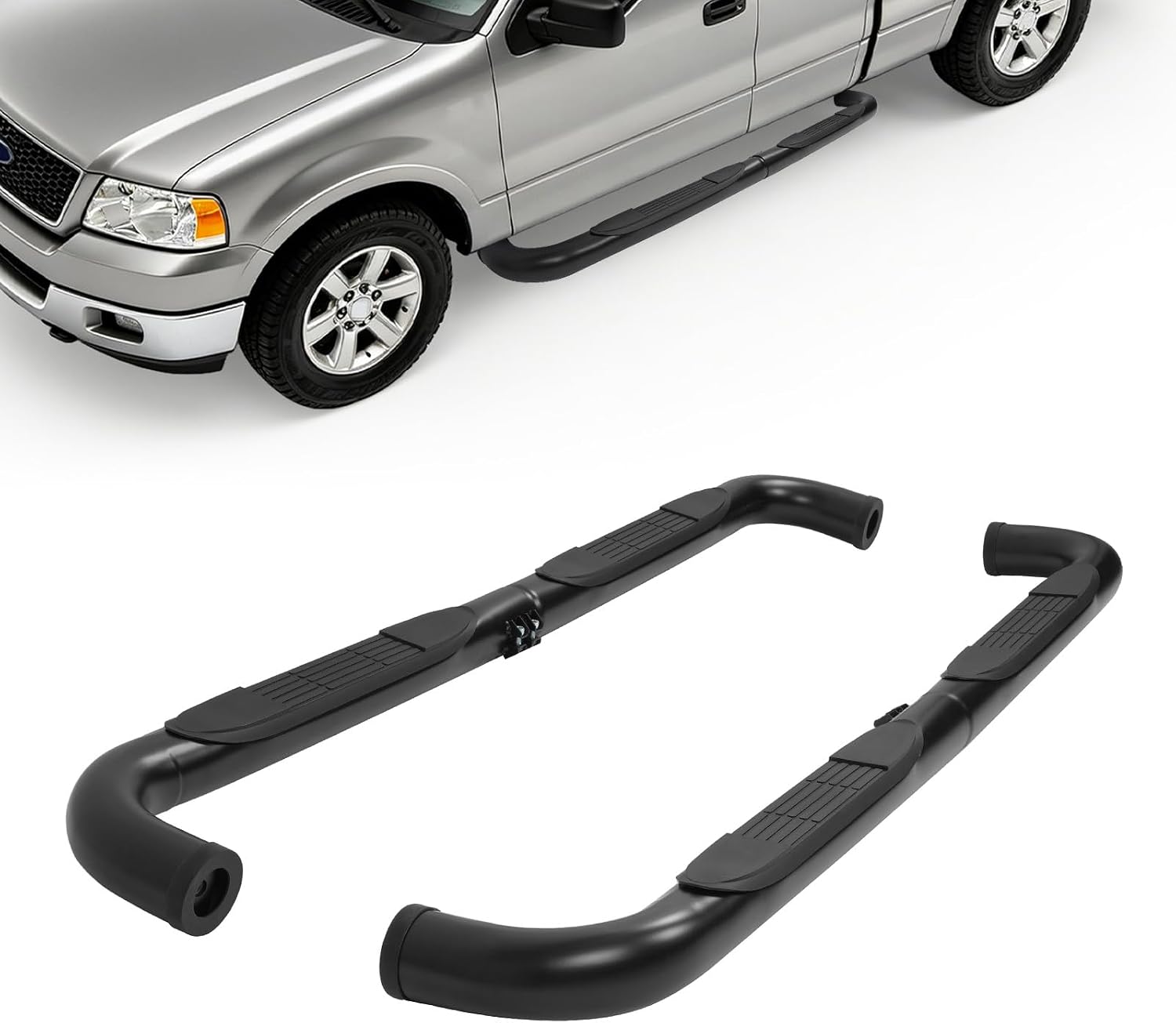
| Compatible with Vehicle Type | 1997-1998 F-150/F-250LD Super Cab 3-Door; 1999-2003 F-150/F-250LD Super Cab 4-Door (includes 2004 Heritage) |
|---|---|
| Material Type | Alloy Steel, Plastic |
| Exterior Finish | Powder Coated |
| Included Components | 1 pair of side steps with hardware and assembly instructions |
These ALMULOO side steps provide a straightforward, affordable way to add a stable stepping surface to 1997–2003 Ford F-150 Super Cab trucks. Designed as vehicle-specific fitment, the kit includes both left and right rails plus mounting hardware and instructions so installation is a straightforward screw-in process for someone comfortable with basic hand tools. Construction combines alloy steel support with plastic step surfaces and a powder-coated finish for corrosion resistance and a clean black look. The wide, non-skid step pattern improves footing in wet or muddy conditions and makes getting in and out easier for passengers and children. Expect a practical, no-frills solution that gives basic protection to rocker panels and a safer entry height without premium materials or advanced features like integrated lights or rubber pads. Buyers should be prepared for the simpler plastic tread and budget-grade hardware compared with higher-end alternatives, but for a factory-style replacement on older Ford Super Cab trucks these steps deliver solid value.
Best for: Buyers seeking a low-cost, factory-style running board to restore function on older Super Cab F-150s who prioritize reliable stepping and straightforward installation over premium materials.
Less Ideal for: Drivers wanting premium finishes, integrated lighting, or heavy-duty metal treads for constant off-road abuse should consider higher-end running boards instead.
- Vehicle-specific fitment for 1997–2004 Ford F-150/F-250LD Super Cab models
- Includes both left and right side steps with mounting hardware and instructions
- Powder-coated alloy steel frame resists corrosion and adds durability
- Wide non-skid step surface improves footing in wet or slippery conditions
- Plastic step surface and budget hardware are less durable than premium rubber or metal tread options
Verdict: The best budget running boards give buyers a reliable, low-cost stepping surface and basic protection while sacrificing premium materials or extra features to keep price down.
APS 6-inch Black iBoard Running Boards with Mounting Kit
Best Premium Running Boards

| Compatible Vehicle Type | Truck |
|---|---|
| Weight Capacity Maximum | 500 Pounds |
| Automotive Fit Type | Vehicle Specific Fit |
| Material Type | 6061 Aircraft Aluminum |
These APS iBoard running boards are a vehicle-specific bolt-on solution for 1999–2003 Ford F-150 Super Cab and compatible F-250 light duty models. The boards use polished 6061 aircraft-grade aluminum with a matte black powder coat and full-length UV-resistant non-slip tread pads, giving a low-profile, refined look while resisting rust better than steel step bars. Installation is straightforward; the kit includes mounting brackets and hardware and can be handled by one person with common hand tools, though an extra set of hands helps for alignment. The 6-inch width provides a broad, secure stepping area useful for older passengers or frequent entries and exits. Brackets are steel for strength and the stated 500 pound capacity covers heavy loads. Limitations are that these are rocker-panel mount boards designed for specific cab configurations only, so they are not universal, and they lack integrated lighting or extra accessories that some higher-end premium options include. Fit depends on choosing the correct Super Cab configuration, so verify compatibility before ordering.
Best for: Buyers seeking a durable, factory-style upgrade that improves stepping safety and resists corrosion on 1999–2003 Ford Super Cab trucks, and who value a refined matte-black aluminum look over extra features.
Less Ideal for: Shoppers who want built-in lighting, motorized retracting boards, or universal kits for multiple vehicle types should look elsewhere.
- 6061 aircraft-grade aluminum construction for strong corrosion resistance
- Matte black powder coat with full-length UV-resistant non-slip tread for secure footing and refined appearance
- Comes with vehicle-specific mounting brackets and hardware for bolt-on installation
- Wide 6-inch board offers a stable, roomy step area
- 500 pound stated weight capacity provides confidence under load
- No integrated lighting or premium accessory features found on some higher-end running boards
Verdict: The best premium running boards prioritize upscale materials, superior corrosion protection, refined styling, and added features like integrated lighting or thicker finishes for buyers willing to pay more.
TrailFX A1504B Nerf Bar Side Steps for Ford F-150 Super Cab (1997–2004)
Best Heavy-Duty Running Boards

| Compatible vehicles | 1997–2003 Ford F-150 Super Cab; 2004 Heritage Super Cab |
|---|---|
| Material Type | Alloy Steel (Q235A mild steel) |
| Finish | Black semi-gloss powder coat |
| Tube size | 4-inch oval |
| Included components | Mounting hardware |
These TrailFX nerf bars are a heavy-duty, vehicle-specific running board solution for 1997–2003 Ford F-150 Super Cab owners. Built from Q235A mild steel with a black semi-gloss powder coat, the 4-inch oval tube provides a wide, stable stepping surface and welded end caps that help keep moisture and road debris out. Each bar includes two large molded step pads with five aggressive pins for slip resistance in wet or muddy conditions. Installation is bolt-on to the rocker panel using included brackets and hardware so no drilling is required, which speeds fitting and keeps the vehicle structure intact. The solid construction and reinforced-looking mounting hardware make these suitable for frequent use, loading gear, and working trucks. Limitations to note are the mild steel construction versus heavier alloys if you need maximum corrosion resistance over decades and the design is specific to Super Cab configurations so it does not fit other F-150 body styles.
Best for: Buyers who need a robust, direct-fit running board for everyday use, hauling, and frequent entry on a 1997–2003 F-150 Super Cab and who prioritize strength and a no-drill installation.
Less Ideal for: Drivers seeking the highest long-term corrosion resistance or a fit for other F-150 body styles should consider alternative materials or models.
- Vehicle-specific rocker panel bolt-on fit for 1997–2003 Super Cab and 2004 Heritage Super Cab
- Durable Q235A mild steel construction with black powder-coat to resist corrosion
- Wide 4-inch oval tubing and molded step pads with traction pins for secure footing
- Welded end caps and included mounting hardware simplify installation and protect tube ends
- Made from mild steel which can corrode over many years in harsh climates compared with stainless or thicker-gauge alloys
Verdict: The best heavy-duty running boards are engineered with thicker gauges, reinforced brackets, and robust mounting hardware to withstand heavy use, hauling, and harsh conditions.
ARIES 3" Round Black Steel Nerf Bars, No-Drill Fit for Select Ford F-150
Best Low-Profile Running Boards

| Included Components | 3" Round Side Bars |
|---|---|
| Material Type | Carbon Steel |
| Exterior Finish | SEMI-GLOSS BLACK POWDER COAT |
| Automotive Fit Type | Vehicle Specific Fit |
| Manufacturer Warranty Description | Limited Lifetime Warranty (One-Year Parts) |
These ARIES 3" round nerf bars provide a low-profile, close-to-body step solution for select Ford F-150 trucks. Built from heavy-wall carbon steel and treated with E-coat plus a semi-gloss black powder coat, they resist corrosion while keeping a subtle, factory-friendly appearance. The bars mount with vehicle-specific brackets that contour to the truck body for a near-factory fit and they install without drilling, which is convenient for DIY installers. Non-skid polypropylene step pads cover a broad area of the tube and offer reliable footing in wet or muddy conditions. Because the tubing is 3 inches in diameter and designed for rigidity, the bars feel solid underfoot though heavier users may notice some flex on older trucks. Fitment is model-specific so you must verify the exact years and cab configurations before buying; a few owners report alignment or bracket clearance issues on certain years. Overall these nerf bars balance a slim profile with practical stepping performance for owners who want a subtle look without losing functionality.
Best for: Buyers who want a sleek, low-profile running board that keeps ground clearance and the truck's factory look while still giving a dependable step for everyday use.
Less Ideal for: People seeking heavy-duty board designs with wide platforms or those who need universal-fit options for multiple vehicle types.
- Custom-bent brackets that contour to the truck for a close-to-body fit
- No-drill installation using vehicle-specific mounting points
- Durable carbon steel construction with E-coat and powder coat for corrosion resistance
- Wide, textured polypropylene step pads for non-skid footing
- Fitment is model- and year-specific so incorrect selection can lead to alignment gaps
Verdict: The best low-profile running boards offer a sleek, close-to-body design that maintains ground clearance and the vehicle's look while still providing a dependable stepping surface.
Choosing the Right 1997-2003 Ford F-150 Running Boards: Key Factors to Consider
Fitment and Cab Configuration
Accurate fitment is the single most important factor for 1997-2003 Ford F-150 running boards. These trucks were produced in different cab styles, and step length and bracket placement must match the truck's rocker panel and factory bolt locations. Poor fitment can cause rubbing, misaligned brackets, or interference with doors.
When evaluating fitment, pay attention to whether an option lists compatibility for regular, extended, or crew cab variants within the 1997-2003 range. Even small differences in mounting point spacing affect ease of installation and long-term stress on fasteners. Consider whether the kit includes model-specific brackets or universal clamps that may need drilling or shims to secure properly.
Mounting System and Strength
The mounting system determines how well the running boards carry load and resist vibration over time. Heavy steel brackets bolted to factory attachment points provide the most secure long-term solution for an older F-150 frame. Lighter clamp-on systems can work for occasional use but are more likely to shift under frequent loading or when the board supports cargo handling.
Look for bracket designs that spread load across multiple factory holes and include lock washers or thread-lock features. Check torque specifications and whether hardware is grade-rated. A robust mounting system also simplifies alignment during installation and reduces the chance of squeaks or creaks as the truck ages.
Material and Corrosion Resistance
Material choice affects durability and maintenance. Steel running boards have strong structural properties but require high-quality coatings, such as powder coat or zinc plating, to resist rust on a truck that sees winter salt or coastal air. Aluminum boards resist corrosion and are lighter, but they must have adequate thickness and internal reinforcement to avoid bending under load.
Consider whether exposed fasteners and brackets are similarly protected. Materials with poor corrosion resistance will need more frequent inspection and touch-up, which increases overall ownership effort. For long-term value, prioritize materials and finishes designed for road salt, mud, and regular cleaning.
Step Surface and Traction
Step surface design directly affects safety when entering and exiting the truck. Look for textured surfaces, rubber pads, or raised nib patterns that shed water and mud and provide grip with wet or booted feet. Wide, stable tread areas reduce the chance of slips, especially when carrying tools or gear.
Consider how the surface holds up to abrasion and whether replacement pads are available. Surfaces that trap debris or wear smooth over time will reduce safety. Good traction design also helps during seasonal conditions, like rain or snow, common across many F-150 use cases.
Load Capacity and Clearance
Running boards must support the dynamic load of people stepping on them, occasional heavy items, and resist bending. Check published load ratings and consider how torque and mounting distribution translate to real-world use on a 1997-2003 F-150. A board that flexes under load increases stress on mounting brackets and can change door alignment over time.
Also evaluate ground clearance, particularly if you use the truck off-road or have aftermarket suspension. Low-mounted boards can reduce approach angles and be susceptible to rock strikes. Choose a design that balances step height and protection without compromising the truck's intended clearance.
Maintenance and Serviceability
Ease of servicing affects long-term ownership. Boards with replaceable rubber pads and modular brackets simplify repairs and refreshes as wear accumulates. Consider whether fasteners are standard sizes and if replacement hardware kits are specified by the manufacturer.
Regular inspection for loose bolts, rust at welds, and worn traction material will extend service life. Choose boards with accessible mounting hardware and simple removal procedures if you plan to repaint or restore the rocker panels on your F-150 in the future.
Installation Overview for 1997-2003 F-150
Most running boards for the 1997-2003 Ford F-150 use model-specific brackets that attach to factory holes in the rocker or frame. A typical installation takes two people and a few hours, depending on whether any drilling is required and on cab length. Prepare by clearing the area under the doors, parking on level ground, and supporting the vehicle with jack stands if needed.
Basic tools include a torque wrench, ratchets, common sockets, and penetrating oil for older fasteners. Follow the bracket alignment steps carefully to avoid binding or misaligned door sills. If the kit requires drilling, verify hole locations against the instructions and protect exposed metal with a rust-inhibiting primer and paint after completing the install.
- Verify kit fitment for regular, SuperCab, or SuperCrew configurations within the 1997-2003 range
- Hand-tighten all fasteners before final torque to align brackets
- Use thread-lock or locking hardware where recommended to prevent loosening
- Protect any drilled holes with corrosion-resistant coatings
Materials and Finish Options
Steel options typically offer higher rigidity and load capacity but rely on protective coatings to resist corrosion. Powder coating and zinc-rich primers extend life but should be inspected periodically for chips. Aluminum boards resist rust naturally and are lighter, but choose thicker extrusions and reinforced mounting to prevent flex.
Consider finishes that conceal surface wear and provide long-term traction. Black textured powder coats hide scuffs, while polished or brushed aluminum finishes emphasize appearance but may require more frequent cleaning to look their best.
- Steel with powder coat: strong, needs rust prevention
- Aluminum: corrosion-resistant, lighter, needs proper reinforcement
- Stainless hardware: reduces galvanic corrosion when paired with aluminum
Trim, Door Clearance, and Vehicle Access
Running boards change how you get in and out of the cab and can affect door opening clearance if not positioned correctly. Ensure the board's vertical placement leaves sufficient space for full door sweep without contact. For trucks with wider aftermarket mirrors or added weatherstrips, verify clearance before final tightening.
Think about how the boards will be used daily. If you routinely step from the rear of the cab onto the running board, choose deeper tread platforms. For loading small cargo from the side, a lower-profile board may offer a steadier stance without adding excessive width.
- Check door sweep during test fit before final torque
- Measure step depth for your typical entry motion
- Account for accessories such as mud flaps or side-mounted lighting
Corrosion Prevention and Winter Care
Older F-150s are often driven in varied conditions that accelerate corrosion. Regular cleaning to remove road salt and grime is the simplest preventive step. Inspect welds, bracket seams, and fastener heads each season and touch up exposed metal with an appropriate rust inhibitor.
If you live where deicing salts are used, consider boards with sealed welds and replaceable rubber pads rather than porous textures that trap moisture. Grease or anti-seize on fasteners helps during reinstallations and reduces the chance of snapped bolts.
- Wash underside and board surfaces periodically after winter drives
- Apply anti-seize to mounting hardware during installation
- Store replacement rubber pads and spare fasteners with your truck toolkit
Compatibility With Aftermarket Accessories
When adding running boards to a 1997-2003 F-150, plan for interaction with bumpers, rock sliders, and bed-mounted equipment. Some boards overlap with side-mounted steps or require trimming of bed rail covers. Confirm that the chosen bracket locations do not conflict with existing frame attachments like fuel tank strap hardware or body mounts.
If you anticipate future mods such as lift kits, select boards with adjustable bracket geometry or higher clearance to accommodate suspension changes. For trucks that frequently haul long loads or use bed racks, ensure the boards do not obstruct loading angles or tie-down access.
- Review frame and rocker area before ordering brackets
- Choose adjustable brackets if you plan suspension changes
- Confirm bed and bumper interactions during test fit
Replacing Pads and Long-Term Upkeep
Traction pads wear over time, especially on frequently used trucks. Look for boards that allow pad replacement without removing the entire assembly. Standardized fasteners and accessible mounting screws make maintenance straightforward and reduce downtime.
Maintain a seasonal checklist that includes bolt torque checks, pad condition, and finish inspection. Keeping spare pads on hand can restore grip quickly after a winter or heavy-use season and helps preserve the underlying board material.
- Keep spare replacement pads compatible with your board
- Check torque on mounting bolts after the first 500 miles
- Inspect for paint chips and touch up to prevent rust
Still looking for the perfect fit?
Select your Ford F-150 configuration to see the most relevant Running Boards recommendations
How We Chose the Best 1997-2003 Ford F-150 Running Boards
We prioritized running boards that provide reliable fitment for the 1997-2003 Ford F-150 across common cab configurations and that use durable mounting methods suited to the truck's factory rocker and frame points. Evaluation criteria included material and corrosion resistance to match typical road conditions, mounting hardware design and torque tolerances to prevent loosening, and step surface design for wet and muddy conditions.We also assessed weight capacity and load distribution, because heavier boards or accessories can stress mounting points on older trucks. Ease of installation was measured by how many common hand tools are needed and whether the design keeps drilling to a minimum. Lastly, we considered long-term serviceability such as replaceable pads and availability of replacement fasteners.Excluded from consideration were products that require extensive body modification, uncertain compatibility with the 1997-2003 F-150 rocker geometry, or poor material specifications that accelerate rust. The shortlist reflects options that balance durability, fitment confidence, and practical installation for typical truck owners.
Our full evaluation process is outlined in our review methodology.
FAQ
Will running boards for a later model F-150 fit my 1997-2003 truck?
Compatibility often depends on bracket spacing and rocker profile, which changed over the years. Many kits are model-year specific, so verify the product lists compatibility with the 1997-2003 F-150 and the correct cab configuration before assuming a direct fit.
Can I install running boards without drilling into the rocker panels?
Some kits use clamp-style brackets that avoid drilling, but their long-term stability varies. For a permanent, robust installation on a 1997-2003 F-150, model-specific bolt-on brackets that use factory holes are usually more secure. Evaluate whether the clamp design suits your expected loads.
How much ground clearance will running boards cost me?
Clearance loss depends on the board profile and mounting height. Low-profile boards reduce step height but also lower clearance more than slim nerf-style options. Measure your truck's current approach angles and choose a design that balances ease of use with the clearance you need.
Are aluminum running boards better for trucks used in coastal areas?
Aluminum resists rust and is a good choice where salt air accelerates corrosion. Ensure that brackets and fasteners are compatible stainless or properly coated to avoid galvanic corrosion. Adequate reinforcement is also important because aluminum can flex more than steel if undersized.
How often should I check the mounting bolts after installation?
Recheck bolt torque after the first 300 to 500 miles and then at regular service intervals or seasonally. Road vibration and temperature cycles can loosen hardware on older trucks, so periodic inspection prevents progressive wear and potential failure.
Can running boards handle supporting heavy gear or ladders during loading?
Some running boards have higher load ratings and reinforced brackets designed for occasional support of heavy items. Verify the manufacturer's load capacity and ensure the mounting system distributes weight across multiple attachment points to reduce stress on the rocker and frame.
Final Verdict
For a 1997-2003 Ford F-150, prioritize fitment accuracy and a strong mounting system above cosmetic features. Material choice and finish matter for long-term resistance to rust, but the bracket design and how load is distributed determine durability and safety. Consider your daily use, whether you need higher clearance, and how much maintenance you are willing to do.Balance step traction, load capacity, and corrosion protection when choosing running boards, and plan for seasonal inspection and simple upkeep. With attention to those tradeoffs, you can select running boards that improve access and protect the truck for years of reliable service.
Explore More:
- Check out all Ford F-150 parts & accessories
- Explore Exterior Accessories
- Browse all Accessories
