

Note: This article contains affiliate links. If you click on these links and make a purchase, I may earn a small commission at no extra cost to you. This helps support my research and content. Read my full affiliate disclosure here.
If you own a 1995-2001 Ford Explorer, the right set of running boards can make daily use markedly more comfortable while protecting the vehicle's lower body. Whether you climb in with kids, haul gear, or simply want cleaner rocker panels, picking running boards that fit the Explorer's rocker profile and mounting points matters.This guide shortlists the top 7 running boards for the 1995-2001 Ford Explorer and evaluates them on fitment, corrosion resistance, load capacity, and installation practicality. Read on to see which styles and materials suit your needs and how each choice affects access, protection, and long-term maintenance.
Looking for other parts? See all Ford Explorer parts & accessories.
Top Picks at a Glance
| Best Overall Running Boards A well-rounded, vehicle-specific kit balancing fit, finish, and durability | APS iBoard Running Boards for Ford Explorer 1995–2001 (4-Door) |  |
| Best Budget Running Boards Affordable bolt-on boards that cover basic stepping and protection needs | Tuxtreme 6-inch Black Stainless Flat Running Boards with Mounting Brackets for Ford Explorer 1995-2001 (4-Door) |  |
| Best Stainless Steel Running Boards Corrosion-resistant steel boards with polished or black powder-coated finishes | APS 6-inch Black Stainless Steel Running Boards (Flat Style) for Ford Explorer 1995–2001 4-Door |  |
| Best Aluminum Running Boards Lightweight 6061/6061‑T6 aluminum iBoard-style steps with full-length tread | APS 6" Aluminum Running Boards with Mounting Kit for Ford Explorer 1995–2001 (4‑Door) |  |
| Best Molded Polymer Running Boards One-piece polymer boards with rubberized step surface and factory-style fit | Westin Molded Running Boards 79 in. Black Pair |  |
| Best Low-Profile Running Boards Slim, OE-style steps that keep the vehicle stance low and sleek | HD Ridez iRunning Boards Low Profile for Explorer 4-Door 1995-2001 |  |
1. APS iBoard Running Boards for Ford Explorer 1995–2001 (4-Door)
Best Overall Running Boards
| Compatible with Vehicle Type | Sport Utility Vehicle |
|---|---|
| Weight Capacity Maximum | 500 Pounds |
| Automotive Fit Type | Vehicle Specific Fit |
| Material Type | 6061 Aircraft Aluminum |
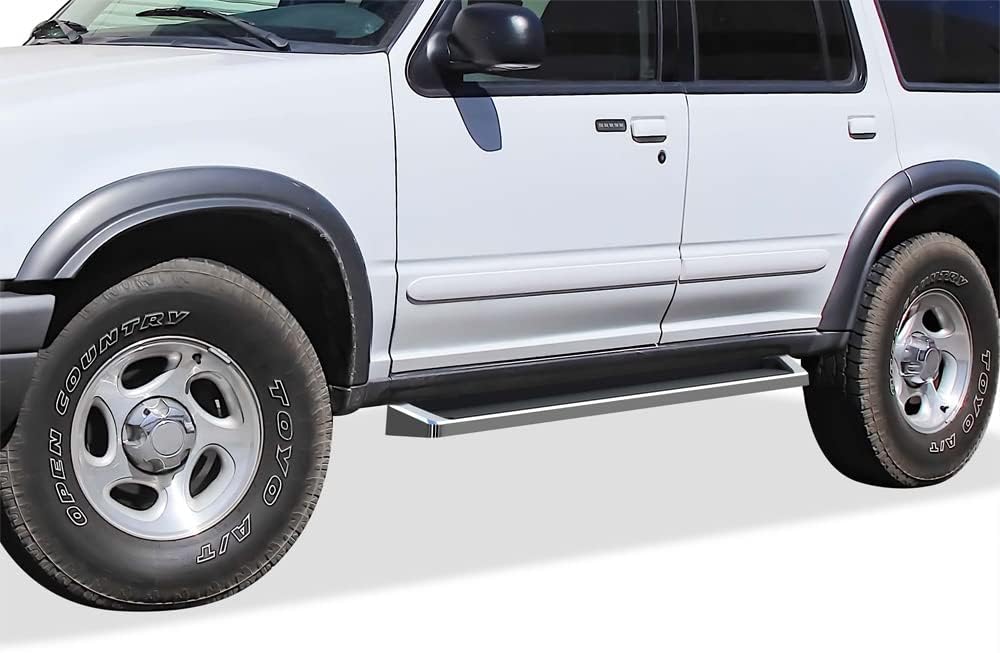
These APS iBoard running boards deliver a full-length stepping surface and robust construction for everyday use on a 1995–2001 Ford Explorer 4-door. They are made from 6061-T6 aircraft aluminum with welded metal end caps and a polished finish, which keeps them lightweight yet corrosion resistant. The wide corrugated, UV-resistant tread provides secure footing across the entire board and the raised ends help deflect mud and road debris. Installation is designed for DIY rocker-panel mounting and the kit includes mounting brackets for a vehicle-specific fit, so most owners can bolt them on without major modification. Practical benefits include easier entry and exit, safer roof access, and some protection for lower body paint from side impacts. Limitations to note are the vehicle fit exclusions listed by the manufacturer and that the boards are specific to the standard 4-door Explorer configuration, so they will not fit alternate body styles or trim variants that require different mounting. Also they are polished aluminum rather than rubber-covered, so they show scratches differently than some painted or fully rubberized options.
Best for: Buyers who want a durable, factory-style running board set for a daily-driven 1995–2001 Ford Explorer 4-door and prefer a DIY-friendly, vehicle-specific installation.
Less Ideal for: If you need a universal or multi-vehicle solution, a heavily rubberized step surface, or fitment for nonstandard Explorer body styles, look elsewhere.
- Vehicle-specific design for 1995–2001 Ford Explorer 4-door ensures correct mounting alignment
- 6061-T6 aircraft aluminum with welded ends for strong, corrosion-resistant construction
- Full-length UV-resistant corrugated tread for continuous, slip-resistant stepping area
- Raised ends act as mud guards and help protect lower body panels
- Includes mounting brackets for bolt-on rocker-panel installation
- Does not fit 2002 body style or certain Sport trim configurations that use mud flaps
Verdict: Choose this pick if you want a complete running board set that offers the best mix of fitment, sturdy construction, and easy DIY installation for everyday use.
2. Tuxtreme 6-inch Black Stainless Flat Running Boards with Mounting Brackets for Ford Explorer 1995-2001 (4-Door)
Best Budget Running Boards

| Material Type | Stainless Steel |
|---|---|
| Step Width | 6-inch |
| Included Components | Pair of Running Boards + Mounting Brackets Kit |
| Exterior Finish | Matte Black Powder Coated Finish |
These Tuxtreme running boards provide a simple, budget-friendly way to add a secure step to a 1995–2001 Ford Explorer 4-door. The 6-inch flat stainless bars mount to the rocker panel with included brackets and hardware, and the ridged top offers consistent non-slip footing across the full length of each board. The matte black powder coat helps resist corrosion and keeps the look low-profile against the body. Installation is aimed at DIYers and includes vehicle-specific brackets so you can bolt them on without heavy modification. They are described as supporting up to 500 pounds per side, which is adequate for everyday use such as helping passengers in and out or reaching roof racks. Trade-offs are the basic materials and finish compared with higher-end aluminum or heavy-gauge stamped boards and the fitment exclusion for certain 2002 body styles and Sport trims that have mud flaps. For buyers prioritizing function and a clean, inexpensive appearance, these deliver straightforward performance at a lower cost point.
Best for: Buyers who want an affordable, no-frills running board that delivers dependable, secure footing and easy DIY installation on a 1995–2001 Ford Explorer 4-door.
Less Ideal for: Anyone seeking a heavy-duty commercial-grade step, premium styling, or fitment for 2002 Explorers and Sport trims with mud flaps should consider other options.
- Vehicle-specific rocker-panel fit for Ford Explorer 1995–2001 4-door for easier installation
- Ridged anti-slip tread provides continuous secure footing along the full board
- Matte black powder coat and stainless-steel construction improve corrosion resistance
- Includes mounting brackets, hardware, and instructions for DIY installation
- Not compatible with certain 2002 body styles and Sport trims with mud flaps
- Basic construction and finish compared with premium, heavier-duty running boards
Verdict: Pick this option when you need a low-cost running board that provides secure footing and basic durability without extra styling or premium materials.
3. APS 6-inch Black Stainless Steel Running Boards (Flat Style) for Ford Explorer 1995–2001 4-Door
Best Stainless Steel Running Boards

| Material Type | Stainless Steel |
|---|---|
| Weight Capacity Maximum | 500 Pounds |
| Automotive Fit Type | Vehicle Specific Fit |
| Exterior Finish | Matte Black Powder Coated Finish |
These APS running boards are a stainless-steel, vehicle-specific upgrade made for 1995–2001 Ford Explorer 4-door models. They provide a full-length, corrugated anti-slip pad across a six-inch wide platform so passengers get a secure step when entering or reaching the roof. The bars use an integrated, no-plastic-end design with a matte black powder coat layered over pretreatment and anti-corrosion primer for improved resistance to rust and road salt. The kit ships with mounting brackets, hardware, and instructions for do-it-yourself installation that mounts to rocker panels for a factory-fit appearance. Practical benefits include easier roof access, side-protection from minor scrapes, and a cohesive look thanks to tapered ends that sit close to the body. Limitations are that the fit excludes the 2002 body style and All Sport trim with mud flaps, and the sizable steel construction adds weight that may make handling and installation more demanding for one person.
Best for: Buyers who want a long-lasting, metal running board that resists rust and keeps a premium appearance while restoring easy roof access and safer entry on a 1995–2001 Explorer 4-door.
Less Ideal for: Drivers who need a lightweight or quick-detach step solution or those with 2002 body style or All Sport trim with mud flaps should look elsewhere.
- Durable stainless-steel construction with triple-layer corrosion protection for long-term rust resistance
- Full-length corrugated anti-slip pad for secure footing across the entire step
- Vehicle-specific design and tapered ends for a close, factory-like fit on the Explorer
- Complete kit includes mounting brackets, hardware, and instructions for DIY installation
- Not compatible with 2002 body style or All Sport trim equipped with mud flaps
Verdict: Select stainless-steel boards if you prioritize long-term rust resistance and a premium metal appearance that holds up to road salt and weather.
4. APS 6" Aluminum Running Boards with Mounting Kit for Ford Explorer 1995–2001 (4‑Door)
Best Aluminum Running Boards

| Compatible Vehicle Type | Sport Utility Vehicle |
|---|---|
| Weight Capacity Maximum | 500 Pounds |
| Automotive Fit Type | Vehicle Specific Fit |
| Material Type | 6061 Aircraft Aluminum |
These APS iBoards are heavy‑duty, vehicle‑specific running boards built from 6061‑T6 aircraft aluminum and supplied with a complete mounting bracket kit for bolt‑on installation. The 6‑inch wide tread runs full length and features a raised, high‑grip pattern that helps keep footing secure in wet or muddy conditions, while the welded metal ends act as mud guards. Because the boards are aluminum and powder coated matte black, they resist corrosion and are less likely to sag over time compared with some steel or plastic alternatives. Installation is aimed at the 1995–2001 Ford Explorer 4‑door and the kit includes the hardware needed, which simplifies fitting for that chassis. Limitations include the vehicle-specific fit—this set excludes certain 2002 body styles and Sport trims with mud flaps—and the finish may show wear if subjected to heavy rock or salt exposure over many seasons. For an owner wanting a stronger, lighter, and corrosion-resistant step tailored to this Explorer generation, these boards deliver practical protection and improved access.
Best for: Buyers restoring or upgrading a 1995–2001 Ford Explorer who prioritize a strong, lighter running board that resists corrosion and provides reliable footing year‑round.
Less Ideal for: Drivers who need a universal fit solution for multiple vehicle models or owners of Explorer Sport trims with mud flaps should look at other options.
- Aircraft‑grade 6061‑T6 aluminum construction for strength with lower weight than steel
- Full‑length high‑grip tread for secure footing in wet or dirty conditions
- Comes with vehicle‑specific mounting brackets and hardware for bolt‑on installation
- Matte black powder coat finish improves corrosion resistance and visual integration
- Fitment is limited to 1995–2001 Ford Explorer 4‑door configurations and excludes some 2002 body styles and Sport trims
Verdict: Go with aircraft‑grade aluminum boards when you want a strong but lighter running board with integrated tread that resists corrosion and won’t sag.
5. Westin Molded Running Boards 79 in. Black Pair
Best Molded Polymer Running Boards

| Compatible with Vehicle Type | Sport Utility Vehicle, Truck |
|---|---|
| Automotive Fit Type | Vehicle Specific Fit |
| Material Type | Plastic |
| Manufacturer Warranty Description | 5 year warranty |
These Westin molded running boards combine a UV-resistant polymer step surface with an extruded aluminum base to give a factory-style appearance and durable footing. They are intended as vehicle-specific running boards and ship with installation hardware and DIY instructions, while the separate mounting kit lets you match the required brackets for your application. The polymer top resists fading and cracking in sun and wet conditions and the high-grip rubberized surface improves traction when entering and exiting the vehicle. Installation is typically a bolt-on process using the correct mounting kit and will suit owners comfortable following instructions or using basic hand tools. Trade-offs are that the mounting kit is not included and the boards are sold as a single pair that may require exact fitment selection for the 1995 to 2001 Ford Explorer, so confirming vehicle-specific fit is necessary before purchase.
Best for: Buyers who prioritize a weatherproof, fade-resistant step surface and a near-factory look for their SUV or truck and who are willing to procure the correct vehicle-specific mounting kit or handle installation themselves.
Less Ideal for: Shoppers who want an all-in-one kit with brackets included or who prefer a metal step style should consider alternate board types.
- UV-resistant molded polymer resists fading and cracking in sun and moisture
- High-grip rubberized step surface improves traction in wet or icy conditions
- Extruded aluminum base provides sturdy support beneath the polymer tread
- Includes running boards, installation hardware, and DIY instructions for self-installation
- Protected by a 5 year warranty
- Mounting kit sold separately so additional purchase may be required for proper fitment
Verdict: Choose molded polymer boards if you want a weatherproof, fade-resistant step with a grippy surface and a seamless, factory-like look.
6. HD Ridez iRunning Boards Low Profile for Explorer 4-Door 1995-2001
Best Low-Profile Running Boards

| Compatible with Vehicle Type | Sport Utility Vehicle |
|---|---|
| Weight Capacity Maximum | 500 Pounds |
| Automotive Fit Type | Vehicle Specific Fit |
| Material Type | 6061 Aircraft Aluminum Bars + Steel Brackets |
These HD Ridez low-profile running boards are a slim, vehicle-specific step solution for a 1995–2001 Ford Explorer 4-door. Constructed from polished 6061 aircraft-grade aluminum with steel brackets, they mount close to the rocker for a factory-look fit while offering a 6-inch-wide full-length anti-slip step pad that helps passengers enter and exit more easily. The integrated bar body and lack of plastic end caps give a cleaner appearance and simplify cleaning. With a stated 500 lb capacity and powder-coated, pretreated corrosion protections, they are durable for everyday use and light roof access tasks. Installation uses vehicle-specific mounting hardware supplied in the kit, but fitting will require basic tools and time and may be less forgiving than universal bars. Buyers seeking the lowest possible profile should note these still add a visible step and require proper alignment to avoid contact with aftermarket mud flaps or body trim.
Best for: Buyers who want a slim, factory-looking running board for a 1995–2001 Explorer that improves entry without adding bulky hardware.
Less Ideal for: If you need heavy-duty side protection or the maximum step height for very tall passengers, a bulkier nerf bar or step would be a better choice.
- Low-profile design blends with the vehicle’s lines for less visual bulk
- 6061-T6 aircraft aluminum boards with steel brackets for good corrosion resistance
- Full-length 6-inch anti-slip step pad for secure footing across the whole board
- Vehicle-specific mounting kit included for a tailored fit to the Explorer
- Installation can be time-consuming and may require basic mechanical skills
- Polished finish will show scratches and road grime more visibly than textured finishes
Verdict: Pick low-profile boards when you want minimal visual bulk and easier garage access while retaining a solid stepping surface for passengers.
Choosing the Right 1995-2001 Ford Explorer Running Boards: Key Factors to Consider
Fitment and Mounting System
Correct fitment is the single most important factor for a 1995-2001 Ford Explorer. These trucks and SUVs have specific rocker contours and predrilled mounting points; boards designed to match those attachment locations reduce the need for drilling or custom brackets. A vehicle-specific mounting kit also ensures brackets do not interfere with suspension components, steering linkage, or factory skid plates.
When fitment is right, installation time and the risk of alignment issues drop substantially. Poorly fitting running boards can put stress on brackets and body panels, leading to loosened fasteners or damage over time. Verify whether the product uses existing factory holes or requires supplemental hardware and confirm that the kit includes all necessary bolts, washers, and fasteners rated for exterior use.
Material and Corrosion Resistance
Material choice affects weight, durability, and how well the boards resist rust on a vehicle this age. Common materials include steel, stainless steel, and aluminum. Steel typically offers excellent strength but needs high-quality coatings to avoid corrosion; stainless steel and aluminum resist rust better but vary in cost and finish.
Also consider the finish and protective treatments: powder coating, zinc plating, or anodizing add important barrier protection. Pay attention to the coating on mounting brackets as well, since brackets contact chassis metal and are prone to rust. Long-term performance on a 1995-2001 Ford Explorer will depend on how well both boards and brackets keep moisture and road salt from reaching bare metal.
Traction Surface and Safety
The step surface determines how safe the running boards are in wet, snowy, or muddy conditions. Deeply textured pads, molded rubber treads, or aggressive diamond-plate patterns provide better grip. For families and frequent passengers, prioritize higher-traction surfaces that reduce slip risk when the tread is wet or when occupants are wearing boots.
Consider how the traction surface ages. Rubber pads can harden and crack over many seasons, while integrated metal tread patterns retain grip but may become slippery when covered in ice. Maintenance considerations include how easy it is to clean the tread and whether replacement pads are available if the original surface degrades.
Load Capacity and Structural Strength
Check the rated load capacity for the running boards and their brackets to ensure they support repeated use. Higher-rated systems typically use heavier-gauge materials and stronger welds or fasteners. For users who anticipate stepping up with cargo, heavy boots, or an older passenger, a sturdier board and bracket combination reduces flex and noise.
Excessive deflection under load can accelerate fastener loosening and cause uneven wear on mounting points. Look for clearly stated weight ratings and robust bracket designs that distribute load to multiple chassis attachment points.
Installation Complexity and Hardware
Installation difficulty ranges from simple bolt-on kits that use factory holes to systems that require drilling or trimming. For many Explorer owners, a straightforward bolt-on kit that includes all necessary hardware is preferable since it avoids welding or bodywork. Consider whether the instructions are clear and whether you will need specialty tools like torque wrenches or rivet tools.
Also check whether the kit provides corrosion-resistant hardware and whether the brackets are preassembled. If a professional install is required, factor in labor. For DIYers, choose kits that match factory attachment points to keep installation time and the risk of error low.
Style, Clearance, and Practicality
The style of the running board affects clearance, vehicle appearance, and how well the board sheds mud and snow. Wide, flat boards provide a stable stepping platform and a more finished look, but they can reduce ground clearance and collect debris. Slim nerf-style bars or tube steps keep more clearance but offer less surface area for stepping.
Think about how you use your Explorer. If you frequently drive off-road or have a lifted suspension, prioritize models that maintain adequate ground clearance and protect against snags. For urban or family use, wider boards that aid entry and protect rockers may be preferable.
Materials Compared: Steel, Aluminum, and Stainless Options
Each material brings tradeoffs for a 1995-2001 Ford Explorer. Steel tends to be strongest and most budget-friendly but relies on coatings to prevent rust. Aluminum resists corrosion and is lighter, which reduces unsprung weight and stress on mounting points. Stainless steel offers a long-lasting finish and good strength but can be heavier and more costly.
Consider how each material behaves over time on an older Explorer. If the vehicle is frequently exposed to road salt or coastal conditions, aluminum or stainless components will usually require less maintenance. For steel systems, prioritize high-quality powder coatings and zinc-treated bolts to extend service life.
- Steel: strong, cost-effective, needs reliable coatings
- Aluminum: lightweight, naturally corrosion-resistant, may dent
- Stainless steel: durable finish, high corrosion resistance, premium option
Styles and Their Practical Uses
Full-length running boards provide the most stepping area and protect the rocker panels along the vehicle side. They are ideal for family use or anyone who wants a broad platform to step on. Slim tube or nerf-bar styles offer a sportier look and preserve more ground clearance, which matters if you do light off-roading.
Power or electric retractable steps are convenient because they tuck up while driving, restoring ground clearance. However, they introduce more moving parts and may need additional maintenance over time. For a 1995-2001 Explorer, weigh convenience against long-term serviceability when considering powered options.
- Full-length boards: best for stable entry and rocker protection
- Tube/nerf-style: better clearance, lighter footprint
- Electric retractable: neat and convenient but more complex
Compatibility with Lifted or Lowered Explorers
Suspension changes affect where and how running boards mount. Lifted Explorers may need extended brackets or specialty kits that position the boards lower relative to the new rocker height. Conversely, lowered vehicles might require different mounting angles to keep the board level and usable.
If you have a modified ride height, verify bracket reach and step height before purchase. Some providers offer adjustable or extended brackets specifically labeled for lifted applications; choosing those avoids improvisation or unsafe step heights.
- Measure actual step height from the ground to where your foot naturally lands
- Confirm bracket reach and compatibility with any aftermarket lift blocks or spacers
- Avoid makeshift spacers that place excessive load on the original mounting points
Maintenance Tips to Prolong Lifespan
Regular cleaning and inspection will dramatically increase the life of running boards on an older Explorer. Rinse off salt and grime during the winter months and inspect bracket fasteners for tightness and corrosion. Touch up chips in coatings promptly to prevent rust from spreading.
If the boards have rubber pads, check them yearly for cracking or detachment and replace pads when traction diminishes. For steel systems, reapply protective coatings where scratches occur and consider periodic lubrication of hinge mechanisms if the boards are retractable.
- Rinse after salt exposure and clean treads to maintain traction
- Check and torque brackets yearly
- Replace worn rubber pads or recoat scratched metal to prevent rust
Installation Checklist for Owners
Before starting installation, confirm you have all hardware, a jack or stands, and basic hand tools. Lay out the bracket locations and verify that mounting holes align with factory spots if applicable. Having a second person to hold boards during bolting can simplify alignment and prevent scratches.
Follow torque specs if provided and use thread-locking compounds rated for exterior fasteners when appropriate. After initial installation, recheck fastener torque after a short period of use to account for settling and load distribution.
- Gather hardware, hand tools, torque wrench, and jack stands
- Verify hole alignment and bracket orientation before tightening
- Re-torque fasteners after initial road use
Still looking for the perfect fit?
Select your Ford Explorer configuration to see the most relevant Running Boards recommendations
How We Chose the Best 1995-2001 Ford Explorer Running Boards
We narrowed options by focusing on attributes that matter specifically for the 1995-2001 Ford Explorer. Primary evaluation criteria included precise vehicle fitment and mounting system compatibility, since older Explorers have factory hole patterns and rocker contours that impact bolt-on installs. Corrosion resistance and finish were next in priority because salt, road grime, and age accelerate rust on metal brackets and boards. Load capacity and step surface traction were assessed to ensure safe, repeated entry and exit for occupants of various weights. Ease of installation and availability of vehicle-specific hardware determined whether a set is practical for a DIY owner. Finally, material and construction quality were considered to estimate long-term durability and maintenance needs.We excluded universal or heavily modified systems that require major drilling or fabrication unless they included a clear Explorer-specific mounting kit. We also filtered out options with unclear weight ratings, inadequate anti-slip surfaces, or poor corrosion protections. The remaining selections met our fitment, durability, and installation standards for this vehicle.
Our full evaluation process is outlined in our review methodology.
FAQ
Will running boards for my 1995-2001 Ford Explorer require drilling?
Many running boards designed for this Explorer range use existing factory mounting points so drilling is not required. However, some universal styles or certain tube systems may need additional holes. Check the product description and installation notes to confirm whether a specific kit is vehicle-specific or requires drilling.
How do I prevent rust on the brackets and boards?
Regular cleaning to remove salt and grime is the first line of defense. Choose coated brackets and boards, inspect for chips, and touch up exposed metal with rust-inhibiting paint. Using stainless or aluminum options can further reduce corrosion risk in harsh climates.
Are electric retractable steps a good idea on an older Explorer?
Electric steps add convenience but also more components that can wear, especially on older vehicles. If you prefer simplicity and ease of maintenance, a fixed bolt-on system is often more reliable. If you select a powered option, ensure the motor and mounting hardware are rated for exterior use and that wiring is well protected.
Can I install running boards myself?
Many owners can install bolt-on running boards with basic tools and a helper. Kits that use factory holes reduce complexity. If the instructions call for drilling, welding, or accessing tight chassis areas, consider professional installation to avoid damage or improper mounting.
How do I choose between full-length boards and nerf bars?
Full-length boards provide more stepping area and better rocker protection, while nerf bars offer improved ground clearance and a lighter look. Base your choice on how you use the Explorer: family and utility use favors full-length boards; off-road use or lifted setups may benefit from nerf-style options.
What should I do if the running board pads wear out?
Many boards have replaceable rubber pads or trim pieces. If pads wear, source replacement pads from the manufacturer or compatible aftermarket suppliers. If replacements are unavailable, consider re-tread solutions such as adhesive non-slip strips rated for exterior use.
Final Verdict
For a 1995-2001 Ford Explorer, prioritize correct fitment and corrosion resistance first, then consider traction, load capacity, and installation practicality. Choosing the right material and mounting system reduces long-term maintenance and preserves rocker panels, while the style you pick should match how you use the vehicle.Weigh tradeoffs between broad, user-friendly full-length boards and clearance-friendly tube or nerf options. Focus on kits that include Explorer-specific brackets and corrosion-resistant hardware to ensure a long-lasting, safe upgrade.
Explore More:
- Check out all Ford Explorer parts & accessories
- Explore Exterior Accessories
- Browse all Accessories
