

Note: This article contains affiliate links. If you click on these links and make a purchase, I may earn a small commission at no extra cost to you. This helps support my research and content. Read my full affiliate disclosure here.
If you need more organized, weatherproof storage for a Hyundai Santa Cruz, a rooftop cargo box is one of the most practical upgrades you can make. Roof boxes free up interior room, keep gear dry, and let you carry bulky items that otherwise would cramp passengers or limit visibility. For Santa Cruz owners, fitment, aerodynamic drag, and usable capacity matter because this vehicle combines pickup-bed versatility with a compact cabin.This guide covers our seven shortlisted rooftop cargo boxes suited to the Hyundai Santa Cruz. We focused on capacity, mounting compatibility with common crossbars, ease of installation, and real-world effects on fuel economy and handling. Read on for what to expect from each style and how to pick the right roof box for weekend trips, family vacations, and gear-hauling errands.
Looking for other parts? See all Hyundai Santa Cruz parts & accessories.
Top Picks at a Glance
| Best Overall Rooftop Cargo Box A well‑rounded hard‑shell box that balances space, durability, and ease. | Yakima SkyBox NX 18 Roof Top Cargo Carrier |  |
| Best Budget Rooftop Cargo Box An affordable car‑top solution that covers basic storage needs reliably. | TUFFIOM 13.4 cu ft Hard Shell Rooftop Cargo Box with Dual-Side Opening |  |
| Best Dual‑Side Opening Rooftop Cargo Box Hard‑shell boxes with lids that open from both sides for easy access. | Goplus 14 Cu Ft Hard-Shell Rooftop Cargo Box with Dual-Side Opening |  |
| Best Hard‑Shell Rooftop Cargo Box Rigid ABS or polyethylene shells for maximum protection and longevity. | QUAWIP Hard‑Shell Rooftop Cargo Box, 13 cu ft, Tool‑Free Install |  |
| Best Soft‑Shell Rooftop Cargo Bag Flexible, foldable rooftop bags for low cost and rackless use. | Sailnovo 20 cu ft Rooftop Cargo Carrier Soft Roof Bag |  |
| Best Large‑Capacity Rooftop Cargo Box Big volume boxes (15+ cu ft) built for family gear and trips. | Perflex Exclusive 17.7 cu ft Hard-Shell Rooftop Cargo Box |  |
| Best Low‑Profile / Aerodynamic Rooftop Cargo Box Slim, aerodynamic boxes engineered to reduce drag and wind noise. | Thule Pulse 2 L Roof-Mounted Hard Shell Cargo Box |  |
1. Yakima SkyBox NX 18 Roof Top Cargo Carrier
Best Overall Rooftop Cargo Box

| Volume | 18 Cubic Feet |
|---|---|
| Mounting Type | Roof Mount |
| Shell Type | Hard |
| Water Resistance Level | Not Water Resistant |
The Yakima SkyBox NX 18 is a mid-size hard-shell cargo box built for routine travel and active weekends. It provides 18 cubic feet of usable volume with a flattened interior floor so skis, snowboards, and camping gear sit flat and pack efficiently. Dual-sided opening makes loading and unloading easier when parked on either side of the vehicle, and the integrated metal handle with SKS keyed locks secures items and helps deter theft. The box mounts to standard crossbars using Yakima's universal mounting hardware for straightforward installation and a snug fit once tightened. Construction uses a molded plastic shell with a nano-texture finish that resists scuffs and sheds road grime. It is not water resistant, so expect some moisture in heavy downpours or prolonged exposure unless you add extra packing protection. Its size and hard-shell design add noticeable wind noise and drag compared with soft cargo solutions, but for regular hauling the SkyBox NX 18 balances capacity, durability, and convenience in a package that installs and lives on crossbars without fuss.
Best for: Santa Cruz owners who need a dependable, easy-to-use roof box for regular hauling of weekend gear and family luggage and who prioritize secure, organized storage over minimal wind noise.
Less Ideal for: Buyers who rarely travel or who need a fully weatherproof or ultralight low-drag solution should consider alternatives like waterproof bags or a smaller aerodynamic box.
- Generous 18 cubic feet of usable storage with a flattened interior for easy packing
- Dual-sided opening for convenient loading from either side of the vehicle
- SKS keyed locking system and metal handle for added security
- Universal roof-mount hardware that installs to standard crossbars without special tools
- Durable molded shell with a textured finish that hides wear and road grime
- Not water resistant so moisture can enter during heavy rain or prolonged exposure
Verdict: The go‑to choice if you want a reliable, weatherproof roof box that balances roomy capacity, sturdy construction, and straightforward mounting for regular hauling.
2. TUFFIOM 13.4 cu ft Hard Shell Rooftop Cargo Box with Dual-Side Opening
Best Budget Rooftop Cargo Box

| Material | ABS |
|---|---|
| Max. Storage Volume | 13.4 cubic feet |
| Max. Loading Capacity | 150lbs |
| Mounting Type | Roof Mount |
| Max. Cross Bar Width | 2.36 inches |
The TUFFIOM rooftop cargo box gives you an inexpensive, weather-resistant way to free up interior space on a vehicle equipped with roof crossbars. Its ABS hard shell and streamlined shape protect gear from rain and dust while helping reduce wind noise. Dual-side opening and included locks make loading, unloading, and securing luggage easier from either side of the vehicle, and built-in stiffeners at the base increase stability under load. Installation is straightforward for one or two people thanks to the box's relatively light weight and a clamp-style fit that works with most crossbar systems up to 2.36 inches wide. The 13.4 cubic foot capacity and 150 lb weight limit suit weekend trips, camping gear, or extra luggage, though the size is modest compared with larger premium boxes. For drivers of the Hyundai Santa Cruz this is a practical budget option if you need occasional extra cargo and already have factory or aftermarket crossbars; performance at highway speeds will depend on proper mounting and load distribution.
Best for: Buyers who need affordable, weather-resistant roof storage for occasional trips and prioritize easy access and basic security over maximum capacity.
Less Ideal for: People who regularly carry large amounts of gear, heavy equipment, or require very high load capacity should consider larger, higher-capacity boxes.
- Hard ABS shell provides weather resistance and protection for luggage.
- Dual-side opening and keyed locks for convenient access and security.
- Relatively light and simple to install on crossbars up to 2.36 inches wide.
- Streamlined design helps minimize wind noise and drag compared with bulky alternatives.
- 13.4 cu ft capacity and 150 lb limit are modest for long family trips or oversized gear.
Verdict: Pick this if you need extra roof storage on a tight budget and want a functional, weather‑resistant option that won’t break the bank.
3. Goplus 14 Cu Ft Hard-Shell Rooftop Cargo Box with Dual-Side Opening
Best Dual‑Side Opening Rooftop Cargo Box
| Volume | 14 Cubic Feet |
|---|---|
| Load Capacity | 165 lbs |
| Crossbar Compatibility | 17" to 22.8" wide |
| Shell Type | Hard |
| Water Resistance Level | Waterproof |
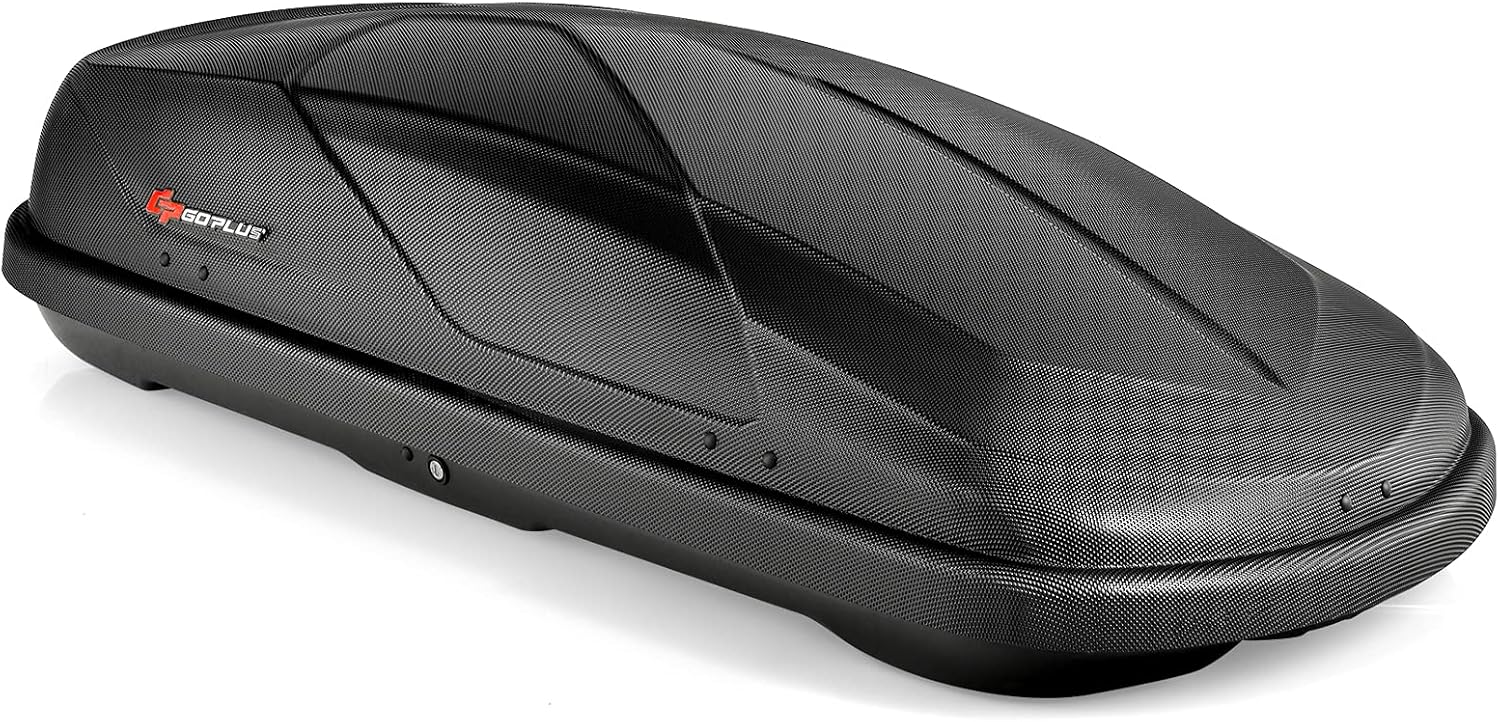
This Goplus hard-shell cargo box expands rooftop storage for a Hyundai Santa Cruz by adding 14 cubic feet of weatherproof space and a 165 lb load capacity. It mounts to crossbar roof racks and is compatible with bars 17 to 22.8 inches wide, so it fits the Santa Cruz factory-style and most aftermarket crossbars that meet those dimensions. The dual-side opening is the standout feature, letting you load or retrieve gear from either side when parked in tight spaces or curbside, and the double-lock latching system adds basic theft resistance. Construction uses ABS and PC with metal lid stiffeners for rigidity and reduced flapping in wind, while the aerodynamic shape aims to limit noise and drag on highway drives. Installation uses four quick-connect anchors for a tool-light fitment, though users should confirm crossbar width and thickness before buying. The box is practical for weekend trips, sporting gear, and extra luggage, but larger groups or very bulky items may need a bigger capacity option.
Best for: Drivers who need easier curbside or tight-space loading on a Hyundai Santa Cruz and prioritize convenient access and weatherproof protection for weekend trips and outdoor gear.
Less Ideal for: Anyone who routinely hauls oversized equipment or needs maximum cargo volume should consider a larger capacity box or a trailer solution.
- Dual-side opening for convenient loading from either side of the vehicle
- Waterproof hard-shell construction protects gear from weather
- Fits 17" to 22.8" wide crossbars, covering most Santa Cruz roof racks
- 165 lb maximum load capacity for bikes' gear, luggage, and camping supplies
- Quick-connect anchors and super latch design simplify installation and security
- May be tight for very large or bulky items due to 14 cu ft capacity
Verdict: Choose a dual‑side opening box when you want easier loading and unloading from either side of the vehicle, especially valuable in tight parking spots or with bulky gear.
4. QUAWIP Hard‑Shell Rooftop Cargo Box, 13 cu ft, Tool‑Free Install
Best Hard‑Shell Rooftop Cargo Box

| Mounting Type | Roof Mount |
|---|---|
| Item Volume | 13 Cubic Feet |
| Shell Type | Hard |
| Automotive Fit Type | Universal Fit |
| Load Capacity | 130 lb |
This QUAWIP hard‑shell rooftop cargo box provides a weatherproof, impact‑resistant cargo solution for road trips and weekend gear hauls. Made from ABS and PMMA, the rigid shell shields luggage, tools, and fragile items from rain and road debris while the double‑side opening and passenger‑side access make loading bulky items easier without climbing onto the vehicle. Installation is tool‑free and it clamps to round, square, and most aerodynamic roof bars, so you can mount and remove it quickly for seasonal use. The box holds about 13 cubic feet and supports up to 130 lb, enough for luggage for two to three people or a mix of gear and tools. A keyed locking system secures the contents and the lid stays open during loading thanks to a support arm. Be aware the size is modest compared with larger boxes and the fixed hard shell means some heavy gear may need careful packing to avoid movement during long drives on rough roads.
Best for: A Hyundai Santa Cruz owner who prioritizes protecting luggage and gear from weather and road impact during trips and needs a compact, easy‑to‑mount hard‑shell carrier for occasional use.
Less Ideal for: Drivers who regularly transport very large loads or need maximum cargo volume for long family vacations should consider larger capacity options or a trailer instead.
- Hard ABS/PMMA shell offers solid impact and weather protection
- Tool‑free installation compatible with round, square, and most aero roof bars
- Double‑side opening with support arm for easier loading and unloading
- Keyed lock with multiple locking points for added security
- Supports up to 130 lb and provides 13 cu ft of usable cargo space
- Modest 13 cu ft capacity may be small for large families or extended trips
Verdict: Opt for a hard‑shell box when you need superior impact resistance and weather protection for tools, luggage, or fragile kit during long drives.
5. Sailnovo 20 cu ft Rooftop Cargo Carrier Soft Roof Bag
Best Soft‑Shell Rooftop Cargo Bag

| Volume | 20 Cubic Feet |
|---|---|
| Mounting Type | Strap mount |
| Material Type | 1000D Oxford cloth |
| Closure Type | Zipper |
| Water Resistance Level | Water Resistant |
The Sailnovo rooftop cargo bag is a large, foldable soft carrier that expands roof storage for road trips and camping while remaining compact when not in use. It mounts with the supplied straps and door hooks so you can fit it to a Santa Cruz with or without crossbars, and the reinforced 1000D Oxford fabric plus PVC-lined zipper and double-coated waterproofing aim to keep luggage dry in light to moderate weather. The bag includes extra tie-down straps, door hooks, and a storage carry case so setup and off-season storage are straightforward. It is best used for soft items like suitcases, sleeping bags, and tents rather than sharp or heavy gear because the fabric will puncture if items are abrasive. Also observe the manufacturer suggestion to limit speed and secure straps to reduce wind noise and movement. For Subaru-sized loads this bag offers a stowable, budget-friendly alternative to a hard box if you need occasional extra cargo on a Hyundai Santa Cruz.
Best for: Buyers who want a compact, stowable roof storage option for occasional hauling on a Hyundai Santa Cruz and prioritize easy storage and weather resistance over permanent roof hardware.
Less Ideal for: Frequent heavy haulers or those who need rigid, lockable cargo security should choose a hard rooftop box instead.
- Large 20 cu ft capacity suitable for family luggage and camping gear
- 1000D Oxford fabric with reinforced seams for improved tear resistance
- PVC-lined double-coated zipper and water-resistant coating for weather protection
- Includes six tie-down straps, six door hooks, and a storage carrying bag for easy installation and storage
- Not intended for sharp or heavy items that can puncture the soft shell
Verdict: Choose a soft‑shell cargo bag if you want a compact, stowable, waterproof option that works with or without crossbars for occasional hauling.
6. Perflex Exclusive 17.7 cu ft Hard-Shell Rooftop Cargo Box
Best Large‑Capacity Rooftop Cargo Box
| Item Volume | 500 Liters |
|---|---|
| Weight Capacity | 130 lbs |
| Shell Type | Hard |
| Mounting Type | Roof Mount |
| Water Resistance Level | Waterproof |
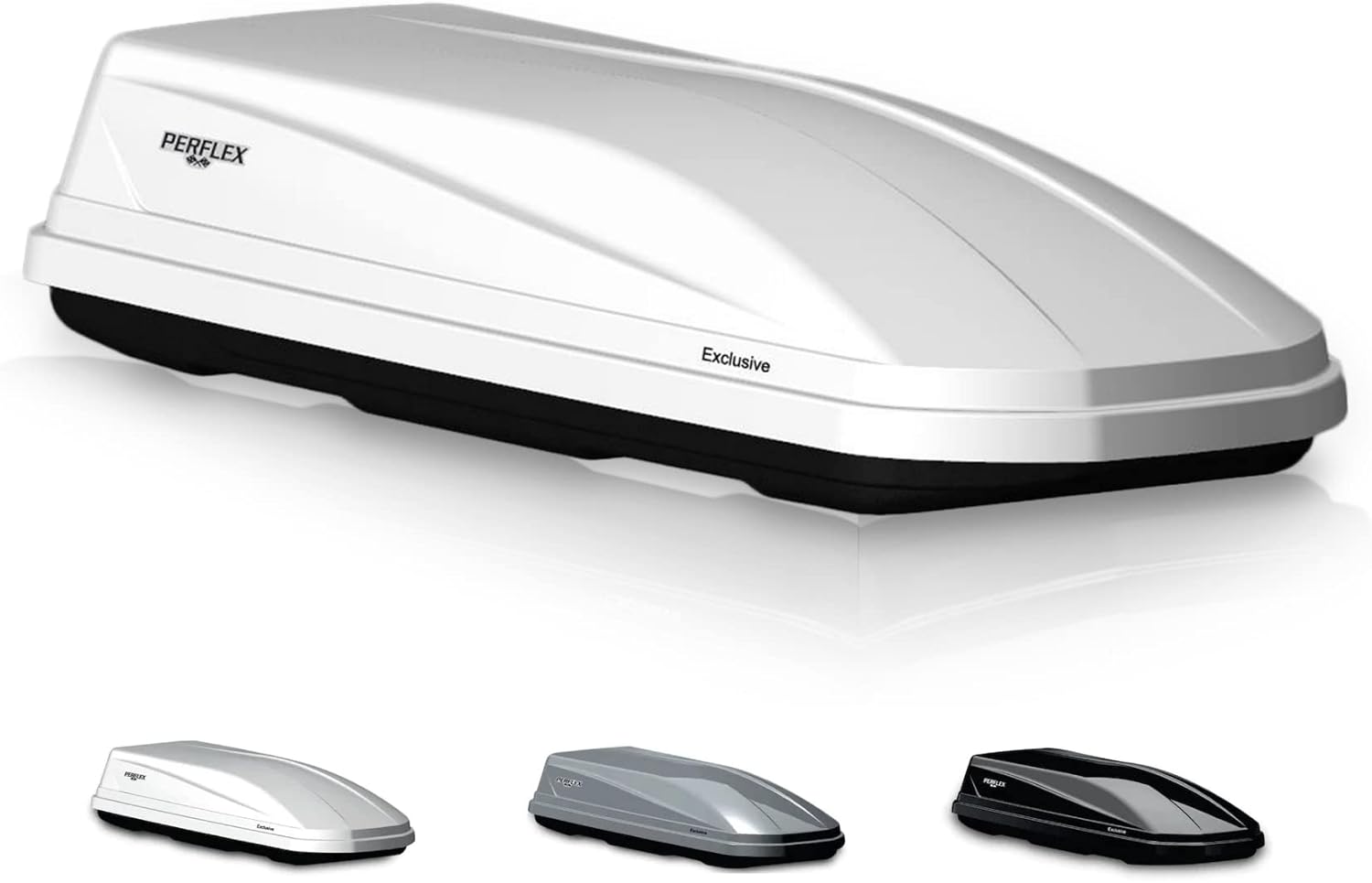
The Perflex Exclusive is a roomy hard-shell cargo box designed to add significant luggage space for vehicles with crossbars. With 17.7 cu ft (500 L) capacity and a 130 lb load limit, it fits bulky family luggage, skis, or camping gear while keeping items protected by a weather-resistant, impact-resistant ABS shell and a central locking system. Dual-side opening makes loading and unloading easier on either side of the vehicle, and the carrier ships fully assembled with tool-free mounting hardware and straps so it installs quickly on factory or aftermarket roof racks. Practical touches include a textured matte finish and four keys for the lock. Expect a bit of wind noise and some added fuel use at highway speeds because of the larger profile, and the box requires compatible roof crossbars (not included), so check fit and fore-aft clearance on the Santa Cruz before installing. For everyday trips and family vacations this box delivers straightforward, secure extra cargo space.
Best for: Buyers who need maximum rooftop cargo volume for regular family trips, bulky gear, or multi-person outings and prioritize easy access and weather protection.
Less Ideal for: People who rarely carry extra cargo or who do not have roof crossbars and do not want to add them should consider smaller or interior storage options instead.
- Large 17.7 cu ft (500 L) capacity suitable for bulky luggage and sports gear
- Dual-side opening for easier loading and unloading from either side
- Weather-resistant, impact-resistant ABS shell protects contents in rain and sun
- Tool-free mounting hardware and straps for quick installation on crossbars
- Central locking system with four keys enhances security
- Requires compatible roof crossbars and enough roof clearance on the vehicle
- May increase wind noise and fuel consumption at highway speeds
Verdict: Go with a large‑capacity box when you regularly carry bulky items or family luggage and need maximum cubic footage without crowding the cabin.
7. Thule Pulse 2 L Roof-Mounted Hard Shell Cargo Box
Best Low‑Profile / Aerodynamic Rooftop Cargo Box

| Volume | 450 Liters |
|---|---|
| Load capacity | 75 kg |
| Mounting type | Roof Mount |
| Shell type | Hard |
| Material type | Plastic |
The Thule Pulse 2 L is a streamlined hard-shell cargo box designed to carry extra luggage and outdoor gear on a Hyundai Santa Cruz while keeping wind noise and drag down. It mounts to crossbars with Thule PowerClick, a tool-free system that clicks when the correct torque is reached so installation is quick and repeatable. The 450 liter interior fits suitcases, weekend kit, skis or snowboards and the dual-side opening plus central locking make loading and securing gear convenient from either side of the vehicle. Its forward, low-profile shape helps preserve full trunk access on the Santa Cruz and reduces the chance the box interferes with hatch operation. Constructed from ASA-ABS plastic, the shell resists sun and scratches for regular use. Keep in mind it is not listed as water resistant and has a 75 kg load limit, so very heavy cargo or prolonged exposure to deep water are limitations to consider.
Best for: Buyers who want a sleek, low-drag cargo solution for a Hyundai Santa Cruz that prioritizes quieter highway driving and easy day-to-day loading.
Less Ideal for: Those needing to carry very heavy loads above the specified 75 kg limit or who require a fully waterproof rooftop container for prolonged water exposure should look elsewhere.
- Low-profile aerodynamic shape that helps reduce wind noise and drag on highway drives
- Dual-side opening for easy access from either side of the Hyundai Santa Cruz
- PowerClick tool-free mounting with torque indicator for fast, secure installation
- Durable ASA-ABS hard shell resists sun damage and scratches for regular outdoor use
- Not water resistant, so heavy rain or deep puddle exposure may allow water ingress
Verdict: Pick a low‑profile aerodynamic box if you prioritize quieter highway driving and better fuel economy while keeping a sleek roofline.
Choosing the Right Hyundai Santa Cruz Rooftop Cargo Box: Key Factors to Consider
Capacity and Internal Layout
Capacity is the first practical constraint because it determines what gear you can carry without spilling into the cabin. Look beyond the headline liters to how the space is shaped. Narrow or tapered ends reduce usable volume for bulky items like skis or long fishing rods. Consider divider options, internal tie-down points, and whether the box opens on one or both sides for easier loading while parked.
For a Santa Cruz, balance capacity against roof load limits and crossbar spacing. A very large box may offer more liters but can extend past the windshield or rear of the vehicle, affecting visibility and parking clearance. Think about how often you will carry oversized items versus general luggage when choosing the internal arrangement.
Mounting Compatibility And Fit
Not all rooftop cargo boxes attach the same way. Mounting systems vary between U-bolts, T-track clamps, and universal quick-mount brackets. Confirm compatibility with your Santa Cruz crossbars and the distance between the bars. Some boxes have long adjustable clamps to fit multiple bar widths while others require adapters.
Installation ease matters because frequent removal and reinstallation is common. Simple, tool-free clamps reduce time and the risk of incorrect tightening. Also check the box's footprint to ensure it does not interfere with roof accessories or the truck bed area of the Santa Cruz when accessing the bed or tailgate.
Aerodynamics And Wind Noise
The aerodynamic shape of a rooftop cargo box affects fuel economy, stability, and cabin noise at highway speeds. Streamlined, low-profile boxes reduce drag and usually produce less wind noise. Tall, boxy designs maximize capacity but can increase wind resistance and make the vehicle feel more sluggish in crosswinds.
If you do a lot of highway driving with a loaded box, prioritize an aerodynamic profile. Also consider how the box sits relative to the Santa Cruz windshield and rear of the vehicle because placement can change how air flows over and around the unit.
Material Durability And Weather Resistance
Rooftop cargo boxes face UV exposure, temperature swings, road debris, and rain. Materials such as reinforced ABS or high-density polyethylene usually offer a durable, weatherproof shell that resists cracking and fading. Pay attention to the quality of seals and gasket systems to keep water and dust out during long trips.
Inspect the hinge and latch design for corrosion resistance and serviceability. A box with replaceable components extends useful life and avoids premature failure. For owners who leave a box mounted frequently, durable finishes and UV-resistant coatings are worth the investment.
Weight, Vehicle Load Limits, And Handling
Every rooftop cargo box adds its own weight when empty and further with cargo. The Hyundai Santa Cruz has a specified roof load limit; exceeding it risks structural stress and altered vehicle dynamics. Choose a box with a favorable weight-to-capacity ratio so you maximize usable space without unnecessary dead weight.
Heavier roof loads raise the vehicle's center of gravity and can affect cornering and braking. Consider distribution of cargo inside the box to keep heavier items toward the center and lower where possible. Also account for total tongue and payload capacities if the Santa Cruz is carrying gear in the bed as well.
Security And Access
A lockable rooftop cargo box protects gear from theft and prevents accidental opening on the road. Assess how many locking points there are and whether the lock cylinder is robust and user-replaceable. Some designs feature keyed locks with internal latches that secure both lid halves simultaneously.
Accessibility matters too. Dual-side opening lets you reach items from either side of the vehicle and can be crucial in tight parking situations. Consider how easy it is to open the lid when the box is mounted and whether the opening height interferes with garage doors or low-clearance areas.
How Much Space Do You Really Need
Estimating real-world needs starts with listing typical loads. For weekend luggage and a cooler you might need 300 to 400 liters. For longer road trips with bulky gear, aim for 400 to 600 liters. Very large loads like multiple sets of skis or camping equipment can push you above 600 liters but will demand careful attention to roof load limits and overhang.
Remember that internal shape affects usefulness. A box with a wide, square interior will store suitcases much more efficiently than one that is long and narrow. When possible, simulate packing with similar-sized bags at home to visualize how many items the box will accept.
- 300–400 L: compact luggage and weekend gear
- 400–600 L: multiple passengers' luggage or family road trips
- 600+ L: large, bulky gear but check vehicle limits
Installation Tips For Santa Cruz Owners
Simple installation steps reduce the chance of damage and ensure a secure fit. Start by measuring the crossbar spacing and verifying the box clamps will reach. Place the empty box on the bars, align the mounting points over the bars, and loosely attach the clamps before tightening them fully. Follow torque guidelines if provided to avoid overtightening.
Double-check that the box does not interfere with the tailgate, doors, or the bed access area on the Santa Cruz. After the first short drive, recheck tightness because fasteners can settle. Periodically inspect mounting hardware during long trips.
- Measure crossbar spacing before purchase
- Tighten clamps evenly and check after a short drive
- Avoid placing the box too far forward or rearward
Managing Fuel Economy And Driving Feel
Any rooftop cargo box increases aerodynamic drag and may affect fuel economy, especially at highway speeds. Low-profile, streamlined boxes mitigate this impact better than tall, blunt shapes. Reducing speed and removing the box when not needed are effective ways to limit fuel penalty.
Loaded roof boxes can change handling, particularly in crosswinds or during rapid lane changes. Drive more cautiously with a loaded box, maintain safe following distances, and be mindful of increased braking distances due to added weight.
- Expect small fuel economy losses at highway speeds
- Prioritize aerodynamic profiles for frequent highway use
- Drive gently when cornering with rooftop loads
Practical Packing And Weight Distribution
Pack heavy items low and centered to reduce sway and the center of gravity shift. Use soft bags to fill odd-shaped gaps and prevent items from shifting. Secure loose items with internal straps or bungee cords if the box provides anchor points.
Leave space near the lid for items you may need during the trip so you do not have to unload everything to reach essentials. Keep fragile items cushioned and consider weather-sensitive gear when choosing where to place it in the box.
- Heavy items in the center, light items at the ends
- Use packing cubes or soft bags to maximize space
- Keep frequently used items accessible near the lid
Storage, Maintenance, And Off-Season Care
When not in use, store the rooftop box in a dry, shaded spot to minimize UV and moisture exposure. Clean the seals and hinges after winter travel to prevent corrosion from road salt. Periodically lubricate moving parts and check for cracked plastic or worn fasteners.
If you mount the box seasonally, label the hardware and keep mounting tools together for quicker reinstallation. Inspect the locking mechanism and replace worn keys or cylinders to maintain security.
- Store indoors or under cover to extend life
- Clean and inspect seals after harsh weather
- Lubricate hinges and check locking hardware annually
How We Chose the Best Hyundai Santa Cruz Rooftop Cargo Box
To build this list we applied practical, Santa Cruz–focused filters to narrow thousands of options to the most relevant rooftop cargo boxes. Selection began with compatibility checks for common crossbar profiles and rooftop load limits typical of the Hyundai Santa Cruz. We prioritized boxes that clearly state mounting methods compatible with square, aerodynamic, and T-track crossbars.Key evaluation criteria included usable internal volume and layout, aerodynamic profile and wind-noise reduction, mounting hardware quality and ease of installation, build material durability and weather sealing, and security features such as robust locks. We also considered weight vs. capacity tradeoffs to avoid exceeding the vehicle roof's load rating and to minimize negative effects on handling.Excluded items included soft bags that require unfixed straps, units lacking clear mounting specs, and boxes with poor or absent weatherproofing. Our final picks balance capacity, installation simplicity, and real-world ergonomics for everyday use on the Hyundai Santa Cruz.
Our full evaluation process is outlined in our review methodology.
FAQ
Will a rooftop cargo box fit the Hyundai Santa Cruz without modifications?
Usually yes if you choose a box compatible with your crossbar type and observe the Santa Cruz roof load limit. Confirm the box mounting system matches your crossbar profile and the box footprint does not block bed access or lights.
How much weight can I put in a roof box on the Santa Cruz?
Maximum load depends on the Hyundai Santa Cruz roof load rating and crossbar capacity. Combine the box's empty weight with cargo weight and stay under the specified roof and crossbar limits to avoid structural or handling issues.
Does a rooftop cargo box affect gas mileage significantly?
It can, particularly at highway speeds. Aerodynamic boxes reduce the penalty, but expect modest decreases in fuel economy. Removing the box when not needed is the most effective way to avoid reduced efficiency.
Can I install a roof box by myself?
Many rooftop cargo boxes are designed for one-person installation, but having a second person helps with alignment and safety. Follow the manufacturer instructions for clamp tightening and recheck hardware after the first drive.
Are hard shell boxes better than soft bags for Santa Cruz owners?
Hard shell boxes offer superior weather protection, security, and resistance to road debris. Soft bags are lighter and easier to store but usually provide less protection and may need additional straps to secure them.
Will a large roof cargo box block access to the truck bed or tailgate?
It can if the box overhangs the rear of the roof or is mounted too far back. Verify box length against roof dimensions and test placement on your crossbars to ensure you can still access the bed and tailgate without obstruction.
Final Verdict
Choosing the right rooftop cargo box for a Hyundai Santa Cruz comes down to balancing usable capacity, mounting compatibility, and aerodynamic impact. Prioritize a box that fits your crossbars, stays within roof load limits, and offers an internal layout that matches the gear you carry most often. If you travel frequently on highways or carry lighter loads, favor low-profile, aerodynamic models; if you need maximum space for occasional big hauls, choose a larger box but pay close attention to weight and placement.Consider installation ease and weather resistance as tiebreakers because they affect everyday usability. With careful attention to capacity, fit, and mounting, you can select a rooftop cargo box that expands your Santa Cruz's versatility without compromising safety or comfort.
Explore More:
- Check out all Hyundai Santa Cruz parts & accessories
- Explore Exterior Accessories
- Browse all Accessories
