

Note: This article contains affiliate links. If you click on these links and make a purchase, I may earn a small commission at no extra cost to you. This helps support my research and content. Read my full affiliate disclosure here.
If you plan to sleep on top of your Toyota Camry, picking the right roof tent matters for safety, comfort, and ease of use. A roof tent designed for a sedan roof must balance low weight, compact packing size, and straightforward mounting so it does not overload the vehicle or create excessive wind noise.This guide covers seven carefully shortlisted roof tents that suit the Camry's roof profile and typical roof rack capacity. We'll explain the practical criteria used to evaluate these options and what to check before you buy, so you can pick a tent that fits your driving and camping style. Read on for quick decision points before the detailed product list.
Looking for other parts? See all Toyota Camry parts & accessories.
Top Picks at a Glance
| Best Overall Roof Tent Versatile midweight option balancing comfort, durability, and everyday usability | Naturnest Sirius 1 Plus Hardshell Rooftop Tent |  |
| Best Budget Roof Tent Affordable, reliable basic tent with simple setup and solid weather protection | HOMEFUN Inflatable 2-Person Rooftop Tent |  |
| Best Hard-Shell Roof Tent Rigid, aerodynamic shell prioritizing durability and quick, secure deployment | WildFinder Hard-Shell Rooftop Tent for 2–3 People |  |
| Best Soft-Shell Roof Tent Expandable fabric design offering roomier interior and lighter packed height | Overland Vehicle Systems TMBK 3-Person Soft Shell Rooftop Tent |  |
| Best Lightweight Roof Tent Extremely low-weight construction for minimal load and easier handling | SAN HIMA Hotham Lite Hard-Shell Rooftop Tent (2-Person) |  |
| Best 2-Person Roof Tent Compact two-person layout optimized for space efficiency and quick setup | ILANDER Hardshell Rooftop Tent for 2–3 People |  |
| Best Premium Roof Tent High-end materials and features focused on durability, comfort, and performance | Thule Foothill 2 Person Rooftop Tent |  |
Naturnest Sirius 1 Plus Hardshell Rooftop Tent
Best Overall Roof Tent

| Occupancy | 3 Person |
|---|---|
| Seasons | 4 Season |
| Installation Type | Roof Top |
| Is Waterproof | True |
| Included Components | Extention Ladder, Parts and Tools, Shoe Bags, Support Rods |
The Naturnest Sirius 1 Plus is a hardshell rooftop tent designed to give an elevated, weather-resistant sleeping platform for vehicle-based camping. It pops open in roughly 30 seconds and uses gas struts and a clamshell ABS shell to make setup and takedown fast for one or two people. The interior is lined with blackout fabric and includes a nearly 2-inch mattress for more comfortable sleep than a ground pad, while multiple windows and venting let you control airflow. Construction mixes aluminum framing, stainless-steel struts, and Oxford fabric for a balance of strength and weight. Practical benefits include elevated sleeping to avoid wet or uneven ground, added storage on the shell for lightweight gear, and solid weather protection for colder or wet conditions. Important limitations are the tent's bulk and mass which require a roof rack and crossbars rated to support it and may change vehicle handling and fuel use; some users report ladder and latch durability issues and occasional fitment or assembly fiddliness with certain racks.
Best for: Drivers who want a single, reliable rooftop tent that balances easy installation, 4-season weather protection, and comfortable sleep for weekend getaways or longer overland trips; ideal for owners prioritizing quick setup, durable construction, and roomy sleeping space without excessive weight or complicated mounting.
Less Ideal for: People who need a lightweight, low-profile cargo solution or who lack a roof rack rated for heavy rooftop loads should consider alternatives like ground tents or lighter soft-shell roof tents.
- Rapid pop-up setup with gas strut assisted clamshell for fast deployment
- Blackout-lined interior and a thick mattress for improved sleep quality
- Hardshell ABS and aluminum construction aimed at weather and thermal protection
- Multiple windows and vents for airflow control and panoramic views
- Includes ladder and mounting hardware plus accessory storage on the shell
- Heavy unit requires a strong roof rack and crossbars sized for the tent weight
- Some customers report ladder sections and latches that feel flimsy or need reinforcement
- Occasional assembly or minor fitment adjustments needed depending on rack style
Verdict: The best all-around roof tent choice for most owners, balancing fit, weight, weather protection, ease of installation, and sleeping comfort for most weekend and overland trips.
HOMEFUN Inflatable 2-Person Rooftop Tent
Best Budget Roof Tent

| Occupancy | 2 Person |
|---|---|
| Seasons | 4 Season |
| Installation Type | Roof Top |
| Material Type | Polyester |
| Pole Material Type | Aluminum |
This inflatable rooftop tent provides a quick, weather-resistant sleeping option for two people. It uses 300D waterproof polyester and seam sealing to keep rain out while four mesh windows and a TPU panoramic skylight improve airflow and stargazing. The included electric pump inflates the tent in about five minutes, making it useful for short stops or spontaneous trips. A 6-inch thick base and reinforced laminated floor are designed to support heavy loads and add sleeping comfort. Setup requires mounting to a roof rack or compatible crossbars and some assembly, and the tent packs down for storage when not in use. Practical limitations include a carrying bag that may feel thin and an initial chemical odor that typically dissipates after airing; because it is inflatable, puncture care and mindful placement on the roof are important. For Camry owners this tent offers a compact, fast-to-deploy rooftop shelter when paired with a proper roof rack and weight-conscious packing.
Best for: Cost-conscious campers who want an affordable, weatherproof rooftop sleeping option that pairs with standard roof crossbars or racks on a Camry and prioritizes quick, simple setup and comfortable nights away from basecamp.
Less Ideal for: Anyone seeking a permanently mounted, heavy-duty rooftop solution or frequent off-road use without upgrading to a stronger roof support or a hard-shell tent.
- Quick electric inflation gets the tent ready in about five minutes
- Waterproof 300D fabric with seam sealing for reliable weather protection
- Mesh windows and panoramic skylight provide strong ventilation and exterior views
- Thick laminated base and reinforced floor for added sleeping comfort and load support
- Inflatable structure requires care to avoid punctures and may not match the rigidity of hardshell designs
- Carry/storage bag quality is thin and zipper durability may be limited
Verdict: The best low-cost roof tent that fits Camry crossbars or roof racks while offering reliable weather protection, manageable weight, and a straightforward setup for cost-conscious campers.
WildFinder Hard-Shell Rooftop Tent for 2–3 People
Best Hard-Shell Roof Tent

| Occupancy | 3 Person |
|---|---|
| Seasons | 4 Season |
| Included Components | Ladder, LED strip, organizers, mattress(s) |
| Form Factor | Hard Shell |
| Water Resistance Level | Waterproof |
This WildFinder hard-shell rooftop tent mounts to a vehicle roof and converts the top of your car into a weatherproof sleeping area for two to three people. It opens in seconds with lift latches and a built-in telescoping ladder for access, and includes interior conveniences such as LED lighting, multiple storage organizers, and an integrated mattress. The aluminum-alloy shell and polyester fabric rainfly aim to resist UV and heavy rain, while the recessed condensation pad and ventilation windows reduce interior moisture and improve airflow. Included accessories like a ladder organizer and multiple storage bags make multi-night trips neater, but the unit is very heavy and requires a suitable roof rack or crossbars and at least two people to mount safely. The mattress is comfortable for short- to medium-length trips but some buyers add a topper for longer stays. This tent is best when you want a durable, fast-deploying roof campsite solution and are prepared for the extra weight and the logistics of installation and storage.
Best for: Drivers who want a durable, low-profile hard-shell roof tent built for frequent road use and quick setup, prioritizing aerodynamic fit and long-term weather resistance for weekend overnights and extended camping trips.
Less Ideal for: Drivers who cannot install a high-capacity roof rack or who need a lightweight, easily removable sleeping option should consider ground tents or lighter soft-shell rooftop tents instead.
- Hard-shell aluminum alloy construction for long-term outdoor exposure
- Quick pop-up deployment with included telescoping ladder for easy setup
- Waterproof polyester rainfly and vents reduce condensation and keep interior dry
- Includes mattress, LED strip, and multiple organizers for camping convenience
- Very heavy which requires strong roof bars and at least two people to install safely
- Mattress may be thin for long trips and some users add an extra topper
Verdict: A low-profile hard-shell roof tent with a rigid lid and fast pop-up setup that prioritizes durability, aerodynamics, and long-term road readiness.
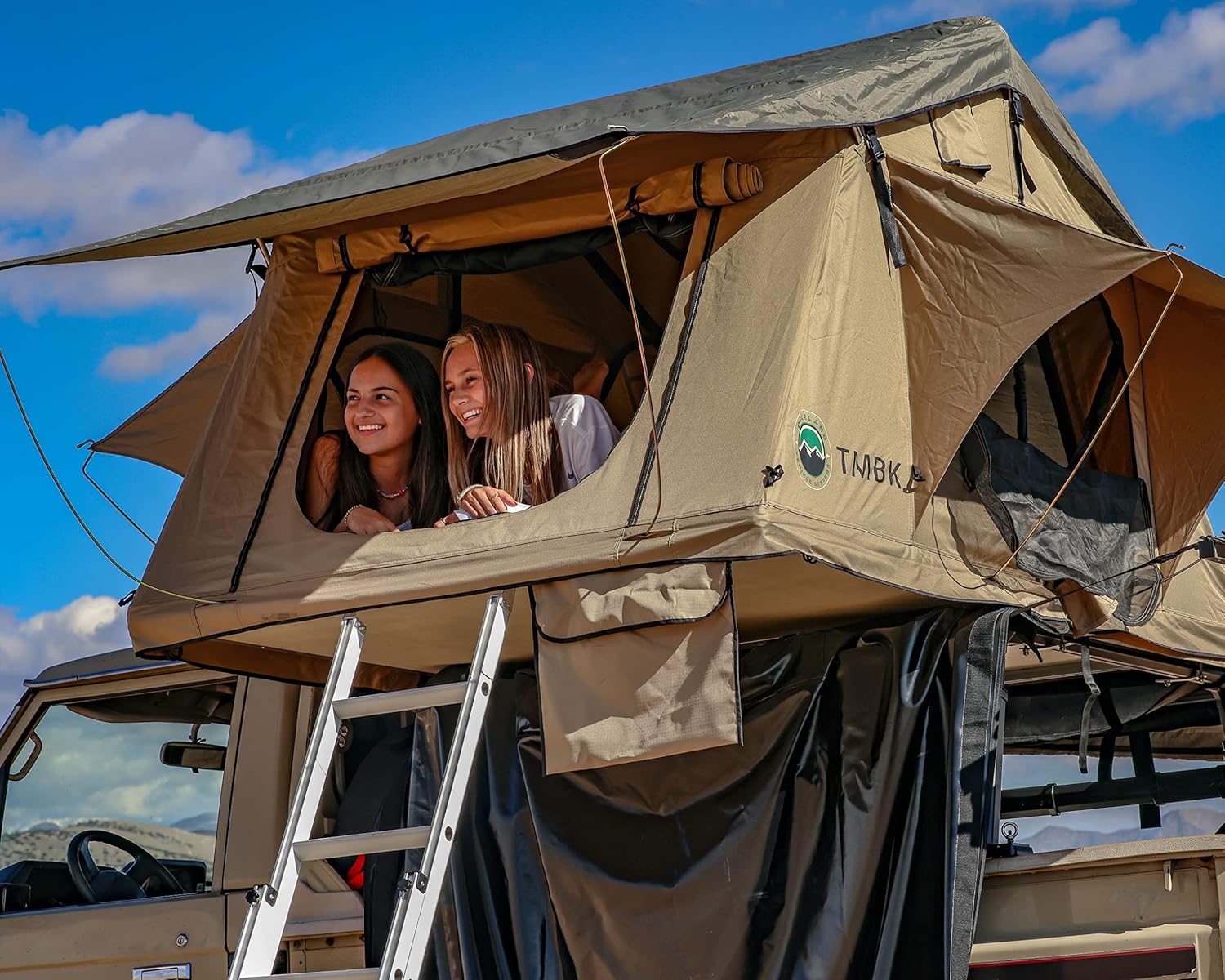
Overland Vehicle Systems TMBK 3-Person Soft Shell Rooftop Tent
Best Soft-Shell Roof Tent
| Occupancy | 3 Person |
|---|---|
| Installation Type | Roof Top |
| Water Resistance Level | Waterproof |
| Fabric Type | Poly Cotton Ripstop |
| Rainfly Material | 420D Polyester Oxford Waterproof |
The Overland Vehicle Systems TMBK 3-person rooftop tent converts a roof rack into a ready-to-sleep setup that lets you camp off the ground on a Toyota Camry with an appropriate load-rated rack. It unfolds quickly and includes an aluminum insulated base, a 2.5-inch high-density foam mattress, and a 420D waterproof polyester rainfly for wet-weather protection. The poly-cotton ripstop body and breathable mesh windows give good ventilation in warm conditions while the rainfly and seam tape help keep the interior dry in storms. Practical benefits include simple mounting to crossbars, an included ladder and rainfly, and multiple vestibules and guylines for gear storage and stability. Important limitations for Camry owners are weight and roof-load considerations; the tent and hardware add substantial mass that requires confirming the vehicle roof and rack are rated for the load and frequent highway use can increase drag. Setup instructions and some supplied hardware may be sparse or need adjustment, and the stock mattress is decent for short trips but many users prefer an aftermarket topper for longer stays.
Best for: Drivers who prioritize roomy, comfortable campsite sleeping and a lower-profile packed tent for easier storage and handling, and who plan to use a roof rack on a midsize sedan for occasional overlanding or car camping trips.
Less Ideal for: People who plan heavy long-term overlanding, need low aerodynamic drag at highway speeds, or cannot confirm their roof and rack meet the tent's weight requirements should consider other solutions.
- Universal roof-rack mounting lets it fit cars equipped with rated crossbars
- Insulated aluminum base improves comfort and limits noise and drafts
- 420D polyester Oxford rainfly and seam tape provide strong waterproofing
- Breathable poly-cotton ripstop body and multiple windows give good ventilation
- Comes with ladder, rainfly, and integrated high-density foam mattress
- Heavy overall weight requiring careful attention to Camry roof load limits
- Instructions and included hardware can be incomplete or require modification
- Stock mattress is thin for extended multi-night trips without a topper
Verdict: A soft-sided roof tent that expands to provide a roomier interior and lower packed height, ideal for buyers who want more living space and lighter packed dimensions.
SAN HIMA Hotham Lite Hard-Shell Rooftop Tent (2-Person)
Best Lightweight Roof Tent

| Occupancy | 2 Person |
|---|---|
| Seasons | 4 Season |
| Water Resistance Technology | PU 5,000mm |
| Material Type | Aluminum |
| Included Components | Anti-condensation Mat, LED Strip Light, Shoe Bag, Telescopic Ladder, Crossbars |
The SAN HIMA Hotham Lite is a low-profile hard-shell rooftop tent built for fast, simple overnighting on a vehicle roof. It mounts to crossbars and uses gas struts to pop open in under a minute, giving a raised sleeping platform with ventilation windows, mesh insect screens, and a full-ceiling tri-color LED strip for interior lighting. The slim pack-down height and relatively light construction make it easier to fit under low clearances and reduce wind noise compared with bulkier RTTs. The tent includes a memory-foam mattress, telescoping ladder, internal storage pockets, and a waterproof 5,000 mm fabric with UV protection for wet-weather use. Practical downsides to be aware of are the included mounting hardware quality reported by some users and occasional missing accessories on delivery, so plan to inspect and upgrade fasteners if you intend to drive aggressively. Also, while the mattress is comfortable for many, several buyers add a topper for extra cushioning. For a Camry owner the tent’s slim profile and quick setup make it an attractive way to convert the car into a weekend camper where roof-rack load limits permit.
Best for: Drivers who prioritize a lightweight, low-profile roof tent to reduce added weight and wind drag on a sedan while still wanting quick setup and reliable all-weather protection for occasional car-top camping trips.
Less Ideal for: People who need heavy-duty expedition gear or frequent high-speed/off-road use where a heavier, more robust mounting system and professional-grade hardware are required.
- Very low packed height for easier garage or undercover parking
- Fast gas-strut opening and near-instant setup
- 5,000 mm waterproof fabric with UV protection for four-season use
- Built-in LED lighting and interior storage pockets for convenience
- Includes memory-foam mattress and telescoping ladder for ready use
- Some customers reported weak factory mounting hardware and recommend upgrading fasteners
- Occasional missing accessories on shipment requiring follow-up with seller
Verdict: An ultralight roof tent designed to minimize added weight on the vehicle for easier mounting and better fuel economy while still delivering adequate weather protection for camping.
ILANDER Hardshell Rooftop Tent for 2–3 People
Best 2-Person Roof Tent

| Occupancy | 3 Person |
|---|---|
| Seasons | 4 Season |
| Water Resistance Technology | ILANDER coating |
| Installation Type | Roof Top |
| Is Waterproof | true |
The ILANDER hardshell rooftop tent mounts to a vehicle roof and creates a dry, elevated sleeping space for two to three people. It uses an aluminum shell with telescoping ladder and a 6 cm high-density mattress to deliver a comfortable, road-ready camp setup that claims a 30-second deploy time and packaged locks and straps for secure folding. The tent is built for all-weather use with an ILANDER coating rated for water repellency and 99% UV protection, plus large windows and a silver-shading fabric for ventilation and privacy. Practical benefits include a compact stored profile that reduces wind drag while driving and interior pockets and an LED light strip for organization and night use. Limitations to consider are that roof tents add roof load, require a compatible roof rack and professional mounting for sedan roof strength, and the listed setup time assumes two people and unobstructed access; assembly and routing of mounting hardware are required before first use.
Best for: Couples or solo campers who prioritize a compact, easy-to-handle rooftop tent that tucks down low for better driving dynamics and fits a two-person sleeping footprint for weekend trips and simple overland setups.
Less Ideal for: People who plan frequent solo rooftop loading or who cannot fit a heavy rooftop system to their vehicle without upgrading the roof rack or using a support-rated vehicle should consider lighter or ground-based camping alternatives.
- Hard-shell aluminum design for faster setup and better weather protection than soft tents
- Quick deploy mechanism and ergonomic straps for faster campsite setup
- Water-repellent and UV-resistant coating for all-weather use
- Includes a thick mattress, internal pockets, LED light strip and ladder for usable comfort
- Requires a sturdy roof rack and proper professional installation to handle roof load on a sedan
Verdict: A compact two-person roof tent sized for couples or solo campers who want a snug, efficient sleeping area with lower bulk and simpler handling.
Thule Foothill 2 Person Rooftop Tent
Best Premium Roof Tent

| Occupancy | 2 Person |
|---|---|
| Seasons | 3 Season |
| Installation Type | Roof Top |
| Material Type | Polyester |
| Pole Material Type | Aluminum |
The Thule Foothill is a low-profile soft-shell rooftop tent intended for car camping when you need to keep roof space for bikes or kayaks. It folds down to a narrow 64 cm footprint and mounts roof-top, giving two people a ventilated sleeping area with large panoramic windows, dual skylights, mesh panels, and a 6 cm foam mattress with removable cover. Setup uses telescopic internal poles and can be done solo thanks to the symmetrical design and low profile. The tent is made from weather-resistant polyester treated for water resistance and uses aluminum poles and a polyester floor and rainfly for durability. Internal pockets and exterior attachment points add practical storage and lighting options at camp. Because it is a soft-shell, it is lighter and packs smaller than hard-shell alternatives but offers less rigid protection and may require more careful packing in prolonged bad weather. Mounting requires compatible roof mounting rails and brackets rather than integrating with a specific factory roof system.
Best for: Drivers who prioritize a durable, comfortable rooftop camping setup and are willing to invest in premium materials and refined features for long-term use and better on‑road integration.
Less Ideal for: People who need a fully waterproof, heavy-duty shelter for extended or extreme-weather expeditions should consider more rugged or hard-shell alternatives.
- Narrow folded footprint preserves roof space for cargo and accessories
- Large windows, dual skylights, and mesh panels provide strong ventilation and daylight
- Includes a thicker 6 cm foam mattress with removable cover for comfortable sleep
- Telescopic internal poles and low-profile design allow one-person setup
- Made from weather-resistant polyester with aluminum poles for durability
- Soft-shell construction offers less rigid protection compared with hard-shell tents
- Not fully waterproof and rated water resistant rather than waterproof
Verdict: A top-tier roof tent built from higher-grade materials with upgraded insulation, hardware, and comfort features for buyers willing to pay more for longevity and refined performance.
Choosing the Right Toyota Camry Roof Tent: Key Factors to Consider
Roof Load Capacity and Crossbar Strength
Know your Camry's published roof load and the dynamic load guidelines for rooftop gear. Exceeding these limits risks damage to the roof structure and can affect handling. Crossbar rating matters as well because a tent distributes its weight through the bars; lightweight tents reduce the strain but do not eliminate the need for properly rated bars.
When comparing tents, check both packed weight and recommended dynamic load. Dynamic load refers to forces generated while driving and should be lower than static capacity figures. Confirm that your existing roof rails or crossbars are rated for rooftop tents and that the mounting footprint aligns with the bars' spacing.
Mounting System Compatibility
Evaluate how the tent attaches to a Camry roof. Most tents clamp to crossbars via brackets or sliding plates. The bracket design, adjustability, and included hardware affect fit and installation time.
Look for tents with adaptable brackets that accommodate low-profile rails and a variety of crossbar shapes. Consider whether installation requires drilling, proprietary hardware, or special tools. A tent that bolts to standard crossbars without drilling preserves vehicle integrity and simplifies removal when not in use.
Packed Size and Aerodynamics
Sedans have less roof area and lower clearance than taller vehicles, so compact packed dimensions and a low-profile shell reduce wind noise and drag. A bulky shell can increase fuel consumption and add significant wind buffeting at highway speeds.
Compare folded height, length, and width to ensure the closed tent does not overhang excessively or interfere with garage clearance. Aerodynamic shells with rounded front profiles will typically perform better on a Camry and produce less noise than large boxy housings.
Comfort and Interior Layout
A camping rooftop tent must offer a comfortable sleep surface within the Camry's reduced roof footprint. Mattress thickness and internal floor dimensions determine whether two adults can sleep comfortably. Consider headroom too; low-profile tents trade interior height for reduced wind resistance, which can affect comfort while changing or sitting up inside.
Inspect the sleeping pad material, whether a cover is included, and ventilation options. For multi-night trips, small comforts such as internal pockets, built-in mattresses, and an integrated ladder storage system make a difference in usability.
Weatherproofing and Durability
Roof tents are exposed to wind-driven rain, UV, and temperature swings. Fabric and seam construction, waterproof coatings, and the quality of zippers and stitching all determine long-term performance. A tent that keeps out rain and sheds wind-driven moisture will reduce condensation inside and protect the mattress and gear.
Check whether the tent shell and fabric are rated for heavy-weather use, and whether replacement parts such as seals or fabric panels are available. Durable ladders and corrosion-resistant mounting hardware are also important for long service life.
Ease of Setup and Daily Use
If you plan frequent weekend trips, ease of setup becomes a major factor. Pop-up and quickly unfolding designs save time and reduce campsite frustration. Also consider ladder length and angle for a Camry's lower roof height; overly long ladders can be awkward and present a climbing safety issue.
Other practical details include integrated vents, insect screens, and accessible storage loops. A tent that packs down neatly and can be stowed with minimal help will be simpler to use on solo trips.
Confirming Fit With Your Camry Roof
Start by checking the Camry's roof load limit in the owner's manual and measuring the distance between your crossbars. Roof tent manufacturers provide recommended crossbar spacing and mounting footprint specs; compare those to your measurements. If your Camry lacks crossbars, you will need a compatible roof rack system rated for rooftop tents before installation.
- Measure crossbar spread and note crossbar profile (square, round, aero)
- Record the vehicle roof static load and recommended dynamic load from the manual
- Confirm garage and driveway clearance for the tent's packed height
Choosing the Right Roof Rack and Accessories
A correctly rated roof rack is as important as the tent itself. For a Camry, pick crossbars with published weight capacity that exceeds the tent's static weight and consider aerodynamic bars to reduce noise. Fit kits or specific mounting hardware may be required to attach tent brackets without drilling. Also assess whether you will need load-distributing accessories such as additional mounting plates or reinforcement bars for peace of mind.
- Prefer crossbars with a safety margin above the tent's static weight
- Use mounting hardware designed for low-profile sedan rails
- Consider anti-theft mounting bolts and corrosion-resistant hardware
Practical Setup Tips For Sedan Roofs
When installing a tent on a sedan, pay attention to ladder placement and angle. Position the tent so the ladder does not block trunk access if you expect to load gear from the rear. Tighten all mounting hardware to manufacturer torque specs and recheck fasteners after the first short drive to account for settling.Practice packing and deployment at home before heading out. This reveals any interference with roof antennas, sunroofs, or rear hatch operation. Keep a small tool kit and extra fasteners in your vehicle while camping so you can address minor issues on the road.
- Pre-fit the mounting brackets on the ground to verify spacing
- Check antenna and sunroof clearance before finalizing placement
- Carry spares for clamps, bolts, and ladder feet
Safety and Legal Considerations
Roof-mounted camping changes vehicle dynamics. Higher center of gravity can affect cornering and crosswind stability, so drive conservatively and observe posted speed limits for roof loads if provided. Confirm local regulations about roof cargo and extended loads; some jurisdictions require flags or additional markings if the tent overhangs the vehicle.Inspect mounts before each trip and after hitting rough roads. Use torque settings recommended by the tent and rack manufacturers, and replace corroded hardware promptly. Limit rooftop occupancy to the tent's rated number of occupants to avoid overloading.
- Reduce speed and take wider turns with a roof tent installed
- Check local rules for overhang and load markings
- Perform pre-trip hardware inspections and torque checks
Maintenance and Storage
Rinse salt and road grime from the tent shell and hardware after coastal trips to prevent corrosion. Keep fabric clean and dry before long-term storage to avoid mold and fabric degradation. Check seals, zippers, and stitching annually and repair small tears promptly to maintain waterproofing.Store the tent in a dry, shaded area when not in use. If the tent uses a hard shell, leave vents slightly open during storage to prevent trapped moisture. Periodically lubricate moving parts such as hinges and ladder telescopes with manufacturer-recommended products.
- Clean and dry fabric before storage to prevent mildew
- Inspect seams and zippers annually
- Lubricate moving parts and replace corroded hardware
How We Chose the Best Toyota Camry Roof Tent
We prioritized options that match the unique constraints of a Toyota Camry roof and the needs of drivers who want rooftop camping without upfitting to a truck or SUV. Selection focused on load, mounting system compatibility, and real-world usability.Evaluation criteria included: structural weight and packed dimensions to ensure the tent fits common sedan roof racks and does not exceed typical Camry roof load limits; mounting hardware and compatibility with standard crossbars so installation is secure and repeatable; aerodynamic profile and wind resistance to limit noise and fuel impact at highway speeds; mattress comfort and internal headroom for reasonable overnight comfort on a compact platform; material durability and weather sealing for safe use in wet or windy conditions; and setup speed and required tools to keep roadside or campsite assembly straightforward.We excluded heavy expedition-style rigs and models that require custom roof modifications or specialized heavy-duty racks. We also filtered out tents with ambiguous load ratings, unclear mounting instructions, or limited warranty information. The resulting list favors tents that balance low weight, solid engineering, and practical features important to Camry owners.
Our full evaluation process is outlined in our review methodology.
FAQ
Will a roof tent fit on every Toyota Camry roof?
Fit depends on your roof rack type, crossbar spread, and the tent's mounting footprint. Not every tent is compatible with low-profile sedan rails, so verify crossbar spacing and clamp compatibility before buying.
How much weight can a Camry roof safely support with a tent installed?
Every Camry has a published roof load limit in the owner's manual. That figure is the starting point; also account for dynamic forces while driving. Choose a tent and rack combination whose rated loads stay within the vehicle's limits with a safety margin.
Do I need a special roof rack to install a roof tent on a Camry?
You need crossbars that are rated for rooftop loads and that match the tent's mounting requirements. Many tents work with common aftermarket crossbars, but some require specific brackets or fit kits. Avoid racks that require drilling into the roof.
How hard is it to set up a roof tent on a sedan compared with an SUV?
Setup difficulty is similar in concept, but sedans have lower roof height which impacts ladder length and angle. Many modern tents are designed for quick pop-up deployment, making setup manageable for most people regardless of vehicle height.
Can I leave a roof tent mounted all year?
You can leave a tent mounted, but long-term exposure to sun, wind, and road salts accelerates wear. If you keep it mounted, perform regular inspections, clean it frequently, and consider a protective cover for extended storage periods.
Will a roof tent affect fuel economy on my Camry?
Yes. Any roof-mounted item increases aerodynamic drag and can reduce fuel efficiency. Low-profile shells and aerodynamic crossbars reduce the impact, but expect some decrease in mileage when the tent is mounted.
Final Verdict
For Toyota Camry owners, prioritize a roof tent that stays within the vehicle's roof load limits, mounts securely to rated crossbars, and packs down compactly to minimize wind noise. Balance comfort features like mattress thickness and ventilation against weight and aerodynamic profile to suit the length of your trips.The best choice will match your typical camping style: short weekend outings favor lightweight, quick-deploy designs, while longer trips may justify a slightly larger tent with extra comfort features. Focus on fitment, mounting compatibility, and durability to choose confidently for the Camry roof.
Explore More:
- Check out all Toyota Camry parts & accessories
- Explore Exterior Accessories
- Browse all Accessories
