

Note: This article contains affiliate links. If you click on these links and make a purchase, I may earn a small commission at no extra cost to you. This helps support my research and content. Read my full affiliate disclosure here.
If you want to turn your Hyundai Santa Cruz into a weekend-ready camper, the right roof tent makes a huge practical difference. A well-chosen roof tent improves comfort, keeps you off the ground, and shortens camp setup and teardown time. For Santa Cruz owners, fitment, weight, and how the tent mounts to existing crossbars are the most important real-world considerations.This guide shortlists seven top roof tents chosen for their fitment to the Santa Cruz profile and overall usability. We evaluate stability, setup speed, and build quality so you can pick the option that best matches your camping style. Read on to compare the criteria that matter and to prepare for installation and use.
Looking for other parts? See all Hyundai Santa Cruz parts & accessories.
Top Picks at a Glance
| Best Overall Roof Tent The best all-around roof tent balancing features, durability, and value | Naturnest Sirius 1 Plus Hard-Shell Rooftop Tent |  |
| Best Budget Roof Tent A reliable, low-cost option that covers the basics well | Overland Vehicle Systems TMBK 3-Person Soft Shell Rooftop Tent |  |
| Best Premium Roof Tent Higher-end materials, advanced features, and superior long-term durability | Bayati Hard-Shell Rooftop Tent — 3-Person, All-Season |  |
| Best Hard-Shell Roof Tent Rigid-shell design offering fast setup and strong weather resistance | SAN HIMA Jervis Hard-Shell Roof Top Tent with Stargaze Window and LED Light |  |
| Best Lightweight Roof Tent Low-weight construction for better fuel economy and easier mounting | SAN HIMA CapeTop Hard-Shell Rooftop Tent with Digital Panel and LED Light |  |
| Best Compact Roof Tent Small footprint and slim profile for tight roof racks and storage | SAN HIMA Hotham Lite Hard-Shell Rooftop Tent with LED and Ladder |  |
| Best Quick-Setup Roof Tent Extremely fast, tool-free setup for frequent overnight stops | Jiadrooe Hard-Shell Roof Top Tent with Adjustable Crossbars (Standard) |  |
1. Naturnest Sirius 1 Plus Hard-Shell Rooftop Tent
Best Overall Roof Tent

| Occupancy | 3 Person |
|---|---|
| Seasons | 4 Season |
| Installation Type | Roof Top |
| Material Type | Oxford |
| Support Pole Material | Stainless Steel |
The Naturnest Sirius 1 Plus is a clamshell hard-shell rooftop tent built to deliver fast setup, solid weather protection, and roomy sleeping space for two adults and a child. It mounts to crossbars and roof racks and uses an ABS hard shell, aluminum frame, and stainless-steel gas struts so the lid opens quickly and stays stable; the manufacturer claims a 30-second deployment and a ladder-assisted entry. Inside you get a thick 1.97-inch mattress with blackout fabric and thermal/ acoustic honeycomb panels for quieter, warmer nights. The tent is rated for four-season use and includes waterproof fabrics, YKK zippers, and reinforced components that should hold up to wind, rain, and snow. Practical extras include integrated vents for running a small heater or cooler and roof crossbar load area for lightweight gear. Downsides are its weight and bulk compared with soft-shell tents and the need to confirm your Santa Cruz crossbar weight capacity and spacing before purchase, plus the usual roof-rack installation work and ladder storage considerations. For a user wanting a fast, durable, weather-ready rooftop sleeping solution, this is a strong all-around choice.
Best for: Campers who want a quick-to-deploy, weatherproof rooftop sleeping solution that balances interior comfort and durable construction for weekend trips and extended overland use on a Hyundai Santa Cruz.
Less Ideal for: Minimizers who prioritize the lightest possible roof load, frequent drive-up/drive-away access without ladder use, or those unwilling to verify and upgrade crossbars for the tent's weight should consider lighter or ground-based alternatives.
- Very fast pop-up deployment with gas struts for one-person setup
- Hard-shell ABS and aluminum construction for strong weather resistance and longevity
- Thick non-deforming mattress with blackout fabric and thermal insulation for comfortable sleep
- Designed for four-season use with waterproof coating, reinforced zippers, and wind/snow protection
- Built-in vents and roof crossbar area let you add climate control or lightweight gear without sacrificing interior space
- Heavier and bulkier than soft-shell rooftop tents which affects fuel economy and roof load
- Requires checking crossbar weight rating and potentially stronger mounting hardware for safe installation
Verdict: The best all-around roof tent that balances weather protection, build quality, interior space, ease of use, and overall value for typical overland or weekend camping use.
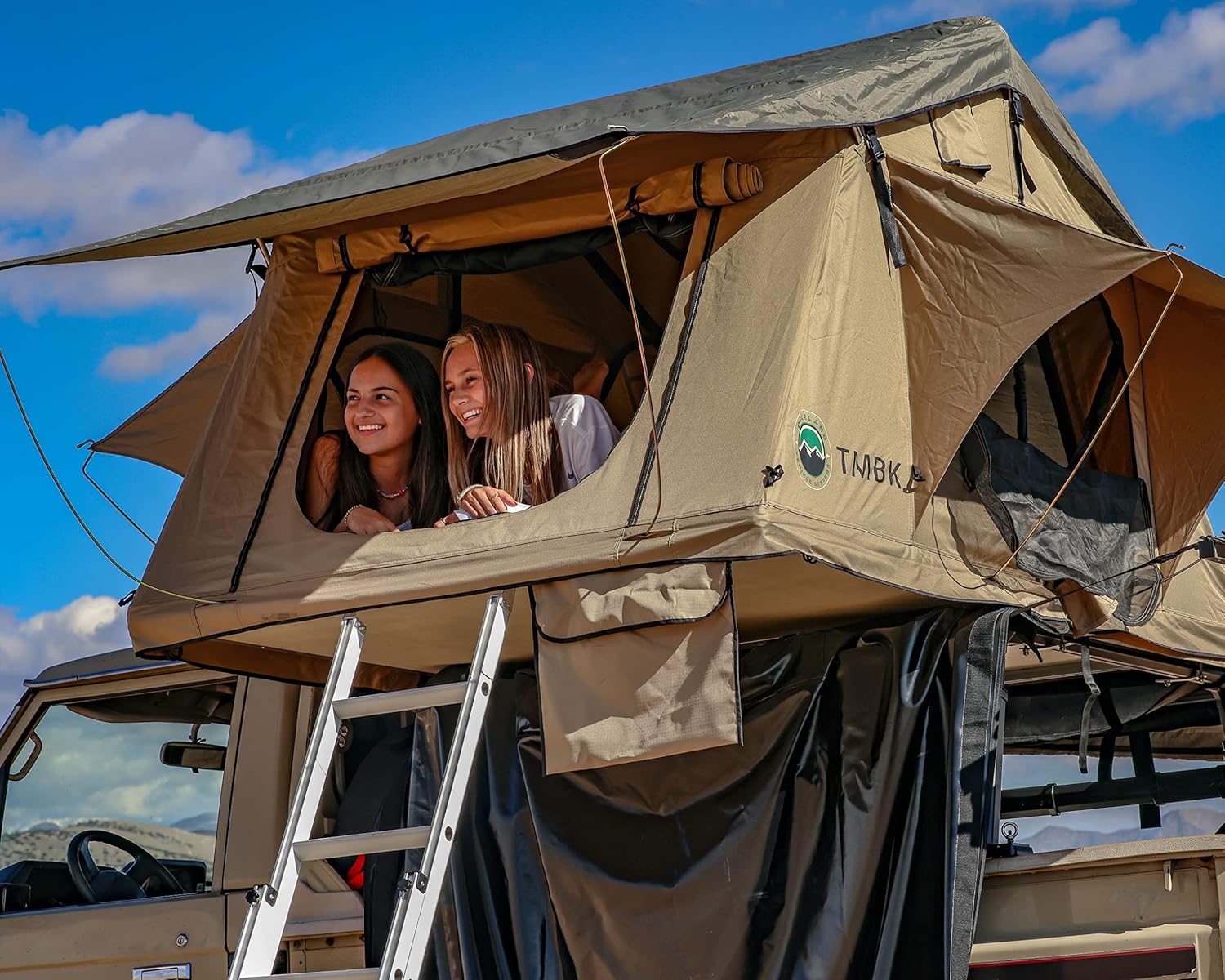
2. Overland Vehicle Systems TMBK 3-Person Soft Shell Rooftop Tent
Best Budget Roof Tent
| Occupancy | 3 Person |
|---|---|
| Seasons | Spring, Summer, Fall, Winter |
| Water Resistance Technology | 300 Mm |
| Rainfly Material | 420D Polyester Oxford Waterproof |
| Base | Insulated Base |
The Overland Vehicle Systems TMBK is a budget-focused soft-shell rooftop tent that gives small-group campers a quick elevated sleep platform on vehicles fitted with a roof rack. It unfolds onto crossbars and provides a 2.5-inch high-density foam mattress, insulated aluminum base, and a 420D polyester oxford rainfly for wet-weather protection. The tent uses durable 600D poly-cotton ripstop fabric and aluminum poles and comes with a sliding ladder and external shoe pouch, making nights on the road simpler and more organized. Its sleeve-style pole attachments, single door, and breathable mesh windows balance ventilation and weather resistance, and the supplied rainfly and waterproof rating help in heavy showers and cold seasons. Trade-offs at this price include a heavier package and bulk when closed, and simpler hardware compared with premium clamshell or hard-shell designs, so setup and pack-down require a bit of manual handling. For Santa Cruz owners who need an affordable, weather-ready rooftop sleeping option that mounts to a roof rack, the TMBK is a practical entry choice.
Best for: Buyers who need the lowest-cost rooftop tent that still provides reliable weather protection and a usable mattress for occasional overland trips on a Santa Cruz with a roof rack.
Less Ideal for: Campers who prioritize ultralight setups, fast pop-open convenience, or the smallest possible closed profile should consider higher-end clamshell or hard-shell tents instead.
- Acceptable waterproofing with a 420D polyester oxford rainfly and waterproof-rated fabric for four-season use
- Included high-density foam mattress and insulated aluminum base improve sleeping comfort compared with bare platforms
- Durable poly-cotton ripstop fabric and aluminum poles give reasonable longevity for the price
- Comes with ladder and basic storage features for convenient access and organization
- Universal fitment for vehicles with a roof rack simplifies mounting on crossbars
- Closed size and weight are substantial, which can affect roof load and vehicle handling if roof rack capacity is limited
- Single-door layout and simpler hardware mean slower setup/tear-down compared with premium quick-open designs
Verdict: The best low-cost roof tent that delivers acceptable weather protection, reasonable materials, and a simple setup for buyers prioritizing price over premium features.
3. Bayati Hard-Shell Rooftop Tent — 3-Person, All-Season
Best Premium Roof Tent

| Occupancy | 3 Person |
|---|---|
| Seasons | 4 Season |
| Installation Type | Roof Top |
| Material Type | ABS Shell, Oxford, Polyester |
| Included Components | Mattress, Telescopic Ladder, Support Rods |
This Bayati hard-shell rooftop tent is a compact, raised clamshell design that mounts to a vehicle roof rack and gives a roomy sleeping platform for two adults and a child. It uses a rigid ABS shell to protect the fabric during travel and folds open quickly for fast setup, with a telescopic ladder and included mattress for immediate use. The tent is built for four-season use with thick, coated polyester and Oxford fabric, waterproof seams, reinforced fiberglass poles, and stainless steel fittings to resist wind and rain. Inside, the raised ceiling and blackout fabric make sitting up and sleeping late more comfortable, while side pockets and shoe bags add simple storage. The tent is heavier and bulkier than soft-shell options, so installing it requires sturdy crossbars rated for the tent weight; it also increases roof load and fuel drag when mounted. Expect solid weather protection and a refined feature set in exchange for higher installation and transport demands.
Best for: Buyers who prioritize long-term comfort and weather protection and are willing to invest in a reinforced, feature-rich rooftop tent for regular family or overland use.
Less Ideal for: People who need a lightweight, low-cost setup for occasional car camping or who cannot fit heavy roof loads on their vehicle should consider lighter soft-shell tents instead.
- Durable ABS hard shell shields fabric during travel and improves aerodynamics when closed
- Thick coated polyester/Oxford fabric with waterproof treatment suitable for four-season use
- Quick, tool-free open/close design with telescopic ladder and included mattress for fast setup
- Raised interior and blackout fabric provide standing headroom and excellent light blocking for sleep
- Stainless steel fittings and fiberglass poles increase longevity in repeated outdoor use
- High item weight requires strong roof crossbars and affects vehicle roof load and fuel economy
Verdict: The best premium roof tent for buyers willing to pay more for top-tier fabrics, reinforced construction, better insulation, and refined features that increase comfort and longevity.
4. SAN HIMA Jervis Hard-Shell Roof Top Tent with Stargaze Window and LED Light
Best Hard-Shell Roof Tent

| Occupancy | 2 Person |
|---|---|
| Seasons | 4 Season |
| Water Resistance Technology | 5,000 mm |
| Material Type | ABS, Aluminum, Polycotton |
| Installation Type | Roof Top |
The SAN HIMA Jervis is a hard-shell rooftop tent aimed at fast, weather-resistant car camping. The shell combines ABS polymer with an aluminum base so the packed profile is low (11.8 in) to reduce wind drag while driving. It pops open with simple latches and a telescoping ladder, turning into an 85 x 64.6 in sleeping area with a removable cloud foam mattress, internal storage pockets, and a stargazer roof window for ventilation and night views. The tent uses 420D double ripstop Oxford and poly-cotton lining with a 5,000 mm waterproof rating and UV50+ protection, and it includes a tri-color LED strip and a digital panel with USB-C, USB-A, and a CIG socket for device charging. Practical limits are the tent weight and roof-rack requirements: the unit is heavy and needs a roof and crossbars rated for the static and dynamic loads of the tent plus occupants. Setup is quick and suited to weekend trips or extended travel where a durable, aerodynamic shell matters more than the lightest possible pack weight.
Best for: Drivers who prioritize a quick-opening, weatherproof hard-shell tent that minimizes aerodynamic drag on longer trips and offers secure, durable protection while parked.
Less Ideal for: People who need the lightest possible rooftop setup or who lack a heavy-duty roof rack rated for rooftop-tent use should consider lighter soft-shell options or a dedicated platform instead.
- Low-profile hard shell reduces wind drag when driving
- 5,000 mm waterproof fabric and UV50+ protection for strong weather resistance
- Quick pop-up setup with included telescoping ladder and internal organization
- Built-in stargazer window and mesh openings for ventilation and night views
- Digital charging panel and tri-color LED lighting for campsite convenience
- Heavier unit that requires a roof rack rated for the tent plus occupants and gear
Verdict: The best hard-shell roof tent for users who want a durable, aerodynamic shell that opens quickly, sheds wind and rain well, and provides secure protection on long trips.
5. SAN HIMA CapeTop Hard-Shell Rooftop Tent with Digital Panel and LED Light
Best Lightweight Roof Tent

| Occupancy | 3 Person |
|---|---|
| Seasons | 4 Season |
| Water Resistance Technology | 3,000 mm (Canopy); 2,000 mm (Main Body) |
| Material Type | Aluminum |
| Included Components | Mattress, LED Strip Light, Anti-condensation Mat, Telescopic Ladder |
The SAN HIMA CapeTop is a hard-shell rooftop tent aimed at campers who want a compact, road-ready shelter that keeps added weight down compared with heavier expedition rigs. It mounts to a vehicle roof and folds out to provide a three-person sleeping area; setup uses a snap-fold system and the included telescoping ladder for quick access. Notable features include a digital panel with USB-C, USB-A and a CIG socket for charging devices, a tri-color/adjustable amber LED strip for interior lighting, an air-conditioner duct opening, and blackout lining in the fabrics for light control. The tent uses 600D and 150D Oxford fabrics with rated waterproofing of 2,000 mm for the main body and 3,000 mm for the canopy, plus an aluminum base and shell that balance strength and weight. Practical benefits include faster setup, internal storage pockets, and a relatively low folded profile that helps preserve vehicle aerodynamics and handling. Limitations are the listed mass for the unit which is still substantial for smaller crossovers and requires a strong roof rack and attention to vehicle roof load limits when installing on a Hyundai Santa Cruz.
Best for: Drivers prioritizing lower rooftop weight to keep handling and fuel efficiency reasonable while carrying a capable three-person tent on a Hyundai Santa Cruz for weekend or overland trips.
Less Ideal for: People seeking the absolute lightest solo or two-person sleeping solutions or those without a rated roof rack and sufficient roof load capacity on their vehicle.
- Relatively low folded profile and aluminum hard shell that reduce wind drag compared with bulkier soft-shell options.
- Built-in digital power panel with USB-C, USB-A and CIG socket for convenient device charging on the roof.
- Waterproof rated fabrics (3,000 mm canopy; 2,000 mm body) and blackout lining for dry, dark sleeping conditions.
- Quick Snap Fold setup and included telescoping ladder for fast deployment and pack-down.
- Interior organizers and an air-conditioner duct hole add practical comfort features for extended trips.
- Still heavy at the listed 131.5 lb so it requires verifying the Santa Cruz roof load capacity and a heavy-duty rack.
- Assembly is required and proper installation is necessary to ensure safe roof mounting and vehicle handling.
Verdict: The best lightweight roof tent for buyers who need reduced cargo weight to preserve vehicle handling and fuel efficiency while still getting dependable shelter.
6. SAN HIMA Hotham Lite Hard-Shell Rooftop Tent with LED and Ladder
Best Compact Roof Tent

| Occupancy | 2 Person |
|---|---|
| Seasons | 4 Season |
| Water Resistance Technology | PU 5,000mm |
| Fabric Type | 420D Double Ripstop Oxford Fabric, 280GT Polyester-Cotton |
| Included Components | Anti-condensation Mat, LED Strip Light, Shoe Bag, Telescopic Ladder, Crossbars |
The SAN HIMA Hotham Lite is a compact hard-shell rooftop tent that prioritizes low-profile packing and fast deployment. It mounts to vehicle crossbars and folds down to a slim height for undercover parking and minimal overhang, then opens to provide a two-person sleeping area with a 1.97-inch memory foam mattress, full-ceiling LED light, multiple windows, and an included telescopic ladder. Construction uses 420D double ripstop fabric, aluminum panels and an aluminum frame, and a PU 5,000mm waterproof rating with UV protection for all-season use. Setup is tool-free and claimed to take roughly 30 seconds, making it convenient for quick stops or weekend trips. Practical benefits include a reduced wind profile on the road, integrated lighting and storage pockets, and the ability to stay dry and ventilated via mesh windows and a roll-up fly. Limitations are its weight and roof load requirement, which means confirming that your Santa Cruz crossbars and roof can safely carry the tent and ladder; it is also a two-person tent so families needing more sleeping space should consider larger options.
Best for: Drivers who need a compact, low-profile rooftop tent that fits in garages or under carports and want a comfortable two-person sleeping setup with fast deployment.
Less Ideal for: Those who need sleeping space for more than two people or who cannot confirm their vehicle crossbars and roof can handle the tent's load should look at other options.
- Very low packed height for undercover parking and reduced wind noise while driving
- Quick, tool-free setup with an included telescopic ladder
- Waterproof 5,000mm fabric and aluminum honeycomb base for weather protection and durability
- Integrated full-ceiling LED lighting and multiple storage pockets for campsite convenience
- Relatively heavy for a compact hard-shell unit, requiring a rated roof system and proper installation
Verdict: The best compact roof tent for people who need minimal overhang and easy storage while retaining a comfortable sleeping area for one or two occupants.
7. Jiadrooe Hard-Shell Roof Top Tent with Adjustable Crossbars (Standard)
Best Quick-Setup Roof Tent

| Occupancy | 4 Person |
|---|---|
| Seasons | 4 Season |
| Water Resistance Technology | 2000 mm |
| Floor Material | Nylon |
| Form Factor | Hard-shell, vehicle-mounted with adjustable crossbars |
This rooftop tent uses a gas-strut hydraulic system to open in about 60 seconds, making it ideal for short stops and solo setup. It mounts to a roof rack and includes two heavy-duty adjustable aluminum crossbars that let you carry extra gear above the hardshell while keeping the tent stable. The interior is aimed at comfort with a 7 cm high-density mattress, built-in LED lighting, storage pockets, and large mesh windows for ventilation and views. Weather protection is strong for a quick-deploy unit: a 280 g ripstop waterproof canvas, an anti-condensation mat under the mattress, and a 2000 mm water-resistance rating help keep moisture and dampness down in wet conditions. Practical extras include a telescoping ladder and universal hardware for rack attachment. Trade-offs are weight and size—this is a heavy, vehicle-mounted hard-shell that needs a proper roof rack and strong mounting points, and the mattress is moderate thickness compared with some luxury options.
Best for: Buyers who prioritize minimal campsite setup time and a secure, weatherproof sleep platform on their Hyundai Santa Cruz and want one-person, near-instant pitching with usable interior comforts.
Less Ideal for: Drivers who cannot support substantial roof loads or who prefer a very lightweight soft-shell option for frequent off-road travel should consider other tent styles.
- Fast hydraulic gas-strut deployment for single-person setup in about one minute
- Adjustable aluminum crossbars add 150 lb of load-carrying flexibility and accessory mounting
- Waterproof 280 g ripstop canvas plus anti-condensation mat for improved moisture control
- Built-in LED lighting and storage pockets increase interior convenience
- Includes telescoping ladder and universal mounting hardware for roof racks
- Heavy unit that requires a strong roof rack and careful weight management
- Water-resistance rating is moderate at 2000 mm, not a high-pressure waterproofing spec
Verdict: The best quick-setup roof tent for users who value a near-instant pitching process—minimizing time and effort at camp while maintaining solid weather protection.
Choosing the Right Hyundai Santa Cruz Roof Tent: Key Factors to Consider
Fitment and Mounting Compatibility
Ensuring the roof tent mounts securely to the Santa Cruz is the single most important factor. Crossbar spacing, rail type, and total dynamic roof load determine whether a tent will sit safely and without excessive sway. A tent with adaptable mounting hardware or universal clamps reduces the chance you will need aftermarket fabrication.
Pay attention to the tent's base footprint relative to the available roof area and overhang limitations. Also consider how the tent's mass is distributed; heavy, long tents that extend far past the roof edge can place uneven stress on the crossbars and tailgate. Verify that your rack and the vehicle's load ratings accommodate the tent's weight when moving and when stationary.
Weight and Packed Dimensions
Tent weight affects both how you install the tent and whether your Santa Cruz can carry it safely while driving. Heavier tents are often more robust and insulated, but they require stronger crossbars and may make single-person installation difficult. Lighter rooftop tents are easier to manage and often pair better with factory or lightweight racks.
Packed dimensions matter for clearance in garages and when transporting the vehicle. A compact folded size reduces wind drag and improves fuel economy. Compare the tent's packed height, width, and length to the Santa Cruz roof area and any overhang limitations you have in your typical driving environment.
Setup Time and Ease of Use
Quick and simple setup changes the camping equation, especially for overnight trips or roadside stops. Some tents deploy with a single zipper and a few latches in under a minute, while others require unfolding multiple panels and securing poles. Consider whether you often camp solo; if so, prioritize tents designed for one-person setup.
Look for clear instructions, intuitive latches, and ladders that lock securely. Ease of stowing the tent is equally important because complicated teardown in bad weather can be frustrating and lead to hurried, improper packing that shortens the tent's life.
Weather Resistance and Ventilation
A roof tent needs to balance waterproofing and breathability to be comfortable in varied conditions. Quality rainfly materials, taped seams, and robust zippers prevent water ingress during storms. At the same time, good ventilation—mesh panels and adjustable vents—reduces condensation buildup during cool nights.
Consider how the tent handles wind when mounted on the Santa Cruz; a low-profile design reduces sail effect, while reinforcement at attachment points helps resist uplift. Insulation and optional annexes or awnings add versatility for colder weather but add weight and complexity.
Sleeping Capacity and Interior Comfort
Think about who will sleep in the tent and how they prefer to camp. Tents vary from compact two-person models to larger layouts that comfortably fit more sleepers. Measure mattress thickness and usable interior floor area rather than relying on nominal capacity numbers.
Interior features such as built-in pockets, lighting access, and stiff floors affect overnight comfort. A firm, supportive mattress improves sleep quality but can increase packed weight. If you plan to camp with kids or pets, prioritize interior space and secure ladder access.
Accessory Compatibility and Add-Ons
Accessories expand a roof tent's usefulness but require compatible mounting points and available roof area. Useful add-ons include annex rooms for storage and changing, awnings for shade, and upgraded ladders or insulation kits. Confirm that accessory brackets or anchoring points align with the Santa Cruz's roof and the tent's base.
Also consider how easy it is to attach and remove accessories in the field. Some systems use modular rails or clip-in fittings that make upgrades simple, while others require more involved modifications. Prioritize options that deliver practical gains without permanent vehicle changes.
Choosing the Right Mounting Hardware
Mounting hardware determines how the tent interfaces with your Santa Cruz roof rails or crossbars. Universal clamp systems work with most bar profiles, but verify that clamp reach and bolt locations match your rack. Some tents include adjustable brackets to accommodate wider or narrower crossbar distances.
Consider low-profile mounting plates that distribute load across multiple crossbars rather than concentrating stress at a single point. If you plan to swap the tent between vehicles or racks, choose hardware that is simple to loosen and retighten without specialized tools.
- Confirm clamp reach and bolt pattern against your crossbar dimensions
- Prefer mounting plates that spread load across more than one bar
- Carry locking hardware or thread locker to prevent loosening on long trips
Assessing Roof Load and Driving Dynamics
Roof tents add weight and change the vehicle's center of gravity. Check the Santa Cruz roof load ratings and adjust driving style accordingly when the tent is mounted. Higher wind resistance can alter highway stability and increase fuel consumption, so test driving at typical speeds before long trips is wise.
When packed, a tent's aerodynamic profile matters. Low, streamlined cases produce less buffeting and reduce noise. Always secure all fasteners and check them after the first few miles to ensure nothing has shifted.
- Verify static and dynamic roof load limits before selecting a tent
- Reassess tire pressures and suspension load when carrying rooftop gear
- Perform a short test drive after installation to check for unusual noise or movement
Seasonal Use and Insulation Strategies
If you plan to camp in cooler months, consider tents with thicker fabrics, insulated floors, or available insulation liners. These features help retain heat and reduce condensation inside the tent. Add-on annexes can create a buffer zone that reduces wind exposure to the sleeping area.
In warm climates, prioritize ventilation and lighter-colored cases to limit heat buildup during the day. Removable rainflies and adjustable vents let you tailor airflow to prevailing conditions.
- Use insulated mattress toppers for added warmth without heavy tent upgrades
- Employ a simple awning or sunshade to reduce daytime heat in summer
- Store a breathable ground sheet in the annex for gear protection and airflow
Practical Tips for Solo Install and Stow
Installing and stowing a roof tent solo is much easier with a few practiced techniques. Use a soft surface like a blanket or foam to protect the tent case during handling. Position the tent on the roof with a second pair of hands if possible, then secure the mounting bolts loosely before final tightening to allow small adjustments.
When stowing, clear debris and allow wet canvas to dry before packing to prevent mildew. Familiarize yourself with the sequence of latches and straps so teardown becomes muscle memory and is quicker in poor weather.
- Practice a full install and stow in the driveway before heading out
- Tighten mounting hardware incrementally to ensure even seating
- Label bolts and keep a small hardware kit with the tent for field repairs
Packing and Organizing Accessories
Keep commonly used items like the ladder, mattress topper, and repair kit accessible. Using packing cubes or waterproof bags inside an annex or the vehicle bed helps you find gear quickly and protects items from moisture. Consider a separate bag for fasteners and spare clips so you do not search through camping gear when a piece is dropped.
Balance gear distribution on the roof and in the bed to maintain handling stability. Heavy items are better stored low and forward in the bed rather than up high on the tent or rack.
- Use waterproof sacks for bedding and sleeping bags
- Secure loose accessories to prevent wind noise or loss
- Keep a small toolkit and spare fasteners with your tent gear
How We Chose the Best Hyundai Santa Cruz Roof Tent
To assemble this list we applied a consistent editorial framework focused on how roof tents perform when mounted to a Hyundai Santa Cruz. Key evaluation criteria included fitment and mounting compatibility, because the Santa Cruz has unique roof dimensions and typical crossbar configurations that affect load distribution. We assessed tent weight and packed footprint to determine whether common Santa Cruz roof racks and cargo capacities can safely support each option. Setup speed and ease were judged by how quickly a single person can deploy and stow the tent and whether any specialized tools or extra hands are usually required.Durability and weather resistance were evaluated based on material specifications, seam construction, and ventilation options to ensure reasonable comfort across seasons. Interior layout and sleeping capacity were considered for practical overnight use, alongside accessory compatibility such as annexes, ladders, and mattress thickness. We excluded options that require vehicle-specific modifications or exceed typical roof load ratings for mid-size pickup crossbars. Final selections prioritized safe fitment for the Santa Cruz, straightforward installation, and practical campsite performance.
Our full evaluation process is outlined in our review methodology.
FAQ
Will a roof tent fit on my Santa Cruz factory crossbars?
Often it will, but fit depends on crossbar width, spacing, and load rating. Confirm the tent base dimensions and clamp reach against your crossbars and check your vehicle's roof load limits before mounting.
Can I install a roof tent by myself on the Santa Cruz?
Many lightweight tents are manageable solo with proper technique, but heavier models typically require two people for safe installation. Practicing at home and using supportive blocks or temporary helpers can make a solo install easier.
How does a roof tent affect driving range and handling?
A mounted tent increases wind resistance and weight, which usually reduces fuel economy and can change handling feel. Low-profile cases minimize these effects, and adjusting speed and cornering habits helps maintain safety.
Do I need to remove the tent for off-road driving?
It depends on the severity of the off-road trail and the tent's attachment security. For mild trails, many owners keep tents mounted, but for aggressive off-road sections you may want to remove it to reduce risk and roof stress.
How should I care for the tent fabric and zippers?
Keep fabric clean and dry before packing and store the tent in a ventilated location. Rinse salt or mud off after coastal trips and lightly lubricate zippers if they become stiff. Avoid long-term UV exposure when possible.
Can I use an annex or awning with my roof tent on the Santa Cruz?
Yes, many tents support annexes and awnings, but confirm that mounting points and roof clearance work with the Santa Cruz. Consider weight and footprint impacts on your rack and vehicle handling.
Final Verdict
For Hyundai Santa Cruz owners, choosing the right roof tent means balancing fitment, weight, and ease of setup against the comfort and weather protection you need. Prioritize tents that match your rack configuration and roof load ratings, and factor in whether you usually camp solo or with companions. Remember that low-profile, lighter models simplify driving and installation, while heavier, better-insulated options improve comfort in colder conditions.Decide which tradeoffs matter most to your trips, then match those priorities to tent weight, mounting hardware, and setup style. With careful selection and correct mounting, a roof tent will turn your Santa Cruz into a versatile and comfortable basecamp for many adventures.
Explore More:
- Check out all Hyundai Santa Cruz parts & accessories
- Explore Exterior Accessories
- Browse all Accessories
