

Note: This article contains affiliate links. If you click on these links and make a purchase, I may earn a small commission at no extra cost to you. This helps support my research and content. Read my full affiliate disclosure here.
If you camp from your truck, a rooftop tent can turn your GMC Sierra 2500 HD into a comfortable, elevated basecamp. The right tent adds sleeping space, keeps you off uneven or wet ground, and simplifies setup at crowded campsites. For a heavy-duty truck like the Sierra 2500 HD, fitment, load capacity, and how the tent mounts to your roof or rack matter more than simple headline features.This guide presents six shortlisted roof tents that suit the Sierra 2500 HD and explains the practical tradeoffs between comfort, weather resistance, and ease of installation. We evaluate each option on durability, setup time, and compatibility so you can pick the solution that matches your camping style. Read on for installation notes, hauling tips, and the decision factors we used to choose these picks.
Top Picks at a Glance
| Best Overall Roof Tent A balanced, all‑season rooftop tent with strong features and fit. | Naturnest Sirius 1 Hardshell Rooftop Tent (3-Person) |  |
| Best Budget Roof Tent A no‑frills, affordable rooftop option that covers basic camping needs. | VEVOR Hard-Shell Rooftop Tent with Tri-Color LED and Thick Mattress |  |
| Best Hard‑Shell Roof Tent Rigid clamshell or hardside tent offering quick deployment and durability. | WildFinder Hard‑Shell Rooftop Tent for 2–3 People |  |
| Best Soft‑Shell Roof Tent Fabric fold‑out tent with roomy interior and traditional canvas construction. | Overland Vehicle Systems TMBK 3-Person Soft-Shell Rooftop Tent with Rainfly and Ladder |  |
| Best Insulated / 4‑Season Roof Tent Upgraded thermal layers and insulation built for cold‑weather camping. | ROVEROLL Hardshell Rooftop Tent with Memory Mattress and LED Lighting |  |
| Best Extra‑Large / Family Roof Tent Roomier roof tent designed to sleep more people or add an annex. | Naturnest Sirius 2 XL Hard-Shell Rooftop Tent with Annex |  |
1. Naturnest Sirius 1 Hardshell Rooftop Tent (3-Person)
Best Overall Roof Tent

| Occupancy | 3 Person |
|---|---|
| Seasons | 4 Season |
| Floor Area | 5203 Square Inches |
| Assembly Time | 10 Minutes |
| Water Resistance Technology | Coated Fabric & Seam Sealing |
The Naturnest Sirius 1 is a clamshell hard‑shell rooftop tent built for fast setup and all‑season protection on truck roofs. It uses hydraulic gas struts so the shell opens and closes in seconds, and a preassembled 7.5 ft ladder plus included hardware makes mounting and deployment straightforward. The shell and aluminum alloy frame add rigidity and a more aerodynamic profile compared with soft tents, while 420D ripstop fabric, sealed seams, and a 5000mm waterproof rating keep occupants dry in heavy rain. Inside the tent a 1.2 in cloud foam mattress, anti‑condensation mat, and stargazer window with mesh balance comfort, ventilation, and night views. Practical extras like multiple windows, storage pockets, and stainless steel support components make extended trips easier. The tent is relatively heavy and bulky, so proper roof rack capacity and installation on a GMC Sierra 2500 HD are essential; professional or reinforced crossbars are recommended if you plan frequent offroad use. Mounting and ladder access are best suited to users comfortable working on a truck roof.
Best for: Truck owners who want a do‑it‑all rooftop tent that sets up in seconds and provides durable, weather‑ready shelter for multi‑day overland or truck‑camping trips.
Less Ideal for: Buyers who need an ultra‑light setup for rooftop use on smaller vehicles or who cannot fit a high‑capacity roof rack on their truck should consider lighter options or bed tents instead.
- Very fast, tool‑free opening and closing with hydraulic gas struts
- Hard shell and aluminum alloy frame improve durability and reduce wind buffeting
- High waterproof rating and UV50+ protection for true four‑season use
- Comfortable built‑in foam mattress with anti‑condensation mat for better sleep
- Multiple windows, mosquito mesh, and storage pockets enhance ventilation and organization
- Heavy unit that requires a high‑capacity, properly installed roof rack and may affect vehicle center of gravity
Verdict: A do‑it‑all rooftop tent that balances weather protection, durability, and easy setup for most overland and truck‑camping trips.
2. VEVOR Hard-Shell Rooftop Tent with Tri-Color LED and Thick Mattress
Best Budget Roof Tent

| Occupancy | 3 Person |
|---|---|
| Seasons | 4 Season |
| Rainfly Material | 420D Oxford (PU coated) |
| Pole Material Type | Aluminum |
| Ladder Max Load | 330 lbs |
This VEVOR hard-shell rooftop tent is a cost-conscious option that mounts to a truck roof or roof rack and converts into a triangular sleeping area for two adults and one child. It uses coated polyester-cotton and 420D Oxford rainfly with PU coating to provide waterproofing and UV protection, and reinforced aluminum support poles plus an aluminum base plate for stability in moderate wind. Setup is straightforward thanks to inflatable-style poles and a telescoping 7-section aluminum ladder that adjusts for different truck heights. Inside you get multiple ventilation points, a breathable mesh window, an integrated LED light, and a thick foam mattress for everyday comfort. Expect practical benefits like quick setup, decent weatherblocking for three-season use, and a compact folded profile for storage on a Sierra 2500 HD roof rack rated for the required load. Limitations are typical for budget tents: the waterproof ratings are functional but not for extreme storms, the build and finish are utilitarian rather than premium, and the ladder and fixtures may feel less refined than higher-end models.
Best for: A budget-minded truck owner who wants an affordable rooftop tent for occasional overland trips and weekend camping on a Sierra 2500 HD, prioritizing basic weather protection and simple setup over luxury materials.
Less Ideal for: Avoid this if you need a high-end, expedition-grade tent for heavy prolonged storms or if you expect showroom-level fit-and-finish and long-term off-grid durability.
- Fits two adults plus a child in a compact hard-shell design
- 420D Oxford rainfly and PU-coated fabric provide practical waterproofing and UV protection
- Aluminum base plate and multiple support poles improve wind resistance compared with soft-shell designs
- Thick foam mattress and ventilation points increase sleeping comfort
- Telescoping aluminum ladder adjusts to different truck heights and supports loading the tent
- Waterproof ratings are suitable for typical conditions but not guaranteed in severe extreme weather
- Finish and fittings are utilitarian and not as durable-feeling as premium rooftop tents
Verdict: For buyers prioritizing cost, this pick is a straightforward rooftop tent that delivers acceptable weather protection and sleeping space without premium extras.
3. WildFinder Hard‑Shell Rooftop Tent for 2–3 People
Best Hard‑Shell Roof Tent

| Occupancy | 3 Person |
|---|---|
| Seasons | 4 Season |
| Included components | Telescoping ladder, organizers, LED strip, mattresses |
| Material | Polyester; aluminum alloy shell |
| Water resistance level | Waterproof |
This WildFinder hard‑shell rooftop tent mounts to a vehicle roof or roof rack and provides a semi‑permanent sleeping space for two to three people. It uses an aluminum alloy shell and polyester fabric to give a rigid, aerodynamic closed profile that protects the interior mattress and gear while driving. Setup is fast: the hard shell pops open and the included 7.5 ft telescoping ladder and organized accessories get you camp‑ready quickly. The tent comes with built‑in and extra mattresses, LED strip lighting, multiple mesh windows for ventilation, and guyline and stake attachments for added stability in wind or snow. Waterproof construction, a condensation pad, and a recessed marine pad improve sleeping comfort in damp conditions. On the downside the unit is heavy and will add significant load to the roof and may require a heavy‑duty roof rack or crossbars rated for the combined weight of the tent and occupants; assembly is required and thicker aftermarket mattresses may be limited when closing the shell. For a Sierra 2500 HD owner wanting an aerodynamic, weatherproof rooftop shelter that opens quickly and stays secure during extended trips, this tent delivers a durable, feature‑rich option.
Best for: GMC Sierra 2500 HD owners who prioritize a quick‑deploy, aerodynamic rooftop shelter for multi‑day trips and value durable, weatherproof construction for year‑round use.
Less Ideal for: Drivers who lack a heavy‑duty roof rack, plan only occasional car camping, or need the lightest possible rooftop solution should consider lighter soft‑shell options instead.
- Hard aluminum alloy hard‑shell protects mattress and gear during travel
- Quick pop‑up design with included telescoping ladder for fast setup
- Waterproof polyester fabric with condensation and marine pads for better damp‑weather comfort
- Includes practical accessories: LED strip, organizers, extra mattresses and mesh windows
- Designed for 4‑season use with wind, rain, snow and high UV protection claims
- Very heavy overall weight means installation requires a high‑capacity rack and may affect vehicle handling
Verdict: Choose this hardshell rooftop tent when you want a fast pop‑up, aerodynamic profile, and a more rigid weatherproof shell for long‑term use.
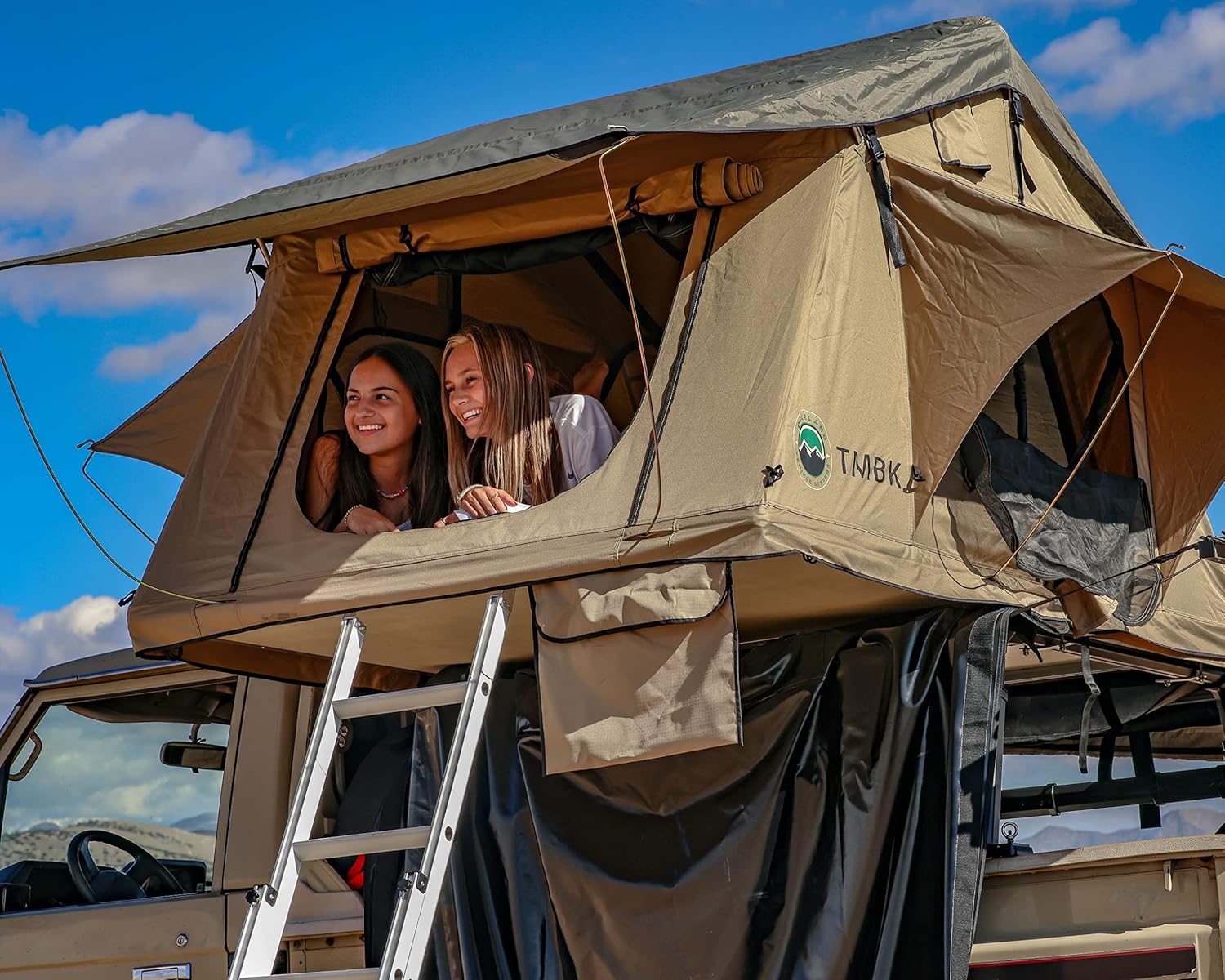
4. Overland Vehicle Systems TMBK 3-Person Soft-Shell Rooftop Tent with Rainfly and Ladder
Best Soft‑Shell Roof Tent
| Occupancy | 3 Person |
|---|---|
| Seasons | Spring, Summer, Fall, Winter |
| Water Resistance Technology | 300 Mm |
| Rainfly Material | 420D Polyester Oxford Waterproof |
| Fabric Type | Poly Cotton Ripstop |
The Overland Vehicle Systems TMBK 3-person rooftop tent is a soft-shell design that mounts to a vehicle roof rack to create a raised sleeping area for car camping. It unfolds quickly and delivers a roomy sleeping footprint for up to three adults, using a 2.5-inch high-density foam mattress and breathable mesh windows for ventilation. Construction combines 600D poly-cotton ripstop canvas for durability and a 420D polyester oxford rainfly to keep out heavy rain and snow; the insulated aluminum base and stainless steel hardware give a stable platform on the roof. Included ladder and rainfly make setup and breakdown straightforward at camp, and sleeve-mounted poles simplify repairs or replacement panels compared with molded hard-shell designs. The tent is heavy and requires a properly rated roof rack and attention to vehicle load limits, and its larger folded footprint needs adequate clearance while driving. For those who value interior volume, traditional fabric breathability, and serviceability, it offers practical all-season capability when matched to a reinforced rack and appropriate vehicle load capacity.
Best for: Drivers who want a soft-shell rooftop tent with a large interior and traditional fabric breathability, and who prioritize easy repairs and roomy sleeping space for multi-person trips.
Less Ideal for: People who need a lightweight, low-profile option for frequent highway driving or who cannot install a reinforced roof rack on their vehicle.
- Spacious sleeping footprint for up to three people with a 2.5-inch high-density foam mattress
- Durable poly-cotton ripstop body with a 420D polyester oxford rainfly for strong weather protection
- Insulated aluminum base and marine-grade stainless hardware provide a stable mounting platform
- Simple sleeve pole system and fabric construction make repairs and replacement parts straightforward
- Heavier and bulkier folded profile requires a strong, weight-rated roof rack and reduces fuel efficiency
Verdict: This soft‑shell model fits buyers who prefer larger interior volume and traditional tent fabrics with easy repairs and simpler geometry.
5. ROVEROLL Hardshell Rooftop Tent with Memory Mattress and LED Lighting
Best Insulated / 4‑Season Roof Tent

| Occupancy | 3 Person |
|---|---|
| Seasons | 4 Season |
| Water Resistance Technology | 3000mm Waterproof Rating |
| Material Type | Aluminum |
| Fabric Type | 280G Polycotton; 600D Oxford |
This ROVEROLL hardshell rooftop tent is built for multi-season use and is aimed at cold-weather and overland trips where insulation and ease of setup matter. The tent uses 280G polycotton with blackout layers and a 600D Oxford PU-coated rainfly to reach a 3000mm waterproof rating while blocking most UV; an anti-condensation pad and a high-density memory foam mattress improve interior comfort and moisture control. The hard shell and gas-strut lift make opening and closing fast and simple, and included LED strip lighting, a telescoping aluminum ladder, and built-in ports add practical convenience. The aluminum honeycomb base and CNC aluminum hardware promise rigidity for roof-mounted use on a truck. Expect a heavier rooftop system that raises vehicle center of gravity and may require a strong roof rack rated for the load; interior space is for two to three people, so larger groups will need another solution. For winter trips the tent’s blackout and insulated layers reduce heat loss and condensation compared with lightweight soft-shell options, but extreme cold will still need insulating sleeping gear.
Best for: Drivers who prioritize winter comfort and reduced condensation for overland trips and want a hardshell rooftop tent that deploys quickly and feels like a self-contained sleeping system.
Less Ideal for: Those who need the lightest possible setup, large sleeping area for more than three people, or who cannot fit a high-capacity roof rack on their vehicle should look elsewhere.
- 4-season fabric and 3000mm waterproof coating for reliable wet-weather protection
- Blackout layers and anti-condensation pad that improve thermal comfort and reduce interior moisture
- Hard-shell design with gas struts for fast, tool-free deployment
- Integrated memory-foam mattress and LED lighting for ready-to-sleep comfort
- Aluminum honeycomb base and CNC aluminum hardware for solid, truck-ready stiffness
- At about 242 pounds it is heavy and requires a strong roof rack and professional mounting for safe use
- Triangular footprint limits usable interior floor area compared with larger box-style hardshell tents
Verdict: Pick this insulated, 4‑season rooftop tent if winter comfort and reduced condensation are priorities for your overland or cold‑weather trips.
6. Naturnest Sirius 2 XL Hard-Shell Rooftop Tent with Annex
Best Extra‑Large / Family Roof Tent

| Occupancy | 4 Person |
|---|---|
| Seasons | 4 Season |
| Closure Type | Latch |
| Water Resistance Level | Waterproof |
| Material Type | Polyester |
The Naturnest Sirius 2 XL is an extra-large hard-shell rooftop tent designed to give families or group campers a roomy, elevated sleeping area. The shell uses ABS with an aluminum-alloy frame, and the tent unfolds in seconds using a ladder and gas-spring assist, so a single person can set it up at a campsite or backyard quickly. Inside the wide 74.8-inch interior you get space for three to four adults plus multi-panel windows and a skylight for airflow. The double-layer mattress and 420D coated oxford fabric promise improved insulation and weather resistance, while YKK zippers and STABILUS gas springs are specified for durability. Practical benefits include fast one-person setup, a comfortable sleep surface off the ground, and weather protection rated for heavy rain and strong sun. Be aware this is a large, heavy unit that requires a suitable roof rack or crossbars and compatible load capacity on the vehicle roof or bed rack; it also adds wind profile when driving and will need secure mounting for highway use.
Best for: Campers who prioritize roomy, family-friendly sleeping space and fast, one-person setup for multi-person outings on an elevated platform.
Less Ideal for: Drivers without a rated roof or bed rack capacity or those wanting a lightweight, low-profile tent for frequent highway travel should consider smaller or soft-shell options instead.
- Very large interior fits 3–4 adults for family camping
- Quick pop-open operation with ladder and gas-spring assist for fast setup
- Hard ABS shell and aluminum frame reduce setup effort while adding toughness
- 420D coated oxford fabric offers strong waterproofing and UV protection
- Durable hardware specified including STABILUS gas springs and YKK zippers
- Heavy and bulky unit that requires a robust roof or bed rack and high load capacity
- Annex and accessories may be needed separately for full family gear storage
Verdict: This larger rooftop tent is for campers who need extra sleeping space or want to add an annex for kids or gear.
Choosing the Right GMC Sierra 2500 HD Roof Tent: Key Factors to Consider
Roof Load Capacity and Mounting System
Your Sierra 2500 HD's roof and any installed crossbars or roof rack must safely support both the static weight of the tent and the dynamic loads encountered during driving. Check the vehicle roof load limit and the rated capacity of crossbars before mounting a rooftop tent. A tent's stated weight is only part of the story; mounting hardware and load distribution brackets matter for avoiding stress points.
For truck owners, a bed rack or heavy-duty roof rack may alter load distribution. Verify that mounting feet, brackets, and rails are compatible with your rack profile and that the rack manufacturer's rating aligns with the combined weight of tent, occupants, and gear. Choosing a tent with a lower center-of-gravity mounting option or wide spreader plates helps reduce flex and improves highway stability.
Ease and Speed of Setup
Quick setup is a major convenience when camping from a Sierra 2500 HD because you will often deploy the tent in fading light or in bad weather. Tents with pop-up or folding hard-shell designs typically set up faster than complex soft-shell models with many poles. Consider how many people are needed to lift and secure the tent and whether the ladder doubles as a hinge support to simplify deployment.
Also assess the time required for bedding, rain fly attachment, and safety checks. Faster setups reduce exposure to bugs and cold, and make late arrivals less stressful. If you plan frequent overnight stops, invest in a design with straightforward attachment points and minimal accessory assembly.
Weather Resistance and Ventilation
Weather performance is vital for truck camping, where you may encounter wind, rain, or temperature swings. Look for high-denier, coated fabrics and taped seams or sealed seams to keep water out. A robust, integrated rain fly with secure tie-downs helps during heavy storms and reduces reliance on improvised tarps.
Ventilation features matter to control condensation inside the tent. Screens, adjustable vents, and multiple openings promote airflow while still blocking insects. In colder weather, consider a tent with good insulation properties and the ability to layer with an inner liner or insulated mattress pad.
Comfort and Interior Layout
Sleeping comfort affects whether you will actually use the rooftop tent regularly. Mattress thickness and quality, internal floor dimensions, and roof height determine sleep quality and usable interior space. For the Sierra 2500 HD, a wider or extended footprint can accommodate two adults and gear without crowding, but it may increase weight and wind profile.
Consider internal storage options such as pockets and gear lofts, and whether the tent's ladder position interferes with door operation or truck bed access. A design with a supportive mattress and adequate headroom makes longer trips more pleasant and reduces the need for supplemental sleeping gear.
Ladder Stability and Access
Access safety is especially important on a taller truck like the Sierra 2500 HD. The ladder must be long enough to reach ground level at the truck's height and secure under load. Look for ladders with non-slip rungs, adjustable length, and a reliable attachment point to the tent base or vehicle so the ladder does not shift during use.
Evaluate how the ladder stores during travel and whether it allows safe entry from uneven ground. If you often camp on rough terrain, a ladder with adjustable feet or one that can be braced against the truck bed will make entry and exit far more predictable.
Durability and Long-Term Maintenance
A rooftop tent is an investment that should withstand UV exposure, repeated setup cycles, and road vibration. Examine the materials and construction methods: corrosion-resistant hardware, reinforced mounting points, and UV-stabilized fabrics lengthen service life. Zippers, hinges, and ladder attachments are common wear points that benefit from robust engineering.
Also consider serviceability: replaceable parts, available repair kits, and readily sourced hardware keep a tent usable for many seasons. Regular maintenance such as cleaning fabrics, lubricating hinges, and checking seam integrity will prolong the tent's lifespan and preserve performance.
Mounting Options for the Sierra 2500 HD
There are three common mounting approaches when fitting a roof tent to a Sierra 2500 HD: roof-mounted crossbars, bed-mounted rack systems, and dedicated cab/bed racks. Each method changes load distribution and vehicle dynamics. Roof-mounted crossbars are straightforward if your truck has the required load rating, while bed racks shift the tent mass lower and can improve stability.
When choosing a mounting approach, inspect the rack attachment points, ensure even weight distribution across multiple mounting feet, and confirm clearance for doors and the truck bed. Ladder placement and storage often influence which mounting method works best for your typical camping routine.
- Roof crossbars: easy to access, depends on roof load rating
- Bed racks: lower center of gravity, better for heavier tents
- Cab/bed racks: maximize usable bed space, complex installation
Practical Tips for Driving with a Roof Tent
Driving with a roof tent on a Sierra 2500 HD affects fuel economy, wind noise, and handling. Secure all mounting hardware with proper torque and use thread locker or safety fasteners where recommended. Periodically check bolts after the first few hundred miles of use and again after off-road trips to ensure nothing has loosened.
Reduce abrupt maneuvers while the tent is mounted and be mindful of increased height for low-clearance areas. If your trips include long highway segments, consider aerodynamic fairings or hard-shell designs to lower drag and wind buffeting.
- Re-check mounting hardware after initial installation and after long trips
- Drive more cautiously in strong crosswinds and on narrow roads
- Store soft accessories inside the tent when driving to reduce wind damage
Seasonal Use and Insulation Strategies
If you plan to camp in cooler months, add insulating layers such as an insulated mattress pad and a thermal liner to retain heat. Ventilation management becomes more important in colder weather to reduce condensation; slightly opening vents near roof peaks can balance moisture control with heat retention.
In hot weather, shade positioning and reflective covers for the tent shell can reduce interior temperatures. Consider a sun awning or annex to create shaded cooking and gear areas without exposing the tent to direct afternoon sun.
- Use insulated mattress pads for three-season and colder camping
- Maintain airflow to control condensation in humid conditions
- Add an awning for shade and protected entry space
Storage and Truck Bed Access While Mounted
A rooftop tent can complicate access to your truck bed or roof-mounted gear. Plan storage so frequently used items remain reachable from the ground or inside the cab. If bed access is essential, choose a tent footprint and ladder placement that do not block tailgate operation.
Consider lightweight, removable storage boxes and quick-release mounts for items you need to access while the tent is mounted. That approach minimizes the need to remove the tent for routine gear retrieval.
- Organize gear to minimize bed-access interruptions
- Use quick-release storage for frequently needed items
- Test hatch and door clearances during a trial fit before permanent mounting
Accessory Options to Enhance Usability
Common add-ons improve functionality and comfort when camping from a Sierra 2500 HD. Consider annexes that attach under the tent for extra enclosed living space, integrated awnings for shaded cooking areas, and ladder stabilizers for safer ingress on uneven ground. A small portable fan or vent can help with airflow during warm nights.
Select accessories that mount cleanly with your tent's attachment system to avoid overloading mounting points. Prioritize modular items that can be added or removed based on trip needs rather than permanently increasing weight.
- Annexes for extra covered space
- Awnings for shade and protected cooking
- Ladder stabilizers and adjustable feet for safe entry
How We Chose the Best GMC Sierra 2500 HD Roof Tent
We selected tents based on attributes that directly affect how well they perform when mounted to a heavy-duty truck like the GMC Sierra 2500 HD. Our evaluation emphasized structural compatibility with common roof racks and crossbar systems, the static and dynamic load ratings relevant to the Sierra's roof and rack setup, and mounting hardware quality that prevents drift or loosening over time. We also prioritized tent construction materials, including fabric denier and waterproofing, frame and hinge durability, and mattress comfort levels that influence real-world overnight comfort.Practical use criteria included setup and teardown time, ventilation and condensation management for overnight comfort, and ingress/egress safety—especially ladder stability on a higher truck bed. Weather performance and seam sealing were assessed for sustained wet-weather use. We excluded options that require extensive custom fabrication, tents that exceed typical roof load capacities for the Sierra 2500 HD without clear engineering guidance, and models designed strictly for light cars rather than heavy trucks. The final list balances reliability, user ergonomics, and long-term durability for truck-based camping.
Our full evaluation process is outlined in our review methodology.
FAQ
Will a rooftop tent damage my GMC Sierra 2500 HD roof?
A properly mounted rooftop tent should not damage the roof if you respect the vehicle roof load limits and use compatible mounting hardware. Use correct load-rated crossbars or a bed rack and distribute mounting feet properly. Regularly inspect attachment points and seals to catch any issues early.
How long does it typically take to set up a rooftop tent?
Setup time varies by design: many pop-up and hard-shell tents take three to five minutes to deploy, while some soft-shell models require more time to extend and attach a rain fly. Practice once at home to speed the process and check ladder positioning before your first trip.
Can I leave a rooftop tent on during long drives?
You can drive with a closed rooftop tent mounted, provided it is secured exactly as the manufacturer recommends and the combined weight stays within rack and vehicle limits. Expect increased wind noise and a small fuel economy penalty. Regularly check fasteners after long-distance travel.
Do rooftop tents work in cold or wet weather?
Many rooftop tents are designed for three-season use and offer good protection in rain when seams and fly are properly sealed. Cold-weather comfort depends on insulation, mattress quality, and your sleeping system. For sustained winter use, you may need insulating layers and additional ventilation control.
How do I choose the right ladder length for my truck?
Choose a ladder rated for the height of the Sierra 2500 HD with some allowance for uneven ground. Adjustable-length ladders are useful because they accommodate variable campsite topography and different mounting heights. Ensure the ladder locks securely when extended.
Will a rooftop tent affect my truck insurance or warranty?
Insurance and warranty effects vary by provider and policy, so check with your insurance company and review the vehicle warranty details. Generally, properly mounted accessories that do not alter vehicle structural components are acceptable, but disclosing modifications is prudent.
Final Verdict
For the GMC Sierra 2500 HD, prioritize rigs that match your truck's load capacity and mounting architecture while delivering reliable weather protection and straightforward setup. Tradeoffs often fall between lighter, lower-profile tents that reduce wind impact and heavier, more spacious models that increase comfort. Consider how often you will deploy the tent, where you will camp, and whether you need additional accessories like an awning or annex.Choose a tent that balances mounting compatibility, mattress comfort, and durable materials. By focusing on installation security, ventilation, and ladder safety, you can confidently convert your Sierra 2500 HD into a comfortable, weather-ready basecamp for many seasons of truck-based camping.
