

Note: This article contains affiliate links. If you click on these links and make a purchase, I may earn a small commission at no extra cost to you. This helps support my research and content. Read my full affiliate disclosure here.
If you plan to camp from your GMC Sierra 1500, choosing the right rooftop tent changes how you travel and where you sleep. A properly selected roof tent gives you higher ground clearance, faster setup than a ground tent, and better protection from wet or uneven terrain. This guide focuses on the top rooftop options that fit the Sierra 1500 and covers the core factors that affect real-world use, including load capacity, mounting compatibility, weather performance, and ease of installation.Below you will find the seven shortlisted roof tents that met our fitment and durability filters, plus clear guidance on mounting, insulation, and maintenance to help you pick the best option for your truck. Read on for practical advice before you choose one for weekend trips or extended overland runs.
Looking for other parts? See all GMC Sierra 1500 parts & accessories.
Top Picks at a Glance
| Best Overall Roof Tent Top all-around rooftop tent balancing durability, comfort, and features | Naturnest Sirius 1 Plus Hard-Shell Rooftop Tent |  |
| Best Budget Roof Tent Affordable rooftop tent that covers basics without breaking the bank | Nice C Inflatable Rooftop Tent with Air Mattress and Ladder |  |
| Best Hard-Shell Roof Tent Rigid clamshell or aluminum-shell tent offering fast setup and protection | Naturnest Polaris Plus Hard-Shell Rooftop Tent (2-Person) |  |
| Best Soft-Shell Roof Tent Classic fold-out canvas tent with roomy interior and lighter weight pack | Overland Vehicle Systems TMBK 3-Person Soft-Shell Roof Top Tent |  |
| Best Insulated 4-Season Roof Tent Models with winter liners, anti-condensation mats and heavy fabrics | JOYINRUTE Hard‑Shell 2‑Person Insulated Roof Top Tent |  |
| Best Solar-Ready Roof Tent Tents with integrated USB/12V hubs or included solar panel setups | ARCTWONDER Hard-Shell Rooftop Tent with 216W Solar Panel |  |
| Best Extra-Spacious Roof Tent Raised or expanded designs that add headroom and interior living space | Naturnest Sirius 2 Hard‑Shell Rooftop Tent (Sirius 2) |  |
1. Naturnest Sirius 1 Plus Hard-Shell Rooftop Tent
Best Overall Roof Tent

| Occupancy | 3 Person |
|---|---|
| Seasons | 4 Season |
| Installation Type | Roof Top |
| Is Waterproof | True |
| Fabric Type | ABS Shell, Aluminum Alloy Frame, Oxford, Polyester, Stainless Steel |
The Naturnest Sirius 1 Plus is a clamshell hard-shell rooftop tent designed for fast deployment and all-season use on a truck like the GMC Sierra 1500. It mounts to common crossbars and opens in roughly 30 seconds using gas struts and latch releases, so nightly setup is minimal. The shell combines ABS with aluminum honeycomb panels for stiffness while the aluminum floor and stainless steel hardware aim to resist corrosion. Inside the blackout lining and a nearly 2-inch foam mattress create a dark, comfortable sleeping space large enough for two adults and a child. Multiple windows, six interior pockets, and integrated vents let you balance airflow and privacy, and the tent is marketed as waterproof, windproof, and snowproof for extended overland travel. Practical downsides to note are the tent weight and footprint on a Sierra roof or bed rack, which require crossbars with sufficient load capacity and may affect fuel economy and handling. Some users report ladder and latch durability issues after heavy use, so expect to inspect and possibly reinforce mounting points over time.
Best for: GMC Sierra 1500 drivers who want a durable, comfortable rooftop sleeping setup they can deploy quickly for regular overland trips and four-season camping.
Less Ideal for: Drivers who need the lightest, most compact roof solution or who cannot fit a high-capacity crossbar system on their Sierra should consider lighter soft-shell options or bed-mounted tents instead.
- Very quick 30-second pop-up setup with gas struts and latch release
- Hard-shell ABS and aluminum honeycomb construction for stiffness and thermal/noise insulation
- Blackout interior lining and 1.97-inch mattress for comfortable, dark sleeping
- Designed for full 4-season protection with waterproof and windproof materials
- Includes ladder, extension ladder, and storage pockets for practical campsite use
- Heavy and sizable unit that requires strong crossbars and impacts vehicle aerodynamics
- Some customers report ladder sections and latches that feel flimsy or may wear with heavy use
Verdict: For buyers who want a well-rounded rooftop tent that combines sturdy construction, easy setup, weather protection, and comfortable sleeping space for regular overland use.
2. Nice C Inflatable Rooftop Tent with Air Mattress and Ladder
Best Budget Roof Tent

| Occupancy | 2 Person |
|---|---|
| Seasons | 4 Season |
| Included Components | Air Cushion, Air Pump, Folding Ladder, Repair Kit, Tie-Down Line |
| Material | Oxford |
| Installation Type | Roof Top |
This inflatable rooftop tent turns a Sierra 1500 into a simple mobile camp in minutes. The included electric air pump inflates the tent frame and built-in mattress quickly, so two people can have a weatherproof sleeping platform with minimal fuss. Fabric and seam sealing claim waterproof and windproof performance and reviewers report it handled light rain and gusts; the double mesh panels and windows provide ventilation and bug protection. The kit ships with a folding ladder, repair kit, tie-down lines, support brackets, and a carry bag so you get everything needed to mount and use it on a truck roof rack. Expect the tent to be heavier and bulkier than a ground tent, and lifting it onto the Sierra’s roof will be easier with a partner or a roof rack lift. Also, inflatable frames trade the absolute rigidity of pole systems for faster setup, so you should check inflation and tie-downs in strong winds. For weekend trips where quick setup, included mattress comfort, and weather resistance matter, this is a practical budget rooftop tent for a Sierra owner.
Best for: Truck owners who want an affordable, ready-to-use rooftop sleeping solution for occasional weekend trips and prioritize quick setup and included comfort features.
Less Ideal for: If you plan to camp in consistently high-wind exposed alpine environments or need a very lightweight, ultra-compact setup for backpacking, choose a different shelter option.
- Fast setup with included air pump and inflatable frame
- Built-in air mattress and cushion for better off-ground sleeping comfort
- Complete kit includes ladder, tie-downs, repair kit, and carry bag
- Waterproof materials and mesh panels for ventilation and bug protection
- Bulky and heavy to lift onto a truck roof without assistance
- Inflatable frame is quicker to deploy but less rigid than a pole-based structure
Verdict: Choose this option if you need a reliable, lower-cost rooftop tent that delivers basic weather protection and sleeping comfort for occasional camping trips.
3. Naturnest Polaris Plus Hard-Shell Rooftop Tent (2-Person)
Best Hard-Shell Roof Tent

| Occupancy | 2 Person |
|---|---|
| Seasons | 4 Season |
| Material Type | Polyester |
| Installation Type | Roof Top |
| Water Resistance Level | Waterproof |
The Naturnest Polaris Plus is a hard-shell rooftop tent designed to mount on a vehicle roof rack and deliver a fast, weather-resistant sleeping space for two. It uses a reinforced aluminum shell, stainless steel supports, and honeycomb insulation to keep wind and rain out while reducing noise and heat transfer. Setup is quick — release the latches and the gas-strut assisted shell pops open in seconds — and the included ladder and rooftop crossbars let you carry light gear on top. Inside you get a blackout-lined sleeping area, mesh and blackout window panels, and a 1.97-inch mattress that reviewers describe as comfortable for car-camping; the tent also includes multiple pockets and vents for running a small heater or portable power. Practical limitations are its weight and size when mounted, which require a properly rated crossbar system and careful mounting; some buyers note small mounting brackets and the need to practice closing the shell to avoid pinching fabric. The Polaris Plus is best when you want durable, low-profile protection during travel and fast deployment at camp, but plan for secure roof hardware and a second mattress pad if you want a plusher sleep surface.
Best for: Drivers who prioritize a durable, low-profile rooftop shelter that opens rapidly and keeps occupants protected in wind, rain, and cold, and who will fit the tent to a properly rated roof rack on their GMC Sierra 1500.
Less Ideal for: Those who cannot upgrade or confirm their Sierra 1500 roof crossbar capacity or who need an ultra-light setup for frequent solo backpacking trips away from vehicle access.
- Hard aluminum shell and stainless steel supports for strong weather resistance and longevity.
- Quick pop-up setup with gas struts for fast deployment and breakdown.
- Blackout interior fabric and mesh windows for privacy and ventilation.
- Includes crossbars and ladder so you can carry lightweight gear and access the tent easily.
- Honeycomb insulated floor and shell reduce noise and improve thermal performance.
- Heavy unit that requires roof crossbars with sufficient weight capacity and may be harder to handle during installation.
Verdict: Pick a hard-shell tent when you want a durable, low-profile shell that pops open quickly, resists wind and moisture, and protects the fabric in transit.
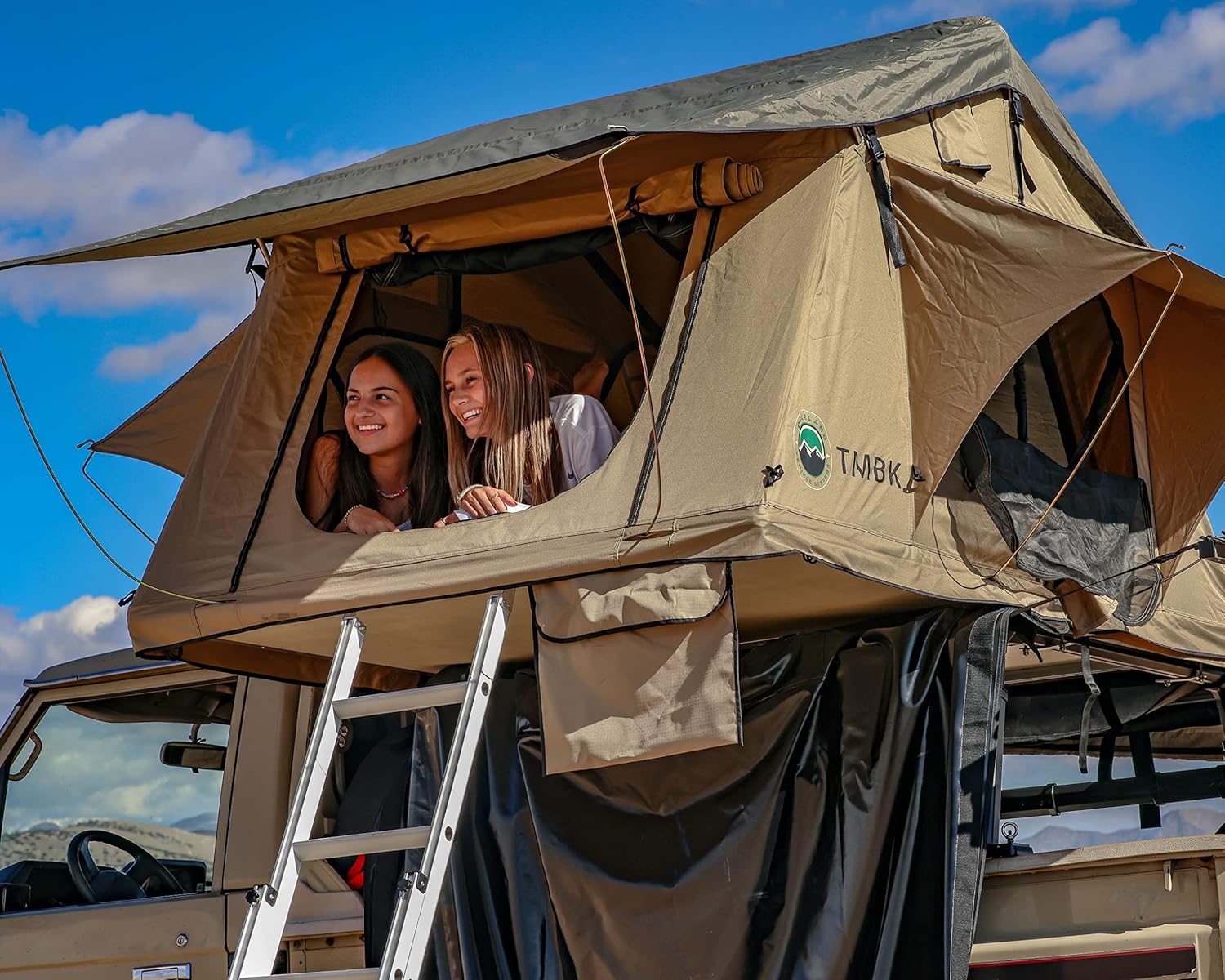
4. Overland Vehicle Systems TMBK 3-Person Soft-Shell Roof Top Tent
Best Soft-Shell Roof Tent
| Occupancy | 3 Person |
|---|---|
| Seasons | Spring, Summer, Fall, Winter |
| Water Resistance Technology | 300 Mm |
| Waterproof Rating | 2000 PU |
| Compatible with Vehicle Type | vehicles with a roof rack |
The Overland Vehicle Systems TMBK is a soft-shell rooftop tent that mounts to a roof-rack system and gives three people an elevated, quick-setup sleeping platform. It unfolds from a compact travel cover into a roomy cabin with multiple mesh windows, a skylight, and a 2.5-inch high-density foam mattress for basic comfort. Construction uses 600D poly-cotton ripstop fabric, a 420D polyester Oxford rainfly, aluminum poles, and an insulated aluminum base to resist weather and provide a stable sleeping surface. Setup and breakdown are straightforward for one or two people and packing takes a few minutes once you get the hang of it. Practical benefits include increased interior volume for the tent footprint, good ventilation for warm-weather use, and a lighter, more affordable package than many hard-shell models. Important limitations are a thinner stock mattress that some campers top up for longer trips, occasional issues with incomplete hardware or sparse instructions reported by buyers, and the typical lack of built-in insulation that means cold-weather comfort may need accessories.
Best for: Sierra 1500 owners who want a budget-friendly, lightweight soft-shell rooftop tent that maximizes interior sleeping space and is easy to set up for weekend overland trips.
Less Ideal for: Campers who plan to spend extended time in cold conditions or who need a factory-insulated, hard-shell solution should consider a different tent or add insulation accessories.
- Soft-shell design provides larger interior volume relative to footprint
- 600D poly-cotton ripstop body and 420D rainfly for reliable waterproofing
- Aluminum insulated base and aluminum poles for a durable yet lightweight structure
- Fast setup and takedown with included ladder and travel cover
- Includes a 2.5" high-density foam mattress for immediate comfort
- Stock mattress is relatively thin for extended multi-night comfort
- Instructions and hardware quality have inconsistent reports from buyers
- Not insulated as a winter-ready system without added accessories
Verdict: Opt for a soft-shell rooftop tent if you prefer more interior volume for its footprint and a typically lighter, more budget-friendly canvas construction.
5. JOYINRUTE Hard‑Shell 2‑Person Insulated Roof Top Tent
Best Insulated 4-Season Roof Tent

| Occupancy | 2 Person |
|---|---|
| Seasons | 4 Season |
| Material | Aluminum, Polyester |
| Water Resistance Technology | 0-5000mm |
| Included Components | Ladder, Mattress, Storage bags, Installation tools |
This JOYINRUTE hard-shell rooftop tent is built for year-round use, combining a rigid aluminum base with a removable winter thermal liner to improve insulation and wind resistance. It mounts to standard roof racks and opens quickly using gas struts, giving two adults a comfortable raised sleeping platform with a thick mattress, condensation pad, and internal storage pockets. The 320G polyester shell with a blackout coating claims 5000 mm water resistance, mesh-covered windows for ventilation, and a flocked lining floor to reduce condensation. Included accessories such as a telescoping ladder, ladder organizer, LED strip, and shoe/storage bags make it ready for multi-night trips. Be aware the unit is heavy and can be awkward to lift and fit alone, and several buyers reported the supplied mounting bolts may not suit every crossbar system, so longer or stronger hardware could be needed for secure installation on some racks. Expect a short break-in to learn closing technique and inspect/clean metal shavings before first use.
Best for: Drivers who want a genuinely insulated, four-season rooftop tent for cold-weather trips on a Sierra 1500 and prioritize warmth and weather protection over light weight.
Less Ideal for: People who need a lightweight, easily lifted tent for frequent solo installation or those unwilling to source stronger mounting hardware for their rack.
- Removable thermal liner and flocked floor reduce heat loss and condensation for cold‑weather camping
- Hard-shell aluminum base with gas struts enables fast, tool-free opening and secure closure
- 320G polyester with 5000 mm water resistance and UV protection for four-season weatherproofing
- Includes mattress, condensation pad, ladder, LED strip, and multiple storage organizers for immediate use
- Heavy overall weight makes solo mounting difficult and may require extra hands or a hoist
- Provided mounting bolts may be too short for some crossbar systems, requiring aftermarket hardware
- Some users reported minor fit and finish issues such as metal shavings or latch damage on arrival
Verdict: Select an insulated 4-season tent when you need reliable cold-weather performance—thermal liners, thicker mattresses, and anti-condensation features keep you warmer and drier.
6. ARCTWONDER Hard-Shell Rooftop Tent with 216W Solar Panel
Best Solar-Ready Roof Tent

| Material | Aluminum, Polyester |
|---|---|
| Solar panel output | 12V 216W |
| Water resistance | Waterproof |
| Floor area | 29.37 Square Feet |
This ARCTWONDER hard-shell rooftop tent is built for quick deployment and off-grid use thanks to a 12V 216W solar panel and included cargo bars. The aluminum shell and corners aim to improve durability compared with plastic-corner designs, while air pressure rods let the tent pop up in seconds and close to a slim 7-inch profile that keeps wind drag low. Inside the tent is a dark, blackout fabric with multiple windows and storage pockets; the included mattress is serviceable but several owners add a thin foam or inflatable pad for better comfort. The tent is rated waterproof with seam tape and has a built-in rain fly and vents to reduce condensation. Practical downsides are the relatively thin factory mattress, occasional fiddliness when tucking flaps to close, and the need to fabricate or source mounting hardware for nonstandard racks. For Sierra 1500 owners this tent provides integrated solar charging and a low-profile hard shell that works well on heavier truck racks, but plan for a two-person lift during installation and budget a small upgrade mattress for overnight comfort.
Best for: GMC Sierra 1500 owners who prioritize off-grid power and a low-profile hard-shell setup for weekend camping and road trips and who value integrated solar charging and rugged construction.
Less Ideal for: Buyers who want a plush, ready-to-sleep mattress out of the box or who need a tent that mounts to specialty racks without any modification should consider other options.
- Built-in 216W solar panel with controller supports charging small power stations and devices off-grid
- Aluminum top, bottom plate, and corner construction improves durability versus plastic corners
- Pop-up design with air pressure rods opens in seconds and closes to a low 7-inch profile
- Waterproof 320g polyester fabric with taped seams and integrated rain fly for dependable weather protection
- Included mattress is thin and many users add an aftermarket pad for comfortable sleep
- May require custom or heavier mounting hardware for large truck bed racks
- Tucking flaps and closing can be fiddly due to tight tolerances
Verdict: Choose a solar-ready rooftop tent when you plan to run lights, charge devices, or power small accessories off-grid using built-in USB/12V outlets or included solar gear.
7. Naturnest Sirius 2 Hard‑Shell Rooftop Tent (Sirius 2)
Best Extra-Spacious Roof Tent

| Occupancy | 3 Person |
|---|---|
| Seasons | 4 Season |
| Installation Type | Roof Top |
| Material Type | Oxford |
| Is Waterproof | True |
The Naturnest Sirius 2 is a clamshell hard‑shell rooftop tent built to give you an elevated, roomy sleeping area that sets up in seconds. It mounts to standard crossbars and opens with gas‑assist struts and a pull‑down ladder so one or two people can deploy it quickly at camp. Notable features include a rigid ABS shell and aluminum frame for wind and rain resistance, a blackout thermal lining for better sleep, and a 1.97‑inch rebound mattress that provides firmer support than most soft tents. The raised design and generous interior allow you to sit up, change clothes, and store small gear inside without bumping your head. It also includes practical extras like YKK zippers, a telescoping ladder, and provisions for a heater or ventilation. Expect a heavier unit that needs a roof rack with adequate load capacity and occasional condensation in cool mornings like most enclosed tents; some buyers have reported occasional hardware or missing parts issues that require inspection on arrival. For Sierra 1500 owners who prioritize interior space, the Sirius 2 trades compact weight for clear comfort and headroom advantages.
Best for: Buyers who put interior room and headroom first and want a rooftop tent that makes sitting up, changing, and storing items inside much more comfortable during multi‑day or family trips.
Less Ideal for: Drivers who need the lightest, most compact rooftop option or who lack a high‑capacity roof rack should consider lighter soft‑shell models instead.
- Spacious interior with raised hard‑shell design lets adults sit up and change comfortably
- Rapid pop‑up setup using gas struts and ladder reduces campsite prep time
- 4‑season construction with thermal headliner and waterproof fabrics for varied climates
- Includes a resilient mattress and quality components like YKK zippers and stainless hardware
- Heavy overall weight requires a sturdy roof rack and higher crossbar load capacity
- Some customers reported shipping or hardware issues, so inspect components on delivery
Verdict: Go for an extra-spacious model if interior room and headroom matter—these designs make changing, sitting up, and stashing gear inside the tent much more comfortable.
Choosing the Right GMC Sierra 1500 Roof Tent: Key Factors to Consider
Vehicle Load Capacity and Mounting
A Sierra 1500 has specific static and dynamic roof load limits that dictate which rooftop tents mount safely. Static load is crucial because it represents the weight the roof supports while parked and occupied; rooftop tents plus occupants and gear must stay within the truck's static limit to avoid stressing the roof structure.
Dynamic load refers to the weight allowed while driving. Tents that exceed dynamic limits can affect handling or damage mounting points. Check the Sierra 1500's roof or rack specifications and verify that the tent's base, hardware, and recommended crossbars match those ratings. Pay attention to recommended torque for mounting bolts and whether the tent requires a dedicated crossbar system or can use factory rails with appropriate adapters. Ensuring correct load distribution reduces the risk of roof deformation and improves overall safety.
Mounting Compatibility and Hardware
Mounting compatibility includes the tent's footprint, rail spacing, and the type of clamps or brackets supplied. Some rooftop tents clamp to crossbars, while others bolt to specific roof rails. For the Sierra 1500, consider whether you will use factory rails, a ladder rack, or an aftermarket crossbar system. Each mounting approach has different weight ratings and installation steps.
Also evaluate the quality of included hardware. Thicker steel brackets, lock washers, and grade-8 bolts reduce loosening under vibration. Check whether adapters or extended feet are needed to clear roof features like a sunroof, antenna, or drip rails. Simple, well-documented mounting reduces installation time and lowers the chance of improper attachment.
Weather Resistance and Ventilation
Rooftop tents are exposed to wind, rain, and sun, so materials and seam construction matter. Look for high-density fabrics with reliable waterproof coatings, taped or welded seams, and protective shell finishes on hard-shell designs. Effective rain gutters over entry points and storm flaps on windows help keep interior dry during heavy weather.
Ventilation is equally important to prevent condensation and maintain comfort. Tents with mesh panels, adjustable vents, and multiple access points allow airflow while keeping insects out. For cooler nights, consider how the tent insulates and whether it accommodates additional insulation layers or a thicker mattress.
Setup Speed and User Ergonomics
One of the main advantages of a rooftop tent is faster setup compared with ground tents. Consider how the tent opens—pop-up soft-shells may fold out quickly, while hard-shell models often hatch open with gas struts. Evaluate whether the ladder is quick to deploy and locks securely, and whether the tent can be opened by one person or needs two.
Interior ergonomics matter for comfort and usability. Check ceiling height, mattress size and thickness, window placement for light and view, and storage pockets for small items. A tent that is simple to deploy and comfortable to use will be used more often and make truck camping more pleasant.
Durability and Repairability
The tent will endure UV exposure, mechanical abrasion, and repeated folding. Durable construction techniques such as reinforced stitching at high-stress points, corrosion-resistant hardware, and robust ladder joints extend service life. Consider materials for the base pan and ladder, since these structural parts bear the load.
Also think about repairability in the field. Removable covers, replaceable zippers, and available spare parts mean simpler fixes on a trip. A tent with documented service parts and common hardware sizes reduces downtime and keeps your Sierra 1500 ready for consecutive trips.
Comfort and Liveability
Sleeping comfort affects how often you choose rooftop camping. Mattress thickness and quality influence back support and insulation from outside temperatures. Some tents include foam mattresses with removable covers for washing; others accept aftermarket sleeping pads for added comfort.
Liveability extends to storage for small items, interior lighting options, and ease of entry. Consider whether the tent's footprint allows gear to remain on the roof when the tent is deployed or if you will need to stow items before setup. A comfortable, organized interior encourages longer trips and improves the overall camping experience.
Mounting Options on the Sierra 1500
The GMC Sierra 1500 can accept rooftop tents via several mounting strategies depending on its configuration. Factory rails, integrated crossbars, or aftermarket roof racks each have different load ratings and clearance characteristics. Before selecting a tent, identify which mounting method your truck uses and confirm the system's dynamic and static load capacities.
When using factory rails, you may need low-profile brackets that clamp without drilling. For trucks with bed racks or ladder racks, ensure the tent's base can sit flat and that the rack distributes weight across strong attachment points. Remember to account for any roof mounted accessories that could interfere with tent placement.
- Verify static and dynamic roof load limits for your Sierra 1500.
- Measure rail spacing and crossbar width before buying mounting hardware.
- Consider clearance to the cab and antenna when positioning the tent.
Setting Up and Stowing Your Tent
Practice the setup and stow process at home before your first trip. Familiarity will reduce the time it takes and highlight any necessary adjustments to ladder length or bracket tightness. With repeated use you will learn the required sequence for deploying awnings, closing storm flaps, and securing zippers.
Stowing often requires folding fabrics and securing straps so the tent does not flap while driving. Confirm that all buckles and straps are accessible when the tent is closed and that locking mechanisms engage fully. Regular checks of torque on mounting bolts after the first few trips help prevent loosening.
- Run a timed setup once to assess how many hands you need.
- Inspect straps and buckles for wear before each trip.
- Tighten mounting hardware after the first 100 miles of driving with a new installation.
Seasonality and Use Cases
Most roof tents are optimized for three-season use and handle light to moderate rain, wind, and cool nights. If you plan winter camping, look for features such as thicker mattresses, insulated panels, and reduced venting to retain heat. For hot-weather trips, prioritize ventilation, UV-resistant materials, and awnings for shade.
Consider how you will use the tent: short weekend car-camping, extended overlanding, or basecamp setups. Lighter, compact models suit frequent mount-and-go trips, while heavier, more robust designs provide better insulation and larger interiors for longer stays.
- Three-season tents balance ventilation with weather protection.
- Winter use demands extra insulation and stronger fabric tension.
- Match tent type to trip style to avoid unnecessary weight penalties.
Maintenance and Care for Longevity
Routine maintenance extends the life of a rooftop tent. After wet trips, dry the fabric thoroughly before storing to prevent mildew. Rinse off road grime and treat zippers with a silicone-based lubricant to prevent salt and dirt buildup from jamming the tracks.
Inspect seams and fabric coatings yearly for signs of wear and refresh seam sealant as needed. Check ladder and bracket hardware for corrosion or fatigue, and replace any worn fasteners. Proper storage in a dry, shaded place when not in use reduces UV degradation of fabrics.
- Air-dry the tent fully before long-term storage.
- Clean zippers and lubricate to maintain smooth operation.
- Re-seal seams periodically and inspect structural hardware.
Accessories That Improve Usability
A few simple accessories make rooftop camping more comfortable and secure. A dedicated ladder stabilizer or foam ladder step increases safety when entering and exiting. An annex or ground tent extension expands living space for changing or gear storage. Low-profile awnings create shaded workspace outside the tent entrance.
Storage solutions such as under-tent gear bags, internal pockets, and quick-release straps keep small items organized. Consider a protective cover if you plan to leave the tent mounted during long storage periods, but choose one that breathes to avoid trapping moisture.
- Annexes add sheltered floor space for gear or changing.
- Ladder stabilizers improve safety on uneven ground.
- Under-tent storage bags maximize usable space without altering mounting.
How We Chose the Best GMC Sierra 1500 Roof Tent
We prioritized roof tents that meet the structural and practical demands of the GMC Sierra 1500. First, fitment and weight limits were primary filters: candidates had to be compatible with common Sierra 1500 roof and rack load ratings and not exceed recommended dynamic and static loads. Second, we evaluated weather protection features, including durable shell materials, waterproof fabrics, sealed seams, and ventilation options for three-season use. Third, ease of installation and mounting flexibility were considered, focusing on tents that attach securely to commonly used factory rails or aftermarket roof racks and that provide clear hardware and instructions.We also assessed build quality markers such as frame strength, ladder design, and mattress comfort levels to ensure safe, comfortable nights. Excluded from consideration were soft shelters that rely solely on vehicle-specific bolting patterns or require extensive vehicle modification. In short, we selected tents that balance secure mounting, weather resistance, durability, and practical usability for Sierra 1500 owners.
Our full evaluation process is outlined in our review methodology.
FAQ
Will a roof tent damage my GMC Sierra 1500 roof?
When installed and used within the Sierra 1500's static and dynamic load limits, a roof tent should not damage the roof. Proper mounting, using recommended crossbars or racks and correct torque on bolts, distributes weight safely. Regular inspections and avoiding overloaded tents reduce the risk of roof stress.
Can I leave a roof tent mounted all season?
You can leave a tent mounted for extended periods, but exposure to UV, wind, and debris accelerates wear. If mounted long-term, use a breathable protective cover and periodically check seals and hardware. Removing the tent for long off-season storage in a dry place will prolong fabric life.
How hard is it to install a roof tent on a Sierra 1500?
Installation difficulty varies with the mounting system and your experience. Many tents attach to crossbars with clamping hardware and can be installed by two people with common tools. Some setups that require specific brackets or bed-rack adaptation may be more involved and benefit from professional help.
Do rooftop tents affect fuel economy?
A rooftop tent adds wind resistance and weight, which usually reduces fuel efficiency to some degree. The effect depends on tent size, profile, and whether it is mounted during long highway drives. Removing or using a low-profile option when not camping reduces the impact.
What maintenance should I plan after rainy trips?
After rainy trips, open the tent and allow it to dry completely before stowing. Rinse off mud and inspect seams for leaks. Treat any water intrusion points with seam sealer and clean zippers to prevent corrosion or blockage.
Can I use the truck bed while a roof tent is mounted?
Yes, in most configurations you can still use the truck bed while a roof tent is mounted, but placement matters. Ensure the tent's footprint does not block bed access or interfere with bed-mounted accessories. Verify ladder positioning to avoid obstructing the tailgate.
Final Verdict
A good rooftop tent for the GMC Sierra 1500 balances secure mounting, weather protection, and comfortable sleeping space while respecting the truck's load limits. Prioritize tents that match your Sierra 1500's roof or rack capacity, offer durable materials and solid mounting hardware, and provide the ventilation and mattress comfort you need for your typical trips. Tradeoffs exist between weight and insulation, and between compactness and interior space, so choose the option that aligns with the kind of camping you do most.
Explore More:
- Check out all GMC Sierra 1500 parts & accessories
- Explore Exterior Accessories
- Browse all Accessories
